Tier 1 Engineering Pillar · Commercial Tables & Bases Sourcing Gateway

Commercial Restaurant Dining Tables
& Hydraulic Anti-Wobble Bases Supplier

Eradicate the operational humiliation of folded napkins under table feet. Engineered and manufactured at RON GROUP's Foshan industrial foundries: 12mm non-porous sintered stone tops, slotted C-channel solid hardwood, ASTM A48 Class 35 cast iron ballast with $D \ge 0.6W$ anti-tipping geometry, and closed-loop hydraulic self-leveling micro-pistons.

< 0.05%
Sintered Stone Absorption
Mohs 7
Scratch & Heat Resistance
≥ 3,200 N
M8 Insert Pull-Out Proof
D ≥ 0.6 W
Anti-Tipping Stability Ratio
1,000 Hrs
ASTM B117 E-Coat Salt Spray
Tri-Core Technical Intelligence

Three Dedicated Engineering Gateways

Systematic technical documentation solving the three primary procurement liabilities in commercial restaurant tables: structural kinematics, component selection, and automated manufacturing.

Dossier 01 · Failure Root Cause

Table Wobble Kinematics & Substrate Physics

Deconstruct why rigid 4-legged tables mathematically fail on 1–3mm tile grout step jumps (Kutzbach-Grübler $DOF = -1$), analyze why André Martin's rotation theorem fails in narrow dining aisles, and explore the fluid dynamics of enclosed hydraulic leveling glides.

  • Over-Constraint Physics: The 4-point contact kinematic problem.
  • Hydraulic Auto-Leveling: 0.3s fluid redistribution via Pascal's law.
  • Tipping Moment Statics: Overturning torque $M_{\text{tip}}$ vs $M_{\text{stab}}$.
  • Substrate Warping: Hoadley 1:10:20 shrinkage vs slotted C-channels.
Read Pain Points & Solutions →
Dossier 02 · Selection & Specs

4×4 Top & Base Combinator Catalog

Explore our interactive specification matrix pairing 4 high-performance commercial tabletop systems with 4 contract-grade cast iron bases. Includes full dimension charts, weight ballasts, CAD downloads, and Cornell RevPASH capacity calculations.

  • 4 Tabletop Materials: 12mm Sintered Stone, Solid Wood, HPL, Compact.
  • 4 Base Geometries: X-Base, Heavy Disc, Booth Cantilever, Hydraulic.
  • Spatial Clearances: 900mm secondary & 1200mm primary aisles.
  • 2-Top vs 4-Top Ratio: 60/30/10 mix eliminating 28% ghost capacity.
Launch 4×4 Catalog Matrix →
Dossier 03 · Factory Production

Waterjet Fabrication & Cast Iron Foundry SOP

Transparent teardown of our 7-stage Foshan manufacturing lifecycle: 5-axis abrasive waterjet stone cutting, CNC sub-plate M8 insert insertion, HT200 gray iron gravity molding, cathodic E-coating, and ISTA 3A vertical A-frame ocean crating.

  • Waterjet Accuracy: ±0.2mm tolerance with 45° shark nose beveling.
  • HT200 Foundry: High-damping pearlitic gray iron casting.
  • Anti-Corrosion Armor: Cathodic E-coat + outdoor thermoset powder.
  • A-Frame Stillage: Eliminates flex fracture during rough ocean swells.
Inspect Manufacturing SOP →
Engineering Materials Substrate Matrix

Four Contract-Grade Tabletop Systems

Commercial restaurant dining involves constant dish contact, scalding sizzler plates, condensation rings, and caustic sanitizing sprays. Domestic clear-coats blister within 6 months. Here is how our engineered substrates compare.
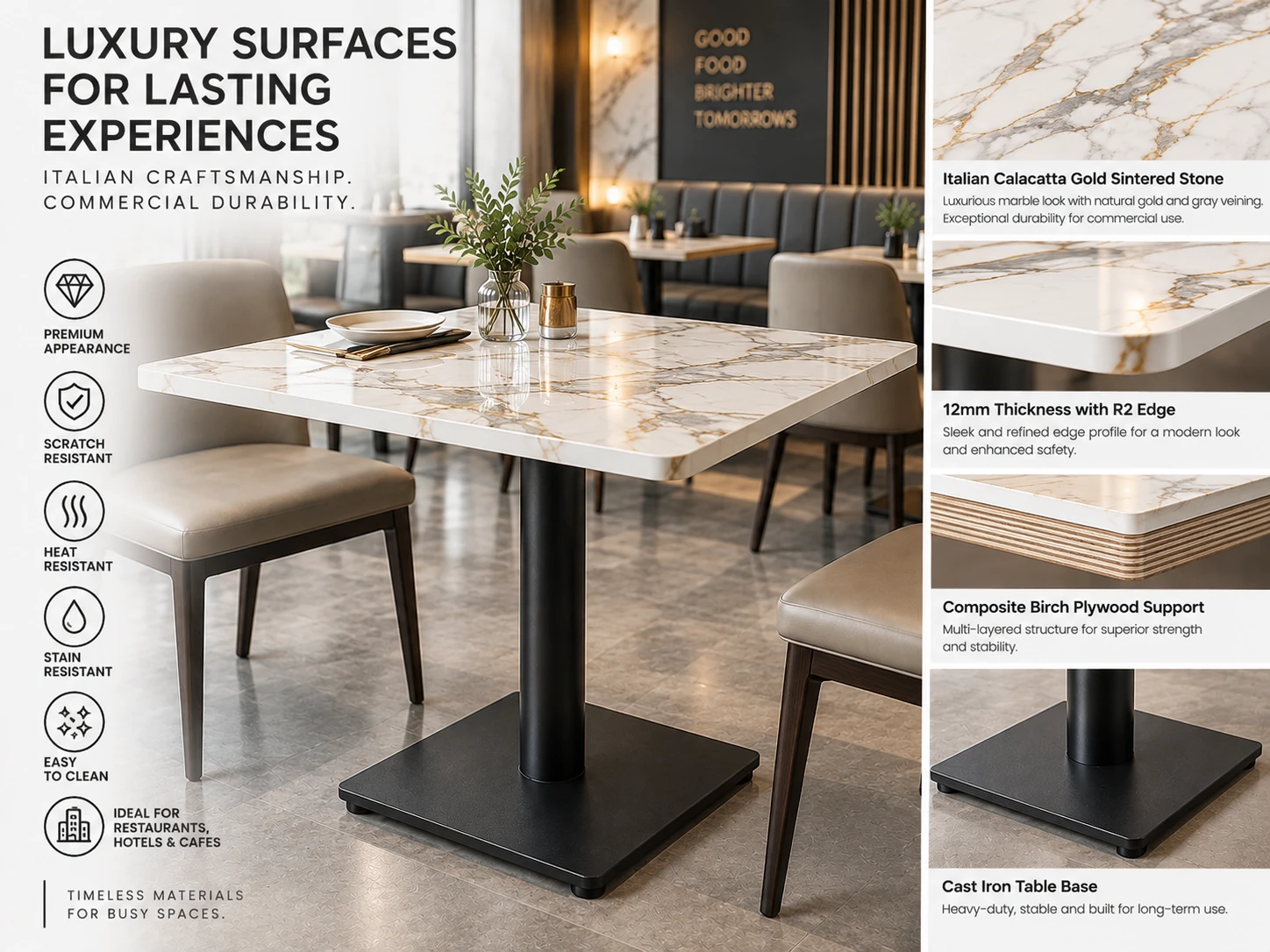
12mm Calacatta Gold Sintered Stone Restaurant Dining Table
Architectural Luxury

12mm Sintered Stone

Fired at 1,200°C under 400 bar pressure. Zero-porosity surface impervious to red wine tannins, lemon acid, and 300°C sizzler platters. Supported by an 18mm birch sub-plate.
Hardness: Mohs 7 (Scratch-Proof)
Absorption: < 0.05% (Zero Stains)
Anchor: CNC M8 Barbed Inserts
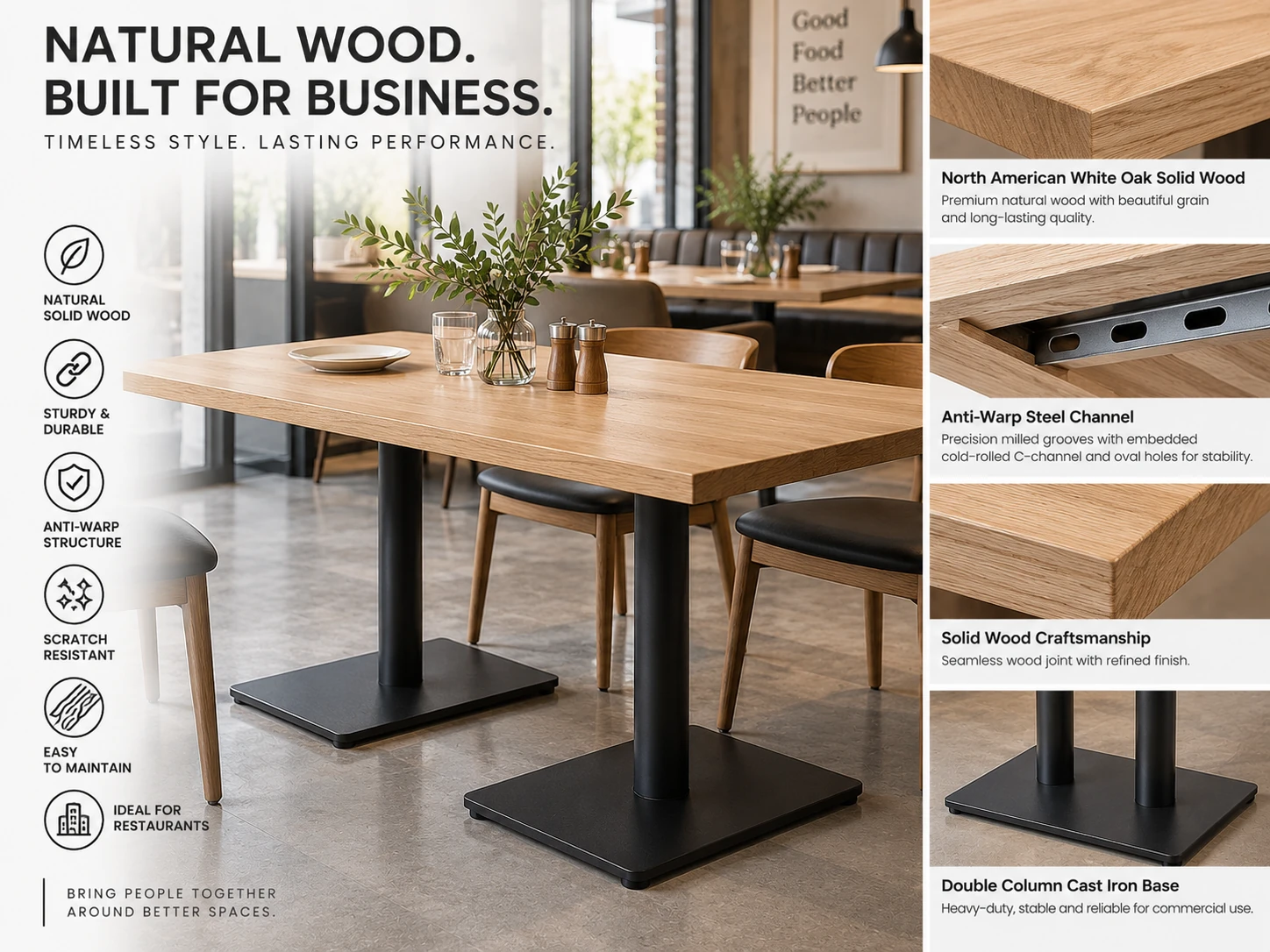
Commercial Solid Hardwood White Oak Table with Steel C-Channel Reinforcement
Biophilic Craftsmanship

Kiln-Dried Hardwood

Solid FAS North American White Oak dried to 6–8% EMC. Back-routed with slotted cold-drawn C-channel steel stiffeners to prevent cupping while accommodating seasonal wood movement.
Moisture Content: 6%–8% EMC
Stability: Slotted C-Channels
Coating: 2-Part Conversion Varnish
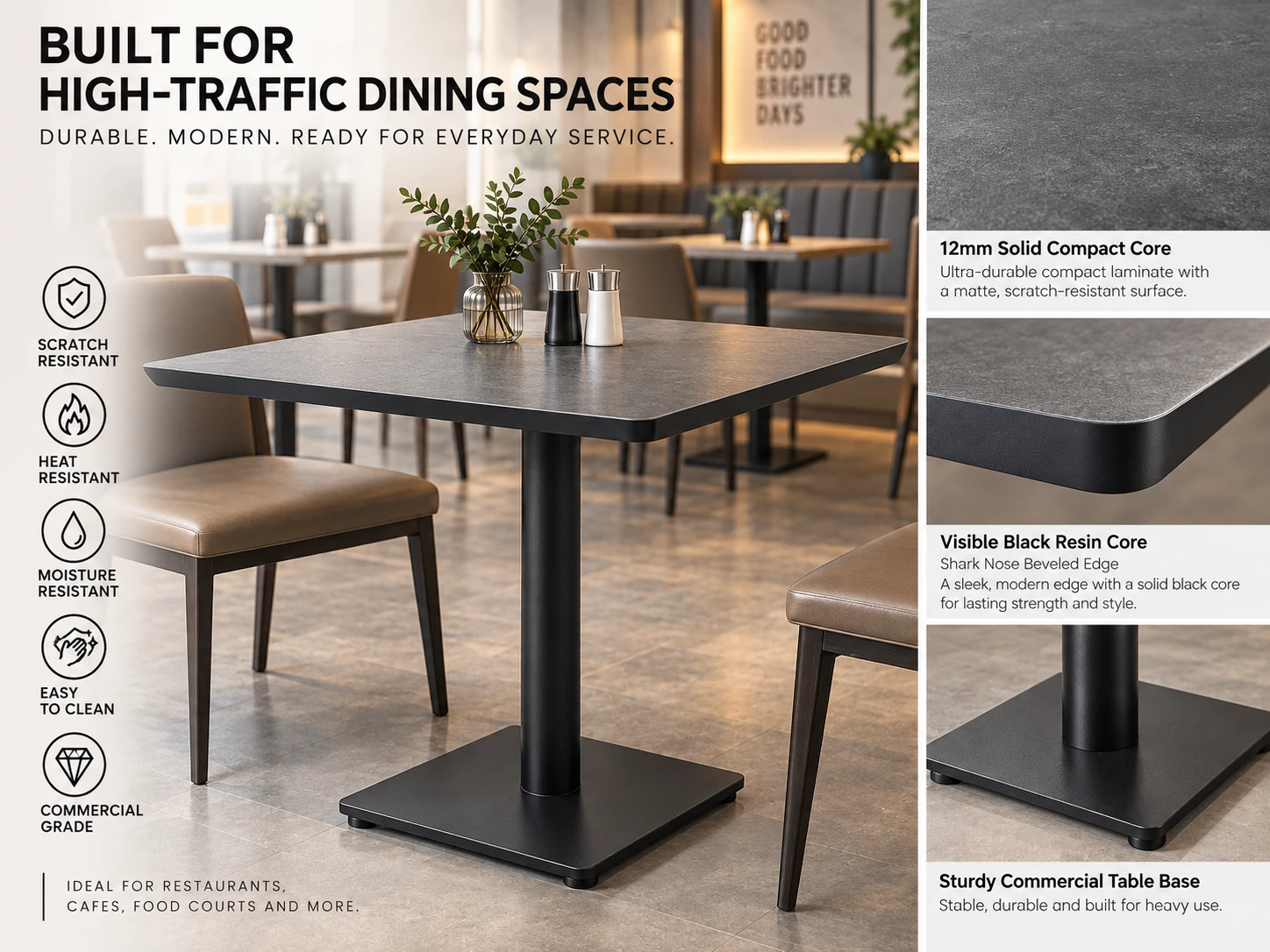
12mm Solid Compact Phenolic Tabletop with Beveled Shark Nose Edge
Indestructible High-Volume

12mm Solid Compact

Solid phenolic resin core compressed under 140°C heat and immense pressure. 100% waterproof homogeneous core suitable for indoor/outdoor bistros with CNC shark-nose edge profile.
Core: Solid Phenolic Resin
Water Resistance: 100% Waterproof
Edge: Machined Shark Nose
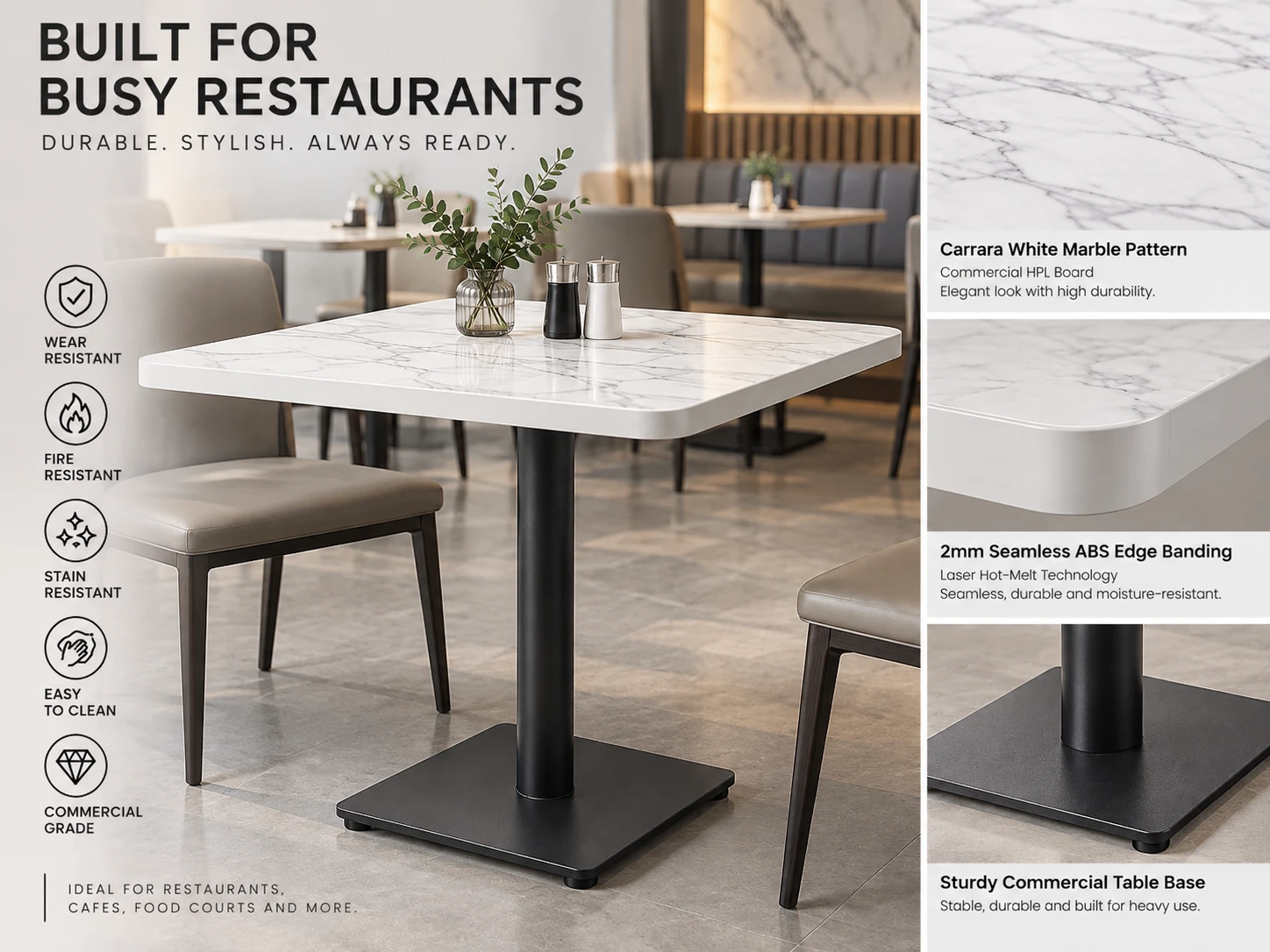
Commercial HPL Restaurant Tabletop with 2mm Laser Seamless ABS Edge Banding
Cost-Effective Flexibility

Commercial HPL + ABS

0.8–1.0mm heavy-duty commercial laminate bonded to moisture-resistant E0 CARB P2 substrate. Edge-banded with 2.0mm impact-resistant PUR hot-melt seamless laser ABS trim.

Laminate: 0.8–1.0mm Heavy HPL
Substrate: MR-MDF / CARB P2
Edge: 2mm Laser PUR ABS
Substrate Type Surface Hardness Heat Tolerance Stain & Acid Resistance Mounting Interface Ideal Hospitality Typology
12mm Sintered Stone + Marine Core Mohs 7 (Scratch-Proof) 1,200°C (Direct Flame) Zero Penetration (pH 2.0–12.0) M8 Cold-Pressed Threaded Inserts Fine Dining · Steakhouses · Luxury Cafes
Solid Hardwood with C-Channels Janka 1,360 lbf (White Oak) 120°C (Hot Plates) High (Polyurethane Barrier) Oval Slotted Wood Thread Fasteners Bistros · Gastro Pubs · Breweries
12mm Solid Compact Phenolic Rockwell M105 180°C Total Impermeability Direct Blind Threaded Bushings High-Turnover QSR · Outdoor Patios
Commercial HPL + 2mm ABS NEMA LD3 Commercial 140°C High (Common Bleach & Alcohol) Reinforced Wood Screws / Pre-Drill Fast Casual Chains · Food Courts
Kinematic Ballast & Structural Stability

Four Heavy-Duty Table Base Architectures

A commercial dining table is only as stable as its ground interface. We cast all bases from ASTM A48 Class 35 (HT200) pearlite gray iron, engineered to maintain an anti-tipping ratio of $D \ge 0.6W$.
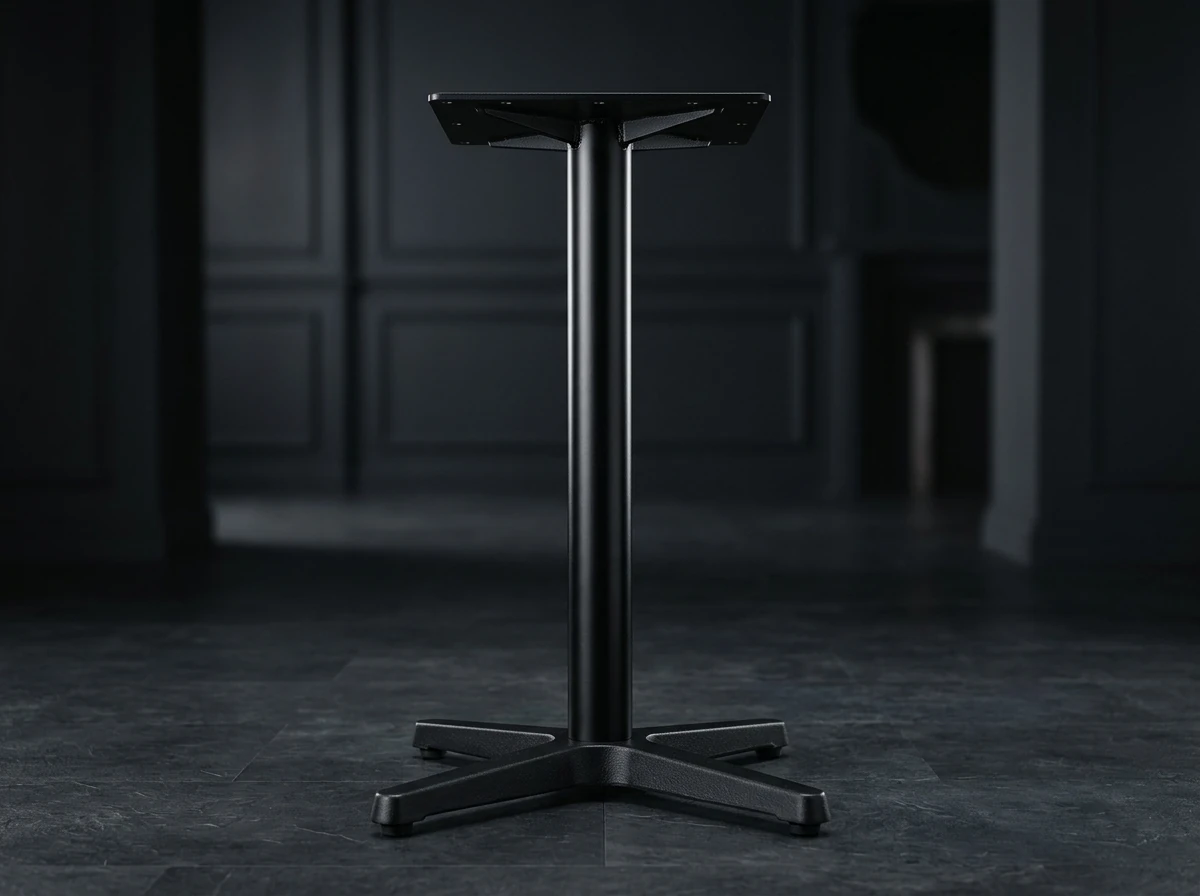
Heavy Cast Iron Cross X-Base Table Pedestal with 3-inch Steel Column
Contract Benchmark

Cast Iron Cross Base (X-Base)

Classic 4-prong low-profile cross footprint providing maximum diagonal diner legroom. Solid HT200 cast iron weighing 14.5–24.0 kg prevents tip hazards while maximizing seating density.
Sizes: 22×22″, 30×30″, 22×30″
Top Spread: 300×300mm Cast Spider
Weight: 14.5 kg – 24.0 kg
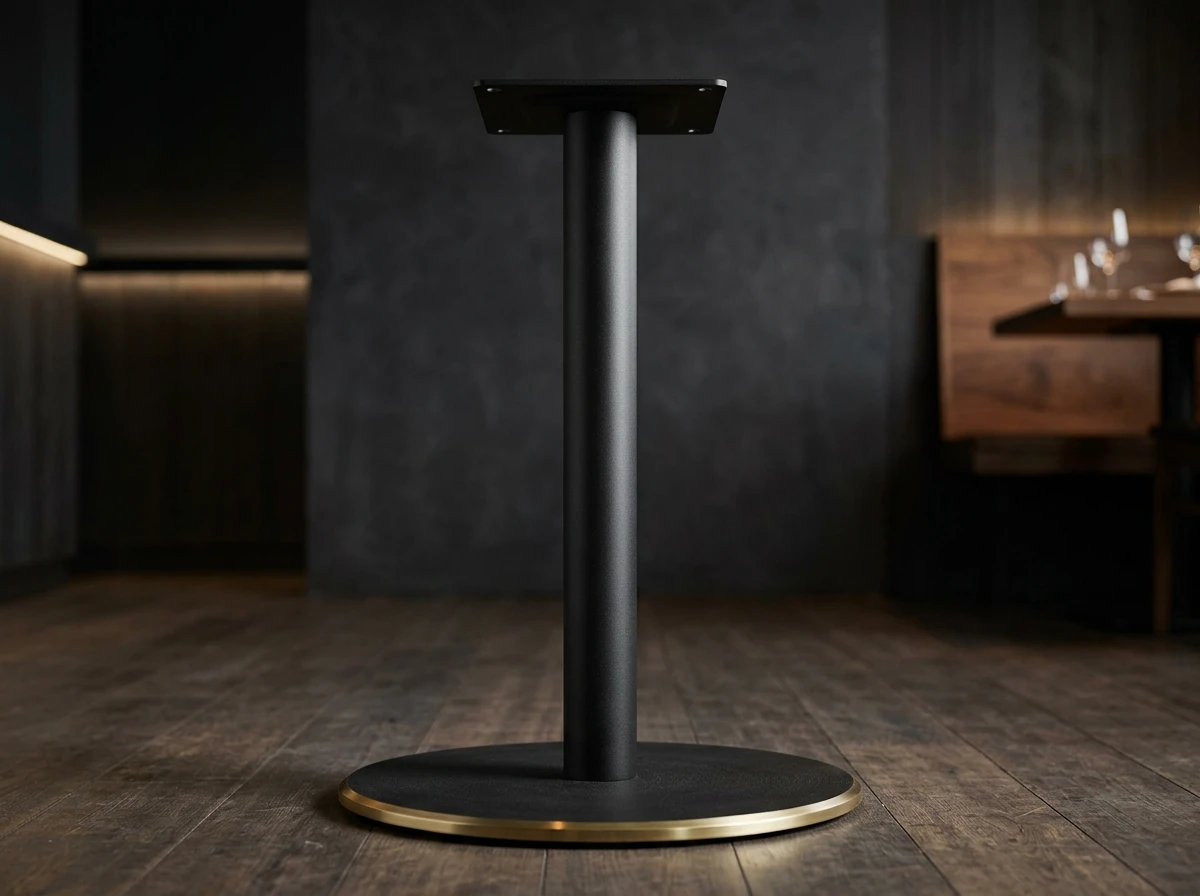
Cast Iron Round Disc Table Base with Brushed Brass PVD Perimeter Ring and 8mm Low Step Profile
Modern Architectural

Round Disc Base + PVD Ring

Ultra-low 8mm stepped edge disk design. High concentrated bottom ballast centers the tipping vector directly beneath heavy sintered stone tops without creating trip hazards for guests.
Diameters: Φ400mm, Φ450mm, Φ500mm
Profile: 8mm Beveled Edge
Weight: 16.0 kg – 26.5 kg
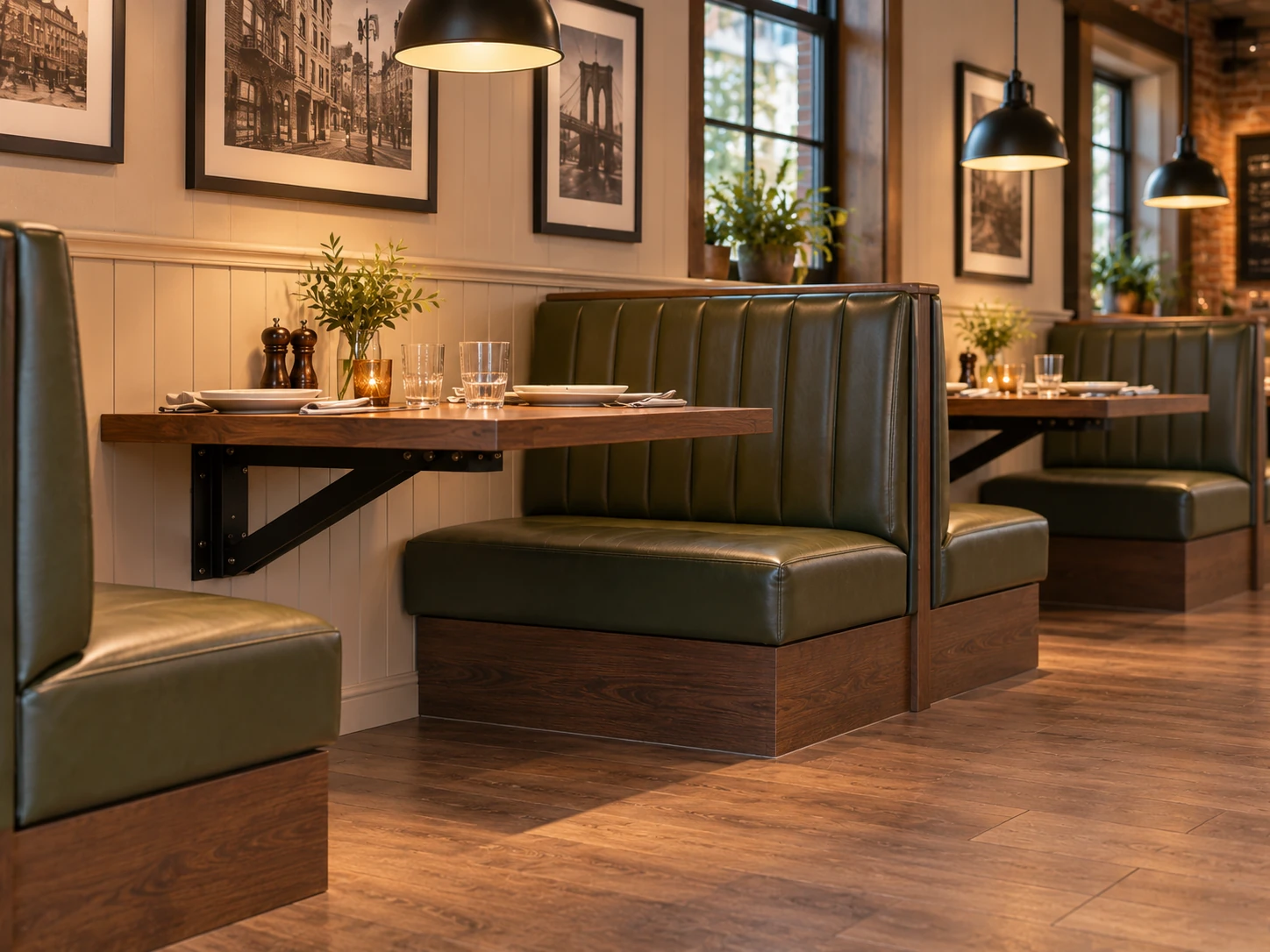
Cantilever Wall-Mount Booth Table Frame Assembly with Zero Floor Obstruction
Booth & Banquette Specialized

Cantilever Wall-Mount Truss

Engineered exclusively for restaurant booth seating. Eliminates floor legs entirely, permanently curing bruised guest knees and enabling uninterrupted staff cleaning passes.
Wall Gusset: 6mm Structural Steel
Leg Clearance: 100% Floor Obstruction-Free
Proof Load: 850 lbs Static Proof Load
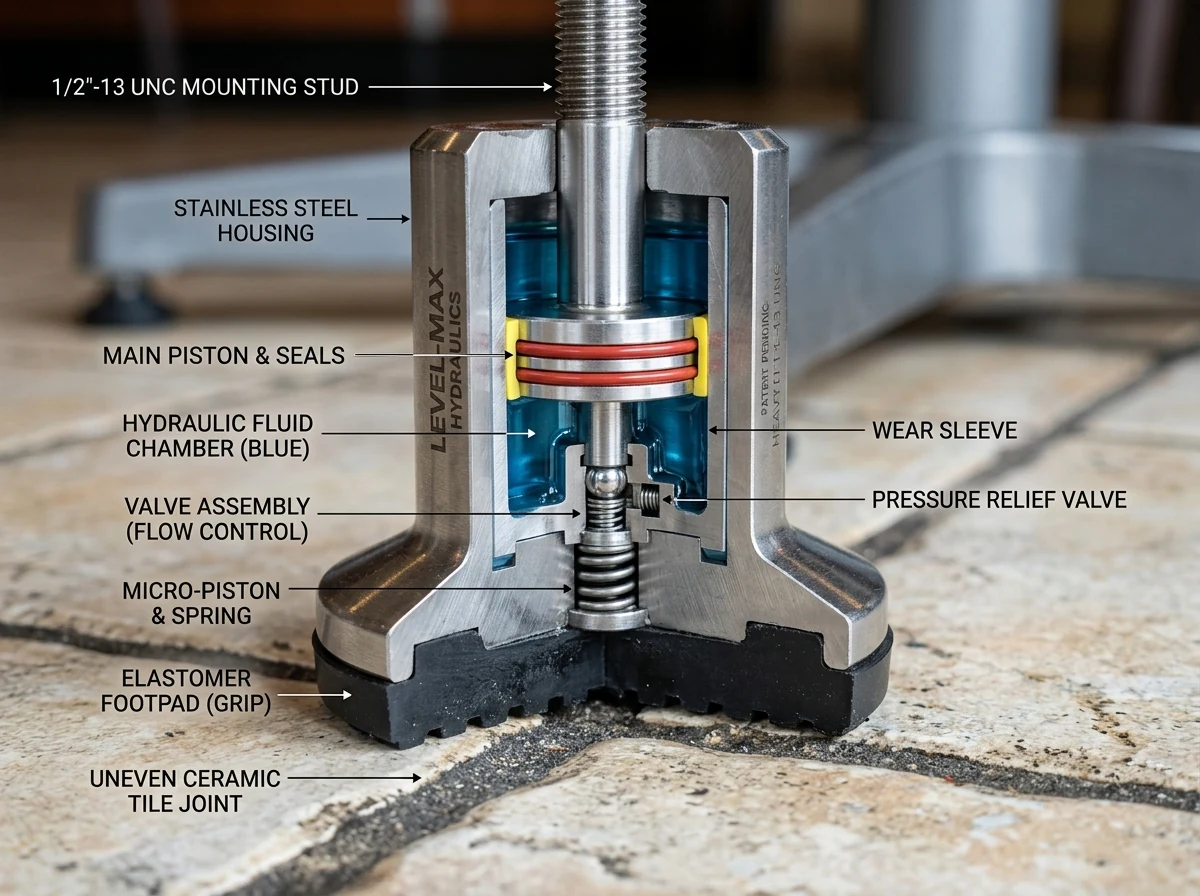
Macro Engineering Cutaway of Hydraulic Self-Leveling Table Glide on Uneven Tile Grout
Permanent Anti-Wobble

Hydraulic Self-Leveling Base

Equipped with closed-loop Pascal fluid equalization technology. Four interconnected pistons instantly absorb up to 6mm of grout line drop in 0.3s, locking rigidly under diner forearm loads.

Leveling Range: ±6.0mm Auto-Adjust
Mechanism: Pascal Fluid Circuit
Operation: Zero Manual Adjustment
Cornell Hospitality Engineering Model

RevPASH Space Clearances & Table Sizing Ratios

Improper table selection inflates operational square-footage waste. An oversized 4-top seating 2 patrons creates a 28% "ghost capacity" penalty. Optimal floor yield requires configuring 60% 2-tops (deuces) that pair seamlessly into 4-tops.

Explore 16-Model Catalog & Calculator →
900 mm
Secondary Diner Aisle
1,200 mm
Primary Service Corridor
450 mm
Seat-to-Table Centerline
+18.4%
RevPASH Yield Increase
Engineering Intelligence · Article 2118

Commercial Restaurant Table Sizing: Space Clearances & Base Selection

Study our definitive technical whitepaper: Deconstruct mathematical seating density formulas, tipping moment arm mechanics ($M_{\text{tip}} \le M_{\text{stab}} / 2.0$), and acoustic dampening guidelines for high-decibel dining halls.

Read Full Technical Whitepaper → View Sizing Tables in Catalog
Commercial Table Sizing and Base Selection Guide Whitepaper 2118
36,000
Words of Contract Engineering Data
Read Whitepaper 2118
B2B Technical Clarifications

Frequently Answered Engineering Inquiries

Critical specifications regarding tile step tolerances, pull-out forces, and commercial tipping compliance.

Why do traditional four-legged restaurant tables always wobble on commercial floors?
According to the Kutzbach-Grübler mobility criterion, a planar rigid structure requires exactly three points to define a plane. Adding a fourth rigid leg creates an over-constrained kinematic system ($DOF = -1$). Because commercial ceramic tile floors feature 1.0 to 3.0mm grout line step discontinuities, the fourth leg inevitably hovers in free air, generating continuous diagonal rocking whenever patron loads shift.
How does hydraulic self-leveling technology permanently stop table wobble?
Enclosed hydraulic bases utilize Pascal's Law ($\Delta P = F/A$). When placed on an uneven floor, hydraulic fluid redistributes across interconnected foot pistons within 0.2 to 0.3 seconds, absorbing up to 6mm of elevation variance. When diners apply downward forearm or dish loads, internal micro-valves instantly lock into a rigid static assembly.
What is the critical base-to-tabletop diameter ratio to prevent table tipping?
Hospitality engineering standards mandate a base footprint ratio of $D \ge 0.6W$. For a 700×700mm dining table, the base spread must measure at least 420mm (recommended 450mm) with minimum 16.0kg solid HT200 cast iron ballast to maintain a safety factor $SF \ge 2.0$ against tipping under patron 40kg edge lean loads.
How does RON GROUP prevent sintered stone tabletops from cracking at mounting screw holes?
RON GROUP never drills directly through brittle stone. We bond 12mm sintered stone to a 15–18mm marine-grade birch plywood sub-top using high-modulus polyurethane structural adhesive. The base is secured using CNC-embedded M8 barbed threaded carbon-steel inserts capable of withstanding over 3,200N of direct pull-out force, isolating the stone from mechanical point stresses.
Direct Factory Sourcing & Container Consolidation

Get Your Custom Table BOM Breakdown & Landed Cost Analysis

Upload your restaurant floor plan CAD, table schedule, or seat count. Receive a transparent factory-direct BOM breakdown, ASTM A48 / BIFMA X5.5 stability test dossier, and centralized container consolidation savings model within 24 hours.

Request Custom BOM & Landed Cost Analysis → Browse 16-Model Table Catalog
✓ 100% Foshan Foundry Direct Pricing ✓ Zero Multi-Factory Destination LCL Markup ✓ AQL 2.5 Quality Inspection & 1:1 Pre-Assembly Guaranteed