









































 3DREAL
Content
Executive Summary: 4 Gates Before Shipping Restaurant Furniture to Australia
To import commercial tables, chairs, and booths from China to Australia without port holds, lock four tracks before factory crating: (1) itemized BOQ material disclosure separating furniture substrates from crating timber; (2) commodity-specific DAFF BICON checks for solid-wood or upholstered SKUs; (3) compliant ISPM 15 solid-wood packaging and accurate packing declarations; and (4) 2026–27 BMSB seasonal verification (1 September 2026 – 30 April 2027) with your licensed Australian customs broker.
Importing commercial dining furniture for an Australian café, restaurant, or hotel dining room requires tight coordination between factory production in Foshan and biosecurity clearance at Australian ports. When item codes, material breakdowns, packaging declarations, and trade terms are aligned up front, your customs broker can clear containers cleanly and your site team can move straight into installation.
1. Lock the 4-Track Australian Import & Packaging File Before Production
An Australian importer needs an exact material breakdown for every item in the container—solid timber species, engineered board or plywood, upholstered foam and textiles, metal frames, stone tops, and crating materials. Clear line-by-line documentation prevents generic carton descriptions such as "restaurant furniture" from triggering manual customs queries at arrival.
| Import track | What to align before production | Owner |
|---|---|---|
| 1. BOQ & substrate disclosure | Line-by-line item codes, solid timber species (if any), plywood/MDF, metal, stone, foam, and fabric specs | RON GROUP + Buyer |
| 2. BICON commodity conditions | Applicable DAFF BICON import case, factory processing details, and treatment records where required | AU Customs Broker + Supplier |
| 3. Export timber packaging | Solid-wood pallets/crates/dunnage vs. pure plywood/cardboard; ISPM 15 stamps and packing declaration | Supplier Export QA |
| 4. Trade terms & clearance roles | Named Incoterms® 2020 port/place, FCL/LCL consolidation status, importer of record, and site unloading | Buyer + Freight / Broker |
Key distinction: Always verify the furniture commodity and the wood packaging carrying it as two separate lines. An ISPM 15 mark on a shipping pallet certifies the pallet timber, while wooden chairs or timber tabletops are assessed under their own BICON commodity conditions.
2. Separate Furniture BICON Conditions From ISPM 15 Packaging
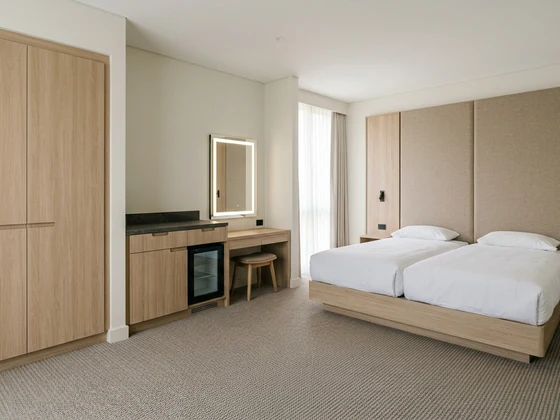
Before crating begins, confirm the exact BICON import case for each timber or plant-derived SKU with your Australian customs broker, record the case reference and check date in your procurement file, and specify exact documentary requirements to the factory.
Australia's Department of Agriculture, Fisheries and Forestry (DAFF) distinguishes solid timber packaging from processed wood packaging:
Solid-wood pallets, crates, and dunnage: Must undergo approved treatment (such as ISPM 15 heat treatment), carry legible IPPC marks on opposite sides, and be declared accurately on the Australian packing declaration.
Processed-wood packaging: Crates made wholly from qualifying processed wood products (such as plywood or particleboard) are treated separately under ISPM 15 exemptions; however, mixed-material crates containing any solid-timber battens, skids, or dunnage must still be treated, marked, and declared for their solid-wood parts.
Pre-loading cleanliness: Inspect crating and container interiors for bark, soil, seeds, moisture, and pests before sealing.
| Packaging compliance check | Pre-shipment verification action |
|---|---|
| Solid-timber pallets, skids, dunnage, or battens | Flag explicitly on the supplier packing declaration |
| Pure plywood vs. mixed solid + plywood crating | Document each packaging material separately; never assume mixed crates are exempt |
| ISPM 15 treatment & stamp legibility | Verify clear IPPC stamps on two opposite faces and match to packing declaration |
| Biosecurity cleanliness before loading | Conduct pre-stuffing visual inspection free of bark, soil, and debris |
| Crate marks mapped to BOQ codes | Match every crate ID to item codes, quantities, and Australian dining zones |
3. Plan Around Australia's 2026–27 Seasonal BMSB Measures
Australia's 2026–27 brown marmorated stink bug (BMSB) risk season applies to shipments with shipped-on-board dates from 1 September 2026 through 30 April 2027 inclusive.
Under DAFF's published 2026–27 seasonal framework (including Industry Advice Notice
151-2026), China is classified as an emerging-risk country subject to heightened vessel surveillance and targeted random onshore inspection on specific tariff chapters—specifically Chapters 39, 94, and 95—rather than blanket mandatory offshore BMSB fumigation on every shipment.Because Chapter 94 covers many commercial seating and table products, your customs broker should verify your exact HS codes, check whether LCL cargo consolidates with goods from target-risk countries, and confirm any in-season DAFF updates prior to vessel booking.
4. Build the Complete Clearance Pack & Compare Landed Quotes Fairly
A low factory unit price rarely captures the full cost of landing commercial furniture in Australia. Normalize every supplier quote against the same Incoterms® 2020 rule and named place—remembering that the ICC advises considering FCA or CIP rather than FOB or CIF when containerized goods are handed to a carrier at a container terminal.
| Cost / scope line | Supplier offer | Importer / 3rd party | Verification checkpoint |
|---|---|---|---|
| Furniture manufacturing & samples | [Confirm] | [Confirm] | Signed shop drawings, swatches, and exact BOQ quantities |
| Export cartons & compliant crating | [Confirm] | [Confirm] | Solid-wood vs. plywood split; ISPM 15 & packing declaration |
| Origin haulage & terminal handling | [Confirm] | [Confirm] | Named Incoterms® 2020 port or terminal |
| Ocean freight & marine insurance | [Confirm] | [Confirm] | FCL vs. LCL co-load risk and cargo coverage |
| AU customs & DAFF/BICON clearance | [Confirm] | [Confirm] | Licensed AU customs broker and inspection contingencies |
| AU local trucking & site unloading | [Confirm] | [Confirm] | Tail-lift, dock height, stair carry, and crate disposal |
| On-site assembly & booth fixing | [Confirm] | [Confirm] | Qualified local AU trades; NCC & AS 1428.1 site checks |
| Warranty remedy & replacement path | [Confirm] | [Confirm] | Written claim window and defect documentation protocol |
Ensure the shipping pack includes an itemized commercial invoice, a BOQ-linked packing list (gross/net mass, dimensions, CBM), ocean bill of lading, accurate packing declarations, and any BICON-required treatment or origin documents confirmed by your broker.
5. Coordinate Australian Site Readiness & Pre-Order Checklist
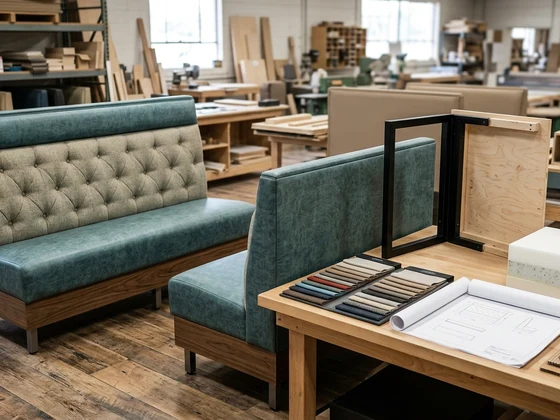
Before cargo arrives in Sydney, Melbourne, Brisbane, or Perth, align container unloading access, room/zone staging tags, and local trades. For built-in booths and fixed seating, confirm wall/floor dimensions on site and have your Australian building certifier or project designer verify applicable NCC fire-performance and AS 1428.1 circulation requirements.
6-Step Australian Pre-Order Checklist:
Record every furniture substrate and finish separately from packaging timber in the master BOQ.
Have your licensed Australian customs broker confirm current BICON cases for all timber and upholstered SKUs.
Separate solid-wood pallets, crates, and mixed-timber battens from pure plywood packing and verify ISPM 15 marks.
Check whether your shipped-on-board date falls inside 1 September 2026 – 30 April 2027 and confirm Chapter 39/94/95 emerging-risk rules and LCL consolidation terms.
Cross-check commercial invoice descriptions, BOQ-linked packing lists, and packing declarations before container sealing.
Compare supplier quotations on an identical Incoterms® 2020 landed-scope matrix covering port handling, clearance, unloading, and site assembly.
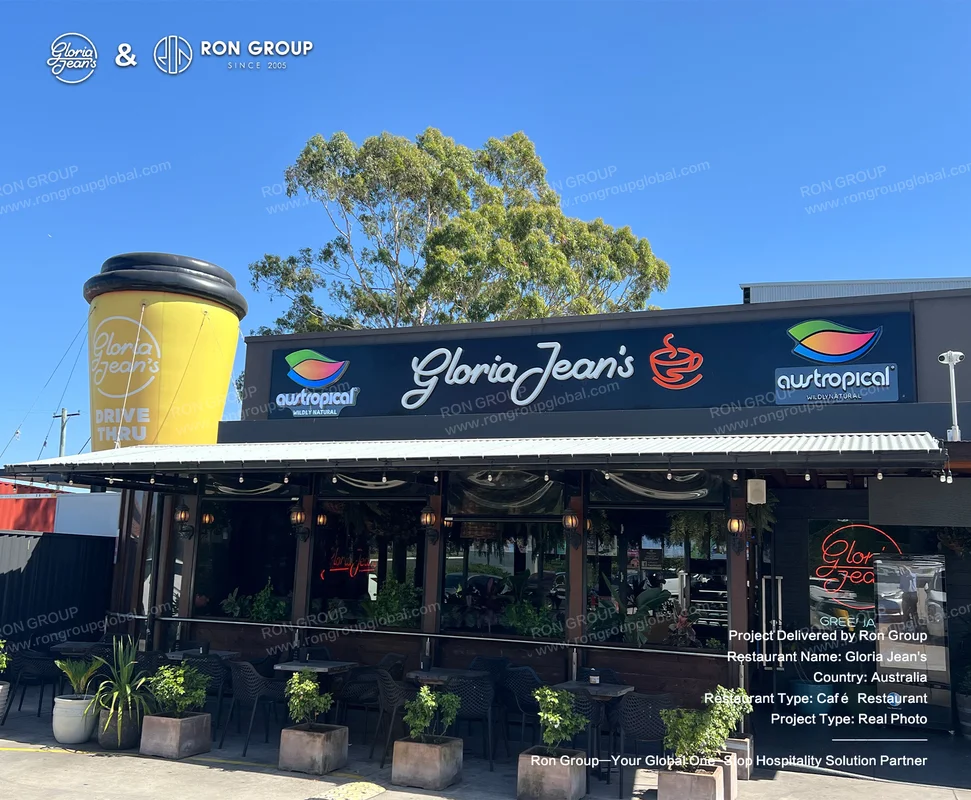
As a Foshan-based hospitality furniture manufacturer and one-stop export sourcing partner, RON GROUP coordinates multi-category restaurant BOQs, pre-shipment quality inspections, export carton labeling, and compliant packing documentation packs for Australian hospitality projects—including published deployments such as Gloria Jean's café furniture.
Ready to align your Australian restaurant furniture BOQ and export packing plan? Contact RON GROUP with your Australian city, target opening date, furniture BOQ, and material schedule →
Frequently Asked Questions
Does all restaurant furniture imported from China to Australia require fumigation?
No. Treatment requirements depend on the exact furniture material, BICON commodity conditions, packaging composition, container consolidation pathway, and seasonal BMSB rules. For 2026–27, DAFF classifies China as an emerging-risk country subject to targeted random onshore inspection on relevant tariff chapters rather than universal offshore fumigation. Confirm your exact shipment pathway with a licensed Australian customs broker.
Is an ISPM 15 stamp on crates enough to clear wooden furniture through Australian customs?
No. An ISPM 15 mark applies to qualifying solid-wood packaging material (pallets, crates, dunnage), not the furniture commodity itself. Importers must also satisfy applicable BICON conditions for timber or upholstered furniture items, submit accurate packing declarations, and meet any seasonal biosecurity inspections.
Are Chapter 94 furniture shipments from China affected by the 2026–27 BMSB season?
Potentially yes. DAFF's 2026–27 seasonal measures list China as an emerging-risk country and specify random onshore inspections for goods in Chapters 39, 94, and 95 shipped between 1 September 2026 and 30 April 2027 inclusive, alongside heightened vessel surveillance. Confirm your HS classification and whether LCL cargo shares a container with target-risk origin goods.
How do RON GROUP and an Australian customs broker divide import responsibilities?
RON GROUP coordinates factory production, BOQ-linked carton labeling, pre-shipment QC inspection, commercial invoices, packing lists, ISPM 15-compliant export crating, and supplier packing declarations in China, while your licensed Australian customs broker manages BICON/DAFF lodgements, tariff classification, and destination port clearance—with local trucking and site installation explicitly scoped in writing per project.
Related Australian Hospitality Sourcing & Export Guides
Planning an Australian hospitality fit-out or consolidating restaurant seating and tables from Foshan? Explore these related procurement resources:
Get the week's latest industry information
-
Real-Life Professional Restaurant Case Studies
Explore Now
-
Create a unique restaurant with over 95,700+products
Explore Now
-
Protessional Free 3D Restaurant Design
Explore Now
-
Still Have Questions About Opening a Restaurant?
Explore Now

Sylvia
With 8 years in catering & hospitality industry, sales manager of Ron Group, specialise in providing one stop solutions to restaurants, hotels and weddings.
Discover Our Exclusive Products
Explore our extensive range of restaurant and hotel supplies designed to enhance your operations. Find the perfect solutions to meet your needs.
Browse Our ProductsFREE 3D DESIGN
Boost your restaurant's success with our free 3D design service. Start building the restaurant of your dreams today!
Explore 3D Design Case
RECOMMENDED CASES
-
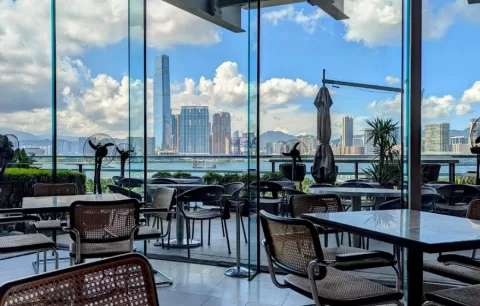
La Rambla by Catalunya: Crafting Barcelona's Soul in Hong Kong - Custom Furniture Excellence
RON Group's custom Spanish-inspired furniture elevates La Rambla with artisanal aesthetics...
Learn More -

Cardinal Point: Elevating Outdoor Seating with Tailored Cushion Upgrades
Discover how Cardinal Point transformed its outdoor dining experience with custom cushions, achievin
Learn More
RECOMMENDED BLOGS
-

Bar Glassware 101: Types, Names, Uses, and How to Stock Your Bar
Learn the 10 core bar glassware types, names, and uses. Discover how to stock your bar with the right glasses for cocktails, beer,...
Sylvia2026-07-26 -

Commercial Bar Equipment List & Checklist for Opening a Bar
Commercial bar equipment checklist for new bars and restaurant bars: underbar stations, ice, refrigeration, draft, glassware and...
Sylvia2026-06-11 -

Low-Budget Restaurant Interior Design Ideas: Spend Where Guests and Staff Notice
Explore low-budget restaurant interior design ideas, practical material choices, layout priorities and phased upgrades without...
Sylvia2026-04-04
Subscribe to RON GROUP
Stay up-to-date with the latest industry insights and expert advice. Together, we'll create your ideal restaurant.