






Content
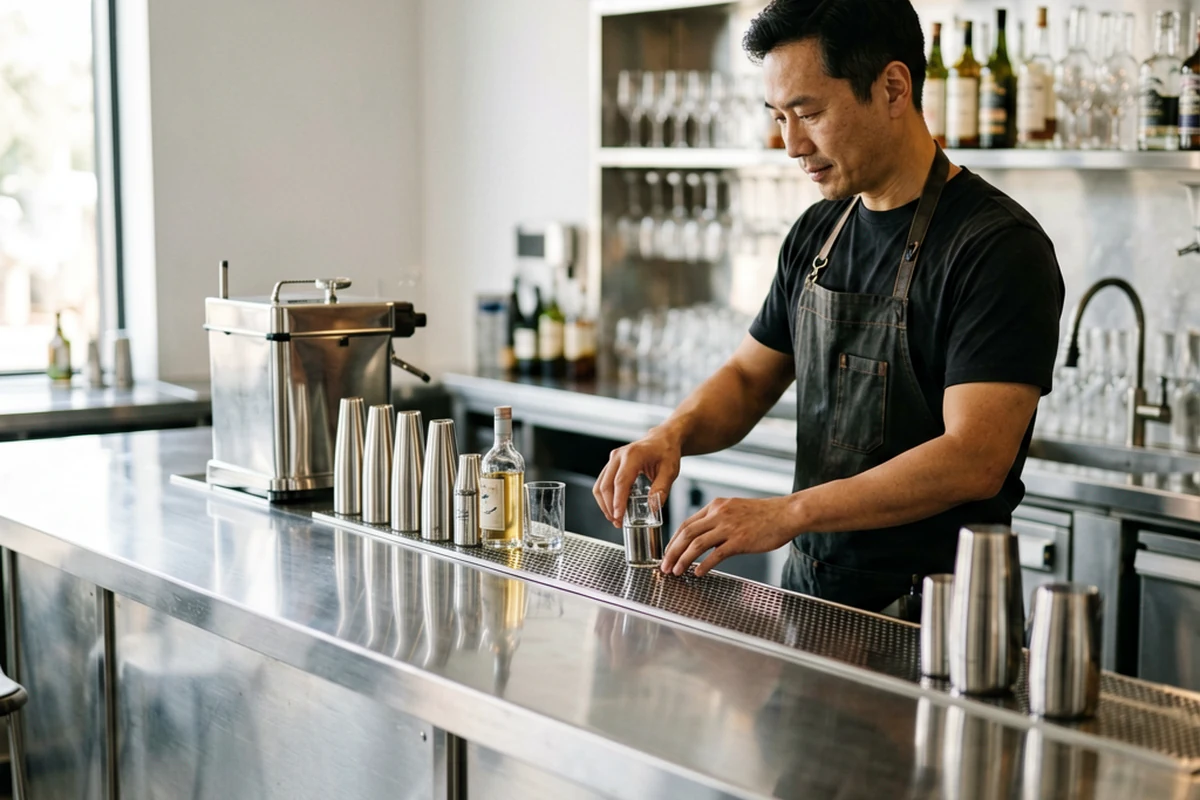
The right bar equipment list starts with the operation, not a generic shopping cart. A cocktail bar, beer-led taproom, hotel lounge, and restaurant bar may need different refrigeration, ice, glassware, food equipment, utilities, storage, and workflow support.
Use this checklist to define the equipment scope before requesting quotes. Confirm fixed equipment and installation requirements with the relevant local health, alcohol, fire, building, accessibility, plumbing, and electrical authorities.
Define Your Bar Equipment Scope Before Requesting Quotes
Prepare the same scope for every supplier so quotations can be compared on equal terms.
| Planning input | What to document |
|---|---|
| Beverage menu | Cocktails, draft beer, wine, frozen drinks, coffee, and non-alcoholic drinks |
| Food service | No food, limited snacks, reheating, or full cooking |
| Service volume | Seats, standing capacity, peak drinks per hour, and service periods |
| Bar stations | Number of service wells and bartenders working at peak |
| Ice demand | Drink types, ice formats, peak production, storage, and backup supply |
| Utilities | Electrical load, water, drainage, gas, ventilation, and equipment heat rejection |
| Installation scope | Delivery, positioning, connections, commissioning, and training |
| Approval scope | Health, alcohol, fire, building, accessibility, plumbing, and electrical review |
Avoid comparing equipment by purchase price alone. Verify what each quotation includes, which utilities are required, who installs the equipment, and how warranty service will be handled.
Underbar Equipment and Workstations
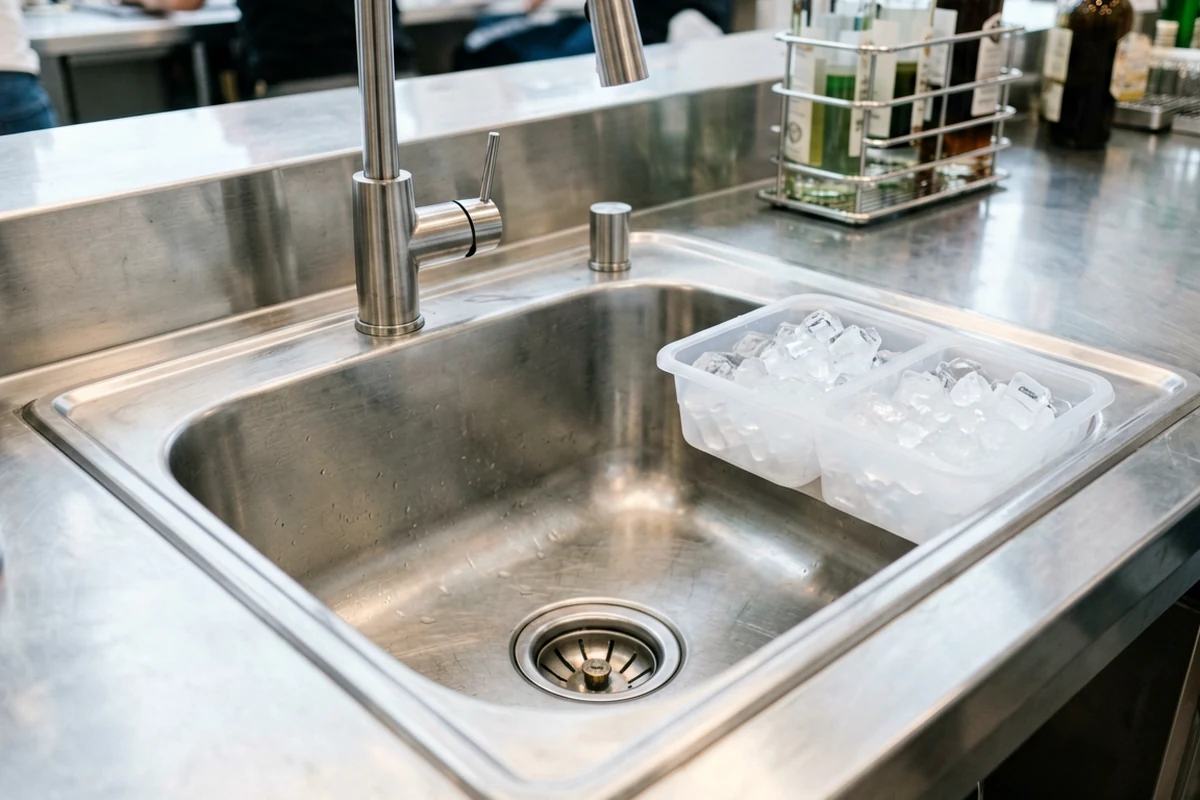
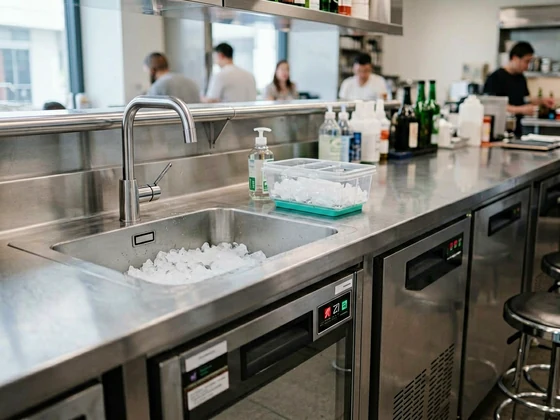
The underbar area determines how efficiently bartenders can prepare, finish, and serve drinks. A typical workstation may include:
Speed rails or bottle wells
Insulated ice bins
Cocktail stations
Sinks and handwashing facilities
Drainboards and glass racks
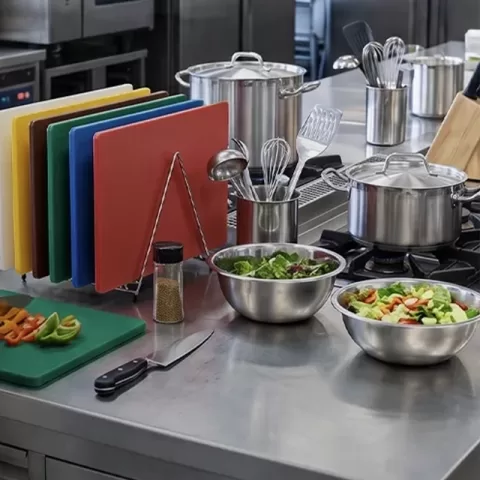
Cutting boards and garnish storage
Bar mats
Waste and recycling containers
Accessible shutoffs, drains, and cleaning clearances
The FDA Food Code provides model provisions for retail and food-service safety, including equipment, utensils, cleaning, and sanitation. Local authorities decide which code and amendments apply to a specific project, so sink configuration and installation details must be confirmed before ordering fixed equipment. FDA Food Code 2022
For equipment used with food, beverages, ice, or utensils, check whether an applicable NSF/ANSI sanitation certification is requested by the project specification or local authority. NSF evaluates areas such as cleanability, hygienic design, material safety, and applicable performance requirements. NSF food equipment sanitation certification
Compare available commercial bar supplies only after the workstation dimensions and utility points are known.
Refrigeration and Ice Equipment
Common refrigeration categories include:
Back-bar bottle coolers
Direct-draw or keg coolers
Underbar refrigerators
Wine refrigerators
Refrigerated garnish or preparation bases
Modular or undercounter ice makers
Ice storage bins
Ice equipment should be sized from the actual beverage program. Document the expected drink mix, peak production period, ice format, ambient conditions, incoming-water conditions, storage capacity, machine recovery, cleaning access, and backup plan. A single customer-based multiplier cannot represent every bar.
When relevant, check the sanitation certification of refrigeration and ice equipment. Also compare eligible ENERGY STAR commercial food-service equipment, including commercial refrigeration and ice-making categories, using the current product criteria and certified-product listings. NSF food equipment sanitation certificationENERGY STAR commercial food service equipment
Draft Beer System
A draft system can include:
Keg storage
Direct-draw equipment or a remote cooler
Towers, faucets, and tap handles
Beer and gas lines
Carbon dioxide or blended-gas supply
Regulators
Cooling equipment for long-draw systems
Drip trays
Line-cleaning equipment
The design depends on line length, beverage type, serving temperature, pressure, cooling method, and service access. Long-draw systems should be engineered and commissioned by a qualified specialist. Ask suppliers to document the complete system boundary, required utilities, balancing procedure, cleaning method, and replacement parts.
Bartending Tools and Smallwares
Build quantities around the number of service stations and peak staffing.
Cocktail Preparation
Shakers
Strainers
Jiggers
Bar spoons
Muddlers
Citrus presses
Peelers and channel knives
Cutting boards and knives
Mixing glasses
Commercial blenders where required
Service Tools
Bottle openers
Wine keys
Stoppers and decanters
Ice scoops and tongs
Covered garnish trays
Condiment dispensers
Backup tools for each critical station
Ice and beverage-handling tools must be stored, cleaned, and used according to the food-safety rules adopted for the project. FDA Food Code 2022
Glassware and Washing Capacity
Select glassware from the menu rather than ordering the same quantity of every type.
| Input | Planning question |
|---|---|
| Menu mix | Which glass is used for each drink? |
| Peak covers | How many drinks of each type may be served before washing catches up? |
| Wash cycle | How long does a complete washing and handling cycle take? |
| Rack capacity | How many glasses fit safely in each rack? |
| Storage | Where are clean and used glasses held? |
| Breakage | What replacement stock is appropriate for the operation? |
Typical categories include rocks, highball, beer, wine, coupe, flute, shot, and specialty glassware. Washing equipment and racks should match the glass type and expected throughput. Check applicable sanitation and installation requirements before selection. FDA Food Code 2022NSF food equipment sanitation certification
For glass-type planning before ordering, use the bar glassware types guide alongside the glassware and washing-capacity schedule.
Bar Furniture and Fixtures
The furniture package may include:
Bar stools
High-top tables
Dining tables and chairs
Lounge seating
Booths or banquettes
Bar counters
Back-bar shelving
Footrails
Host or waiting furniture
Confirm counter height, seat height, seat-to-counter clearance, foot support, accessibility, floor fixing, and user comfort with the selected products and the project drawings.
Commercial furniture should also be reviewed for cleanability, stability, replaceable components, finish durability, delivery access, and future replenishment.
Lighting, Sound, and Guest-Facing Fixtures
Plan task lighting for working surfaces, accent lighting for displays, ambient lighting for guests, and required emergency lighting. Sound-system scope should identify zones, controls, speaker locations, equipment ventilation, maintenance access, and electrical load.
Coordinate lighting and sound with the reflected ceiling plan, bar millwork, sprinklers, detectors, exit signs, and other building systems.
Kitchen Equipment When the Bar Serves Food
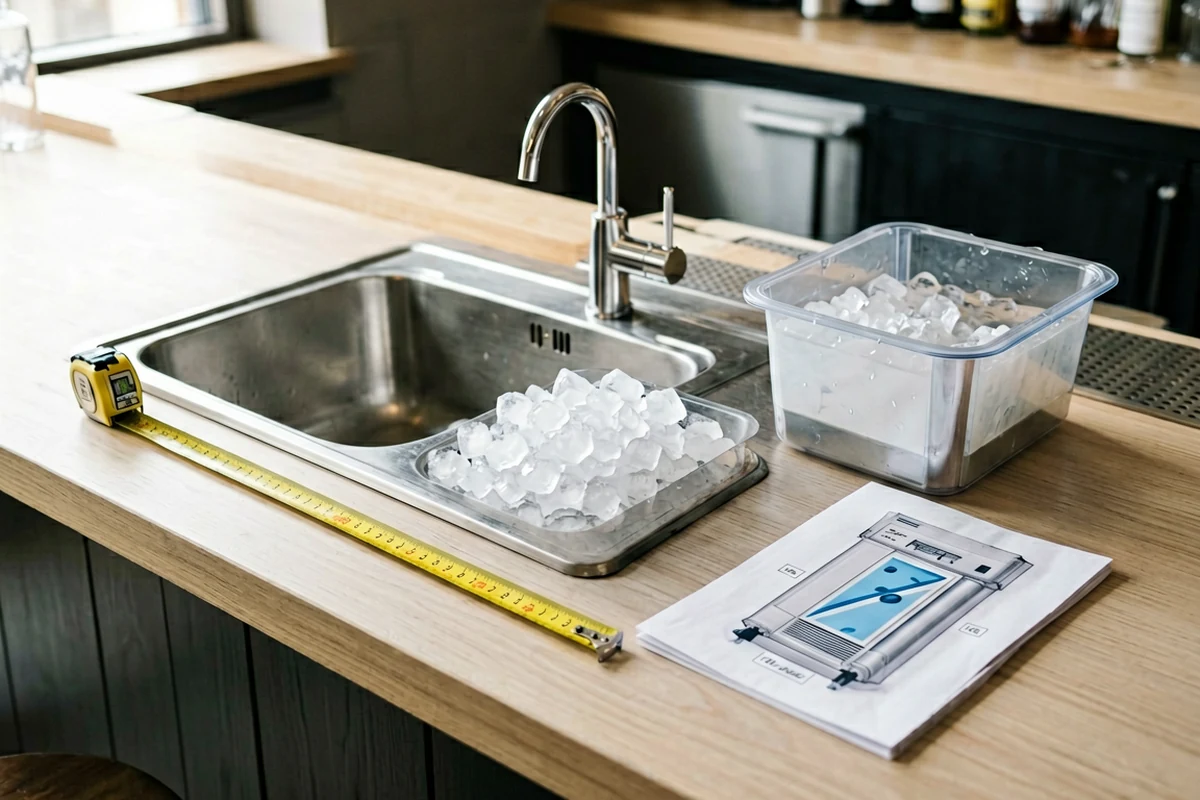
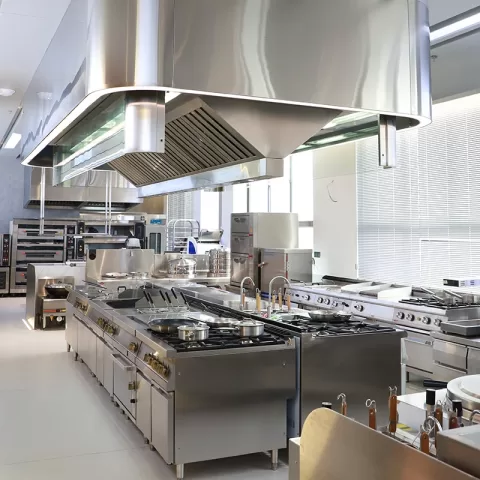
Start with the approved menu and production method. A limited menu may require refrigeration, preparation surfaces, reheating or cooking equipment, hot or cold holding, storage, washing, ventilation, and fire suppression.
An illustrative list may include:
Refrigerated preparation tables
Commercial microwave or rapid-cook equipment
Fryers, griddles, or ovens where the menu requires them
Food storage and shelving
Warewashing equipment
Exhaust and fire-suppression systems where applicable
Do not treat this as a universal minimum package. Confirm equipment from the menu, food-safety plan, utilities, ventilation design, and local approval requirements. Browse commercial kitchen equipment after the production scope has been defined. FDA Food Code 2022NSF food equipment sanitation certificationENERGY STAR commercial food service equipment
POS, Payments, Inventory, and Security
Evaluate:
POS terminals and handheld devices
Payment and contactless support
Tab management and pre-authorization
Menu and modifier configuration
Inventory integration
User permissions and audit logs
Data export and accounting integration
Offline operation
Support coverage
Security cameras and secure storage
Request a live workflow demonstration using the bar's actual order, tab, split-payment, refund, and closing procedures.
Sanitation, Safety, and Approval Checklist
Sanitation
Handwashing facilities
Warewashing method
Sanitizer and test tools
Clean and dirty storage separation
Cleanable food-contact and non-food-contact surfaces
Ice-handling tools
Drainage and cleaning access
General Safety
Appropriate fire extinguishers
First-aid supplies
Slip and trip controls
Emergency lighting and signage
Safe chemical storage
Equipment shutoffs
Authorities and Project Review
Health authority
Alcohol licensing authority
Building department
Fire authority
Accessibility reviewer
Plumbing and electrical reviewers
The FDA Food Code is a model code and does not replace the requirements adopted by the state or locality. FDA Food Code 2022
Plan Workflow, Service Access, and Equipment Clearances
Use a scaled plan to test:
Order entry and payment
Glass pickup
Ice access
Beverage preparation
Garnishing
Service handoff
Used-glass return
Waste removal
Cleaning and maintenance
Restocking during service
Separate employee workflow, accessible routes, and egress review. Do not assume one aisle dimension satisfies every function. Check actual equipment doors, drawers, panels, chair positions, and service clearances on the drawing.
Compare Equipment by Total Project Risk
Use a decision matrix instead of a simple save-or-splurge list.
| Criterion | Questions |
|---|---|
| Capacity | Can the equipment meet peak demand under project conditions? |
| Sanitation | Is it cleanable and appropriately certified where required? |
| Energy | Is consumption documented, and is an ENERGY STAR option available? |
| Utilities | Are electrical, water, drainage, gas, and ventilation requirements compatible? |
| Service | Are trained technicians and replacement parts available? |
| Warranty | Does commercial use meet warranty conditions? |
| Installation | Who delivers, connects, tests, and commissions it? |
| Lifecycle | What maintenance, cleaning, and replacement work is expected? |
Used equipment may be suitable when condition, sanitation, refrigerant, utility compatibility, warranty, parts, and lifecycle cost have been independently checked.
Common Bar Equipment Planning Mistakes
Before defining the equipment scope:
Sizing equipment before the menu and peak demand are defined.
Treating residential equipment as automatically suitable for commercial duty cycles, sanitation requirements, and warranties.
Omitting backup tools or a contingency plan for critical refrigeration and ice.
During design coordination:
Ordering fixed underbar equipment before utilities and approvals are coordinated.
Designing draft systems without line-length and cooling calculations.
Skipping a scaled workflow and maintenance-clearance review.
Before placing the order:
Ignoring service access, replacement parts, and technician availability.
Complete Bar Equipment Checklist
Use these columns in the project equipment schedule:
Category and item
Required or optional
Quantity basis
Dimensions
Capacity
Electrical load
Water and drainage
Ventilation or gas
Sanitation certification
Energy certification
Local approval
Supplier
Lead time
Installation responsibility
Warranty and service contact
Core categories are underbar equipment, refrigeration, ice, draft systems, tools, glassware, washing, furniture, lighting, sound, kitchen equipment, POS, safety, cleaning, storage, and permits.
Turn the Checklist into a Project Equipment Schedule
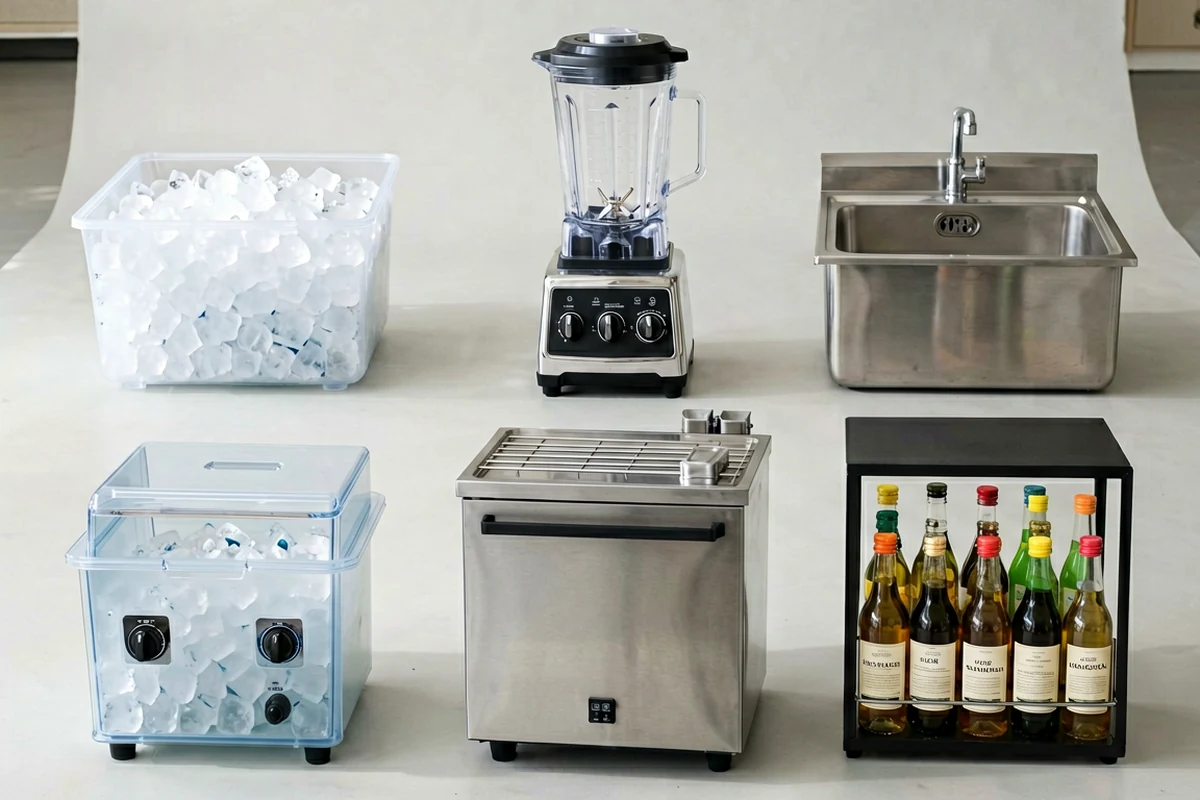
Before requesting final quotations, approve the menu, service volume, floor plan, utilities, equipment schedule, authority requirements, delivery route, installation sequence, and commissioning responsibilities.
RON GROUP can review the project scope against relevant bar-supply and kitchen-equipment categories. Request a bar equipment sourcing plan based on your menu, layout, target opening date, and destination market.
Sources
Get the week's latest industry information
-
Real-Life Professional Restaurant Case Studies
Explore Now
-
Create a unique restaurant with over 95,700+products
Explore Now
-
Protessional Free 3D Restaurant Design
Explore Now
-
Still Have Questions About Opening a Restaurant?
Explore Now

Sylvia
With 8 years in catering & hospitality industry, sales manager of Ron Group, specialise in providing one stop solutions to restaurants, hotels and weddings.
Discover Our Exclusive Products
Explore our extensive range of restaurant and hotel supplies designed to enhance your operations. Find the perfect solutions to meet your needs.
Browse Our ProductsFREE 3D DESIGN
Boost your restaurant's success with our free 3D design service. Start building the restaurant of your dreams today!
Explore 3D Design Case
RECOMMENDED CASES
-
La Rambla by Catalunya: Crafting Barcelona's Soul in Hong Kong - Custom Furniture Excellence
RON Group's custom Spanish-inspired furniture elevates La Rambla with artisanal aesthetics...
Learn More -

Cardinal Point: Elevating Outdoor Seating with Tailored Cushion Upgrades
Discover how Cardinal Point transformed its outdoor dining experience with custom cushions, achievin
Learn More
RECOMMENDED BLOGS
-

Bar Glassware 101: Types, Names, Uses, and How to Stock Your Bar
Learn the 10 core bar glassware types, names, and uses. Discover how to stock your bar with the right glasses for cocktails, beer,...
Sylvia2026-07-26 -
Complete Bar Equipment List for Opening a Bar
Plan a complete commercial bar equipment list by menu, service volume, refrigeration, ice, glassware, utilities, sanitation,...
Sylvia2026-06-11 -

Low Budget Restaurant Interior Design: 2026 Trends
Prioritize a low-budget restaurant interior by protecting code, operations, durability, accessibility, and phased design decisions...
Sylvia2026-04-04
Subscribe to RON GROUP
Stay up-to-date with the latest industry insights and expert advice. Together, we'll create your ideal restaurant.