






Content
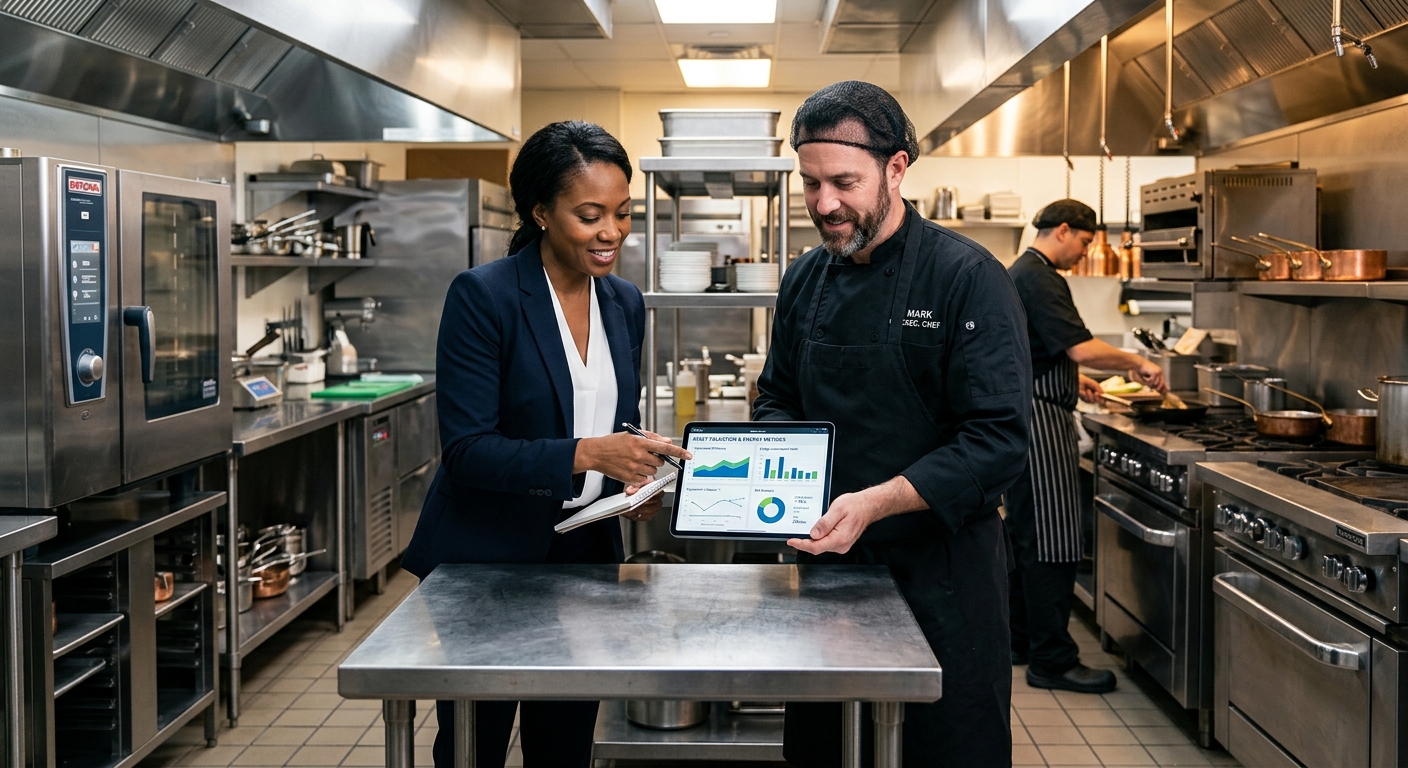
TECHNICAL NOTE // KEY ENGINEERING STANDARD
Commercial Sourcing & Engineering Standard: High-turnover hospitality environments require rigorous commercial-grade compliance (ASTM, NFPA 96, NSF/ANSI, and BIFMA engineering standards). Standard residential-grade items experience rapid fatigue failure, escalating long-term Total Cost of Ownership (TCO).
EXECUTIVE MANDATE // PROCUREMENT COMPLIANCE AUDIT
Procurement Compliance Audit: Verify all factory test certificates, utility load calculations (kW, voltage, phase, and ventilation CFM requirements), and manufacturer warranties prior to final procurement dispatch.
Executive Summary: The Paradigm Shift in Hospitality Asset Valuation
The commercial kitchen, traditionally viewed as a utilitarian production center, has evolved into a complex financial ecosystem where capital allocation, operational efficiency, and regulatory compliance intersect with increasing volatility. For hotel owners, F&B directors, and hospitality investors, the era of evaluating equipment based solely on sticker price and immediate availability has definitively ended. The modern hospitality landscape-characterized by shrinking profit margins, labor scarcity, rising utility costs, and stringent environmental regulations-demands a sophisticated, data-driven understanding of Return on Investment (ROI) and Total Cost of Ownership (TCO).
This report serves as an exhaustive financial and operational blueprint for the RON Group Global audience. It deconstructs the methodology required to calculate the true financial performance of commercial kitchen equipment, moving beyond basic amortization schedules to incorporate multi-variable analyses. We explore the profound economic implications of energy density, the "hidden" inflation of water and sewage rates, and the looming capitalization cliffs presented by environmental mandates.
By synthesizing data from federal regulatory bodies, industry performance benchmarks, and advanced financial modeling, this document establishes a rigorous decision-making framework. It posits that kitchen equipment must be managed not merely as depreciating operational necessities, but as strategic financial instruments capable of delivering measurable yield, hedging against inflation, and securing long-term enterprise value.
Part I: The Macro-Economic Context of Kitchen Asset Management
To accurately calculate ROI, one must first understand the economic theater in which these assets operate. The hospitality sector is currently navigating a "perfect storm" of inflationary pressures that distort traditional payback periods and necessitate a more dynamic approach to capital expenditure (CAPEX).
1.1 The Erosion of Margins and the Efficiency Imperative
Historically, restaurant and hotel food service operations operated with a buffer that allowed for inefficiencies in utility usage and labor allocation. That buffer has evaporated. The traditional "30/30/30/10 rule"-allocating 30% to food, 30% to labor, 30% to overhead, and retaining 10% profit-is under siege. As noted in recent breakdowns of restaurant operating costs , labor costs in many markets have breached the 35% threshold, while food costs remain volatile due to supply chain disruptions. In this environment, the "overhead" wedge-specifically utilities and maintenance-becomes the primary lever for margin protection.
Equipment selection is the most significant determinant of this overhead. A decision to purchase a standard-efficiency deep fryer over a high-efficiency model is not a one-time savings of capital; it is a decision to lock the operation into a higher operational expenditure (OPEX) structure for the next seven to ten years. Conversely, investing in energy-efficient infrastructure acts as a hedge against future utility rate hikes, effectively "buying down" the future cost of doing business.
1.2 The "War for Talent" and the Role of Equipment
The labor market for skilled culinary professionals is tighter than at any point in recent history. This scarcity drives up wages and increases the cost of turnover. Consequently, the ROI of kitchen equipment can no longer be calculated solely on energy savings; it must be calculated on "Labor Aversion" and "Retention Value."
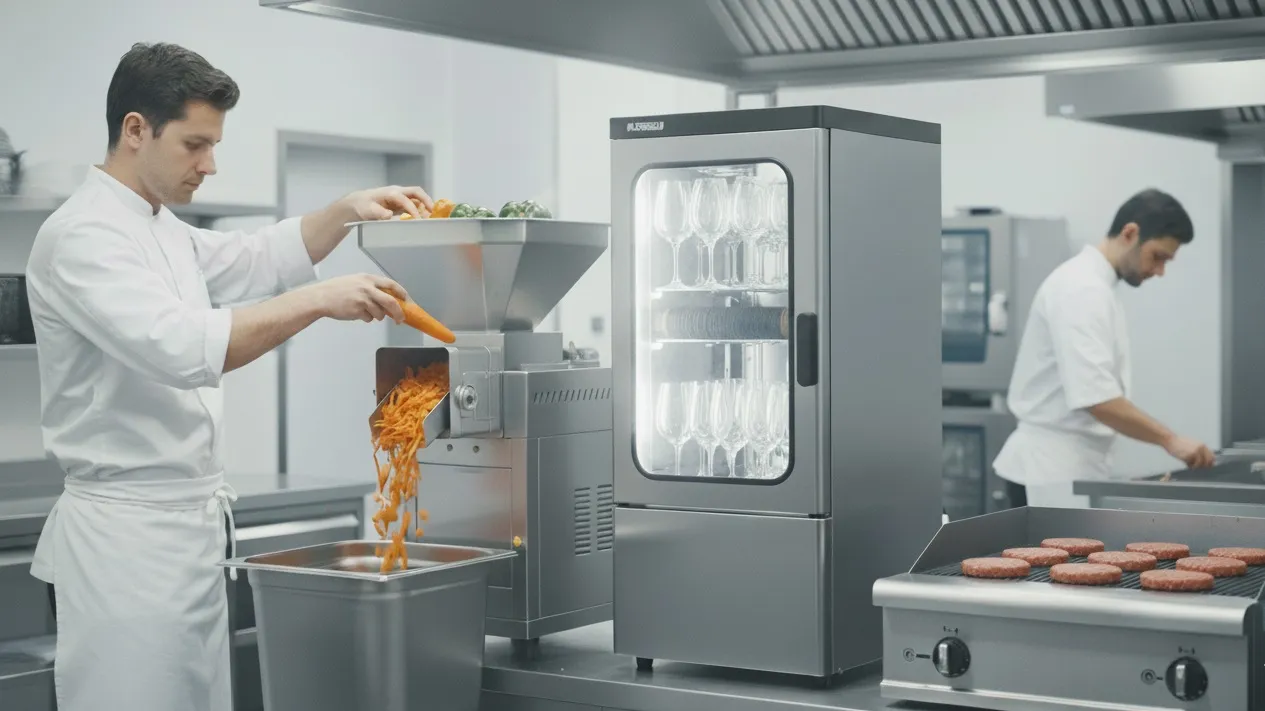
Equipment that automates repetitive, low-skill tasks-such as vegetable slicers or automatic glass polishers-does not just save hours; it changes the nature of the work. It allows operators to utilize labor budgets for high-value tasks that directly impact guest satisfaction, rather than backend processing. Furthermore, equipment that reduces physical strain (ergonomic design) or improves the thermal comfort of the kitchen contributes to lower turnover rates and reduced Workers' Compensation claims. These "soft" costs are quantifiable and must be integrated into the TCO model.
1.3 The Regulatory Cliff: EPA SNAP 2025
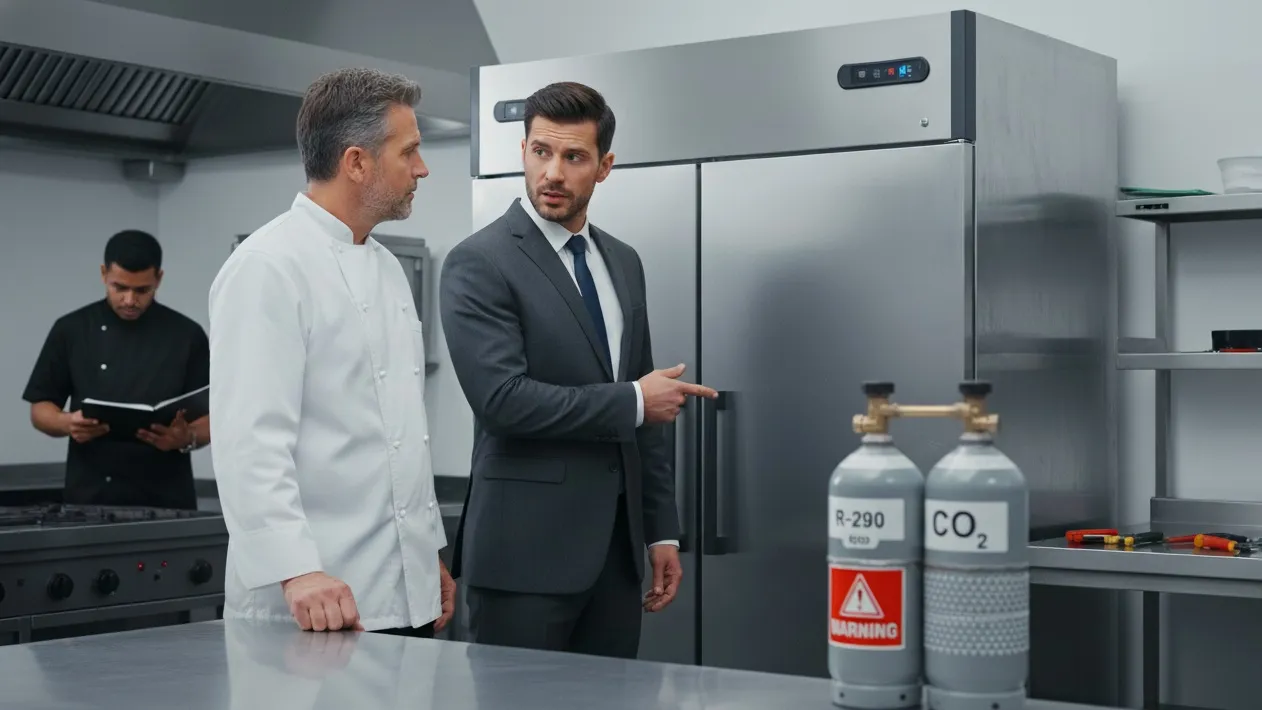
Perhaps the most urgent macro-factor is the regulatory environment regarding refrigerants. The American Innovation and Manufacturing (AIM) Act and the EPA's Significant New Alternatives Policy (SNAP) are phasing out high-Global Warming Potential (GWP) hydrofluorocarbons (HFCs). Effective January 1, 2025, the EPA is restricting the installation of certain new equipment using legacy refrigerants.
This creates a "Compliance Asset Class." Equipment purchasing decisions made in 2024 must account for the risk of asset stranding-owning equipment that is legal to run but increasingly expensive to service as refrigerant supplies dwindle. The ROI calculation for a walk-in cooler today must include a risk premium for the refrigerant type it uses, favoring low-GWP alternatives like R-290 (propane) or CO2, which are future-proof against these regulatory shifts.
Part II: The Theoretical & Mathematical Framework of ROI & TCO
2.1 Redefining ROI in the Foodservice Context
Return on Investment (ROI) is the fundamental metric for capital allocation, yet in the kitchen, it is frequently misapplied . The standard formula-$ROI = (Net Profit / Cost of Investment) \times 100$-assumes a direct revenue correlation. However, kitchen assets generally fall into two distinct financial categories, each requiring a modified calculation methodology.
A. Revenue Generating Assets These assets directly drive top-line growth. They include espresso machines, soft-serve ice cream dispensers, or specialized pizza ovens that enable a new menu category.
- The Calculation: For these assets, "Net Profit" is the gross margin of the new product sales minus the specific operating costs of the machine.
- Example: A $20,000 investment in a high-end coffee machine that generates an additional $24,000 in revenue annually. After deducting the cost of goods sold (COGS) and specific labor, if the net profit is $4,000, the first-year ROI is 20%.
- Nuance: The calculation must account for the ramp-up period (marketing the new offering) and the cannibalization risk (does selling a latte reduce the sale of regular coffee?).
B. Cost Defending Assets The majority of kitchen infrastructure-dishwashers, ventilation, refrigeration, fryers-defends profit margins rather than generating new revenue. For these assets, "Net Profit" is replaced by "Annualized Operational Savings."
- The Calculation: $ROI = (Annual Savings / Incremental Cost) \times 100$.
- Incremental Cost: This is crucial. You are often comparing the cost of a premium unit against a baseline unit. If a standard fryer costs $1,500 and an efficient one costs $3,500, the investment is the $2,000 difference , and the ROI is calculated based on how quickly the savings recoup that $2,000.
2.2 The Total Cost of Ownership (TCO) Imperative
Total Cost of Ownership is the holistic financial view, essential for assets with long lifecycles. As explained in detailed guides on Total Cost of Ownership , TCO exposes the fallacy of "low bid" procurement. A piece of equipment with a low acquisition price but high energy and repair costs can be 18-34% more expensive over a 10-year period than a premium alternative.
The comprehensive TCO formula for commercial kitchens is:
TCO = I_c + E_c + W_c + L_c + M_c + D_c - R_v
Where:
- I_c: Initial Acquisition Cost (Purchase Price + Freight + Installation + Training). Note: You can significantly lower this variable by sourcing quality furniture and equipment at factory prices .
- E_c: Energy Costs (Electricity/Gas consumption).
- W_c: Water/Sewer Costs (Water usage + Sewage multipliers).
- L_c: Labor Costs (Operational labor + Cleaning time).
- M_c: Maintenance Costs (Preventative + Corrective + Parts).
- D_c: Downtime Costs (Lost revenue + Emergency mitigation).
- R_v: Residual Value (Resale or scrap value).
Key Insight: Energy bills alone can consume 45% of equipment lifetime costs. Unscheduled downtime can cost operations between $550 and $1,200 per hour. Excluding these variables results in a "fantasy" budget that inevitably leads to operational variances.
2.3 The Time Value of Money: Payback Period and NPV
For hotel owners managing large portfolios, the Payback Period is a critical liquidity metric. It answers: "How long until I get my cash back?"
- Benchmark: A payback period of 3 to 5 years is the standard acceptance threshold for technology and heavy machinery in hospitality.
- High-Efficiency Data: Commercial refrigerators often demonstrate a payback of ~2.8 years, while steam kettles may take ~4.1 years.
- Net Present Value (NPV): In an environment of higher interest rates, future savings are worth less than present cash. TCO models should discount future cash flows to understand if the upfront premium is truly justified by future savings.
Part III: The Energy Equation - Electricity, Gas, and Thermodynamic Efficiency
Energy consumption is the largest variable operational cost in the kitchen. With utility rates rising globally, the energy density of equipment determines its long-term viability. The U.S. EPA and Department of Energy (DOE) provide critical benchmarks through the Energy Star program.
3.1 The Energy Star Premium
Energy Star-certified commercial food service (CFS) equipment is engineered to reduce energy consumption by 10% to 50% compared to standard models. This efficiency is not magic; it is the result of superior insulation, variable speed drives (VSD), and advanced heat exchange technologies.
Table 1: Annual Operating Cost Comparison (Standard vs. Efficient)
| Equipment Type | Annual Energy Cost (Standard) | Annual Energy Cost (Efficient) | Annual Savings | Payback Period (Years) |
|---|---|---|---|---|
| Commercial Refrigerator | $2,100 | $1,450 | $650 | 2.8 |
| 60-Gallon Steam Kettle | $3,800 | $2,900 | $900 | 4.1 |
| Convection Oven (Electric) | $4,000 | $3,080 | $920 | 3.2 |
| Commercial Dishwasher | $5,133 | $3,517 | $1,616 | 1.5 |
Source: Derived from Energy Star Commercial Food Service Newsletters and DOE data.
Strategic Insight: The savings are compounded when considering the Ambient Heat Load . Inefficient gas equipment radiates massive amounts of waste heat into the kitchen. This forces the building's HVAC system to work harder to maintain a safe working temperature. For every 1 kWh of electricity saved by an efficient appliance, there is often an additional ~0.3 kWh saved in HVAC cooling load. This secondary ROI is rarely calculated but significantly impacts the property's total energy footprint.
3.2 The Shift to Induction and Electric
The industry is seeing a structural shift from gas to electric, specifically induction cooking.
- Efficiency: Gas burners are notoriously inefficient, transferring only 40-50% of energy to the food. Induction transfers 90%+.
- Cost Dynamics: While electricity is often more expensive per unit than natural gas, the efficiency gain of induction can neutralize this cost difference. Furthermore, as municipalities move to decarbonize (banning gas hookups in new construction in some regions), investing in electric infrastructure is a future-proofing strategy.
- New Standards: The EPA's Version 1.0 specification for commercial electric cooktops introduces a minimum cooking efficiency of 80%, offering lifetime savings of roughly $200 and 1,800 kWh per hob.
3.3 Managing Idle Load
A critical "hidden" energy thief is idle load-energy consumed when the machine is on but not cooking. According to guidance on purchasing energy-efficient dishwashers , a standard dishwasher might draw 0.87 kW while idle, whereas an Energy Star model might draw only 0.55 kW, or even enter a "sleep" mode drawing near zero.
Operational ROI: Equipment with intelligent "sleep" modes or fast recovery times allows staff to turn equipment off during slow periods without fear of impacting service speed. This behavior modification, enabled by technology, drives substantial ROI.
Part IV: The Water & Waste Nexus
Water costs are rising faster than energy costs in many jurisdictions, driven by aging infrastructure and scarcity. For 2025, cities are reporting significant rate hikes. For example, Cincinnati's 2025 water charges and Birmingham, MI's rate adjustments reflect a trend of 5% to 20% increases. This escalation fundamentally alters the ROI for water-intensive assets.
4.1 The "Double Bill" of Water and Sewer
It is critical for F&B managers to understand that they pay for water twice: once to bring it in (water rate) and once to send it out (sewer rate).
- The Multiplier: Sewer rates are often calculated as a percentage of metered water usage. As seen in NYC Water Board regulations , the sewer rate can be as high as 159% of the water charge.
- Implication: Saving one gallon of water saves the cost of 2.59 gallons (1.0 water + 1.59 sewer). This dramatic multiplier means that water-saving technologies have some of the fastest payback periods in the industry.
4.2 Commercial Dishwashers: The ROI Champions
The commercial dishwasher is the largest consumer of water in the kitchen. The efficiency gap between legacy models and modern Energy Star units is profound.
Table 2: Dishwasher Water Consumption and Financial Impact
| Machine Type | Standard Usage (Gal/Rack) | Energy Star Usage (Gal/Rack) | Water Saved (Gallons) | 10-Year Cost Savings |
|---|---|---|---|---|
| Undercounter | 1.70 | 0.86 | 45,990 | ~$9,198 |
| Door Type (High Temp) | 1.29 | 0.89 | 43,800 | ~$8,760 |
| Single Tank Conveyor | 0.79 | 0.70 | 29,565 | ~$5,913 |
| Multi-Tank Conveyor | 0.54 | 0.37 | 111,690 | ~$22,338 |
Cost Assumption: Combined Water/Sewer rate of $20.00 per 1,000 gallons (conservative blend of rising 2025 rates).
Analysis: A multi-tank conveyor dishwasher can save over $22,000 in water/sewer costs alone over a decade. When combined with the energy savings (heating less water), the TCO advantage is undeniable.
4.3 Spray Valves and Pre-Rinse ROI
The humble pre-rinse spray valve is often the lowest-hanging fruit for ROI. As highlighted in fact sheets on commercial dishwashers , replacing a 2.6 gallon-per-minute (gpm) valve with a 1.6 gpm valve saves 1.0 gpm. If used 3 hours a day, this saves roughly 65,000 gallons annually. With a high-efficiency valve costing ~$100, the payback period is less than one month , with an annual ROI of over 1,000% .
Part V: Labor Economics & Automation
In 2024 and beyond, labor is the most volatile and expensive line item on the P&L, typically consuming 25-35% of revenue. The "ROI of Automation" is derived from the ability to decouple production volume from labor hours.
5.1 Vegetable Preparation: The Speed of Profit
Manual vegetable preparation-slicing, dicing, chopping-is the bottleneck of the prep kitchen. It is slow, inconsistent, and dangerous.
- Scenario: A kitchen spends 3 hours daily hand-cutting vegetables. At $18/hour, this costs $19,710 annually.
- Automation: A commercial processor can process 11-17 pounds per minute. The same 3-hour task is completed in roughly 30 minutes.
- Savings: 2.5 hours/day saved = $16,425 annual labor savings.
- Payback: With a machine cost of ~$2,500, the ROI is over 600% in year one.
- Secondary Benefits: Machine cuts are uniform, ensuring consistent cooking times and presentation. There is also a significant reduction in waste (higher yield from the vegetable), which lowers food costs.
5.2 Automated Glass Polishing: Breaking the Cycle of Breakage
For hotel bars, banquet halls, and high-volume restaurants, polishing glassware is a silent profit killer.
- Speed: Automated glass polishers are 5x faster than manual polishing. One staff member with a machine can polish 250-500 glasses per hour.
- Breakage ROI: Manual polishing involves torque (twisting the glass), which is the primary cause of stemware breakage. Machines use hot air and soft microfiber brushes, virtually eliminating breakage. If a hotel breaks 20 glasses a week at $5/glass, the annual cost is $5,200. Eliminating this saves the equivalent of the machine's cost in roughly one year, irrespective of labor savings.
- Hygiene: Automated drying removes the "dirty towel" variable, reducing cross-contamination risk-a critical compliance factor in the post-pandemic era.
5.3 The Hidden Cost of Manual Labor: Insurance and Safety
While difficult to itemize on a single receipt, the reduction of injury risk is a TCO factor. Kitchens are high-risk environments for cuts (knives) and repetitive strain injuries (polishing/chopping). A single Workers' Compensation claim can increase insurance premiums for years. Investing in safety-focused automation demonstrates a commitment to safety that can be leveraged during insurance renewals to negotiate better rates.
Part VI: The Regulatory Horizon - EPA SNAP 2025
The most significant "Black Swan" event for kitchen ROI is the regulatory transition of refrigerants. The EPA's Technology Transitions Rule under the AIM Act is forcing a hard stop on high-GWP refrigerants.
6.1 The 2025 Compliance Mandate
Effective January 1, 2025 , the EPA restricts the installation of new refrigeration systems using high-GWP HFCs (like R-404A and R-134a) in specific subsectors, including retail food refrigeration and cold storage. The Technology Transitions HFC restrictions outline a phase-down where production of these HFCs is being aggressively cut, guaranteeing that the cost of legacy refrigerants will skyrocket due to scarcity.
6.2 The Risk of Asset Stranding
Purchasing a "bargain" refrigerator today that uses R-404A is a financial trap.
- Maintenance Cost Spike: As R-404A supply dwindles, a simple leak repair in 2027 could cost 5x-10x more than today due to the cost of the gas.
- Resale Value: The resale market for non-compliant equipment will collapse. No one will want to buy a used unit that uses a banned/scarce gas.
- The TCO Adjustment: ROI models for refrigeration MUST assume zero residual value ($R_v=0$) for HFC units and should budget for significantly higher maintenance costs in years 5-10.
6.3 The Low-GWP Opportunity
The industry is pivoting to R-290 (Propane) and R-600a (Isobutane). These hydrocarbons are thermodynamically superior; R-290 units typically consume 20-40% less energy than their HFC predecessors. Furthermore, these refrigerants have near-zero GWP, meaning they are immune to future climate regulations. Investing in R-290 equipment is an "inflation-proof" strategy for the refrigeration fleet.
Part VII: Asset Lifecycle Management
The operational lifespan of equipment is a variable that can be managed, but knowing when to "pull the plug" is a financial art form. For more on this, see our guide on how often restaurants replace furniture and equipment .
7.1 The "Repair vs. Replace" Matrix
F&B managers often fall victim to the "Sunk Cost Fallacy"-continuing to repair a unit because they have already spent money fixing it. A disciplined approach uses the 50% Rule :
- Guideline: If the cost of a repair exceeds 50% of the equipment's current replacement value , replacement is the financially sound choice.
However, this rule is blunt. A refined Decision Matrix includes:
- Age Factor: Is the equipment past 60% of its expected life? (e.g., a fryer > 6 years).
- Efficiency Gap: Will a new unit reduce utility bills? Calculate the "Energy Subsidy"-if a new unit saves $50/month, that is $3,000 over 5 years that subsidizes the purchase price.
- Reliability Cost: What is the cost of downtime? If a walk-in fails twice a year, risking $5,000 in inventory, the "cost" of the old unit is not just the repair bill-it is the risk exposure.
7.2 Preventative Maintenance (PM) as ROI
Maintenance should be budgeted as a fixed cost, typically 1.5% to 3% of annual revenue .
- The ROI of PM: Regular cleaning of condenser coils can reduce energy consumption by 10-15% and extend compressor life by years. A $500 annual service contract that extends a $5,000 unit's life from 7 years to 10 years yields a high return by deferring CAPEX.
- Warranty Integrity: Most warranties are conditional on proof of maintenance (e.g., changing water filters). Failing to maintain the unit voids the "insurance" of the warranty, destroying TCO value.
Part VIII: Strategic Equipment Analysis
We apply the TCO framework to three critical equipment decisions.
8.1 The Oven Debate: Combi vs. Convection
- Convection: Low entry price, simple, reliable for dry baking.
- Combi (Combination): High entry price, complex, offers steam + convection.
The Financial Case for Combi:
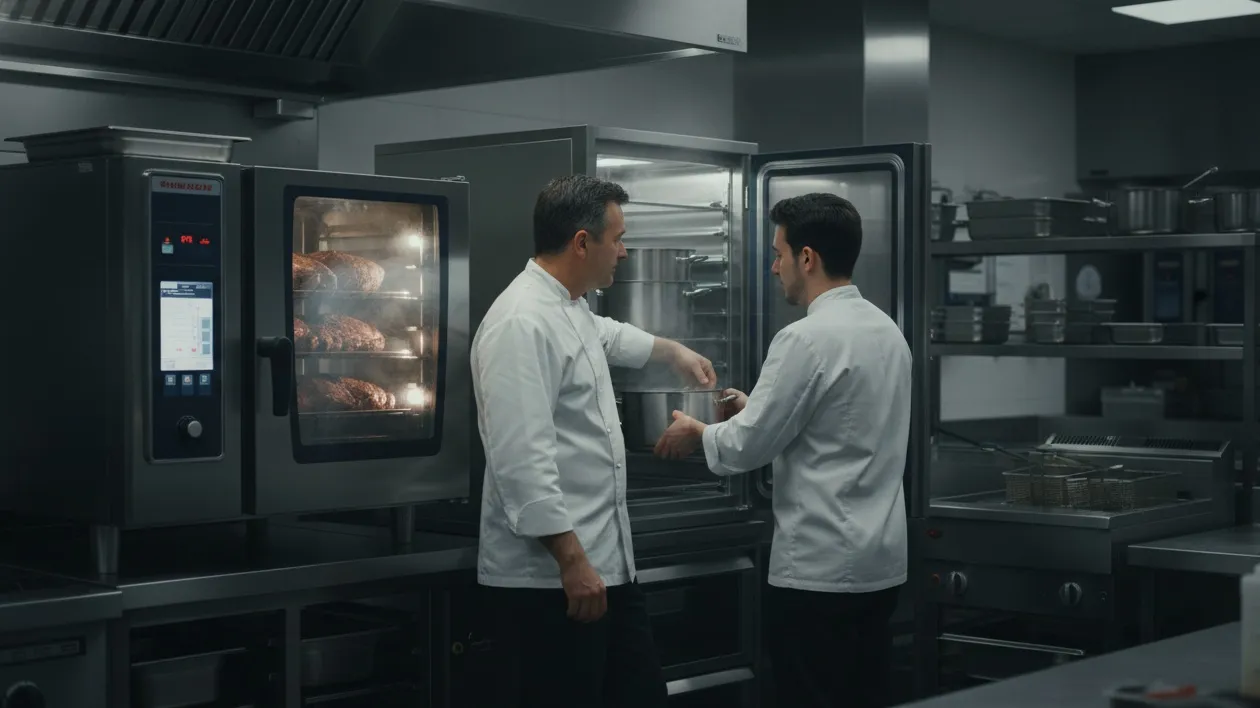
- Yield: Combi ovens cook proteins with humidity, reducing shrinkage by up to 20% compared to dry convection. For a hotel roasting prime rib, 10% more yield equals thousands of dollars in "found revenue" annually.
- Consolidation: One Combi can replace a convection oven, a steamer, and a holding cabinet. This saves roughly 3-4 linear feet of hood space. In construction, hood space costs ~$1,500 per linear foot to install. Saving space reduces the construction budget and ongoing ventilation energy costs.
- Versatility: Combis allow for sous-vide style cooking overnight (unattended), effectively adding a "ghost shift" of production without labor costs.
8.2 Blast Chillers: Food Safety and Waste Reduction
Blast chillers are often seen as luxury items, but their ROI is rooted in Waste Reduction and Labor Scheduling .
- Labor: They allow kitchens to cook in bulk (e.g., making 50 gallons of soup once a week vs. 10 gallons daily) and safely chill it. This "batch cooking" optimizes labor efficiency.
- Waste: By rapidly cooling food through the "Danger Zone," shelf life is extended from 3 days to 5+ days, significantly reducing spoilage waste.
8.3 High-Efficiency Fryers
- Oil Savings: Advanced fryers use roughly 40-50% less oil to fill the vat and have filtration systems that extend oil life by days.
- The Math: If a fryer saves $3,000 in oil costs annually (a conservative estimate for high volume), the payback on the "premium" price of the fryer is often less than 12 months.
Part IX: The Hidden Costs of Installation & Infrastructure
A common pitfall in budgeting is focusing on the "Box Price" and ignoring the "Deployed Cost." For a comprehensive look at budgeting, review our Restaurant Equipment Sourcing Guide .
9.1 The "Installed Cost" Multiplier
The sticker price is typically only 70-80% of the final cost to get the equipment running.
- Installation: Professional installation, calibration, and utility connections typically cost 10-20% of the equipment price.
- Infrastructure: Installing a new high-capacity ice machine might require upgrading a floor drain or running a new electrical circuit. Fit-out costs can be substantial.
- Contingency: It is recommended to allocate a 30% contingency budget for hidden installation costs such as grease trap upgrades, ventilation adjustments, and code compliance retrofits.
9.2 Water Quality: The Warranty Killer
Water filtration is not optional. Limescale is the primary killer of steamers, combi ovens, and ice machines.
- Risk: Most manufacturers will void the warranty if water quality standards are not met.
- ROI: A $300 filter system protects a $20,000 asset. The ROI is effectively infinite because it insures the entire capital investment against premature failure.
Part X: Financial Engineering for Hospitality
10.1 Section 179 and Bonus Depreciation
For US-based operations, the tax code provides powerful levers to improve first-year ROI.
- Section 179: As detailed in IRS Publication 946 , businesses can deduct the full purchase price of qualifying equipment up to $1,220,000 (2024 limit). Example: Buying $50,000 of equipment allows a $50,000 deduction. At a 21% corporate tax rate, this saves $10,500 in cash taxes, effectively reducing the equipment cost to $39,500.
- Bonus Depreciation: This allows for accelerated depreciation of assets. However, as noted in recent financial updates on depreciation changes , this benefit is phasing down: 60% in 2024 , 40% in 2025 , and 20% in 2026 . There is a financial incentive to accelerate purchases into the 2024/2025 tax years to capture higher depreciation rates before they decline.
10.2 Fire Suppression and Insurance Discounts
Investing in safety yields financial returns through insurance premiums.
- Discounts: Insurance carriers often offer premium discounts ranging from 5% to 15% for facilities with fully compliant, maintained fire suppression systems (UL 300). Advanced monitoring can push this even higher.
- Underwriting: Compliant equipment places the business in a lower risk class, protecting against rate hikes.
10.3 Leasing vs. Buying
- Leasing: Preserves working capital. It shifts the cost from CAPEX to OPEX. It is ideal for rapidly depreciating assets (like ice machines) or for startups with cash flow constraints.
- Buying: Offers the lowest TCO (no interest payments) and allows for the tax benefits of Section 179. Ideal for long-life assets (ovens, walk-ins) in established businesses with cash reserves.
Conclusion: The Strategic Asset Management Approach
The calculation of ROI for commercial kitchen equipment is a multidimensional exercise that transcends simple arithmetic. It requires the integration of engineering data (energy/water), operational metrics (labor/yield), risk management (insurance/compliance), and fiscal strategy (tax/depreciation).
For RON Group Global's clients-hotel owners and F&B managers-the imperative is clear: The equipment with the lowest price tag frequently carries the highest cost .
To maximize financial performance, operators must:
- Adopt TCO over Price: Use the TCO formula to evaluate every asset costing over $2,000.
- Prioritize Efficiency: Leverage Energy Star and water-saving technologies to insulate the business against the rising tide of utility inflation.
- Automate to Elevate: Invest in labor-saving machinery to mitigate wage inflation and improve staff retention.
- Future-Proof: Ensure all refrigeration procurement adheres to 2025 EPA SNAP regulations to avoid asset stranding.
- Leverage the Tax Code: Utilize Section 179 to subsidize capital improvements, but act swiftly to capture fading bonus depreciation rates.
By treating kitchen equipment as a portfolio of financial assets rather than mere tools, hospitality leaders can unlock significant value, turning the "back of house" from a cost center into a driver of enterprise value.
Ready to optimize your hospitality assets? Contact RON Group Global today to discuss how our strategic sourcing and hotel furniture collections can improve your bottom line.
Get the week's latest industry information
-
Real-Life Professional Restaurant Case Studies
Explore Now
-
Create a unique restaurant with over 95,700+products
Explore Now
-
Protessional Free 3D Restaurant Design
Explore Now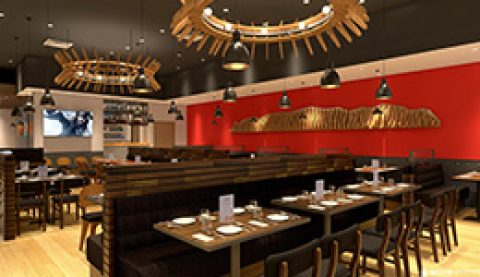
-
Still Have Questions About Opening a Restaurant?
Explore Now

Sylvia
With 8 years in catering & hospitality industry, sales manager of Ron Group, specialise in providing one stop solutions to restaurants, hotels and weddings.
Discover Our Exclusive Products
Explore our extensive range of restaurant and hotel supplies designed to enhance your operations. Find the perfect solutions to meet your needs.
Browse Our ProductsFREE 3D DESIGN
Boost your restaurant's success with our free 3D design service. Start building the restaurant of your dreams today!
Explore 3D Design Case
RECOMMENDED CASES
-
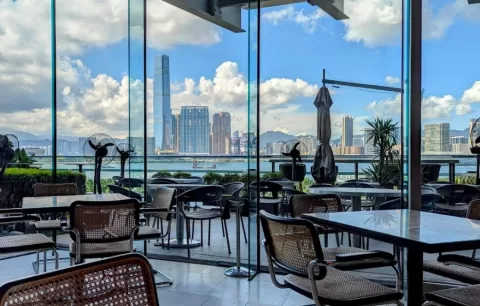
La Rambla by Catalunya: Crafting Barcelona's Soul in Hong Kong - Custom Furniture Excellence
RON Group's custom Spanish-inspired furniture elevates La Rambla with artisanal aesthetics...
Learn More -

Cardinal Point: Elevating Outdoor Seating with Tailored Cushion Upgrades
Discover how Cardinal Point transformed its outdoor dining experience with custom cushions, achievin
Learn More
RECOMMENDED BLOGS
-

Bar Glassware 101: Types, Names, Uses, and How to Stock Your Bar
Learn the 10 core bar glassware types, names, and uses. Discover how to stock your bar with the right glasses for cocktails, beer,...
Sylvia2026-07-26 -
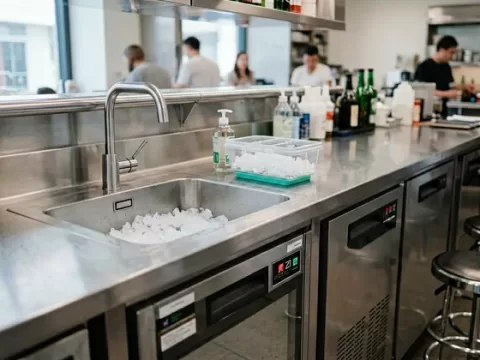
Complete Bar Equipment List for Opening a Bar
Plan a complete commercial bar equipment list by menu, service volume, refrigeration, ice, glassware, utilities, sanitation,...
Sylvia2026-06-11 -

Low Budget Restaurant Interior Design: 2026 Trends
Prioritize a low-budget restaurant interior by protecting code, operations, durability, accessibility, and phased design decisions...
Sylvia2026-04-04
Subscribe to RON GROUP
Stay up-to-date with the latest industry insights and expert advice. Together, we'll create your ideal restaurant.