

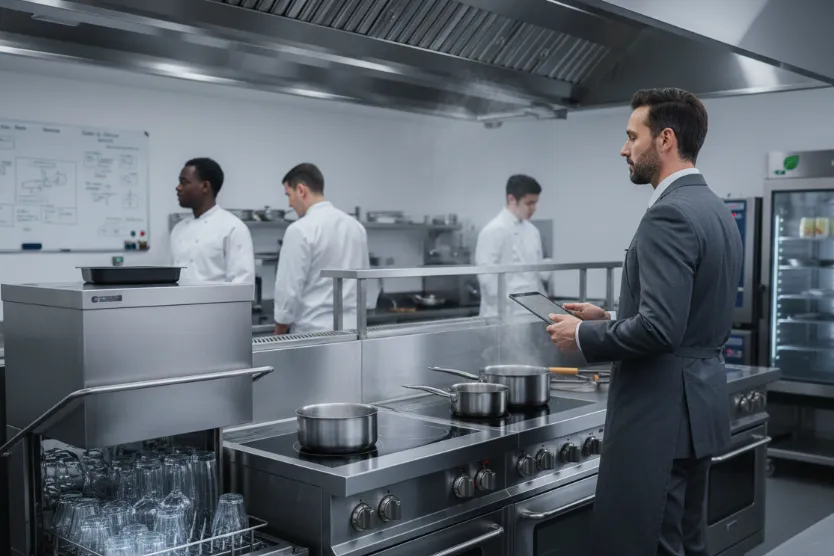
Common Mistakes in Hotel Kitchen Equipment Investment
Learn how hotel investors can use TCO, smart layout, Energy Star equipment, and compliance‑ready design to cut lifetime costs and turn kitchens into profit engines.
Content
Executive Summary: The Kitchen as a Profit Engine
In the high-stakes environment of hotel development and hospitality management, asset managers and investors frequently misidentify the commercial kitchen as a cost center—a necessary backend utility that consumes capital through equipment procurement and space allocation. This fundamental misconception drives a cascade of investment errors that can plague hotel operations for decades, eroding net operating income (NOI) and compromising asset value. A hotel kitchen is, in reality, a high-volume manufacturing plant, a logistical hub, and the primary engine for Food and Beverage (F&B) revenue, which often constitutes 30% to 40% of a property’s total revenue stream. The divergence between a successful hospitality venture and a struggling asset often lies in the invisible infrastructure of the back-of-house (BOH). While front-of-house aesthetics drive initial guest acquisition, the kitchen’s operational efficiency determines the margin, speed of service, quality consistency, and ultimately, the asset’s long-term viability.
When investors and project developers approach kitchen equipment procurement with a short-term, CAPEX-reduction mindset, they inadvertently lock in years of inflated OPEX, labor inefficiencies, and regulatory risks. The decision to save $5,000 on a cooking suite today can result in $50,000 of excess utility and maintenance costs over the equipment’s lifecycle. Furthermore, the post-pandemic hospitality landscape has introduced new variables: chronic labor shortages, rising energy costs, and stringent hygiene regulations. In this context, equipment is no longer just “hardware”; it is a strategic tool for labor retention, energy hedging, and risk mitigation. This is a core principle we explore in our Restaurant Cost-Cutting Guide, which emphasizes sourcing quality items at factory prices.
This comprehensive report provides an exhaustive analysis of the common pitfalls in hotel kitchen equipment investment. It moves beyond superficial checklists to examine the structural, financial, and operational pathologies that result from poor decision-making. By leveraging data from industry standards, energy efficiency studies, and regulatory frameworks (including ASHRAE, OSHA, FDA Food Code, and EU Ecodesign directives), this document serves as a strategic guide for shifting from a procurement-based approach to a lifecycle-value operational strategy. The core thesis presented herein is that the “lowest bid” for kitchen equipment is invariably the most expensive option when viewed through the lens of Total Cost of Ownership (TCO). Errors in sizing, workflow integration, energy specification, and maintenance planning create a compound interest of inefficiency that erodes net profit. Conversely, strategic investment in intelligent, integrated, and compliant kitchen systems acts as a hedge against rising utility costs, labor shortages, and regulatory tightening.
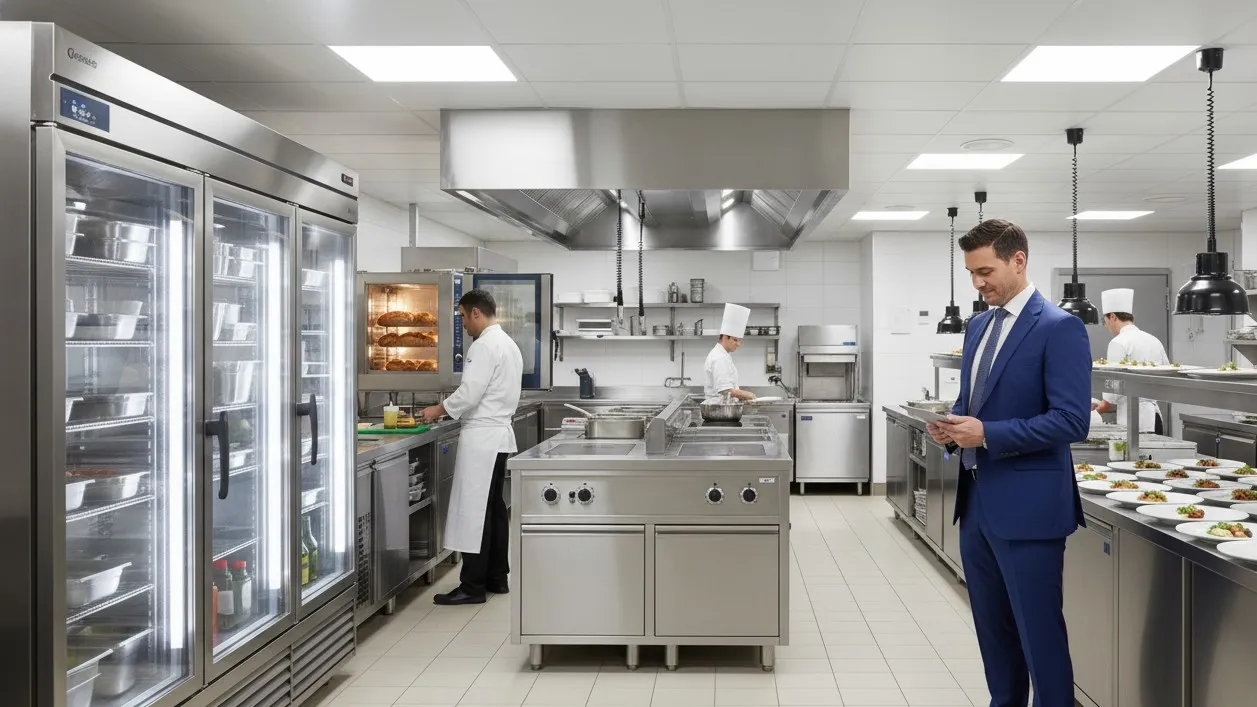
Section 1: The Macro-Economic Landscape of Hospitality Procurement
1.1 The Shifting Paradigm of Hotel F&B
The hospitality industry is navigating a period of profound transformation. Traditional hotel F&B models—often characterized by loss-leader restaurants and subsidized room service—are being replaced by profit-centric models demanding standalone viability. Hotel restaurants now compete directly with high-street dining establishments, requiring a level of culinary agility and operational efficiency that legacy kitchen designs cannot support. This shift necessitates a rigorous re-evaluation of how capital is allocated to back-of-house infrastructure.
Historically, hotel developers have treated kitchen equipment as a commodity, prioritizing volume purchasing agreements and initial discounts. However, this approach ignores the macroeconomic realities of the 2020s:
Energy Volatility: With global energy prices fluctuating wildly, the operational cost of gas and electricity has become a significant variable in the P&L. Kitchens are energy-intensive environments, consuming roughly 2.5 times more energy per square foot than other commercial spaces.
Labor Crisis: The hospitality sector faces a chronic shortage of skilled culinary labor. Equipment that requires excessive manual intervention, is difficult to clean, or creates an uncomfortable working environment directly contributes to staff turnover.
Supply Chain Fragility: The “just-in-time” repair model is broken. Reliance on equipment with poor reliability records or obscure supply chains leads to extended downtime, during which revenue generation ceases.
1.2 The Fallacy of Upfront Cost vs. Total Cost of Ownership (TCO)
One of the most pervasive errors in hospitality procurement is prioritizing the initial purchase price over the Total Cost of Ownership (TCO). Procurement teams, often incentivized to bring construction projects in under budget, frequently select equipment based solely on the line-item cost on a spreadsheet. This approach, while satisfying immediate budgetary constraints, fails to account for the operational reality that the purchase price represents only a fraction of the asset’s lifetime cost.
The TCO of commercial kitchen equipment comprises four distinct cost vectors that must be modeled during the feasibility phase:
Acquisition Cost: The invoice price, shipping, warehousing, and installation.
Energy and Utility Consumption: Electricity, gas, water, and sewage costs over the asset’s life (typically 10-15 years).
Maintenance and Repair: Preventative maintenance contracts, spare parts, and emergency service calls.
Operational Labor: The staff time required to operate, clean, and manage the equipment.
Data suggests that for energy-intensive units like refrigeration and cooking suites, energy consumption can exceed the initial purchase price within the first few years of operation. When investors choose a “budget” fryer or oven that lacks energy regulation or insulation, they are effectively signing a contract for higher monthly utility bills for the next decade. For example, a standard electric deep fat fryer can consume more than 18,000 kWh annually, a figure that highlights the massive, invisible drain on profitability when compared to high-efficiency models, as noted in reports on ENERGY STAR certified equipment.
The financial penalty of inefficient equipment is not linear; it is compounding. Inefficient equipment generates excess heat, creating a “double penalty” where the operator pays once to generate the waste heat and a second time to remove it via the HVAC system. This thermal load forces air conditioning systems to run harder and longer, shortening their lifespans and increasing building-wide energy costs.
| Cost Component | Standard “Budget” Equipment Impact | High-Efficiency/Strategic Equipment Impact | Long-Term Financial Implication & Analysis |
|---|---|---|---|
| Acquisition | Lower initial capital outlay; appears attractive on construction budgets. | Higher initial investment (typically 10-20% premium). | The premium is often recovered in under 18 months via utility savings, yielding a pure ROI for the remaining 8+ years of the equipment’s life. |
| Utilities | High consumption; creates significant ambient heat load requiring HVAC compensation. | Reduced consumption; lower ambient heat load; often qualifies for utility rebates. | A 10-30% reduction in total utility costs is achievable with Energy Star-rated commercial kitchen suites, directly impacting the monthly P&L. |
| Maintenance | Higher frequency of breakdown; generic parts may be cheap but labor costs for repair are high. | Predictive maintenance features; longer warranty periods; robust build quality. | Reduced downtime and service call-outs are critical, as the cost of lost revenue during downtime often exceeds the cost of the repair itself. |
| Resale Value | Negligible after 5 years due to rapid depreciation and wear. | Retains value due to brand reputation and durability. | Asset recovery potential is higher during renovation, especially with superior materials like 304-grade stainless steel that resists corrosion. |
1.3 ROI Modeling and the Payback Period
Smart investment requires a shift from “cost minimization” to “ROI maximization.” The Return on Investment (ROI) for kitchen equipment should be calculated by analyzing net profit against the total investment. However, in the context of kitchen infrastructure, “Net Profit” is often realized as “Cost Savings” and “Efficiency Gains.”
A common mistake is failing to model the payback period or the “opportunity cost” of space. Advanced equipment, such as combi-ovens or blast chillers, often comes with a higher price tag but offers versatility that can replace multiple pieces of standard equipment. A single combi-oven can steam, bake, roast, sous-vide, and hot-hold food, potentially eliminating the need for a separate steamer, convection oven, and holding cabinet. This consolidation reduces the kitchen footprint—saving valuable square footage that can be reallocated to revenue-generating front-of-house space—reduces the ventilation hood requirement, and streamlines the workflow.
When evaluating ROI, investors must also consider the “soft” ROI of workforce stability. Equipment that is difficult to clean, dangerous to operate, or unreliable contributes to staff frustration. In an industry facing chronic labor shortages, the cost of turnover is significant. Equipment that features self-cleaning cycles or ergonomic designs contributes to staff retention, a metric that—while harder to quantify—has a direct impact on the bottom line.
Section 2: Spatial Engineering and Workflow Architecture
2.1 The “Golden Triangle” vs. The “Golden Path”
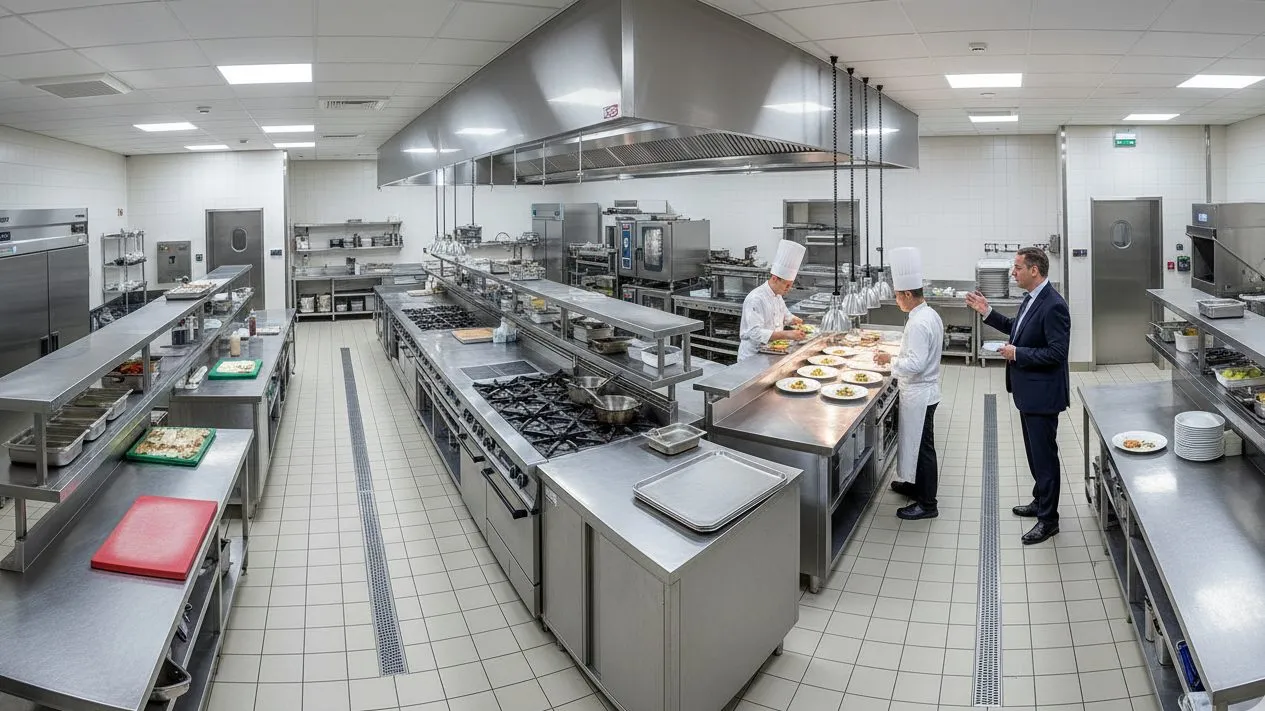
In residential kitchen design, the “Golden Triangle” (the spatial relationship between the sink, stove, and refrigerator) is the governing principle. In commercial hotel kitchens, applying this concept rigidly is a mistake. The scale and complexity of hotel operations—often involving simultaneous banquet prep, room service, and a la carte dining—require a linear, flow-based approach known as the “Golden Path” or “Flow-Through” design.
The flow must be unidirectional to prevent the cross-contamination of food and the collision of staff. The most frequent design error is creating “crossing paths,” where the trajectory of dirty dishes returning to the scullery intersects with the path of clean food leaving the pass. This not only creates a severe health code violation risk but also causes physical bottlenecks during high-pressure service periods.
To optimize the “Golden Path,” the kitchen must be zoned logically:
Receiving: Dedicated loading docks with immediate access to dry and cold storage to prevent spoilage and theft.
Storage: Proximity to prep areas to minimize “fetch time.” A common error is placing storage on the opposite side of the kitchen from the receiving door.
Preparation: Segregated zones for raw meat, seafood, produce, and finished goods to adhere to HACCP (Hazard Analysis Critical Control Point) protocols.
Production (Cooking): The “hot line” where final cooking occurs, positioned to minimize the distance to the service pass.
Plating/Pick-up: A designated thermal landing zone where servers collect dishes without entering the active cooking line.
Warewashing: A localized area for cleaning that does not impede the flow of service. The return path for waitstaff must be separate from the food pickup path.
2.2 Space Allocation: The Metrics of Efficiency
Under-sizing the kitchen is a cardinal sin in hotel development. Developers, eager to maximize revenue-generating front-of-house (FOH) space, often compress the BOH footprint. This results in traffic jams, lack of storage, and dangerous working conditions.
Industry best practices suggest specific ratios for space allocation, with a general rule of thumb being 5 square feet of kitchen space per dining seat. For a 200-seat hotel restaurant, this necessitates a minimum of 1,000 square feet. However, this metric must be adjusted for hotels that handle banqueting, as these operations require significantly more plating and staging area to handle the surge of plating hundreds of meals simultaneously, a key consideration in modern banquet kitchen design.
Common Space Planning Mistakes:
Inadequate Aisle Width: Aisles must be wide enough for staff to pass safely. A common mistake is designing aisles that are too narrow (<36 inches) or too wide (>60 inches). The optimal width for a working aisle with back-to-back equipment is often cited as 42-48 inches.
Lack of Landing Space: Failing to provide stainless steel table space next to ovens, fryers, and refrigerators forces staff to walk across the kitchen with dangerous loads, increasing the risk of burns and spills.
Vertical Space Neglect: Ignoring the vertical volume of the kitchen. High shelving and wall-mounted racks are essential for storage in tight footprints. Failing to run cabinets to the ceiling is a missed opportunity for storage and creates a dust trap.
2.3 The Banquet vs. Room Service Logistical Conflict
Hotel kitchens differ from standalone restaurants because they must serve multiple distribution channels simultaneously. A major design error is forcing Room Service, Banqueting, and Restaurant dining to share the same pickup window and cooking line without segregation.
Banquet Operations: Require massive “surge” capacity—the ability to plate 500 meals in 30 minutes. This necessitates long plating belts, mobile warming cabinets, and roll-in blast chillers. If the kitchen is designed only for a la carte service, banquet plating will paralyze the restaurant’s operation.
Room Service: Operates 24/7 and requires specific packaging and tray setup areas. According to an analysis of efficient hotel kitchen design, the room service station should be located near service elevators to minimize travel time and ensure food quality upon delivery.
2.4 Storage: The Forgotten Variable
Insufficient storage is one of the most common design complaints post-opening. Novice investors often calculate storage needs based on daily usage, failing to account for bulk purchasing discounts, holiday surges, or supply chain disruptions that require holding more safety stock.
Cold Storage: Walk-in coolers are often undersized or poorly shaped. The trend towards “just-in-time” delivery has reversed due to supply chain volatility, making larger on-site storage capacity a strategic asset.
Dry Storage: Often relegated to damp basements or unventilated closets, leading to spoilage. Dry storage must be climate-controlled and secure.
Waste Management: The physical space required for trash, recycling, and compost is rarely calculated correctly. As sustainability mandates increase, hotels need dedicated, refrigerated waste rooms to prevent odors and pest infestation.
Section 3: Equipment Specification and Sizing
3.1 The Engineering of Heat and Air: Ventilation Mistakes
Ventilation is the single most expensive and complex system in a commercial kitchen. It is not merely a fan; it is a life-support system for the building. Mistakes here are catastrophic and often require structural renovation to fix.
Undersizing the Hood: A common error is sizing the exhaust hood to exactly match the cooking equipment. Best practices dictate that hoods must overhang the equipment by at least 6 inches on the sides and 12 inches on the front to capture the thermal plume effectively.
Makeup Air Imbalance: For every cubic foot of air exhausted, a cubic foot must be replaced. Failing to install an adequate Makeup Air Unit (MUA) creates negative pressure, which can suck doors open, back-draft sewer gases, and even pull dangerous carbon monoxide from gas flues back into the workspace.
Fire Suppression Conflicts: Moving cooking equipment after the fire system is installed without re-certifying the nozzle alignment is a common error that can render the fire protection useless and void insurance.
ASHRAE 154 Compliance: Recent updates to ASHRAE Standard 154 for commercial cooking operations introduce stricter requirements for fan testing and grease containment. Investors must ensure that specified hoods meet these new listing standards to avoid code violations.
3.2 Refrigeration: The Thermodynamics of Reliability
Refrigeration systems are the heart of food safety. Investment errors here lead to spoilage, health code violations, and massive energy waste.
Compressor Placement: For large hotel kitchens, a mistake is not using remote refrigeration systems, where compressors are located on the roof or in a mechanical room. Remote systems remove heat and noise from the kitchen, lowering the ambient temperature and reducing the load on the building’s AC.
Undersizing for Peak Load: Specifying refrigeration based on average capacity rather than peak capacity. If a unit’s recovery rate is insufficient during a busy service, internal temperatures will rise above safe zones (40°F/4°C), spoiling food.
Ignoring Climate Class: Commercial refrigerators are rated by Climate Class. Hotels in hot climates must specify Climate Class 4 or 5 units designed for high ambient temperatures to prevent compressor failure.
Energy Star Savings: The data is compelling. An Energy Star certified commercial freezer can save a business over $110 annually per unit. Over its lifecycle, this equates to nearly $1,000 in savings. Scaling this across a hotel with 20+ refrigeration units results in substantial NOI improvement.
3.3 Dishwashing and Sanitation Logistics
The “Dish Pit” is often an afterthought, yet it is the bottleneck of the entire hotel operation. If the dish machine cannot keep up, the dining room runs out of plates, and service stops.
The Conveyor Mistake: Installing a single-rack door machine for a 200-seat hotel is a fatal capacity error. Hotels generally require conveyor or flight-type machines that can process thousands of pieces per hour.
Ventilation: Dishwashers produce massive amounts of steam. Failing to provide a condensate hood leads to mold growth and peeling paint in the ceiling assembly.
Water Hardness: Failing to test water quality and install softeners will destroy heating elements and leave residue on glassware, damaging the guest experience.
Ergonomics: The dirty dish drop-off area must be designed to prevent breakage and injury, requiring ample landing tables and a logical scraping/rinsing workflow.
3.4 The Danger of “Residential” Thinking in Commercial Spaces
A frequent error by first-time boutique hotel investors is the temptation to purchase “prosumer” or high-end residential equipment. This is a critical failure in judgment. Commercial kitchens operate under brutal conditions for which residential equipment is not engineered. The compressors in residential refrigerators, for example, are not designed for the hundreds of daily openings that occur during a hotel dinner service.
The consequences of using non-commercial grade equipment include:
Warranty Voidance: Most manufacturers explicitly void warranties if residential equipment is installed in a commercial setting.
Regulatory Non-Compliance: Health departments require NSF (National Sanitation Foundation) or equivalent certification, which residential gear lacks.
Catastrophic Failure: The mean time to failure for residential gear in a commercial setting is drastically shorter, leading to service interruptions during peak hours.
Section 4: Infrastructure, Utilities, and MEP (Mechanical, Electrical, Plumbing)
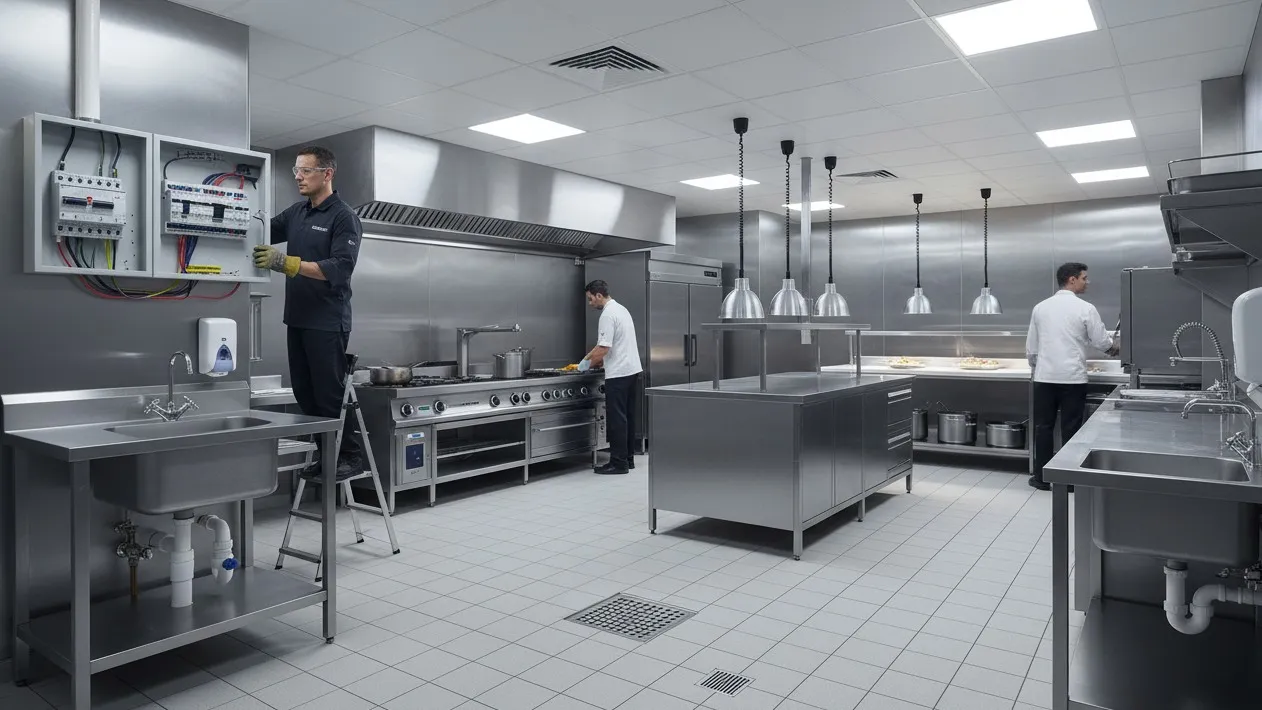
4.1 Electrical Planning Shortfalls
Kitchen equipment is power-hungry. A frequent oversight is failing to plan for the diversity of voltages and phases required.
Voltage Mismatch: Ordering equipment that requires 3-phase power when the kitchen is only wired for single-phase, or vice versa, triggers expensive change orders.
Outlet Scarcity: A classic complaint is not planning enough electrical sockets. A lack of convenient utility outlets leads to the use of dangerous extension cords, which are OSHA violations.
Emergency Power: Failing to connect walk-in coolers and freezers to the hotel’s backup generator can result in thousands of dollars of inventory loss during a single power outage.
4.2 Plumbing and Drainage Realities
Floor Drains: A common construction mistake is insufficient floor drains or placing them at the high point of the floor slope. Drains must be accessible and located near major water-using equipment.
Grease Traps: Under-sizing the grease interceptor will lead to frequent, expensive pumping and may result in fines for clogging municipal sewers.
Handwashing Stations: A frequent health code violation is not having enough dedicated handwashing sinks. Code typically requires a hand sink within 25 feet of food prep areas.
Material Selection: Using standard iron piping for gas lines in wet areas instead of corrosion-resistant stainless steel is a “value-engineering” mistake that leads to long-term maintenance issues.
4.3 Lighting: The Overlooked Safety Factor
Underestimating the importance of lighting is not just an aesthetic issue; it is a safety and quality control issue.
Task Lighting: Chefs need high-intensity, high-CRI (Color Rendering Index) lighting to safely use knives and accurately judge the doneness of food.
Safety: Poor lighting contributes to slips, falls, and cuts.
Protection: All lighting fixtures in food preparation areas must be shielded or shatter-resistant to prevent glass from falling into food.
Zoning: Using dimmer switches and separate zones allows for energy savings during prep times and full illumination during deep cleaning.
Section 5: Regulatory Compliance and Risk Management
5.1 ADA Compliance in the Back-of-House
The Americans with Disabilities Act (ADA) applies to employee work areas, not just guest spaces. This is not just legal compliance; it is inclusive design that broadens the labor pool.
Aisle Widths: ADA guidelines generally look for a 36-inch minimum clearance, with 60-inch turning spaces in certain configurations.
Work Surface Heights: Providing at least one accessible workstation is crucial. Standard counter height is 36 inches, but accessible surfaces should be a maximum of 34 inches.
Reach Ranges: Controls for equipment must be within accessible reach ranges, typically a maximum height of 48 inches.
Sink Design: Accessible sinks must have knee clearance and protected pipes to prevent burns.
5.2 OSHA and Workplace Safety
The kitchen is a hazardous environment, and investment decisions directly impact liability.
Ergonomics: Ignoring ergonomics by failing to provide prep stations at a comfortable height leads to Repetitive Strain Injuries (RSI) and workers’ compensation claims.
Slips and Falls: Specifying the wrong flooring tile is a negligence liability. Flooring must have a high Coefficient of Friction (COF) even when wet or greasy.
Storage Safety: OSHA mandates that storage must be stable and secure. Overloading shelving units beyond their weight rating is a violation and a physical hazard.
Egress: Aisles must not be blocked by equipment. Placing portable equipment in designated egress paths violates fire codes.
5.3 EU Ecodesign and Global Sustainability Standards
For global hotel brands, complying with the strictest environmental standards is becoming a corporate mandate. The EU’s Ecodesign Directive is setting a new global baseline for equipment efficiency, influencing manufacturing standards worldwide.
Energy Labeling: As the EU focuses on more energy-efficient appliances, new stringent A-G ratings mean that what was once “efficient” may now be rated F or G. Purchasing equipment that barely meets today’s standards puts the hotel at risk of obsolescence.
Right to Repair: New regulations emphasize modularity and repairability. Investing in “disposable” equipment is becoming operationally difficult, and the EU’s “Digital Product Passport” will soon track the lifecycle and repairability of equipment, a topic covered by new EU requirements for sustainable products.
Refrigerant Phase-outs: Many older refrigerants are being phased out due to high Global Warming Potential (GWP). Investing in equipment that uses obsolete refrigerants is a financial time bomb. Smart investment targets natural refrigerants like R-290 (Propane) or CO2.
Section 6: Technology Integration and Future-Proofing
6.1 The Rise of Smart Kitchens and IoT
The era of analog equipment is ending. A critical investment mistake is failing to specify “connectable” equipment. Modern “Smart” kitchens utilize the Internet of Things (IoT) to drive efficiency and transparency.
HACCP Automation: Smart refrigerators and ovens can automatically log temperatures to the cloud, eliminating manual logbooks and ensuring 100% compliance with food safety laws.
Predictive Maintenance: Smart equipment can alert maintenance teams before a component fails, allowing for proactive, scheduled repairs. This is a key finding in recent reports on 2025 restaurant technology trends.
Energy Management: Connected kitchens can optimize energy usage by automatically putting equipment into “sleep mode” during slow periods or managing peak electrical loads to avoid demand charges.
6.2 Automation and Robotics
While full automation is rare, “cobots” (collaborative robots) are entering the hotel space.
Task Automation: Automated biological waste digesters, robotic floor scrubbers, or automated food runners for room service are becoming viable ROI investments that address the pain point of low-value, repetitive labor.
Future-Proofing Design: Designing a kitchen today without the electrical and data infrastructure to support future robotics is a short-sighted error. Aisles need to be wide enough for autonomous carts, and Wi-Fi/5G coverage must extend into the kitchen.
6.3 Flexibility and Modular Design
Hotel menus and culinary trends change. The fixed, immovable kitchen is a relic.
Modular Equipment: Investing in equipment on casters with quick-disconnect gas hoses allows the kitchen layout to be reconfigured for different events or menu concepts.
Multi-Functional Equipment: The combi-oven and the tilt-skillet are force multipliers. A tilt-skillet can be a griddle, a braiser, a deep fryer, and a soup kettle. Investing in these versatile units allows a smaller footprint to produce a wider variety of cuisines.
Section 7: Strategic Sourcing and Vendor Relations
7.1 The Vendor as Partner, Not Supplier
In the complex landscape of global hospitality, the relationship with equipment suppliers should be strategic, not transactional. A common mistake is treating vendors solely as sources of hardware. Leading solution providers, like RON Group Global, offer value beyond the box by providing comprehensive solutions for your business needs, including design consulting, logistics management, and after-sales support.
Logistics and Consolidation: For large hotel projects, sourcing from dozens of different manufacturers creates a logistical nightmare. Consolidating procurement through a single solutions provider streamlines shipping, customs clearance, and installation. For guidance on this, see our article on avoiding common furniture purchase mistakes from China.
Global Warranty Support: Buying cheaper equipment from obscure grey-market sources often means having no warranty support in the hotel’s region. Established partners ensure that warranties are enforceable and that spare parts are locally available.
7.2 Designing for Staff Retention
In a labor-constrained market, the kitchen environment is a recruitment tool. A hot, poorly ventilated, dark, and cramped kitchen drives staff away.
Thermal Comfort: Investing in high-quality induction cooking suites significantly lowers the ambient heat in the kitchen compared to gas, improving the working environment for chefs.
Hygiene Standards: Touchless faucets, automatic doors, and easy-to-clean surfaces show staff that their health is prioritized.
7.3 The Cost of “Value Engineering” (VE)
“Value Engineering” is often a euphemism for cost-cutting that compromises integrity. When project budgets overrun, the kitchen is often the first target for VE.
The Swap-Out Trap: Swapping a specified heavy-duty range for a medium-duty alternative saves money upfront but ensures failure within 2-3 years under hotel workloads.
Material Downgrades: Changing stainless steel from 304-grade (corrosion-resistant) to 430-grade (magnetic, prone to rust) helps the budget today but results in rusted, unsanitary tables within months. This degradation requires premature replacement, costing far more than the initial savings.
Conclusion: The Strategic Imperative
The data is unequivocal: the cost of a hotel kitchen is not defined by the invoice at the time of purchase, but by the cumulative performance of that infrastructure over a 15-year lifecycle. The common mistakes outlined in this report—undersizing ventilation, ignoring workflow logic, prioritizing low CAPEX over TCO, and neglecting regulatory shifts—are not merely operational nuisances; they are capital leaks that drain the asset’s value.
For hotel investors and procurement teams, the strategic pivot requires viewing the kitchen not as a collection of appliances, but as an integrated technological ecosystem. Best practices dictate a collaborative approach involving specialized kitchen consultants, chefs, and facility managers early in the design phase.
Key Takeaways for Decision Makers:
Adopt TCO Modeling: Mandate that all equipment bids include estimated energy and maintenance costs over 10 years.
Respect the Flow: Prioritize linear workflow and segregation of clean/dirty paths to minimize labor costs and liability.
Invest in Infrastructure: Never compromise on ventilation, drainage, or electrical capacity; these are the most expensive errors to rectify later.
Embrace Compliance: View ADA, OSHA, and Ecodesign standards not as burdens but as frameworks for safety and sustainability.
Future-Proof: Build digital backbones and flexible spaces that allow the hotel to adapt to the inevitable shifts in culinary trends and labor markets.
By avoiding these historic pitfalls and partnering with experienced solution providers who understand the holistic nature of hospitality operations, investors can ensure that their capital allocation yields not just a functional kitchen, but a resilient, profitable, and high-performance hospitality asset. If you’re ready to explore a strategic approach to your next project, contact us today.
Get the week's latest industry information
-
Real-Life Professional Restaurant Case Studies
Explore Now
-
Create a unique restaurant with over 95,700+products
Explore Now
-
Protessional Free 3D Restaurant Design
Explore Now
-
Still Have Questions About Opening a Restaurant?
Explore Now

Sylvia
With 8 years in catering & hospitality industry, sales manager of Ron Group, specialise in providing one stop solutions to restaurants, hotels and weddings.
Discover Our Exclusive Products
Explore our extensive range of restaurant and hotel supplies designed to enhance your operations. Find the perfect solutions to meet your needs.
Browse Our ProductsFREE 3D DESIGN
Boost your restaurant's success with our free 3D design service. Start building the restaurant of your dreams today!
Explore 3D Design Case
RECOMMENDED CASES
-

La Rambla by Catalunya: Crafting Barcelona's Soul in Hong Kong - Custom Furniture Excellence
RON Group's custom Spanish-inspired furniture elevates La Rambla with artisanal aesthetics...
Learn More -

Cardinal Point: Elevating Outdoor Seating with Tailored Cushion Upgrades
Discover how Cardinal Point transformed its outdoor dining experience with custom cushions, achievin
Learn More
RECOMMENDED BLOGS
-
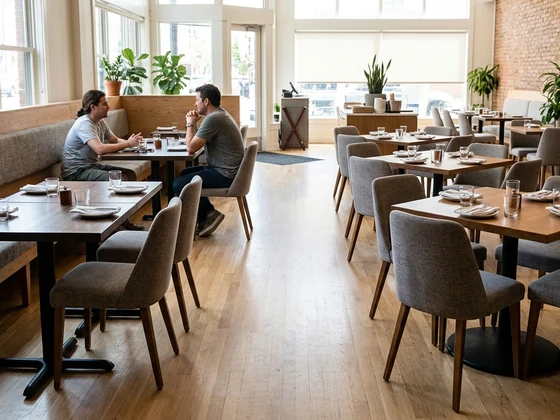
Restaurant Table Spacing and Aisle Clearance: Supplier Drawing Checklist
Check restaurant table spacing, aisle clearance, chair pullout, service path, and supplier drawing proof before approving a...
Sylvia2026-07-20 -

5 Mistakes to Avoid When Buying Restaurant Furniture from China
Don't fall for costly oversights! Learn the 5 mistakes to avoid when buying restaurant furniture from China and ensure a...
 Ron2025-01-079 min read
 -

RON GROUP Launches VR Experience to Explore Our Dynamic Showroom
Discover RON GROUP's VR showroom! Explore dining furniture, tableware, and customized services virtually or visit us in person to...
Sylvia2024-12-163 min read
Subscribe to RON GROUP
Stay up-to-date with the latest industry insights and expert advice. Together, we'll create your ideal restaurant.