








Content
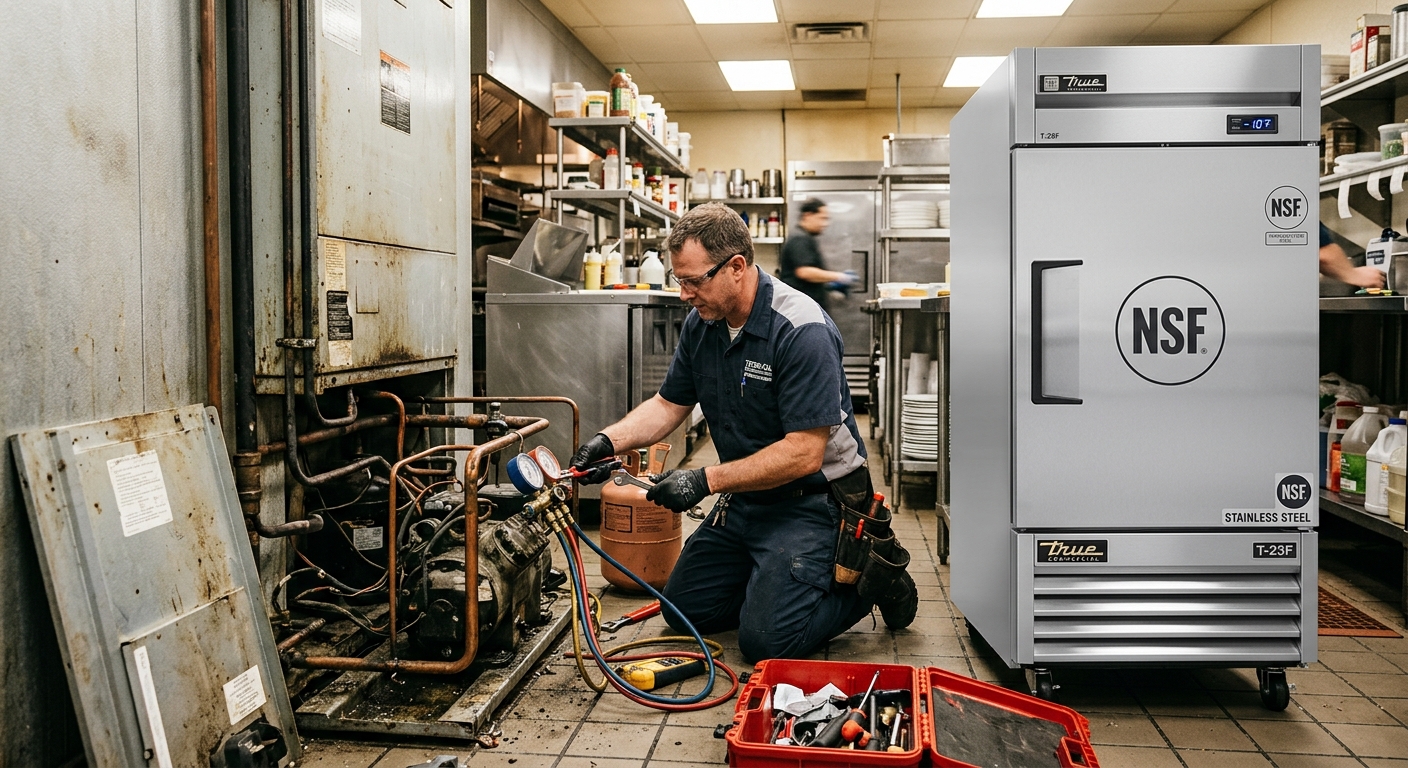
TECHNICAL NOTE // KEY ENGINEERING STANDARD
Commercial Sourcing & Engineering Standard: High-turnover hospitality environments require rigorous commercial-grade compliance (ASTM, NFPA 96, NSF/ANSI, and BIFMA engineering standards). Standard residential-grade items experience rapid fatigue failure, escalating long-term Total Cost of Ownership (TCO).
EXECUTIVE MANDATE // PROCUREMENT COMPLIANCE AUDIT
Procurement Compliance Audit: Verify all factory test certificates, utility load calculations (kW, voltage, phase, and ventilation CFM requirements), and manufacturer warranties prior to final procurement dispatch.
Executive Summary: The Imperative of Lifecycle Economics
In the contemporary hospitality and foodservice landscape, the commercial kitchen represents the operational heart of the enterprise, yet it is frequently managed through a fragmented financial lens. For decades, the procurement of kitchen equipment-ranges, refrigeration, warewashing units, and ventilation systems-has been governed by the strictures of Capital Expenditure (CapEx) budgets. In this traditional model, the "price tag" is the primary determinant of decision-making, with procurement teams often incentivized to minimize upfront cash outflows.
However, a comprehensive analysis of industry data, evolving regulatory frameworks, and operational benchmarks reveals that this acquisition-centric approach is fundamentally flawed. It exposes hotel owners, restaurant groups, and foodservice operators to a massive, submerged iceberg of operational costs that can erode profitability for significantly longer than the asset's depreciable life.
This guide establishes a rigorous framework for Total Cost of Ownership (TCO) . By integrating data from the 2024-2025 regulatory horizon-including the imminent EPA AIM Act refrigerant phase-downs and PFAS prohibitions-with granular operational metrics, we demonstrate that the initial purchase price constitutes merely a fraction of an asset's ultimate financial footprint. The remaining costs are hidden within monthly utility bills, emergency repair invoices, food waste logs, and labor hours.
For operators looking to optimize their setup, understanding these long-term costs is as vital as knowing how to source quality furniture at factory prices . The thesis of this report is unequivocal: shifting from a "lowest bid" procurement strategy to a TCO-centric model is not merely an operational refinement; it is a financial imperative.
1. The Financial Anatomy of Commercial Kitchens
1.1 Redefining Value in Foodservice Procurement
To understand the true cost of commercial kitchen equipment, one must first deconstruct the traditional procurement paradigm. Historically, the segregation of budgets-CapEx for buying equipment and Operational Expenditure (OpEx) for running it-has created a misalignment of incentives. A procurement manager is often rewarded for coming in "under budget" on a renovation project, while the operations manager is penalized for "blowing the budget" on utilities and repairs two years later. TCO bridges this gap by unifying these distinct financial silos into a single, holistic metric.
Total Cost of Ownership is defined as the sum of all direct and indirect costs associated with an asset over its entire lifecycle. In the high-intensity environment of a commercial kitchen, where equipment runs 12 to 24 hours a day under extreme thermal and mechanical stress, the velocity of operational spending is exceptionally high.
The strategic shift required is to view kitchen equipment not as "furniture" but as "production machinery." Just as we advise clients to avoid common mistakes when buying restaurant furniture , the same diligence applies to equipment. No plant manager would purchase a machine solely because it was cheap if it consumed double the raw materials and required weekly repairs. The hospitality industry must adopt this manufacturing mindset.
1.2 The Iceberg Effect: Visible vs. Hidden Liabilities
The "Iceberg Effect" is the prevailing metaphor for TCO because it accurately visualizes the risk profile of commercial assets. The visible portion-the invoice amount-is dangerous because it is fixed and known. The submerged portion is variable, volatile, and often undocumented until it impacts the P&L statement.
The TCO Breakdown:
| Cost Component | Visibility | Estimated Share of TCO | Nature of Expense |
|---|---|---|---|
| Acquisition (CapEx) | High | 15% - 30% | One-time, Fixed |
| Energy Consumption | Medium | 35% - 50% | Recurring, Inflationary |
| Maintenance & Repair | Medium | 12% - 28% | Variable, Escalating |
| Labor (Cleaning/Ops) | Low | 10% - 20% | Recurring, Fixed/Variable |
| Downtime & Disruption | Hidden | 5% - 15% (Risk-based) | Unpredictable, High Impact |
Data synthesized from industry benchmarks and EPA guidelines.
The profound insight from this breakdown is that Energy and Maintenance combined account for roughly two-thirds of the total cost of ownership. Therefore, a procurement strategy that prioritizes the initial 20% (Acquisition) while ignoring the 65% (Energy + Maintenance) is statistically destined to overspend.
1.3 Strategic Alignment for Stakeholders
For Hotel Owners and Asset Managers , TCO provides a mechanism to protect Net Operating Income (NOI). By investing in higher-quality, more efficient assets-much like investing in durable hotel furniture collections -owners reduce the utility and maintenance lines on the P&L, directly increasing the property's valuation.
For Procurement Teams , adopting TCO requires a cultural shift from "Cost Cutting" to "Value Engineering." It involves presenting data that justifies a higher upfront spend by demonstrating a rigorous Return on Investment (ROI) and a shorter Payback Period.
2. The Thermodynamics of Profit: Energy Efficiency as a Financial Instrument
2.1 The Energy Intensity of Commercial Kitchens
Commercial kitchens are among the most energy-intensive commercial spaces on the planet. According to EPA data on commercial kitchen energy intensity , restaurants and foodservice operations consume roughly 2.5 times more energy per square foot than other commercial buildings. In a low-margin industry where profit margins often hover around 5-6%, utility costs are one of the few controllable expenses that can directly impact the bottom line.
The physics of kitchen equipment dictates that energy efficiency is not just about "being green"; it is about thermodynamic efficiency. A gas range that is only 35% efficient wastes 65% of the purchased fuel as ambient heat. This waste is double-taxed: the operator pays to generate the heat, and then pays again to remove it via the HVAC system. This "Parasitic Load" on the building's cooling infrastructure is a critical second-order cost often missed in basic TCO calculations.
2.2 Deep Dive: Refrigeration Economics
Refrigeration is the only category of equipment that runs 24 hours a day, 365 days a year. Consequently, it represents the "purest" test of TCO principles.
Financial Modeling: Consider a standard two-door commercial freezer versus an Energy Star-rated equivalent.
- The Delta: The premium unit may cost $1,000 more upfront but can save $350 annually in electricity.
- The ROI: The payback period is roughly 2.8 years. Over a 12-year lifespan, the efficient unit generates a cumulative cash flow savings that effectively pays for the unit entirely.
- Lifespan Bonus: Premium units often have superior thermal management, which reduces the duty cycle on the compressor, extending the equipment's lifespan-a concept similar to how often restaurants replace furniture based on build quality.
2.3 Cooking Equipment: Gas vs. Electric and the Combi Revolution
The debate between gas and electric cooking is evolving rapidly. While gas has historically been cheaper in many regions, the efficiency of modern electric appliances-specifically induction and combi technology-is altering the TCO landscape.
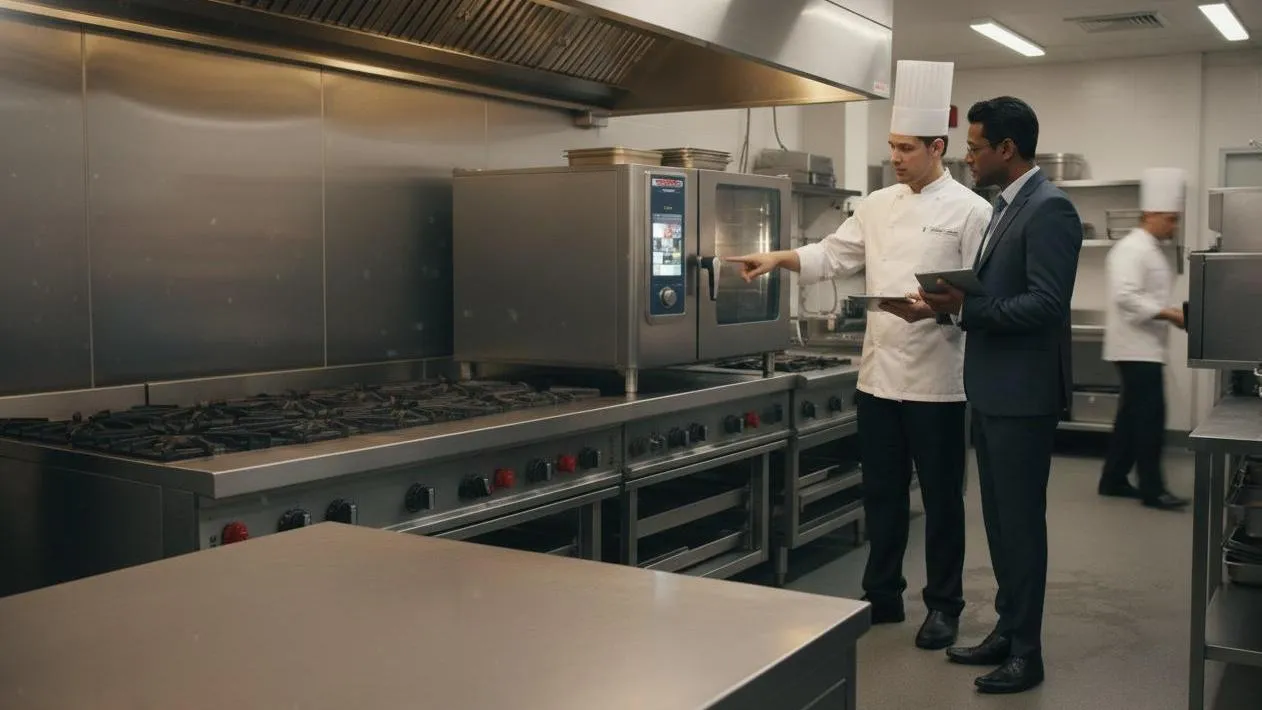
Combi Ovens: The Combination Oven (Steamer/Convection) is the ultimate TCO case study.
- Throughput: A combi oven can replace a steamer, a convection oven, and a grill, reducing the kitchen's physical footprint.
- Smart Energy: Modern combis utilize heat exchangers to recover energy from exhaust air to heat incoming water. This "closed-loop" efficiency results in energy bills that are significantly lower than the aggregate cost of the separate appliances they replace.
2.4 The Inflationary Risk of Utility Rates
A static TCO model assumes today's energy prices will persist for ten years. This is a dangerous assumption. Historical trends suggest that energy prices are inflationary. A robust TCO model should include a "Utility Escalator" of 3-5% annually. High-efficiency equipment acts as a financial hedge against this inflation. By locking in a lower consumption profile today, the operator insulates the business from future rate hikes.
3. Water and Waste: The Double-Edged Cost Centers
3.1 The Water-Energy Nexus in Warewashing
Dishwashing operations are unique because they consume three distinct resources simultaneously: Water, Energy (to heat the water), and Chemicals. This creates a "multiplier effect" for efficiency.
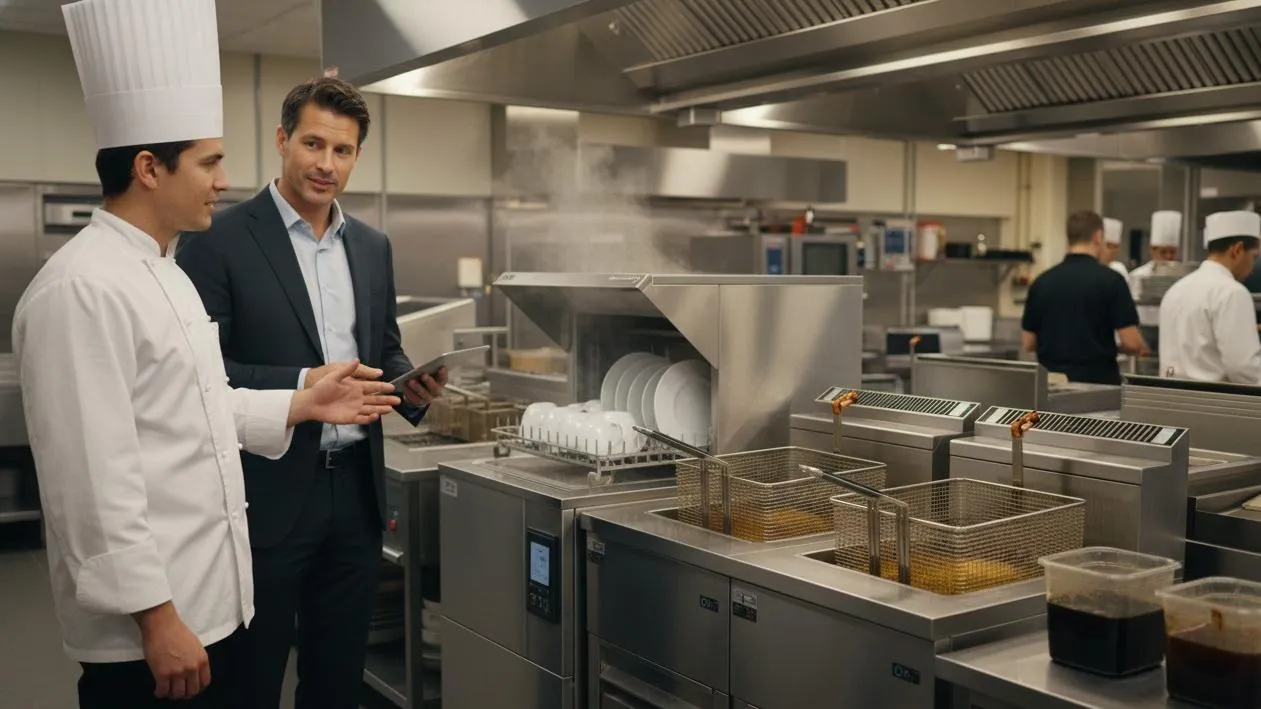
Heat Recovery Technology: Advanced warewashers feature Ventless Heat Recovery (VHR) systems. These capture the steam generated during the wash cycle and use it to pre-heat the incoming cold water supply. This technology can save significant capital, a benefit outlined in waste reduction guides for commercial dishwashers . Furthermore, VHR units often eliminate the need for a dedicated Type II ventilation hood, saving the operator thousands in installation costs.
3.2 Fryer Oil Management: Liquid Gold
For Quick Service Restaurants (QSR) and casual dining, fryer oil is often the second largest expense after food and labor. High-end fryers with built-in automatic filtration systems can extend oil life by 50% to 100%. If a restaurant spends $500 per week on oil, a 50% reduction saves $13,000 annually. Over a 7-year life, the filtered fryer saves nearly $90,000-dwarfing the initial equipment cost.
4. Asset Health: Maintenance Strategies and Lifespan
4.1 The High Cost of Reactive Maintenance
The most common error in kitchen management is the reliance on "Reactive Maintenance"-fixing equipment only when it breaks. Data indicates that reactive repairs cost 3 to 4 times more than planned maintenance activities due to overtime labor rates and expedited shipping fees for parts.
4.2 The "Percent of RAV" Benchmark
World-class facility management utilizes the "Replacement Asset Value" (RAV) metric to budget for maintenance. The industry benchmark for a healthy maintenance program is 2% to 5% of RAV annually. Procurement teams should budget this 3% annually, a strategy supported by maintenance budgeting guides . For a $100,000 kitchen suite, a $3,000 annual preventive maintenance (PM) contract is not an "extra" cost; it is the insurance premium that guarantees the 15-year lifespan.
4.3 Lifespan Variance: Economy vs. Premium
The "Y" (Years) variable in the TCO formula is critical.
- Economy Brands: Often utilize lighter gauge steel and generic motors. Typical lifespan: 4-7 years.
- Premium Brands: Utilize heavy-gauge stainless steel and welded construction. Typical lifespan: 12-20 years.
Over a 20-year operational horizon, an operator would need to purchase, install, and dispose of three economy units versus one premium unit. This logic parallels our advice on furnishing your Italian restaurant , where investing in quality upfront prevents rapid replacement costs.
4.4 Supply Chain and Spare Parts Logistics
A hidden component of Maintenance Cost is parts availability. Premium global brands maintain robust regional parts distribution centers, whereas budget imported equipment often lacks a domestic parts network. If a specialized part must be shipped from overseas, the lead time can be 2-6 weeks. During this time, the asset is dead, incurring massive downtime costs.
5. The Revenue Assassin: Downtime and Reliability
5.1 Quantifying the Unquantifiable
Downtime is the TCO variable with the highest variance and risk. The cost of downtime is not the repair bill; it is the Revenue Opportunity Cost .
Scenario: A high-volume fryer fails at 6:00 PM on a Friday.
- Lost Revenue: The kitchen cannot serve high-margin items.
- Reputation: A service meltdown results in negative reviews. A drop in aggregate rating can significantly impact annual revenue, a risk highlighted in reports on equipment downtime in QSRs .
5.2 The "Saturday Night" Multiplier
Strategic TCO modeling applies a "risk multiplier" to critical equipment. Smart alerts and IoT-enabled equipment that send notifications when performance degrades (Predictive Maintenance) can prevent the "Saturday Night" failure. The premium paid for this connectivity is effectively "Business Interruption Insurance," a concept reinforced by the 2024 State of Maintenance Report .
6. Labor, Ergonomics, and Automation
6.1 The Labor Crisis and Equipment Solutions
With the hospitality industry facing chronic labor shortages and rising wages, equipment that reduces labor intensity has a massive positive impact on TCO. High-speed ovens allow a smaller kitchen crew to handle higher volumes. If technology allows a station to be run by one cook instead of two, the labor savings eclipse the equipment cost immediately.
6.2 The Self-Cleaning Revolution
Manual cleaning of rotisseries and ovens is widely regarded as one of the worst jobs in the kitchen. A self-cleaning combi oven requires minutes of staff time rather than hours. Over a 10-year life, the self-cleaning feature can save tens of thousands of dollars in labor. TCO analysis proves that buying a manual-clean oven is essentially "hiring" a phantom employee to clean it forever.
7. The 2025 Regulatory Cliff: A TCO Shockwave
The regulatory environment for commercial kitchens is undergoing a seismic shift. Ignoring these regulations in current procurement cycles creates a high risk of acquiring "Stranded Assets."
7.1 The PFAS Prohibition: Cookware and Coatings
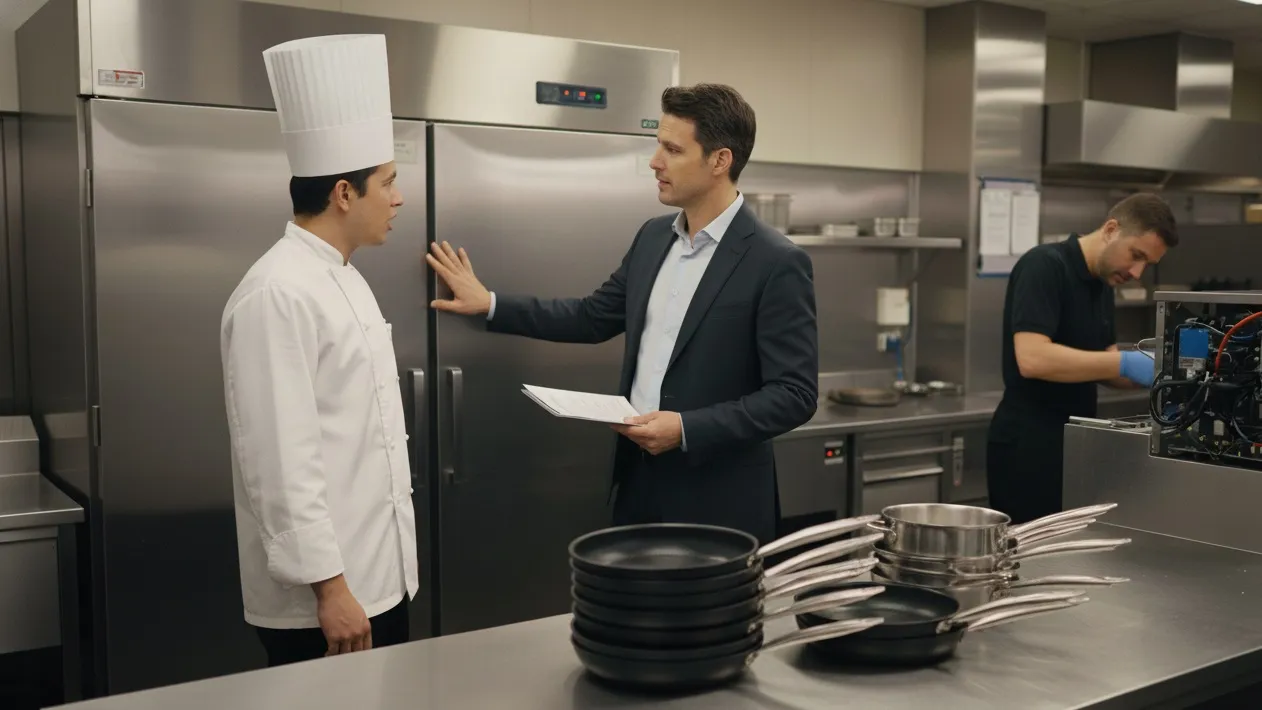
Starting January 1, 2025, several jurisdictions are enforcing strict bans on "intentionally added" PFAS in cookware, as detailed in Minnesota's 2025 PFAS prohibition guidelines .
- TCO Impact: Kitchens holding large stocks of PFAS-coated pans may find them unusable. The industry is shifting to ceramic coatings or returning to carbon steel/stainless steel. Procurement teams must vet suppliers now for "PFAS-Free" certification to avoid liability.
7.2 The Refrigerant Transition: EPA AIM Act & F-Gas
The EPA's AIM Act mandates a drastic phase-down of high-GWP (Global Warming Potential) refrigerants. New equipment faces strict GWP limits, according to the EPA's Technology Transitions program .
- TCO Impact: As production of legacy refrigerants is throttled, their price will skyrocket. A leak in an old freezer in 2026 could cost thousands to refill.
7.3 EU Ecodesign 2025: Right to Repair
The EU is implementing stricter Ecodesign requirements, focusing on the "Right to Repair." Manufacturers must make spare parts available for years, a core tenet of the EU's updated Ecodesign requirements . This regulation forces manufacturers to build repairable machines, extending the useful life of the asset.
8. Sector-Specific TCO Analysis
8.1 Quick Service Restaurants (QSR)
In QSR, the menu is limited, and volume is high. TCO strategy focuses on Throughput and Uptime . Additionally, holding cabinets that keep food fresh longer reduce the "throw-away" rate, a critical metric in restaurant food waste statistics .
8.2 Fine Dining
The TCO justification for premium equipment in fine dining is Yield . Cooking a Prime Rib with precise humidity control can reduce shrinkage significantly. On a high-volume steakhouse menu, serving that extra 10% of meat generates pure profit. For tips on setting up the front-of-house to match this back-of-house precision, see our guide on restaurant table selection .
8.3 Hotels and Large Banqueting
Large production kitchens deal with fluctuating volumes. The TCO value lies in Labor Optimization -using Cook-Chill systems to produce food in bulk during off-peak hours. For hoteliers, aligning this efficiency with durable hotel furniture ensures the entire operation runs smoothly from kitchen to guest room.
9. Strategic Procurement: The Decision Matrix
9.1 The "Green Premium" Myth
There is a pervasive misconception that sustainable equipment is "too expensive." TCO analysis consistently debunks this. A high-efficiency dishwasher may cost $2,000 more upfront but save $1,500/year in utilities. Over a 10-year life, the "expensive" machine costs $13,000 LESS to own.
9.2 Lease vs. Buy: A TCO Perspective
Leasing high-efficiency equipment can align cash flows. The monthly utility savings from a premium unit can often cover the difference in the lease payment compared to a budget unit. Effectively, the operator gets the better equipment for a neutral cash flow impact.
9.3 Data-Driven Procurement Checklist
To implement TCO, procurement teams must demand the following data from suppliers:
- Energy Consumption: ASTM-verified consumption rates.
- Water Usage: Gallons per hour/rack/cycle.
- Maintenance Schedule: Required PM frequency and estimated cost.
- Compliance: Written certification of PFAS-free coatings and 2025 Refrigerant compliance.
For a broader look at smart sourcing, refer to our guide on saving 65% on restaurant setup .
10. Conclusion: The Path to Smart Procurement
The era of intuitive, price-based purchasing in the hospitality industry is closing. The convergence of rising operational costs, labor scarcity, and stringent environmental regulations demands a sophisticated, data-driven approach to asset management.
Total Cost of Ownership (TCO) is the only metric that provides a true reflection of an asset's value. The "Strategic Edge" comes not from buying the cheapest equipment, but from buying the most efficient, reliable, and compliant equipment that minimizes the burn rate of the kitchen over the next decade.
Ready to optimize your procurement strategy? Whether you are sourcing kitchen equipment or outfitting your dining room, RON Group Global provides the expertise to maximize value. Contact us today to discuss your project requirements.
Get the week's latest industry information
-
Real-Life Professional Restaurant Case Studies
Explore Now
-
Create a unique restaurant with over 95,700+products
Explore Now
-
Protessional Free 3D Restaurant Design
Explore Now
-
Still Have Questions About Opening a Restaurant?
Explore Now

Sylvia
With 8 years in catering & hospitality industry, sales manager of Ron Group, specialise in providing one stop solutions to restaurants, hotels and weddings.
Discover Our Exclusive Products
Explore our extensive range of restaurant and hotel supplies designed to enhance your operations. Find the perfect solutions to meet your needs.
Browse Our ProductsFREE 3D DESIGN
Boost your restaurant's success with our free 3D design service. Start building the restaurant of your dreams today!
Explore 3D Design Case
RECOMMENDED CASES
-
La Rambla by Catalunya: Crafting Barcelona's Soul in Hong Kong - Custom Furniture Excellence
RON Group's custom Spanish-inspired furniture elevates La Rambla with artisanal aesthetics...
Learn More -

Cardinal Point: Elevating Outdoor Seating with Tailored Cushion Upgrades
Discover how Cardinal Point transformed its outdoor dining experience with custom cushions, achievin
Learn More
RECOMMENDED BLOGS
-

Bar Glassware 101: Types, Names, Uses, and How to Stock Your Bar
Learn the 10 core bar glassware types, names, and uses. Discover how to stock your bar with the right glasses for cocktails, beer,...
Sylvia2026-07-26 -
Complete Bar Equipment List for Opening a Bar
Plan a complete commercial bar equipment list by menu, service volume, refrigeration, ice, glassware, utilities, sanitation,...
Sylvia2026-06-11 -

Low Budget Restaurant Interior Design: 2026 Trends
Prioritize a low-budget restaurant interior by protecting code, operations, durability, accessibility, and phased design decisions...
Sylvia2026-04-04
Subscribe to RON GROUP
Stay up-to-date with the latest industry insights and expert advice. Together, we'll create your ideal restaurant.