




Content

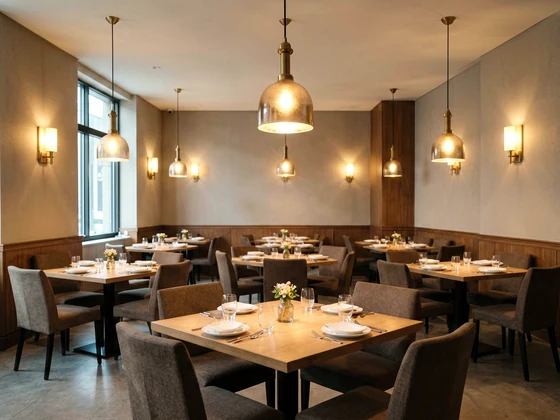
Restaurant lighting suppliers are easiest to compare after the buyer has a fixture package, not before. A useful package tells the supplier where each fixture will be used, what mood or function it must support, which documents the project team needs for review, and which decisions belong to the designer, electrician, code consultant, or owner.
That shift changes the buying conversation. Instead of asking several suppliers for a quick price on a pendant photo, the restaurant team asks each supplier to respond to the same zone schedule, sample needs, technical data requests, dimming or control notes, safety-document requests, packing requirements, and replacement plan.
Turn the Concept Into a Fixture Schedule
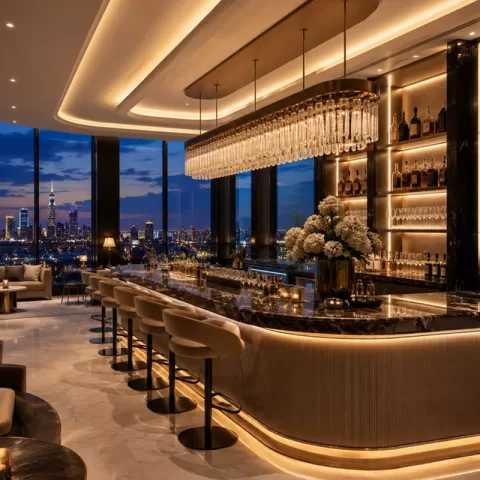
A restaurant concept usually starts with atmosphere: warm dining tables, brighter bar work areas, host-stand identity, private-room mood, exterior visibility, or a feature chandelier. Suppliers cannot quote those ideas consistently until the buyer translates them into a fixture schedule.
Build the schedule by zone:
dining tables and banquettes;
bar counter, back bar, and service stations;
host stand and waiting area;
private rooms or flexible event rooms;
restrooms and corridors;
exterior entries, signs, and facade accents;
emergency-route and exit-sign coordination points.
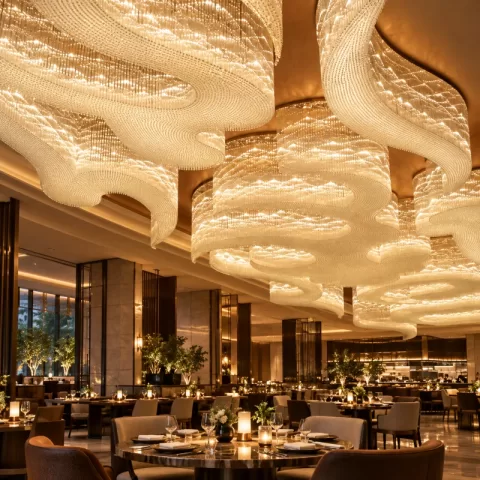
For each zone, record the fixture type, target look, mounting location, finish direction, quantity basis, ceiling condition, cleaning exposure, and whether local electrical or code review is required. RON GROUP's restaurant and hotel lighting collection can help organize product categories, while the project lighting category is useful when the discussion includes commercial or custom project support.
The schedule does not need to solve every technical detail. It needs to stop every supplier from making different assumptions.
For a procurement file, add four columns that are often missing from early lighting conversations: review owner, sample needed, control question, and site condition. A pendant over a dining table may need finish approval and ceiling-height confirmation. A bar fixture may need a dimming-control question. An exterior sconce may need mounting-surface and weather-exposure review. A supplier can respond much more clearly when these questions are visible before quotation.
The schedule should also identify what is still unknown. If the reflected ceiling plan is not ready, mark it as pending instead of letting each supplier assume a mounting condition. If the designer has not chosen a color-temperature direction, mark it as designer review. If the installation market is not final, flag the safety and listing evidence as documents for later local review.
Separate Decorative Fixtures From Performance Fixtures
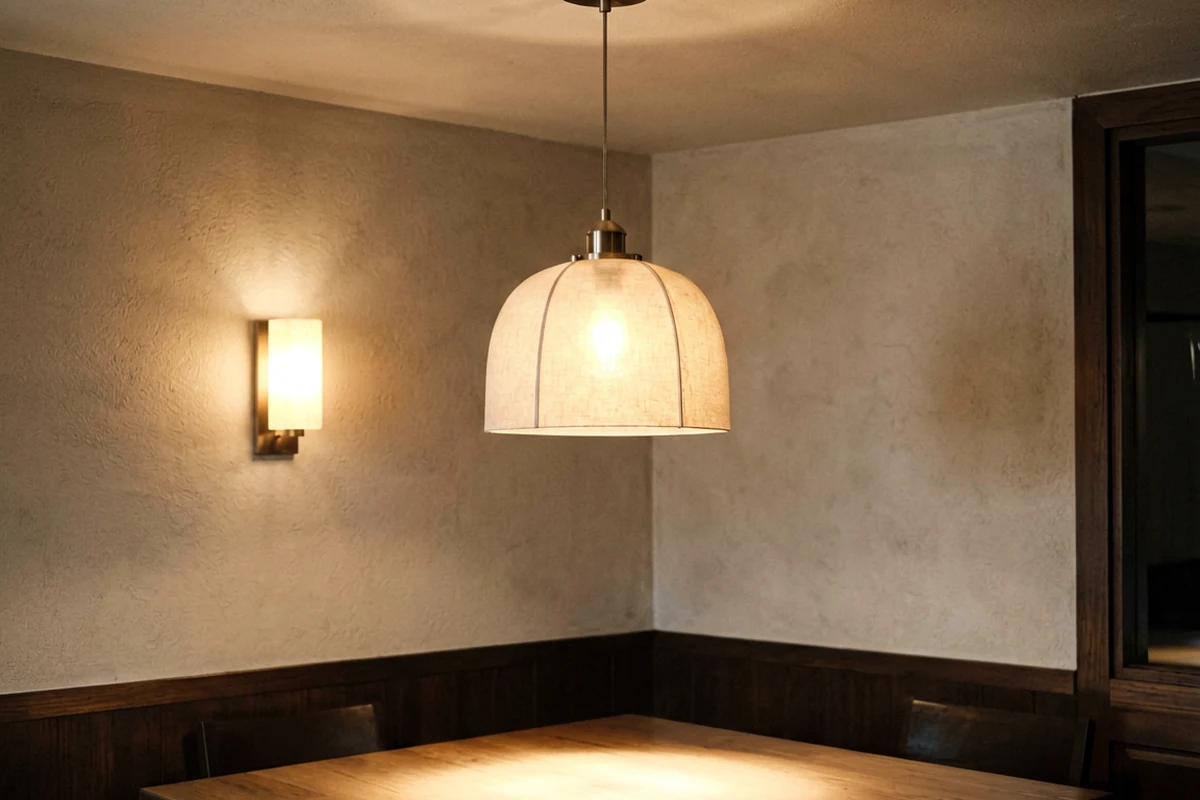
Not every lighting decision belongs to the supplier. A pendant over a dining table may be mainly a mood and finish decision. A fixture near an exit route, sign, stair, service counter, or dimming-control system may need technical review outside the supplier's role.
Use a responsibility map before supplier comparison:
| Lighting decision | Supplier can usually provide | Project team must verify |
|---|---|---|
| Decorative pendant or chandelier | Product options, finish references, sample plan, packing details | Visual fit, mounting location, ceiling condition, local installation limits |
| Wall sconce or accent fixture | Dimensions, finish, lamp or LED module information, replacement route | Clearance, glare, cleaning exposure, wiring condition |
| Bar or service lighting | Product data, mounting assumptions, dimming compatibility notes | Work visibility, glare control, control zoning, local electrical review |
| Exterior or sign lighting | Product information, finish and weather-exposure discussion | Local code, mounting substrate, signage rules, installer requirements |
| Exit-route or emergency coordination | Product documents for review when relevant | Qualified local design, electrical, fire-safety, and code review |
OSHA's exit-route rule at 29 CFR 1910.37 is a good reminder that exit routes need adequate lighting and marking. It is not proof that a supplier's fixture selection makes a restaurant compliant. Keep supplier documents and local review responsibilities separate.
Ask for Submittals, Not Just Product Photos
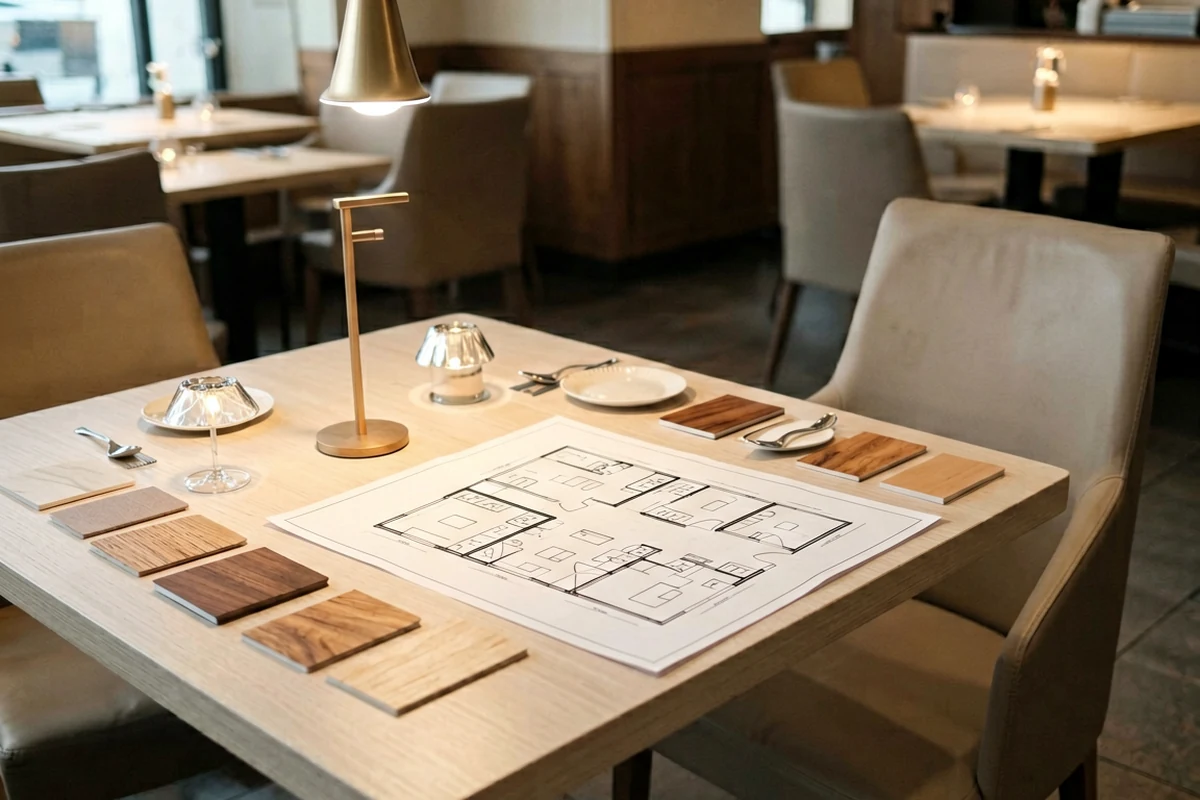
Product photos show style. Procurement needs submittals. Ask each supplier to provide the review documents that let the restaurant team compare fixtures without guessing.
| Submittal item | Why the buyer needs it | Boundary |
|---|---|---|
| Cut sheet or product data | Confirms dimensions, finish, lamp or LED module, mounting, and basic product identity | Does not replace local installer review |
| Photometric or light-output data when available | Helps the designer or consultant assess performance questions | Does not prove final restaurant ambiance by itself |
| Driver, dimming, and control information | Identifies compatibility questions before purchase | Must be checked against the control system and installer plan |
| Finish sample or material reference | Reduces mismatch risk across dining furniture and interior finishes | Sample approval must name the accepted reference |
| Certification or listing evidence | Gives the project team a document to review | Do not treat logos or claims as proof without a verifiable certificate or listing |
| Replacement and maintenance path | Clarifies what can be replaced after opening | Should be written before the bulk order |
ENERGY STAR's LED guidance supports screening LED technology and heat-management discussions, while the DesignLights Consortium Qualified Products List can be used as one commercial LED screening resource. For federal purchasing contexts, DOE FEMP's efficient lighting procurement guidance gives buyers another way to think about efficient fixture selection and controls. None of those sources prove that a specific restaurant fixture is suitable without product-level documents.
The useful supplier response is not a single PDF attachment. It is a submittal set that can be routed through the buyer's review team. Name the document owner, version date, fixture code, and project zone on every submittal. If the supplier changes a driver, finish, shade, mounting canopy, or LED module after approval, require a written revision note before the change enters production.
Run Sample and Mockup Approval Before the Bulk Order
Lighting changes when it enters the restaurant. A pendant that looks warm in a catalog may look dull over a dark tabletop. A decorative shade may create glare at the bar. A wall sconce may sit too close to a banquette back. A bright fixture may work for cleaning but feel harsh during dinner service.
Use samples or a mockup to answer buyer-specific questions:
Does the fixture color and finish match nearby furniture, wall finish, and metalwork?
Does the selected lamp or LED module create the intended mood in the zone?
Does the fixture create glare from seated eye level?
Can staff clean, relamp, or replace the fixture without unusual access problems?
Does the mounting detail match the ceiling, wall, or millwork condition?
Are substitutions controlled before production or shipment?
The Illuminating Engineering Society maintains hospitality lighting work through its hospitality lighting committee and broader lighting standards library. Use that as evidence that hospitality lighting has its own design and measurement context. Do not invent illuminance targets or technical results unless a project designer or opened standard supplies them.
Mockup notes should be written like procurement evidence, not design impressions. Record the sample code, finish reference, lamp or LED module, driver note if relevant, installed height, table or counter material nearby, reviewer, date, and accepted changes. If the team rejects the sample, record whether the issue is color, glare, scale, finish, dimming behavior, mounting detail, or supplier documentation. That record prevents the same disagreement from returning during bulk production.
Compare Release-Ready Suppliers With Quote-Only Suppliers
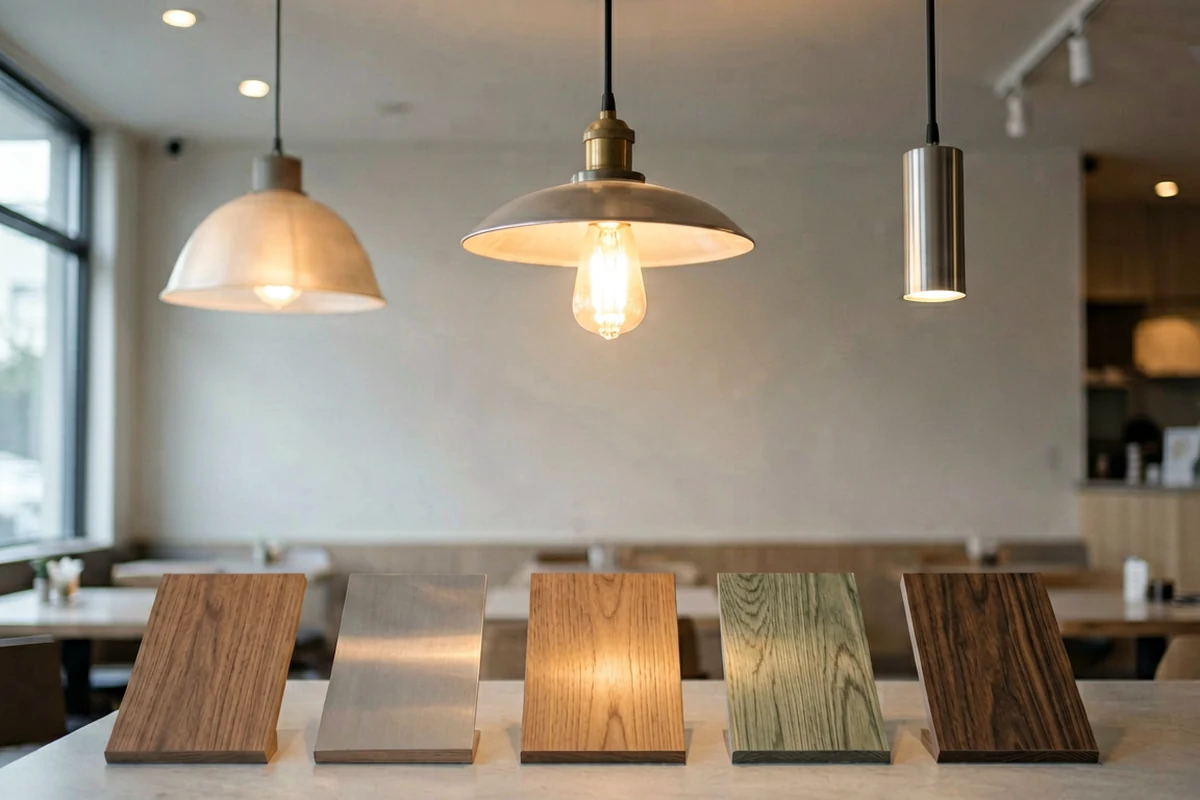
The best supplier is not simply the one with the lowest fixture price. The better question is whether the supplier can help the buyer release a fixture package with fewer open assumptions.
| Supplier behavior | Quote-only supplier | Release-ready supplier |
|---|---|---|
| Response to mood images | Sends similar-looking fixtures and unit prices | Asks for zones, quantities, mounting conditions, and finish direction |
| Technical documents | Sends photos and basic dimensions | Provides cut sheets, driver notes, finish references, and review documents |
| Samples | Treats samples as optional | Defines what sample or mockup approval will control |
| Safety and listing evidence | Uses generic claims | Provides verifiable documents for project review |
| Dimming and controls | Says the fixture is dimmable | Identifies driver and control compatibility questions |
| Handoff | Ships products | Supports packing labels, replacement path, and issue communication |
The American Society for Quality's supplier-quality guidance supports looking beyond price and considering supplier performance, support, quality, and evidence. For lighting, translate that into a release question: can this supplier help the project team approve the exact fixture package, or only sell products that resemble the concept?
Use a final release checklist before issuing the purchase order:
| Release item | Buyer should confirm |
|---|---|
| Fixture schedule | Every item has a zone, code, quantity basis, and review owner |
| Submittals | Product data, finish reference, driver or dimming notes, and certification evidence are attached when relevant |
| Samples | Accepted samples or mockup notes are named and dated |
| Controls | Dimming and control assumptions are routed to the responsible project party |
| Safety review | Supplier documents are available for local review without claiming automatic compliance |
| Packing | Carton marks connect fixture codes to the project schedule |
| Replacement path | The supplier has named what can be reordered, replaced, or supported after opening |
What to Send RON GROUP for a Lighting Supplier Review
When the team is ready to request restaurant lighting supplier support, send a small but complete review package:
restaurant floor plan or zone list;
ceiling heights and reflected ceiling plan if available;
target fixture types by zone;
reference images and finish direction;
target color-temperature direction if already chosen by the designer;
dimming or control notes;
installation country or region;
sample deadline and desired approval route;
replacement or maintenance concerns;
any local review documents the supplier must provide.
If the team still needs to organize ambiance and function before supplier comparison, the restaurant lighting design guide can help frame the conversation. For wider hospitality procurement coordination, RON GROUP's restaurant project support can be used with the lighting schedule, furniture schedule, and finish direction.
Sources and Further Reading
RON GROUP Lighting Collection supports internal product-scope and category references.
RON GROUP Project Lighting Category supports commercial project-lighting scope context.
OSHA 29 CFR 1910.37 supports exit-route lighting and marking coordination context for U.S. projects.
ENERGY STAR LED Lighting Guidance supports LED screening and heat-management discussion.
DOE FEMP Efficient Light Fixtures Guidance supports efficient fixture procurement and controls screening.
DesignLights Consortium Qualified Products List supports commercial LED product screening context.
Illuminating Engineering Society Hospitality Lighting Committee supports hospitality lighting as a specialized lighting context.
Illuminating Engineering Society Lighting Library supports lighting standards, measurement, and technical-data review context.
UL Solutions Lighting Safety Testing and Certification supports requesting verifiable lighting safety and certification documents.
U.S. International Trade Administration due diligence guidance supports supplier and partner due diligence.
American Society for Quality supplier quality guidance supports supplier-quality evaluation criteria.
Get the week's latest industry information
-
Real-Life Professional Restaurant Case Studies
Explore Now
-
Create a unique restaurant with over 95,700+products
Explore Now
-
Protessional Free 3D Restaurant Design
Explore Now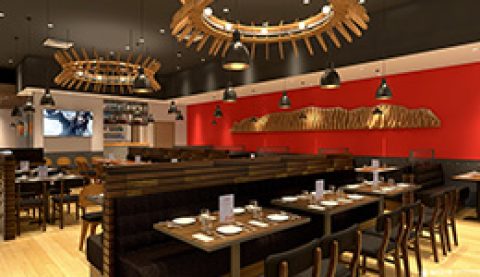
-
Still Have Questions About Opening a Restaurant?
Explore Now

Sylvia
With 8 years in catering & hospitality industry, sales manager of Ron Group, specialise in providing one stop solutions to restaurants, hotels and weddings.
Discover Our Exclusive Products
Explore our extensive range of restaurant and hotel supplies designed to enhance your operations. Find the perfect solutions to meet your needs.
Browse Our ProductsFREE 3D DESIGN
Boost your restaurant's success with our free 3D design service. Start building the restaurant of your dreams today!
Explore 3D Design Case
RECOMMENDED CASES
-
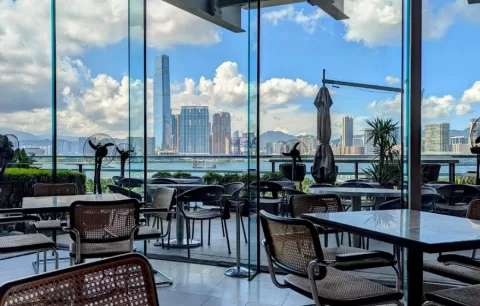
La Rambla by Catalunya: Crafting Barcelona's Soul in Hong Kong - Custom Furniture Excellence
RON Group's custom Spanish-inspired furniture elevates La Rambla with artisanal aesthetics...
Learn More -
Cardinal Point: Elevating Outdoor Seating with Tailored Cushion Upgrades
Discover how Cardinal Point transformed its outdoor dining experience with custom cushions, achievin
Learn More
RECOMMENDED BLOGS
-

Bar Glassware 101: Types, Names, Uses, and How to Stock Your Bar
Learn the 10 core bar glassware types, names, and uses. Discover how to stock your bar with the right glasses for cocktails, beer,...
Sylvia2026-07-26 -
Complete Bar Equipment List for Opening a Bar
Use a complete bar equipment list with pictures, covering workstations, ice, refrigeration, glassware, utilities, sanitation and a...
Sylvia2026-06-11 -

Low-Budget Restaurant Interior Design Ideas: Spend Where Guests and Staff Notice
Explore low-budget restaurant interior design ideas, practical material choices, layout priorities and phased upgrades without...
Sylvia2026-04-04
Subscribe to RON GROUP
Stay up-to-date with the latest industry insights and expert advice. Together, we'll create your ideal restaurant.