




Content
Operating Supplies and Equipment (OS&E) represents the operational engine of every commercial hospitality property. While architecture, interior layouts, and structural furniture define the visual identity of a property, OS&E encompasses the physical tools that guests touch, use, and evaluate every minute of their stay. From the balanced weight of an 18/10 forged stainless steel fork in the main dining room to the precise thread count and tensile strength of a 300-thread-count sateen bedsheet, OS&E directly dictates service efficiency, guest satisfaction scores, and ongoing operational expenditure.
Procuring OS&E for an opening hotel or a comprehensive brand conversion is a complex technical exercise. It demands rigorous cross-departmental coordination, strict inventory modeling, aggressive quality assurance, and uncompromising supply-chain orchestration. Misjudging par levels results in operational failure on opening day; neglecting material specifications leads to premature replacement cycles that rapidly inflate total cost of ownership (TCO).
This guide provides an end-to-end framework for hotel owners, procurement directors, general managers, and project consultants navigating the commercial OS&E procurement lifecycle.
What Does OS&E Mean in Hotels?
In the hospitality industry, OS&E stands for Operating Supplies and Equipment. It designates the movable, day-to-day items that do not have a permanent physical connection to the building structure, yet are fundamentally required to operate every department within a hotel.
Unlike core structural infrastructure or built-in millwork, OS&E items are portable, subject to continuous direct physical handling, and have a predictable rate of wear, breakage, depletion, or routine replacement.
+-------------------------------------------------------------------------+
|                         HOTEL CAPITAL ASSETS                            |
+------------------------------------+------------------------------------+
|               FF&E                 |               OS&E                 |
|  (Furniture, Fixtures & Equipment) |  (Operating Supplies & Equipment)  |
+------------------------------------+------------------------------------+
| - Built-in millwork & headboards   | - Bed linens, duvets, pillows      |
| - Casegoods (wardrobes, desks)     | - Bath towels, robes, bath mats    |
| - Upholstered sofas & lounge chairs| - Vitrified porcelain dinnerware   |
| - Custom decorative chandeliers    | - Lead-free crystal stemware       |
| - Motorized drapery tracks         | - 18/10 stainless steel flatware   |
| - Heavy primary walk-in cold rooms | - Induction chafers & buffetware   |
| - Commercial laundry extractors    | - Housekeeping cleaning carts      |
+------------------------------------+------------------------------------+
OS&E occupies a specific accounting and operational tier:
- Lifespan Horizon: OS&E items typically have an operational service life ranging from 12 months to 5 years, depending on product categorization, material density, and guest cycling intensity.
- Operational Functionality: These are the functional assets deployed by hotel associates to execute guest services (such as housekeeping caddies, chemical dosing dispensers, service trays, and front-desk keycard encoders) and the items placed directly in guest touchpoints (such as glassware, iron boards, hangers, amenities, and stationery).
- Financial Treatment: While FF&E is almost universally capitalized and depreciated over 7 to 10 years, OS&E can be classified as either depreciable short-term assets (capitalized pre-opening packages depreciated over 3 to 5 years) or expensed directly through operational departmental budgets as ongoing operating supplies.
TECHNICAL NOTE // KEY ENGINEERING STANDARD
Distinguishing operational supplies from construction items is critical during early budget architecture. If an item requires a dedicated hardwired electrical connection or in-wall plumbing hookup provided by the general contractor, it is typically managed under the construction or FF&E contract, not the OS&E package.
OS&E vs. FF&E: What Is the Difference?
A frequent point of budget confusion and scope gap during hotel development is the demarcation line between FF&E (Furniture, Fixtures, and Equipment) and OS&E (Operating Supplies and Equipment). Scope gaps between these two packages create unexpected change orders, unassigned line items, and schedule slippages immediately prior to property handover.
+------------------+----------------------------------+----------------------------------+
| Attribute        | FF&E                             | OS&E                             |
+------------------+----------------------------------+----------------------------------+
| Primary Role     | Structural, spatial, and         | Functional, guest-contact, and   |
|                  | environmental definition         | daily service execution          |
+------------------+----------------------------------+----------------------------------+
| Asset Attachment | Often anchored, hardwired,       | Loose, portable, stackable, or   |
|                  | recessed, or semi-permanent      | hand-carried                     |
+------------------+----------------------------------+----------------------------------+
| Depreciation     | Long-term capital asset          | Short-term operational asset     |
| Period           | (7 to 12 years)                  | (1 to 5 years) or expensed       |
+------------------+----------------------------------+----------------------------------+
| Replacement      | Driven by brand PIP cycles       | Driven by breakage, wear,        |
| Catalyst         | (Property Improvement Plans)     | loss, laundering fatigue, par    |
+------------------+----------------------------------+----------------------------------+
| Installation     | General contractor, millworker,  | Hotel operational teams or       |
| Requirement      | or specialized FF&E installer    | pre-opening taskforce staff      |
+------------------+----------------------------------+----------------------------------+
| Examples         | Beds, nightstands, credenzas,    | Towels, bedsheets, hangers,      |
|                  | wall sconces, carpet, banquettes | glassware, cutlery, trash cans   |
+------------------+----------------------------------+----------------------------------+
To eliminate scope confusion on the job site, professional project managers utilize the "Shake and Turn" rule: if you were to theoretically invert the completed hotel building upside down and shake it, everything that falls loose falls under the OS&E scope. Everything that remains anchored to the walls, floor, or ceiling belongs to the base building, MEP (Mechanical, Electrical, Plumbing), or FF&E contract.
While useful, this rule has exceptions. A countertop microwave or a guestroom kettle is unattached, but brand standards frequently shift loose electronics between FF&E and OS&E procurement schedules. Clarifying these boundary items in the responsibility matrix during the schematic design phase is non-negotiable.
Hotel OS&E List by Department
A mid-scale to luxury hotel requires anywhere from 1,500 to over 4,500 distinct OS&E stock keeping units (SKUs). Organizing these components by operating department prevents operational blind spots.
Guestroom and Bathroom OS&E
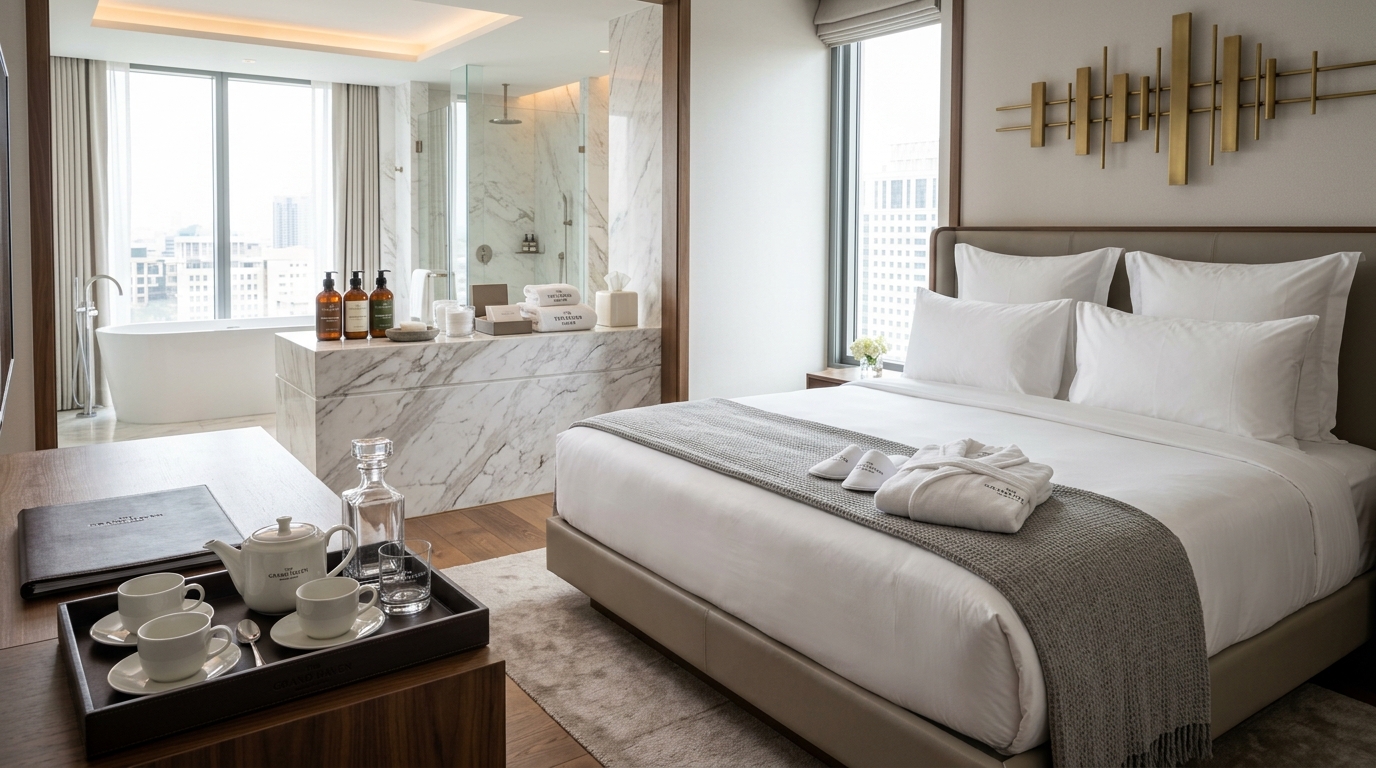
The guestroom package forms the core of the guest experience and represents the largest volume commitment in hotel OS&E procurement.
- Bedding and Sleep Systems:
- Bed linens (flat sheets, fitted sheets, duvet covers) featuring high-durability commercial blends (typically 100% long-staple combed cotton or 60/40 cotton-poly sateen weave, 250 to 400 thread count).
- Pillows (hypoallergenic down-alternative, micro-cluster fiber, or dual-chamber 70/30 duck down/feather blends).
- Mattress protectors (breathable, waterproof polyurethane backing with elasticized skirts) and box-spring encasements.
- Duvet inserts and decorative bed runners or throws designed to withstand frequent laundering.
- Bath Linens:
- Bath sheets (min. 600-700 GSM), bath towels (min. 550-650 GSM), hand towels (min. 500 GSM), and washcloths (min. 450-500 GSM), double-needle stitched to prevent hem unravelling.
- Bath mats (min. 800-1000 GSM) engineered with high water absorbency and low snagging loops.
- Guestroom Accessories and Operational Equipment:
- Wastebaskets (fire-retardant metal or wrapped composite) for bedroom and wet-rated models for bathrooms.
- Luggage racks with reinforced webbing straps and wall-protection bumpers.
- Closet infrastructure: Solid wood contoured hangers with anti-theft ring stems or closed-loop brass hooks, suit clips, and satin-padded lingerie hangers.
- In-room operational electronics: Heavy-duty steam irons with auto-shutoff safety sensors, full-size ironing boards with scorch-resistant aluminized covers, commercial hair dryers (1800W-2200W with DC or BLDC motors and ALCI plugs), and digital safes with audit trail capabilities.
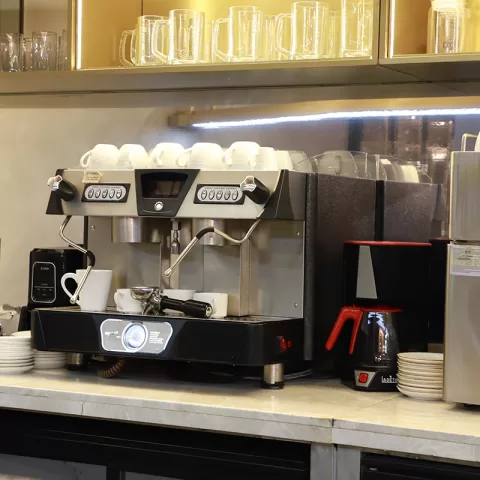
- Beverage stations: Commercial UL-listed kettles with auto-shutoff, premium single-serve capsule coffee machines, and coordinated drinkware. For specialized properties, refer to our procurement breakdown on commercial coffee shop mugs and cups.
Housekeeping and Laundry Supplies
The housekeeping department relies on durable OS&E to maintain high sanitation metrics and labor productivity.
- Housekeeping Carts: Powder-coated structural aluminum or high-density polyethylene (HDPE) carts with non-marking 8-inch pneumatic or polyurethane casters, lockable amenities drawers, and heavy-duty vinyl waste/linen collection bags.
- Commercial Vacuum Cleaners: Commercial-grade upright vacuums equipped with HEPA filtration (H13 or higher), multi-stage bypass motors, replaceable cord systems, and low-profile floor tools.
- Linen Handling Equipment: Heavy-duty canvas or vinyl laundry spring-loaded bulk trucks, soiled linen sorting hampers, and foldable transport cages.
- Janitorial Cleaning Hardware: Color-coded microfiber cleaning cloths, dual-chamber mop buckets with ergonomic gear wringers, window squeegees, safety floor signage, and chemical dispensing backflow-preventer systems.
Restaurant, Bar, Banquet, and Kitchen OS&E
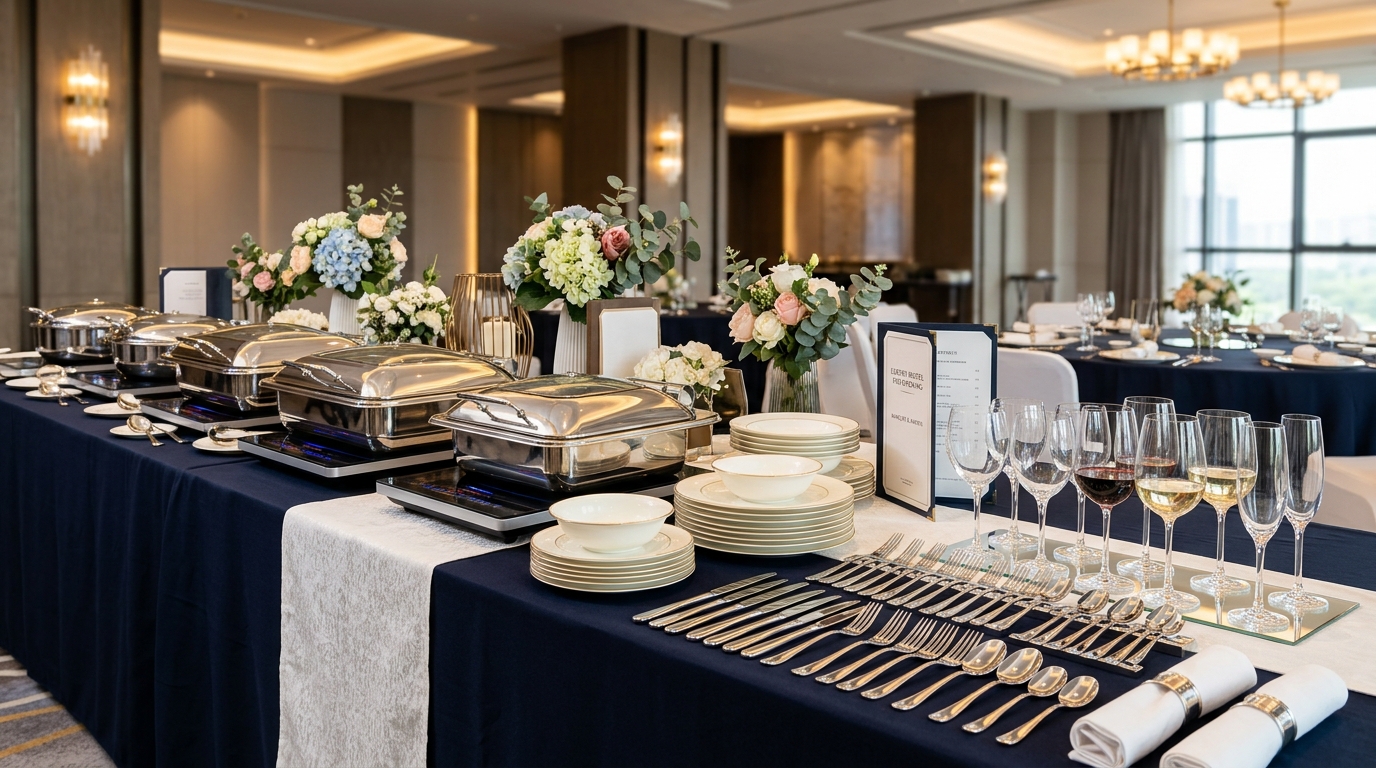
Food and beverage operations require the most technically demanding OS&E due to strict thermal, impact, and chemical resistance thresholds.
- Dinnerware (Chinaware):
- Fully vitrified commercial porcelain, alumina-reinforced ceramic, or fine bone china.
- Glaze hardness rated at minimum 6 to 7 on the Mohs scale to resist cutlery marking during commercial dishmachine washing.
- Rolled-edge rims on high-traffic banqueting lines to reduce impact edge-chipping.
- Flatware:
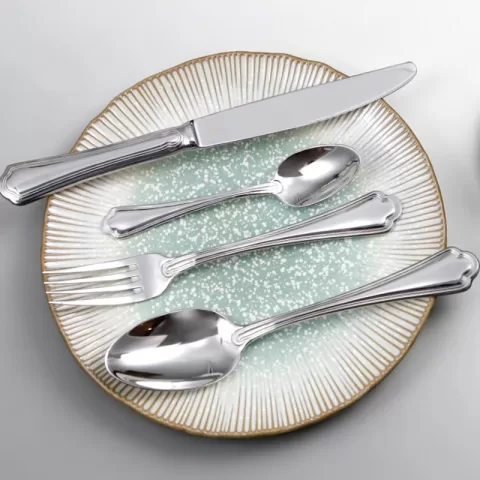
- 18/10 stainless steel (18% chromium, 10% nickel) for superior corrosion resistance and high-luster retention.
- Forged knives featuring hardened martensitic stainless steel blades (AISI 420) to retain cutting edges under aggressive dishwashing detergent exposure.
- Glassware:
- Lead-free crystal or high-clarity soda-lime glass with cold-cut fire-polished rims and laser-treated beadless edges.
- Fully tempered thermal shock-resistant lines for high-volume banqueting and room service.
- Shatterproof Tritan or polycarbonate drinkware for outdoor pools, rooftop lounges, and spa wet areas.
- Banquet and Buffet Equipment:
- Induction-compatible chafing dishes with hydraulic soft-close glass lid mechanisms and encapsulated three-ply thermal bases.
- Modular buffet risers manufactured from food-grade stainless steel, treated acacia wood, or powder-coated structural aluminum.
- Insulated beverage dispensers, carved-meat heating stations, and sneeze-guard assemblies compliant with NSF standards.
- Back-of-House (BOH) Smallwares:
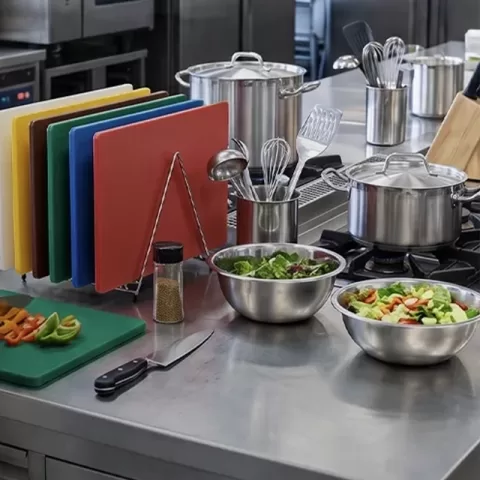
- Gastronorm (GN) food pans (201 or 304 stainless steel), heavy-gauge 3004 aluminum saute pans, commercial stockpots, color-coded HACCP cutting boards, and high-heat silicone spatulas.
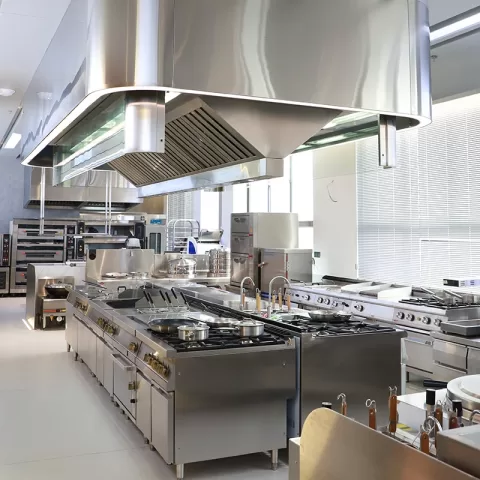
- For a master equipment layout of hot and cold production zones, consult our hotel opening equipment checklist.
Front Office and Guest-Service Supplies
The front office acts as the operational nerve center. OS&E here focuses on customer intake, logistical luggage routing, and guest movement.
- Bellman Equipment: Heavy-duty stainless steel or polished brass birdcage luggage carts with 8-inch pneumatic shock-absorbing wheels and fully carpeted decks with wrap-around rubber bumpers.
- Front Desk Operational Gear: High-frequency RFID/NFC keycard encoders, optical passport/ID scanners, cash-drop safes, desk organizers, and heavy-duty luggage tag systems.
- Queue Management: Stanchions with woven retractable safety belts (minimum 2.5-meter belt length with controlled-damping retraction) or classic velour ropes with weighted brass bases.
- Concierge Supplies: Umbrella stands, high-volume wet umbrella bag wrapping dispensers, directional stanchion sign frames, and dispatch equipment.
Spa, Fitness, Pool, Engineering, and Security Items
- Pool and Spa: Heavy-weight chlorine-resistant pool towels (minimum 100% carded ring-spun cotton with vat dyeing to resist UV degradation), non-metallic pool tray caddies, and silicone/polycarbonate glassware.
- Fitness Center: Sanitizing wipe stations, branded antimicrobial exercise mats, kettlebell racks, yoga blocks, and audio/headphone disposable dispensers.
- Engineering and Maintenance Tools: Portable digital multimeters, professional cordless tool platforms (18V-20V commercial brush-less platforms), heavy-duty fiberglass step ladders (Type IA ANSI-rated 300 lb capacity), and mechanical service toolboxes.
- Security Infrastructure: Long-range UHF two-way radios with noise-canceling surveillance earpieces, digital key-control lockboxes with mechanical tracking pegs, and handheld metal-detecting wands.
How to Calculate Opening Quantities and Par Levels
Determining the opening purchase volume for OS&E is not a guessing game; it requires strict algorithmic modeling based on room count, seat capacity, laundry turnaround frequency, and historical attrition metrics.
The baseline metric used across hospitality management is the Par Level. A par level of "1 Par" represents the exact total quantity of an item needed to equip the entire hotel simultaneously under 100% operational capacity.
+-----------------------------------------------------------------------------------+
|                        PAR LEVEL DISTRIBUTION ARCHITECTURE                        |
|                                                                                   |
|  [ PAR 1: IN USE ]        [ PAR 2: LAUNDRY CYCLE ]     [ PAR 3: FLOOR STORAGE ]   |
|  Dressed on the bed       Soiled, in transport,        Clean, folded, staged on   |
|  or hung in bathrooms     or in active wash/dry/iron   housekeeping linen closets |
|                                                                                   |
|  [ PAR 4: MAIN LINEN ROOM ]                       [ PAR 0.5: CENTRAL BUFFER ]     |
|  Bulk stock ready for distribution                Unopened master reserve box     |
|  to guest floor pantries                          stored for seasonal attrition   |
+-----------------------------------------------------------------------------------+
Guestroom Linen Par Formulas
For linen and terry items, the industry standard relies on a 3.5 to 4.5 Par structure depending on whether the laundry operation is internal (On-Premise Laundry - OPL) or outsourced to a commercial industrial laundry contractor.
Total Opening Linen Units = Total Active Inventory Positions x Target Par Level x (1 + Pre-Opening Waste/Setup Buffer)
Where:
- Active Inventory Positions: The number of physical positions in active guest service. (e.g., A 200-key property with 120 King beds and 80 Double-Queen beds requires 280 active bed positions).
- OPL Par Baseline (3.5 Par):
- 1.0 Par in the guestrooms (on the beds).
- 1.0 Par soiled (in transit or actively being processed in the laundry facility).
- 1.0 Par clean (stored in floor linen pantries ready for today's turn).
- 0.5 Par resting (allowing cotton fibers to rehydrate and rest for 24 hours post-ironing, which extends textile life by up to 25%).
- Outsourced Commercial Laundry Par Baseline (4.0 to 4.5 Par):
- Adds an additional 0.5 to 1.0 Par to buffer against weekend transit delays, logistics failures, and external processing bottlenecks.
+-------------------+-------------------+--------------------+----------------------+
| Item Category     | OPL In-House Par  | Outsourced Laundry | Breakage/Loss Buffer |
+-------------------+-------------------+--------------------+----------------------+
| Bed Sheets        | 3.5 Par           | 4.5 Par            | 10% annual           |
| Duvet Covers      | 3.0 Par           | 4.0 Par            | 8% annual            |
| Bath Towels       | 4.0 Par           | 4.5 - 5.0 Par      | 15% annual           |
| Washcloths        | 4.5 Par           | 5.5 Par            | 25% annual (high)    |
| Pillows / Inserts | 1.1 Par           | 1.1 Par            | 5% annual            |
+-------------------+-------------------+--------------------+----------------------+
Food and Beverage Chinaware and Glassware Formulas
In F&B procurement, par levels are established by multiplying Total Restaurant Seats (or Banquet Capacity) by an operational turnover multiplier, combined with a structural reserve for dishwashing turnarounds.
Total F&B Units = Total Physical Covers x Operational Multiplier x Shift Turnover Buffer
+-------------------------+--------------------+-------------------+--------------------+
| Product Class           | Fast-Casual Dining | Fine Dining / Bar | Banquet Operations |
+-------------------------+--------------------+-------------------+--------------------+
| Dinner Plates           | 2.5 x Seats        | 3.0 x Seats       | 1.5 x Max Capacity |
| Bread / Side Plates     | 2.0 x Seats        | 2.5 x Seats       | 1.2 x Max Capacity |
| Water Goblets           | 3.0 x Seats        | 2.5 x Seats       | 1.5 x Max Capacity |
| Wine Glasses (Red/White)| 2.0 x Seats        | 3.5 x Seats       | 1.5 x Max Capacity |
| Dinner Forks            | 3.0 x Seats        | 3.5 x Seats       | 2.0 x Max Capacity |
| Steak / Dinner Knives   | 2.5 x Seats        | 3.0 x Seats       | 1.5 x Max Capacity |
+-------------------------+--------------------+-------------------+--------------------+
EXECUTIVE MANDATE // PROCUREMENT COMPLIANCE AUDIT
Banquet operations do not calculate par levels based on daily covers. They calculate based on the Maximum Fire Capacity of the Main Ballroom, ensuring that the property can cater a fully seated dual-session banquet without requiring mid-service dishwashing cycles.
Build an OS&E Budget and Procurement Schedule
The OS&E timeline must be reverse-engineered from the property's soft-opening date. OS&E items can require extended manufacturing, testing, and shipping lead times. A failure to execute purchase orders early in the timeline results in expensive air freight or bare guestrooms on opening day.
+-----------------------------------------------------------------------------------+
|                        OS&E PROCUREMENT MASTER TIMELINE                           |
+-----------------------------------------------------------------------------------+
| T-12 Months | Finalize brand matrix, room counts, and operational concepts.       |
| T-10 Months | Establish itemized budgets and complete first RFQ drafts.           |
| T-8 Months  | Review golden samples, complete factory audits, issue purchase orders.|
| T-5 Months  | Production milestones verified; mass production QC sign-off.        |
| T-3 Months  | Global freight dispatch (ocean containers sealed and tracked).       |
| T-2 Months  | Port clearance, off-site consolidation warehouse intake & audit.   |
| T-1 Month   | Phased room-by-room drop; staff training on operating hardware.    |
| Opening Day | Operational deployment complete; baseline inventory recorded.       |
+-----------------------------------------------------------------------------------+
OS&E Budget Allocation Guidelines
While regional economic factors influence the final line item totals, typical OS&E budgets by chain scale generally adhere to the following 2026 investment benchmarks (expressed as total OS&E cost per guest key, including F&B and back-of-house allocation):
- Midscale Properties (3-Star): $2,000 to $3,500 per key.
- Upscale / Upper-Upscale (4-Star): $4,500 to $7,500 per key.
- Luxury / Ultra-Luxury (5-Star): $9,000 to $16,000+ per key.
+--------------------------------------------------+------------------------------+
| Departmental Allocation                          | Percentage of OS&E Budget    |
+--------------------------------------------------+------------------------------+
| Guestrooms, Suites, and Bathrooms                | 35% - 42%                    |
| Food and Beverage (Front and Back of House)      | 28% - 35%                    |
| Housekeeping and Laundry Equipment               | 12% - 15%                    |
| Front Office, Uniforms, Luggage Handling         | 5% - 8%                      |
| Engineering, Safety, Pool, and Spa               | 5% - 8%                      |
| Unallocated Project Contingency Reserve          | 5%                           |
+--------------------------------------------------+------------------------------+
Write Specifications and an OS&E RFQ
Vague item specifications result in non-compliant vendor bids, low-quality materials, and early product failures. Every item on an OS&E Request for Quotation (RFQ) requires unambiguous technical specifications, performance tolerances, and regulatory standards.
+-----------------------------------------------------------------------------------+
|                       POOR SPECIFICATION vs. PROFESSIONAL RFQ                     |
+-----------------------------------------------------------------------------------+
| POOR SPECIFICATION:                                                               |
| "White ceramic dinner plate, round, approximately 10 inches, high quality, 500 pcs"|
+-----------------------------------------------------------------------------------+
| PROFESSIONAL PROCUREMENT SPECIFICATION:                                           |
| "Item Code: DP-105-VIT                                                            |
| Description: Fully vitrified high-alumina commercial porcelain dinner plate.      |
| Dimensions: 270 mm (+/- 1.5 mm) diameter, rim height 22 mm, weight 740 g (+/- 25g)|
| Glaze Hardness: Mohs Scale 6.5 minimum; lead and cadmium compliant (FDA/EU).     |
| Thermal Performance: Thermal shock resistant from 20 deg C to 200 deg C without   |
| micro-crazing; dishmachine safe for 2,500+ commercial cycles using 65 deg C wash  |
| and 85 deg C sanitizing rinse. Reinforced rolled edge with chipping guarantee.   |
| Quantity: 600 pieces. Packaging: 6-piece inner carton, export drop-test master."  |
+-----------------------------------------------------------------------------------+
Essential Technical Specifications Checklist
- Textiles and Linens:
- Yarn count (e.g., 40s, 60s, or 80s single-pick yarn).
- Fiber composition (e.g., 100% long-staple cotton vs. 60/40 ring-spun cotton-polyester).
- Tensile and tear strength standards (ASTM D5034 / ASTM D2261).
- Colorfastness to laundering and chlorine bleach (AATCC 61).
- Shrinkage threshold (maximum 3% to 5% post-five commercial washes).
- Dinnerware and Hollowware:
- Vitrification level (water absorption rate strictly below 0.5% per ASTM C373; bone china under 0.2%).
- Thermal shock tolerance (ASTM C554).
- Food safety certification (US FDA Compliance Policy Guide 7117.06/07 for leachable lead and cadmium; EU Framework Regulation EC 1935/2004).
- Flatware and Metalware:
- Metallurgical grade (AISI Type 304 / 18/10 stainless steel for forks, spoons, and hollowware).
- Corrosion resistance and passivation treatment (ISO 8442-1 standard for materials in contact with food).
- Blade steel grade (AISI 420 Martensitic stainless steel, hardened and tempered to 48-52 HRC).
- Guestroom Electricals:
- Safety approvals: UL, ETL, CE, or regional electrical safety certifications.
- Commercial duty features: Automatic shutoff circuits, tamper-resistant screws, heavy-gauge rubber cords, and low electromagnetic interference (EMI) profiles.
Samples, Quality Checks, and Compliance Evidence
Never release an OS&E production run based solely on digital product sheets or non-representative physical samples. Implement a strict, three-tier sampling and quality-control protocol.
+-----------------------------------------------------------------------------------+
|                        THREE-TIER SAMPLE APPROVAL PIPELINE                        |
+-----------------------------------------------------------------------------------+
|                                                                                   |
|  [ 1. PROTOTYPE / OFF-THE-SHELF ] ---> Initial aesthetic, weight, and             |
|                                        dimensional evaluation by ownership/design |
|                                                                                   |
|  [ 2. GOLDEN SAMPLE SIGN-OFF ]   ---> Factory-sealed reference benchmark.         |
|                                        One stays with buyer, one with production  |
|                                                                                   |
|  [ 3. MASS PRODUCTION PULL ]     ---> AQL 1.5 / 4.0 inspection samples pulled     |
|                                        directly from crated shipping runs         |
+-----------------------------------------------------------------------------------+
Pre-Shipment Inspection and Acceptance Quality Limit (AQL)
Prior to releasing final balance payments to manufacturing plants, an independent pre-shipment inspection (PSI) should be performed using the internationally recognized ISO 2859-1 (ANSI/ASQ Z1.4) sampling standard.
- Inspection Level II (General Inspection): Standard protocol for hotel OS&E bulk shipments.
- AQL Limits:
- Critical Defects (0% allowed): Safety hazards, sharp glass/metal burrs, exposed wiring, non-certified electrical cords.
- Major Defects (AQL 1.5% - 2.5%): Dimensional out-of-tolerance, significant color variance from golden sample, missing components, failed thermal shock resistance.
- Minor Defects (AQL 4.0%): Minor cosmetic blemishes, loose packaging tape, minor packaging scuffs that do not affect functionality or presentation.
SOURCING AUDIT TIP // DIRECT PROCUREMENT SPECIFICATION
Perform on-site stress tests during factory audits. Take random samples of chinaware directly off the packing line and subject them to sudden thermal shifts (e.g., ice-water bath immersion immediately followed by 100 deg C steam exposure) to confirm the integrity of the glaze and body.
Shipping, Receiving, Storage, and Pre-Opening Distribution
OS&E supply chain logistics represent an operational bottleneck where projects often encounter unexpected costs and damage. Coordinating hundreds of multi-category SKUs requires an understanding of commercial freight realities.
+-----------------------------------------------------------------------------------+
|                           LOGISTICS REALITY FRAMEWORK                             |
+-----------------------------------------------------------------------------------+
| FACTORY GATE (FOB / EXW)                                                          |
| Direct factory packing into 20GP, 40GP, or 40HQ dry containers.                  |
| Container sealed at origin; zero intermediary cross-docking for FCL shipments.    |
|                                                                                   |
| FREIGHT CONSOLIDATION (LCL vs. FCL)                                               |
| - FCL (Full Container Load): Best for bulk linens, guestroom packages, chinaware. |
| - LCL (Less than Container Load): Avoid CIF terms; use DDP door-to-door or        |
|   buyer's designated forwarder under clear FOB terms to avoid destination port    |
|   terminal handling fee markups.                                                  |
|                                                                                   |
| SITE ARRIVAL / PORT OF ENTRY                                                      |
| B2B transport delivers curbside or onto an offloading loading dock only.         |
| NO white-glove inside delivery or driver carry upstairs is provided by freight   |
| carriers. The hotel project team must coordinate manual offloading labor.         |
|                                                                                   |
| STAGING & MARSHALLING (Warehouse vs. On-Site)                                     |
| Deliver to an off-site consolidation warehouse within 30 miles of the hotel site. |
| Sort, tag, and palletize by floor and room number before final property drops.   |
+-----------------------------------------------------------------------------------+
Port-to-Property Logistical Rules
- FCL vs. LCL Execution:
- Shipments containing breakables (glassware, chinaware) should be moved via Full Container Loads (FCL) whenever possible. Factory-loaded and sealed containers experience significantly fewer handling transfers than Less-than-Container Loads (LCL), reducing damage rates from 8% down to under 0.5%.
- Where LCL shipments are necessary, avoid CIF (Cost, Insurance, and Freight) terms. CIF pricing frequently conceals aggressive destination terminal handling fees. Instead, contract directly under FOB (Free on Board) terms using your nominated freight forwarder, or execute via complete DDP (Delivered Duty Paid) with transparent, all-inclusive terms.
- Unloading Expectations:
- Commercial logistics carriers deliver strictly to the designated property receiving dock or curbside apron. Freight drivers do not unpack containers, transport items across interior hallways, or carry boxes upstairs.
- The property must contract specialized rigging labor or mobilize the pre-opening taskforce, equipped with hydraulic pallet jacks, dock levelers, hand trucks, and staging hampers to clear delivery containers within the free demurrage window (typically 2 hours from truck arrival).
- Off-Site Consolidation Warehouse:
- Attempting to receive hundreds of mixed OS&E pallets directly onto an active, uncompleted hotel construction site creates clutter, damage, and inventory loss.
- Contract an off-site, climate-controlled consolidation warehouse 60 to 90 days before the property's opening date. Shipments are cross-docked, inspected for freight damage, organized into floor-by-floor kits (e.g., "Pallet 14: Floor 3 Guestroom Linen Set"), and dispatched to the hotel property in sequenced truckloads as rooms are signed off by the general contractor.
Replenishment Planning After the Hotel Opens
Procurement does not end on opening day. A successful operational handover requires transitioning from pre-opening project procurement to ongoing departmental replacement modeling.
Operating supplies suffer from steady, predictable annual attrition due to physical breakage, industrial laundry abrasion, accidental disposal, and guest theft.
+-----------------------------------+-----------------------------------+
| Item Category                     | Expected Annual Attrition Rate    |
+-----------------------------------+-----------------------------------+
| Bar and Restaurant Stemware       | 25% - 40%                         |
| Restaurant Plates and Bowls       | 15% - 25%                         |
| Flatware (Forks, Spoons, Knives)  | 10% - 15%                         |
| Bed Linens (Sheets/Pillowcases)   | 15% - 20%                         |
| Bath Towels and Washcloths        | 20% - 30%                         |
| Guestroom Hangers and Irons       | 5% - 10%                          |
+-----------------------------------+-----------------------------------+
Reorder Point (ROP) Formula for Hotel Inventory
To prevent stockouts without tying up excessive working capital in back-of-house storage, the procurement manager must implement an automated Reorder Point model for all continuous-use OS&E items:
Reorder Point (ROP) = (Average Daily Consumption x Lead Time in Days) + Safety Stock Buffer
Where:
- Average Daily Consumption: Historical replacement burn rate across all shifts.
- Lead Time: Total calendar days required from purchase order approval, through manufacturing, freight transit, customs clearance, to physical delivery at the dock.
- Safety Stock Buffer: Additional par units allocated to handle unexpected occupancy spikes, large banqueting buyouts, or international logistics delays.
EXECUTIVE MANDATE // PROCUREMENT COMPLIANCE AUDIT
When choosing chinaware, flatware, and glassware patterns, verify the manufacturer's Factory Line Continuity Guarantee. Reputable commercial manufacturers guarantee open-stock availability for standard collections for 5 to 10 years, ensuring that ongoing replenishment matches the original opening profiles without requiring premature, property-wide pattern updates.
Hotel OS&E Procurement Checklist
This structured checklist outlines each critical milestone across the complete OS&E lifecycle:
[ ] PHASE 1: CONCEPTUALIZATION & SCOPE MAPPING (T-12 to T-10 Months)
    [ ] Establish project budget based on property star rating and key count.
    [ ] Define interface matrix separating FF&E, OS&E, and base-building MEP scopes.
    [ ] Review and document brand standard compliance specifications.
    [ ] Establish property linen par levels (3.5 Par OPL vs. 4.5 Par Outsourced).

[ ] PHASE 2: TECHNICAL SPECIFICATION & RFQ ISSUANCE (T-10 to T-8 Months)
    [ ] Draft line-item technical sheets detailing material grades, ASTM/ISO codes, and dimensions.
    [ ] Incorporate dishmachine cycle thresholds, flame retardancy, and food-contact compliance.
    [ ] Issue RFQ packages to pre-qualified commercial hospitality manufacturers.
    [ ] Secure factory warranty documentation and replacement continuity guarantees.

[ ] PHASE 3: SAMPLE EVALUATION & CONTRACTING (T-8 to T-6 Months)
    [ ] Inspect physical production samples against functional parameters.
    [ ] Conduct destructive drop-testing and thermal shock testing on chinaware and glassware.
    [ ] Formalize and sign Golden Sample reference units for each custom SKU.
    [ ] Issue Purchase Orders with milestone-based payment schedules.

[ ] PHASE 4: PRODUCTION MONITORING & QUALITY ASSURANCE (T-6 to T-3 Months)
    [ ] Track raw material sourcing and manufacturing output against master milestones.
    [ ] Conduct Third-Party Pre-Shipment Inspection (PSI) utilizing ISO 2859-1 Level II (AQL 1.5/4.0).
    [ ] Verify inner packaging drop-test certifications (ISTA 1A/2A standards).
    [ ] Secure container loading supervision reports with photographic verification.

[ ] PHASE 5: FREIGHT, WAREHOUSING & SITE DISTRIBUTION (T-3 to T-0 Months)
    [ ] Route ocean freight containers (prioritizing FCL over LCL to minimize damage).
    [ ] Secure off-site consolidation staging warehouse facility.
    [ ] Coordinate dock staging access, offloading labor, and safety pallet handling tools.
    [ ] Execute room-by-room drop schedules following general contractor handover.
    [ ] Train departmental staff on hardware maintenance, storage, and chemical dosing.
Frequently Asked Questions About Hotel OS&E
What does OS&E stand for in the hotel industry?
OS&E stands for Operating Supplies and Equipment. It encompasses all the loose, functional, non-permanent items used daily by hotel associates and guests, including bed linens, towels, dinnerware, glassware, flatware, housekeeping carts, uniform apparel, cleaning gear, and guestroom amenities.
What is the primary difference between OS&E and FF&E?
FF&E (Furniture, Fixtures, and Equipment) consists of larger, semi-permanent, or built-in assets such as headboards, desks, sofas, credenzas, custom lighting, and primary commercial laundry machinery, which are capitalized and depreciated over 7 to 12 years. OS&E consists of portable, smaller, guest-contact items with an operational lifespan of 1 to 5 years, often depreciated quickly or expensed directly through departmental operating budgets.
How much does an OS&E package cost per room for an opening hotel?
Total OS&E allocation varies by positioning and service scope:
- 3-Star (Select Service): $2,000 to $3,500 per key.
- 4-Star (Full Service): $4,500 to $7,500 per key.
- 5-Star (Luxury): $9,000 to $16,000+ per key.
These figures reflect the blended cost per room, including the shared burden of food and beverage smallwares, banqueting equipment, housekeeping, and front office assets.
Why do hotels need 3.5 to 4.5 Par for linens?
Hotels utilize multi-par inventory systems to ensure continuous operations. One par is on the beds, one par is in laundry hampers or active wash cycles, one par is clean and staged in floor storage closets, and the remaining 0.5 to 1.5 par is resting in central storage. Resting extends textile lifespan by allowing cotton fibers to normalize after commercial ironing stress, while the buffer protects against delivery delays from third-party industrial laundries.
Can freight companies deliver hotel OS&E directly into guestrooms?
No. Standard commercial freight contracts provide only curbside, street-level, or loading dock offloading. Carriers do not provide inside delivery, unpacking, or vertical transport up freight elevators. Hotel owners must plan and budget for specialized on-site receiving teams or route shipments through an off-site consolidation warehouse with dedicated distribution logistics.
Conclusion: Partnering with Ron Group for Hotel OS&E Procurement
Executing a multi-category OS&E procurement program requires extensive technical expertise, reliable manufacturing sources, and structured logistics management. Missteps in material specification, factory quality control, or shipping consolidation can result in budget overruns, property opening delays, and operational friction.
Ron Group provides integrated, end-to-end OS&E procurement solutions for the global commercial hospitality sector. With decades of manufacturing relationships, direct factory oversight, stringent quality inspection protocols, and global consolidation capabilities, Ron Group helps hotel owners, operators, and developers streamline their procurement process. Whether you are outfitting a boutique property, converting a full-service hotel, or constructing a multi-key luxury resort, our procurement specialists deliver commercial packages aligned with your design vision, operational performance requirements, and capital budget.
Get the week's latest industry information
-
Real-Life Professional Restaurant Case Studies
Explore Now
-
Create a unique restaurant with over 95,700+products
Explore Now
-
Protessional Free 3D Restaurant Design
Explore Now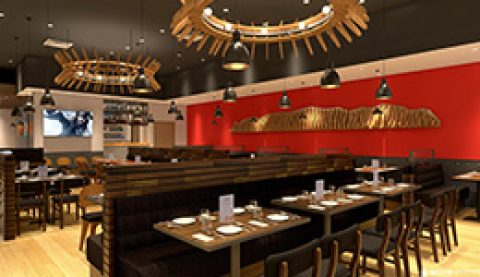
-
Still Have Questions About Opening a Restaurant?
Explore Now

Sylvia
With 8 years in catering & hospitality industry, sales manager of Ron Group, specialise in providing one stop solutions to restaurants, hotels and weddings.
Discover Our Exclusive Products
Explore our extensive range of restaurant and hotel supplies designed to enhance your operations. Find the perfect solutions to meet your needs.
Browse Our ProductsFREE 3D DESIGN
Boost your restaurant's success with our free 3D design service. Start building the restaurant of your dreams today!
Explore 3D Design Case
RECOMMENDED CASES
-
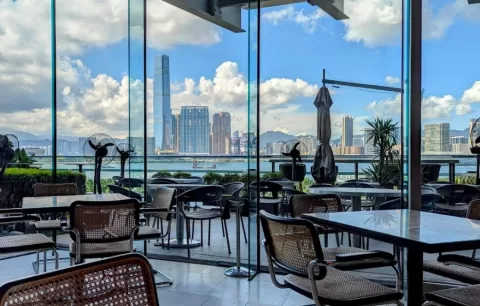
La Rambla by Catalunya: Crafting Barcelona's Soul in Hong Kong - Custom Furniture Excellence
RON Group's custom Spanish-inspired furniture elevates La Rambla with artisanal aesthetics...
Learn More -

Cardinal Point: Elevating Outdoor Seating with Tailored Cushion Upgrades
Discover how Cardinal Point transformed its outdoor dining experience with custom cushions, achievin
Learn More
RECOMMENDED BLOGS
-

Bar Glassware 101: Types, Names, Uses, and How to Stock Your Bar
Learn the 10 core bar glassware types, names, and uses. Discover how to stock your bar with the right glasses for cocktails, beer,...
Sylvia2026-07-26 -

Complete Bar Equipment List for Opening a Bar
Plan a complete commercial bar equipment list by menu, service volume, refrigeration, ice, glassware, utilities, sanitation,...
Sylvia2026-06-11 -

Low Budget Restaurant Interior Design: 2026 Trends
Prioritize a low-budget restaurant interior by protecting code, operations, durability, accessibility, and phased design decisions...
Sylvia2026-04-04
Subscribe to RON GROUP
Stay up-to-date with the latest industry insights and expert advice. Together, we'll create your ideal restaurant.