










Content

A commercial kitchen equipment checklist should do more than name the machines a restaurant might buy. It should help the project team turn the menu, service model, utilities, installation route, sanitation plan, and supplier quote into one equipment schedule that can be reviewed before money is committed.
This refreshed checklist keeps the existing page as the broad planning hub for restaurant and hospitality kitchen equipment. It is not a layout workflow guide. Use it to define what belongs in the equipment package, what information each supplier needs, and what review points should be cleared before requesting final quotations.
For RON GROUP projects, the checklist is normally reviewed with the menu, floor plan, operating concept, destination market, equipment schedule, utilities, installation responsibility, service expectations, and opening timeline. The goal is a quote-ready package, not a generic shopping list.
In This Checklist
Start with the operating concept before choosing equipment categories.
Build a supplier-ready equipment schedule.
Check cooking, refrigeration, preparation, warewashing, storage, sanitation, and support equipment.
Record utility, installation, cleaning, and service requirements before supplier comparison.
Connect kitchen equipment planning with budget, lifecycle, bar-area, and procurement decisions.
Start with the Restaurant Concept and Menu
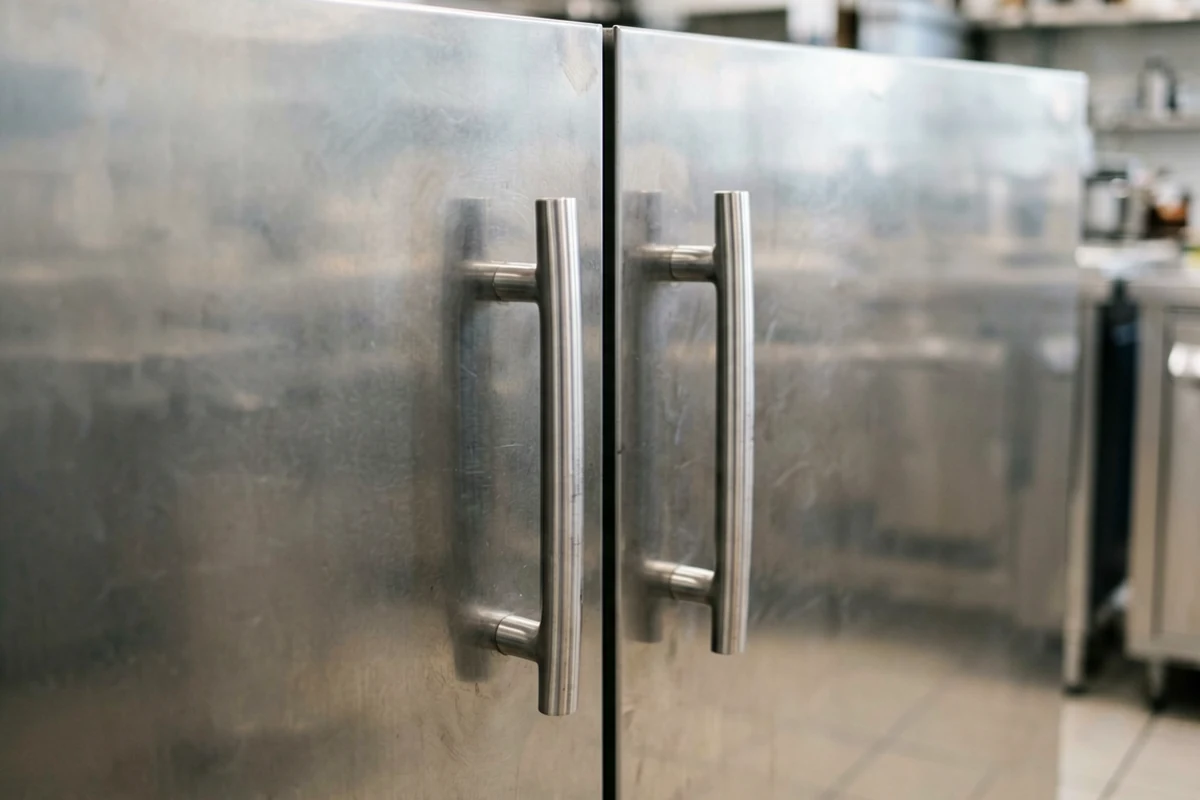
The equipment list should begin with the work the kitchen must perform. A cafe, hotel breakfast room, banquet kitchen, fast-casual restaurant, ghost kitchen, and full-service restaurant can all need different equipment even when their category names look similar.
Record these planning inputs first:
| Planning input | What to document before equipment selection |
|---|---|
| Menu | Core dishes, preparation methods, holding needs, beverage service, and future menu flexibility |
| Service model | Dine-in, takeaway, delivery, room service, buffet, banquet, or mixed operation |
| Peak period | The busiest production, plating, warewashing, and restocking window |
| Staff model | Who receives, prepares, cooks, plates, washes, cleans, and restocks during service |
| Space condition | New build, renovation, existing kitchen reuse, or landlord-provided services |
| Destination market | Local utility standards, review process, installation conditions, and service availability |
Do not ask suppliers to quote a final package until the buyer can explain how food, staff, dirty ware, clean items, waste, and supplies move through the operation. The checklist can be broad, but the quote should be based on the real project.
Build the Equipment Schedule First
An equipment schedule is the working document that turns a checklist into something suppliers, designers, operators, and installers can review. It should include each major item, its role, quantity basis, preferred specification, utility needs, installation responsibility, and service notes.
| Schedule field | Why it matters |
|---|---|
| Item category | Groups the package into cooking, refrigeration, prep, warewashing, storage, and support areas |
| Required or optional | Separates opening-critical equipment from future upgrades or alternatives |
| Quantity basis | Shows whether the count comes from the menu, service stations, storage needs, or workflow |
| Dimensions | Confirms fit, delivery route, door swing, cleaning access, and replacement access |
| Utility requirements | Records electrical, water, drainage, gas, ventilation, and heat-related assumptions |
| Installation scope | Clarifies who delivers, positions, connects, tests, commissions, and trains staff |
| Service plan | Documents warranty, parts, technician access, maintenance expectations, and downtime risk |
Use the commercial kitchen equipment category when the project is ready to move from planning categories into product review and quotation. The category link is most useful after the team has a clear equipment schedule, not at the first brainstorming stage.
Cooking Equipment Checklist
Cooking equipment depends on the menu, production volume, ventilation approach, available utilities, and staff workflow.
Common planning categories include:
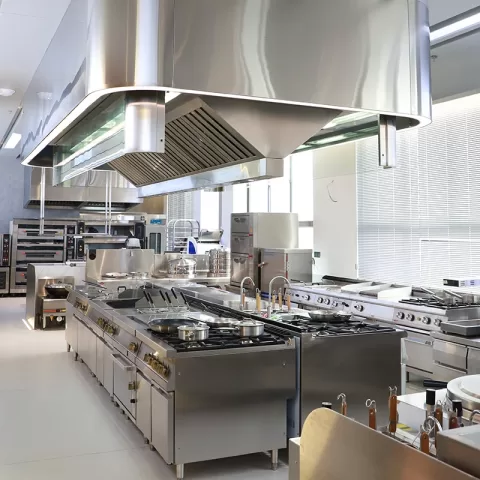
Ranges
Ovens
Combi ovens
Fryers
Griddles
Charbroilers
Steamers
Stock pot stoves
Holding cabinets
Heated pass or finishing equipment
Before approving cooking equipment, confirm:
Which menu items require each cooking method.
Whether the equipment needs gas, electric, water, drainage, or ventilation coordination.
Whether heat, steam, smoke, grease, or odor affects the surrounding plan.
Whether the equipment can be cleaned and serviced after installation.
Whether the supplier quote includes options, accessories, stands, casters, connectors, and commissioning.
Avoid choosing a cooking line because it looks complete in a catalog. The correct package is the one that supports the menu, fits the project utilities, and can be installed, cleaned, and serviced in the real kitchen.
Refrigeration and Cold Storage Checklist
Refrigeration should be planned from ingredient storage, prep timing, service access, and backup needs. The buyer should separate bulk storage, line storage, prep storage, beverage storage, frozen storage, and specialty items instead of treating refrigeration as one category.
Common planning categories include:
Walk-in coolers and freezers
Reach-in refrigerators and freezers
Undercounter refrigeration
Refrigerated prep tables
Blast chilling or specialty cold equipment where required by the menu
Beverage refrigeration where the kitchen supports bar or service areas
Check these points before supplier comparison:
| Checkpoint | Planning question |
|---|---|
| Storage role | Is the unit for receiving stock, prep, line service, backup, or display? |
| Access pattern | Who opens it during peak service, and does the door or drawer block the work path? |
| Temperature responsibility | Who records, monitors, and responds to temperature issues? |
| Cleaning access | Can staff clean around coils, gaskets, shelving, casters, drains, and surrounding floor areas? |
| Service access | Can technicians reach panels, condensers, filters, and replacement parts? |
The equipment schedule should also show what happens if a critical refrigerator fails. That does not require a complex risk model; it requires the buyer to identify which cold items are essential to service and how they will be protected.
Food Preparation Equipment Checklist
Preparation equipment should match the food production method. For many restaurants, the prep area carries as much operational risk as the cookline because it affects labor, sanitation, storage, and speed before service begins.
Potential equipment and fixtures include:
Stainless worktables
Prep sinks
Mixers
Food processors
Slicers
Vegetable preparation equipment
Scales
Ingredient bins
Shelving
Refrigerated prep bases
Mobile carts
Before ordering, confirm:
Which tasks happen before service and which happen during service.
Whether raw and ready-to-eat preparation need separate time, space, tools, or storage.
Where clean utensils, cutting boards, pans, and containers are stored.
Whether the prep team can reach refrigeration, dry storage, cooking, and warewashing without crossing dirty routes.
Whether tables, sinks, shelves, and mobile equipment leave enough access for cleaning and inspection.
This section should remain a checklist. Detailed numeric prep-capacity decisions should be handled in a separate project-specific review.
Warewashing and Sanitation Equipment Checklist
Warewashing equipment should be selected from the dirty-item load, item mix, rack handling, staff flow, utilities, and clean-storage needs. Do not choose a dishwasher only from its catalog category.
A basic warewashing package may include:
Dishwasher
Pre-rinse or scraping area
Dirty landing space
Clean landing space
Sinks
Racks
Chemical storage
Drying and inspection area
Clean storage
Waste handling
Record these questions in the checklist:
| Area | What to confirm |
|---|---|
| Dirty return | Where plates, pans, glasses, trays, and utensils arrive from service or production |
| Sorting and scraping | Who sorts, scrapes, rinses, and racks items before washing |
| Machine selection | Whether the dishwasher type matches the item load and available utilities |
| Clean landing | Where items dry, get inspected, and return to storage or service |
| Chemical handling | Where cleaning products are stored, labeled, accessed, and separated |
| Maintenance | Who cleans filters, checks chemicals, reports issues, and schedules service |
If the kitchen also supports beverage service, coordinate the dish area with glassware racks, ice handling, and bar return routes. Use the bar equipment checklist only when the project includes a bar, service bar, beverage station, ice program, or glasswashing loop.
Storage, Shelving, and Smallwares Checklist
Storage equipment is often under-scoped because it is less visible than cooking and refrigeration. A practical kitchen checklist should include dry goods, smallwares, cleaning tools, backup stock, service items, packaging, and maintenance supplies.
Include these categories:
Dry storage shelving
Ingredient bins
Wall shelves
Mobile racks
Dunnage racks
Pan racks
Knife and utensil storage
Pot and pan storage
Cleaning tool storage
Chemical storage
Waste and recycling containers
Staff-use or support storage where required
Before ordering storage equipment, check:
Which items need to be near receiving, prep, cookline, warewashing, or service.
Which items must stay dry, clean, covered, separated, or easy to inspect.
Whether shelves and racks can be cleaned around and below.
Whether the selected storage approach blocks meters, panels, drains, shutoffs, doors, or service access.
Whether replacement stock and opening spares have a defined location.
The checklist should also identify which smallwares are operation-critical. Missing pans, racks, containers, carts, or utensils can delay opening even when the main equipment has arrived.
Utilities, Installation, and Responsibility Checklist
Many kitchen equipment problems appear after purchase because the quote did not clearly assign utilities and installation responsibility. The checklist should force those questions before the purchase order is approved.
For each major item, record:
| Requirement | What to ask before ordering |
|---|---|
| Electrical | Voltage, phase, plug or hardwire condition, panel coordination, and installation responsibility |
| Gas | Gas type, connection point, shutoff, pressure assumptions, and installer scope |
| Water | Hot water, cold water, filtration, pressure assumptions, and connection scope |
| Drainage | Floor sink, floor drain, indirect waste, condensate, grease handling, and local review notes |
| Ventilation | Hood, exhaust, make-up air, heat, steam, and odor coordination where relevant |
| Delivery route | Door widths, elevator access, stairs, floor protection, lifting needs, and site timing |
| Commissioning | Testing, start-up, staff handover, manuals, and warranty start conditions |
This information should be written into the quote request. If one supplier includes delivery, installation, commissioning, accessories, and training while another quotes only the machine, the lower visible price may not represent the better project decision.
Budget, ROI, and Lifecycle Review
The checklist should not invent cost savings or payback claims. It should help the buyer compare the full project impact of each equipment decision.
When comparing options, review:
Purchase price and what is excluded.
Installation, connection, and commissioning scope.
Utility compatibility.
Cleaning and maintenance work.
Staff training requirements.
Spare parts and service access.
Warranty terms and commercial-use conditions.
Replacement difficulty if the equipment fails or the menu changes.
Use a dedicated commercial kitchen equipment ROI guide when the buying decision needs business-case review, ownership responsibility, or asset-value discussion. Use the commercial kitchen equipment total cost of ownership guide when lifecycle cost, maintenance responsibility, energy-related operating assumptions, and replacement planning need a deeper review.
For this checklist page, the rule is simple: do not compare equipment by machine price alone. Compare the complete project scope the buyer must install, operate, clean, maintain, and eventually replace.
Supplier-Ready Quote Checklist
Before requesting final quotations, prepare one package that every supplier can respond to in the same format.
| Quote input | What to provide |
|---|---|
| Project type | Restaurant, hotel, cafe, central kitchen, bar kitchen, delivery kitchen, or mixed operation |
| Menu and service model | Food type, production method, service periods, beverage scope, and opening plan |
| Floor plan | Dimensions, doors, columns, drains, utility points, ceiling constraints, and delivery route |
| Equipment schedule | Item category, quantity basis, preferred options, dimensions, and utility assumptions |
| Review notes | Health, building, fire, landlord, accessibility, or local project review points to confirm |
| Installation scope | Delivery, positioning, connection, testing, commissioning, and training responsibilities |
| Service expectations | Warranty, parts, technician access, preventive maintenance, and response process |
| Alternatives | Acceptable substitutions, required approvals, and information needed for comparison |
The supplier should return a quotation that identifies exact models, included accessories, exclusions, utility requirements, installation assumptions, service terms, and any open questions. If the quote does not answer those items, the buyer does not yet have a complete equipment package.
Common Commercial Kitchen Equipment Checklist Mistakes
Before building the list:
Copying a generic equipment list before defining the menu and service model.
Treating cooking equipment as the whole kitchen package.
Forgetting receiving, dry storage, cleaning, waste, staff support, and service access.
Before requesting quotes:
Sending suppliers different assumptions and then comparing the prices as if they are equal.
Omitting utilities, installation route, commissioning, accessories, and exclusions from the quote request.
Choosing equipment before confirming how it will be cleaned, serviced, and replaced.
Before ordering:
Approving substitutions without checking dimensions, utilities, accessories, service access, and documentation.
Treating a model code or catalog description as local project approval.
Ordering fixed or heavy equipment before site access, delivery route, and installation responsibility are clear.
Review Checklist Before Purchase Approval
Use this final pass before the project team approves the equipment package:
The menu and service model are documented.
The equipment schedule lists all opening-critical items.
Cooking, refrigeration, prep, warewashing, storage, sanitation, and support equipment are all included.
Utility assumptions are recorded for major items.
Delivery route and installation responsibility are clear.
Cleaning and service access have been reviewed.
Supplier quotes use the same scope and identify exclusions.
Budget review includes lifecycle and maintenance considerations where relevant.
Bar equipment is coordinated only if the project includes a bar or beverage service area.
The final package is ready for local project review and supplier confirmation.
When to Request a Project-Specific Quote

Request a quote when the team has a menu, service model, equipment schedule, floor plan, utility assumptions, installation route, destination market, and review notes. A useful quote should make the project scope visible before the buyer compares suppliers.
RON GROUP can review the commercial kitchen equipment schedule, supplier assumptions, installation responsibility, and opening procurement plan before final comparison. Contact RON GROUP with your floor plan, menu, destination market, target opening timeline, and equipment schedule for a project-specific sourcing review.
Get the week's latest industry information
-
Real-Life Professional Restaurant Case Studies
Explore Now
-
Create a unique restaurant with over 95,700+products
Explore Now
-
Protessional Free 3D Restaurant Design
Explore Now
-
Still Have Questions About Opening a Restaurant?
Explore Now

Sylvia
With 8 years in catering & hospitality industry, sales manager of Ron Group, specialise in providing one stop solutions to restaurants, hotels and weddings.
Discover Our Exclusive Products
Explore our extensive range of restaurant and hotel supplies designed to enhance your operations. Find the perfect solutions to meet your needs.
Browse Our ProductsFREE 3D DESIGN
Boost your restaurant's success with our free 3D design service. Start building the restaurant of your dreams today!
Explore 3D Design Case
RECOMMENDED CASES
-
La Rambla by Catalunya: Crafting Barcelona's Soul in Hong Kong - Custom Furniture Excellence
RON Group's custom Spanish-inspired furniture elevates La Rambla with artisanal aesthetics...
Learn More -

Cardinal Point: Elevating Outdoor Seating with Tailored Cushion Upgrades
Discover how Cardinal Point transformed its outdoor dining experience with custom cushions, achievin
Learn More
RECOMMENDED BLOGS
-

Bar Glassware 101: Types, Names, Uses, and How to Stock Your Bar
Learn the 10 core bar glassware types, names, and uses. Discover how to stock your bar with the right glasses for cocktails, beer,...
Sylvia2026-07-26 -
Complete Bar Equipment List for Opening a Bar
Plan a complete commercial bar equipment list by menu, service volume, refrigeration, ice, glassware, utilities, sanitation,...
Sylvia2026-06-11 -

Low Budget Restaurant Interior Design: 2026 Trends
Prioritize a low-budget restaurant interior by protecting code, operations, durability, accessibility, and phased design decisions...
Sylvia2026-04-04
Subscribe to RON GROUP
Stay up-to-date with the latest industry insights and expert advice. Together, we'll create your ideal restaurant.