
What Is FF&E and OS&E? A Hotel Buyer's Complete Guide
Learn the key differences between FF&E and OS&E in hotel procurement — including budgeting, depreciation, classification gray areas, and how each affects your bottom line.
Content
If you've ever reviewed a hotel development budget, you've seen two line items that account for the bulk of physical asset spending: FF&E and OS&E. These acronyms show up in every feasibility study, brand standards manual, and procurement RFP — yet many first-time hotel owners and even experienced operators use them interchangeably.
That's a problem. Confusing FF&E with OS&E leads to budget miscalculations, accounting errors, and procurement delays. This guide clarifies exactly what each category covers, how they differ in budgeting and depreciation, and why the distinction matters for every hotel buyer.
What Is FF&E?
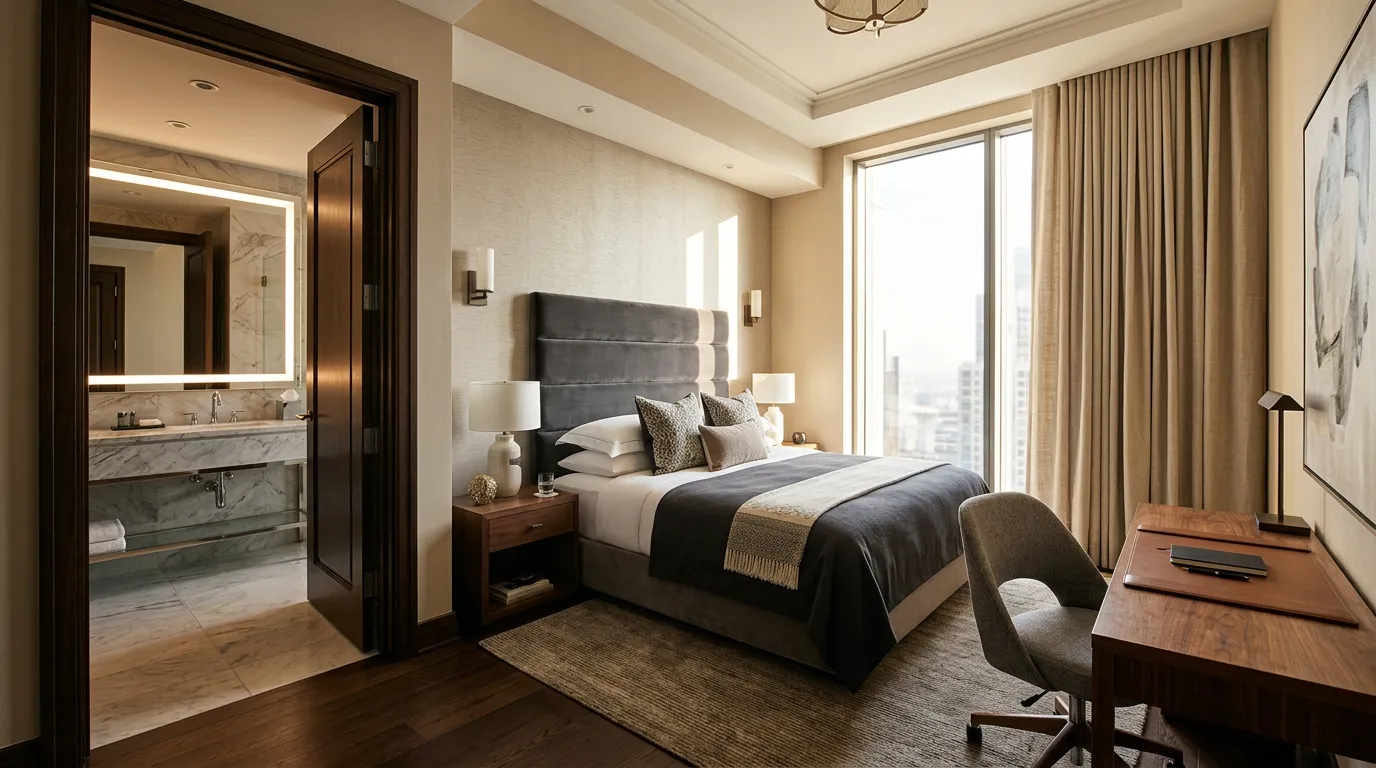
FF&E stands for Furniture, Fixtures, and Equipment — the tangible, movable assets that furnish and equip a hotel but are not permanently attached to the building structure.
Furniture
Beds, desks, chairs, sofas, nightstands, dining tables, lobby seating, banquet chairs and tables, outdoor furniture, bar stools. Furniture is typically the largest single category within FF&E, often representing 40-50% of the total FF&E budget.
Fixtures
Items that are attached to the building but can be removed without structural damage: light fixtures, bathroom mirrors, towel bars, curtain rods, shelving systems, signage. Fixtures exist in a gray area — permanently attached items like built-in cabinetry may be classified as building improvements rather than FF&E, depending on accounting treatment.
Equipment
Major operational equipment with multi-year lifespans: commercial ovens, walk-in coolers, HVAC units, laundry machines, POS systems, in-room safes, minibars. For a detailed breakdown of kitchen equipment, see our Commercial Kitchen Equipment Checklist.
Key Characteristics of FF&E
Capitalized on the balance sheet as fixed assets
Depreciated over 5-10 years (furniture: 7 years, equipment: 5-7 years under standard accounting)
High unit cost — individual items typically $500+ for furniture, $2,000+ for equipment
Long replacement cycles — typically 7-12 years for furniture, 10-15 years for major equipment
Funded from CapEx (capital expenditure) budgets, often through FF&E reserve funds
What Is OS&E?
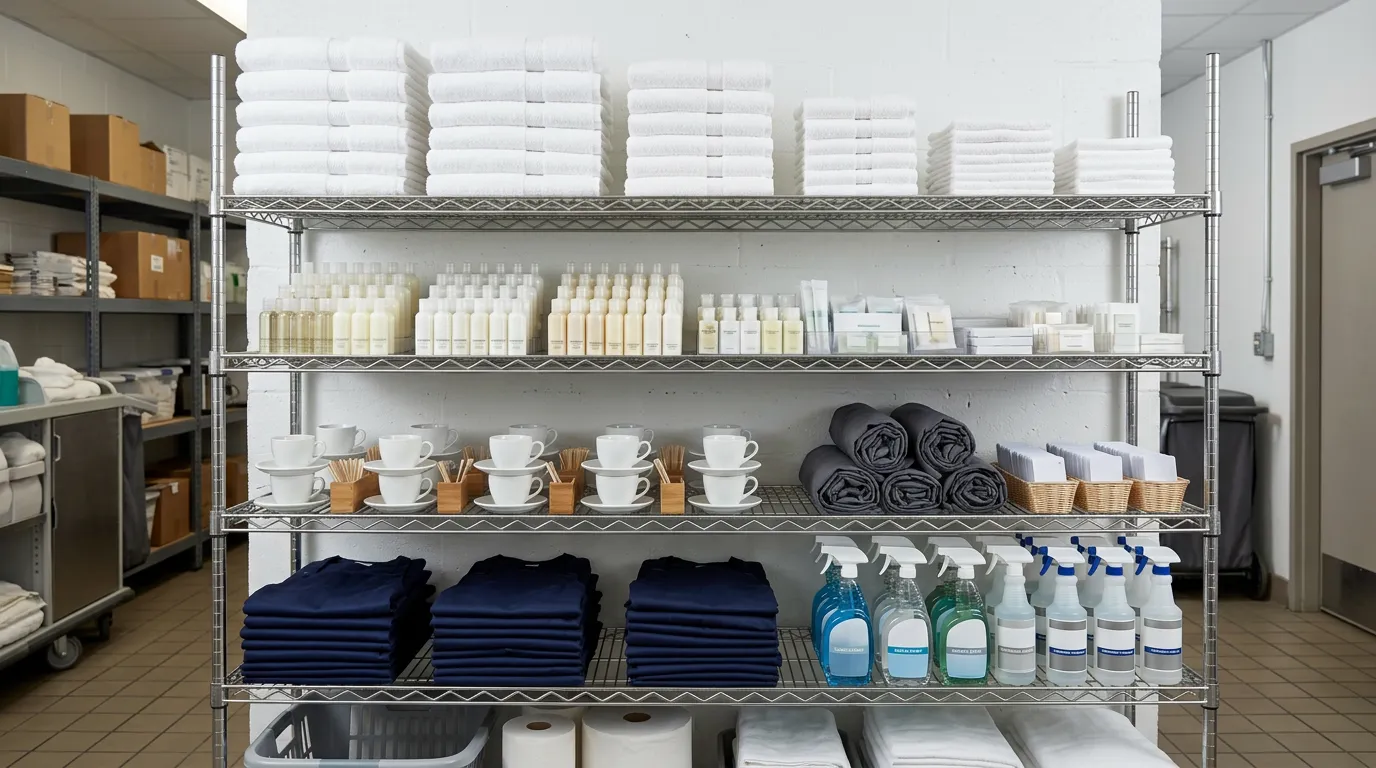
OS&E stands for Operating Supplies and Equipment — the consumable, replaceable, and smaller operational items a hotel needs for daily operations. These are the items that guests use, wear out, take home, or that staff consume in the course of service delivery.
Operating Supplies
Linens (sheets, towels, tablecloths), guest amenities (soap, shampoo, slippers), cleaning chemicals, stationery, staff uniforms, disposable items (gloves, food containers, paper goods).
Operating Equipment
Smaller equipment items that are expensed rather than capitalized: tableware (plates, glasses, flatware), cookware (pots, pans, sheet pans), housekeeping carts, luggage trolleys, serving trays, coffee makers.
Key Characteristics of OS&E
Expensed as operational costs (not capitalized)
Not depreciated — recognized as expenses in the period purchased or consumed
Lower unit cost — individual items typically under $500
Short replacement cycles — months to 2-3 years depending on category
Funded from OpEx (operating expenditure) budgets
For a comprehensive department-by-department OS&E breakdown, see our Hotel OS&E Procurement Guide.
FF&E vs OS&E: Side-by-Side Comparison
| Dimension | FF&E | OS&E |
|---|---|---|
| Full name | Furniture, Fixtures & Equipment | Operating Supplies & Equipment |
| Accounting treatment | Capitalized as fixed assets | Expensed as operating costs |
| Depreciation | Yes (5-10 years) | No |
| Typical unit cost | $500 - $50,000+ | $1 - $500 |
| Replacement cycle | 7-15 years | Months to 3 years |
| Budget source | CapEx / FF&E reserve | OpEx / operating budget |
| Examples | Guest room bed, commercial oven, lobby chandelier | Bed sheets, dinner plate, cleaning chemicals |
| Procurement timing | Major purchases at opening / renovation | Initial outfitting + ongoing replenishment |
| Impact on P&L | Depreciation expense (spread over years) | Direct expense (current period) |
The Gray Area: Items That Could Be Either
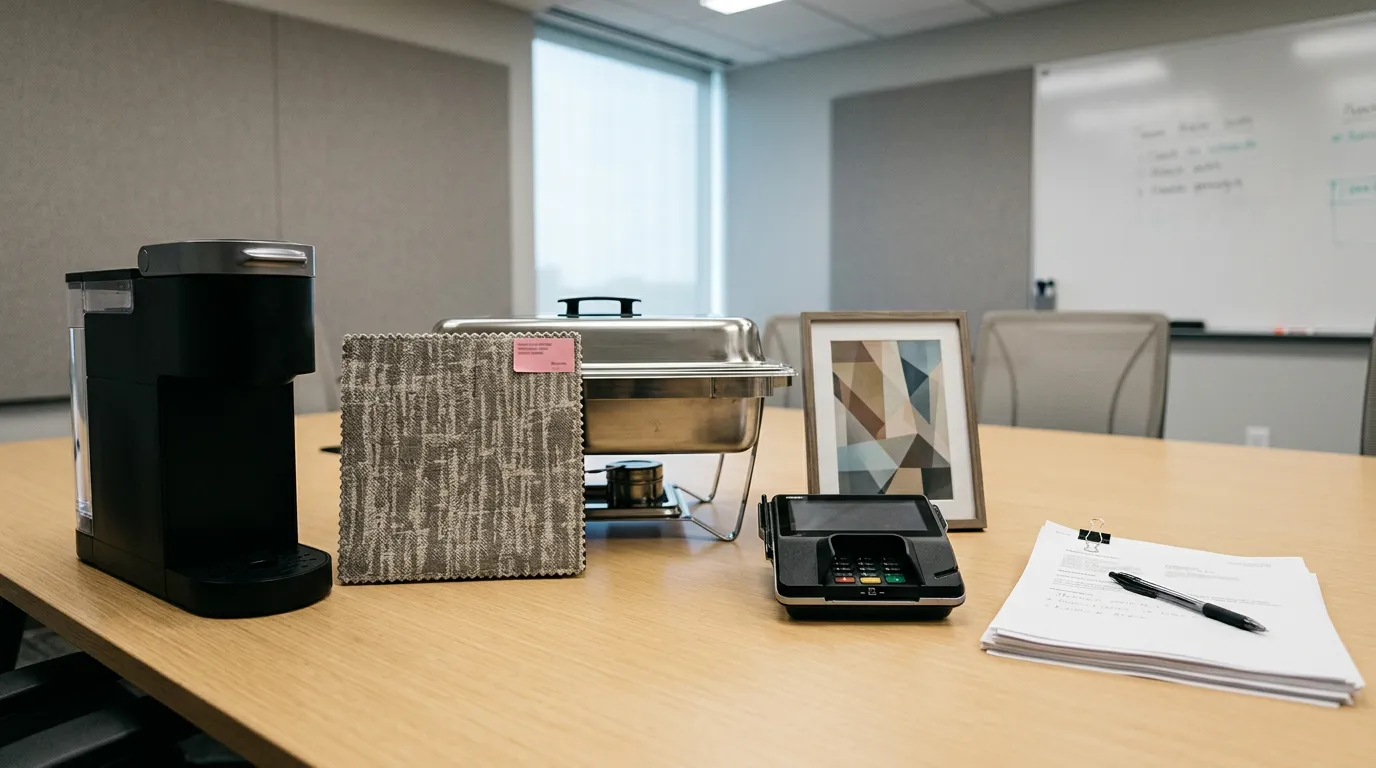
Not every hotel item fits neatly into one category. Classification often depends on your accounting policy, the item's cost, and its expected useful life. Here are common items that create confusion:
| Item | Often Classified As | Why It's Ambiguous |
|---|---|---|
| In-room coffee maker | OS&E | Low unit cost ($30-80) but lasts 3-5 years. Some hotels capitalize. |
| Curtains / drapes | FF&E | Attached (fixture) but replaced every 5-7 years. Could be OS&E if treated as soft furnishing. |
| Chafing dishes | OS&E | $100-400 unit cost, used for banquets. Some hotels capitalize banquet equipment. |
| POS terminals | FF&E (Equipment) | Often leased, which changes classification. Owned units are typically FF&E. |
| Artwork | FF&E (Fixtures) | Decorative pieces hung on walls. Low-cost prints may be treated as OS&E. |
| Mattress protectors | OS&E | Protect an FF&E asset (mattress) but are replaced every 1-2 years. |
Why the Distinction Matters for Hotel Buyers
1. Budget Planning and Cash Flow
FF&E is a large upfront investment concentrated at opening or renovation — think millions of dollars for a mid-size property. OS&E requires a smaller initial outlay but creates ongoing operational costs that must be budgeted monthly and annually.
Confusing the two leads to underestimating operating costs. A hotel that budgets $8 million for FF&E but underestimates OS&E by 20% will face cash flow pressure within the first year of operations.
2. FF&E Reserve Funds
Most hotel management agreements require setting aside 3-5% of gross revenue annually into an FF&E reserve fund for future replacement of furniture, fixtures, and equipment. OS&E costs come out of the regular operating budget instead.
Misclassifying OS&E items as FF&E inflates the reserve requirement and misrepresents capital needs. Misclassifying FF&E as OS&E depletes operating budgets and can trigger cash shortfalls when major replacements are due.
3. Tax Treatment
FF&E is depreciated over multiple years, providing tax deductions spread across the asset's useful life. OS&E is expensed immediately, providing a tax deduction in the year of purchase. The timing difference affects taxable income and cash flow planning.
4. Procurement and Supplier Strategy
FF&E and OS&E have fundamentally different procurement patterns:
FF&E is project-based — large one-time orders with long lead times (12-24 weeks for custom furniture), evaluated on quality, design fit, and longevity
OS&E is relationship-based — ongoing replenishment requiring consistent quality, reliable supply chains, competitive per-unit pricing, and responsive reorder fulfillment
This is why many hotel operators separate FF&E procurement (handled by the project/design team) from OS&E procurement (handled by operations/purchasing). It also explains why choosing a supplier with broad category coverage matters for OS&E — managing 15 individual vendors for different consumable categories is operationally expensive.
Budgeting for FF&E vs OS&E

As a general framework, here's how FF&E and OS&E budgets compare for a new hotel development:
| Property Type | FF&E per Room | OS&E per Room (Initial) | OS&E Annual Replenishment |
|---|---|---|---|
| Economy | $6,000 - $12,000 | $1,500 - $3,000 | $500 - $1,000 |
| Mid-Scale | $15,000 - $30,000 | $3,000 - $6,000 | $800 - $1,500 |
| Upscale / Full-Service | $35,000 - $65,000 | $6,000 - $12,000 | $1,500 - $3,000 |
| Luxury | $80,000 - $150,000+ | $12,000 - $25,000+ | $2,500 - $5,000+ |
Key insight: OS&E initial outfitting typically runs 15-25% of the FF&E budget. But over a 10-year cycle, cumulative OS&E spending often equals or exceeds the original FF&E investment due to ongoing replacement — making supplier selection and pricing negotiation for OS&E a high-impact financial decision.
How to Structure Your Procurement
For new hotel openings and major renovations, keep these principles in mind:
Separate your budgets early. Create distinct FF&E and OS&E line items from the feasibility study stage. Don't lump them together under "furnishings" or you'll underestimate the ongoing cost.
Align timelines. FF&E orders typically start 6-9 months before opening (longer for custom pieces). OS&E procurement should begin 3-4 months out, with delivery 2-4 weeks before soft opening. See our Hotel Opening Equipment Checklist for a detailed timeline.
Consolidate OS&E suppliers where possible. Unlike FF&E — where you might use specialized manufacturers for case goods, soft furnishings, and lighting — OS&E benefits from consolidation. A single supplier covering tableware, linens, uniforms, and kitchen smallwares reduces logistics cost and simplifies reordering.
Plan for replenishment from day one. Build par levels and reorder points into your OS&E plan before opening. Running out of towels or dinner plates in month three because you only ordered for opening is a common and avoidable mistake.
Review classification with your accountant. Ensure FF&E vs OS&E classification aligns with your accounting policies, brand standards, and local tax regulations. This is especially important for items in the gray area.
Next Steps
Understanding the FF&E vs OS&E distinction is the foundation for effective hotel procurement planning. From here:
Hotel OS&E Procurement Guide — department-by-department checklists, budgeting benchmarks, and supplier evaluation criteria
Hotel Opening Equipment Checklist — timeline and complete item list for outfitting a new property
Restaurant Furniture Sourcing Guide — practical guidance for evaluating and selecting furniture suppliers
Browse the full range of hotel supplies and hotel furniture to see how a one-stop procurement approach works in practice, or contact our project team for a consultation.
Get the week's latest industry information
-
Real-Life Professional Restaurant Case Studies
Explore Now
-
Create a unique restaurant with over 95,700+products
Explore Now
-
Protessional Free 3D Restaurant Design
Explore Now
-
Still Have Questions About Opening a Restaurant?
Explore Now

Sylvia
With 8 years in catering & hospitality industry, sales manager of Ron Group, specialise in providing one stop solutions to restaurants, hotels and weddings.
Discover Our Exclusive Products
Explore our extensive range of restaurant and hotel supplies designed to enhance your operations. Find the perfect solutions to meet your needs.
Browse Our ProductsFREE 3D DESIGN
Boost your restaurant's success with our free 3D design service. Start building the restaurant of your dreams today!
Explore 3D Design Case
RECOMMENDED CASES
-

La Rambla by Catalunya: Crafting Barcelona's Soul in Hong Kong - Custom Furniture Excellence
RON Group's custom Spanish-inspired furniture elevates La Rambla with artisanal aesthetics...
Learn More -

Cardinal Point: Elevating Outdoor Seating with Tailored Cushion Upgrades
Discover how Cardinal Point transformed its outdoor dining experience with custom cushions, achievin
Learn More
RECOMMENDED BLOGS
-
Restaurant Table Spacing and Aisle Clearance: Supplier Drawing Checklist
Check restaurant table spacing, aisle clearance, chair pullout, service path, and supplier drawing proof before approving a...
Sylvia2026-07-20 -

5 Mistakes to Avoid When Buying Restaurant Furniture from China
Don't fall for costly oversights! Learn the 5 mistakes to avoid when buying restaurant furniture from China and ensure a...
 Ron2025-01-079 min read
 -

RON GROUP Launches VR Experience to Explore Our Dynamic Showroom
Discover RON GROUP's VR showroom! Explore dining furniture, tableware, and customized services virtually or visit us in person to...
Sylvia2024-12-163 min read
Subscribe to RON GROUP
Stay up-to-date with the latest industry insights and expert advice. Together, we'll create your ideal restaurant.