









Content
A hotel opening date creates pressure, but it does not create a procurement plan. The risky schedule is the one that lists target dates without showing which room matrix is frozen, which supplier has been checked, which samples are approved, which accessibility details are coordinated, which packing evidence exists, and who owns receiving when the truck or container reaches site.
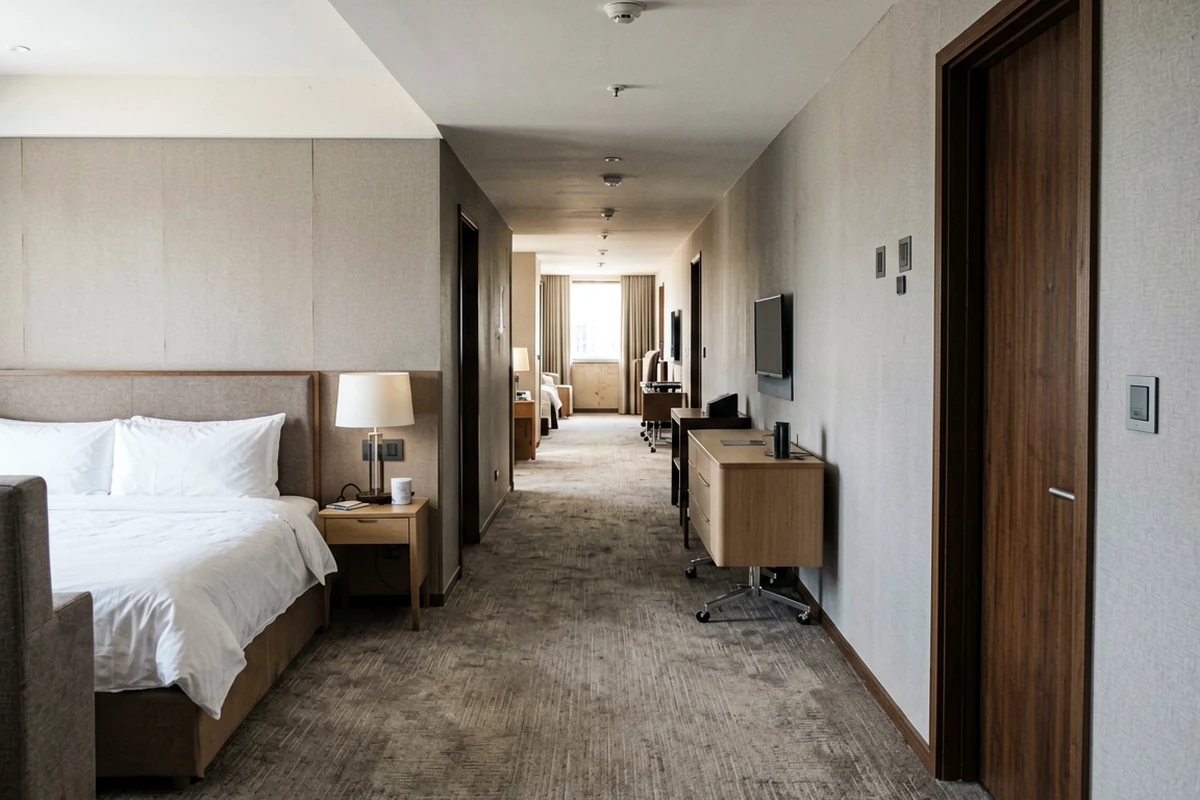
Treat the timeline as a sequence of release gates. A sound schedule shows dependencies, owners, and the next permitted action; it is not just a calendar. The Association for Project Management's scheduling guidance describes scheduling through activity sequence, dependencies, and critical path logic, while the UK government's project delivery planning guidance frames delivery planning as something created, baselined, and controlled during delivery. For hotel procurement, that means the opening target is a constraint, not a supplier promise.
Build the timeline backward, then test every dependency
Start from the desired opening readiness date and work backward through evidence gates. Do not assign a fixed duration to every hotel. A prototype city hotel, a resort, a conversion project, and a brand-standard renovation can have different design approvals, destination rules, freight routes, and site readiness. The buyer's job is to identify the dependencies early enough that missing information does not become a last-minute purchase decision.
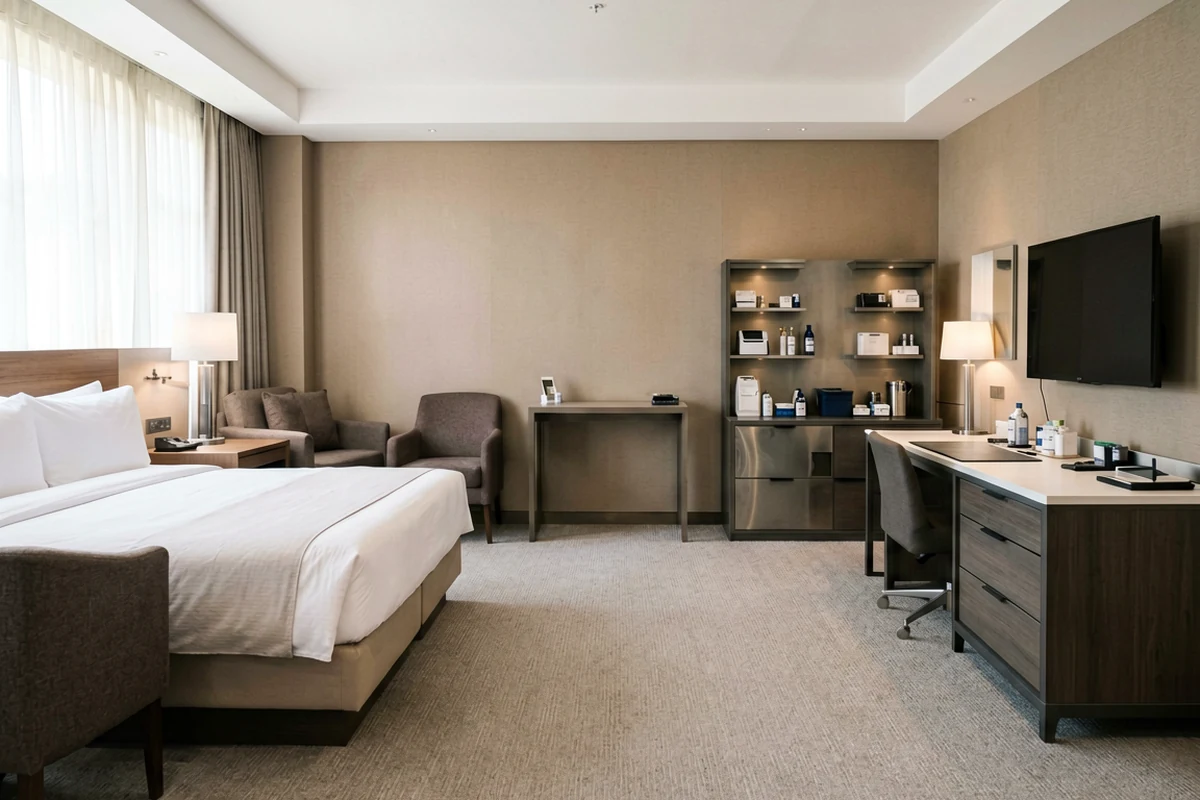
| Gate | Buyer-controlled evidence | Do not release the next step until |
|---|---|---|
| Scope freeze | Room matrix, public-area list, FF&E/OS&E split, item codes, quantity basis, destination, and brand/operator requirements | The team knows what is being bought and which items affect opening readiness |
| Supplier shortlist | Business identity, manufacturing role, references, sample responsibility, quality process, contact owner, and issue-escalation route | Supplier responsibility is checked and recorded |
| Submittal review | Drawings, finishes, materials, hardware, dimensions, mock-up scope, packing approach, and deviation register | Every exception has an owner, status, and approval path |
| Sample or mock-up | Finish samples, room-item samples, sample-room notes, corrections, and control-sample records | The approved sample baseline is clear enough for production |
| Production release | Approved item schedule, final drawings, finish references, inspection plan, packing labels, and change-control rule | The supplier cannot interpret missing details silently |
| Pre-shipment | Packing list, package IDs, photos, inspection results, shortage list, spare parts, and replacement evidence | The site team can identify and receive the goods |
| Receiving and installation | Delivery sequence, staging area, room or zone labels, damage-report process, installation owner, and punch list route | The opening team can act on exceptions without guessing |
The table is a planning control, not a universal hotel-opening timetable. If a gate is incomplete, revise the schedule or escalate the decision. Do not hide the gap behind a more optimistic date.
Vet suppliers before the schedule depends on them
Supplier approval should happen before deposits, sample release, or production release become urgent. The U.S. International Trade Administration's due-diligence guidance supports checking potential business partners before entering commercial relationships. For China-related sourcing, the ITA's China market-entry guidance also emphasizes careful partner selection, vetting, business-goal alignment, and attention to local or sector specialization.

For a hotel opening file, due diligence should be practical and proportionate. Record the legal business identity, manufacturing location or role, export responsibility, quality owner, sample owner, report or certificate owner, after-sales contact, and authority to approve changes. If a trader, factory, installer, freight forwarder, and site contractor share the work, do not let one salesperson's name stand in for the whole responsibility map.
| Supplier question | Evidence to request | Procurement decision |
|---|---|---|
| Who makes or controls the item? | Business identity, production role, subcontracting disclosure, and named project contact | Approve only when responsibility is traceable |
| Who owns samples and deviations? | Sample log, control sample, deviation register, and approval authority | Revise if substitutions can bypass buyer approval |
| Who owns packing and shortage resolution? | Packing standard, label rule, photo record, spare-parts list, and claim process | Escalate if receiving evidence is vague |
| Who supports replacement after opening? | Finish/code record, spare component basis, and reorder contact | Record limitations before opening stock decisions |
These checks do not replace legal, sanctions, credit, factory, technical, or customs review. They make the procurement schedule honest about counterparty risk.
Put accessibility and room coordination into the procurement gate
Accessibility is not only a design-team issue after furniture arrives. For applicable U.S. projects, the Department of Justice's 2010 ADA Standards and the U.S. Access Board's Chapter 2 scoping requirements and Chapter 8 special rooms, spaces, and elements show why transient lodging, guest-room features, clearances, communication features, and room elements can require early coordination. The buyer should not interpret compliance alone, but procurement can prevent avoidable conflicts by routing the right items for review.
Create an accessibility and room-interface checkpoint before production release. For each affected room type or public area, record clearances, reach ranges where relevant, hardware and control locations, bed and casegoods interfaces, lighting and power conflicts, door swings, service access, and communication-feature requirements. If the project uses brand standards, local code consultants, or an accessibility specialist, attach their review status to the item schedule. A supplier drawing marked "approved" should not override unresolved accessibility or room-interface comments.
For RON GROUP sourcing conversations, the commercial furniture collection and hotel furniture category can help organize the product scope, but those pages are navigation references. Project-specific accessibility, code, brand, and operator approvals remain with the buyer's responsible advisers.
Separate production readiness from shipment readiness
Production approval answers whether the supplier may make the goods. It does not answer whether the goods are packed, labeled, inspectable, shippable, receivable, or installable.

Before shipment or container loading, require a receiving file:
final item schedule with room or zone destination;
packing list with package IDs, dimensions, gross mass, and quantity inside;
labels that connect package ID, item code, room type, and destination area;
photos showing packed items, labels, fragile faces, spare parts, and final shipment condition;
shortage, damage, replacement, and claim procedures;
unloading sequence, staging plan, site access limits, and responsible receiving contact.
For broader supplier-selection context, RON GROUP's related guide to restaurant furniture project supplier planning is useful because the same evidence habit applies: buyers need supplier capability, packing controls, and issue ownership, not just a quotation.
Use approve, revise, reject, and escalate rules
A procurement timeline should tell the buyer what decision is allowed at each gate.
Approve the next gate when scope, supplier responsibility, sample or mock-up evidence, accessibility routing, production baseline, packing plan, receiving owner, and issue path are recorded.
Revise before release when the schedule is plausible but item codes, room destinations, finishes, drawings, packing labels, or owner assignments are incomplete.
Reject the release when the supplier cannot identify responsibility, proposes substitutions without evidence, treats a sample as optional after production, or asks the buyer to accept shipment without package-level receiving records.
Escalate to specialists when accessibility interpretation, destination import rules, freight safety, structural fixing, fire/life-safety, brand standards, or site installation risk falls outside the procurement team's authority.
The final opening plan can still be conditional. What matters is that every condition is visible: who owns it, what evidence closes it, what decision depends on it, and what action is prohibited until it closes.
RON GROUP can support the furniture-scope conversation by reviewing item lists, room matrices, finish and sample status, packing expectations, and project milestones within its commercial furniture role. To start a structured discussion, send the project team your hotel procurement scope: opening target, destination, room types and quantities, FF&E/OS&E split, drawings, finish schedule, accessibility or brand-review status, sample-room status, supplier shortlist, packing and receiving requirements, and the next approval gate you need to close.
Get the week's latest industry information
-
Real-Life Professional Restaurant Case Studies
Explore Now
-
Create a unique restaurant with over 95,700+products
Explore Now
-
Protessional Free 3D Restaurant Design
Explore Now
-
Still Have Questions About Opening a Restaurant?
Explore Now

Sylvia
With 8 years in catering & hospitality industry, sales manager of Ron Group, specialise in providing one stop solutions to restaurants, hotels and weddings.
Discover Our Exclusive Products
Explore our extensive range of restaurant and hotel supplies designed to enhance your operations. Find the perfect solutions to meet your needs.
Browse Our ProductsFREE 3D DESIGN
Boost your restaurant's success with our free 3D design service. Start building the restaurant of your dreams today!
Explore 3D Design Case
RECOMMENDED CASES
-
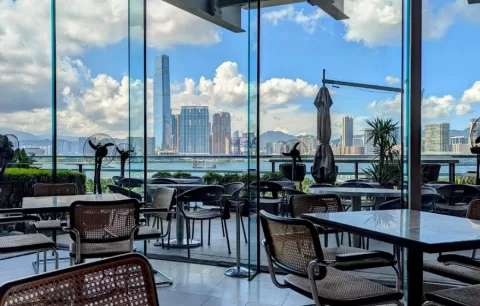
La Rambla by Catalunya: Crafting Barcelona's Soul in Hong Kong - Custom Furniture Excellence
RON Group's custom Spanish-inspired furniture elevates La Rambla with artisanal aesthetics...
Learn More -

Cardinal Point: Elevating Outdoor Seating with Tailored Cushion Upgrades
Discover how Cardinal Point transformed its outdoor dining experience with custom cushions, achievin
Learn More
RECOMMENDED BLOGS
-

Bar Glassware 101: Types, Names, Uses, and How to Stock Your Bar
Learn the 10 core bar glassware types, names, and uses. Discover how to stock your bar with the right glasses for cocktails, beer,...
Sylvia2026-07-26 -

Complete Bar Equipment List for Opening a Bar
Use a complete bar equipment list with pictures, covering workstations, ice, refrigeration, glassware, utilities, sanitation and a...
Sylvia2026-06-11 -

Low-Budget Restaurant Interior Design Ideas: Spend Where Guests and Staff Notice
Explore low-budget restaurant interior design ideas, practical material choices, layout priorities and phased upgrades without...
Sylvia2026-04-04
Subscribe to RON GROUP
Stay up-to-date with the latest industry insights and expert advice. Together, we'll create your ideal restaurant.