
Content
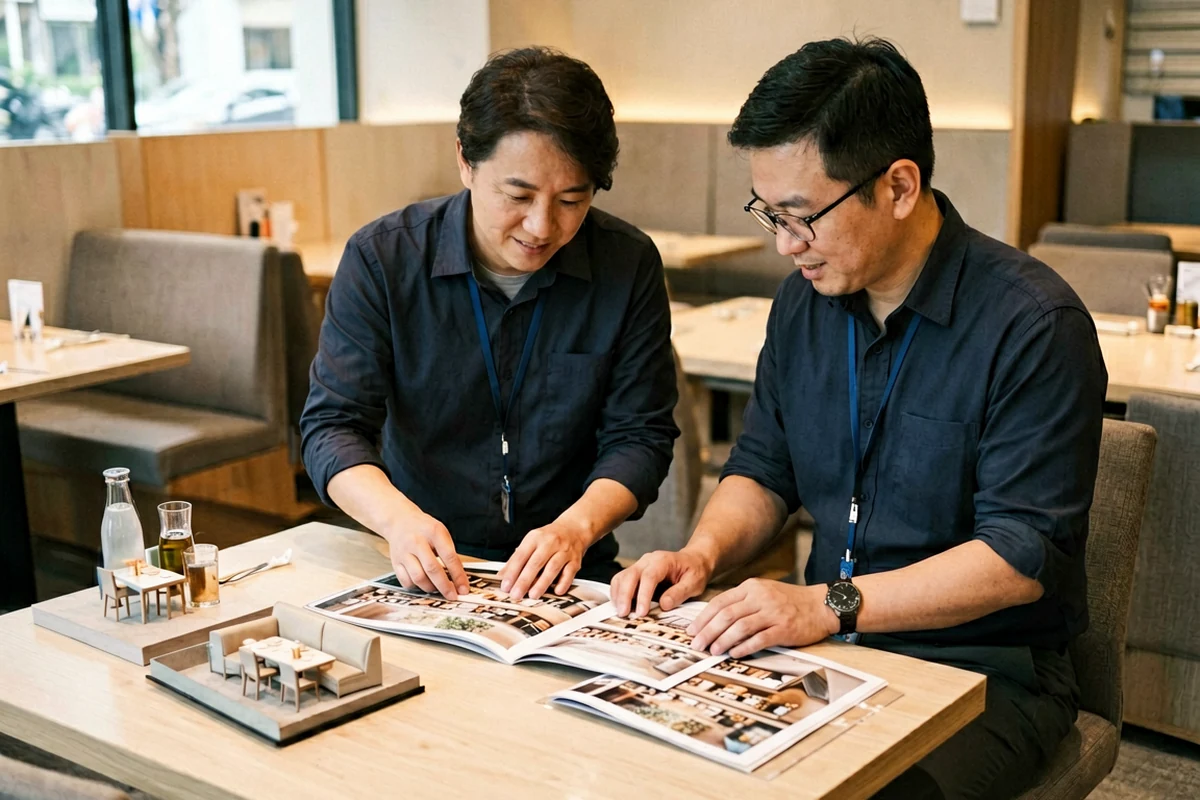
A restaurant furniture project supplier should be evaluated as a project-delivery partner, not only as a source of chairs and tables. The decision affects design coordination, sample approval, production control, packing, delivery, installation readiness, and replacement planning.
The strongest selection process begins with a controlled furniture schedule and a written responsibility matrix. Buyers can then compare suppliers against the same scope, evidence, samples, and delivery requirements instead of comparing quotations that describe different work.
Build the Project Scope Before the Shortlist
Start with the restaurant concept, floor plan, operating model, target opening sequence, and the spaces that need furniture. Translate those inputs into a schedule that separates each furniture family:
Dining chairs and armchairs
Bar stools and counter stools
Dining tables and table bases
Booths and banquette seating
Outdoor furniture where applicable
Host, waiting, lounge, and private-dining furniture
Loose furniture, fixed furniture, and items requiring site installation
For each item, record the location, quantity, dimensions, materials, finish, upholstery, performance requirement, drawing status, sample status, packing method, delivery phase, and responsible approver. This prevents a supplier from quoting an attractive visual concept without confirming whether every item fits the layout and project sequence.
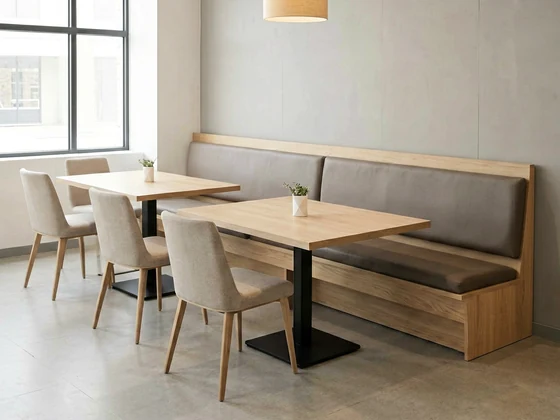
RON GROUP's commercial restaurant furniture collection is an internal product reference for building the initial product scope. Use it to identify relevant furniture categories, then confirm the project-specific dimensions, finishes, construction, and quantities through the controlled schedule.
Shortlist Suppliers Against the Same Evidence
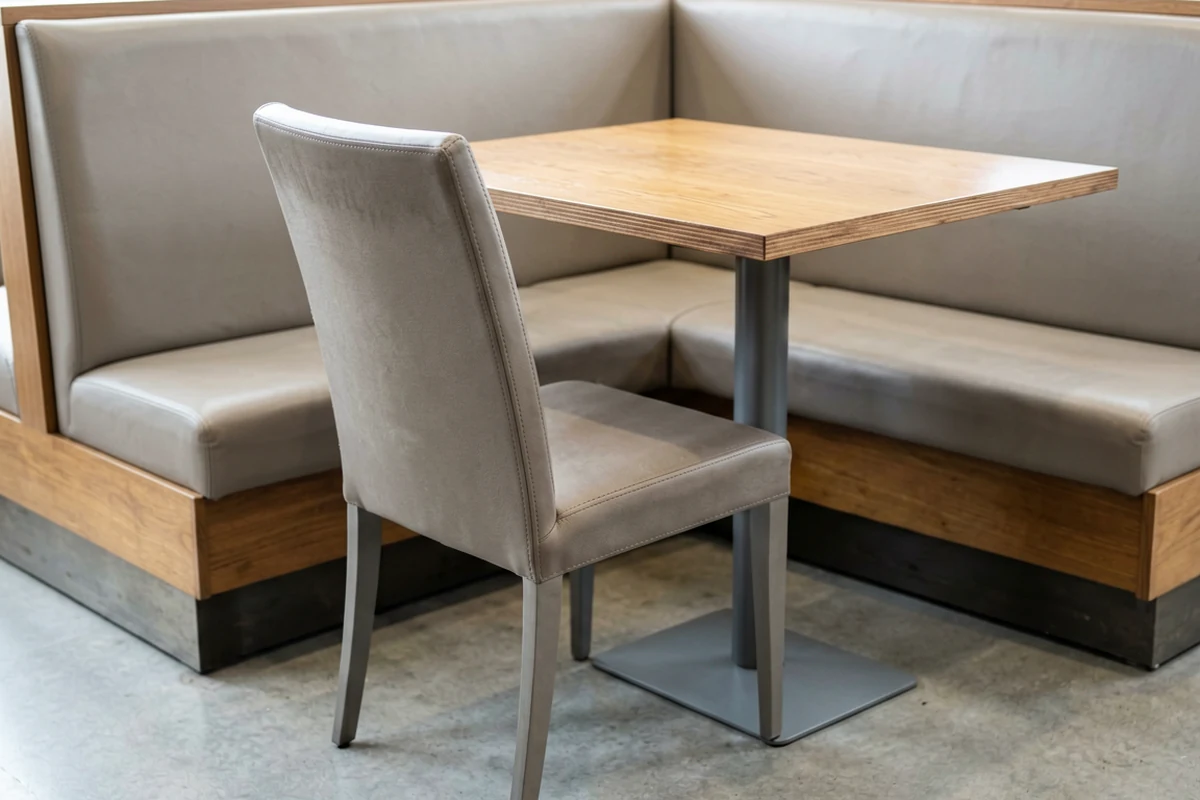
A shortlist should be based on evidence that relates directly to the project. The U.S. International Trade Administration due-diligence guidance recommends investigating market conditions and evaluating prospective business partners before entering a commercial relationship. For a restaurant furniture project, that principle can be translated into a practical supplier file.
Ask each supplier for evidence covering:
Legal business identity and the entity that will sign the contract.
Factory or production-partner identity for the proposed furniture categories.
Experience with comparable hospitality furniture and project coordination.
Named responsibility for drawings, samples, production, quality checks, packing, and shipment documents.
A clear process for approving materials, finishes, upholstery, hardware, and dimensions.
A production and delivery plan tied to the project schedule.
A documented process for nonconforming items, damage, shortages, and replacement parts.
When China sourcing is involved, the International Trade Administration China market-entry guidance emphasizes careful partner vetting and alignment on business goals. Buyers should therefore confirm who controls production, which entity receives payment, who owns the drawings and specifications, and who is accountable when a sample, production batch, or delivery does not match the approved record.
A supplier should not move forward because it answers quickly or provides the lowest initial quotation. It should move forward because its evidence, communication, technical control, and delivery process fit the restaurant project.
Compare Supplier Capability with a Weighted Matrix
Use one comparison matrix for every shortlisted supplier. The weighting should reflect the actual project risk rather than a generic purchasing template.
| Evaluation area | Evidence to request | Decision question |
|---|---|---|
| Scope understanding | Marked furniture schedule and exclusions | Has the supplier priced the same project scope? |
| Technical coordination | Drawings, dimensions, material specifications, finish references | Can the supplier turn the design intent into controlled production information? |
| Sample control | Sample list, approval form, retained reference process | Will production be checked against an approved physical or documented reference? |
| Manufacturing route | Factory identity and category capability | Is the proposed production route suitable for each furniture family? |
| Quality control | Inspection stages, acceptance criteria, issue records | Are defects detected before packing and shipment? |
| Project management | Named contacts, reporting cadence, decision log | Can the supplier coordinate approvals and dependencies without losing decisions? |
| Packing and logistics | Packing specification, carton marks, loading plan, document list | Will the furniture arrive identifiable, protected, and sequenced for the site? |
| After-delivery support | Damage, shortage, spare-part, and replacement process | Is there a workable route for resolving site findings? |
Score only against submitted evidence. If a criterion is important but the supplier has not provided proof, record it as open rather than awarding a confidence score based on presentation quality.
Control Drawings, Samples, and Approvals
Restaurant furniture combines visual, dimensional, material, and operational requirements. A written description alone is rarely enough for project control. Establish an approval hierarchy before production:
Approved furniture schedule
Approved shop drawing or dimensional record
Approved material and finish reference
Approved upholstery reference
Approved hardware and glides where relevant
Approved pre-production sample or controlled sample record
Approved packing and labeling method
Every approval should identify the item code, revision, date, approver, and any conditional comments. When a change is accepted, update the controlled record instead of relying on a message thread.
The supplier should also show how the approved sample or reference will be carried into production. Useful controls include retained finish references, first-article review, in-process checks, pre-packing inspection, and a final quantity reconciliation. The exact inspection plan depends on the furniture and project, but the decision points should be agreed before production begins.
Test Project Management Before Award
The supplier-selection stage is an opportunity to test how the team will work after award. Give shortlisted suppliers the same small coordination task, such as reviewing a furniture schedule against a floor plan and identifying missing decisions.
Look for whether the supplier:
Finds dimensional or scope conflicts instead of silently assuming answers
Separates confirmed requirements from proposals
Records exclusions and dependencies
Assigns owners and deadlines to open decisions
Maintains consistent item codes across drawings, samples, quotations, and packing
Explains how late changes affect production or delivery sequence
RON GROUP's restaurant project support page is an internal service reference for discussing project coordination. Buyers should still define the exact scope of support in the quotation and contract, including who prepares drawings, who consolidates approvals, who inspects goods, and who coordinates delivery information.
Verify Product Fit, Not Just Appearance
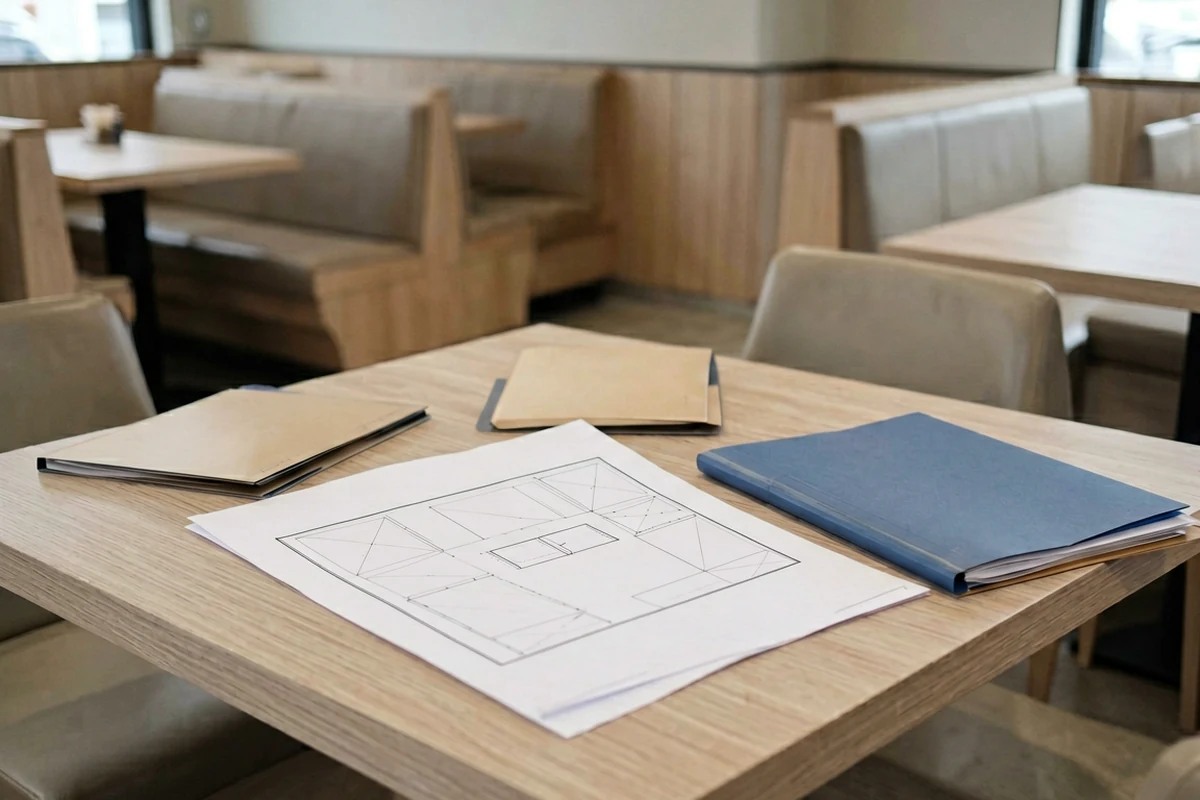
A furniture item can look suitable in a rendering and still create operational problems. Review each category against the restaurant's use conditions.
Chairs and Stools
Check dimensions, seat height, table relationship, stability, floor contact, cleanability, stacking or storage needs, upholstery exposure, and replacement consistency. Confirm that armchairs, stools, and accessible seating positions work with the intended layout.
Tables and Bases
Check top dimensions, base footprint, stability, knee and foot clearance, adjacent seating, floor conditions, joining requirements, and how tables will be moved or reconfigured. Confirm that the selected base and top are approved as one assembly.
Booths and Banquettes
Check the site dimensions, wall conditions, seat and back geometry, upholstery transitions, access for installation, service routes, and interfaces with tables, power, lighting, or architectural finishes. Fixed seating usually needs tighter site coordination than loose furniture.
Outdoor Furniture
Define the actual exposure, storage plan, cleaning method, anchoring or movement requirements, and replacement route. Do not accept a broad outdoor claim without a material, finish, and maintenance record relevant to the project conditions.
A hospitality furniture manufacturer shortlist can support early market discovery, but the final award should be based on the current project's controlled evidence and supplier response.
Manage Production and Delivery Risk
Convert the project schedule into supplier checkpoints. A practical sequence is:
Scope and responsibility confirmation.
Drawing and specification review.
Material and finish approval.
Sample approval.
Production release.
In-process issue review.
Pre-packing inspection and quantity reconciliation.
Packing, labeling, and document approval.
Shipment release.
Site receipt, damage, shortage, and replacement tracking.
Do not treat the promised completion date as a complete production plan. Ask which decisions must be approved before production, which materials are dependent on those decisions, and which furniture categories drive the critical path.
For imported furniture, align commercial documents, packing lists, item codes, carton marks, and the site receiving plan. The team receiving the goods should be able to identify each item and location without opening every package or reconstructing the supplier's naming system.
Contract and Purchase Order Controls
The commercial document should match the approved technical record. Include or reference:
Supplier legal entity and payment entity
Furniture schedule and item codes
Drawings, material specifications, and approved sample records
Quantities, packing method, labels, and required documents
Approval and production-release conditions
Inspection points and acceptance process
Delivery terms and shipment responsibilities
Procedure for changes, substitutions, shortages, damage, and nonconforming items
Spare parts or replacement requirements where relevant
Project contacts and escalation route
Avoid language that leaves the supplier free to substitute materials or construction without written approval. If a controlled equivalent is permitted, define who reviews it and what evidence is required.
Supplier Risk-Control Checklist
Before award, confirm that:
The quotation covers the same furniture schedule and revision used for comparison.
Exclusions, assumptions, and optional items are visible.
The legal supplier and production route have been checked.
Drawings and samples have named owners and approval dates.
Materials and finishes have controlled references.
The supplier has explained production and quality checkpoints.
Item codes remain consistent through quotation, drawing, packing, and delivery.
Packing and labels support the receiving and installation sequence.
Damage, shortage, and replacement responsibilities are documented.
The project team knows which decisions can delay production.
The final decision is supported by evidence, not only price or presentation.
Questions to Ask During the Final Supplier Interview
Which project information is still missing from our furniture schedule?
Which items require site dimensions before production?
Who owns drawings, samples, production reporting, inspection, and logistics documents?
How will approved materials and finishes be controlled during production?
What will you do if a material becomes unavailable after approval?
How will item codes appear on drawings, cartons, packing lists, and delivery records?
Which decisions drive the production sequence?
How are nonconforming items recorded and resolved before shipment?
What information does the site team need before receiving the furniture?
How will shortages, damage, and replacement items be tracked after delivery?
The quality of these answers matters, but the supplier should also provide the records and examples that prove the process exists.
Make the Award Decision
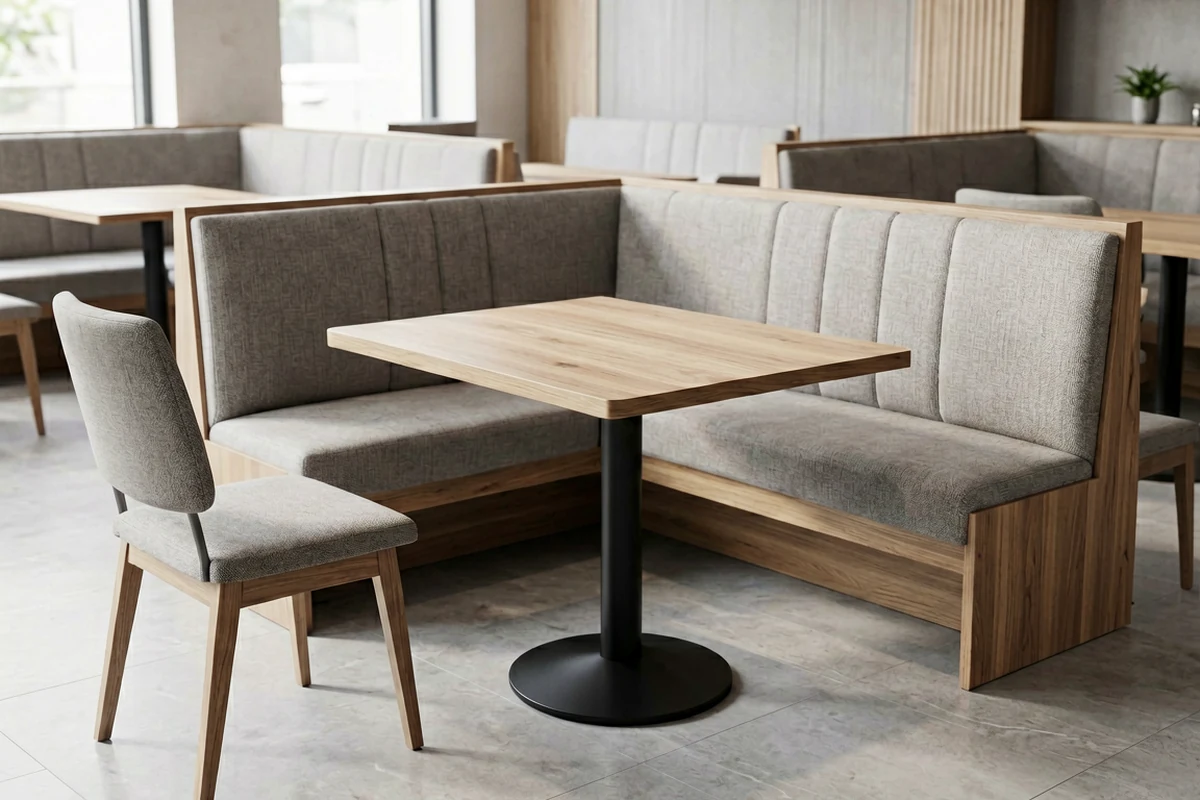
A suitable restaurant furniture project supplier is the one that can demonstrate product fit, disciplined approvals, reliable communication, production control, logistics readiness, and a workable resolution process. The selection file should show why the supplier fits the project and which remaining risks will be controlled after award.
RON GROUP can review the furniture schedule, product categories, finish direction, sample requirements, packing needs, and delivery sequence for a restaurant project. Request restaurant furniture project support with the floor plan, target quantities, design references, and required delivery location.
Sources and Further Reading
U.S. International Trade Administration due-diligence guidance supports the partner-verification and evidence-based shortlist framework.
U.S. International Trade Administration China market-entry guidance supports the China partner-vetting and business-alignment context.
RON GROUP Furniture Collection supports the internal restaurant furniture product-scope reference.
RON GROUP Project Page supports the internal project-coordination service reference.
Get the week's latest industry information
-
Real-Life Professional Restaurant Case Studies
Explore Now
-
Create a unique restaurant with over 95,700+products
Explore Now
-
Protessional Free 3D Restaurant Design
Explore Now
-
Still Have Questions About Opening a Restaurant?
Explore Now

Sylvia
With 8 years in catering & hospitality industry, sales manager of Ron Group, specialise in providing one stop solutions to restaurants, hotels and weddings.
Discover Our Exclusive Products
Explore our extensive range of restaurant and hotel supplies designed to enhance your operations. Find the perfect solutions to meet your needs.
Browse Our ProductsFREE 3D DESIGN
Boost your restaurant's success with our free 3D design service. Start building the restaurant of your dreams today!
Explore 3D Design Case
RECOMMENDED CASES
-

La Rambla by Catalunya: Crafting Barcelona's Soul in Hong Kong - Custom Furniture Excellence
RON Group's custom Spanish-inspired furniture elevates La Rambla with artisanal aesthetics...
Learn More -

Cardinal Point: Elevating Outdoor Seating with Tailored Cushion Upgrades
Discover how Cardinal Point transformed its outdoor dining experience with custom cushions, achievin
Learn More
RECOMMENDED BLOGS
-
Restaurant Table Spacing and Aisle Clearance: Supplier Drawing Checklist
Check restaurant table spacing, aisle clearance, chair pullout, service path, and supplier drawing proof before approving a...
Sylvia2026-07-20 -

5 Mistakes to Avoid When Buying Restaurant Furniture from China
Don't fall for costly oversights! Learn the 5 mistakes to avoid when buying restaurant furniture from China and ensure a...
 Ron2025-01-079 min read
 -

RON GROUP Launches VR Experience to Explore Our Dynamic Showroom
Discover RON GROUP's VR showroom! Explore dining furniture, tableware, and customized services virtually or visit us in person to...
Sylvia2024-12-163 min read
Subscribe to RON GROUP
Stay up-to-date with the latest industry insights and expert advice. Together, we'll create your ideal restaurant.