











Content
A hotel can approve the right-looking mattress and still receive the wrong product. The sample may sit at the expected height, yet production arrives with a different cover, fire barrier, foam stack, spring unit, assembly method, label, or foundation pairing. The quotation still carries the same model name, but the evidence no longer describes what is in the guestrooms.
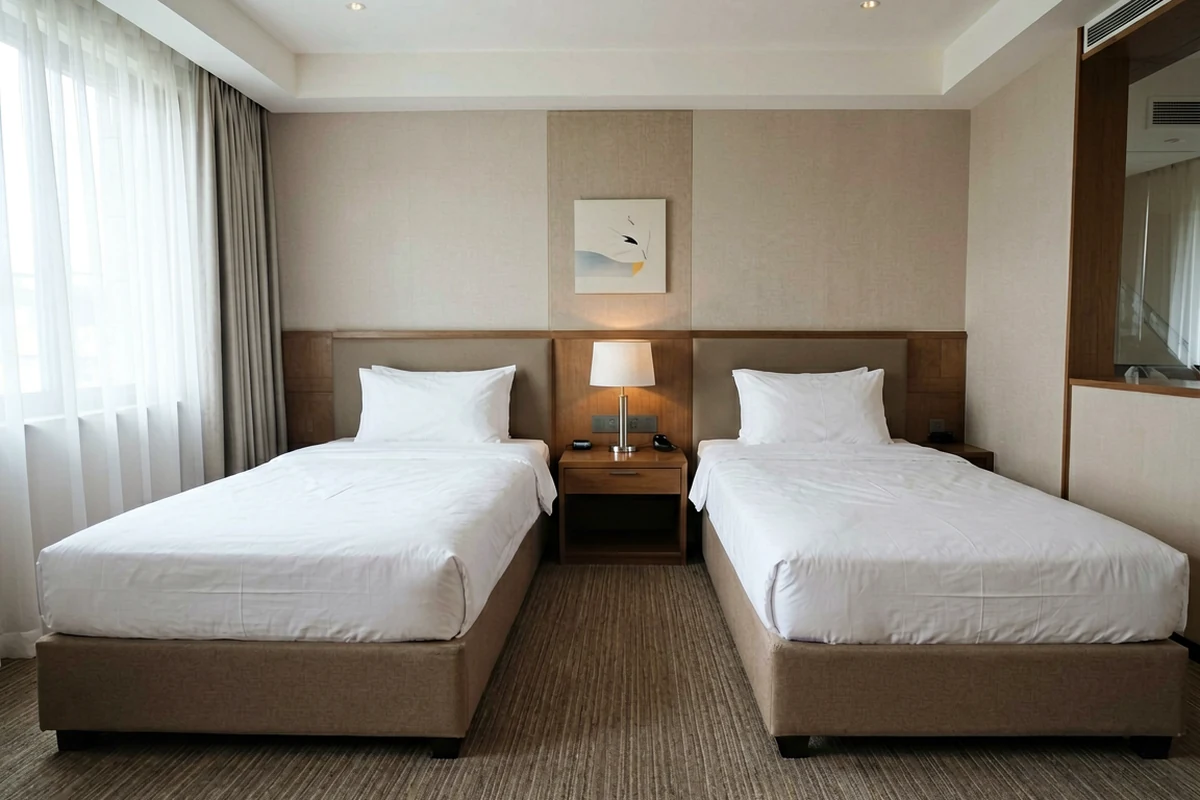
The procurement decision is therefore not "Which mattress feels best?" It is: Is this exact mattress system defined, evidenced, sampled, and controlled well enough to pass the next project gate?
Freeze the Room and Bed-System Schedule
Start with the room schedule, not the supplier catalog. Give every mattress an item code connected to room type, quantity, nominal size, required finished dimensions, finished bed height, and intended bed base or foundation. Include special rooms, connecting rooms, sofa beds, rollaways, staff accommodation, and retained mock-up units where they are in scope.
The interface matters. A change in mattress height can affect the headboard relationship, bedside-table reach, linen fit, bed-skirt position, housekeeping handling, and the perceived proportions of the room. Coordinate these decisions with the wider hotel room furniture package rather than buying the mattress as an isolated item.
| Schedule field | Buyer input or supplier evidence | Stop condition |
|---|---|---|
| Item identity | Item code, room type, quantity, model, and revision | One model name covers several undefined constructions |
| Dimensions | Finished length, width, height, and project-agreed tolerance | Supplier provides only nominal market size |
| Bed system | Base/foundation ID, support surface, headboard and linen interfaces | Mattress is priced without its intended support relationship |
| Product definition | Cover, layer stack, core/spring unit, edge, underside, and assembly | Construction is described only with marketing terms |
| Traceability | Manufacturer, plant, production date/batch method, and permanent labels | Delivered units cannot be linked to the approved model |
| Packing | Package ID, room/area label, orientation, protection, and opening method | Site cannot identify or distribute units without unpacking |
Do not let "king," "queen," "firm," "hotel grade," or a warranty period stand in for a specification. Those terms do not define the offered construction or prove suitability for a particular property. Comfort targets, dimensions, operational handling, and acceptance criteria must come from the project and operator.
Define the Mattress That Is Being Approved
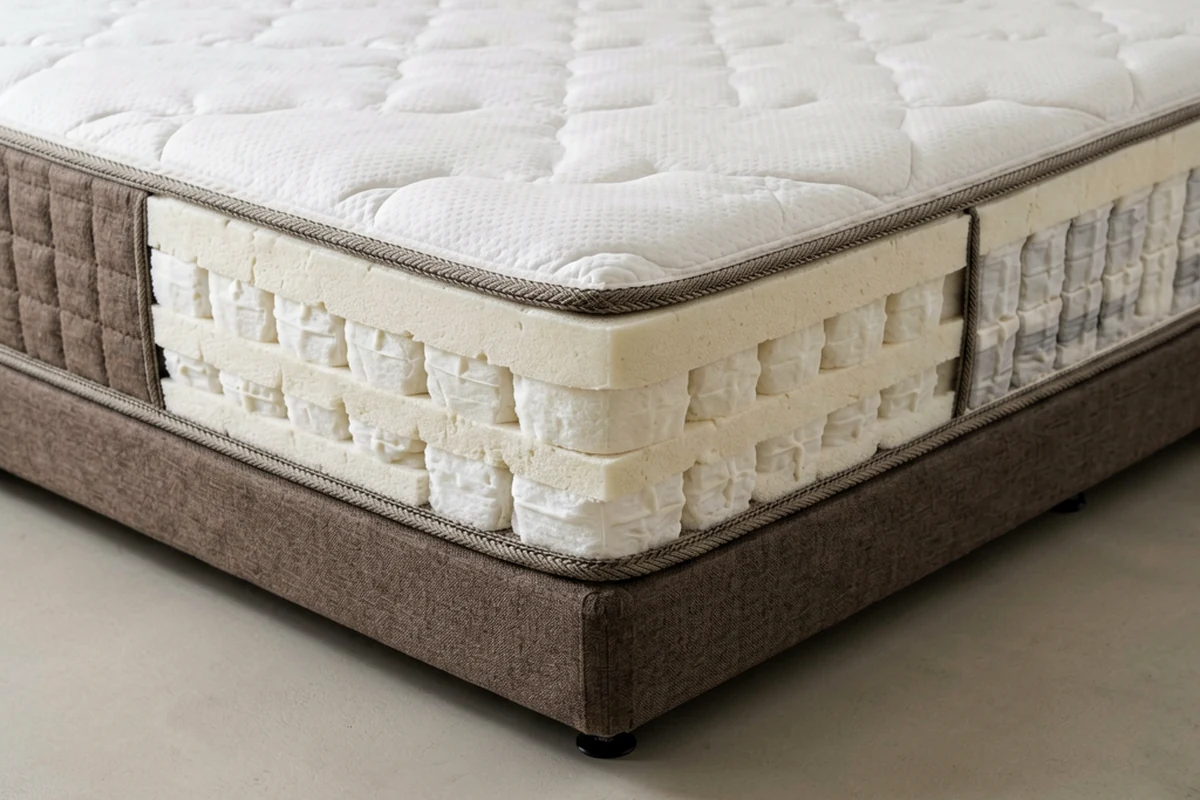
The supplier submittal should describe one controlled configuration. At minimum, request the ticking or cover reference; quilting and comfort layers; fire-barrier system where applicable; foam, fiber, latex, or other layer identities; spring or core reference; perimeter construction; underside; handles; adhesives or assembly method; finished dimensions; intended foundation relationship; labels; and packaging.
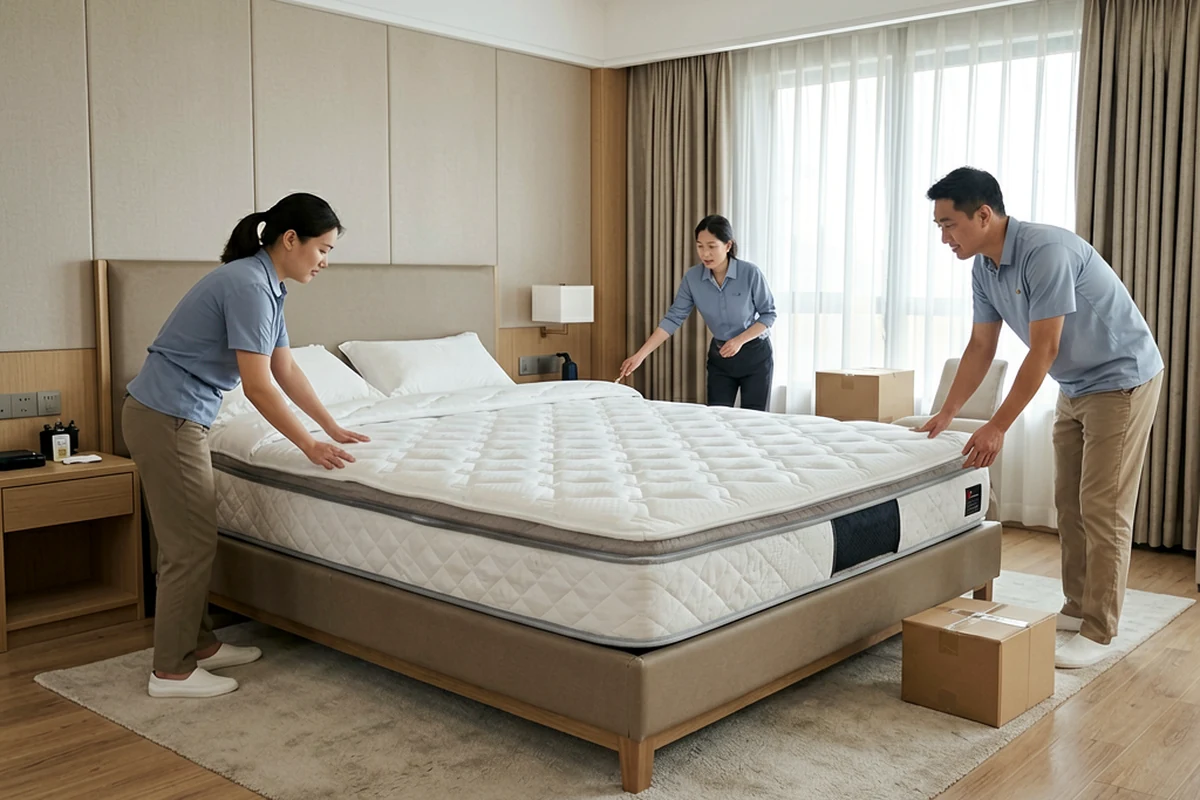
The purpose is not to force every buyer to become a mattress engineer. It is to stop silent substitution. If the quotation says only "pocket spring mattress with high-density foam," the supplier still controls the identities, quantities, locations, and assembly of the components that determine whether the approved sample and supporting evidence remain relevant.
Use a deviation register from the first quotation. Each proposed difference should identify the requirement, current approved configuration, proposed change, reason, affected model and room types, evidence impact, sample impact, cost or schedule effect, owner, and disposition. No response is not approval.
Separate the Two U.S. Flammability Questions
For products entering United States commerce, mattresses can be subject to two different federal flammability standards. 16 CFR Part 1632 addresses smoldering ignition of mattresses and mattress pads. 16 CFR Part 1633 addresses open-flame performance of mattress sets. The CPSC mattress guidance explains the distinction and states the Part 1633 criteria: peak heat release must not exceed 200 kW during the 30-minute test, and total heat release must not exceed 15 MJ during the first 10 minutes.
These are U.S. federal requirements, not a worldwide hotel specification. The destination, transaction, product type, hotel operator, insurer, and local authorities may introduce other requirements. Confirm applicability with the responsible compliance professionals before award and again before shipment.
The practical buyer question is not merely "Do you have a 1633 report?" Part 1633 defines a prototype as a specific mattress-set design that is the same in materials, components, design, and assembly. The intended foundation relationship also matters: a mattress sold with a foundation is treated differently from one intended for sale without one. Part 1632 has its own prototype and ticking-substitution controls. Ask the supplier to map the offered production model to the tested or otherwise permitted prototype basis, including every difference.
Review Evidence as a Chain, Not a PDF Collection
Build an indexed evidence file for each destination and model:
| Evidence field | Question to answer | Approval response |
|---|---|---|
| Rule and product scope | Which requirements apply to this mattress, pad, or mattress/foundation set in the destination? | Escalate if scope is assumed |
| Prototype identity | Which tested or qualified design represents the offer? | Reject an unidentified "similar model" |
| Configuration | Do cover, barrier, layers, core, dimensions, assembly, plant, and foundation match? | Record and review every difference |
| Test record | Who owns the complete report, when was it run, and what exact specimen/result does it show? | Do not approve from a certificate screenshot |
| Production controls | How are incoming components, assembly, labels, changes, and nonconforming units controlled? | Revise if production cannot stay linked to the prototype |
| Transaction evidence | Who is the manufacturer/importer, what model is shipped, and what certificate and records apply? | Hold shipment until responsibility is clear |
For Part 1633, the regulation and CPSC guidance require manufacturer/importer records covering prototypes, production, pooling or confirmation where relevant, and quality assurance. Required records are retained while the prototype is in production and for three years afterward. Permanent labels identify information including the manufacturer or importer, month and year of manufacture, model, and the intended foundation relationship.
For applicable general-use products in the United States, CPSC's general-use product certification guidance states that the domestic manufacturer or importer is responsible for written certification. Its mattress General Certificate of Conformity example shows the need to identify the product, applicable rules, certifying party, production details, and test-record contact. Treat the GCC as one link in the file, not as a substitute for configuration review.
The CPSC Part 1632 laboratory manual and Part 1633 laboratory manual can help a qualified reviewer understand test execution and report content. Both state that they are guidance tools used with the mandatory standards, not replacements for them.
Make the Sample a Controlled Release Gate
The sample room should test the project decision, not stage a brief comfort vote. Record the sample's full model and component revision, production location, dimensions, weight if project-relevant, label artwork, foundation/base, packaging, and approval date. Retain the signed record and, where practical, a controlled reference sample or sealed component set.
Review the sample on the specified bed system:
Measure finished dimensions and bed height against the approved schedule.
Check mattress position, edge alignment, headboard relationship, bedside reach, linen fit, and housekeeping access.
Confirm the visible cover, quilting, edge, underside, handles, labels, and packaging against the submittal.
Open and make the bed using the property's normal method; record handling, fit, visible damage, odor, or unpacking concerns without turning a one-time observation into a service-life claim.
Reconcile the sample identity with the test, certificate, and production-control evidence.
Record every accepted deviation and the exact models or room types it affects.
Use four dispositions: approve the sample for the next defined gate, revise and resubmit, reject, or escalate. Sample approval should not silently authorize later substitutions, and it does not prove long-term comfort, durability, hygiene, or guest preference.
Control Production, Packing, and Receiving
Before mass-production release, freeze the bill of materials or equivalent controlled product definition, approved labels, foundation pairing, packaging, inspection plan, and deviation register. Name who can authorize changes. A ticking, barrier, foam, spring unit, adhesive, quilting, assembly, plant, dimension, or foundation change should trigger documented technical and compliance review before it reaches production.
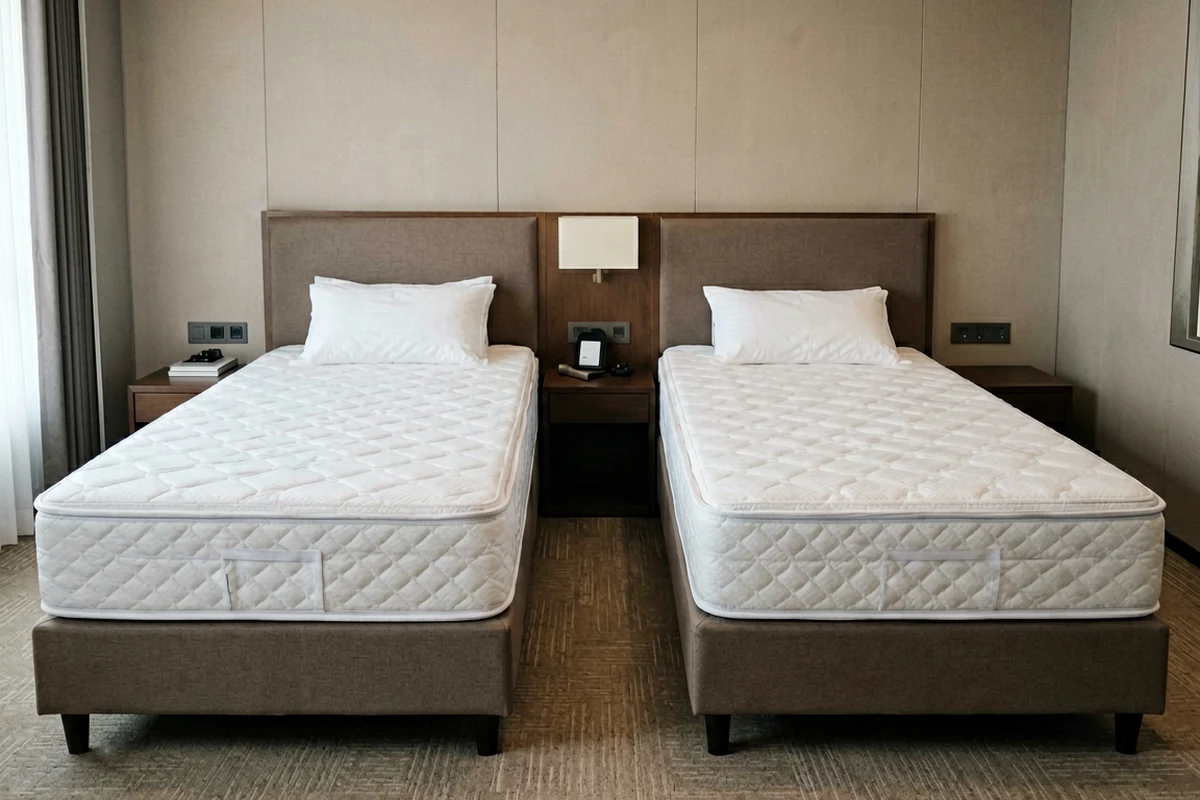
At receiving, match the delivery to the approved file. Check package ID, item code, room type, model, size, quantity, production date or trace method, permanent label, visible damage, wet packaging, unusual odor requiring investigation, and foundation/base identity. Quarantine unexplained differences instead of distributing them to rooms. Keep one signed receiving record linked to the purchase order and approved sample.
Supplier selection still matters outside the mattress evidence itself. The related guide to hotel furniture supplier selection can help structure entity and capability checks. For adjacent linens, amenities, and operating items, continue into hotel OS&E procurement. Neither link replaces mattress-specific compliance and product review.
Decide the Next Gate
Approve only when the room schedule, mattress/base relationship, controlled construction, destination requirements, prototype mapping, reports, labels, responsible certificate party, sample record, change authority, packaging, and receiving plan are closed for the next stated step.
Revise when the offer may be workable but dimensions, component identities, evidence ownership, model mapping, labels, sample results, or packing details remain incomplete.
Reject when the supplier will not disclose the offered configuration, cannot connect production to relevant evidence, substitutes without approval, or presents unrelated reports as proof.
Escalate when regulatory scope, fire-test applicability, medical claims, destination labeling, chemical requirements, unusual bed systems, or report interpretation need a qualified compliance, laboratory, fire-safety, medical, design, or legal specialist.
To start a useful supplier discussion, send your hotel mattress procurement package with the destination, room schedule and quantities, mattress and base dimensions, required finished bed height, product definition, applicable standards, supplier evidence index, sample status, packaging and labeling plan, delivery sequence, and target approval and opening milestones.
Get the week's latest industry information
-
Real-Life Professional Restaurant Case Studies
Explore Now
-
Create a unique restaurant with over 95,700+products
Explore Now
-
Protessional Free 3D Restaurant Design
Explore Now
-
Still Have Questions About Opening a Restaurant?
Explore Now

Sylvia
With 8 years in catering & hospitality industry, sales manager of Ron Group, specialise in providing one stop solutions to restaurants, hotels and weddings.
Discover Our Exclusive Products
Explore our extensive range of restaurant and hotel supplies designed to enhance your operations. Find the perfect solutions to meet your needs.
Browse Our ProductsFREE 3D DESIGN
Boost your restaurant's success with our free 3D design service. Start building the restaurant of your dreams today!
Explore 3D Design Case
RECOMMENDED CASES
-

La Rambla by Catalunya: Crafting Barcelona's Soul in Hong Kong - Custom Furniture Excellence
RON Group's custom Spanish-inspired furniture elevates La Rambla with artisanal aesthetics...
Learn More -

Cardinal Point: Elevating Outdoor Seating with Tailored Cushion Upgrades
Discover how Cardinal Point transformed its outdoor dining experience with custom cushions, achievin
Learn More
RECOMMENDED BLOGS
-

Bar Glassware 101: Types, Names, Uses, and How to Stock Your Bar
Learn the 10 core bar glassware types, names, and uses. Discover how to stock your bar with the right glasses for cocktails, beer,...
Sylvia2026-07-26 -

Complete Bar Equipment List for Opening a Bar
Use a complete bar equipment list with pictures, covering workstations, ice, refrigeration, glassware, utilities, sanitation and a...
Sylvia2026-06-11 -

Low-Budget Restaurant Interior Design Ideas: Spend Where Guests and Staff Notice
Explore low-budget restaurant interior design ideas, practical material choices, layout priorities and phased upgrades without...
Sylvia2026-04-04
Subscribe to RON GROUP
Stay up-to-date with the latest industry insights and expert advice. Together, we'll create your ideal restaurant.