

Hotel Linen & Textile Procurement: Thread Count, GSM & Par Stock
A complete guide to hotel linen procurement: thread count vs GSM specs, par stock calculations, quality tiers by star rating, wash durability economics, and how to evaluate China-based textile suppliers.
Content
Hotel guests remember two things above almost everything else: the quality of their sleep and the feel of their towels. Both come down entirely to linen procurement decisions made months before opening day. In guest satisfaction surveys, bedding comfort consistently ranks among the top three drivers of overall stay ratings — and towel quality follows close behind.
Yet linen is one of the most technically complex OS&E categories to procure. Thread counts, GSM weights, fiber blends, and par stock calculations each carry real cost implications. Buy too cheap and you're replacing stock after 50 washes instead of 150. Buy without calculating your par correctly and you're placing emergency orders at a 40–60% price premium during your busiest weeks.
This guide walks hotel procurement managers through every dimension of linen sourcing: quality specifications, tier-by-tier standards, par stock math, wash durability economics, and a practical framework for evaluating China-based linen suppliers. For context on where linen fits within your broader hotel supply budget, see our Hotel OS&E Procurement Guide.
Why Linen Is a High-Stakes Procurement Category
Linen procurement is not a set-it-and-forget-it purchase. Unlike fixed assets, textiles degrade with every wash cycle. That makes linen simultaneously an initial capital outlay and an ongoing operational cost, a combination that rewards disciplined planning and punishes reactive buying.
Consider the total cost of ownership (TCO) math. A midscale 150-room hotel maintaining 3-par linen stock will have roughly 450 sets of bed linen in circulation at any given time. At $18 per set for a poly-cotton blend vs. $32 for a 100% cotton alternative, the initial purchase difference is $6,300. But if the cheaper blend lasts 80 wash cycles versus 150 for the cotton option, you're replacing the entire inventory nearly twice as fast. Over a three-year horizon, the cheaper product costs significantly more.
Guest satisfaction adds a second layer. Research from J.D. Power's hotel satisfaction studies consistently shows that room cleanliness and in-room comfort (a category that includes bedding) account for a disproportionate share of satisfaction variance. Negative linen experiences: pilling, yellowing, rough texture, generate reviews that show up in booking platforms and compound over time. Procurement quality decisions made in a spreadsheet translate directly into online reputation scores.
Hotel Linen Categories: A Complete Overview
Before specifying thread counts and GSM values, you need a complete picture of which linen categories your property requires. Requirements vary by property type (a resort spa needs pool wraps that a business hotel doesn't), but the core taxonomy applies across segments.
Bed Linen
Fitted and flat sheets: the highest-volume SKU in any hotel linen program
Duvet covers / duvets: covers require regular laundering; inner duvets run on a seasonal replacement cycle
Pillowcases: standard and European sizes; often the first item guests notice
Mattress protectors: waterproof or quilted; critical for mattress longevity
Bed skirts / valances: lower turnover than functional linen but essential for FF&E presentation
Terry (Bathroom) Linen
Bath towels: 70×140 cm is the standard hotel size
Hand towels: 50×100 cm; typically 2 per occupied room per day
Face cloths / washcloths: 30×30 cm; high daily turnover
Bath mats: thicker GSM product; daily replacement standard
Bath robes: waffle weave or terry; in-room amenity with higher per-unit cost
Spa slippers: technically soft goods, often sourced alongside terry
F&B Linen
Tablecloths: sizes vary by table format; round, rectangular, and banquet configurations
Napkins: cotton or poly-cotton; fine dining properties use 100% cotton damask
Chair covers and skirting: primarily for banquet and event spaces
Waitstaff aprons: technically uniform, but often sourced through the same linen supplier
Spa & Pool Linen
Pool towels: oversized (90×170 cm or larger), higher GSM, often in distinctive colors or with logo stripes
Spa wraps: treatment linen; softness is the primary quality driver here
For hotels procuring from a single supplier, clarifying which of these categories are in scope before requesting quotes prevents scope creep and price surprises. RON Group's Hotel Supplies collection covers all of these categories from a single source.
Quality Specifications Decoded
Linen specifications are often misunderstood, and sometimes deliberately inflated by suppliers using marketing language. Here's what the key metrics actually mean for hotel procurement decisions.
Thread Count for Bed Linen
Thread count (TC) measures the number of threads per square inch of fabric, counting both horizontal (weft) and vertical (warp) threads. Within a legitimate counting methodology, higher TC typically correlates with a smoother hand feel. But the relationship isn't linear, and the number alone doesn't determine quality.
The reason: some manufacturers artificially inflate TC by counting multi-ply threads (two twisted threads counted as two instead of one) or by using very fine, low-quality yarn in high density. A 600TC sheet using thin, low-grade cotton may feel stiffer and wear faster than a well-woven 300TC sheet using long-staple cotton.
Practical hotel benchmarks:
200TC: Serviceable for budget properties; more prone to pilling with heavy laundry cycles
300TC: The sweet spot for midscale hotels; good durability and soft hand feel at a reasonable cost
400TC: Appropriate for upscale properties; noticeably smoother, holds quality through 120+ wash cycles when made with long-staple cotton
600TC+: Luxury positioning; only cost-effective when fiber quality (Egyptian or Pima cotton) matches the TC specification
GSM for Terry Products
For towels and bath mats, weight per square meter (GSM) is the primary quality indicator, not thread count. GSM directly correlates with absorbency, softness, and wash durability.
| GSM Range | Category | Typical Application | Wash Durability |
|---|---|---|---|
| 400–450 GSM | Economy | Budget hotels, gym facilities | 60–80 cycles |
| 450–500 GSM | Standard | Midscale hotels, 3-star properties | 80–120 cycles |
| 500–600 GSM | Superior | Upscale hotels, 4-star properties | 120–150 cycles |
| 600–750 GSM | Luxury | 5-star hotels, spa facilities | 150–200 cycles |
Fiber Content
100% combed cotton is the default for upscale and luxury linen. Combing removes short fibers, leaving longer, more uniform strands that produce smoother fabric and resist pilling. Ring-spun cotton adds a further processing step that improves tensile strength.
Poly-cotton blends (typically 60/40 or 50/50 cotton-polyester) offer meaningful cost savings and increased wrinkle resistance, a practical benefit in high-volume laundry operations. The tradeoff is reduced breathability and a slight decrease in perceived softness. For budget and midscale properties with aggressive laundry programs, blends are a defensible choice.
Bamboo-derived fabrics (bamboo viscose or lyocell) are increasingly available at the luxury end. Bamboo fiber is naturally moisture-wicking and hypoallergenic, and properties can use this to support sustainability positioning. That said, bamboo viscose processing involves chemical treatments, so sustainability claims require verification through certifications like OEKO-TEX.
Weave Types
For bed linen, the two dominant weave constructions are:
Percale: One-over-one-under weave producing a matte, cool, crisp feel. More durable and breathable; the standard choice for hot climates and hotels with strong air-conditioning. Softens with washing.
Sateen: Four-over-one-under weave creating a silkier, slightly lustrous surface. Warmer feel; more susceptible to snagging but preferred for a luxury appearance in photography and room presentation.
For terry towels, loop pile height matters: a taller, more open loop increases absorbency and luxury perception; a tighter, denser loop wears better in institutional laundry settings.
Par Stock Calculation for Hotel Linen
Par stock is the number of complete linen sets required to keep all occupied rooms serviced while maintaining laundry flow and emergency reserves. Getting par wrong is one of the most common procurement errors in hotel openings, and one of the most expensive to correct mid-operation.
The Standard Par Formula
The hospitality industry standard is 3-par minimum for most linen categories:
1 par in-room: the set currently on the bed or in the bathroom
1 par in the laundry: being washed, dried, or staged for return
1 par in housekeeping storage: clean inventory ready for turnover service
Worked Example: 100-Room Midscale Hotel
| Item | Per Room (3 Par) | Total Units (100 rooms) | Unit Cost (midscale) | Total Cost |
|---|---|---|---|---|
| Fitted sheets (king/queen) | 3 | 300 | $12 | $3,600 |
| Flat sheets | 3 | 300 | $10 | $3,000 |
| Duvet covers | 3 | 300 | $18 | $5,400 |
| Pillowcases (2 per room) | 3 | 600 | $5 | $3,000 |
| Bath towels (2 per room) | 3 | 600 | $8 | $4,800 |
| Hand towels (2 per room) | 3 | 600 | $4 | $2,400 |
| Bath mats | 3 | 300 | $6 | $1,800 |
| Total initial linen investment | ~$24,000 |
This estimate covers bed linen and bath terry only, using midscale pricing. Face cloths, mattress protectors, and F&B linen add to the total.
High-Occupancy Adjustments
For resort properties with seasonal peaks, weekend-heavy hotels, or properties with same-day laundry constraints, 4–5 par is more appropriate. The additional inventory cost is offset by avoiding two scenarios:
Laundry shortfalls: running out of clean linen mid-shift and delaying room turns
Emergency purchases: sourcing replacement linen at retail or spot prices, typically 40–60% above contracted supplier rates
A property with 80-room capacity that runs short on linen during a fully booked weekend and needs to make 50 emergency towel purchases at $12 retail vs. $8 contracted is looking at a $200 overspend on that single weekend. Multiply that across a season and the case for 4-par inventory writes itself.
Quality Tiers by Hotel Star Rating
There is no universal "right" specification. Appropriate linen quality should align with your property's star rating, average daily rate (ADR), and guest expectations. Here's how the tiers break down:

| Star Rating | Bed Linen Spec | Terry GSM | Fiber | Approx. Cost/Room (Initial 3-Par) |
|---|---|---|---|---|
| Budget (2★) | 200TC percale | 400–450 GSM | 50/50 poly-cotton | $80–$120 |
| Midscale (3★) | 300TC percale | 450–500 GSM | 60/40 poly-cotton | $150–$220 |
| Upscale (4★) | 400TC percale or sateen | 500–600 GSM | 100% combed cotton | $280–$380 |
| Luxury (5★) | 400–600TC long-staple | 650–750 GSM | Egyptian or Pima cotton | $500–$800+ |
These per-room costs are for bed linen and terry combined, calculated at 3-par. They exclude F&B linen, spa stock, and branded customization premiums.
Wash Durability: Why Cheap Linen Costs More Over Time

The 100-wash test is the hospitality industry's standard durability benchmark. Quality linen suppliers test fabric samples through 100 commercial wash cycles and measure retention of weight, tensile strength, and whiteness. Reputable suppliers can provide test results; if they can't, treat that as a red flag.
What the numbers look like in practice:
A 400 GSM budget towel might retain 85% tensile strength after 80 washes, then degrade rapidly
A 550 GSM standard towel from a quality supplier may still test above 90% tensile strength at 150 washes
A luxury 700 GSM hotel towel made with ring-spun cotton can hold structural integrity through 200+ commercial washes
For a 100-room hotel washing bath towels twice per occupied room per day at 75% average occupancy, that's roughly 150 towel wash cycles per year per towel. A towel rated for 80 cycles needs replacing annually. One rated for 150+ cycles lasts two years or more. The math on quality investment pays off clearly at scale.
When evaluating China-based suppliers, ask specifically for 100-wash test certificates alongside product samples. Request testing by an accredited third-party lab rather than in-house test results. Our guide on Quality Inspection for China Suppliers covers the full inspection framework including how to structure pre-shipment sampling for linen orders.
Sourcing Hotel Linen from China: What to Look For
China's textile manufacturing base, concentrated in provinces including Zhejiang, Shandong, and Jiangsu, produces the majority of the world's hotel linen supply. The challenge for buyers is not finding suppliers; it's identifying which factories operate at the quality and consistency standards required for hospitality procurement.

Key Certifications
OEKO-TEX Standard 100 is the most important certification for hotel linen procurement. It certifies that the finished product has been tested for harmful substances at every stage of production, from raw fiber to dye to finished fabric. For hotel operators serving guests with skin sensitivities, or catering to markets with strong consumer safety expectations (EU, North America, Japan), OEKO-TEX certification is increasingly a baseline requirement rather than a differentiator.
ISO 9001 certification for the supplier's quality management system confirms that consistent production processes are in place. It doesn't guarantee product quality directly, but it indicates a supplier operating with documented quality controls, non-conformance tracking, and corrective action processes.
Additional certifications worth requesting for specific product lines:
GOTS (Global Organic Textile Standard): for organic cotton claims
Better Cotton Initiative (BCI): for sustainably sourced conventional cotton
bluesign: chemical safety in dye and finishing processes
MOQ Ranges for Linen
Hotel linen suppliers in China typically operate with the following minimum order quantities:
Standard white linen (sheets, pillowcases): 200–300 pieces per SKU (size/spec combination)
Terry products (towels, bath mats): 300–500 pieces per SKU
Custom color or striped linen: 500+ pieces per SKU due to dye lot minimums
Embroidered or woven-label products: 300+ pieces; embroidery setup fees apply per design
For a 150-room hotel at 3-par, most individual SKUs will exceed MOQ thresholds comfortably. Smaller properties (under 50 rooms) may find it more economical to work through a distributor rather than sourcing direct from factory to meet MOQ requirements. For a full breakdown of how to navigate MOQ structures, see our China Supplier MOQ and Lead Time Guide.
Lead Times
Plan for the following production and shipping timelines when sourcing linen from China:
Stock/standard white linen: 15–30 days production + 20–35 days sea freight
Custom weave or jacquard: 45–60 days production + shipping
Embroidered monogram or logo: 45–75 days total (includes design approval, sampling, production)
Large-volume opening orders: Add 2–3 weeks for pre-shipment inspection scheduling
Hotel openings that leave linen procurement to the last three months frequently encounter lead time problems. Build linen sourcing into your procurement timeline at the 6-month mark from planned opening, allowing buffer for sampling rounds and any quality rejects during inspection.
The relationship between hotel linen and the broader FF&E vs OS&E procurement distinction matters here: linen is OS&E (operational), but its lead time rivals many FF&E items. Treat it accordingly in your procurement schedule.
Custom Branding Options for Hotel Linen

Branded linen reinforces property identity and, functionally, reduces walk-away theft by reducing the perceived "souvenir" value of generic white towels. The main customization options available through China-based suppliers:
Embroidery
Logo or monogram embroidery on bath towels and robes is the most common form of hotel textile branding. Placement is typically on the border band or chest area of robes. Setup fees for digitizing artwork run $30–$80 per design; subsequent per-piece embroidery costs are $0.50–$2.00 depending on stitch count and complexity. Minimum order quantities for embroidered items are usually 300 pieces per design.
Dobby Hem Stripes
Woven border stripes in property colors are built directly into the fabric during production. They add no post-production cost but require that the order reach the factory's dobby loom minimum (typically 500 pieces or more). Stripe patterns and colors are confirmed at the sampling stage. This is the premium option used by full-service and luxury brands because the branding cannot be removed without destroying the towel.
Woven Labels
A woven or printed care label with property name, care instructions, and country of origin. This is the lowest-cost branding option and can be applied to any linen category. Labels are typically sewn into seams on bed linen and onto the interior tag band on terry. Cost addition is $0.10–$0.30 per piece in large quantities.
Jacquard-Woven Patterns
High-end properties sometimes specify jacquard-woven patterns (subtle damask or geometric designs) into sheets or pillowcases. This requires dedicated loom setup and significantly higher MOQs (1,000+ pieces per pattern/size), so it's reserved for flagship properties or chains with enough room count to justify the investment.
Budget Benchmarks: Initial Setup and Annual Replacement
Planning a hotel linen budget requires two separate calculations: the initial full-par setup cost at opening, and the annual replacement allowance to maintain inventory quality as items age out.
Initial Setup (per room, all linen categories at 3-par)
| Category | Budget 2★ | Midscale 3★ | Upscale 4★ | Luxury 5★ |
|---|---|---|---|---|
| Bed linen (all items) | $50–$75 | $90–$130 | $180–$240 | $350–$500 |
| Bath terry (towels, mat, robe) | $40–$55 | $65–$95 | $120–$160 | $200–$320 |
| F&B linen (per F&B seat) | $8–$15 | $15–$25 | $25–$45 | $50–$100 |
| Total per room (room only) | $90–$130 | $155–$225 | $300–$400 | $550–$820 |
Annual Replacement Rate
Industry benchmarks for linen replacement run at 25–35% of total linen inventory per year for most hotel segments, according to guidance from the American Hotel & Lodging Association. This accounts for normal wear, laundry losses, and attrition from guest damage. Higher-occupancy properties (above 80% ADR) trend toward the higher end of that range.
A practical formula:
Annual linen budget = (initial inventory cost per room × number of rooms × 30%)
For a 100-room midscale hotel with a $190 average initial investment per room: 100 × $190 × 30% = $5,700 annual replacement budget for room linen alone. F&B linen adds to this, particularly for restaurants with tablecloth service.
Sourcing linen through RON Group's Hotel Supplies program allows buyers to consolidate linen procurement with other OS&E categories, reducing shipping costs and simplifying supplier management. For properties in the planning phase, our full hotel procurement framework covers both OS&E linen and capital expenditure items side by side: Hotel OS&E Procurement Guide.
Key Takeaways for Hotel Linen Procurement
A well-executed linen procurement program is built on five decisions made before the first order is placed:
Specify correctly for your tier. Thread count and GSM targets should align with your star rating and ADR. Over-specifying inflates costs; under-specifying inflates replacement rates and guest complaints.
Calculate par stock before pricing suppliers. Know exactly how many units you need across all SKUs before entering supplier conversations. Under-paring is the most common and most expensive linen procurement mistake.
Ask for wash test data, not just samples. A towel can feel excellent fresh from the factory. Its quality at wash cycle 100 is what actually drives your TCO. Require test certificates.
Build lead time into your opening schedule. Custom linen with embroidery or dobby stripes requires 60–75 days from order confirmation. Start six months out.
Source certifications proactively. OEKO-TEX Standard 100 is increasingly a guest and buyer expectation, not a premium add-on. Build it into your supplier qualification criteria.
For properties sourcing across multiple hospitality categories, consolidating linen, kitchen equipment, furniture, and uniforms under fewer suppliers reduces complexity and strengthens your negotiating position on volume pricing. Contact our procurement team to discuss your project specifications.
Get the week's latest industry information
-
Real-Life Professional Restaurant Case Studies
Explore Now
-
Create a unique restaurant with over 95,700+products
Explore Now
-
Protessional Free 3D Restaurant Design
Explore Now
-
Still Have Questions About Opening a Restaurant?
Explore Now

Sylvia
With 8 years in catering & hospitality industry, sales manager of Ron Group, specialise in providing one stop solutions to restaurants, hotels and weddings.
Discover Our Exclusive Products
Explore our extensive range of restaurant and hotel supplies designed to enhance your operations. Find the perfect solutions to meet your needs.
Browse Our ProductsFREE 3D DESIGN
Boost your restaurant's success with our free 3D design service. Start building the restaurant of your dreams today!
Explore 3D Design Case
RECOMMENDED CASES
-

La Rambla by Catalunya: Crafting Barcelona's Soul in Hong Kong - Custom Furniture Excellence
RON Group's custom Spanish-inspired furniture elevates La Rambla with artisanal aesthetics...
Learn More -

Cardinal Point: Elevating Outdoor Seating with Tailored Cushion Upgrades
Discover how Cardinal Point transformed its outdoor dining experience with custom cushions, achievin
Learn More
RECOMMENDED BLOGS
-
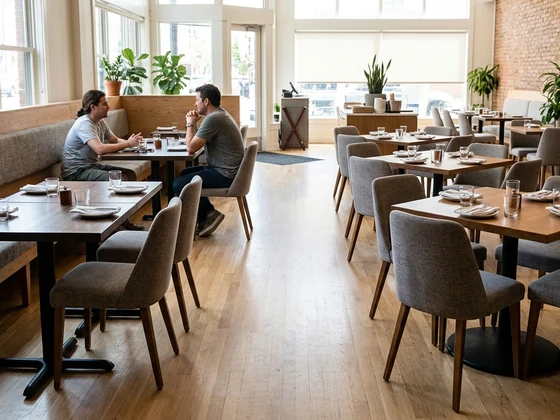
Restaurant Table Spacing and Aisle Clearance: Supplier Drawing Checklist
Check restaurant table spacing, aisle clearance, chair pullout, service path, and supplier drawing proof before approving a...
Sylvia2026-07-20 -

5 Mistakes to Avoid When Buying Restaurant Furniture from China
Don't fall for costly oversights! Learn the 5 mistakes to avoid when buying restaurant furniture from China and ensure a...
 Ron2025-01-079 min read
 -

RON GROUP Launches VR Experience to Explore Our Dynamic Showroom
Discover RON GROUP's VR showroom! Explore dining furniture, tableware, and customized services virtually or visit us in person to...
Sylvia2024-12-163 min read
Subscribe to RON GROUP
Stay up-to-date with the latest industry insights and expert advice. Together, we'll create your ideal restaurant.