











Content
China Supplier Quality Inspection: The Complete Guide for Furniture Buyers
Picture 500 banquet chairs arriving three weeks before opening. The first crate has wobbling legs, patchy finish, and screws that strip the first time someone tightens them. At that point you have few good options. Shipping the goods back costs more than they are worth, a replacement run takes weeks, and the opening date doesn't move.
Once a container leaves China, a factory warranty is hard to enforce. Your leverage sits on the factory floor, before the balance payment goes out. This guide explains how quality inspection with a China furniture supplier works, which inspections to book and when, and what to check at each step. The checklist further down can go straight into a purchase order.
Factory audit or product inspection?
They answer different questions, and buyers often mix them up.
| Factory audit | Product inspection | |
|---|---|---|
| Question it answers | Can this factory make what my project needs? | Does this production batch match what I approved? |
| When | Before the contract and deposit | During production and before shipment |
| What is checked | Capacity, equipment, QC process, material storage, certifications | The actual goods: materials, dimensions, workmanship, function, packing |
A good audit doesn't replace inspection. A capable factory can still get your order wrong.
The four inspection stages
1. Pre-production inspection (PPI)
Done before manufacturing starts. The inspector checks incoming materials and components against the approved specification: timber moisture, steel tube wall thickness, foam density certificates, fabric against the approved swatch, and fire test reports for the actual fabric, foam, and barrier being used. Book it for first orders with a new factory, for custom tooling, and for anything where a material substitution would be expensive to find later.
2. During-production inspection (DPI or DUPRO)
Done when roughly 20% to 30% of the order is made. This is where you catch a systematic error while it is still cheap to fix: machining tolerances, weld penetration, joinery, foam shaping, and whether production still matches the golden sample. For upholstered pieces, the frame has to be checked before the foam and fabric go on.
3. Pre-shipment inspection (PSI)
Done when production is 100% complete and at least 80% is packed. The inspector draws a random sample using ISO 2859-1 and checks it for dimensions, function, finish, labels, and packing. This is the inspection that matters most, because a failed PSI report gives you documented grounds to hold the balance payment until the goods are reworked and re-inspected.
4. Container loading inspection (CLI)
Done as the container is loaded. It confirms carton counts against the packing list, a clean and dry container with no holes or roof rust, proper bracing, and the seal number. It matters most for full containers, consolidated multi-factory loads, and fragile goods.
Inspection steps checklist
Copy this into your PO or inspection booking. Agree the pass limits with the supplier in writing before production starts.
Before production
- ☐ Golden sample approved, signed, photographed, measured, and kept as the contract benchmark
- ☐ Shop drawings approved with critical dimensions and tolerances marked
- ☐ Sampling plan and defect classes written into the contract (see the next section)
- ☐ Timber moisture content checked with a calibrated meter: 8% to 12%
- ☐ Steel tube wall thickness checked with a caliper against the drawing
- ☐ Foam density checked against the certificate (we specify 45 to 55 kg/m³ cold-cure HR foam for booth and chair seats)
- ☐ Fabric checked against the approved swatch, with an abrasion report (Martindale ISO 12947-2 or Wyzenbeek ASTM D4157)
- ☐ Fire test reports match this order's fabric, foam, and barrier (for example TB 117-2013 / 16 CFR 1640, BS 5852 Crib 5)
During production
- ☐ Frames inspected before upholstery: mortise-and-tenon joints, corner blocks glued and screwed, no staples in structural joints
- ☐ Welds continuous on load-bearing joints, with no porosity or burn-through, checked before powder coating
- ☐ First production units compared side by side with the golden sample
- ☐ For booths: sections pre-assembled at the factory and checked for seam alignment and wall-mount hardware position
Before shipment
- ☐ Random sample drawn per ISO 2859-1, General Inspection Level II
- ☐ Dimensions checked on the sample against the shop drawing, with seat height and table clearance as critical dimensions
- ☐ Stability: chairs and tables on a flat surface, maximum rock of 1.5 mm, or levelers able to correct it
- ☐ Static load on the seat (150 kg is a common check), then frame checked for loosening, cracks, or permanent deformation
- ☐ Finish: no runs, drips, orange peel, or bare spots; cross-cut adhesion test on metal finishes (ISO 2409, Class 0 or 1)
- ☐ Upholstery: seams straight, no puckering, and a white cloth with 75% alcohol rubbed on the fabric picks up no colour
- ☐ Moving parts (folding mechanisms, glides, levelers, casters) cycled and working smoothly
- ☐ Permanent flammability labels sewn in and readable where required (US: "Complies with U.S. CPSC requirements for upholstered furniture flammability.")
- ☐ Cartons: correct shipping marks and barcodes, corner and edge protection, packing to the agreed drop-test standard (for example ISTA 1A)
At loading
- ☐ Container clean, dry, odor-free, with no light leaks
- ☐ Carton count matches the packing list
- ☐ Heavy items low and evenly spread, with the load braced or strapped
- ☐ Desiccants in place for long or tropical routes
- ☐ Seal number recorded and photographed
Sampling and defect classes
Most furniture inspections follow ISO 2859-1 (equivalent to ANSI/ASQ Z1.4): the inspector pulls a sample from the lot and counts defects against classes you defined in the contract. The sample size and the pass/fail limits are set in that standard once you choose an inspection level and the limits for each class. Most commercial furniture buyers use General Inspection Level II with normal single sampling, but the exact numbers belong in your purchase order, not in a generic article.
Defects are sorted into three classes:
- Critical: a safety or legal problem, such as a collapsing leg, a sharp edge, or a missing fire label. These usually stop the lot.
- Major: a defect a guest or operator would reject, such as a wobbling table, a seam that has split, or the wrong colour.
- Minor: cosmetic issues that don't affect use, such as glue residue on a hidden underside.
Write the sampling plan, the defect list, and the pass/fail rule for each class into the contract before production starts. If the factory and the inspector disagree over whether a scuff is major or minor, the contract wording decides.
Furniture-specific checks inspectors miss
General inspection checklists are written for consumer goods. Commercial furniture has its own failure points:
- Moisture: solid wood above 12% will move once it reaches a heated or air-conditioned dining room.
- Hidden structure: by the time a chair is upholstered, you can no longer see the joints. That's why the frame check happens during production, not at PSI.
- Foam: low-density or rebonded foam feels fine on delivery and sags within months. Check density against the certificate, and cut a sample if in doubt.
- Booths: check the wall-mount hardware position, the toe-kick, and access cutouts for power or floor boxes. Mistakes here show up on site, where they are expensive to fix.
- Labels: a missing or wrong US flammability label can hold up an inspection on site.
If the container carries more than furniture
Many restaurant and hotel containers also carry tableware, kitchen equipment, or linens. The same four stages apply, but the checks change:
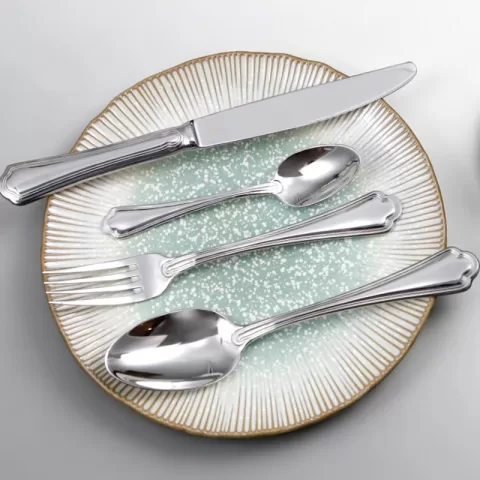
- Tableware: chip resistance, dishwasher durability, and lead and cadmium extraction testing to the limits of the destination market.
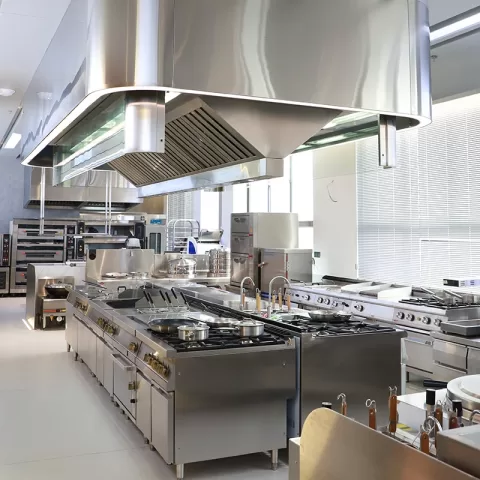
- Kitchen equipment: certification marks (UL, ETL, NSF, CE as required) checked against the certifier's database, correct voltage and frequency, a running test, and weld quality on food-contact surfaces.
- Linens: weight (GSM), shrinkage, and colourfastness after commercial washing.
What to expect from the supplier's own QC
A good factory does not treat inspection as a fight. Look for:
- A QC team with calibrated calipers, moisture meters, coating thickness gauges, and test rigs.
- Photo and video updates at material arrival, frame stage, and final assembly.
- Material traceability: mill certificates, kiln records, and test reports on file.
- A written corrective action process when defects are found.
- Open access for your third-party inspector.
For how we run this in Foshan, including our four QC gates, AQL defect classes, export packing, and consolidated container loading, see our hospitality QC and export protocol. If you are still at the supplier selection stage, our guide to the 5 mistakes to avoid when buying restaurant furniture from China covers what to check before you sign.
Talk to our QC team
RON GROUP has sourced and manufactured hospitality furniture in Foshan since 2005, with factory audits, production monitoring, AQL inspections, and container consolidation across product categories.
Email info@rongroup.co or call / WhatsApp +86 13380258855 to discuss inspection for your next order.
Get the week's latest industry information
-
Real-Life Professional Restaurant Case Studies
Explore Now
-
Create a unique restaurant with over 95,700+products
Explore Now
-
Protessional Free 3D Restaurant Design
Explore Now
-
Still Have Questions About Opening a Restaurant?
Explore Now

Sylvia
With 8 years in catering & hospitality industry, sales manager of Ron Group, specialise in providing one stop solutions to restaurants, hotels and weddings.
Discover Our Exclusive Products
Explore our extensive range of restaurant and hotel supplies designed to enhance your operations. Find the perfect solutions to meet your needs.
Browse Our ProductsFREE 3D DESIGN
Boost your restaurant's success with our free 3D design service. Start building the restaurant of your dreams today!
Explore 3D Design Case
RECOMMENDED CASES
-

La Rambla by Catalunya: Crafting Barcelona's Soul in Hong Kong - Custom Furniture Excellence
RON Group's custom Spanish-inspired furniture elevates La Rambla with artisanal aesthetics...
Learn More -

Cardinal Point: Elevating Outdoor Seating with Tailored Cushion Upgrades
Discover how Cardinal Point transformed its outdoor dining experience with custom cushions, achievin
Learn More
RECOMMENDED BLOGS
-

Bar Glassware 101: Types, Names, Uses, and How to Stock Your Bar
Learn the 10 core bar glassware types, names, and uses. Discover how to stock your bar with the right glasses for cocktails, beer,...
Sylvia2026-07-26 -

Complete Bar Equipment List for Opening a Bar
Plan a complete commercial bar equipment list by menu, service volume, refrigeration, ice, glassware, utilities, sanitation,...
Sylvia2026-06-11 -

Low Budget Restaurant Interior Design: 2026 Trends
Prioritize a low-budget restaurant interior by protecting code, operations, durability, accessibility, and phased design decisions...
Sylvia2026-04-04
Subscribe to RON GROUP
Stay up-to-date with the latest industry insights and expert advice. Together, we'll create your ideal restaurant.

Contact Us Today
Connect With Us Today