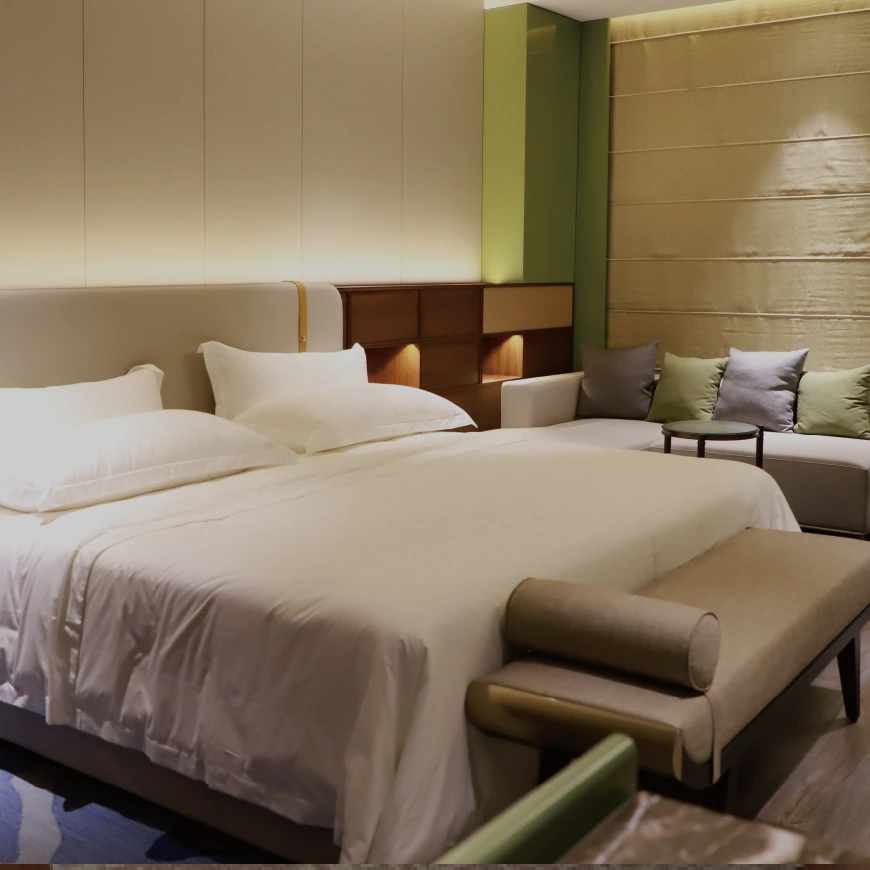


MOQ & Lead Times: Sourcing Restaurant Equipment from China
Learn standard MOQs, realistic production lead times, and safe payment terms when sourcing restaurant and hotel equipment from China. Includes negotiation tips and a pre-order checklist.
Content
You've found the perfect restaurant chairs at half the price you'd pay domestically. The commercial wok range checks every box. The supplier's catalog looks legitimate, and the samples impressed your operations team. So you're ready to place an order — and then the questions start piling up.
What's the minimum order? How long until it actually arrives? Do I really have to wire 30% to a company I've never visited?
These aren't trivial concerns. For procurement managers placing their first order from China, the biggest source of anxiety isn't price — it's process opacity. You don't know what's standard, what's negotiable, and what's a red flag. That uncertainty stalls decisions, delays openings, and sometimes kills deals that would have been excellent for both sides.
This guide strips away the ambiguity. We'll walk through exactly what to expect for MOQs, production lead times, and payment terms when sourcing hospitality equipment and supplies from China — with specific numbers, realistic timelines, and practical negotiation strategies you can use immediately.
What MOQ Really Means in China Manufacturing — And Why It Exists
MOQ stands for Minimum Order Quantity, but in China's manufacturing context, it means something more specific than "the smallest number we'll sell you." It represents the minimum production run that makes economic sense given raw material batch sizes, machine setup costs, and labor allocation.
Understanding why MOQs exist helps you negotiate them intelligently rather than just asking for lower numbers.
Why Suppliers Set MOQs
Raw material minimums: Steel mills, fabric suppliers, and ceramic clay vendors have their own batch minimums. A furniture factory can't order 10 meters of upholstery fabric — the textile mill's minimum is usually 300-500 meters per color.
Production setup costs: Switching a CNC machine from one chair design to another takes 2-4 hours. Mold changes for melamine tableware can take a full day. These fixed costs need to be spread across enough units to keep per-piece pricing viable.
Quality consistency: Smaller batches actually produce less consistent results. Color matching, welding uniformity, and finish quality all stabilize as production runs increase.
Typical MOQ Ranges by Product Category
These ranges reflect what most established manufacturers (not trading companies) require for standard products. Custom or OEM orders typically sit at the higher end.
| Product Category | Typical MOQ Range | Notes |
|---|---|---|
| Restaurant Furniture (chairs, tables, booths) | 50–100 pieces | Per SKU/design; lower for stock models |
| Hotel Furniture (beds, desks, wardrobes) | 30–80 pieces | Larger items = lower MOQ per unit |
| Tableware (plates, bowls, glassware) | 200–500 pieces | Per design; ceramic kilns fire in large batches |
| Commercial Kitchen Equipment | 5–20 units | Heavy equipment has naturally lower MOQs |
| Linens & Textiles (tablecloths, napkins, bedding) | 100–300 pieces | Fabric dyeing drives the minimum |
| Disposables & Smallwares | 1,000–5,000 pieces | Low unit cost requires volume for viability |
| Hotel Amenities & Supplies | 500–2,000 pieces | Packaging customization adds to minimum |
5 Ways to Negotiate Lower MOQs
You can't eliminate MOQs, but you can work with them strategically:
Accept stock colors and materials. A chair manufacturer quoting MOQ 100 for a custom green fabric might accept 30 pieces in their standard charcoal or beige. The difference is that they already have the fabric on hand.
Consolidate across SKUs. Instead of ordering 50 units of one chair model, order 20 of model A, 15 of model B, and 15 of model C. Many factories aggregate these into a single production run if the construction process is similar. This is one area where working with a one-stop supplier covering multiple categories delivers real advantage.
Mix into a larger consolidated shipment. If your total order value is substantial ($15K+), suppliers are more willing to include small-quantity items as part of the container. A 20-unit tableware order that wouldn't fly on its own becomes acceptable when it's shipping alongside a $30K furniture order.
Order samples first, then commit to a production timeline. Some factories will lower the MOQ for a first order if you provide a written commitment (not a binding contract, but a letter of intent) for repeat orders at standard volumes.
Ask about overstock or last-season inventory. Factories occasionally have finished goods from canceled orders or production overruns. MOQ for these is often 1 piece — but selection is limited and inconsistent.

Production Lead Times: Realistic Timelines from Order to Delivery
Lead time misunderstandings cause more sourcing frustration than any other factor. The number your supplier quotes is almost always the production time — it doesn't include material sourcing, quality inspection, inland transport, customs clearance, or ocean freight. Here's what to actually plan for.
Lead Time Breakdown by Order Type
| Order Type | Production Time | Total Door-to-Door Estimate | Examples |
|---|---|---|---|
| Stock / Ready-to-Ship Items | 0–3 days | 2–4 weeks | Standard smallwares, basic hotel amenities |
| Standard Production (existing designs, no customization) | 30–45 days | 8–12 weeks | Catalog furniture in stock finishes, standard kitchen units |
| Custom / OEM Orders (new colors, materials, branding) | 45–90 days | 12–18 weeks | Custom-upholstered seating, branded tableware, modified equipment |
| Full Custom Development (new molds, prototyping) | 90–120 days | 18–24 weeks | Proprietary furniture designs, bespoke kitchen systems |
What Actually Affects Lead Time
When your supplier says "45 days," here's what's happening behind the scenes:
Material sourcing (5–15 days): Factories don't stockpile every material. Specialty fabrics, imported hardware, or specific steel grades need to be ordered and delivered to the factory before production can start.
Production queue position: Your order enters a queue. During peak season, a factory running at 90%+ capacity may not start your order for 1-2 weeks after confirming it.
Quality control steps: Responsible manufacturers run in-line inspections, pre-shipment checks, and sometimes third-party QC. Each stage can add 3-5 days but dramatically reduces the risk of receiving defective goods.
Customization complexity: Printing a logo on a standard plate adds 2-3 days. Developing a new plate shape from scratch adds 30-45 days for mold creation alone.
Peak Season Warning: Plan Around These Dates
China's manufacturing calendar has predictable pressure points that many international buyers don't account for:
October–January: Peak export season. Factories are running at maximum capacity filling Q4 orders for global markets. Lead times can extend 20-30% beyond standard quotes.
Chinese New Year (late January–mid February): Most factories shut down for 2-4 weeks. The real impact is longer — workers often leave 1-2 weeks early and return 1-2 weeks late. Effectively, production capacity drops by 50% for a 6-week window. If you need goods by March, place orders no later than mid-November.
Golden Week (first week of October): A 7-day national holiday. Production stops, but the disruption is manageable if you plan for it.
Canton Fair periods (April and October): Factory sales teams are at the fair, which can slow response times for quotes and order confirmations — though production continues.

How to Protect Your Timeline
Get a written production schedule with milestone dates (material arrival, production start, QC inspection, ship date) — not just a single delivery date.
Request progress photos at key stages. Any professional factory will accommodate this.
Build a 2-week buffer into your project timeline. Delays happen even with excellent suppliers.
Confirm shipping method early. Ocean freight to the US West Coast takes 18-25 days; East Coast is 30-38 days. Air freight (3-7 days) is available for urgent items but costs 5-8x more.
Payment Terms: What's Standard, What's Negotiable, and What's a Red Flag
Payment terms generate the most anxiety for first-time buyers, and understandably so. You're transferring significant funds to a company in another country, often before you've seen the finished product. Here's how the system actually works.
Standard Payment Structures
| Payment Structure | Typical Use Case | Risk Level for Buyer |
|---|---|---|
| 30% deposit + 70% before shipment (T/T) | Most common for orders $5K–$50K | Moderate — standard industry practice |
| 30% deposit + 70% after BL copy (T/T) | Established relationships, $10K–$100K | Lower — goods are already on the water |
| Letter of Credit (L/C) | Large orders $50K+, new relationships | Lowest — bank guarantees protect both sides |
| Trade Assurance (Alibaba platform) | Smaller orders, first-time buyers | Lower — platform holds payment until delivery confirmed |
| Open Account (Net 30/60) | Long-term partners with proven track record | Lowest for buyer — highest for supplier |
T/T (Telegraphic Transfer) is the dominant method, accounting for roughly 70-80% of China export transactions in the hospitality sector. The 30/70 split is genuinely standard — not a negotiation starting point, but the established norm.
How Payment Terms Evolve with the Relationship
First orders rarely get favorable terms, and that's rational on both sides. Here's the typical progression:
First order: 30% deposit + 70% before shipment, via T/T. Supplier may request full payment for very small orders (under $3K).
Second and third orders: Same 30/70 split, but 70% balance may shift to "upon BL copy" (meaning goods have shipped). Supplier may also offer slightly extended payment windows (7-10 days after BL).
Ongoing relationship (5+ orders): Deposit may drop to 20%. Some suppliers offer Net 30 terms on a portion of the order. L/C requirements loosen.
Strategic partnership: Flexible terms tailored to your cash flow cycle. Some buyers negotiate quarterly settlement or consignment arrangements for high-volume programs.

Red Flags in Payment Discussions
Be cautious if a supplier:
Demands 100% payment upfront — especially for production orders. There's no legitimate reason a factory needs full payment before starting production.
Asks for payment to a personal bank account instead of the registered company account. The beneficiary name on the wire transfer should match the company name on the contract and business license.
Refuses to provide a proforma invoice or contract — even a simple one-page agreement should outline product specs, quantities, pricing, payment schedule, and delivery terms.
Pushes for Western Union or cryptocurrency payments. Legitimate factories use standard banking channels.
Quotes prices dramatically below market and asks for a large deposit. If restaurant chairs that should cost $35-50 are quoted at $18, the economics don't work. Either the quality will be unacceptable, or the order won't materialize at all.
Protecting Your Payments
Verify the company registration using China's National Enterprise Credit Information Publicity System (free, government-operated).
Use L/C for first-time orders above $50K. The bank fees (typically 0.5-1.5% of the order value) are worth the protection. The ICC trade finance rules (UCP 600) govern L/C transactions globally.
Include inspection clauses in your contract. The balance payment should be contingent on the goods passing a pre-shipment inspection — either your own inspector or a third-party service like SGS or Bureau Veritas.
Start small. There's no reason your first order needs to be $100K. Place a $5K–$15K trial order to validate quality, communication, and reliability before scaling up.
What a Professional Supplier Setup Looks Like
The challenges above aren't unique to China sourcing — they're inherent in any international manufacturing relationship. What separates a smooth experience from a frustrating one is usually the supplier's operational infrastructure.
When evaluating any China-based hospitality supplier, look for these capabilities:
Cross-category consolidation: Suppliers covering furniture, kitchen equipment, tableware, and OS&E under one roof can consolidate your MOQs across categories into a single shipment — turning five sub-minimum orders into one viable container.
Transparent production tracking: You should receive proactive updates, not have to chase your contact for status. Milestone-based reporting with photos is the baseline expectation.
Flexible payment structures: A supplier confident in their product and relationship will offer graduated payment terms, not insist on the same rigid structure for a tenth-time buyer as a first-time buyer.
In-house QC teams: Factories with dedicated quality control catch issues before goods ship, saving you the cost and delay of returns or rejections.
Export documentation experience: Proper commercial invoices, packing lists, certificates of origin, and familiarity with your country's import requirements. If the supplier can't explain Incoterms (FOB, CIF, DDP), that's a competency gap worth noting.
At RON Group, we've built our operations around eliminating exactly these friction points — from consolidated MOQs across 95,700+ products to milestone-based production tracking for every order. But regardless of which supplier you choose, the capabilities above should be on your evaluation checklist.
Pre-Order Checklist: 7 Things to Confirm Before Your First Purchase
Before you wire a deposit on your first order from China, make sure you've confirmed every item on this list. Print it, share it with your team, and don't skip any steps.
Product specifications are documented in writing — not just discussed verbally or over chat. Dimensions, materials, finishes, colors (with Pantone or RAL codes if applicable), and performance standards should all appear in the proforma invoice or purchase contract.
MOQ and pricing are confirmed per SKU — including any price breaks at higher quantities. Ask: "Is this price valid for the MOQ quantity, or does it require a higher volume?"
Production timeline is broken into milestones — material sourcing, production start, in-line inspection, completion, and ship date. A single "delivery in 45 days" promise is not a timeline.
Payment terms and bank details are on the proforma invoice — with the company name, bank name, account number, and SWIFT code. Verify the company name matches their business registration.
Incoterms are specified — FOB (you arrange shipping from the port), CIF (supplier covers freight and insurance to your port), or DDP (supplier handles everything to your door). This single detail determines who pays for shipping, insurance, and customs duties. The ICC Incoterms 2020 rules are the global standard.
QC and inspection process is agreed — will you send your own inspector? Use a third party? Accept factory QC reports? When does inspection happen relative to the balance payment?
Return/defect policy is explicit — what happens if goods arrive damaged or don't match specs? Is there a replacement commitment, credit, or refund process? Get this in writing before the order, not after a problem arises.

Frequently Asked Questions
Can I order just a few samples before committing to the MOQ?
Yes — and you absolutely should. Most manufacturers will send 1-3 samples for you to evaluate. Expect to pay for the samples (typically at a higher per-unit price than production cost) plus shipping. Sample costs are often credited against your first production order. Budget 2-4 weeks for sample production and international delivery.
What if I need the goods faster than standard lead time?
Rush orders are possible but come with trade-offs. Most factories can accelerate production by 20-30% for a rush fee (typically 10-15% of the order value). Air freight can replace ocean shipping for the fastest delivery, though at significantly higher cost. The most effective strategy is planning ahead — if you know your opening timeline, work backward from that date and add a two-week buffer.
Is it safe to use T/T wire transfer for international payments?
T/T is the standard payment method for China export transactions and is inherently safe as a banking mechanism. The risk isn't in the transfer method — it's in verifying that you're sending money to a legitimate business. Verify the company registration, confirm bank details match official documents, and start with a smaller trial order. For orders above $50K with a new supplier, an L/C provides additional protection through your bank.
What happens if the factory misses the delivery date?
This depends on your contract. Well-structured agreements include a delivery tolerance window (typically 7-15 days) and penalty clauses for delays beyond that — usually 0.5-1% of the order value per week of delay, capped at 5-10%. In practice, most delays are communicated in advance and resolved through adjusted timelines rather than penalties. The key is having the clause in place as a framework for accountability.
Sourcing from China Is Predictable — When You Know What to Expect
The anxiety around MOQs, lead times, and payment terms is almost always rooted in unfamiliarity, not in actual risk. Thousands of restaurants, hotels, and hospitality businesses source successfully from China every year. The ones that have the smoothest experience share a few traits: they ask specific questions, they document everything in writing, and they choose suppliers based on operational capability rather than lowest quoted price.
Now you know the standard ranges for MOQs across every major product category. You have realistic timelines that account for production, QC, and shipping — not just factory promises. And you understand which payment structures are standard, which are negotiable, and which are warning signs.
The next step is straightforward: identify your needs, request quotes with specific specs, and start a conversation with a supplier who can answer your follow-up questions with the same level of specificity you've seen here. The process works. It just works better when you walk in informed.
Get the week's latest industry information
-
Real-Life Professional Restaurant Case Studies
Explore Now
-
Create a unique restaurant with over 95,700+products
Explore Now
-
Protessional Free 3D Restaurant Design
Explore Now
-
Still Have Questions About Opening a Restaurant?
Explore Now

Sylvia
With 8 years in catering & hospitality industry, sales manager of Ron Group, specialise in providing one stop solutions to restaurants, hotels and weddings.
Discover Our Exclusive Products
Explore our extensive range of restaurant and hotel supplies designed to enhance your operations. Find the perfect solutions to meet your needs.
Browse Our ProductsFREE 3D DESIGN
Boost your restaurant's success with our free 3D design service. Start building the restaurant of your dreams today!
Explore 3D Design Case
RECOMMENDED CASES
-

La Rambla by Catalunya: Crafting Barcelona's Soul in Hong Kong - Custom Furniture Excellence
RON Group's custom Spanish-inspired furniture elevates La Rambla with artisanal aesthetics...
Learn More -

Cardinal Point: Elevating Outdoor Seating with Tailored Cushion Upgrades
Discover how Cardinal Point transformed its outdoor dining experience with custom cushions, achievin
Learn More
RECOMMENDED BLOGS
-
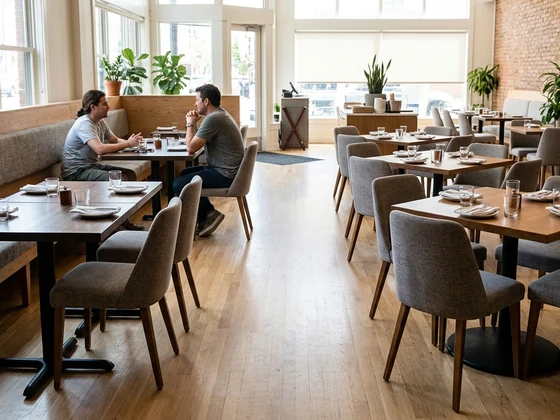
Restaurant Table Spacing and Aisle Clearance: Supplier Drawing Checklist
Check restaurant table spacing, aisle clearance, chair pullout, service path, and supplier drawing proof before approving a...
Sylvia2026-07-20 -

5 Mistakes to Avoid When Buying Restaurant Furniture from China
Don't fall for costly oversights! Learn the 5 mistakes to avoid when buying restaurant furniture from China and ensure a...
 Ron2025-01-079 min read
 -

RON GROUP Launches VR Experience to Explore Our Dynamic Showroom
Discover RON GROUP's VR showroom! Explore dining furniture, tableware, and customized services virtually or visit us in person to...
Sylvia2024-12-163 min read
Subscribe to RON GROUP
Stay up-to-date with the latest industry insights and expert advice. Together, we'll create your ideal restaurant.