


Content

To successfully qualify a restaurant uniform supplier for a multi-role program, procurement teams must move beyond style catalogs and fabric claims. Before awarding a contract, buyers must lock a comprehensive role matrix, establish strict fabric and laundry requirements, finalize a size set, approve decoration samples, and define packing, replenishment, and delivery controls.
Evaluating a supplier requires establishing an evidence framework. Procurement managers, operators, and brand teams must require suppliers to provide physical samples, documented test results, and clear supply chain workflows. Unlike the highly bespoke science behind luxury hotel uniforms, or the rigid traditions of a French fine-dining uniform hierarchy, multi-role restaurant programs demand scalable, repeatable procurement frameworks that balance brand identity with operational reality.
This guide details the critical award gates, evidence records, and risk controls required to evaluate and select a uniform supplier capable of executing a complex, multi-role program.
1. Defining the Multi-Role Program Matrix
Before evaluating a supplier's capabilities, the buyer must define the exact scope of the uniform program. A multi-role matrix serves as the foundational document for the Request for Quotation (RFQ). It dictates the garments required, the environmental exposures each garment will face, the intended care process, and how the garments will be replenished.
When sourcing from a comprehensive uniform category, buyers must map specific garments to specific operational roles to ensure the supplier can meet the diverse needs of the entire restaurant group.
Table 1: Multi-Role Uniform Program Matrix
| Role | Garment Components | Movement & Exposure Profile | Intended Care Process | Branding & Decoration | Replenishment Strategy |
|---|---|---|---|---|---|
| Front of House (Servers/Hosts) | Aprons, button-down shirts, trousers, ties/accessories | High mobility, exposure to food spills, beverage splashes, frequent customer interaction | Home laundering or light commercial wash | Embroidered logo on apron and shirt chest; branded buttons | High turnover; requires continuous open-stock availability |
| Kitchen (Chefs/Line Cooks) | Chef coats, cook shirts, trousers, caps | Reaching and fast movement; heat, grease, and cleaning exposure defined by the buyer | The actual contracted laundry process | Name/title and logo method approved on a wash-tested sample | Staffing-based issue and replacement stock |
| Bar (Bartenders/Barbacks) | Vests, aprons, dark shirts | Upper-body movement and exposure to water, syrups, citrus, and beverages | The actual home or commercial process | Pins, patches, embroidery, or print with attachment and care evidence | Role-specific replacement stock |
| Housekeeping & Cleaning | Tunics, trousers, utility garments | Bending, reaching, kneeling, and documented cleaning-product exposure | The actual contracted laundry process | Patch or trim approved for the intended care process | Site-level issue and replacement stock |
| Management | Blazers, woven shirts, trousers | Office and floor management; client-facing wear | Supplier care recommendation reconciled with buyer operations | Subtle decoration with placement standard | Individual issue with agreed reorder route |
2. The Supplier Evidence Matrix: Moving from Claims to Proof
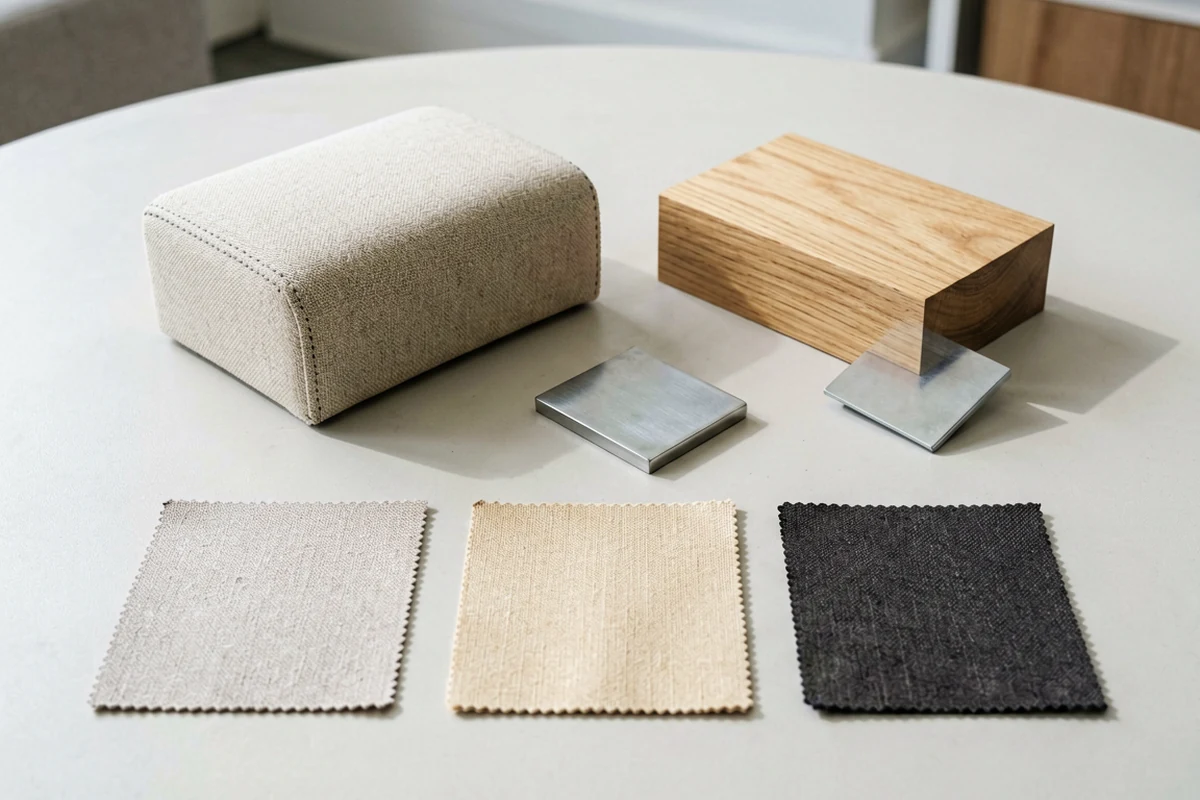
A critical failure point in uniform procurement is accepting supplier claims without requiring product-specific evidence. Do not accept assertions that a garment is "durable," "shrink-proof," "colorfast," or "fire-resistant" without documentation. Standards are evidence frameworks and RFQ references, not proof that any specific supplier or garment passes automatically.
Before award, the buyer and supplier must agree on the test methods used to evaluate the garments and identify who owns the approval process.
Table 2: Supplier Evidence and Approval Matrix
| Claim / Requirement | Evidence Requested Before Award | Sample / Test Method Reference | Approval Owner | Change-Control Record |
|---|---|---|---|---|
| Fabric Composition & Weight | Mill specification sheet and physical fabric swatches (lab dips) | Buyer-specified ASTM Textile Standards for composition analysis | Procurement Manager | Signed physical swatch attached to master contract |
| Dimensional Stability (Shrinkage) | Lab test report showing dimensional change after specified wash cycles | AATCC Standard Laundering methods | Operations Lead | Approved Pre-Production Sample (PPS) |
| Colorfastness to Laundering | Lab test report evaluating color transfer and fading | AATCC Standard Test Methods for colorfastness | Brand Team | Approved physical wash-tested sample |
| Seam Slippage & Strength | Lab test report on seam integrity under tension | Buyer-specified ASTM Textile Standards | Procurement Manager | Technical specification document |
| Decoration Durability | Physical sample of decorated garment subjected to intended wash process | Visual evaluation post-wash (AATCC appearance evaluation guidelines) | Brand Team | Signed decorated PPS |
| Size Set & Fit Dimensions | Complete physical size run across all contracted sizes | ISO 8559-1 and ISO 8559-2 vocabulary | Operations Lead / HR | Locked grading chart and approved physical size set |
| Packing & Sorting Accuracy | Documented packing manual and First Article Inspection (FAI) report | Visual inspection of first packed carton | Project Manager | Approved packing specification document |
| Continuity of Supply | Written policy for discontinued fabrics, colors, trims, and replacement proposals | Contract terms agreed by buyer and supplier | Procurement Manager | Signed continuity and substitution record |
3. Laundering, Care, and Appearance Control
Uniforms fail most frequently in the wash. Procurement teams must explicitly distinguish industrial laundering from home laundering and require the buyer to state the intended care process in the RFQ. A garment designed for home laundering will rapidly degrade in an industrial facility.
Defining the Intended Process
Buyers should provide the supplier with the known parameters of the intended laundry process, including the operator, program type, chemistry categories, drying or finishing method, and pressing requirements. If the laundry provider controls the detailed process, the provider should join sample approval rather than leaving the garment supplier to guess.
Industrial Laundering: When evaluating workwear for industrial wash environments, buyers can reference ISO 15797:2017. This standard provides defined industrial washing and finishing procedures that can be used to evaluate workwear. However, passing a standardized test does not guarantee performance in the field; actual intended laundry processes at the buyer's specific facilities may still need compatibility checks. Furthermore, ISO 30023:2021 provides context for professional-industrial-laundering qualification symbols, but the presence of a symbol does not imply a garment qualifies without product-specific evidence.
Home Laundering: For garments washed by employees at home, buyers should rely on AATCC Standard Laundering conditions to recommend agreed test methods and controlled laundering conditions.
Evaluating Appearance and Dimensional Change
Suppliers must provide evidence of how the garment performs after repeated cycles of the intended care process. Buyers should utilize AATCC Standard Test Methods to evaluate: 1. Dimensional Change: Recording change against the agreed measurement points and acceptance criteria. 2. Color Transfer and Fading: Evaluating whether the fabric bleeds onto lighter trims or loses its primary hue. 3. Seam, Trim, and Decoration Appearance: Checking for puckering at the seams, curling of collars, or degradation of buttons and zippers after washing.
4. Size-Set and Fit Approval Workflow
A universal size chart does not exist. A "Medium" from one supplier may fit entirely differently than a "Medium" from another. To mitigate fit issues, buyers must establish a rigorous size-set and fit approval workflow using standardized body-measurement vocabulary without prescribing one universal size chart.
The Fit Approval Workflow
Establish Vocabulary: Utilize ISO 8559-1:2017 (body measurement vocabulary) and ISO 8559-2:2017 (garment dimension vocabulary) to ensure the buyer and supplier are using identical terms when discussing chest girth, sleeve length, and waist placement.
Review Supplier Base Patterns: The supplier provides their standard size chart and garment dimensions for the proposed styles. The buyer reviews these against the intended employee demographic.
Request a Physical Size Set: The supplier manufactures a complete physical size run (e.g., XS through 4XL) in the exact approved fabric and pattern.
Conduct Fit Sessions: The buyer conducts live fit sessions with employees representing various body types. Movement profiles (reaching, bending, sitting) are tested.
Lock the Grading Chart: Any required adjustments (e.g., lengthening the hem, widening the bicep) are communicated to the supplier. The supplier updates the pattern grading, and the final garment dimensions are locked as a contractual requirement.
5. Decoration Durability and Brand Control

Restaurant uniforms are highly visible brand assets. The application of logos, names, and custom trims must be evaluated for both aesthetic accuracy and long-term durability. Buyers must ask suppliers specific brand-control questions before award:
Embroidery: What backing material is used to prevent puckering? Is the embroidery thread colorfast to the intended laundry process (especially if exposed to bleach)?
Print and Heat Transfers: Can the supplier provide evidence that the print will not crack, peel, or fade after the specified wash cycles? What is the maximum safe ironing temperature for the decorated area?
Patches and Appliqués: Are patches sewn on, heat-applied, or combined, and what evidence supports the chosen attachment method?
Trims and Hardware: What inspection evidence supports attachment and appearance after the intended care process?
Placement Accuracy: How does the supplier control logo placement across the approved size range?
All decoration methods must be finalized on a Pre-Production Sample (PPS) and subjected to the intended care process before bulk production is authorized.
6. Supply Chain: MOQ, Replenishment, and Packing Controls
A uniform program is only successful if the garments arrive at the right location, in the right sizes, at the right time. As demonstrated in complex rollouts like the Central Burgs custom uniform solutions case, supply chain controls are just as critical as garment quality.
Initial Issue vs. Replenishment
Buyers must evaluate the supplier's capability to handle different phases of the uniform lifecycle: * Initial Issue (Rollout): Large volume orders outfitting the entire staff of a new or rebranding restaurant. * New-Hire Issue: Smaller, frequent orders to outfit new employees as turnover occurs. * Replacement Stock: Ongoing orders to replace garments that have reached the end of their usable life.
Minimum Order Quantities (MOQ) and Reorder Cadence
Procurement teams must clarify the supplier's MOQ for both initial production and ongoing replenishment. If the supplier requires a high MOQ for reorders, the buyer must determine who holds the liability for warehousing the inventory. The reorder cadence and the party responsible for forecast review should be defined in the supply agreement.
Discontinued Fabric and Color Policies
Fabrics are occasionally discontinued by textile mills. The supplier must provide a clear policy on continuity of supply. If a core fabric or color is discontinued, the supplier must be required to provide a minimum notice period and present an exact matched alternative that undergoes the full testing and evidence framework before substitution.
Packing and Delivery Controls
Carton packing must be strictly controlled to prevent chaos at the restaurant level. Buyers must specify the required packing method in the RFQ: * Bulk Packing: Garments packed by style and size (e.g., a box of 50 Medium Chef Coats). * Packing by Site: All garments required for a specific restaurant location packed together. * Packing by Role: Garments sorted by department (e.g., all Bar uniforms in one carton). * Packing by Person (Man-Packing): Individual employee uniform kits packed into single bags/boxes, labeled with the employee's name and role.
7. Procurement Risk Scenarios, Hold Points, and Recovery
Even with strict evidence frameworks, uniform programs carry risk. Procurement teams should establish contractual hold points—stages where production cannot proceed without the named buyer approval—and define recovery actions before an exception occurs.
Risk Scenario 1: Unapproved Fabric Substitution* The Risk: The supplier substitutes the approved fabric with a cheaper, lighter alternative during bulk production. * Hold Point: Pre-Production Sample (PPS) approval and First Article Inspection (FAI). * Recovery Action: Quarantine the affected quantity, compare it with the sealed approval sample and specification, and apply the rejection, replacement, or concession route already defined in the contract.
Risk Scenario 2: Industrial Laundry Destroys Decoration* The Risk: A screen-printed logo melts or peels off after the first week of industrial laundering at the restaurant. * Hold Point: Wash test evaluation of the decorated sample prior to bulk production. * Recovery Action: Hold bulk approval, review the intended wash process and decoration evidence, then resample an agreed decoration method before release.
Risk Scenario 3: Inconsistent Size Set Grading* The Risk: The size Large fits perfectly, but the size 2XL is disproportionately tight in the shoulders, indicating poor pattern grading. * Hold Point: Physical size set fit session. * Recovery Action: Bulk production is halted. The supplier must submit a revised pattern grading chart and a new physical 2XL sample for fit approval before proceeding.
Risk Scenario 4: Chaotic Rollout Packing* The Risk: Cartons arrive at a new restaurant opening with mixed sizes, missing roles, and no clear labeling, causing operational delays. * Hold Point: First Article Inspection of packed cartons at the supplier's facility prior to shipment. * Recovery Action: Hold shipment release, reconcile the packing register, and repack or relabel under the responsibility and cost-allocation terms agreed in the purchase contract.
Risk Scenario 5: Core Fabric Discontinued Mid-Contract* The Risk: Two years into a program, the supplier announces the custom-dyed apron fabric is no longer available. * Hold Point: Annual supplier review and SLA enforcement. * Recovery Action: Use the continuity clause: review remaining stock, timing, and replacement options; then run the replacement fabric through the same evidence, sample, wash, and approval gates before substitution.
8. RFQ Checklist and Scored Supplier Comparison

To finalize the evaluation, procurement teams should use a standardized scoring matrix to compare competing suppliers objectively.
RFQ Checklist Before Award
[ ] Multi-role matrix defined and shared with supplier.
[ ] Intended care process (industrial vs. home) explicitly stated.
[ ] Buyer-specified test methods (ASTM, AATCC, ISO) agreed upon.
[ ] Physical fabric swatches and lab test reports received and reviewed.
[ ] Physical size set received, fit sessions conducted, and dimensions locked.
[ ] Decorated samples wash-tested and approved.
[ ] MOQ, lead times, and replenishment warehousing liabilities defined.
[ ] Packing manual (site/role/person) documented and approved.
Table 3: Scored Supplier Comparison Table
| Evaluation Criteria | Evidence-Based Rating Question | Supplier A | Supplier B | Supplier C |
|---|---|---|---|---|
| Evidence Provision | Are reports, swatches, and samples product-specific, current, and traceable? | [Rate] | [Rate] | [Rate] |
| Size & Fit Capability | Was a physical size set approved against named measurements and movement tasks? | [Rate] | [Rate] | [Rate] |
| Decoration Control | Was the decorated sample evaluated after the intended care process? | [Rate] | [Rate] | [Rate] |
| Supply Chain Controls | Are MOQ, replenishment, packing, continuity, and substitution rules explicit? | [Rate] | [Rate] | [Rate] |
| Risk Control | Does the supplier accept hold points, discrepancy records, and agreed recovery routes? | [Rate] | [Rate] | [Rate] |
| Commercial Fit | Do total landed terms and service responsibilities fit the program? | [Rate] | [Rate] | [Rate] |
Conclusion
Evaluating a restaurant uniform supplier for a multi-role program is an exercise in risk management and evidence gathering. By defining a strict role matrix, requiring documented test results for laundering and durability, locking physical size sets, and enforcing supply chain controls, procurement teams can ensure the uniform program is scalable, repeatable, and operationally sound.
For restaurant groups looking to establish robust, multi-role uniform programs backed by strict procurement controls and quality evidence, contact RON GROUP to discuss your operational requirements and supply chain needs.
Sources and Further Reading
The following professional standards provide the vocabulary, test methods, and evaluation frameworks necessary for qualifying uniform garments and suppliers. Buyers should reference these standards in their RFQs to establish clear evidence requirements.
ISO 15797:2017 — Industrial washing and finishing procedures for testing workwear provides an evaluation framework; the intended laundry process still requires compatibility review.
ISO 30023:2021 — Professional industrial laundering qualification symbols provides label vocabulary, not product-specific proof.
ISO 8559-1:2017 — Anthropometric definitions for body measurement supports consistent size-set measurement language.
ISO 8559-2:2017 — Primary and secondary garment dimensions supports garment-dimension communication.
AATCC Standard Test Methods provides textile evaluation method references.
AATCC Standard Laundering provides controlled laundering context.
ASTM Textile Standards provides a source family for buyer-specified test methods.
Get the week's latest industry information
-
Real-Life Professional Restaurant Case Studies
Explore Now
-
Create a unique restaurant with over 95,700+products
Explore Now
-
Protessional Free 3D Restaurant Design
Explore Now
-
Still Have Questions About Opening a Restaurant?
Explore Now

Sylvia
With 8 years in catering & hospitality industry, sales manager of Ron Group, specialise in providing one stop solutions to restaurants, hotels and weddings.
Discover Our Exclusive Products
Explore our extensive range of restaurant and hotel supplies designed to enhance your operations. Find the perfect solutions to meet your needs.
Browse Our ProductsFREE 3D DESIGN
Boost your restaurant's success with our free 3D design service. Start building the restaurant of your dreams today!
Explore 3D Design Case
RECOMMENDED CASES
-

La Rambla by Catalunya: Crafting Barcelona's Soul in Hong Kong - Custom Furniture Excellence
RON Group's custom Spanish-inspired furniture elevates La Rambla with artisanal aesthetics...
Learn More -

Cardinal Point: Elevating Outdoor Seating with Tailored Cushion Upgrades
Discover how Cardinal Point transformed its outdoor dining experience with custom cushions, achievin
Learn More
RECOMMENDED BLOGS
-

Restaurant Table Spacing and Aisle Clearance: Supplier Drawing Checklist
Check restaurant table spacing, aisle clearance, chair pullout, service path, and supplier drawing proof before approving a...
Sylvia2026-07-20 -

5 Mistakes to Avoid When Buying Restaurant Furniture from China
Don't fall for costly oversights! Learn the 5 mistakes to avoid when buying restaurant furniture from China and ensure a...
 Ron2025-01-079 min read
 -

RON GROUP Launches VR Experience to Explore Our Dynamic Showroom
Discover RON GROUP's VR showroom! Explore dining furniture, tableware, and customized services virtually or visit us in person to...
Sylvia2024-12-163 min read
Subscribe to RON GROUP
Stay up-to-date with the latest industry insights and expert advice. Together, we'll create your ideal restaurant.