
Hotel Renovation Budget: FF&E Cost Benchmarks and Worksheet Guide
Plan your hotel FF&E budget with confidence. Per-key cost benchmarks by star rating, room-by-room breakdowns, China sourcing savings, and a practical worksheet framework for procurement managers.
Content
Before you sign a contract with a general contractor, finalize your brand standards package, or send a single RFQ to a furniture manufacturer, you need a working FF&E budget. Without one, you're negotiating blind. Every change order, material upgrade, or delivery delay will erode your contingency faster than you expect.
This guide gives procurement managers, hotel developers, and ownership groups a ground-level framework for budgeting hotel FF&E. You'll find industry benchmark ranges by star rating, a room-by-room cost breakdown, the key drivers that push costs up or down, and a practical worksheet structure you can adapt for any property size.
What Is FF&E Budgeting and Why It Matters Before You Sign
FF&E stands for Furniture, Fixtures, and Equipment: the movable, non-structural assets that furnish and equip a hotel. Beds, desks, lobby seating, commercial kitchen equipment, lighting fixtures, window treatments, and in-room electronics all fall under this umbrella. For a full comparison of FF&E versus the companion category OS&E, see our guide on Hotel FF&E vs OS&E.
FF&E budgeting is the process of estimating the total capital cost of those assets before procurement begins. It matters for three reasons:
Financing alignment. Most hotel construction loans and SBA 7(a) loans require a detailed FF&E budget before funding. Lenders want to see that the developer has quantified every line item, not just a rough "furnishings" figure.
Contract protection. Suppliers and GCs sharpen their pencils when they know you've done your homework. Arriving at a negotiation with benchmark data (rather than an open-ended budget) shifts the balance back to the buyer.
Scope management. The most common source of hotel development overruns isn't construction; it's FF&E scope creep. A structured budget with per-key caps by room type keeps the design team accountable and gives ownership a basis for approving or rejecting upgrades.
The cost-per-key metric (total FF&E spend divided by the number of rooms) is the standard unit of measurement across the hotel development industry. It allows apples-to-apples comparison across different property sizes and makes benchmarking straightforward.
Industry Benchmark Ranges: FF&E Cost Per Key by Hotel Tier

The ranges below reflect 2026 market conditions, drawing on procurement data from North American and Asia-Pacific hotel development projects. They assume standard new-build scenarios; renovation projects and regions with high import duties will produce different figures. The American Hotel & Lodging Association and major hotel brands publish periodic cost benchmarks; treat any single data point as directional until verified against your market.
| Hotel Tier | Star Rating | FF&E Cost Per Key | What Drives the Range |
|---|---|---|---|
| Budget / Economy | 2★ | $3,000 – $8,000 | Catalog furniture, laminate case goods, minimal public areas |
| Midscale | 3★ | $8,000 – $18,000 | Spec-grade furniture, branded product standards, small F&B |
| Upscale | 4★ | $18,000 – $35,000 | Custom case goods, premium upholstery, full-service outlets |
| Luxury / Ultra-Luxury | 5★ | $35,000 – $80,000+ | Bespoke millwork, art program, multiple F&B venues, spa |
Important caveat: These are benchmarks, not guarantees. A 200-room midscale property in a tier-2 city with a China-sourced furniture package can land at the low end of the 3★ range. The same room count in a gateway city with brand-mandated custom upholstery will push toward the ceiling. Use these numbers to sense-check proposals, not to set hard project caps before design is complete.
For context: the total FF&E investment for a 150-room upscale hotel at $25,000 per key is $3.75 million. At the same room count, a budget property at $6,000 per key is $900,000. That $2.85 million spread is almost entirely explained by specification grade, public area scope, and procurement strategy. Room count is not the variable.
Room-by-Room FF&E Breakdown

Cost-per-key averages are useful for macro budgeting, but procurement requires line-item thinking. Here's how FF&E spend typically breaks down across property zones.
Standard Guest Room
The guest room is the core unit of the FF&E budget and typically accounts for 55–65% of total spend across all tiers. Key line items:
Bed platform and headboard: $400–$2,500 (economy to upscale). The headboard is often the room's design anchor; custom upholstered headboards in 4★ properties can reach $800–$1,200 per unit.
Case goods (dresser, nightstands, desk, wardrobe): $600–$3,500 per room set. Laminate-wrapped MDF is standard in budget hotels; solid wood or custom veneer is common in upscale.
Seating (desk chair, lounge chair, occasional table): $200–$1,200. Ergonomic task chairs in business-segment properties add $150–$300 over standard desk chairs.
Lighting (bedside lamps, desk lamp, floor lamp, sconces): $150–$800. LED fixtures with integrated dimmers are now standard in 3★+ properties.
Window treatment (blackout curtains or motorized roller blinds, sheer layer): $120–$600 per room. Motorized systems add $300–$700 per opening but are increasingly standard in 4★ properties.
In-room electronics and millwork integration: $200–$1,500 (TV mount, in-room safe, minibar unit). Often quoted separately by MEP or AV subcontractors.
Suite
Suites typically carry 2.0–3.5× the per-key cost of a standard room due to the additional living area. Budget an extra $4,000–$20,000 per suite above the standard room baseline, depending on size and tier. Key additions:
Sofa and coffee table for the living area ($600–$3,000)
Dining table and chairs for full suites ($400–$2,000)
Upgraded soft furnishings and window treatment for larger openings
Additional case goods for wet bar or kitchenette
Artwork (an additional $200–$1,500 in upscale and luxury tiers)
Lobby and Public Areas
Public areas (lobby, elevator lobbies, corridors, fitness center) consistently run 15–20% of the total FF&E budget for full-service hotels. For select-service properties without significant F&B or meeting space, the figure drops to 8–12%.
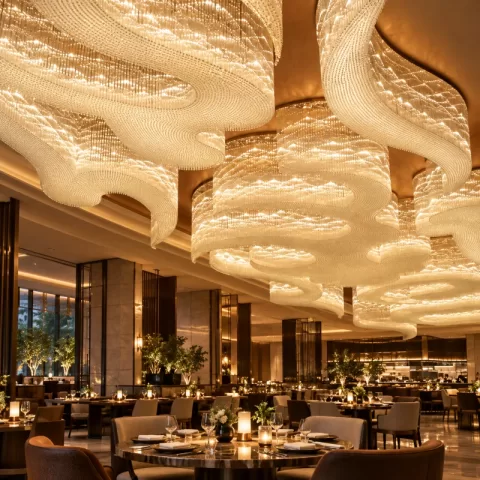
The lobby is where guests form their first impression, so owners frequently authorize per-square-foot spend that far exceeds guest room ratios. Signature seating, statement lighting fixtures, and custom reception millwork are common budget pressure points. Browse RON Group's hotel furniture collection to see specification-grade options for lobby and public area applications.
F&B Outlets: Restaurant, Bar, and Banquet
F&B FF&E is complex because it blends furniture with commercial kitchen equipment, which are two very different procurement tracks. A rough split:
Restaurant front-of-house: Tables, chairs, booth seating, host stand, lighting. Budget $180–$800 per cover depending on tier. A 100-seat hotel restaurant at midscale spec runs $25,000–$55,000 in FOH furniture alone.
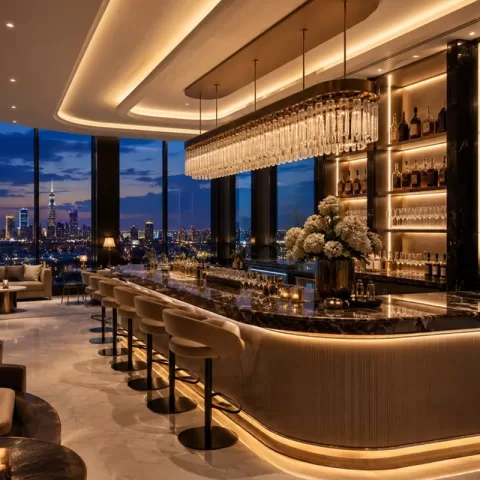
Bar: Bar counter millwork, bar stools, back-bar shelving, glassware display. Highly design-dependent; $15,000–$80,000+ for a full hotel bar depending on size and finish level.
Banquet / meeting rooms: Stacking or folding banquet chairs, folding tables, staging, AV equipment. For banquet chair volume pricing guidance, see how similar procurement decisions are made in our restaurant furniture cost guide.
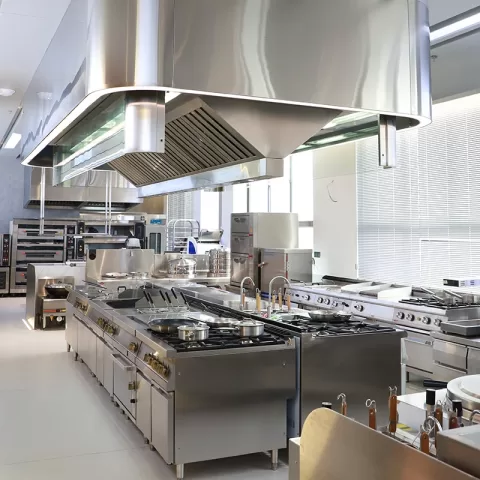
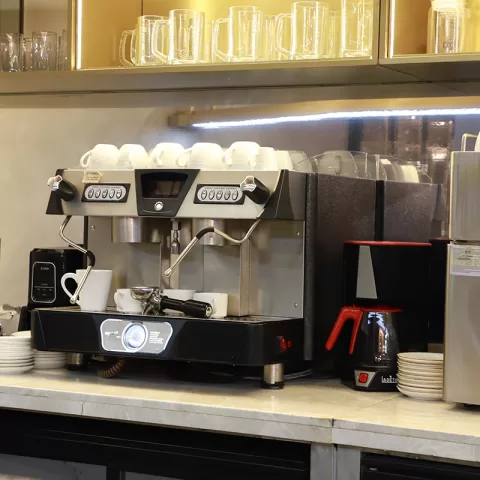
Back-of-house kitchen equipment: This is typically a separate line item from FF&E furniture. Commercial ranges, refrigeration, dishwashers, and prep stations are quoted separately by kitchen equipment consultants.
Back-of-House: Staff, Housekeeping, and Laundry
Back-of-house FF&E is often underbudgeted because it's invisible to guests. Standard line items include:
Housekeeping carts and linen trolleys ($200–$600 each; budget 1 per 12–16 rooms)
Staff locker room furniture and break room seating
Laundry equipment (washer/dryer banks, pressing tables): often leased or quoted separately
Maintenance workshop shelving and equipment storage
Back-of-house typically represents 3–6% of total FF&E spend but has an outsized impact on operational efficiency. Undersized or poor-quality housekeeping carts, for instance, slow room turns and increase labor cost.
Key Cost Drivers That Move FF&E Budgets
Custom vs. Spec-Grade vs. Catalog Furniture
This is the single largest lever in FF&E cost management:
Catalog furniture (stock items from manufacturer catalogs): Lowest cost, fastest lead times (4–8 weeks), limited finish options. Common in economy and budget segments.
Spec-grade furniture (manufacturer's standard product lines with limited customization): Mid-range cost, 8–14 week lead times, sufficient for most 3★–4★ applications. This is where most midscale and upscale projects land.
Custom furniture (bespoke design, unique dimensions, proprietary finishes): Highest cost (30–60% premium over spec-grade), 16–24+ week lead times. Required for luxury brand standards and signature public spaces.
Material Choices
Within any specification tier, material choices can shift costs by 20–40%:
Wood species: Rubberwood and poplar are cost-effective; oak and walnut carry a 30–50% premium; teak and ebony are specialty pricing.
Upholstery grade: Grade A contract fabric ($12–$18/yard) vs. Grade D or leather ($35–$85/yard) makes a meaningful difference across hundreds of upholstered pieces.
Hardware: Brushed nickel vs. chrome is a $5–$15 per-piece difference; solid brass hardware on 500 case good units adds $3,000–$7,500 to the budget quickly.
Case good construction: MDF with laminate vs. solid wood veneer vs. solid wood, with price differences of 2–4× between the extremes.
Brand Standards Compliance
Franchise hotels operate under strict prototype and brand standards that specify approved manufacturers, minimum specification grades, and sometimes mandatory products. The major global chains maintain brand standards documents that run hundreds of pages. For franchise operators, brand standards are non-negotiable. That said, understanding which standards are truly mandatory versus "preferred" can yield real savings:
Most major brands allow approved-equal substitutions for case goods and seating if you submit samples for approval.
Some brand standards apply only to guest-facing items; back-of-house and some public areas have more flexibility.
Independent hotels have full discretion and can optimize aggressively, but should still benchmark against equivalent branded properties to ensure competitiveness at their price point.
Lead Time Penalties
Rush orders are expensive. When a hotel development falls behind schedule and needs furniture delivered faster than the manufacturer's standard lead time, expect to pay:
15–25% premium for orders that need to move 4–6 weeks faster than standard
25–40% premium for orders requiring air freight rather than ocean freight from overseas suppliers
Additional storage costs if FF&E arrives before the property is ready to receive it
This is one reason procurement planning should begin as soon as schematic design is approved, not after construction milestones are hit. See the China Supplier MOQ and Lead Times Guide for a detailed breakdown of production and shipping timelines when sourcing internationally.
How to Build Your FF&E Budget Worksheet

A working FF&E budget worksheet doesn't require sophisticated software. A structured spreadsheet is sufficient for properties up to 300 rooms. Here's the framework:
Step 1: Room Count × Per-Key Estimate
Start with your room mix and apply per-key estimates by room type:
| Room Type | Count | Per-Key Estimate | Subtotal |
|---|---|---|---|
| Standard King (3★ example) | 80 | $12,000 | $960,000 |
| Standard Double | 50 | $12,000 | $600,000 |
| Junior Suite | 15 | $22,000 | $330,000 |
| Full Suite | 5 | $38,000 | $190,000 |
| Guest Room Subtotal | 150 | $2,080,000 |
Step 2: Add the Public Area Multiplier
For a full-service 3★ hotel, use a 20% public area multiplier on the guest room subtotal as a starting estimate. Refine this once the lobby, F&B, and meeting room programs are defined:
Public areas (20% of guest room subtotal): $416,000
F&B outlets (quoted separately based on seat count and tier): $120,000–$200,000
Back-of-house (5% of guest room subtotal): $104,000
Total pre-contingency estimate: ~$2,720,000–$2,800,000
Step 3: Add Contingency
Industry standard FF&E contingency is 10–15% of total estimated spend. Use 15% for properties with significant custom specification, complex logistics, or first-time procurement teams. Use 10% for straightforward catalog-grade projects with experienced procurement management:
10% contingency: adds $272,000–$280,000 → total ~$3.0M
15% contingency: adds $408,000–$420,000 → total ~$3.2M
Step 4: Phased Renovation vs. Full Gut
Renovation projects require a different worksheet structure than new builds:
Full gut renovation: Budget 70–85% of new-build FF&E cost per key. You still need to specify and procure everything; you're just saving on some structural prep costs.
Selective renovation (e.g., soft goods only: bedding, curtains, upholstery): Budget 15–25% of full FF&E per key. Useful for mid-cycle refreshes between major renovations.
Phased renovation (public areas year 1, guest rooms year 2): Budget each phase independently at full rates, but factor in operational disruption costs for the phase affecting live rooms.
A full department-by-department checklist can be found in our Hotel OS&E Procurement Guide, which covers what to budget alongside FF&E for a complete opening package.
China Sourcing for Hotel FF&E: Where the Savings Are

China remains the world's largest manufacturer of contract hospitality furniture, case goods, and commercial lighting. For procurement teams willing to manage international logistics, the cost advantage is real: typically 30–55% below comparable locally sourced products at equivalent specification grades.
Categories That Source Well from China
Case goods (dressers, nightstands, desks, wardrobes): China's manufacturing base for wood furniture is deep. Factories in Guangdong, Shandong, and Zhejiang produce spec-grade hotel case goods to BIFMA and EN standards at highly competitive per-unit pricing.
Seating: Dining chairs, task chairs, lobby lounge chairs, and bar stools. MOQ of 100–200 pieces is typical for custom specification, with price per unit dropping 20–35% versus equivalent domestic products.
Lighting fixtures: Both decorative and functional. China dominates LED commercial fixture manufacturing; lead times from order to delivery typically run 8–14 weeks for standard products.
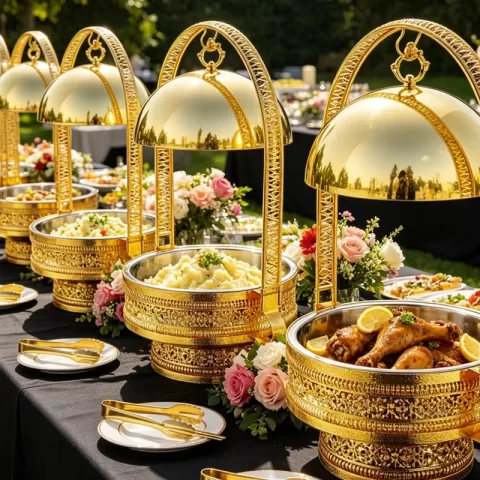
Banquet furniture: Stacking and folding chairs, folding banquet tables. Volume pricing makes China sourcing particularly advantageous for banquet-heavy properties.
Metal and upholstered accent furniture: Side tables, accent chairs, headboard panels. Good value and manageable quality control.
Categories Requiring More Caution
Custom upholstered seating: COM (customer's own material) projects with custom foam profiles and complex pattern matching require tight QC. Not impossible, but requires either an on-site QC agent or a trusted factory with a strong track record.
Very custom millwork and cabinetry: Fine joinery, complex veneering, and bespoke built-ins are harder to specification-match from overseas without a factory visit or very detailed shop drawings.
Items requiring ANSI/NSF certification for food contact: Commercial kitchen equipment for the US market must meet certification requirements that add lead time and cost. Not all Chinese factories carry current certification.
Typical Savings Math
For a 150-room midscale hotel with $2M in furniture-category FF&E (case goods, seating, lobby furniture, banquet):
Domestic sourcing at baseline: $2,000,000
China sourcing at 40% savings: $1,200,000
Net saving: $800,000 — enough to fund a full public area upgrade or reduce debt service materially
Logistics, customs duties, and QC costs typically add 8–15% back to the China-sourced figure, so real net savings are closer to 25–45% depending on destination country and freight market conditions. See our China Supplier MOQ and Lead Times Guide for detailed logistics planning guidance.
Timeline: From Budget Approval to FF&E Delivery
FF&E procurement is a long lead-time activity. Missing the procurement start window by 30 days often costs 60–90 days at delivery, because every week of delay compounds through design approval, sample production, factory scheduling, and ocean freight booking.
| Phase | Activity | Typical Duration |
|---|---|---|
| Budget & Scope | Develop FF&E budget worksheet, align with brand standards | 2–4 weeks |
| RFQ & Supplier Selection | Issue RFQs, review proposals, negotiate, shortlist | 3–5 weeks |
| Sample Approval | Proto samples, finish mock-ups, brand approval if applicable | 4–6 weeks |
| Production | Full production run (catalog: 4–6 wks; spec-grade: 8–14 wks; custom: 14–22 wks) | 4–22 weeks |
| Pre-Shipment Inspection | Third-party QC inspection before container loading | 1–2 weeks |
| Ocean Freight (China) | Port to destination (Asia–North America: 18–28 days; Asia–Europe: 22–35 days) | 3–5 weeks |
| Customs & Delivery | Clearance, drayage, warehouse receiving, site installation | 1–3 weeks |
| Total (spec-grade, China) | ~22–34 weeks |
Rule of thumb: Start FF&E procurement no later than 9 months before your target opening date for spec-grade projects. Custom programs need 12–15 months. Budget catalog programs can be compressed to 5–6 months if suppliers have stock, but this carries delivery risk.
Red Flags in FF&E Quotes
An FF&E quote can look competitive on the surface while hiding costs or risks that will surface later. Watch for these warning signs:
Per-unit pricing without specification detail. A chair at $85 per unit and a chair at $210 per unit can both be described as "lounge chair, fabric upholstered." If the quote doesn't specify frame material, foam density, fabric grade, and finish, you cannot compare them.
No COM surcharge disclosure. If you're supplying your own fabric (customer's own material), ask upfront about the per-yard cutting surcharge and minimum fabric quantity. COM projects routinely add 15–25% to upholstery cost if not disclosed in the base quote.
Freight not included or quoted separately as TBD. Ocean freight rates fluctuate significantly. A quote with freight listed as "TBD at time of shipment" is an open-ended cost commitment. Lock in freight during the RFQ stage or build a 15% freight buffer into your budget.
Unrealistic lead times. A supplier offering 6-week delivery on 150 rooms of custom case goods from China has either misunderstood the specification or is overpromising. Verify production capacity before accepting aggressive timelines.
No payment milestone schedule. Standard FF&E contracts structure payment as 30–40% deposit on order confirmation, 30–40% on production completion/inspection, and 20–30% on delivery. Any supplier requesting 70–100% upfront without an inspection milestone deserves scrutiny.
Missing warranty terms. Hospitality-grade furniture should carry a minimum 5-year structural warranty and 1–2 year finish warranty. If warranty terms aren't in the quote, ask for them in writing before signing.
Building a Reliable FF&E Budget in 2026
Hotel FF&E budgeting is part science, part experience. The benchmarks in this guide give you a starting framework, but the most accurate budget comes from running a detailed room-by-room specification against current supplier pricing, not from applying a single cost-per-key figure to the full room count.
The fundamentals that consistently differentiate well-managed FF&E projects from overrun ones:
Start procurement planning early, ideally at design development rather than at construction completion
Specify clearly and completely before issuing RFQs; incomplete specs produce incomparable quotes
Hold 10–15% contingency and resist the temptation to spend it before installation is complete
Evaluate international sourcing for high-volume categories; the savings on case goods and seating alone can fund significant public area upgrades
Use pre-shipment inspection for overseas orders; catching defects before the container is sealed costs a fraction of handling claims after delivery
Whether you're equipping a 60-room select-service property or a 400-room full-service hotel, the same discipline applies: budget by zone, specify by grade, and procure with enough lead time to avoid the costly mistake of rushing production.
Explore RON Group's full range of hotel furniture, from guest room case goods and lobby seating to banquet furniture and outdoor pieces, or contact our project team to discuss FF&E specification for your property.
Get the week's latest industry information
-
Real-Life Professional Restaurant Case Studies
Explore Now
-
Create a unique restaurant with over 95,700+products
Explore Now
-
Protessional Free 3D Restaurant Design
Explore Now
-
Still Have Questions About Opening a Restaurant?
Explore Now

Sylvia
With 8 years in catering & hospitality industry, sales manager of Ron Group, specialise in providing one stop solutions to restaurants, hotels and weddings.
Discover Our Exclusive Products
Explore our extensive range of restaurant and hotel supplies designed to enhance your operations. Find the perfect solutions to meet your needs.
Browse Our ProductsFREE 3D DESIGN
Boost your restaurant's success with our free 3D design service. Start building the restaurant of your dreams today!
Explore 3D Design Case
RECOMMENDED CASES
-
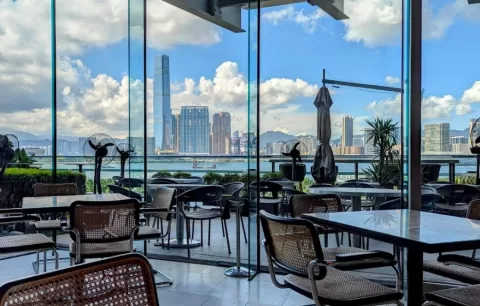
La Rambla by Catalunya: Crafting Barcelona's Soul in Hong Kong - Custom Furniture Excellence
RON Group's custom Spanish-inspired furniture elevates La Rambla with artisanal aesthetics...
Learn More -
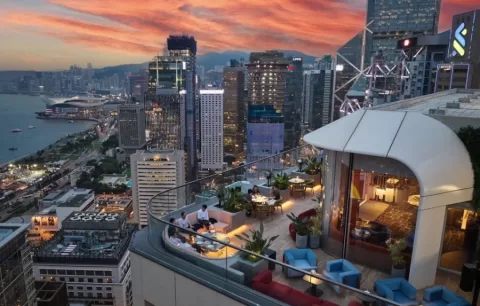
Cardinal Point: Elevating Outdoor Seating with Tailored Cushion Upgrades
Discover how Cardinal Point transformed its outdoor dining experience with custom cushions, achievin
Learn More
RECOMMENDED BLOGS
-
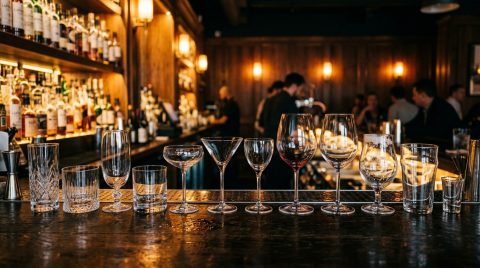
Bar Glassware 101: Types, Names, Uses, and How to Stock Your Bar
Learn the 10 core bar glassware types, names, and uses. Discover how to stock your bar with the right glasses for cocktails, beer,...
Sylvia2026-07-26 -
Complete Bar Equipment List for Opening a Bar
Plan a complete commercial bar equipment list by menu, service volume, refrigeration, ice, glassware, utilities, sanitation,...
Sylvia2026-06-11 -
Low Budget Restaurant Interior Design: 2026 Trends
Prioritize a low-budget restaurant interior by protecting code, operations, durability, accessibility, and phased design decisions...
Sylvia2026-04-04
Subscribe to RON GROUP
Stay up-to-date with the latest industry insights and expert advice. Together, we'll create your ideal restaurant.