

OEM vs. ODM for Restaurant and Hotel Supplies: A Procurement Guide
Learn how OEM, ODM, and white label sourcing work for hospitality supplies — with MOQ ranges, setup costs, timelines, and IP protection tips for procurement managers.
Content
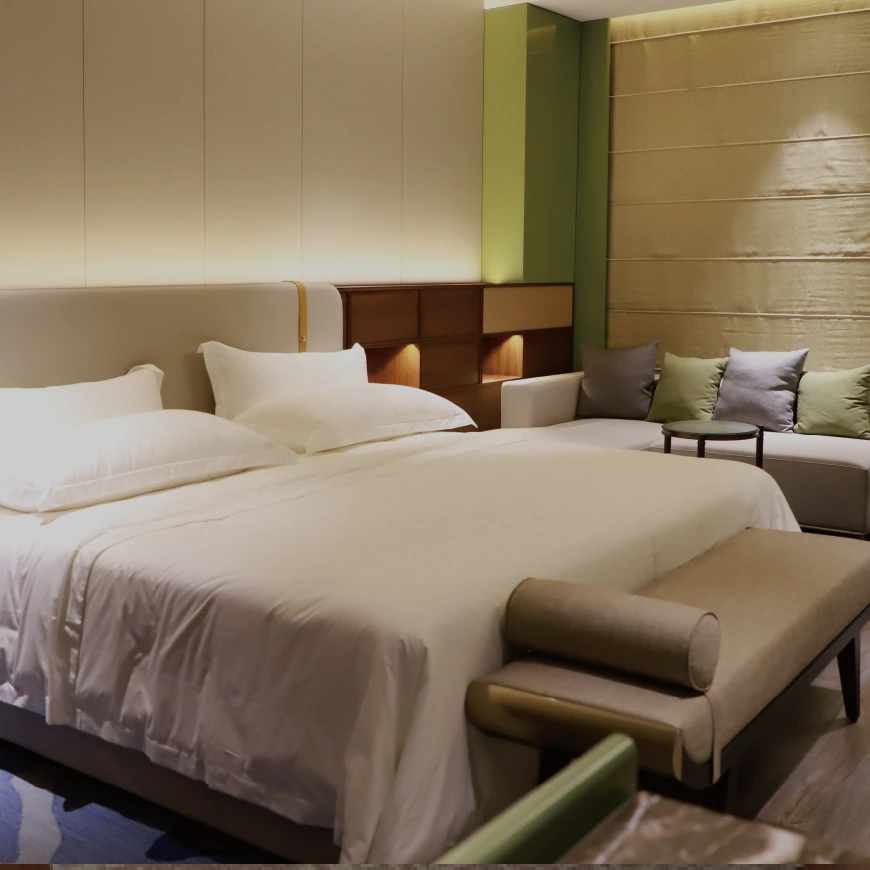
Walk into a well-executed hotel lobby or a polished restaurant chain and something registers before you consciously process it: everything matches. The plates carry the same mark as the napkin rings. The server's jacket shares the same color story as the booth upholstery. The water glass has a subtle logo etched at the rim. None of this happens by accident — and none of it requires a manufacturing operation of your own.
Custom branding on hospitality supplies is more accessible than most buyers assume. The process has a name — OEM or ODM sourcing — and China's manufacturing ecosystem handles it every day for clients ranging from independent boutique hotels to global QSR chains. What separates buyers who execute it well from those who burn money on failed samples is understanding the three sourcing models, knowing the real cost structure, and building the right process from day one.
This guide covers all of it: the OEM vs. ODM vs. white label decision, what can be customized across each category, realistic MOQs and timelines, setup costs, IP protection, and the red flags that separate serious factories from time-wasters.
Why Custom Branding Matters in Hospitality
Custom branding in hospitality isn't about vanity. It's a business decision with measurable returns.
Brand consistency builds trust. Guests at a hotel brand expect the same experience whether they're checking in at a flagship urban property or a suburban franchise location. When the linen, the tableware, and the staff uniforms all carry the same visual identity, it signals that operations are controlled — not assembled from whatever was cheapest this quarter.
Premium perception justifies pricing. JD Power's hotel guest satisfaction research consistently finds that physical touchpoints — bedding, towels, tableware — correlate directly with guests' willingness to pay rate premiums and return. A logoed ceramic coffee mug on the in-room tray communicates something a generic mug cannot.
Operational consistency simplifies procurement. When you specify custom products, you lock in exact dimensions, materials, and finish. That means replacements always match. You're not hunting for "the same blue as last time" across three suppliers.
For multi-unit operators — franchise groups, hotel chains, restaurant groups rolling out locations — custom branding also creates a defensible supply chain. Your branded tableware isn't available on competitor tables.
OEM vs. ODM vs. White Label: The Three Models Explained
These terms are used interchangeably in casual conversation, but they describe very different production relationships — with different cost structures, IP implications, and lead times.
OEM (Original Equipment Manufacturer)
In a true OEM arrangement, you own the design. You provide the manufacturer with complete technical specifications — CAD drawings, material grades, finish standards, dimensional tolerances — and the factory produces the product to your exact brief.
The manufacturer in this model is purely a production partner. They do not contribute design expertise, and the resulting product is proprietary to you. Furniture designed in-house by a hotel brand, produced at a Chinese factory, is OEM. Ceramic dinnerware created by a chain's brand team and fired at a Jingdezhen factory is OEM.
Best for: Established brands with in-house design capability or budget for external designers; projects where unique product form is itself a brand asset; buyers who want full IP ownership from day one.
ODM (Original Design Manufacturer)
In an ODM arrangement, the manufacturer already has an existing design. You select from their portfolio, then customize it — typically adding your logo, specifying your color palette, or adjusting certain dimensions. The underlying design structure belongs to the manufacturer.
Most hospitality custom branding is actually ODM, even when buyers call it OEM. You pick a chair silhouette the factory already tooled, specify your fabric and logo embossing, and receive a product that looks and feels proprietary without the tooling investment of starting from scratch.
Best for: Buyers who want a professional custom result at lower cost; projects where the product category has well-established forms (tableware shapes, glass profiles, standard furniture silhouettes); faster first-run timelines.
White Label
White label means the factory's off-the-shelf product with your logo applied. No design modification, no dimensional changes — just a sticker, print, or stamp with your brand mark. This is the lowest-cost, fastest option, but also the least differentiated.
Best for: Disposables, packaging, and low-differentiation consumables (napkins, takeaway cups, disposable bags); items where form is commodity and only the brand mark matters; buyers testing a new product category before committing to custom tooling.
Decision Matrix: When to Use Each
| Factor | OEM | ODM | White Label |
|---|---|---|---|
| Design ownership | Full (you own it) | Shared (factory owns base design) | None |
| Setup cost | High ($500–$5,000+) | Medium ($150–$800) | Low ($50–$200) |
| Product uniqueness | Fully unique | Differentiated | Commodity with logo |
| MOQ | Higher (amortize tooling) | Medium | Lowest |
| Timeline to first sample | 60–90 days | 30–60 days | 7–20 days |
| Best application | Flagship furniture, signature tableware | Branded glassware, uniform programs | Packaging, disposables |
What Can Be Customized in Hospitality Supplies?
The short answer: almost everything in the supply chain. Here's a practical breakdown by category.
Tableware
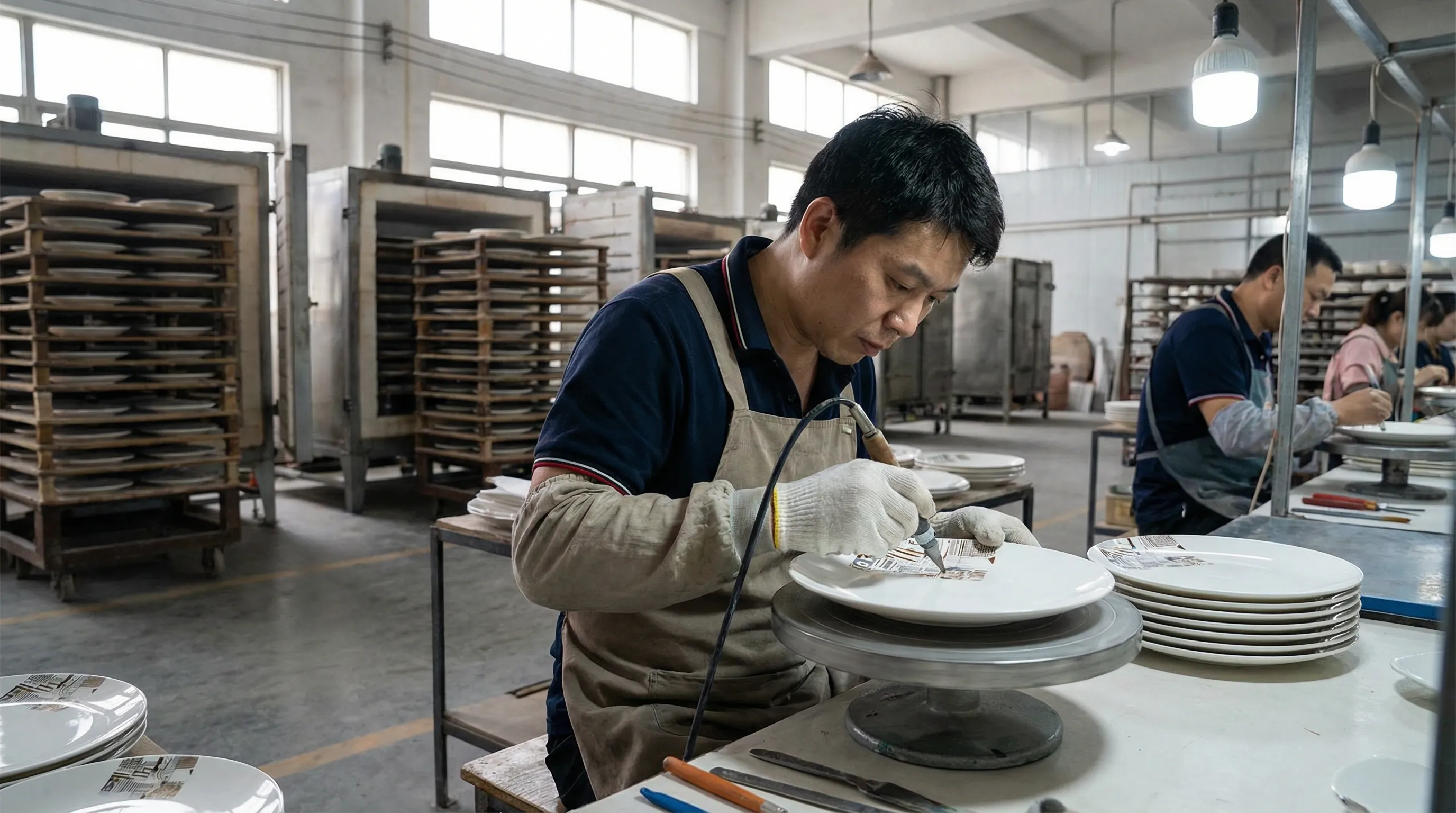
Ceramic and porcelain tableware offers the widest range of customization options at relatively accessible MOQs. The main techniques are:
Logo stamping / decal transfer: A fired-on ceramic decal carries your logo or pattern. Durable through commercial dishwasher cycles when properly fired. This is the most common route for custom printed restaurant plates.
Custom glaze colors: Specify Pantone references; the factory matches glaze formulation. Expect 2–3 sample rounds for complex colors. Lead time adds 2–4 weeks for glaze development on first orders.
Edge banding and rim treatments: Gold, platinum, or colored edge bands applied over glaze. Requires noble metal firing as an additional step — adds cost and 1–2 weeks.
Custom shapes: True OEM territory. New ceramic forms require mold development ($300–$1,500 per shape) and add 4–8 weeks.
For examples of base ceramic forms commonly available for ODM customization, see RON Group's tableware collection.
Glassware
Screen printing: One or two-color logo or pattern applied to the glass surface and kiln-fired for durability. Standard process for branded beer glasses, water glasses, and coffee cups.
Sandblasting: Frosted matte finish applied to selected areas. Creates a premium tactile effect. Not as durable as screen printing for dishwasher use.
Acid etching: Chemical process producing a permanent frost — more durable than sandblasting. Used for fine dining and hotel glassware where permanence matters.
Custom color glass: Requires specialty glass blowing or molding — typically ODM from factory's existing shapes in tinted glass formulations.
Furniture
Furniture customization is where ODM earns its value. Starting from a factory's proven structural frame, you can specify:
Fabric and upholstery: Color, texture, material grade (COM — customer's own material — is also possible if you source fabric separately)
Frame finish: Paint color (RAL references), powder coat, wood stain
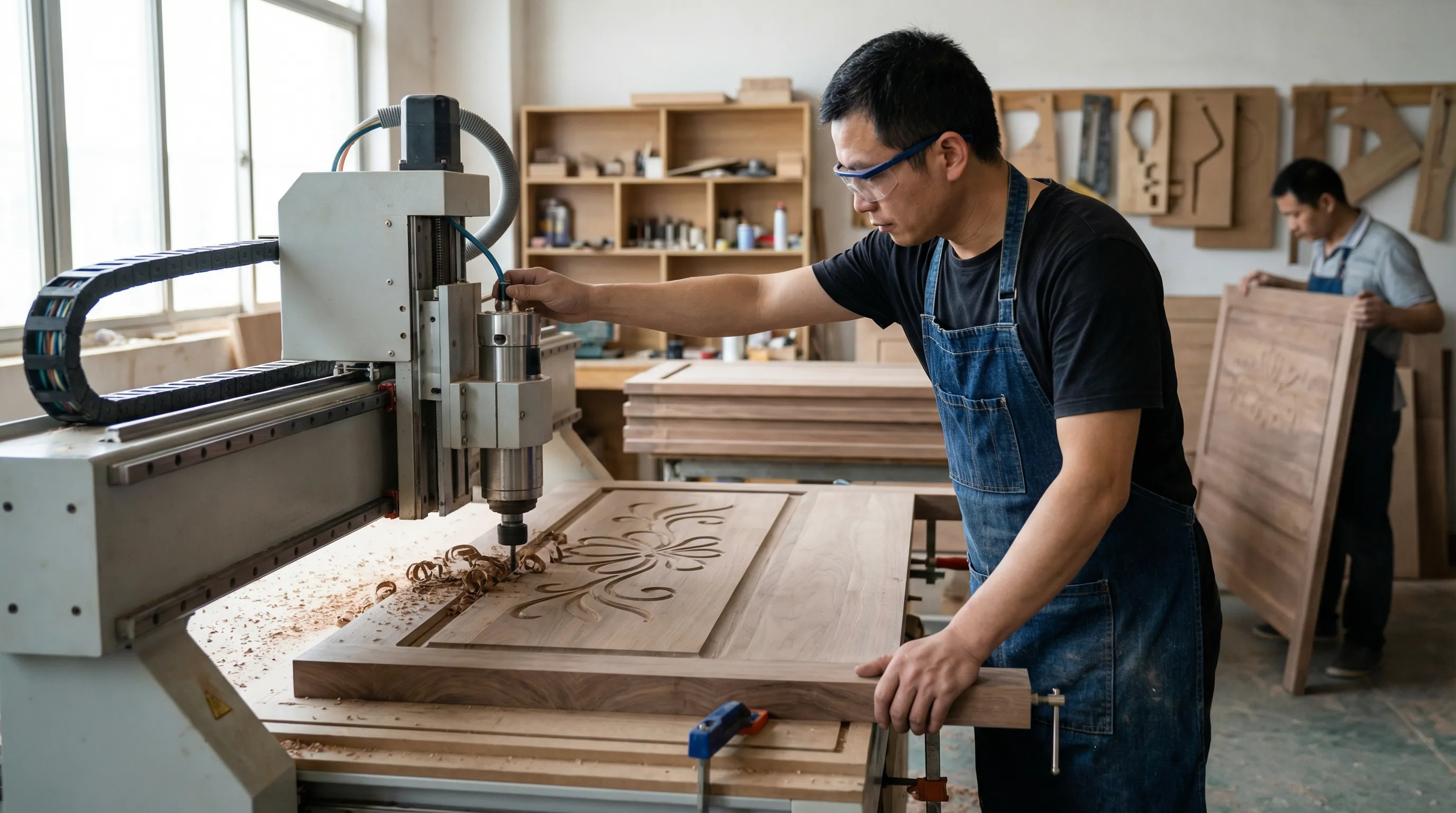
Logo embossing on headboards: Common for hotel casegoods; typically achieved through CNC routing or cast resin inserts
Custom dimensions: Seat height, table diameter, booth depth — factories can often modify from their base dimensions within certain tolerances at no extra tooling cost
Hardware details: Leg tip materials, pull handle finishes, hinge types
Linen and Textiles
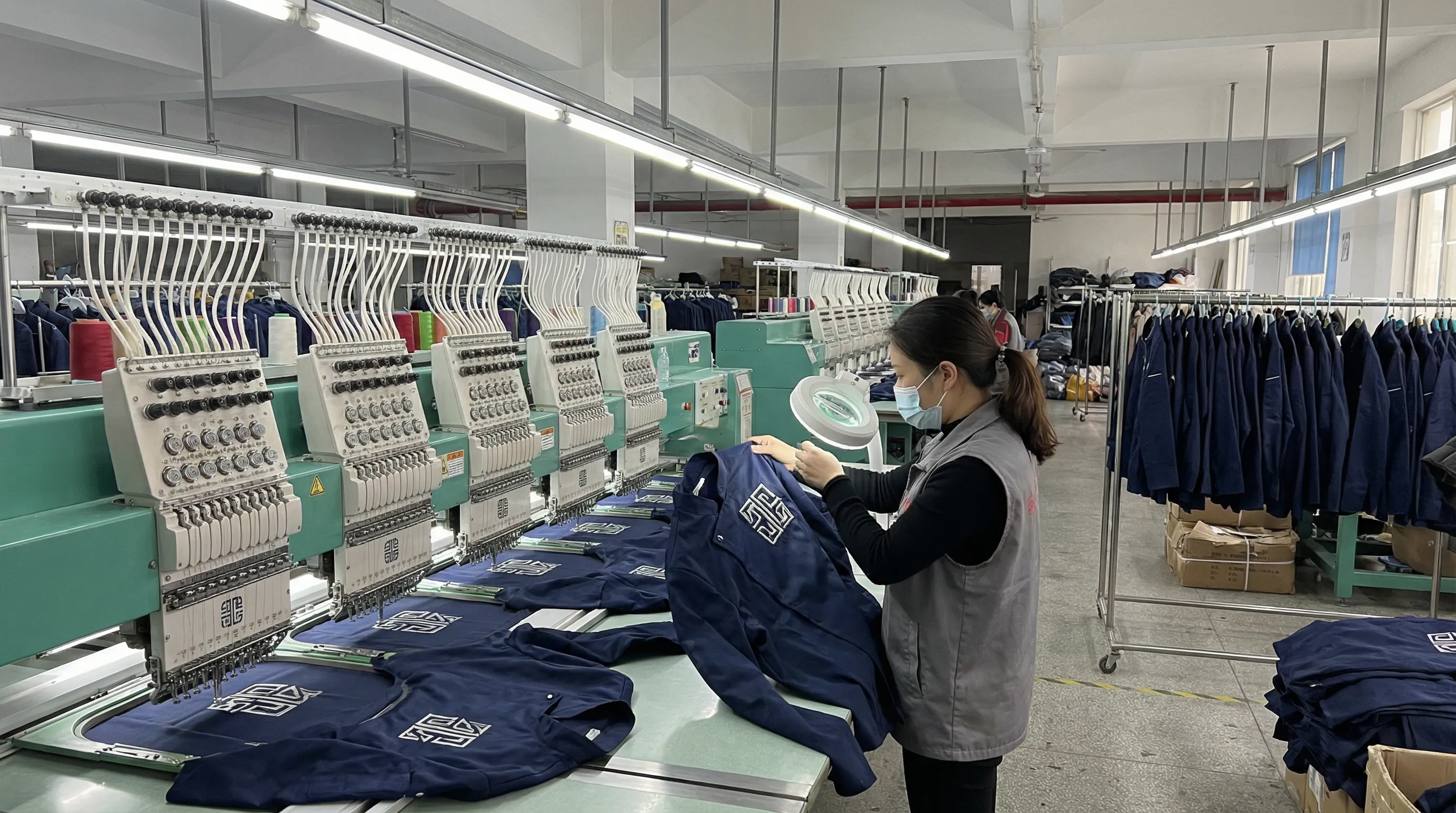
Embroidery: The standard for hotel pillowcases, bath robes, and restaurant napkins. Logo or monogram. Requires digitizing fee ($30–$80 per design).
Woven hem stripes: Colored stripe woven into the edge of the textile during production. Signals quality and brand identity without embroidery bulk on items like hand towels.
Custom weave patterns: True ODM — a jacquard loom program creates your repeat pattern. Setup cost is higher ($200–$600 for loom programming), but the result is impossible to replicate by competitors without the same loom file.
Uniforms
The uniform category has excellent customization options at moderate MOQs:
Embroidery: Logo on chest, sleeve, or collar. Same digitizing fee as linens.
Woven labels: Interior brand label with size and care instructions — standard for any professional uniform program.
Custom cut and pattern: True OEM — your silhouette, your pocket placement, your fit specifications. Requires a pattern-making fee and at least 2–3 fit sample rounds.
Branded buttons and trim: Custom-molded buttons with logo relief add a premium detail at relatively low cost (around $0.30–$1.20 per button MOQ ~500 units).
Packaging and Disposables
Printed takeaway boxes and containers: Flexographic or digital printing; 4-color CMYK available at moderate MOQs.
Custom cups: Paper hot cups and cold cups; screen printing or sleeve wrapping. White-label approach most common here.
Branded bags: Kraft paper, non-woven, or laminated; flexographic printing standard. Often the entry point for custom branding because MOQs are low and the brand impact is high.
MOQ Reality Check by Category
The numbers below reflect standard ranges for new custom orders — not one-off samples and not established repeat business (which often carries lower minimums once you have a track record with a factory). For a deeper look at why manufacturers set these floors, see our China Supplier MOQ Guide.
| Category | Customization Type | Typical MOQ Range | Key Driver |
|---|---|---|---|
| Tableware (plates, bowls) | Decal logo / custom glaze | 500–2,000 pcs/SKU | Kiln batch sizes; decal printing minimum |
| Tableware — new shape | OEM mold development | 1,000–3,000 pcs | Mold cost amortization |
| Glassware (screen print) | 1–2 color logo | 144–500 pcs/design | Screen setup fee spread |
| Furniture (OEM custom) | Logo embossing + custom fabric | 20–50 pcs/design | Upholstery fabric batch, frame tooling |
| Linen — embroidery | Logo embroidered | 200–500 pcs | Digitizing overhead; embroidery machine run efficiency |
| Linen — jacquard weave | Custom woven pattern | 500–2,000 pcs | Loom programming cost; minimum fabric run |
| Uniforms — embroidery | Logo on chest/sleeve | 50–100 pcs/style | Cut-and-sew batch economics |
| Uniforms — custom pattern/cut | Full OEM silhouette | 100–300 pcs/style | Pattern-making + grading cost |
| Paper cups (custom print) | Sleeve print / wrap print | 1,000–5,000 pcs | Flexo plate setup |
| Takeaway bags | Branded print | 500–2,000 pcs | Printing plate cost |
One practical note: MOQs for mixed SKU orders are often negotiable when you're placing across multiple categories simultaneously. A supplier handling your tableware and your packaging may blend minimums when the total order value justifies it.
The Customization Process: From Brief to First Sample
Most buyers underestimate how structured this process is — and how much of the timeline is spent waiting on approvals, not manufacturing. Here's what the flow looks like in practice.
Step 1: Design Brief and Brand Guideline Submission
Provide the factory with your brand guidelines: exact Pantone or RAL color references, logo files in vector format (AI or EPS, not PNG), dimensional specifications if applicable, and material requirements. Vague briefs produce vague samples. The more precise your inputs, the fewer sample rounds you'll need.
Step 2: Digital Proof or 3D Render Approval
Before any physical production, the factory produces a digital mockup — a 3D render of the product with your branding applied, or a flat artwork proof for print applications. Review this carefully. Mistakes caught at this stage cost nothing. Mistakes caught at the physical sample stage cost a second sample cycle (another 2–6 weeks).
Step 3: Pre-Production Sample
The factory produces 1–3 physical samples at your cost. Sample pricing is separate from production pricing and reflects the manual labor of producing units outside a production run. Expect:
Tableware: $50–$150 per sample set (plate, bowl, cup)
Glassware: $80–$200 per design
Furniture: $150–$500 per piece (more complex forms cost more)
Uniforms: $80–$200 per style (includes fit sample)
Sample cost is typically credited against your first production order, but confirm this in writing before paying.
Step 4: Sample Approval and Production Release
Once you approve the physical sample — in writing, specifying exactly what you're approving — the factory locks the production parameters and begins the run. This is also when your initial payment (typically 30–50% deposit) is due.
Step 5: QC Inspection Before Shipment
Never skip pre-shipment inspection on a first custom run. The factory has your approved sample as a reference. An independent inspector verifies that production units match it on all key parameters: dimensions, color, finish, logo placement accuracy, and packaging. For a detailed walkthrough of what this involves, read our Quality Inspection Guide for China Suppliers.
Timeline: 45 to 90 Days for First Run
The total timeline from brief to shipped goods on a first custom order typically breaks down as follows:
Brief submission to digital proof approval: 5–10 days
Physical sample production: 10–25 days (varies by category)
Sample transit to buyer + review + approval: 7–14 days
Production run: 15–35 days (depends on volume and complexity)
QC inspection + packing: 3–7 days
Add ocean freight time (18–40 days to most destinations) and you're looking at 65–130 days from brief to warehouse. Plan custom branding programs well ahead of opening dates or seasonal rollouts.
Cost Implications: Custom vs. Catalog
Understanding the cost structure of customization helps you make the right investment decisions — and avoid unpleasant surprises.
Setup and Tooling Fees
These are one-time charges that don't repeat on reorders. They exist because custom production requires manufacturing assets created specifically for you:
Ceramic molds: $300–$1,500 per shape (depending on complexity)
Screen print screens: $80–$200 per color per screen size
Embroidery digitizing: $30–$80 per design
Jacquard loom programming: $200–$600
Furniture cut die / CNC template: $150–$400 per design
Flexographic print plate (packaging): $300–$800 per color
These fees are setup costs, not production costs. On reorders, you pay only for materials and labor.
Unit Cost Premium for Customization
Standard customization (logo printing, color specification) adds 8–25% to the unit cost compared to a factory's catalog equivalent. The range depends on technique complexity: embroidery adds less than full-color printing, which adds less than custom mold production. Furniture with custom fabric and logo embossing typically sits in the 12–18% premium range over equivalent catalog models.
Break-Even Calculation
Here's how to think about whether custom branding pays off at your volume. Suppose you're deciding between catalog plates at $4.20/unit and custom-branded plates at $5.10/unit (a $0.90 premium), with a one-time screen setup fee of $150.
To recover the setup cost in brand benefit terms, you need to run at least:
$150 setup ÷ $0.90 premium = 167 units to break even on first order
Since your MOQ is likely 500–1,000 units anyway, the setup cost becomes negligible within the first order. The real question isn't whether to pay setup fees — it's whether the long-term brand value of custom product justifies the ongoing unit premium. For most multi-unit operators, the answer is yes.
IP and Design Protection: What to Do Before Sharing Your Designs
Protecting your design assets before sharing them with manufacturers is not paranoia — it's standard practice among experienced importers. Here's a practical framework:
Register your trademark before you share logo files. A China trademark registration (through CNIPA) gives you enforceable rights in the country where your products are made. Registration typically takes 12–18 months; expedited track takes 4–6 months. If your launch timeline is shorter, file immediately and keep your NDA enforcement options active in the interim.
Use NDAs (Non-Disclosure Agreements). Reputable factories sign them routinely. If a factory resists or dismisses an NDA as unnecessary, treat that as a red flag. Get it signed before sharing any proprietary design files.
Share production-ready files, not source files, when possible. Provide manufacturers with the exact-specification files needed to produce your product, not your master source files. A vector PDF with locked layers protects your working files while giving the factory everything they need.
Work with manufacturers who serve your competitive category carefully. A factory that produces identical-category products for three of your direct competitors carries inherent design leak risk regardless of NDAs. Ask directly: who else do they supply in your category?
Register key product designs with CNIPA. China's design patent system covers product appearance for 15 years and costs approximately $150–$300 per design. For signature shapes or distinctive product forms, it's worth the investment. The WIPO Hague System also allows international design registration across 96 member countries from a single application.

Red Flags in Customization Proposals
The following patterns appear repeatedly in problematic custom branding engagements. Treat them as signals to ask harder questions before committing funds.
No sample charge. Reputable factories charge for samples because custom samples require real labor. "Free samples" on custom products usually means the factory is using an existing mold or stock item and will claim it's custom — meaning what you approved isn't what produces in volume.
Sample-to-production mismatch claims. A factory that tells you "small differences between sample and production are normal" before production starts is pre-excusing quality gaps. Approve the sample because it matches your spec, not because it's close enough.
Unusually low setup fees. If a factory quotes $20 for screen setup when the industry standard is $80–$200, they may be skipping the setup and printing from a degraded or recycled screen — which affects color registration and print durability.
Resistance to third-party inspection. Any factory that refuses to allow an independent inspector on premises is protecting information you have a right to see as the buyer.
Vague delivery of design ownership terms. If a contract doesn't specify who owns the molds, tools, and screens produced for your order, assume the factory retains them. Get explicit tooling ownership language in writing before you pay tooling fees.
No reference to approved sample in production contracts. Your signed production order should explicitly reference the approved sample as the quality standard. Without this, you have no contractual basis for rejecting non-conforming production.
What to Look for in a Multi-Category OEM/ODM Partner
Sourcing custom branding across multiple product categories from separate suppliers is operationally demanding: separate NDAs, separate sample rounds, separate QC cycles, separate shipping consolidations. For buyers outfitting a full hospitality property — or rolling out a multi-unit concept — that fragmentation adds time, cost, and coordination overhead. A single multi-category partner can eliminate most of it.
When evaluating potential OEM/ODM partners for multi-category custom branding, prioritize these capabilities:
Centralized color management across categories. The partner should manage Pantone/RAL color matching across ceramic glazes, upholstery fabrics, printed packaging, and embroidery thread from one coordination point. Color drift between categories — a common problem when managing multiple suppliers independently — is one of the hardest issues to fix after production.
Consolidated sampling. Look for partners who coordinate sample approvals so that your team reviews an integrated set, not scattered single-item submissions from five different suppliers over six weeks.
Combined QC and shipping. Pre-shipment inspection should cover all categories in a single engagement, reducing inspection fees and coordinating shipment release timing. For details on shipping logistics and lead times, plan multi-category shipments as a consolidated container rather than separate dispatches.
Tooling and mold management. Customer-owned tooling (molds, screens, digitizing files) should be cataloged and stored so that reorders execute from locked production parameters — no re-sampling, no re-approval cycle.
For large franchise operators — where brand standards are non-negotiable across thousands of locations — this integrated model is the operational baseline. For growing groups and independent operators building toward that level of brand control, it's the right structure to put in place early. RON Group, for example, offers this multi-category coordination across tableware, furniture, linen, uniforms, and disposables.
Get the week's latest industry information
-
Real-Life Professional Restaurant Case Studies
Explore Now
-
Create a unique restaurant with over 95,700+products
Explore Now
-
Protessional Free 3D Restaurant Design
Explore Now
-
Still Have Questions About Opening a Restaurant?
Explore Now

Sylvia
With 8 years in catering & hospitality industry, sales manager of Ron Group, specialise in providing one stop solutions to restaurants, hotels and weddings.
Discover Our Exclusive Products
Explore our extensive range of restaurant and hotel supplies designed to enhance your operations. Find the perfect solutions to meet your needs.
Browse Our ProductsFREE 3D DESIGN
Boost your restaurant's success with our free 3D design service. Start building the restaurant of your dreams today!
Explore 3D Design Case
RECOMMENDED CASES
-

La Rambla by Catalunya: Crafting Barcelona's Soul in Hong Kong - Custom Furniture Excellence
RON Group's custom Spanish-inspired furniture elevates La Rambla with artisanal aesthetics...
Learn More -

Cardinal Point: Elevating Outdoor Seating with Tailored Cushion Upgrades
Discover how Cardinal Point transformed its outdoor dining experience with custom cushions, achievin
Learn More
RECOMMENDED BLOGS
-
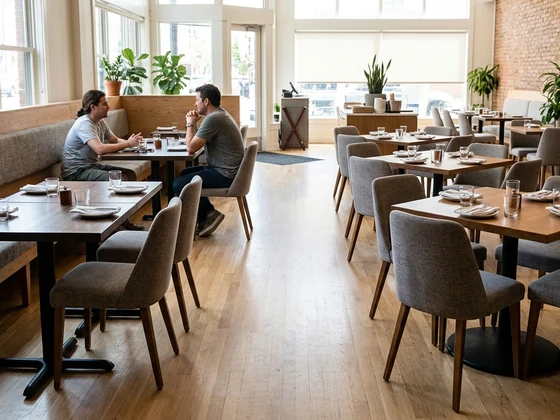
Restaurant Table Spacing and Aisle Clearance: Supplier Drawing Checklist
Check restaurant table spacing, aisle clearance, chair pullout, service path, and supplier drawing proof before approving a...
Sylvia2026-07-20 -

5 Mistakes to Avoid When Buying Restaurant Furniture from China
Don't fall for costly oversights! Learn the 5 mistakes to avoid when buying restaurant furniture from China and ensure a...
 Ron2025-01-079 min read
 -

RON GROUP Launches VR Experience to Explore Our Dynamic Showroom
Discover RON GROUP's VR showroom! Explore dining furniture, tableware, and customized services virtually or visit us in person to...
Sylvia2024-12-163 min read
Subscribe to RON GROUP
Stay up-to-date with the latest industry insights and expert advice. Together, we'll create your ideal restaurant.