

Custom Printed Restaurant Plates & Glassware Guide 2026
Elevate your dining experience with custom printed restaurant plates and glassware. We are premier wholesale suppliers offering low MOQs, logo integration, and durable commercial tableware.
Content
In the complex, high-stakes ecosystem of the global hospitality industry, the dining table has ceased to be merely a piece of furniture; it has evolved into a stage, a battleground for market share, and a primary canvas for brand storytelling. For the modern restaurateur, the vessel that holds the culinary creation is no longer a passive container—it is an active participant in the guest’s sensory experience and a critical driver of the business's bottom line. This comprehensive research report, commissioned for RON Group Global, provides an exhaustive analysis of the strategic, operational, and financial dimensions of custom tableware procurement. We move beyond the superficial aesthetics to dissect the "silent science" of gastrophysics, the viral economics of "Instagrammability," the material engineering of commercial durability, and the intricate logistics of global procurement in a post-2025 regulatory landscape.
Part I: The Strategic Value of Branded Tableware
The decision to invest in custom tableware is often miscategorized as a purely aesthetic choice, relegated to the "interior design" budget. However, seasoned hospitality decision-makers recognize that branded plates and glassware function as a capital asset that delivers measurable returns across three verticals: brand equity, marketing reach, and customer lifetime value (CLV).
1.1 The Silent Influencer: Gastrophysics and Sensory Engineering
Tableware acts as the "silent influencer" in the dining narrative, functioning as a non-verbal communication channel between the chef and the diner. Beyond the visual appreciation of a well-plated dish, the physical properties of the vessel—its weight, texture, color, thermal conductivity, and shape—exert a psychological force known as gastrophysics. This field, bridging experimental psychology and cognitive science, has demonstrated that the vessel can fundamentally alter the diner's perception of flavor, value, and satiety, offering operators a lever to manipulate guest satisfaction without changing a single ingredient.
The interaction between visual input and taste receptors is not merely anecdotal; it is biological. Research indicates that the color of the plate sets a sensory expectation that biases the palate before the food even touches the tongue.
Sweetness and the White/Round Correlation: Extensive studies have shown that round, white plates significantly enhance the perception of sweetness. This phenomenon is rooted in evolutionary biology, where sweetness is often associated with ripe, safe-to-eat fruits (often round). For the pastry chef or menu engineer, this offers a strategic advantage: desserts served on round, white porcelain can potentially be formulated with up to 10% less sugar while maintaining the same perceived indulgence profile. This aligns perfectly with 2026 consumer trends favoring health-conscious dining without compromising on flavor satisfaction.
The Savory/Bitter Spectrum of Angularity: Conversely, angular, square, or slate-textured plates are subconsciously associated with savory, complex, or bitter notes. A dark, angular plate can heighten the perception of "premium" bitterness in dark chocolate or the complexity of a charcuterie selection.
Color-Induced Satiety and the Delboeuf Illusion: The "Delboeuf illusion" is a powerful tool for food cost control. This optical illusion alters size perception based on the contrast between the food and the plate's rim. Food served on a plate with a high color contrast (e.g., white risotto on a black plate) appears more abundant than the same portion on a low-contrast plate. Furthermore, specific colors trigger biological satiety responses; red plates have been shown to reduce overall food intake, potentially acting as a subtle tool for portion control in tasting menus where preventing palate fatigue is crucial, whereas blue plates can curiously enhance the perception of saltiness.
Perhaps the most direct correlation between tableware and revenue is found in the concept of "sensation transference." This psychological phenomenon dictates that consumers transfer their perception of the packaging (the tableware) to the product (the food).
Research involving cutlery weight is particularly illuminating. Diners using heavier, substantial cutlery rated the artistic merit of the food higher and, critically, were willing to pay approximately 15% more for the exact same meal compared to diners using lightweight alternatives. The brain subconsciously equates the density and heft of the metal or ceramic with the quality of the ingredients and the skill of the chef. In this context, investing in high-quality, heavy-gauge custom flatware or substantial stoneware is not an expense; it is a revenue-generation strategy that justifies higher menu pricing and increases perceived value.

1.2 The Viral Currency: "Instagrammability" as a Business Model
In the digital age, the visual appeal of a dish—and by extension, the plate it sits on—is a primary driver of marketing reach. User-Generated Content (UGC) has become a critical marketing asset, with social media platforms acting as the new, amplified word-of-mouth.
A plate with a distinct design or a logo placed strategically on the rim ensures that every photo taken by a guest becomes a branded advertisement.
Organic Reach Metrics: Data suggests that 69% of millennials photograph their food before eating. When these images are shared, they carry the brand's visual identity into the personal networks of the diner. A logo on the plate acts as a watermark, ensuring attribution even if the guest fails to tag the location.
The Multiplier Effect: Consider the mathematics of organic reach. If a busy casual dining restaurant serves 300 guests a week, and a conservative 10% post photos reaching an average of 500 followers, the brand achieves 15,000 organic impressions weekly without a single dollar of direct ad spend. Over a year, this accumulates to nearly 800,000 impressions. Unlike paid impressions, which are often ignored, these are trusted endorsements; 90% of consumers trust peer recommendations (social proof) over corporate advertising.
Conversion and Discovery: The impact on foot traffic is tangible. 30% of millennials state they would actively avoid a restaurant with a weak Instagram presence, and 54% of diners report discovering new restaurants via social media on a monthly basis.
To maximize this ROI, the design of the custom tableware must be engineered for the camera lens, not just the naked eye.
The "Face" vs. The "Rim" Debate: While placing a logo in the center (the "face") of the plate creates a strong brand impression when the guest first sits down, it is invariably covered by food during the critical photography moment—when the dish arrives. Therefore, 90% of savvy restaurant operators opt for rim printing. This placement ensures the brand is visible in the coveted "top-down" food shot (flat lay) without interfering with the chef's plating composition.
Managing Glare: High-gloss finishes, while traditional, can be problematic for mobile photography, creating harsh glare spots under dining room lighting. Matte, satin, or semi-matte finishes are increasingly popular for their ability to diffuse light, providing a soft, textured background that makes food colors pop and ensures the logo remains legible in photos.
Unboxing the Experience: For the fast-casual and delivery sectors, the "tableware" is the packaging. Branded takeout containers and bags extend the dining experience into the home. Unboxing videos on platforms like TikTok drive significant engagement, meaning the aesthetic quality of disposables is now as critical as permanent ware.
Part II: Material Science and Selection Strategies
Selecting the right material for custom tableware is a complex balancing act between aesthetic desires (translucency, refinement, brand fit) and operational realities (breakage rates, thermal shock resistance, washing cycles, and capital expenditure). A purely aesthetic choice can lead to disastrous replacement costs, while a purely utilitarian choice can dilute brand equity.
2.1 Ceramics: The Backbone of Hospitality
Ceramics serve as the foundation of most restaurant tabletops. However, the term "ceramic" covers a wide spectrum of materials with vastly different performance characteristics. Understanding the mineralogy and firing processes is vital for predicting longevity and ROI.
Porcelain
Composition and Science: Porcelain is the workhorse of the industry. It is composed primarily of kaolin clay, feldspar, and quartz. The defining characteristic of porcelain is that it is fired at extremely high temperatures, typically exceeding 1300°C (2372°F). At this temperature, the silica in the clay body melts and fills the microscopic pores in a process called vitrification.
Operational Characteristics: Because it is fully vitrified, porcelain is non-porous (with an absorption rate of less than 0.5%). This is critical for hygiene; it means the plate will not absorb grease, odors, or bacteria. Even if the glaze chips, the exposed body will not soak up dishwasher water. It is extremely hard (7+ on the Mohs scale), making it resistant to knife scratches, and it has excellent thermal shock resistance.
Hospitality Use Case: It is the gold standard for fine dining, upscale casual, and high-volume banqueting due to its balance of elegance and durability. High-alumina porcelain (reinforced with aluminum oxide) offers 30-40% greater mechanical strength than standard porcelain.
ROI Profile: While the initial cost is medium-to-high, the replacement rate is moderate, offering a solid long-term value proposition.
Bone China
Composition and Science: Bone china is defined by the addition of bone ash (tricalcium phosphate) to the porcelain clay mixture, typically comprising 30-50% of the body. The bone ash acts as a flux, allowing the clay to fuse at slightly lower temperatures while creating a unique crystalline structure.
Operational Characteristics: Despite its delicate, translucent appearance, bone china creates the strongest ceramic body available. The dense crystalline structure formed by the bone ash makes it highly resistant to chipping and mechanical shock—often stronger than thicker, standard porcelain plates. It has a warm, milky white color compared to the cooler, blue-white of hard porcelain.
Hospitality Use Case: Reserved for luxury hotels, executive dining, and ultra-fine dining. Its lightweight nature is a functional benefit in multi-course service, reducing server fatigue.
Trade-off: It is significantly more expensive due to the cost of raw materials (bone ash) and the complex production process.
Stoneware
Composition and Science: Stoneware is fired at lower temperatures (1100°C-1200°C). Unlike porcelain, the clay particles fuse but may not fully vitrify to the same density.
Operational Characteristics: Stoneware is opaque and typically heavier than porcelain. It is favored for its aesthetic versatility, often featuring reactive glazes, matte finishes, and earthy textures that support the "farm-to-table" narrative. However, it is generally more porous.
Risk Factors: If the glaze on stoneware chips, the porous body underneath acts like a sponge, absorbing water during the wash cycle. When this water-logged plate is subsequently heated, the water expands, causing the plate to crack or even explode—a phenomenon known as "thermal shock failure".
Hospitality Use Case: Ideal for rustic, casual concepts where the aesthetic value outweighs the slightly higher replacement rate.
Melamine
Composition and Science: Melamine is a synthetic resin (melamine-formaldehyde) that is molded under heat and pressure.
Operational Characteristics: It is virtually unbreakable, lightweight, and inexpensive. Modern melamine can surprisingly mimic the look of ceramic, matte stoneware, or even slate.
Limitations: It has a distinct "plastic" feel and sound which can detract from a premium experience. Crucially, it is not microwave safe (risk of toxin release and warping) and cannot be used in ovens or under heat lamps. It is susceptible to staining and knife scratching over time.
Lifecycle: While it doesn't shatter, it "ages out." Melamine plates typically need replacing every 12-24 months as they become scratched, dull, and stained.
Hospitality Use Case: Unbeatable for poolside dining, outdoor patios, high-volume cafeterias, and children's tableware where breakage safety is the primary concern.

2.2 Glassware: Durability, Clarity, and Safety
Glassware selection is dictated by the beverage program's specific needs and the venue's breakage tolerance.
Soda-Lime Glass: The most common commercial glass. It is inexpensive and clear but has moderate durability and is susceptible to thermal shock.
Borosilicate Glass: Contains boron trioxide, which gives it a very low coefficient of thermal expansion. It is the material of choice for coffee service, hot tea, and molecular gastronomy presentations involving temperature extremes as it can withstand shifting from freezer to oven without cracking.
Lead-Free Crystal: Modern "crystal" uses minerals like magnesium and zinc instead of lead to increase the refractive index (sparkle) and strength. This allows for the manufacturing of ultra-thin rims desired for premium wine service. However, it requires specific handling and glasswashing protocols to prevent "etching" (clouding) over time.
For high-volume environments, the distinction between annealed and tempered glass is critical.
Annealed Glass: This is glass that has been cooled slowly. When it breaks, it shatters into large, sharp, jagged shards that pose a significant safety hazard to staff and guests.
Fully Tempered Glass: This glass is heated and then rapidly cooled, creating high surface compression and internal tension. It is 4-5 times stronger than annealed glass. Crucially, when it breaks, it crumbles into small, blunt "safety cubes" rather than sharp shards.
Rim Tempering: A middle ground where only the rim is tempered to prevent chipping, while the bowl remains annealed to preserve clarity and reduce cost.
Recommendation: For high-volume bars, pubs, and casual dining, fully tempered glassware is effectively mandatory for liability reduction and ROI. Although the unit cost is higher, the replacement rate is typically 50% lower than annealed alternatives.

2.3 Comparative Breakage and Total Cost of Ownership (TCO) Analysis
The following table synthesizes industry data on material durability, thermal properties, and replacement cycles to aid in TCO calculation.
| Material | Initial Cost Index | Chip Resistance | Thermal Shock Limit | Annual Replacement Rate | Best Application |
|---|---|---|---|---|---|
| Melamine | $ (Low) | Excellent | < 200°F (No Oven) | 10% - 20% | Poolside, Fast Casual, High-Volume |
| Porcelain | $$-$$$ | High | > 400°F (Excellent) | 50% - 150% | Fine Dining, Banquets, All-Day |
| Bone China | $$$$ (High) | Very High | > 400°F (Excellent) | 40% - 100% | Luxury, Executive Dining |
| Stoneware | $$ (Med) | Moderate | Moderate | 75% - 200% | Rustic, Farm-to-Table, Bistro |
| Tempered Glass | $$ (Med) | High | High | 20% - 40% | High-Volume Bar, Pub |
Strategic Insight: While melamine offers the lowest TCO over a 2-year period due to its resistance to breakage, porcelain remains the operational favorite for versatile commercial kitchens. This is because porcelain supports oven-to-table workflows, retains heat for hot entrees, and maintains a premium appearance over decades, whereas melamine degrades visually and limits menu execution.
Get more information from our blog: 2026 Kitchen Procurement Strategy: Maximizing ROI & Tax Incentives
Part III: Customization Manufacturing Processes
For RON Group Global clients, possessing technical literacy regarding the how of customization is crucial. It empowers buyers to manage lead times, understand setup costs, and set realistic quality expectations.
3.1 Ceramic Branding Technologies
The method of applying a logo or design to ceramic dictates its longevity, safety, and price point.
In-Glaze (High-Fire)
Process: The decal (transfer) or paint is applied to the already glazed ware. The piece is then fired at a very high temperature, typically between 1100°C and 1300°C. At this intense heat, the base glaze softens and melts.
Mechanism: The ceramic pigment from the decal sinks into the molten glaze layer. Upon cooling, the glaze re-hardens, effectively encapsulating the design beneath a glass-like shield.
Advantages: This is the most durable method. The design is protected by the glaze, making it fully dishwasher safe, scratch-proof, and resistant to acid/detergent wear. It has zero "relief," meaning the design cannot be felt by touch, ensuring a smooth sanitary surface.
Limitations: The high firing temperature limits the available color palette. Certain vibrant colors, particularly bright reds (cadmium-based) or pinks (gold-based), may burn out or shift tone under such high heat.
Verdict: Essential for high-traffic hospitality use where hygiene and long-term durability are paramount.
On-Glaze (Low-Fire)
Process: Decals are applied to the finished, glazed ware and fired at a lower temperature (750°C–850°C).
Mechanism: The design fuses to the surface of the glaze but does not sink in.
Advantages: This method allows for a much wider range of vibrant colors and the use of precious metals (gold or platinum rims) that would otherwise burn off at higher temperatures. It is generally lower in cost.
Limitations: The design sits on top of the glaze and can be felt. Because it is exposed, it is susceptible to mechanical abrasion (scratching from knives and forks) and chemical fading from harsh commercial dishwasher detergents over time.
Verdict: Suitable for decorative show plates, chargers, or low-use items (like dessert plates), but less ideal for the main dinner plate in a steakhouse where cutlery contact is frequent.
Under-Glaze
Process: The design is applied directly to the bisque (unfired or twice-fired clay) before the clear glaze is applied. The piece is then fired.
Advantages: The design is completely permanent and indestructible, as it is buried under the glaze.
Limitations: The color palette is severely restricted (mostly blues, browns, and earth tones) because very few pigments can survive the initial high-fire kiln atmosphere.
Verdict: Common for traditional patterns (e.g., Blue Willow) but often lacks the flexibility required for custom corporate logos that need specific Pantone matching.
3.2 Glassware Customization Techniques
Screen Printing & Decal: Similar to ceramics, decals are applied by hand and fired. Organic UV-cured inks offer vibrant, unlimited colors (CMYK) but have lower scratch resistance than ceramic enamels. They are suitable for promotional glassware but may degrade in high-rotation commercial dishwashers.
Laser Etching: Used to permanently mark the glass with a frosted look.
Nucleation: A highly functional form of branding involving laser etching on the inside bottom of beer glasses. Mechanism: The etching creates rough surface points that act as nucleation sites for dissolved CO2. Benefit: This promotes a steady stream of bubbles rising to the top, maintaining the beer's "head" and releasing aromatics throughout the drinking experience. It turns branding into a flavor-enhancing feature.
Full Frost/Acid Etching: Creates a premium, tactile matte finish. Newer organic spray processes allow for "frosted" looks without the hazardous chemicals and environmental impact of traditional acid dipping.
3.3 Smart Tableware Integration
Innovation: High-end and smart-casual chains are increasingly embedding RFID tags into the base of reusable tableware. This is often achieved using silicone sealing or during the molding process.
Function: This technology transforms a plate into a data point. It enables automated inventory tracking (scanning a stack of plates in seconds), theft prevention, and "smart" self-checkout in cafeterias where the plate "tells" the register what the food is. It also tracks the lifecycle of the plate, alerting staff when a specific item has reached its maximum wash cycles or expiration.

Part IV: Wholesale Procurement Strategies for Hospitality Decision-Makers
Navigating the global supply chain requires a strategic approach to Minimum Order Quantities (MOQs), lead times, and inventory planning. A misstep here can lead to service disruptions or bloated capital expenditure.
4.1 Understanding MOQs and Cost Structures
Wholesale pricing is volume-dependent, but "hidden" setup costs often catch buyers off guard.
The MOQ Spectrum:
Stock Items with Decal: Low MOQ (approx. 100-200 pieces). The supplier takes a finished, stock white plate and applies a custom decal. This offers a fast turnaround (2-4 weeks) but higher per-unit cost.
Custom Glaze/Color: Medium MOQ (300-500 pieces). Requires a dedicated kiln batch to ensure color consistency across the set. This prevents "dye lot" variations.
Custom Shape (Mold): High MOQ (1000-5000+ pieces). Requires creating a master plaster mold. Mold fees can range from $300 to $2,000 depending on complexity. This path is for brands creating a proprietary shape.
Setup Fees: Custom printing often incurs a "screen charge" or "setup fee" per color ($50-$150). For a complex 4-color logo, this adds up. These are usually one-time fees if the design doesn't change on reorders.
Hidden Costs to Watch:
Freight: Ceramics are heavy. Shipping can add 15-25% to the total order value.
Breakage Buffer: Always order 10-15% over the required headcount to account for shipping damage and initial operational breakage during the staff training phase.
4.2 Inventory Ratios: The 3:1 Rule
A common procurement error is under-ordering, leading to "dish pit bottlenecks" where service halts because no clean plates are available. The industry standard 3:1 ratio dictates that for every seat in the dining room, the restaurant needs three sets of plates:
One set in use on the table.
One set in the wash (dish pit).
One set in storage/cooling (ready for plating).
Fine Dining Adjustment: High-course tasting menus require higher ratios (5:1 or more) as turnover is slower, plating is complex, and specific courses use specific plates.
High Turnover Adjustment: Fast-casual venues with 3+ turns per night also need deeper inventory to ensure the wash cycle can keep up with the seating velocity.
4.3 Negotiation Levers with Suppliers
Tiered Pricing: Negotiate price breaks at 500, 1000, and 5000 units. Even if the initial order is smaller, try to lock in the volume price by committing to a future reorder schedule.
Warehousing Agreements: Some large distributors will agree to hold stock (e.g., produce 5000 plates but ship/bill 1000 monthly) to aid the restaurant's cash flow and mitigate on-site storage constraints.
Warranty on Edge Chipping: Seek suppliers who offer a "chip warranty" (often 1-5 years) on rolled-edge porcelain. This serves as a guarantee of the vitrification quality and edge reinforcement.
4.4 Lead Times and Logistics
Procurement managers must factor in realistic timelines, especially for custom orders.
Standard Custom Order: Custom samples typically take 2-3 weeks. Once approved, mass production takes 4-8 weeks.
Shipping: Sea freight adds another 4-6 weeks. The total lead time can comfortably be 3-4 months.
Seasonal Disruptions: Be keenly aware of the Chinese New Year (CNY) shutdown. Factories in China often close for 2-4 weeks, causing backlogs that ripple into delays of up to 2 months. Orders should be placed 3 months prior to CNY to avoid this bottleneck.
Part V: Regulatory Compliance and Safety Horizons (2025-2026)
The regulatory environment regarding food contact materials is shifting aggressively. Hospitality groups importing non-compliant tableware face significant legal and reputational risks.
5.1 The 2025 FDA Lead Leaching Crackdown
Throughout 2024 and 2025, the FDA has intensified warnings and issued recalls regarding imported cookware and ceramic tableware containing leachable lead.
The Risk: Lead oxide is historically used in glazes to brighten colors (especially red, orange, and yellow) and lower firing temperatures. If not fired correctly, this lead remains unstable. When acidic foods (tomato sauce, vinaigrette, coffee) contact the glaze, they can leach the lead out into the meal.
The Regulation: The FDA maintains strict action levels (e.g., 0.5 mcg/mL for mugs). 2025 has seen expanded surveillance extending beyond traditional ceramics to include aluminum and brass cookware.
Strategic Action: Buyers must demand Prop 65 compliance certificates and FDA leaching test reports from accredited 3rd party labs (SGS, Intertek, Bureau Veritas) dated within the last 12 months. Do not rely on simple manufacturer declarations. University studies, such as those from Johns Hopkins Bloomberg School of Public Health, emphasize the importance of predicting lead leaching in dishware using advanced testing methods like XRF.
5.2 The 2026 EU PFAS Ban (The "Forever Chemicals" Shift)
A massive regulatory shift is approaching in the EU with the Packaging and Packaging Waste Regulation (PPWR), effective 2026.
The Scope: While primarily targeting packaging, this regulation imposes a ban on PFAS (per- and polyfluoroalkyl substances) in food contact materials. PFAS are commonly used to make disposable fiber plates (sugarcane/bagasse) grease-resistant.
US Implications: States like California, Minnesota, and New York are enacting similar bans effective 2025-2026.
Strategic Action: This regulation is forcing a shift away from chemically treated disposables. Hospitality groups must transition to PFAS-free certified alternatives or move back to reusable ceramic/glass systems. The Green Seal GS-35 standards provide a robust safety benchmark for buyers, validating that products are free from carcinogens, reproductive toxins, and PFAS.
Part VI: Trends and Future Outlook (2026)
Tableware design in 2026 is moving toward a synthesis of "Wabi-Sabi" authenticity and "Dopamine" vibrancy, supported by smart technology.
6.1 Aesthetic Shifts: "Wabi Farmhouse" vs. "Dopamine Dining"
Wabi-Sabi & Organic Forms: The era of the "perfect white circle" is waning. The dominant trend for 2026 is Wabi-Sabi—finding beauty in imperfection. Plates feature freeform rims, speckled clay bodies, reactive glazes (where colors pool and separate unpredictably), and raw, unglazed textures. This aesthetic signals "handmade" and "artisanal," aligning with the slow food movement and a pushback against mass production. Operational Note: Reactive glazes mean no two plates are identical. Chefs and brand managers must be comfortable with slight visual variations in plating.
Dopamine Dining: A counter-trend embracing maximalism is also rising. High-energy, joyful dining experiences are utilizing vibrant, saturated colors (cobalt blue, sunset orange) and bold, retro patterns.
Warm Earth Tones: Stark white is being replaced by "soft minimalism"—creamy off-whites, sand, terracotta, and mushroom gray. These tones provide a warmer, more inviting canvas than clinical white.
6.2 Technology Integration: The Smart Table
RFID & NFC: By 2026, the integration of RFID tags into reusable tableware will become standard for large-scale operations. Case studies show that major chains, such as McDonald's France, successfully deployed RFID on reusable tableware to track inventory, minimize loss, and manage the return-for-washing cycle, setting a precedent for the industry.
Augmented Reality (AR): Restaurants are beginning to use AR to allow guests to visualize menu items on their plates before ordering. This requires tableware that can act as a stable fiducial marker for the AR software to overlay the digital food image accurately.
6.3 Sustainability 2.0: Circularity
Recycled Content: We are seeing the rise of ceramics made from industrial byproducts and glassware made from 100% post-consumer cullet.
Durability as Sustainability: The industry is recognizing that the most sustainable plate is the one that doesn't break. "Buy once, buy right" strategies favor high-alumina porcelain over cheaper, fragile alternatives, reducing the landfill footprint of broken shards.
Conclusion: The Investment Case for Customization
In the 2026 hospitality landscape, tableware is no longer an operational expense to be minimized; it is a marketing asset to be optimized. The data is clear: investment in high-quality, branded, and aesthetically distinct tableware yields measurable returns through:
Enhanced Perceived Value: Justifying higher menu prices through "sensation transference" (heavier, nicer plates = better food).
Marketing Amplification: Converting every cover into a potential social media impression via "Instagrammable" design.
Operational Efficiency: Reducing long-term replacement costs by selecting the correct material (e.g., in-glaze porcelain) for the specific environment.
For RON Group Global, the opportunity lies in guiding clients not just to buy plates, but to invest in brand assets that survive the rigors of the kitchen while delighting the guest. The winning strategy combines the durability of high-fired ceramics with the storytelling power of custom design, all underpinned by strict adherence to the evolving safety regulations of the global market.
Procurement Checklist for the Buyer
Define the Menu: Does the food require high heat retention (Stoneware/Porcelain) or is it cold service (Melamine/Glass)?
Calculate the Ratio: Seats x 3 (Casual) or Seats x 5 (Fine Dining).
Check the Certs: Ask for "FDA Lead/Cadmium Leach Test Report" and "Prop 65 Compliance" dated within 12 months.
Understand the Decoration: Ask "Is this In-Glaze or On-Glaze?" (Always prefer In-Glaze for main dinner plates).
Negotiate the Mold: If going custom shape, ask if the mold fee is refundable after a certain volume (e.g., 5000 pieces).
Plan the Timeline: Custom samples take 2-3 weeks. Mass production takes 4-8 weeks. Shipping (Sea) takes 4-6 weeks. Total lead time: ~3-4 months.
RFID Consideration: For high-volume venues, ask about RFID embedding options for inventory control.
Get the week's latest industry information
-
Real-Life Professional Restaurant Case Studies
Explore Now
-
Create a unique restaurant with over 95,700+products
Explore Now
-
Protessional Free 3D Restaurant Design
Explore Now
-
Still Have Questions About Opening a Restaurant?
Explore Now

Sylvia
With 8 years in catering & hospitality industry, sales manager of Ron Group, specialise in providing one stop solutions to restaurants, hotels and weddings.
Discover Our Exclusive Products
Explore our extensive range of restaurant and hotel supplies designed to enhance your operations. Find the perfect solutions to meet your needs.
Browse Our ProductsFREE 3D DESIGN
Boost your restaurant's success with our free 3D design service. Start building the restaurant of your dreams today!
Explore 3D Design Case
RECOMMENDED CASES
-

La Rambla by Catalunya: Crafting Barcelona's Soul in Hong Kong - Custom Furniture Excellence
RON Group's custom Spanish-inspired furniture elevates La Rambla with artisanal aesthetics...
Learn More -

Cardinal Point: Elevating Outdoor Seating with Tailored Cushion Upgrades
Discover how Cardinal Point transformed its outdoor dining experience with custom cushions, achievin
Learn More
RECOMMENDED BLOGS
-
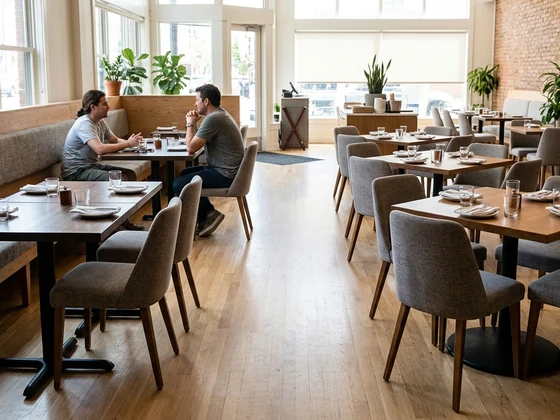
Restaurant Table Spacing and Aisle Clearance: Supplier Drawing Checklist
Check restaurant table spacing, aisle clearance, chair pullout, service path, and supplier drawing proof before approving a...
Sylvia2026-07-20 -

5 Mistakes to Avoid When Buying Restaurant Furniture from China
Don't fall for costly oversights! Learn the 5 mistakes to avoid when buying restaurant furniture from China and ensure a...
 Ron2025-01-079 min read
 -

RON GROUP Launches VR Experience to Explore Our Dynamic Showroom
Discover RON GROUP's VR showroom! Explore dining furniture, tableware, and customized services virtually or visit us in person to...
Sylvia2024-12-163 min read
Subscribe to RON GROUP
Stay up-to-date with the latest industry insights and expert advice. Together, we'll create your ideal restaurant.