
2026 Kitchen Procurement Strategy: Maximizing ROI & Tax Incentives
Avoid "dead equity" in your kitchen. Learn when to buy "passive iron," lease high-tech gear, and use Pay-as-You-Go models to protect your restaurants cash flow.
Content
Executive Summary: The Financial Imperative of Modern Kitchen Strategy
The global hospitality sector enters 2026 at a pivotal intersection of financial recovery, technological disruption, and operational necessity. After navigating years of pandemic-induced volatility, supply chain fractures, and acute labor shortages, hotel owners and foodservice operators are now confronting a new economic reality characterized by sustained high interest rates, aggressive regulatory sustainability mandates, and a fundamental shift in the technological baseline of commercial kitchen operations.
For the Hotel Chief Financial Officer (CFO), Asset Manager, and Procurement Director, the acquisition of commercial kitchen equipment has graduated from a tactical purchasing function to a central component of strategic capital allocation. The decisions made regarding the acquisition of back-of-house assets—specifically the choice between Outright Purchase, Leasing, and emerging Pay-as-You-Go (PAYG) models—now exert a material influence on cash flow liquidity, tax liability, and ultimately, the Total Cost of Ownership (TCO) over the asset’s lifecycle. To navigate these complexities efficiently, many operators are turning to comprehensive resources like our guide to sourcing from China to optimize initial capital expenditure.
This report provides an exhaustive financial and operational analysis of these three acquisition pathways. It challenges the traditional industry orthodoxy that prioritizes asset ownership (“buying equity”) by exposing the hidden costs of technological obsolescence and the opportunity costs of tied-up capital. In an era where a combi oven is as much a computer as it is a cooking device, the useful economic life of an asset often terminates long before its physical utility, creating a “depreciation mismatch” that penalizes the ownership model.
Our analysis suggests that a monolithic approach to equipment acquisition is financially suboptimal. High-performing hospitality groups are increasingly adopting a hybrid acquisition strategy. This approach leverages aggressive tax incentives—such as the expanded $2.5 million Section 179 deduction limit and the restoration of 100% bonus depreciation—to acquire durable infrastructure (“Passive Iron”) while utilizing leasing models for high-maintenance technology. This nuanced strategy maximizes tax efficiency and preserves working capital for revenue-generating front-of-house renovations.
Section 1: The Macro-Economic and Technological Context for Hospitality Investment in 2026
To make informed decisions regarding capital allocation, one must first understand the macroeconomic and technological currents shaping the hospitality landscape in 2026. The environment is defined by a tension between the need for aggressive modernization to combat labor shortages and the financial discipline required by a high-cost-of-capital environment.
1.1 The Acceleration of the Smart Kitchen Ecosystem
The commercial kitchen of 2026 is undergoing a profound digital transformation, transitioning from a collection of mechanical appliances to an integrated ecosystem of Internet of Things (IoT)-enabled devices. The trends dominating the sector include the proliferation of “smart” kitchens, AI-driven predictive maintenance, and high levels of automation. This shift is not merely a pursuit of novelty but a direct operational response to the chronic labor crisis plaguing the industry. With skilled culinary labor becoming increasingly scarce, operators are turning to technology to ensure consistency and efficiency. Automated cooking adjustments and cloud-based monitoring systems allow executive chefs to manage multiple locations remotely, ensuring quality control without a full brigade of senior staff on-site.
However, for the financial decision-maker, this technological shift introduces a critical new risk factor: technological obsolescence. In previous decades, a heavy-duty gas range could be amortized over 15 to 20 years. In contrast, modern “smart” equipment relies on software and sensors that may face repair challenges and obsolescence cycles of just 5 to 7 years. A smart combi oven purchased today may lack the processing power required by the hotel’s central management system in 2030. This reality effectively shortens the “innovation cycle,” rendering traditional long-term depreciation schedules financially inefficient for high-tech units.
1.2 Energy Efficiency and Sustainability as Financial Drivers
Sustainability has graduated from a corporate social responsibility (CSR) metric to a hard financial Key Performance Indicator (KPI). With energy costs remaining volatile, the operational expenditure (OpEx) savings derived from energy-efficient equipment have a material impact on TCO analysis. For example, Energy Star-certified commercial ovens are approximately 30% more energy-efficient than standard models, translating to thousands of dollars in annual utility savings. Similarly, upgrading to Energy Star-certified commercial refrigeration can leverage advanced compressors to drastically cut electricity consumption in assets that run 24/7/365.
In 2026, regulatory pressure regarding environmental standards is also intensifying. The market forecast for commercial appliances indicates that the global phase-down of high-GWP (Global Warming Potential) refrigerants is forcing the accelerated retirement of older systems. Financial models must now account for these “green premiums” in upfront acquisition costs, balanced against the long-term reduction in utility OpEx. The decision to “sweat the asset”—keeping old equipment running—is increasingly becoming a false economy.
1.3 The 2026 Tax Environment: A CapEx Stimulus
A pivotal factor in the Buy vs. Lease decision for US-based operations in 2026 is the favorable tax environment. Recent legislative updates have permanently reinstated 100% bonus depreciation for qualified property placed in service after January 19, 2026. This reverses previous phase-down schedules. Additionally, the Section 179 deduction limit has been substantially raised, as detailed in the 2026 IRS instructions for Form 4562, allowing for an immediate write-off of up to $2.5 million in equipment purchases.
For profitable hotel groups, these provisions create a compelling argument for purchasing. The ability to immediately expense the cost of a kitchen renovation provides a substantial cash flow shield, effectively reducing the net after-tax cost of acquisition by the corporate tax rate. This necessitates close collaboration between procurement directors and tax controllers to time acquisitions to maximize these benefits.
1.4 Interest Rates and the Cost of Capital
While tax incentives encourage spending, the cost of capital remains a constraint. Interest rates for equipment financing in 2026 are projected to remain elevated. As noted in recent financial analysis of equipment loans, rates for prime business borrowers generally hover between 6% and 9%, while those for businesses with fair credit can exceed 12-16%.
This elevated cost of capital affects all acquisition models. CFOs must rigorously compare their Weighted Average Cost of Capital (WACC) against the implicit interest rates of leasing proposals. In high-interest environments, the “cash price” of an asset is often deceptively low compared to the total stream of payments required to finance it, making cash purchases—potentially via factory-direct sourcing—increasingly attractive.
Section 2: Model 1 — Outright Purchase (The Equity Strategy)
The traditional model of acquiring commercial kitchen equipment through direct purchase remains the baseline against which other models are measured. It fundamentally represents an exchange of current liquidity for long-term equity and operational control.
2.1 Financial Mechanics: Balance Sheet Impact and Cash Flow
In an outright purchase scenario, the equipment is capitalized immediately on the balance sheet. The most significant disadvantage is the substantial upfront cash outflow. A full commercial kitchen fit-out can range from $100,000 to over $500,000, depending on the scale. Using cash reserves for this “dead equity” depletes working capital that could otherwise be deployed for revenue-generating activities like marketing or renovations.
However, ownership grants absolute control. The operator implies no restrictive covenants regarding usage hours and faces no return conditions at the end of a term. This autonomy is valuable for stable, long-term operations where equipment is expected to remain in place for decades.
2.2 Tax Implications: Maximizing Deductions
The primary financial engine of the Purchase model in 2026 is the ability to accelerate tax depreciation.
Section 179 Expensing:
For tax years beginning in 2026, the Section 179 limit allows a hotel to deduct the full purchase price of qualifying equipment. If a hotel in a 24% tax bracket purchases $100,000 worth of equipment, it realizes an immediate tax savings of $24,000, effectively reducing the acquisition cost significantly.
Bonus Depreciation:
The permanent reinstatement of 100% bonus depreciation for assets placed in service after January 19, 2026, removes phase-down complexities. Unlike Section 179, bonus depreciation has no spending cap and can create a Net Operating Loss (NOL) that can be carried forward. This makes purchasing particularly tax-efficient for profitable entities with large CapEx budgets.
2.3 Total Cost of Ownership (TCO) Dynamics: The Owner’s Burden
While purchasing avoids explicit finance charges, it exposes the owner to the full burden of lifecycle costs.
Maintenance Liability:
The owner bears 100% of repair and maintenance (R&M) costs. Industry data suggests that annual R&M costs for restaurants average between 1.5% and 2% of total sales. Reactive maintenance costs significantly more than planned maintenance. In the purchase model, the onus is entirely on the hotel’s facilities team to implement a Preventive Maintenance (PM) program.
Depreciation and Obsolescence Risk:
The owner assumes the risk that the equipment will lose value. Physical depreciation of “Passive Iron” is slow; however, technological depreciation for computerized units is much faster. A smart oven purchased today may be incompatible with future updates, creating a mismatch between physical life and economic utility.
Depreciation Schedules:
For tax purposes, different equipment classes follow specific recovery periods under MACRS. For example, standard kitchen equipment falls under 7-Year Property, while computers and POS systems are 5-Year Property. The disparity between tax life and physical life creates a “tax holiday” in early years but results in higher taxable income later.
2.4 The Verdict on Buying
Best For:
Established Hotel Groups: Entities with strong cash reserves and significant taxable income.
“Passive Iron”: Long-term assets like those found in our Restaurant Furniture collections.
Long-Term Assets: Items expected to remain in service for 10+ years.
Risk: Capital is tied up in depreciating assets; high exposure to repair costs.
Section 3: Model 2 — Leasing (The Cash Flow Strategy)
Leasing has evolved from a simple financing tool into a strategic mechanism for managing asset lifecycles. In 2026, it is particularly relevant for preserving capital.
3.1 Lease Structures: Operating vs. Capital (Finance) Leases
The distinction between operating and capital leases is critical. A Capital (Finance) Lease is effectively a loan disguised as a lease where the lessee assumes the risks of ownership. Conversely, an Operating Lease acts as a rental agreement, where the hotel returns the equipment at the end of the term.
3.2 The Impact of ASC 842 and IFRS 16 on Balance Sheets
A critical update for Hotel CFOs is the demise of “off-balance-sheet” financing. Under ASC 842 and IFRS 16, virtually all leases longer than 12 months must appear on the balance sheet. Lessees must now recognize a Right-of-Use (ROU) Asset and a corresponding Lease Liability. This inflates the balance sheet and can negatively impact debt-to-equity ratios. Interestingly, this accounting change can increase reported EBITDA because lease payments are often split into amortization and interest expense, both of which sit below the EBITDA line.
3.3 Strategic Advantages of Leasing
Liquidity Preservation:
Leasing preserves liquidity. Instead of a massive upfront outflow, a hotel pays monthly. Analysis suggests that leasing can preserve significant working capital, which is vital for soft costs like marketing and staffing.
Obsolescence Hedge:
An operating lease transfers the risk of obsolescence to the lessor. If a hotel leases a high-tech dishwasher for 5 years, they can return it and upgrade, creating a disciplined Technology Refresh Cycle. This ensures the operation is never stuck with outdated technology.
Tax Flexibility:
Operating lease payments are fully deductible as operating expenses (OpEx), providing a steady deduction that aligns with revenue generation.
3.4 The Verdict on Leasing
Best For:
Cash-Constrained Operations: Startups or renovations where cash is king.
“Revenue Iron”: Complex equipment that depreciates quickly.
Risk Aversion: Operators who want to avoid the risks of owning obsolete machinery.
Risk: Higher total dollar cost; binding contracts; balance sheet expansion under ASC 842.
Section 4: Model 3 — Pay-as-You-Go / Equipment-as-a-Service (The Agility Strategy)
The most disruptive model gaining traction in 2026 is Pay-as-You-Go (PAYG), or Equipment-as-a-Service (EaaS). This shifts acquisition from “paying for the asset” to “paying for the output.”
4.1 Concept and Mechanism
In a PAYG model, the vendor retains ownership, and the hotel pays a fee based on usage metrics collected via IoT.
Warewashing: Programs exist where hotels pay per wash cycle. This fee includes the machine, chemicals, and maintenance.
Coffee & Beverage: High-end machines are often provided with a contract to purchase consumables or pay a per-cup fee.
Robotics: “Robot-as-a-Service” models allow hotels to adopt automation without the upfront risk.
4.2 Financial Mechanics: Pure Variable Cost and Seasonality Alignment
The genius of PAYG is seasonality alignment. For a beach resort with fluctuating occupancy, a fixed lease payment is burdensome in the off-season. In a PAYG model, expenses drop proportionately with guest counts, effectively converting a fixed cost into a variable cost.
4.3 The “Embedded Lease” Accounting Trap
Financial Controllers must be wary of ASC 842 implications. If a contract identifies a specific asset and the hotel controls its use, it may be classified as a lease. To remain off-balance sheet, the contract must be structured as a Service Contract, often requiring the vendor to have substantive substitution rights. Controllers must consult with accounting teams to review embedded lease reporting requirements.
4.4 TCO Analysis: The Premium for Peace of Mind
Nominally, PAYG is the most expensive option long-term. However, TCO calculations must adjust for the inclusion of maintenance and consumables. The vendor is incentivized to keep the machine running, effectively transferring the risk of breakdown. This is driven by digital transformation in dishwashing and other sectors, where connected machines enable predictive maintenance to prevent failure before it impacts service.
Section 5: Comparative Financial Analysis & TCO Deep Dive
To visualize the financial impact, consider the lifecycle of a high-end commercial asset.
5.1 Cash Flow Strategy & NPV Analysis
Purchase: Wins on a pure Net Present Value (NPV) basis due to the elimination of finance charges and the massive Year 1 tax shield.
Lease: Offers a higher Internal Rate of Return (IRR) on invested capital because the initial outlay is minimal.
PAYG: Financially inefficient for stable, high-volume operations but serves as a crucial insurance policy against volatility.
5.2 The Hidden Costs: Energy and Maintenance
TCO analysis reveals that the purchase price is often only ~30% of the lifecycle cost.
Energy Efficiency: Buying or leasing Energy Star equipment captures immediate OpEx savings. Holding onto old equipment can cost more in energy inefficiency than the price of a new lease payment.
Maintenance Volatility: Reactive maintenance is costly. Maintenance cost curves rise exponentially as equipment ages. Buying locks the owner into the high-cost tail of this curve, while leasing allows the operator to exit the asset before it enters the high-maintenance phase.
Section 6: Strategic Recommendations: The Hybrid Approach
The most sophisticated hospitality groups deploy a Hybrid Strategy that allocates capital based on the specific nature of the asset class.
Strategy 1: Buy the “Passive Iron”
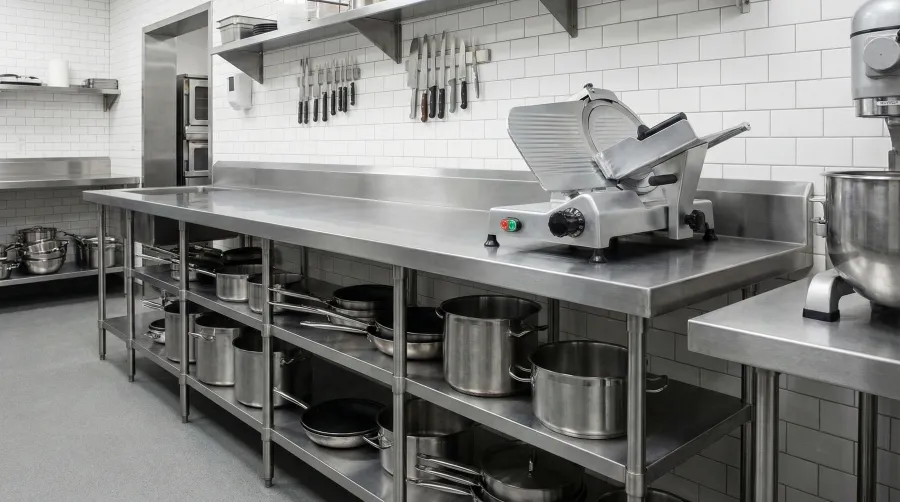
Equipment: Stainless steel prep tables, sinks, shelving, standard gas ranges.
Action: Use cash reserves or low-interest term loans. These are “dead assets” with long lifespans. Utilize the Section 179 limit to write them off immediately. For the best value on these durable goods, consider wholesale restaurant furniture collections.
Strategy 2: Lease the “Revenue Engines”
Equipment: High-tech Combi Ovens, High-Speed Ovens, Complex Dishwashers.
Action: Use operating leases with 3-5 year terms. This aligns the financing term with the warranty and useful technological life. At the end of the lease, swap the unit for the newest model to maintain energy efficiency.
Strategy 3: Use PAYG for Volatile & Consumable Categories
Context: Seasonal resorts or specific high-volume beverage programs.
Action: Use Pay-per-wash or per-cup contracts to protect margins during low-occupancy periods and offload maintenance headaches.
Since "Passive Iron" assets like furniture represent long-term equity, minimizing the initial acquisition cost is the most effective lever for improving ROI. Rather than absorbing domestic distributor markups, smart procurement involves going directly to the source. However, vetting suppliers is critical; to assist with this, we have analyzed the market to help you identify the top hospitality furniture manufacturers in China for 2026. Securing factory-direct pricing from these trusted partners can reduce upfront CapEx by 30-50%, preserving liquidity for your high-tech investments.
Section 7: Conclusion: Agility as the New Currency
In 2026, the decision to Lease, Buy, or use Pay-as-You-Go is a lever for financial engineering that goes far beyond simple procurement.
Buy if you have excess cash and need “passive” infrastructure.
Lease if you need to preserve working capital and hedge against obsolescence.
Pay-as-You-Go if you need operational flexibility and alignment with revenue fluctuations.
For the Hotel CFO, the ultimate goal is optimizing Total Cost of Ownership while maintaining Liquidity. By abandoning the dogma of “ownership at all costs,” hotels can build a resilient operation. If you are ready to evaluate your procurement strategy or need assistance with high-volume sourcing, contact our team for a consultation on optimizing your kitchen investment.
Get the week's latest industry information
-
Real-Life Professional Restaurant Case Studies
Explore Now
-
Create a unique restaurant with over 95,700+products
Explore Now
-
Protessional Free 3D Restaurant Design
Explore Now
-
Still Have Questions About Opening a Restaurant?
Explore Now

Sylvia
With 8 years in catering & hospitality industry, sales manager of Ron Group, specialise in providing one stop solutions to restaurants, hotels and weddings.
Discover Our Exclusive Products
Explore our extensive range of restaurant and hotel supplies designed to enhance your operations. Find the perfect solutions to meet your needs.
Browse Our ProductsFREE 3D DESIGN
Boost your restaurant's success with our free 3D design service. Start building the restaurant of your dreams today!
Explore 3D Design Case
RECOMMENDED CASES
-

La Rambla by Catalunya: Crafting Barcelona's Soul in Hong Kong - Custom Furniture Excellence
RON Group's custom Spanish-inspired furniture elevates La Rambla with artisanal aesthetics...
Learn More -

Cardinal Point: Elevating Outdoor Seating with Tailored Cushion Upgrades
Discover how Cardinal Point transformed its outdoor dining experience with custom cushions, achievin
Learn More
RECOMMENDED BLOGS
-
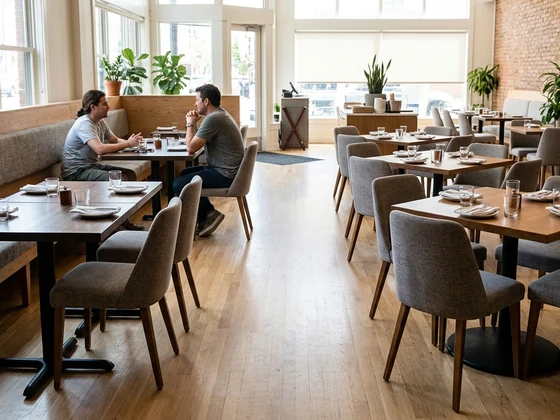
Restaurant Table Spacing and Aisle Clearance: Supplier Drawing Checklist
Check restaurant table spacing, aisle clearance, chair pullout, service path, and supplier drawing proof before approving a...
Sylvia2026-07-20 -

5 Mistakes to Avoid When Buying Restaurant Furniture from China
Don't fall for costly oversights! Learn the 5 mistakes to avoid when buying restaurant furniture from China and ensure a...
 Ron2025-01-079 min read
 -

RON GROUP Launches VR Experience to Explore Our Dynamic Showroom
Discover RON GROUP's VR showroom! Explore dining furniture, tableware, and customized services virtually or visit us in person to...
Sylvia2024-12-163 min read
Subscribe to RON GROUP
Stay up-to-date with the latest industry insights and expert advice. Together, we'll create your ideal restaurant.