











Restaurant Kitchen Setup: Complete Equipment Checklist (2026 Updated)
Transform your restaurant with strategic kitchen equipment choices.
Content
<!-- x-tinymce/html -->
Section 1: Introduction: Engineering the Heart of Your Restaurant
The commercial kitchen is the engine of any food service establishment, a complex ecosystem where culinary vision becomes profitable reality. Outfitting this space is one of the most significant capital investments a restaurateur will make. However, a common pitfall is viewing this process as simply checking items off a shopping list. A truly successful kitchen is not merely bought; it is engineered. The selection of equipment is a series of strategic decisions that must be meticulously aligned with the restaurant’s core menu, operational model, and long-term financial goals. This “menu-first” approach to procurement ensures that every appliance, from the primary cooking range to the smallest prep tool, serves a direct purpose in delivering on the brand’s promise to the customer.
The right equipment directly impacts every key performance indicator of a restaurant, including speed of service, product consistency, food and workplace safety, and overall operational efficiency. These factors, in turn, drive profitability. The central challenge for any operator is to strike a delicate balance between the initial capital expenditure on equipment and the recurring operational costs—such as energy, water, and labor—while simultaneously planning for future growth. This guide serves as a practical resource for navigating this complex landscape. It moves from universal principles of equipment evaluation to foundational checklists for a successful launch and culminates in bespoke blueprints for diverse restaurant concepts. As a comprehensive solutions provider, RON Group Global offers not only the full spectrum of kitchenware and equipment but also the expertise in 3D kitchen design and operational consulting to help engineer the ideal heart for your restaurant.
Section 2: The Foundational Framework: Core Principles of Equipment Selection
Before a single piece of equipment is considered, operators must internalize the foundational framework of strategic selection. This framework moves beyond the price tag to evaluate each potential purchase as a calculated, long-term investment. Mastering these four pillars—Capacity & Throughput, Energy Efficiency, Footprint & Workflow, and Material & Durability—is the difference between building a kitchen that merely functions and one that generates a powerful return on investment.
2.1 Capacity & Throughput: Sizing for Success
The most critical calculation in outfitting a kitchen is determining the appropriate capacity for your equipment. Undersizing is a recipe for disaster, creating bottlenecks during peak hours that lead to slow service, frustrated staff, and lost revenue. Conversely, oversizing results in squandered capital, underutilized assets, and needlessly high utility bills, a common mistake highlighted in guides for new restaurant owners. This decision must be data-driven and rooted in a deep understanding of the menu and projected service volume.
The menu is the primary determinant of equipment needs. An establishment where 80% of dishes originate from the grill requires a significant investment in a high-capacity charbroiler, whereas a bakery’s success hinges on a high-performance convection oven, making a thoughtful equipment buying guide an invaluable tool. The number of meals served per day is a fundamental metric for these calculations.
Calculating Refrigeration Needs: Proper cold storage is non-negotiable for food safety and inventory management. A precise method involves calculating the required volume for distinct food categories based on projected meal counts. For example, a restaurant serving 1000 meals between deliveries might require 75 cubic feet for meat, 100 cubic feet for produce, and 37.5 cubic feet for dairy. Crucially, as detailed in food facility planning guides, these calculations must account for the reality that only about 40% of a walk-in unit’s interior volume is usable storage space due to the need for shelving and air circulation. The cooling power of a refrigeration system is measured in British Thermal Units (BTUs). Accurately calculating the required BTUs involves inputting the unit’s dimensions, the desired internal holding temperature, and other key variables, which can be done using a specialized refrigeration BTU calculator.
Calculating Cooking Capacity: Oven capacity should be determined by a combination of projected food volume, the physical space available in the kitchen, and the standard pan sizes you will use (e.g., full-size, half-size, or quarter-size sheet pans). The essential question to answer is how many portions must be prepared during the busiest service periods to meet demand without delay.
A sophisticated approach to capacity planning goes beyond simple peak-hour calculations. Restaurant demand is not linear; it features intense peaks and long, quiet troughs. A common error is to purchase equipment sized for the absolute busiest hour of the week. This leads to massive, energy-hungry appliances sitting idle and inefficiently consuming power for the majority of operating hours. A more strategic analysis involves weighing the cost of a large, peak-capacity unit against a more moderately sized primary unit supplemented by a smaller, secondary piece of equipment for overflow.
2.2 Energy Efficiency: The Hidden ROI
Energy and water consumption represent a substantial and recurring operational expense. In fact, a commercial kitchen can use up to 2.5 times more energy per square meter than other commercial spaces. Consequently, investing in energy-efficient equipment offers one of the most compelling long-term returns on investment available to an operator.
The ENERGY STAR certification is the globally recognized standard for energy-saving commercial food service equipment. The savings are quantifiable and significant: an operator who outfits a kitchen with a full suite of ENERGY STAR equipment can save approximately 350 MMBTU per year.
The choice between gas and electric cooking equipment also has major efficiency implications. While many chefs prefer gas ranges, electric induction technology is remarkably efficient. The final decision should be based on a careful analysis of local utility rates, installation costs, and specific menu requirements.
Beyond the direct reduction in utility bills, energy-efficient equipment offers a powerful, often overlooked, benefit: an improved working environment. For example, an induction cooktop generates significantly less ambient heat than a gas range. This reduces the strain on the kitchen’s ventilation and air conditioning systems, leading to secondary energy savings. More importantly, it creates a cooler, more comfortable, and less stressful workspace for the culinary team. This can lead to higher productivity, improved staff morale, and potentially lower employee turnover.
2.3 Footprint & Workflow: The Science of Kitchen Layout
A commercial kitchen is, in essence, a compact manufacturing facility. The physical size of each piece of equipment and its placement within the kitchen’s layout dictate the efficiency of every task, from ingredient prep to plating. The mantra “measure twice, buy once” is paramount. Operators must take precise measurements of their available space, carefully accounting for necessary clearance for opening doors, proper ventilation, and safe, unimpeded movement for staff.
The goal is to design an ergonomic layout that promotes a logical and linear workflow, minimizing wasted steps and preventing dangerous cross-contamination. Common and effective layouts include the Assembly Line, Island, and Zone-Style configurations. The ideal flow progresses seamlessly from receiving and storage to prep, cooking, service, and finally to warewashing.
Strategic placement is key to achieving this flow. For instance, food prep stations should be situated away from the high heat of the main cook line. Undercounter refrigeration units should be placed directly on the line, keeping essential ingredients within a chef’s immediate reach. The physical footprint of equipment has a direct and quantifiable impact on labor costs. A seemingly small inefficiency, like an extra few steps to the refrigerator repeated dozens of times per shift, translates into miles of wasted movement and thousands of dollars in squandered labor costs over a year. Choosing equipment with a slightly smaller footprint where space is tight is not merely a space-saving tactic; it is a direct investment in long-term labor efficiency and profitability.
2.4 Material & Durability: Building to Last
Commercial kitchens are unforgiving environments characterized by intense heat, constant moisture, and rigorous cleaning protocols. The equipment must be constructed from materials robust enough to withstand these daily demands. The choice of material is a primary indicator of an item’s durability, lifespan, and, most importantly, its safety.
NSF Certification: The National Sanitation Foundation (NSF) mark is the gold standard for commercial kitchen equipment. NSF certification ensures that an appliance meets stringent standards for public health and safety, covering everything from material composition to construction.
Stainless Steel Grades: Stainless steel is the material of choice for its durability and hygienic properties, but not all stainless steel is created equal. Understanding the common grades is crucial:
304 Stainless Steel (18/8): The industry standard, offering excellent resistance to corrosion and rust. Ideal for high-contact surfaces like prep tables and sinks.
430 Stainless Steel (18/0): A more affordable, magnetic option suitable for less demanding applications like equipment paneling and medium-duty work tables.
316 Stainless Steel: A premium grade with superior resistance to corrosion from salts and harsh chemicals, optimal for coastal areas or for contact with highly acidic foods.
The selection of a stainless steel grade serves as a clear indicator of an operator’s deep, menu-driven understanding of their kitchen’s specific needs. A novice restaurateur might opt for a less expensive 430-grade stainless steel prep table. However, a seasoned operator whose menu features tomato-based sauces or brined products will recognize that the high acidity of these items will eventually corrode the 430 steel. That operator would wisely invest in a 304 or 316-grade table for those specific prep stations, a strategic decision that prevents premature equipment failure and protects the investment.
Section 3: The Day-One Essentials Checklist: Equipping for a Successful Launch
To open its doors, every restaurant requires a core set of equipment to ensure operational functionality and compliance with health and safety regulations. This checklist outlines the non-negotiable, foundational items needed for a successful launch.
3.1 Cooking Equipment
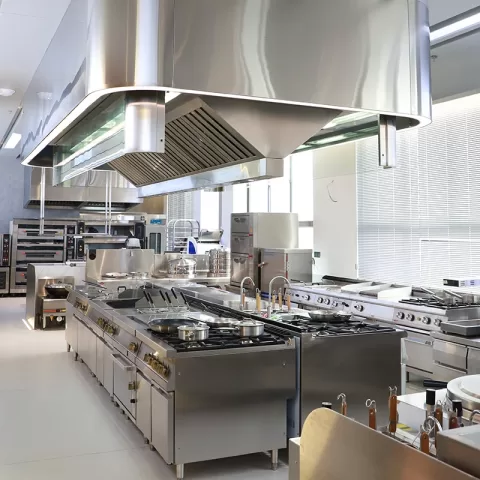
Commercial Range (Gas or Electric): The absolute workhorse of the hot line. A versatile 4- or 6-burner model with an oven base is a solid starting point for most kitchens, as noted in many kitchen start-up checklists.
Ventilation/Exhaust Hood & Fire Suppression System: A legal and safety mandate that must be professionally installed and sized for the cooking equipment it covers.
Commercial Microwave: Essential for its speed and utility in defrosting, reheating, and steaming.
3.2 Refrigeration Equipment
Reach-In Refrigerator & Freezer: The cornerstones of cold storage, providing the necessary capacity for daily ingredients and frozen goods.
Ice Machine: A critical component for any beverage program, with capacity matched to projected drink sales.
3.3 Food Preparation Equipment
Stainless Steel Prep Tables/Work Tables: Provide durable, hygienic surfaces for all prep tasks.
Commercial Mixer (Countertop): A planetary mixer is vital for preparing batters, dressings, sauces, and small batches of dough.
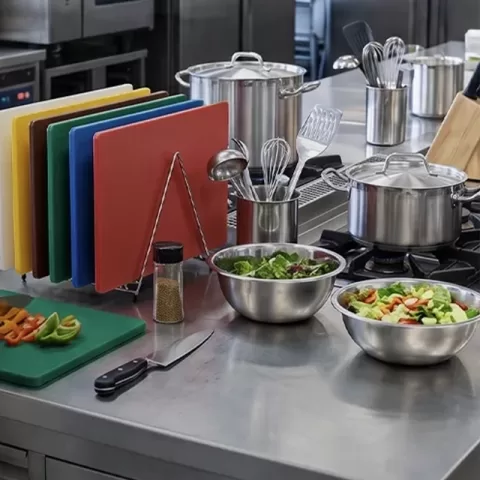
Chef Knives & Color-Coded Cutting Boards: Fundamental tools for efficiency and preventing cross-contamination.
3.4 Warewashing & Sanitation Equipment
Three-Compartment Sink: A legal requirement in most jurisdictions for manually washing, rinsing, and sanitizing pots and pans.
Commercial Dishwasher (Undercounter or Door-Type): Dramatically increases the speed and efficacy of cleaning, ensuring proper sanitation temperatures are met.
Dedicated Handwashing Sinks: Health codes mandate separate, fully stocked handwashing stations in all food preparation and service areas.
Grease Trap: An essential plumbing component required by local ordinances to prevent grease from entering the sewer system.
3.5 Storage & Organization
NSF-Approved Shelving (Dry Storage): Sturdy, adjustable shelving is necessary for organizing non-perishable goods.
Food Storage Containers: A comprehensive set of clear, food-grade containers is crucial for organizing ingredients and facilitating a first-in, first-out (FIFO) inventory system.
3.6 Safety & Compliance Equipment
Fire Extinguishers (K-Class): Specifically designed to combat fires involving cooking oils and grease.
First-Aid Kit & Eyewash Station: Essential for addressing common kitchen injuries.
Non-Slip Floor Mats: A critical tool for preventing slips and falls in high-traffic areas.
3.7 Technology
Point of Sale (POS) System: The digital hub of the operation, processing orders, managing payments, and tracking sales data. As a central piece of technology, a complete buyer’s guide can help in selecting the right system.
Section 4: The Growth-Oriented Optionals Checklist: Scaling for Future Success
Once a restaurant has established its core operations, strategic investments in additional equipment can unlock new revenue streams, enhance efficiency, and allow for greater menu complexity. These should be targeted investments made to solve a specific operational challenge or seize a clear business opportunity.
4.1 Increasing Capacity & Volume
Walk-In Cooler/Freezer: The single most impactful upgrade for storage capacity, enabling bulk purchasing and supporting higher service volumes or expansion into catering.
Conveyor Dishwasher: For high-volume restaurants, this automates the warewashing process, dramatically reducing labor and increasing the speed of dish turnover.
Floor Mixer: A large-capacity floor mixer is a necessity for any operation that produces large quantities of dough, such as a bakery or pizzeria.
4.2 Expanding Menu & Specialization
Deep Fryer: One of the quickest ways to expand a menu with highly popular and profitable items like french fries and chicken wings.
Griddle/Charbroiler: A flat-top griddle opens the door to a full breakfast menu, while a charbroiler imparts a distinct smoky flavor for steaks and grilled vegetables.
Specialty Ovens (Conveyor, Deck, Combi): These represent a significant step up from a standard range. A conveyor oven is built for speed, a deck oven provides intense radiant heat for artisan breads, and a combi oven offers unparalleled versatility.
Cuisine-Specific Equipment: As a concept matures, investing in specialized equipment like wok ranges or pasta cookers can elevate authenticity and efficiency.
4.3 Enhancing Efficiency & Consistency
Food Processor/Slicer: Can reduce hours of manual labor to mere minutes while ensuring perfect consistency and portion control.
Refrigerated Prep Table: These units are the foundation of an efficient assembly line for salads, sandwiches, or pizzas.
Kitchen Display System (KDS): Replaces paper tickets with a digital screen, minimizing errors, improving communication, and tracking order times to identify bottlenecks.
Advanced Holding Equipment: Humidity-controlled holding cabinets can hold cooked food at precise temperatures for extended periods without quality degradation, allowing kitchens to batch-cook during slower periods.
Each piece of optional equipment should be viewed as a strategic lever. For instance, purchasing a high-capacity conveyor oven isn’t just about adding pizza to the menu; it’s a lever that can pivot a concept toward a high-volume takeout and delivery operation. The decision should always be preceded by a clear business objective.
Section 5: Tailoring Your Toolkit: Equipment Blueprints for Diverse Restaurant Concepts
A one-size-fits-all checklist is insufficient for strategic kitchen planning. The optimal equipment mix is dictated by the specific operational demands of the restaurant’s concept. The following blueprints provide curated equipment priorities for three distinct models.
5.1 The Efficient Cafe: Precision, Presentation, and Beverage Focus
Operational Philosophy: The primary focus is on high-quality beverage production, supplemented by baked goods and light fare. Speed of service is critical, as is the attractive merchandising of grab-and-go items.
Day-One Essentials Focus:
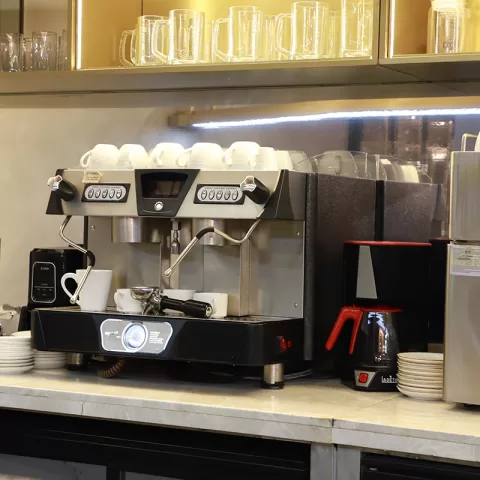
Commercial Espresso Machine & Grinder: The non-negotiable heart of the operation.
High-Performance Blender: Essential for producing smoothies, frappes, and other blended beverages.
Convection Oven (Countertop or Half-Size): Necessary for consistently baking pastries and muffins in-house.
Refrigerated Display Case: Vital for showcasing baked goods and driving impulse purchases.
Undercounter Refrigeration: Provides immediate access to milk and creams, speeding up the drink-making process.
Growth-Oriented Optionals:
Panini Press/Sandwich Grill: Allows for menu expansion into hot sandwiches, increasing lunch sales potential.
Commercial Toaster (Conveyor): As breakfast volume grows, a conveyor toaster can handle a high throughput of bagels and toast far more efficiently.
Glasswasher: A dedicated undercounter glasswasher ensures all glassware is impeccably clean and spot-free.
5.2 The High-Volume QSR: Speed, Durability, and Throughput
Operational Philosophy: The entire model is built on speed, consistency, and volume. Equipment must be exceptionally durable, and processes are designed to be simple, ensuring any employee can produce a uniform product quickly. This approach de-skills tasks and maximizes throughput.
Day-One Essentials Focus:
Flat-Top Griddle & High-Capacity Fryers: The core of most QSR menus, used for items like burgers and french fries.
Charbroiler: For concepts featuring grilled items, a charbroiler provides a distinct flavor profile.
Rapid-Cook or Conveyor Oven: Engineered for speed and minimal user intervention, perfect for toasting buns or cooking items in a continuous flow.
Refrigerated Prep Tables: The foundation of the QSR assembly line.
Holding Stations/Heat Lamps: Essential for staging finished products while awaiting pickup, a key part of any restaurant equipment inventory list.
Growth-Oriented Optionals:
Walk-In Cooler: Becomes necessary to handle the large inventory required as volume increases.
Conveyor Dishwasher: Manages the relentless turnover of pans and baskets in a high-volume environment.
Drive-Thru POS/KDS Integration: A crucial investment to optimize the highly profitable drive-thru channel.
5.3 The Precision Fine Dining Kitchen: Control, Versatility, and Technique
Operational Philosophy: The emphasis is on precision, culinary artistry, and flawless execution of complex techniques. Equipment is selected to provide the chef with ultimate control over the cooking process.
Day-One Essentials Focus:
Professional Gas Range (Multi-Burner): Preferred for its instantaneous and nuanced heat control.
High-End Convection Oven: Provides the even, consistent heat required for perfect roasting and baking.
Multiple Refrigeration Units: Necessary for meticulous segregation of ingredients to maintain pristine quality.
Salamander/Broiler: Indispensable for rapid caramelization and finishing dishes.
High-Quality Smallwares: Precision tools are not optional. Items like a mandoline, a chinois for smooth purées, and highly accurate digital scales are fundamental to executing the cuisine.
Growth-Oriented Optionals:
Combi Oven: A game-changer for versatility and consistency, offering precise control over both temperature and humidity.
Blast Chiller: Essential for HACCP food safety protocols, rapidly cooling hot foods to preserve texture and quality.
Sous Vide Setup (Immersion Circulator & Vacuum Sealer): This technique offers unparalleled temperature control, ensuring perfect, uniform doneness for high-cost proteins like steak and delicate fish.
| Equipment Category | The Efficient Cafe | The High-Volume QSR | The Precision Fine Dining Kitchen |
|---|---|---|---|
| Primary Cooking | Commercial Espresso Machine | High-Capacity Fryer & Griddle | Multi-Burner Professional Gas Range |
| Justification: Core of beverage-focused menu. | Justification: Engine for speed and throughput. | Justification: Provides precise, responsive heat control. | |
| Primary Refrigeration | Refrigerated Display Case | Refrigerated Prep Table | Multiple Segregated Reach-In Units |
| Justification: Merchandises grab-and-go items. | Justification: Enables assembly-line production. | Justification: Preserves pristine quality of ingredients. | |
| Key Prep Tool | High-Performance Blender | Rapid-Cook/Conveyor Oven | High-Accuracy Digital Scale |
| Justification: Essential for smoothie/frappe menu. | Justification: Maximizes speed and de-skills tasks. | Justification: Ensures absolute precision in recipes. | |
| Warewashing | Undercounter Dishwasher | Conveyor Dishwasher | Door-Type Dishwasher & Glasswasher |
| Justification: Handles moderate volume. | Justification: Manages relentless high volume. | Justification: Balances pan washing with delicate glassware. | |
| Signature Optional | Panini Press | Drive-Thru Tech Suite | Sous Vide Setup (Circulator & Sealer) |
| Justification: Expands into profitable lunch category. | Justification: Optimizes the highest-revenue channel. | Justification: Guarantees consistency for high-cost proteins. |
Section 6: Investing in Innovation: The Strategic ROI of Advanced Kitchen Technology
Beyond the standard lineup, a class of advanced equipment offers transformative potential. These technologies—the combi oven, sous vide circulator, and blast chiller—represent a significant capital investment, but their ROI can be measured in enhanced consistency, waste reduction, optimized labor, and expanded culinary capabilities.
6.1 The Combi Oven: The Ultimate All-in-One
A combi oven merges the functions of a convection oven and a steamer into one versatile appliance. It can roast, steam, or use a combination of both, allowing for a vast range of cooking applications.
ROI Analysis:
Space Savings: By replacing two large appliances with one, a combi oven frees up valuable line space.
Consistency and Quality: Programmable cooking cycles ensure every batch is cooked identically. The ability to inject steam also improves moisture retention and increases the final yield of proteins.
Labor Savings: The programmability can automate complex processes, including low-temperature, overnight cooking that tenderizes tough cuts and frees up staff during busy daytime hours.
6.2 Sous Vide (Immersion Circulator & Vacuum Sealer): Unparalleled Precision
The sous vide technique involves vacuum-sealing food and cooking it in a water bath at a highly precise temperature. This method cooks food to a perfect and uniform internal temperature, a result impossible to achieve with traditional cooking methods.
ROI Analysis:
Perfect Consistency & Waste Reduction: Sous vide eliminates the guesswork in cooking expensive proteins, reducing food waste from over- or under-cooked items to virtually zero.
Labor Optimization: This technology decouples the cooking process from the service period. A chef can cook dozens of steaks during slower hours, then simply sear and serve them in minutes during the dinner rush, dramatically improving ticket times.
Enhanced Flavor and Texture: The vacuum-sealing process locks in natural juices and flavors and can tenderize tougher, less expensive cuts of meat.
6.3 The Blast Chiller: The Key to Safety and Workflow
A blast chiller is designed to rapidly cool hot food, forcing its temperature through the microbiological “danger zone” (140°F to 41°F) in a fraction of the time a standard refrigerator could.
ROI Analysis:
Food Safety: Rapid chilling is a cornerstone of HACCP food safety plans. By minimizing the time food spends in the danger zone, blast chillers drastically inhibit bacterial growth, as emphasized in public health refrigeration guides.
Quality Preservation: The rapid cooling creates tiny microcrystals, preserving the food’s texture and flavor far more effectively than slow cooling, according to foodservice industry analysis.
Workflow Revolution (Cook-Chill): The blast chiller unlocks the “cook-chill” production model. This allows a kitchen to prepare large batches of items during off-peak hours, cool them safely, and store them for several days, smoothing out production schedules and reducing the workload during the chaotic service rush.
Section 7: Conclusion: Building Your Blueprint for a High-Performance Kitchen
The journey of outfitting a commercial kitchen is a defining moment for any restaurant venture. The evidence overwhelmingly shows that the most successful kitchens are not those filled with the most expensive equipment, but rather those equipped with precisely the right tools for the job. Adopting a “menu-first” procurement strategy is the foundational principle for success. Every equipment decision must flow directly from the culinary and operational demands of the menu itself.
This strategic approach is built upon four pillars: calculating Capacity to meet demand, prioritizing Energy Efficiency to control long-term costs, optimizing Footprint to enhance workflow, and selecting proper Materials for durability. An equipment list should be a dynamic blueprint that evolves with the restaurant’s growth. For example, knowing how often restaurants replace furniture can inform long-term capital planning for both front and back of house.
Navigating these critical decisions requires a partner with both comprehensive product offerings and deep industry expertise. RON Group Global stands as that partner. Our extensive catalogues cover the full spectrum of hospitality needs—from heavy-duty kitchen equipment and professional-grade kitchenware to elegant tableware, custom uniforms, and stylish custom restaurant furniture. Beyond products, we provide invaluable services like professional 3D kitchen design and operational consulting, helping our clients translate their vision into a high-performance, profitable reality. By partnering with us, you are not just buying equipment; you are building a blueprint for lasting success.
Ready to start engineering your ideal kitchen? Contact us today to speak with one of our hospitality solutions experts.
Get the week's latest industry information
-
Real-Life Professional Restaurant Case Studies
Explore Now
-
Create a unique restaurant with over 95,700+products
Explore Now
-
Protessional Free 3D Restaurant Design
Explore Now
-
Still Have Questions About Opening a Restaurant?
Explore Now

Sylvia
With 8 years in catering & hospitality industry, sales manager of Ron Group, specialise in providing one stop solutions to restaurants, hotels and weddings.
Discover Our Exclusive Products
Explore our extensive range of restaurant and hotel supplies designed to enhance your operations. Find the perfect solutions to meet your needs.
Browse Our ProductsFREE 3D DESIGN
Boost your restaurant's success with our free 3D design service. Start building the restaurant of your dreams today!
Explore 3D Design Case
RECOMMENDED CASES
-
La Rambla by Catalunya: Crafting Barcelona's Soul in Hong Kong - Custom Furniture Excellence
RON Group's custom Spanish-inspired furniture elevates La Rambla with artisanal aesthetics...
Learn More -

Cardinal Point: Elevating Outdoor Seating with Tailored Cushion Upgrades
Discover how Cardinal Point transformed its outdoor dining experience with custom cushions, achievin
Learn More
RECOMMENDED BLOGS
-

Bar Glassware 101: Types, Names, Uses, and How to Stock Your Bar
Learn the 10 core bar glassware types, names, and uses. Discover how to stock your bar with the right glasses for cocktails, beer,...
Sylvia2026-07-26 -
Complete Bar Equipment List for Opening a Bar
Use a complete bar equipment list with pictures, covering workstations, ice, refrigeration, glassware, utilities, sanitation and a...
Sylvia2026-06-11 -

Low-Budget Restaurant Interior Design Ideas: Spend Where Guests and Staff Notice
Explore low-budget restaurant interior design ideas, practical material choices, layout priorities and phased upgrades without...
Sylvia2026-04-04
Subscribe to RON GROUP
Stay up-to-date with the latest industry insights and expert advice. Together, we'll create your ideal restaurant.