
Content
A restaurant table base is often approved too late and with too little evidence. The buyer sees a black pedestal in a rendering, a price line in the quotation, and a table top size in the schedule. Then the installed table rocks on an uneven floor, the base blocks guest knees, cleaning staff cannot reach around the foot, a booth table cannot meet the accessible dining plan, or the installer refuses responsibility for floor fixing.
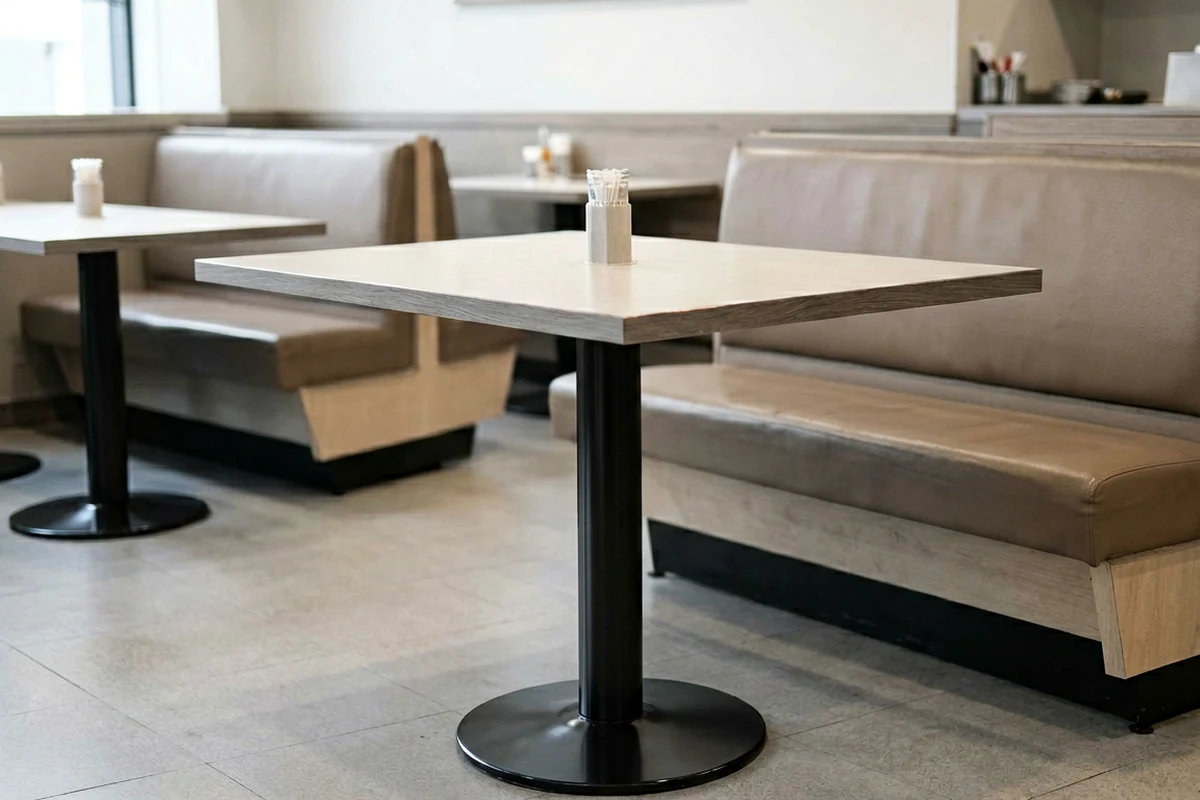
The buying question is not "which base style looks best?" It is: can this exact base, with this exact top, in this exact location, be stable, serviceable, accessible where required, installable, cleanable, and replaceable without guessing?
Start with a controlled top-and-base schedule
Do not approve bases from a style name alone. Build a table schedule that joins the top, base, seating type, floor condition, and supplier evidence into one approval record. RON GROUP's restaurant and hospitality furniture options can help the buyer frame product families, but the release file still needs project-specific evidence.
| Approval field | What the buyer defines | Release rule |
|---|---|---|
| Table top | Shape, size, material, thickness, edge profile, fixing plate, and approximate finished weight if known | Do not release a base until the supplier confirms the offered top/base pairing |
| Dining layout | Chair or booth type, seating count, guest entry side, server path, aisle relationship, and adjacent walls or columns | Review the table in plan, not as an isolated product photo |
| Base type | Round, square, X, T, cantilever, folding, outdoor, weighted, or bolt-down | Match the base form to knees, chair movement, cleaning access, and floor condition |
| Floor condition | Finish, slope, joints, outdoor exposure, substrate, underfloor services, and leveling method | Escalate uneven floors or fixing assumptions before shipment |
| Evidence | Drawing, data sheet, sample or mock-up result, assembly instruction, test or performance claim, spare-part record, and deviation log | Production follows the approved item code and revision, not the catalogue image |
The important distinction is responsibility. If the base is freestanding, the supplier must state the proposed pairing and adjustment method. If it is fixed to the floor, the project team must decide who verifies the substrate, anchor method, waterproofing, services below the floor, and final installation acceptance.
Compare base types by failure mode
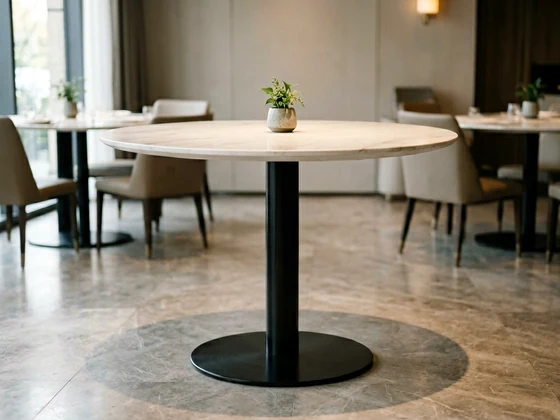
A central pedestal can improve chair movement and cleaning access, but a small or light base can feel unstable with a large or heavy top. A four-leg table may feel familiar and easy to understand, but legs can conflict with chair positions or booth entry. A T-base may work neatly against banquettes, while an X-base may interfere less in open seating. Bolt-down bases can control movement in high-traffic or fixed-layout zones, but they turn a furniture choice into a site-interface decision.
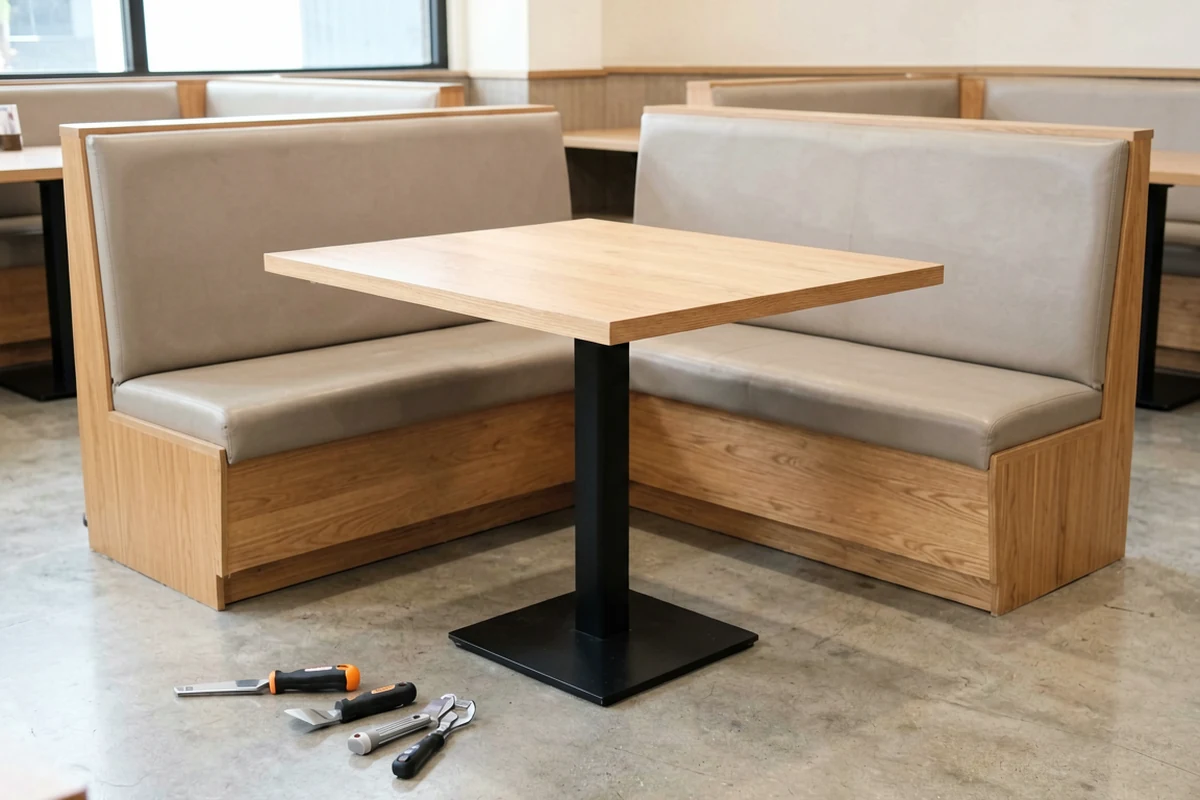
Use base type as a starting hypothesis, not as approval evidence.
| Base decision | Buyer evidence to request | Stop condition |
|---|---|---|
| Freestanding pedestal | Supplier top-compatibility statement, base weight or construction description if supplied, glides or levelers, and sample review | The base rocks, tips, or feels flexible with the selected top |
| Booth table base | Plan showing top overhang, seat edge, entry side, knee space, and cleaning reach | Guests cannot enter comfortably or knees hit the column or foot |
| Outdoor or wet-cleaning area | Finish specification, corrosion-risk discussion, glide or foot detail, and maintenance instruction | The finish or fastener package is not defined for the environment |
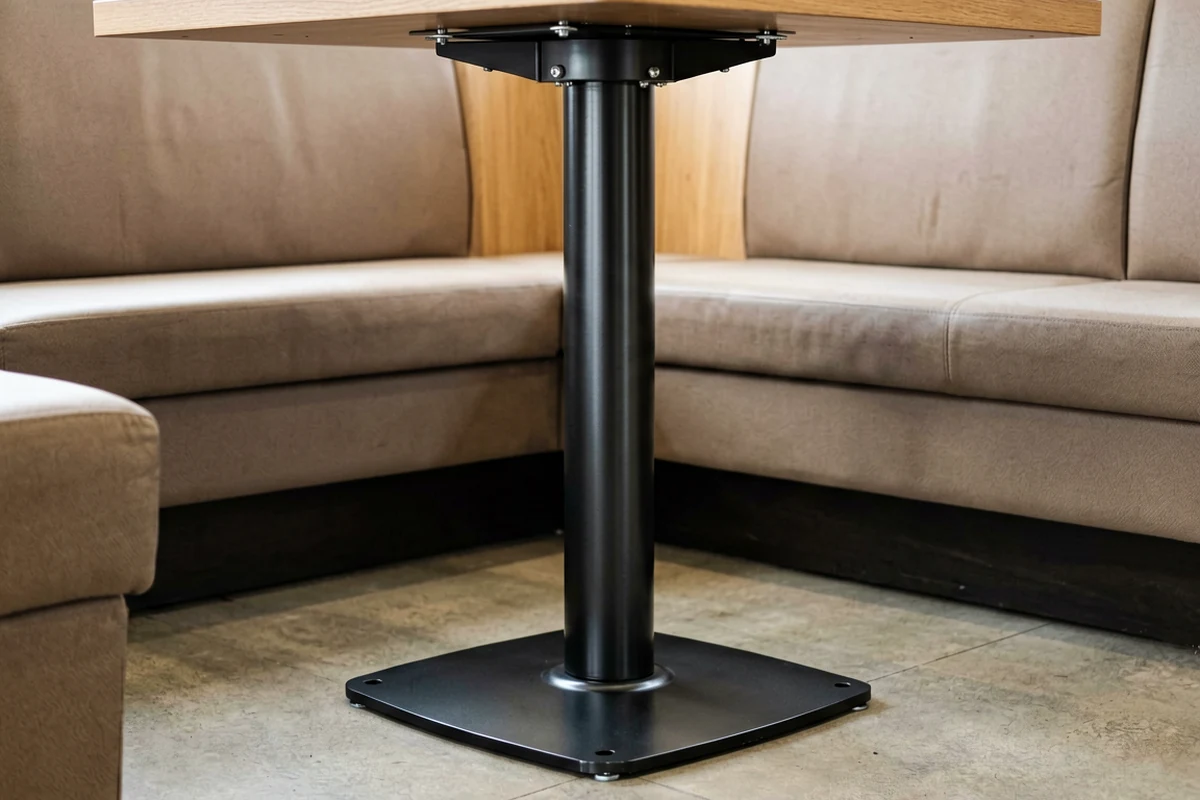
| Bolt-down base | Model detail, fixing plate, anchor assumption, substrate owner, installer owner, and site approval | No one owns substrate verification or floor penetration risk |
| Folding or movable base | Locking method, handling method, storage plan, and staff-use instruction | Stability depends on informal staff setup rather than a defined method |
Supplier documents show why model-specific review matters. BFM Seating's table-base range presents bases by style, finish, height, and recommended top compatibility. A JI Bases bolt-down table-base sheet is useful for seeing the kind of model detail a fixed base may require. Those documents support the principle of submittal review; they do not create universal dimensions for every restaurant.
Separate accessible dining review from ordinary comfort
In U.S. projects where ADA requirements apply, table-base selection must not break the accessible dining plan. The U.S. Access Board's ADA dining-surface provisions state that accessible dining surfaces require clear floor space, knee and toe clearance, and a surface height from 28 inches minimum to 34 inches maximum above the finished floor or ground. The Access Board's knee and toe clearance provisions define the clearance geometry that makes a forward approach usable.
That does not mean a buyer can approve every table by checking height only. A center column, large foot plate, cross base, booth base, wall panel, planter, or floor fixing plate can make the actual position unusable even when the top height looks correct. Mark the accessible dining positions on the plan, then review the top, base, seating, floor finish, and adjacent obstructions together with the project designer or accessibility adviser.
| Accessible-position check | Evidence | Buyer action |
|---|---|---|
| Dining-surface height | Table drawing and finished-floor condition | Confirm the project requirement before approving the base/top set |
| Knee and toe space | Base footprint, column position, foot plate, and top overhang | Reject or revise if the base blocks the intended approach |
| Clear floor space | Plan showing booth, chair, wall, route, and service items | Do not let decorative or service items consume the accessible position |
| Installed condition | Mock-up or site check where risk is high | Escalate conflicts before full production or installation |
For non-U.S. projects, treat this section as a reminder to identify the destination accessibility requirement, not as a global compliance answer.
Ask for performance evidence, not broad stability promises
"Commercial grade" and "stable base" are not release evidence. The buyer needs to know what was tested or proven, which model was involved, what top size and weight were assumed, and whether the offered item differs from the tested or sampled item.
BIFMA's public standards descriptions identify ANSI/BIFMA X5.5 as a desk and table products standard (BIFMA standards overview). That is relevant context when a supplier mentions table testing, but it is not automatic approval for a restaurant table base. Ask for the standard edition, report owner, tested model, tested configuration, top relationship, date, laboratory or internal method, and deviations from the offered product.
If the supplier does not have formal test evidence, the buyer can still control risk through a sample or mock-up, a written top/base compatibility statement, assembly instructions, leveling detail, spare parts, and a deviation log. A Flash Furniture table-base assembly document, for example, shows why assembly, levelers, and later rechecks belong in the evidence file. The point is not that every supplier uses that instruction; the point is that installation and re-tightening assumptions must be visible before the restaurant opens.
Review the sample in the real seating scenario
A table-base sample should be tested with the selected top, chair or booth, and expected floor condition. Do not review it on a warehouse floor and assume it will behave the same beside a banquette, on tile joints, outdoors, or in a tight service aisle.
Record:
rocking, wobble, and leveling range;
guest knee contact with column, foot, fixing plate, or cross base;
chair pull-out and booth entry;
cleaning reach around the base and under the top;
top overhang and fixing position;
finish match under restaurant lighting;
assembly time, hardware access, and spare-part identification;
packaging labels and replacement ordering code.
Classify every issue as approve, revise, reject, or escalate. A sample that looks acceptable but requires undocumented shims, unapproved anchors, or a different top is not approved. A base that works only after staff reposition the table every day is not a controlled restaurant solution.
Control supplier and installer responsibility
International sourcing adds another approval layer. The U.S. International Trade Administration advises companies to perform due diligence before business relationships, and its China commercial guide emphasizes careful partner vetting and business-goal alignment for China-related sourcing (China market-entry strategy). For table bases, that due diligence should become a practical evidence request, not a generic supplier checklist.
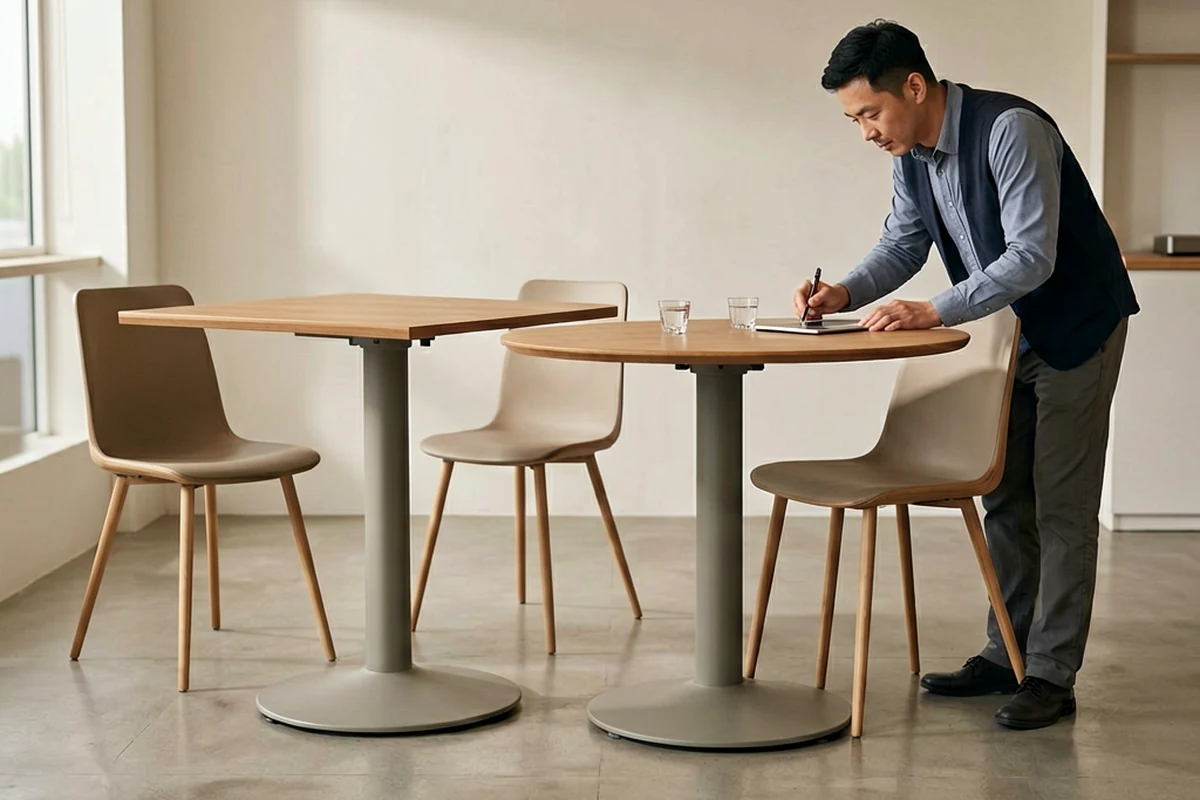
Ask the supplier to identify the exact model, compatible top assumptions, finish, hardware, assembly method, packing method, replacement parts, and change-control process. Ask the project team to identify who owns site measurements, floor condition, drilling approvals, substrate verification, installation, cleaning-method limits, and post-installation rechecks. Use RON GROUP's hotel and restaurant project support when the decision must connect furniture supply with project coordination, and use the restaurant furniture supplier-selection framework when the broader supplier relationship is still being evaluated.
Approve, revise, reject, or escalate
Approve the next gate when the top/base pairing, layout position, accessible dining impact, supplier evidence, sample result, floor interface, installation owner, packing label, and spare-part record are all clear.
Revise before release when the style is acceptable but the top size, leveling method, finish sample, mock-up result, assembly evidence, or floor-fixing responsibility is incomplete.
Reject the proposed base when it conflicts with knees, chair movement, booth entry, cleaning, accessible positions, or the selected top, or when the supplier cannot define what is being supplied.
Escalate to specialists for ADA or local accessibility uncertainty, unusual top weight, stone or oversized tops, outdoor exposure, floor penetrations, underfloor services, seismic or public-area fixing requirements, or any installation method outside the furniture supplier's competence.
For a project-ready comparison, send the table schedule for review with table top sizes and materials, base styles under consideration, seating plan, booth or chair types, destination country, floor finish, accessible dining notes, fixing assumptions, sample status, opening date, and any supplier documents already received. The strongest table-base decision is the one that lets the project team release the next step without hidden assumptions.
Get the week's latest industry information
-
Real-Life Professional Restaurant Case Studies
Explore Now
-
Create a unique restaurant with over 95,700+products
Explore Now
-
Protessional Free 3D Restaurant Design
Explore Now
-
Still Have Questions About Opening a Restaurant?
Explore Now

Sylvia
With 8 years in catering & hospitality industry, sales manager of Ron Group, specialise in providing one stop solutions to restaurants, hotels and weddings.
Discover Our Exclusive Products
Explore our extensive range of restaurant and hotel supplies designed to enhance your operations. Find the perfect solutions to meet your needs.
Browse Our ProductsFREE 3D DESIGN
Boost your restaurant's success with our free 3D design service. Start building the restaurant of your dreams today!
Explore 3D Design Case
RECOMMENDED CASES
-

La Rambla by Catalunya: Crafting Barcelona's Soul in Hong Kong - Custom Furniture Excellence
RON Group's custom Spanish-inspired furniture elevates La Rambla with artisanal aesthetics...
Learn More -

Cardinal Point: Elevating Outdoor Seating with Tailored Cushion Upgrades
Discover how Cardinal Point transformed its outdoor dining experience with custom cushions, achievin
Learn More
RECOMMENDED BLOGS
-
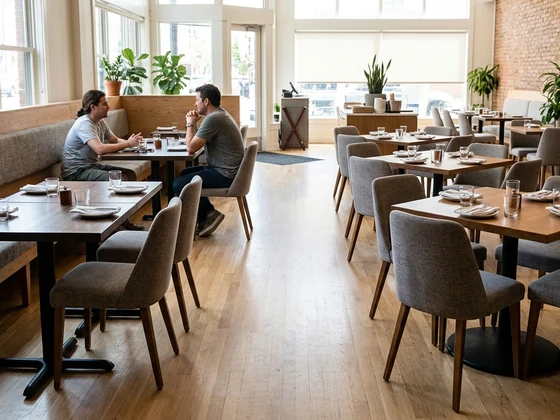
Restaurant Table Spacing and Aisle Clearance: Supplier Drawing Checklist
Check restaurant table spacing, aisle clearance, chair pullout, service path, and supplier drawing proof before approving a...
Sylvia2026-07-20 -

5 Mistakes to Avoid When Buying Restaurant Furniture from China
Don't fall for costly oversights! Learn the 5 mistakes to avoid when buying restaurant furniture from China and ensure a...
 Ron2025-01-079 min read
 -

RON GROUP Launches VR Experience to Explore Our Dynamic Showroom
Discover RON GROUP's VR showroom! Explore dining furniture, tableware, and customized services virtually or visit us in person to...
Sylvia2024-12-163 min read
Subscribe to RON GROUP
Stay up-to-date with the latest industry insights and expert advice. Together, we'll create your ideal restaurant.