


Content
Calculate each glass type separately. Add the maximum quantity in active use, the glasses unavailable during collection and washing, the clean stock staged at service points, and a documented operating reserve. The result is a working par level based on the restaurant's menu and service cycle, not a universal glasses-per-seat multiplier.
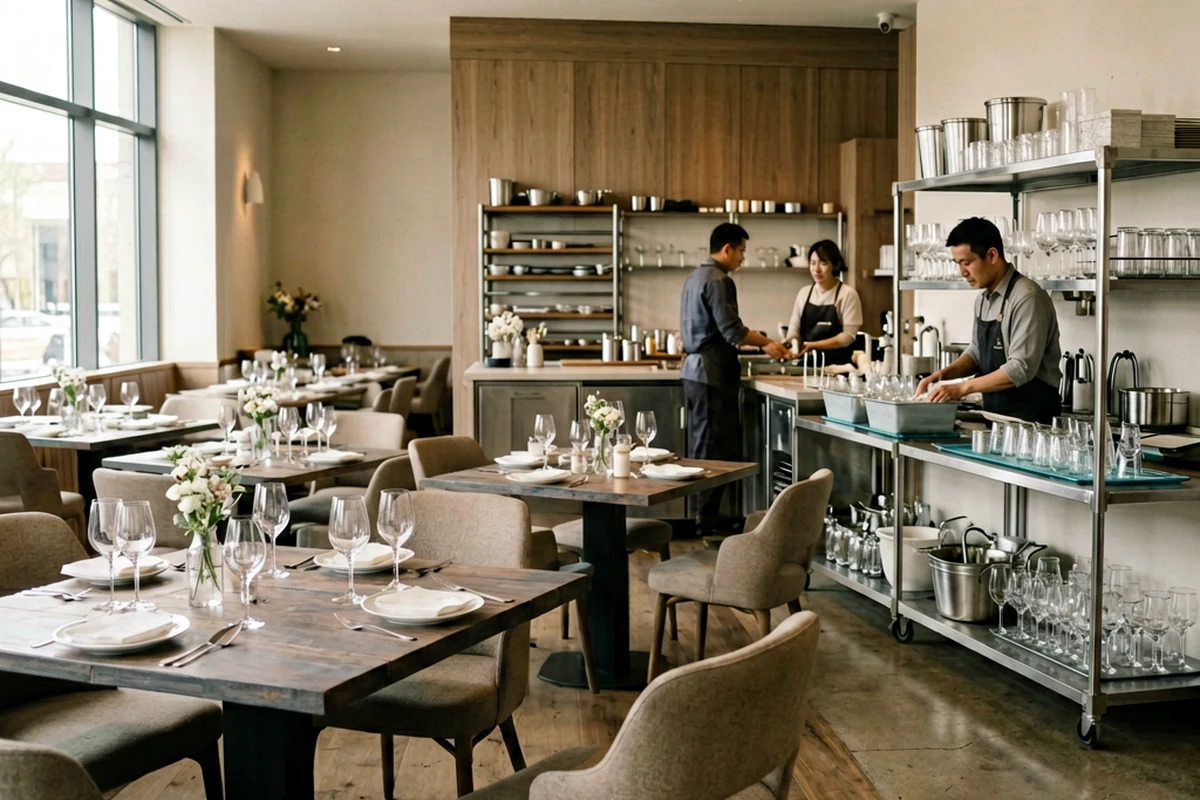
How to Calculate the Par Level
Use one row for every approved glass:
Required working stock = peak glasses in active use + glasses unavailable during the return-and-wash loop + staged clean stock + operating reserve
| Formula input | What it measures |
|---|---|
| Peak active use | Glasses simultaneously held by guests, bartenders, or preset on tables |
| Return-and-wash loop | Glasses unavailable while waiting, washing, drying, inspection, and return |
| Staged clean stock | Ready glasses held at bars, service stations, pantries, or event points |
| Operating reserve | Documented allowance for breakage, rejected pieces, downtime, and replenishment delay |
Build the calculation by glass type. Combining every item into one total can hide the real shortage. A restaurant may have enough glasses overall and still run out of the wine glass, beer glass, coupe, or water tumbler required during its busiest service period.
Use the bar glassware types guide to decide which forms belong on the beverage menu. Then calculate the quantity for each approved form.
Illustrative Example: Wine Glasses for One Service Period
The numbers below demonstrate the method only. They are not an industry benchmark.
| Input | Illustrative quantity |
|---|---|
| Peak glasses in active use | 72 |
| Glasses in the return-and-wash loop | 24 |
| Clean glasses staged at service points | 18 |
| Documented operating reserve | 12 |
| Required working stock | 126 |
72 + 24 + 18 + 12 = 126 wine glasses
If the approved item is packed in cases of 12, the purchasing quantity would round up to 132. The six-glass difference comes from case-pack rounding, not from an additional par multiplier.
Repeat the calculation for every glass used by the menu. Do not copy the wine-glass result to water, beer, cocktail, or specialty glassware because their peak demand and service cycle may differ.
Measure Peak Active Use
Peak active use is the highest number of one glass type that may be unavailable because it is with a guest or bartender. It is not the restaurant's total daily covers.
Map each beverage to its approved glass and estimate demand during the busiest overlapping service period. Include:
Glasses preset before guests order
Drinks served before food
Additional beverage rounds
Wine glasses that remain on the table
Bar, dining room, terrace, lounge, banquet, and private-dining demand that overlaps
A seat count can help define capacity, but it cannot replace the beverage mix. Two restaurants with the same number of seats may need different glassware quantities because one sells mostly bottled beverages while the other runs a cocktail-led bar and table wine service.
Measure the Return-and-Wash Loop
Time the complete loop from guest release to clean-glass return:
Used glasses remain at the table or service counter.
Staff collect and sort them.
Racks wait for a safe load.
The machine washes and sanitizes the load.
Staff unload and inspect the glasses.
Clean glasses return to storage or a service point.
The machine cycle is only one part of this period. Delayed clearing, incomplete racks, inspection, drying where required, and restocking can keep a glass unavailable longer than the wash cycle itself.
The FDA Food Code 2022 is a model for retail and food-service safety, and Chapter 4 addresses equipment, utensils, and linens. The Supplement to the 2022 Food Code updates provisions within that framework. Confirm the edition and amendments adopted by the relevant state or local authority before treating a model provision as locally binding.
The NSF food equipment standards describe NSF/ANSI 3 as covering the materials, design, construction, and performance of commercial dishwashing and glasswashing machines and related components. Confirm the certification and equipment requirements specified for the project and jurisdiction.
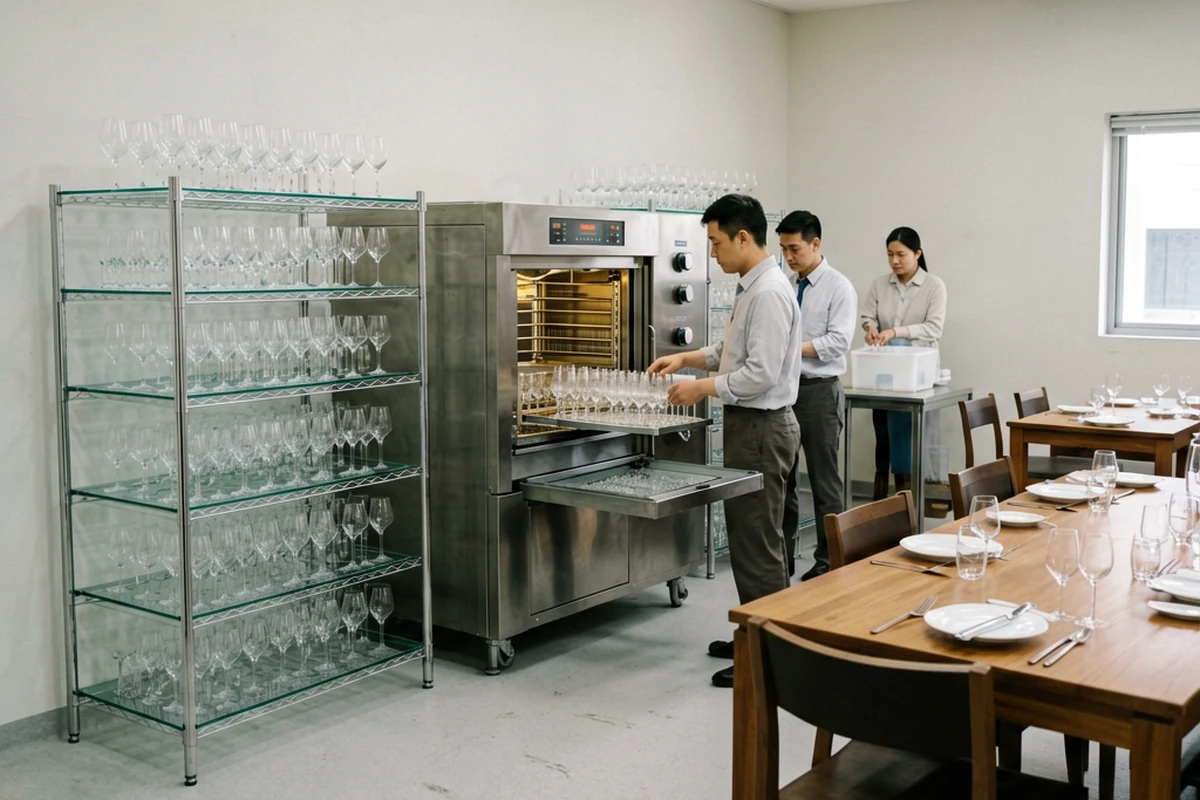
To estimate the loop quantity, record how many glasses of each type enter the dirty side during the measured loop. If demand changes sharply by hour, model the busiest interval rather than averaging the whole shift.
Add Staged Clean Stock and Reserve
Staged clean stock is ready for immediate use but distributed across service points. Record the minimum quantity required at each location:
Dining room stations
Bar wells and back bars
Banquet pantries
Private dining rooms
Pool, terrace, or lounge stations
Backup storage close enough to support peak service
Stock in a remote storeroom should not be counted as immediately available if staff cannot retrieve it during service.
The operating reserve protects the approved service plan from specific risks. Set it by glass type and record the reason:
Breakage or rejection history
Chipping, scratching, clouding, or residue
Supplier lead time
Case pack and minimum order quantity
Seasonal or event demand
Menu changes
Rack or machine downtime
Delayed clearing during peak service
Reserve stock is not the same as ordinary working stock. If the team routinely consumes the reserve during normal service, the active-use or wash-loop assumptions need to be reviewed.
Build the Glassware Schedule
Use one controlled schedule for operations, procurement, and replenishment.
| Schedule field | What to record |
|---|---|
| Glass type | Approved glass name or item reference |
| Primary use | Drinks assigned to the glass |
| Service location | Where clean stock must be available |
| Peak active quantity | Maximum simultaneous use |
| Return-and-wash quantity | Stock unavailable during the complete loop |
| Staged quantity | Clean stock held at service points |
| Reserve quantity | Approved allowance and its reason |
| Required working stock | Sum of the four calculation inputs |
| Case pack | Supplier packaging quantity |
| Purchase quantity | Working stock rounded to the valid order quantity |
| Rack type and capacity | Handling and washing compatibility |
| Storage location | Confirmed clean-storage capacity |
| Supplier and item reference | Replenishment control |
| Reorder trigger and lead time | Point at which replacement must begin |

When comparing commercial restaurant glassware, check more than appearance. Confirm menu fit, rack compatibility, storage density, handling, inspection, packaging, lead time, and replacement consistency.
Check Washing and Storage Capacity
Glassware quantity and washing capacity form one operating system. More glasses may hide a slow wash loop, while a faster machine will not fix poor collection, rack management, landing space, inspection, or restocking.
Review:
Racks required during the peak period
Safe capacity for each glass shape
Machine cycle plus loading and unloading time
Dirty-rack staging space
Clean-rack landing and inspection space
Staff available to sort, load, unload, inspect, and restock
Water, drainage, electrical, ventilation, and chemical requirements
Backup procedure for machine or rack downtime
The ENERGY STAR commercial dishwasher guidance covers equipment used by establishments that wash reusable dishes, glassware, and utensils. Verify that a dedicated glasswasher or shortlisted model falls within the current certified product scope before making an efficiency claim.
If the calculated stock does not fit the available storage, do not simply reduce the order. Recheck the beverage range, wash-loop duration, rack capacity, service-station quantities, and replenishment frequency.
Separate Opening Stock from Replenishment Stock
Opening stock must support training and launch conditions as well as normal service. It may include:
Required working stock by glass type
Stock staged at every service point
Initial operating reserve
Training and mock-service requirements
Opening events
Inventory needed before the regular replenishment route is active
The replenishment plan controls what happens after opening. Define the inspection and breakage record, approved replacement item, reorder trigger, case pack, minimum order quantity, supplier lead time, emergency substitute process, and person responsible for review.
Do not replace a discontinued glass with a visually similar item until the team checks its rim, bowl, stem, base, capacity, rack fit, table presentation, and handling.
Compare Total Operating Cost
Purchase price is one part of the decision. Use the same questions for every shortlisted item.
| Criterion | Buyer question |
|---|---|
| Menu coverage | Does the glass support the approved beverage without adding unnecessary variants? |
| Handling | Is it stable and practical for the service method? |
| Rack compatibility | Does it fit without unsafe contact? |
| Storage density | Can the working stock be stored at the required locations? |
| Inspection | Can staff identify chips, cracks, clouding, and residue? |
| Replacement | Can the same item or an approved equivalent be replenished? |
| Packaging | Does the case pack suit reorder quantities and storage limits? |
| Consistency | Can samples, dimensions, finish, and repeat orders be controlled? |
Standardizing selected glass types can simplify storage, racks, training, and replenishment. Too much standardization can weaken beverage presentation or create a poor operational fit. Approve the smallest range that still supports the menu and service concept.
Common Planning Mistakes
Applying one multiplier to every restaurant or glass type.
Using daily covers instead of peak simultaneous demand.
Timing the machine but not collection, waiting, inspection, and return.
Selecting glassware before checking rack and storage compatibility.
Ordering equal quantities of slow- and fast-moving glass types.
Treating reserve stock as routine working stock.
Ignoring demand from events or secondary service areas.
Failing to approve a replacement item and reorder trigger.
Comparing prices without aligning case packs, lead time, and sample control.
Treating a model code or certification as identical in every jurisdiction.
Procurement Approval Checklist
Before issuing the purchase order, confirm:
The beverage menu and glass assignments are approved.
Peak active use is estimated by glass type and location.
The complete return-and-wash loop has been timed or modeled.
Staged stock is assigned to each service point.
Every reserve quantity has a documented reason.
Rack type, rack quantity, and machine compatibility are confirmed.
Clean and dirty staging areas are shown on the plan.
Storage capacity matches the proposed quantity.
Opening stock and replenishment stock are separated.
Samples have been reviewed for handling and presentation.
Case packs, minimum orders, lead times, and replacement terms are documented.
Local sanitation and equipment requirements have been checked.
Delivery, inspection, and damage-reporting responsibilities are assigned.

Frequently Asked Questions
Is There a Standard Number of Glasses per Restaurant Seat?
No single multiplier fits every concept. Seat count does not capture the beverage mix, preset policy, service overlap, wash-loop duration, staged stock, or replacement risk. Calculate each glass type from the actual operation.
Should Reserve Stock Be Included in Working Par?
Yes, but show it as a separate input. This keeps the reserve reason visible and prevents the team from treating emergency or replacement stock as ordinary service stock.
How Often Should Glassware Par Levels Be Reviewed?
Review them after opening observations, menu changes, service changes, major events, equipment changes, repeated shortages, or a change in supplier lead time. A stable operation should also include the schedule in its regular inventory review.
Should Every Glass Type Use the Same Reserve?
No. Reserve requirements depend on the glass type's breakage history, usage rate, replacement lead time, case pack, and role in the menu.
Turn the Par Level into a Sourcing Plan
A useful glassware schedule connects every quantity to the menu, service period, wash loop, service location, reserve reason, storage plan, and replenishment route. Buyers can then compare quotations without losing the operational assumptions behind the order.
RON GROUP can review the beverage program, target quantities, service locations, samples, packaging, and delivery requirements. Request a glassware sourcing plan for a restaurant, hotel, bar, or banquet project.
Sources and Further Reading
FDA Food Code 2022 from the U.S. Food and Drug Administration supports the description of the Food Code as a model framework and the Chapter 4 equipment and utensil context.
Supplement to the 2022 Food Code from the U.S. Food and Drug Administration supports the requirement to review the base edition with its later supplement.
NSF food equipment standards supports the scope statement for commercial dishwashing and glasswashing equipment standards.
ENERGY STAR commercial dishwasher guidance supports the description of commercial dishwasher product scope and the need to verify eligible equipment.
Get the week's latest industry information
-
Real-Life Professional Restaurant Case Studies
Explore Now
-
Create a unique restaurant with over 95,700+products
Explore Now
-
Protessional Free 3D Restaurant Design
Explore Now
-
Still Have Questions About Opening a Restaurant?
Explore Now

Sylvia
With 8 years in catering & hospitality industry, sales manager of Ron Group, specialise in providing one stop solutions to restaurants, hotels and weddings.
Discover Our Exclusive Products
Explore our extensive range of restaurant and hotel supplies designed to enhance your operations. Find the perfect solutions to meet your needs.
Browse Our ProductsFREE 3D DESIGN
Boost your restaurant's success with our free 3D design service. Start building the restaurant of your dreams today!
Explore 3D Design Case
RECOMMENDED CASES
-

La Rambla by Catalunya: Crafting Barcelona's Soul in Hong Kong - Custom Furniture Excellence
RON Group's custom Spanish-inspired furniture elevates La Rambla with artisanal aesthetics...
Learn More -

Cardinal Point: Elevating Outdoor Seating with Tailored Cushion Upgrades
Discover how Cardinal Point transformed its outdoor dining experience with custom cushions, achievin
Learn More
RECOMMENDED BLOGS
-

Restaurant Table Spacing and Aisle Clearance: Supplier Drawing Checklist
Check restaurant table spacing, aisle clearance, chair pullout, service path, and supplier drawing proof before approving a...
Sylvia2026-07-20 -

5 Mistakes to Avoid When Buying Restaurant Furniture from China
Don't fall for costly oversights! Learn the 5 mistakes to avoid when buying restaurant furniture from China and ensure a...
 Ron2025-01-079 min read
 -

RON GROUP Launches VR Experience to Explore Our Dynamic Showroom
Discover RON GROUP's VR showroom! Explore dining furniture, tableware, and customized services virtually or visit us in person to...
Sylvia2024-12-163 min read
Subscribe to RON GROUP
Stay up-to-date with the latest industry insights and expert advice. Together, we'll create your ideal restaurant.