


Content
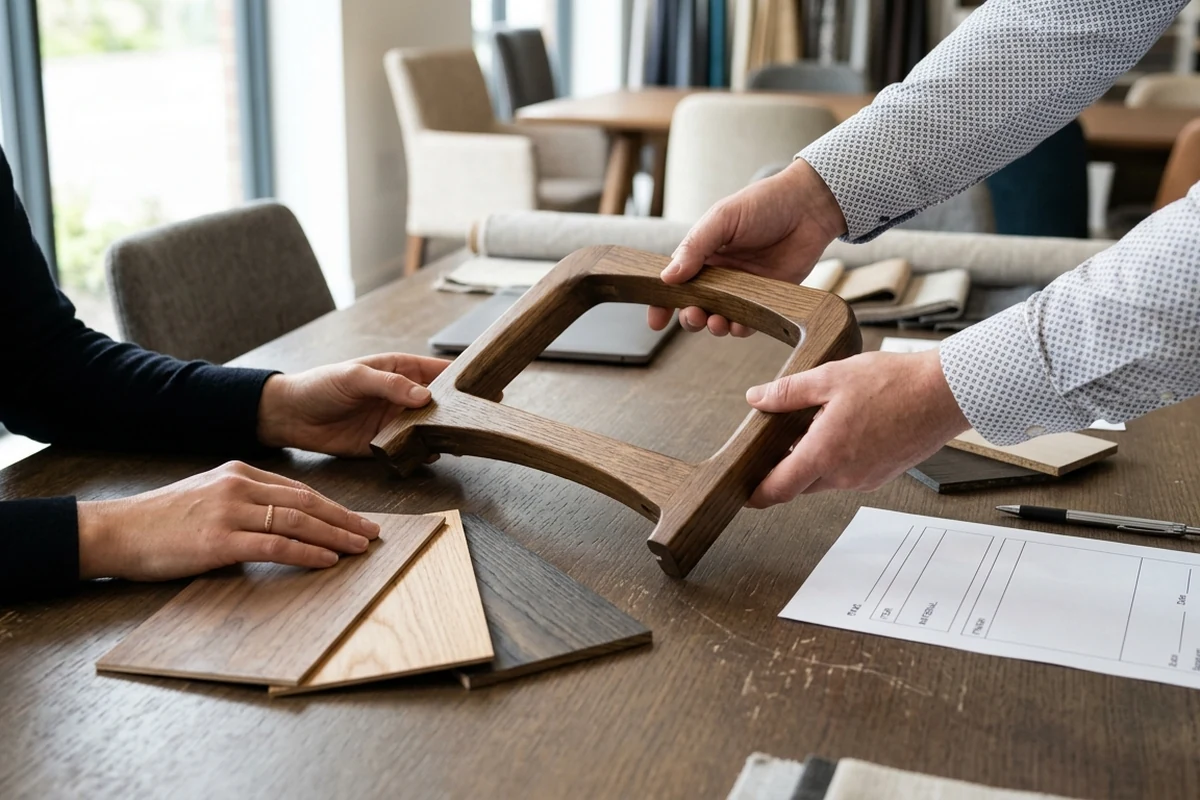
To evaluate a luxury hotel furniture manufacturer for an upscale project RFQ, procurement teams can request evidence of the supplier's readiness to document and control a project package before issuing a formal request for quotation. The review covers proposed workflows for shop drawings, finish schedules, sample revisions, mock-up approvals, and packing records. Rather than relying on marketing portfolios, buyers can compare project-specific documentation, approval responsibilities, assumptions, exclusions, and receiving controls.
Defining the Evaluation Question
The primary evaluation question is whether the supplier can show a controlled flow of information from design intent to released project documents. The buyer, designer, procurement team, manufacturer, and site team each need visible responsibilities. Custom pieces need traceable references so conceptual requirements can become reviewable drawings, schedules, samples, and approval records.
When conducting hotel furniture supplier evaluation, the focus remains on requesting objective evidence. Procurement teams may ask if the manufacturer can provide redacted shop drawings from past projects. They may request documentation of the process used for managing Requests for Information (RFIs). They may also ask how the factory records the approval status of a physical finish sample. By defining the evaluation question around documentation and control, procurement managers establish a baseline for comparing suppliers based on their project management infrastructure rather than subjective aesthetic interpretations.
Building a Project Brief
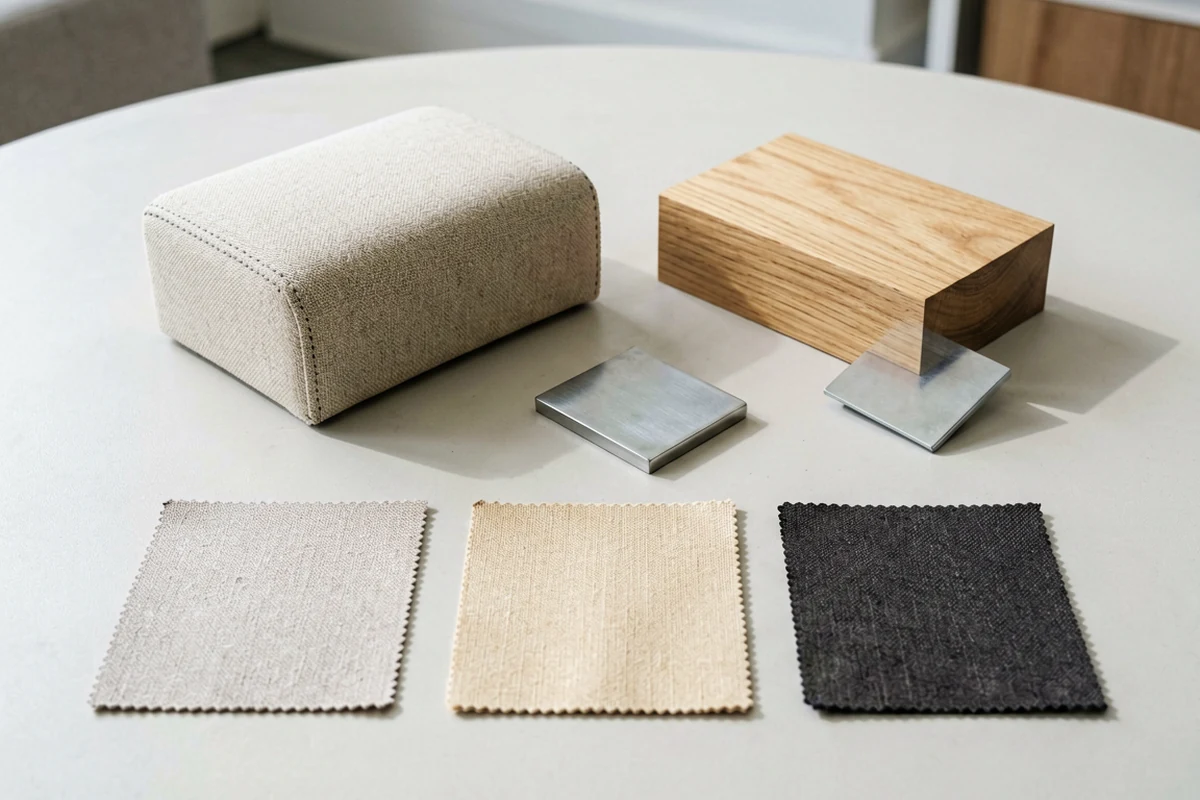
Before a manufacturer can be evaluated effectively, the procurement team builds a comprehensive project brief. This brief serves as the foundation of the RFQ and tests whether the manufacturer can interpret and respond to detailed scope requirements. A standard brief for an upscale project typically includes itemized specifications, preliminary location matrices, and clear delineations of assumptions and exclusions.
For example, the brief may explicitly state which party is responsible for Customer's Own Material (COM) or Customer's Own Leather (COL) logistics. It may ask the manufacturer to define their process for site dimension verification or request evidence of how they document architectural plan tolerances.
When identifying top hospitality furniture manufacturers for a shortlist, the project brief acts as an initial evaluation tool. Procurement teams may evaluate how manufacturers respond to the brief—specifically, whether they issue RFIs regarding missing dimensions, material specifications, or joinery details before submitting pricing. The brief establishes the parameters against which the manufacturer's documentation capabilities will be tested during the RFQ phase.
Zoning the Furniture Package
Upscale hotel projects require zoning the furniture package to manage different levels of complexity, documentation, and production methodology. Procurement managers may divide the project into distinct zones—such as Lobby and Public Spaces, Guestrooms, Suites, Food & Beverage (F&B), and Outdoor areas—and evaluate the manufacturer's ability to handle the specific documentation requirements of each distinct area.
Procuring hotel furniture for public spaces often involves customized, oversized, or complex statement pieces that require extensive structural engineering and shop drawing iterations. In contrast, guestroom zones require a focus on modularity, repetitive manufacturing consistency, and precise packaging to align with phased installation schedules.
By zoning the package, the procurement team can ask targeted evaluation questions. For the guestroom zone, the evaluation may focus on requesting mock-up room revision records and batch consistency controls. For the lobby zone, the evaluation may shift to requesting evidence of the manufacturer's ability to document complex joinery, integrate third-party materials such as lighting or stone, and provide examples of custom crating protocols for oversized items.
Controlling Drawings, Schedules, Finishes, and Samples
The core of the evaluation rests on requesting evidence of how the manufacturer controls project documentation. Upscale furniture procurement relies on a continuous loop of submissions, redlines, revisions, and approvals. Procurement teams evaluate whether a manufacturer can demonstrate a controlled workflow for this process to mitigate the risk of deviation from the design intent.
Shop drawings may be evaluated for their level of detail by requesting redacted past examples. Procurement teams look for comprehensive dimensions, material callouts, hardware specifications, veneer matching directions, and cross-sectional views of complex joinery. Finish schedules may be evaluated by requesting evidence of how they are tied directly to physical control samples. The buyer may request documentation of the system used for submitting custom finish samples or step-panels, and how the formal approval of these physical assets is recorded before production begins.
To evaluate a manufacturer's readiness to receive the RFQ, procurement teams may use a structured readiness table to verify that the supplier understands the required documentation outputs.
RFQ Package Readiness Table
| Document Type | Relevance to Upscale Projects | Primary Stakeholders | Evidence Request Example |
|---|---|---|---|
| Shop Drawings | Details dimensions, joinery, material callouts, hardware specs, and cross-sections. | Manufacturer / Designer | Request redacted examples showing revision tracking and approval stamps. |
| Finish Schedule | Master list of wood, metal, glass, and stone finishes tied to specific item numbers. | Manufacturer / Designer | Request examples of schedules matched to physical sample tracking logs. |
| Control Samples | Physical wood blocks, metal swatches, or step-panels representing the production finish. | Manufacturer / Owner Rep | Request documentation of physical sample retention and sign-off policies. |
| Bill of Materials (BOM) | List of raw materials, hardware, and sub-components required for each item. | Manufacturer / Procurement | Request redacted BOM examples used for internal material purchasing controls. |
| Upholstery Matrix | Directional diagrams for fabric application, seam placements, and pattern matching. | Designer / Manufacturer | Request shop drawing examples that incorporate fabric directional indicators. |
When sourcing hotel furniture manufacturers in China or other global hubs, requesting redacted examples of these documents from past projects provides concrete evidence for evaluating their administrative capabilities.
Assigning Responsibilities

Evaluating a supplier involves requesting evidence of their willingness and ability to adhere to a strict responsibility matrix. Ambiguity in approval workflows may lead to unauthorized substitutions, production delays, and receiving disputes. The manufacturer's workflows must integrate with the broader project team.
Procurement teams may ask the manufacturer to demonstrate how they intake information, who within their organization is responsible for issuing RFIs, and how they record approvals from the procurement manager, interior designer, and owner's representative.
Responsibility Matrix (RACI Framework)
| Project Task | Manufacturer Role | Procurement Role | Designer Role | Owner Role |
|---|---|---|---|---|
| Issue Initial Design Intent & Specs | Receiver | Accountable | Responsible | Consulted |
| Generate & Submit Shop Drawings | Responsible | Accountable | Consulted | Informed |
| Review & Redline Shop Drawings | Informed | Accountable | Responsible | Consulted |
| Submit Physical Finish Samples | Responsible | Accountable | Consulted | Informed |
| Approve Final Finish Samples | Informed | Accountable | Responsible | Responsible |
| Produce & Present Mock-up Room | Responsible | Accountable | Consulted | Responsible |
| Document Mock-up Revisions | Responsible | Accountable | Responsible | Consulted |
| Provide Packing & Loading Evidence | Responsible | Accountable | Informed | Informed |
Note: This table represents an example framework procurement teams may use to evaluate how a manufacturer assigns internal roles (Responsible, Accountable, Consulted, Informed) during the RFQ process.
Using Mock-up and Revision Evidence
For upscale projects, the model room or mock-up phase is a critical evaluation point. The evaluation of a manufacturer may heavily weigh their documented process for managing mock-up reviews. The physical mock-up often requires revisions—whether adjusting the pitch of a lounge chair, modifying the sheen of a nightstand finish, or altering the density of seat foam.
Procurement teams may request evidence of how the manufacturer documents these requested changes, updates the shop drawings, and establishes the revised baseline for mass production. Asking for evidence of past mock-up revision logs helps verify this workflow.
Concrete Risk Scenarios and Controls
To evaluate the manufacturer's risk mitigation strategies, procurement teams may request evidence of how their documentation controls the following scenarios:
Risk Scenario: Veneer pattern mismatch between the approved mock-up and final mass production.
Evidence Request for Control: Request evidence of the manufacturer's workflow requiring a physical master control sample of the veneer lay-up to be retained by the factory quality control team, along with photographic documentation policies.
Risk Scenario: Unauthorized substitution of drawer glides or hinges due to supply chain shortages.
Evidence Request for Control: Request documentation of a formal RFI and Change Order workflow that requires written sign-off from the procurement manager before any deviation from the approved hardware schedule is permitted.
Risk Scenario: Upholstery fabric applied with the incorrect pattern direction or improper seam placement.
Evidence Request for Control: Request examples of shop drawings that mandate the inclusion of specific fabric roll direction indicators and seam placement diagrams for interior designer review.
Risk Scenario: Oversized lobby banquettes fail to fit through the property's service elevators or staging doors.
Evidence Request for Control: Request documentation showing how the manufacturer's shop drawings explicitly detail the modular breakdown of large pieces, including assembly joints and overall carton dimensions.
Risk Scenario: Moisture damage or physical abrasion occurring during international ocean transit.
Evidence Request for Control: Request evidence of packing protocols, including documentation of desiccant inclusion, edge protection, and sealed crate photographs logged against the packing list prior to container loading.
Requesting Packing and Receiving Evidence

The evaluation of a manufacturer's packing and receiving protocols is just as critical as evaluating their joinery. Upscale furniture requires specific crating, labeling, and loading documentation to facilitate efficient receiving and installation at the project site or staging warehouse.
Procurement teams may evaluate the manufacturer's carton labeling system by requesting examples. They may ask if the label includes the project name, item number, zone/room location, and a reference photograph of the contents. They may also request evidence of how the manufacturer documents the loading of the shipping container.
Supplier Evidence Questions
Before issuing the RFQ, procurement teams may require the manufacturer to provide documented answers to the following ten evidence-based questions:
How do you document, version-control, and track revisions to shop drawings across review cycles?
What is your documented process for submitting physical finish samples and recording their approval status?
How do you record and distribute the approval status and required revisions following a mock-up room review?
Can you provide a redacted Bill of Materials (BOM) or specification sheet from a past project to demonstrate your internal documentation?
What specific documentation and specifications do you request from the procurement team before initiating the first draft of a shop drawing?
How do you manage, document, and track Requests for Information (RFIs) regarding missing dimensions or material exclusions?
What specific photographic evidence is captured and cataloged during the packing and crating process?
How do you format and apply labels to individual cartons to correspond with a project's phased installation schedule?
Can you supply a redacted sample of a receiving report, packing list, or commercial invoice used for international freight coordination?
How do you document the resolution of a non-conformance issue identified either during factory production or upon site delivery?
Releasing a Comparable RFQ
When evaluating if a manufacturer can provide evidence of document control, revision workflows, and packing protocols, the procurement team can release the formal RFQ. The goal of the RFQ is to generate comparable data across the shortlisted suppliers.
A comparable RFQ for an upscale project asks suppliers to quote based on the exact same set of assumptions, exclusions, and documentation requirements. The RFQ may explicitly state the required packing standards, the expected shop drawing revision workflows, and the mock-up production requirements to ensure all responses are evaluated on an equal baseline.
Comparable Supplier Response Table
Procurement teams may use this table structure to evaluate the returned RFQs objectively, focusing on documented inclusions and workflows rather than bottom-line pricing alone.
| Evaluation Criteria | Evidence Request Example | Validation Method | RFQ Integration |
|---|---|---|---|
| Shop Drawing Workflows | Documentation of revision cycle tracking and approval recording. | Review RFQ response for clarity on revision workflows. | Include specific drawing requirements in the RFQ brief. |
| Mock-up Room Processes | Documentation of mock-up production, review, and revision logging. | Review commercial terms for mock-up handling and credit policies. | Detail mock-up expectations in the RFQ scope of work. |
| COM/COL Management | Documented receiving, inspection, and storage process for COM. | Review scope of work response for material handling protocols. | Request COM intake procedures within the RFQ questionnaire. |
| Packing Specifications | Examples of crating, carton labeling, and container loading methodologies. | Review the packing methodology section of the submitted quote. | Specify required packing evidence in the RFQ logistics section. |
| Project Management Structure | Organizational chart and communication workflow for the project team. | Review submitted project management structure and RFI processes. | Ask for a dedicated communication plan in the RFQ. |
| Manufacturing Tolerances | Examples of manufacturing tolerance documentation for casegoods and upholstery. | Review technical specifications response for documented tolerances. | Request tolerance guidelines in the RFQ technical package. |
By structuring the RFQ to demand specific responses to these criteria, procurement managers can evaluate which manufacturer has absorbed the project brief and provided evidence of the necessary administrative controls.
Next Steps
Evaluating a luxury hotel furniture manufacturer requires focusing on document control, revision workflows, and packing evidence. By defining the evaluation criteria around shop drawings, finish schedules, mock-up logs, and responsibility matrices, procurement teams can evaluate the workflows necessary for upscale custom manufacturing. Before releasing your next comparable RFQ, request concrete evidence from your shortlisted suppliers to assess their ability to manage complex project data. To discuss your specific documentation requirements and evaluate our workflow controls, contact our project team to schedule a restrained project-package review.
Sources and Further Reading
Get the week's latest industry information
-
Real-Life Professional Restaurant Case Studies
Explore Now
-
Create a unique restaurant with over 95,700+products
Explore Now
-
Protessional Free 3D Restaurant Design
Explore Now
-
Still Have Questions About Opening a Restaurant?
Explore Now

Sylvia
With 8 years in catering & hospitality industry, sales manager of Ron Group, specialise in providing one stop solutions to restaurants, hotels and weddings.
Discover Our Exclusive Products
Explore our extensive range of restaurant and hotel supplies designed to enhance your operations. Find the perfect solutions to meet your needs.
Browse Our ProductsFREE 3D DESIGN
Boost your restaurant's success with our free 3D design service. Start building the restaurant of your dreams today!
Explore 3D Design Case
RECOMMENDED CASES
-

La Rambla by Catalunya: Crafting Barcelona's Soul in Hong Kong - Custom Furniture Excellence
RON Group's custom Spanish-inspired furniture elevates La Rambla with artisanal aesthetics...
Learn More -

Cardinal Point: Elevating Outdoor Seating with Tailored Cushion Upgrades
Discover how Cardinal Point transformed its outdoor dining experience with custom cushions, achievin
Learn More
RECOMMENDED BLOGS
-

Restaurant Table Spacing and Aisle Clearance: Supplier Drawing Checklist
Check restaurant table spacing, aisle clearance, chair pullout, service path, and supplier drawing proof before approving a...
Sylvia2026-07-20 -

5 Mistakes to Avoid When Buying Restaurant Furniture from China
Don't fall for costly oversights! Learn the 5 mistakes to avoid when buying restaurant furniture from China and ensure a...
 Ron2025-01-079 min read
 -

RON GROUP Launches VR Experience to Explore Our Dynamic Showroom
Discover RON GROUP's VR showroom! Explore dining furniture, tableware, and customized services virtually or visit us in person to...
Sylvia2024-12-163 min read
Subscribe to RON GROUP
Stay up-to-date with the latest industry insights and expert advice. Together, we'll create your ideal restaurant.