
Content
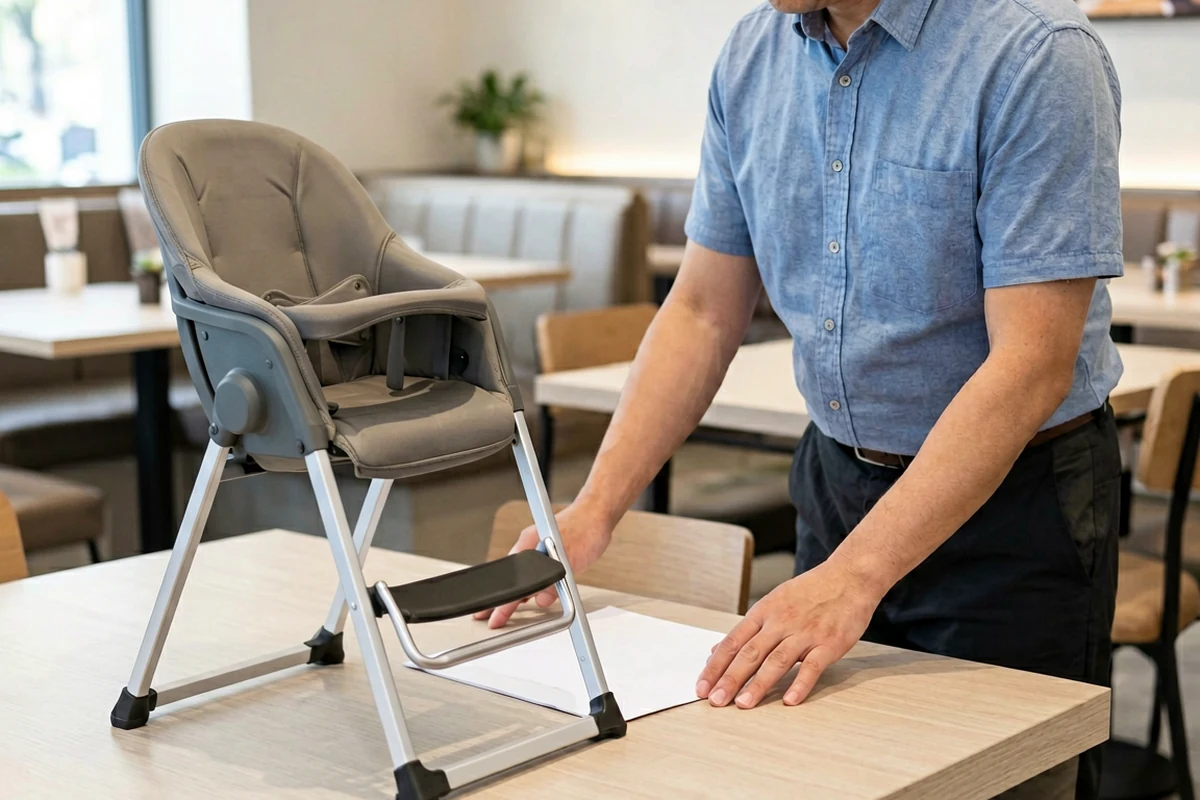
A hospitality high chairs supplier should be evaluated as a safety-sensitive furniture partner, not only as a seating vendor. Restaurants, hotels, resorts, cafes, food courts, and family venues need high chairs that fit the dining layout, support cleaning routines, arrive with traceable documentation, and can be reordered or serviced when units are damaged.
The strongest buying process starts with a written high-chair specification and a controlled supplier file. That lets the purchasing team compare the same product requirements, safety documents, samples, packing details, and delivery responsibilities across each shortlisted supplier.
Define the Use Case Before Asking for Quotes
Start by separating where and how the high chairs will be used. A hotel breakfast area, quick-service restaurant, resort buffet, event venue, and fine-dining restaurant may all need different storage, cleaning, finish, color, and service requirements.
Record the basic project scope:
Venue type and service style
Indoor, outdoor, or mixed-use condition
Expected locations for guest seating and high-chair storage
Table and aisle conditions where high chairs will be placed
Required material, finish, color, and branding direction
Cleaning method and exposure to food, water, and sanitizing routines
Quantity by opening phase and replenishment plan
Destination market and required compliance documentation
Packaging, labeling, and receiving requirements
RON GROUP lists commercial high chairs and related restaurant seating in its commercial high chairs and restaurant seating category. Use that page as an internal product-scope reference, then confirm every project-specific dimension, material, finish, and compliance requirement before purchase.
Treat Safety Documentation as a Shortlist Requirement
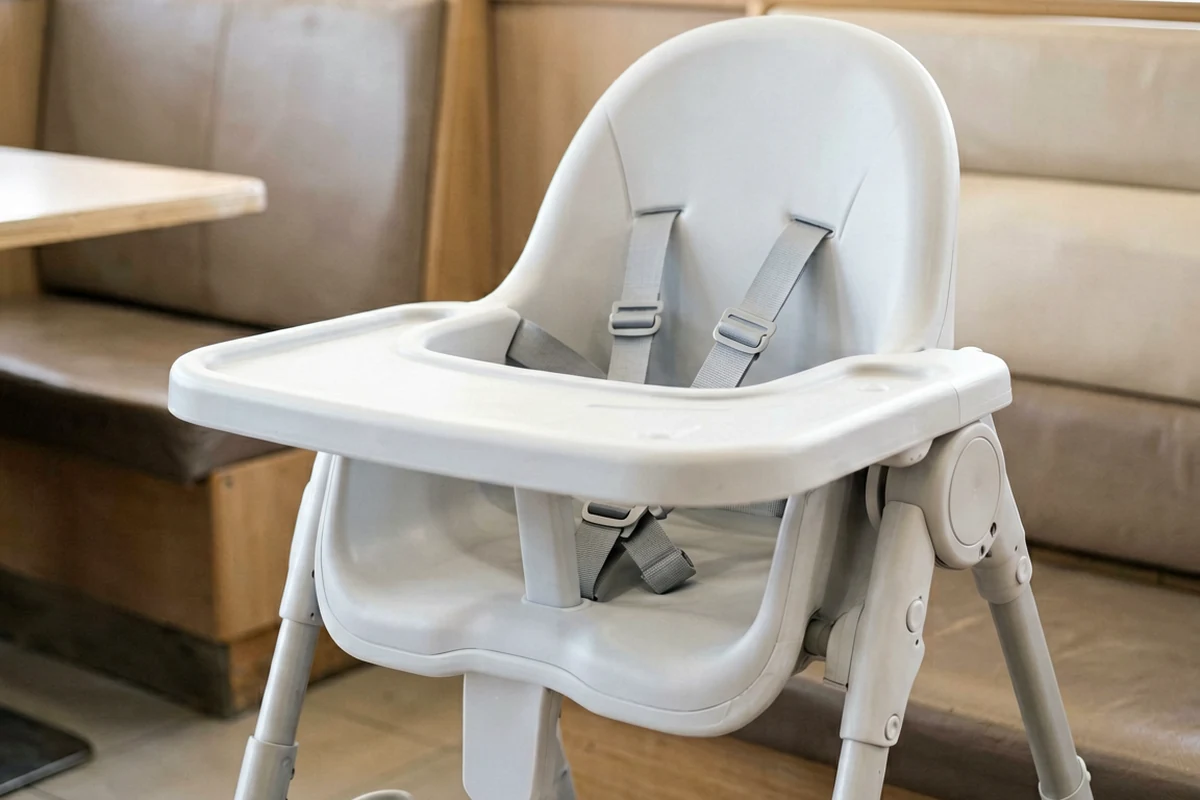
High chairs are used by young children, so documentation should be checked before a supplier is shortlisted. For the U.S. market, 16 CFR Part 1231 establishes the consumer product safety standard for high chairs and incorporates applicable ASTM F404-21 provisions. The CPSC high chairs business guidance also summarizes areas buyers should expect to see addressed, including stability, restraint systems, structural integrity, labeling, openings, tray performance, and other safety-related requirements.
Do not treat a supplier's marketing phrase as proof of compliance. Ask for a document set that identifies:
The exact high-chair model and revision.
The applicable destination-market standard or regulation.
Test report issuer and test date.
Photos, drawings, or model identifiers that tie the report to the quoted product.
Labeling and warning information supplied with the product.
Any age, weight, use, or supervision limits stated by the manufacturer.
Whether trays, restraints, glides, hardware, and replacement parts match the tested configuration.
The purchasing team should route safety documentation to the qualified reviewer responsible for the destination market. This article provides a procurement framework, not legal or certification advice.
Check Product Fit in the Dining Layout
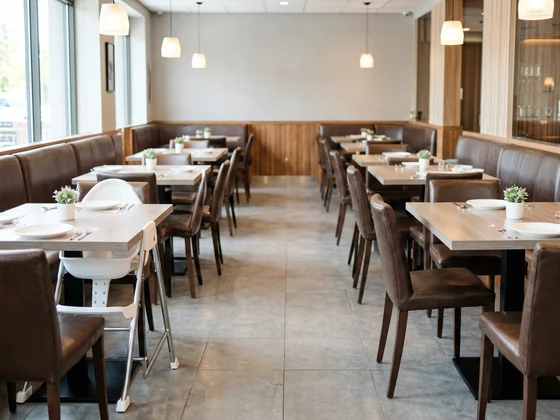
A high chair can pass a product review and still fail in daily operation if it blocks service routes, does not work with table heights, or has no storage plan. RON GROUP's restaurant table sizing guide flags high chairs and booster seats as items that should be included in restaurant layout planning for family-oriented concepts.
Before approving a supplier sample, test the high chair against the actual dining layout:
Table height, apron, base, and edge conditions
Aisle width and server movement when the chair is occupied
Chair footprint at table ends and along walls
Storage location when units are not in use
Stacking or nesting behavior, if available
Cleaning access around straps, tray edges, seats, and legs
Floor contact, glides, and movement on the selected floor finish
Compatibility with nearby booths, loose chairs, and stroller conditions
How staff will move, inspect, clean, and store each unit
A supplier should be able to provide dimensions, product photos, material descriptions, and maintenance instructions that let the operator test those points before ordering the full quantity.
Build a Supplier Evidence File
The U.S. International Trade Administration due-diligence guidance advises companies to investigate market conditions and evaluate potential partners before entering a commercial relationship. For hospitality high chairs, turn that principle into a practical supplier evidence file.
Request evidence covering:
Legal business identity and contracting entity
Factory or production-partner identity for the quoted high chair
Product catalog, model number, and controlled specifications
Destination-market safety documentation
Sample, test report, and production-batch traceability
Quality control checkpoints before packing
Packing method and carton labeling
Replacement parts, strap, tray, glide, and hardware support
Process for defects, shortages, damage, or nonconforming goods
Named contact for technical, commercial, and logistics questions
When China sourcing is involved, the International Trade Administration China market-entry guidance emphasizes careful partner vetting and alignment on business goals. That means the buyer should confirm who controls production, who receives payment, who owns product documentation, and who is accountable if the delivered goods do not match the approved sample or safety file.
Compare Suppliers with One Matrix
Use the same matrix for every shortlisted supplier. Score only against submitted evidence, not response speed or presentation quality.
| Evaluation area | Evidence to request | Decision question |
|---|---|---|
| Safety documentation | Standard, report, model match, labeling file | Can the supplier tie the quoted chair to the required safety file? |
| Product specification | Dimensions, materials, finish, tray, restraint, hardware | Does the product fit the dining layout and operating routine? |
| Sample control | Approved sample record and retained reference process | Will production be checked against the accepted sample? |
| Production route | Factory or production-partner identity | Is the supplier clear about where and how the chair is made? |
| Quality control | Inspection stages and acceptance criteria | Are stability, hardware, finish, and packing checked before shipment? |
| Project coordination | Item codes, contacts, reporting, change records | Can the supplier support a multi-site or opening-phase order? |
| Import documentation | Invoice, packing list, carton marks, model identifiers | Can the buyer and receiving team trace the shipment accurately? |
| After-delivery support | Damage, shortage, spare-part, and replacement process | Is there a workable route for resolving site findings? |
If a supplier cannot provide a required document, mark that item open. Do not convert an open item into confidence just because the product photo looks suitable.
Control Samples Before Production
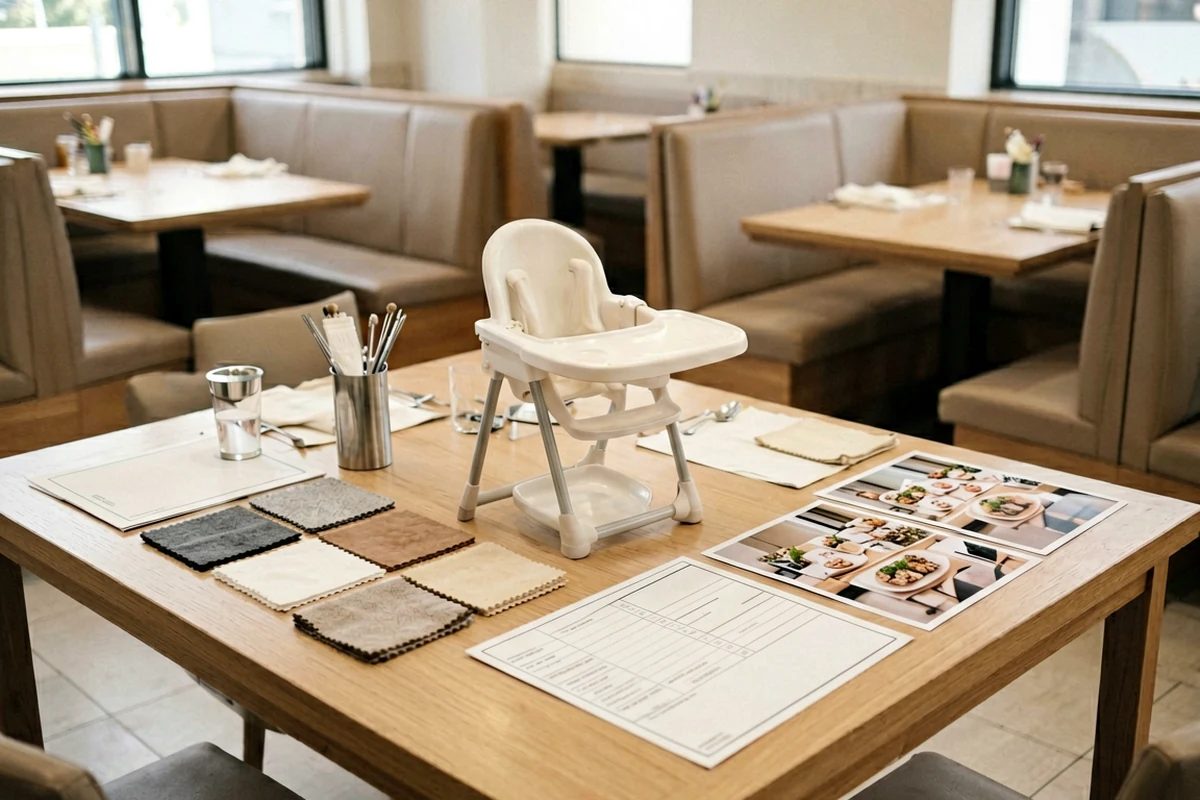
A high-chair sample should be reviewed as a controlled reference. Record the item code, model, color, finish, materials, tray condition, restraints, hardware, glides, packaging, date, and approver. If the sample is accepted with conditions, record the required correction and confirm how the supplier will prove it before production release.
Useful sample checks include:
Stability and floor contact under normal handling
Smoothness of edges and touch points
Function of tray, restraint, and hardware components
Cleanability around seams, straps, corners, and food-contact areas
Visible finish consistency with the approved design direction
Storage behavior in the venue's planned storage area
Compatibility with the selected tables and seating zones
Labeling, instructions, and documentation supplied with the unit
A sample approval should not be separated from the safety file. The supplier should show that the ordered product, tested configuration, sample, and production record are aligned.
Manage Import and Receiving Controls
For imported high chairs, the commercial and logistics records should match the approved product file. 19 CFR Part 141 Subpart F describes U.S. commercial invoice requirements for merchandise shipments unless an exemption applies. Buyers should use that type of document discipline as part of their import control process, while leaving tariff, duty, and customs advice to qualified professionals.
Before shipment, align:
Supplier legal entity and payment entity
Product model, item code, and specification revision
Quantity by carton, site, phase, or purchase order
Commercial invoice and packing list descriptions
Carton marks and receiving labels
Safety documentation reference used by the buyer
Replacement-part or spare-component records
Damage and shortage reporting procedure
The site team should be able to identify the correct product without reconstructing the supplier's naming system after delivery.
Use Project Procurement Discipline
The UK Sourcing Playbook supports clear requirements, planning, market engagement, and disciplined supplier selection. For hospitality high chairs, apply that discipline to the project schedule.
A practical sequence is:
Confirm destination market and required review owner.
Define high-chair use cases and operating conditions.
Issue the same specification to shortlisted suppliers.
Collect safety, supplier, sample, and logistics evidence.
Review and approve one controlled sample.
Confirm product, packing, labeling, and document requirements.
Release production only after open items are closed.
Inspect production or pre-shipment evidence against the approved record.
Reconcile quantities and carton marks before shipment.
Track site damage, shortages, replacements, and replenishment needs.
RON GROUP's hospitality project support page can support coordination discussions for restaurant and hotel projects. The quotation should still define the exact scope, including who prepares specifications, who checks samples, who consolidates documents, and who coordinates delivery information.
Supplier Risk-Control Checklist
Before awarding the order, confirm that:
The supplier has identified the exact model being quoted.
The safety documentation matches the quoted product and destination market.
The product dimensions, materials, finish, tray, restraint, and hardware are documented.
The sample approval is recorded and tied to the production release.
Cleaning and maintenance instructions are available for the operator.
The supplier's legal identity and production route have been checked.
Item codes match quotation, sample record, invoice, packing list, and cartons.
Packing protects the units and supports site receiving.
Replacement parts or spare components are available where required.
Damage, shortage, and nonconforming-item procedures are documented.
Remaining open items are assigned before production starts.
The goal is not to create paperwork for its own sake. The goal is to make sure the product used by guests is the same product approved by the project team.
Questions to Ask During the Final Supplier Interview
Which exact high-chair model and revision are you quoting?
Which destination-market safety documentation supports this model?
How do the test report, sample, and production product connect to each other?
Which components are included: tray, restraint, hardware, glides, and instructions?
What changes would require a new approval before production?
How will approved samples and finishes be controlled during production?
What inspection points are used before packing?
How will model numbers and item codes appear on cartons and packing lists?
What should the venue do if a strap, tray, glide, or hardware item is damaged?
How are shortages, transit damage, and replacement items tracked after delivery?
The answers should be backed by records, not only verbal assurance.
Make the Supplier Decision
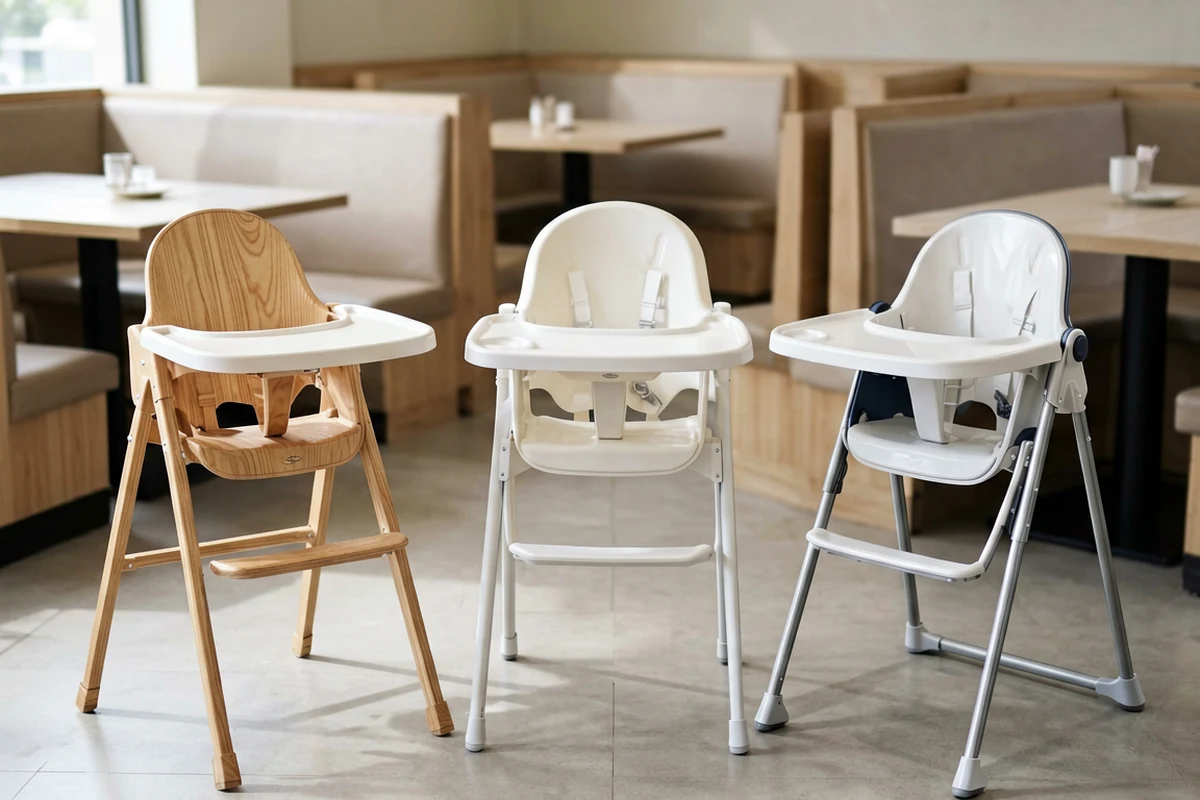
A suitable hospitality high chairs supplier can demonstrate safety-document control, product fit, supplier transparency, production discipline, import-document consistency, and a workable after-delivery support process. The selection file should explain why the supplier fits the project and which remaining risks will be controlled before production and shipment.
RON GROUP can help review high-chair options alongside broader hospitality furniture, table layouts, restaurant seating, and opening-phase procurement needs. Request hospitality high chair sourcing support with your venue type, destination market, target quantity, layout conditions, finish direction, and required delivery location.
Sources and Further Reading
16 CFR Part 1231 high-chair safety standard supports the U.S. high-chair safety-standard context.
CPSC high chairs business guidance supports the supplier documentation and safety-check framework.
RON GROUP bar chairs and restaurant seating collection supports the internal product-fit reference.
RON GROUP restaurant table sizing guide supports the layout-planning reference for high chairs and booster seats.
U.S. International Trade Administration due-diligence guidance supports the supplier-verification framework.
U.S. International Trade Administration China market-entry guidance supports China partner-vetting context.
19 CFR Part 141 Subpart F commercial invoice rules supports import-document control context.
UK Sourcing Playbook supports the structured project-procurement approach.
Get the week's latest industry information
-
Real-Life Professional Restaurant Case Studies
Explore Now
-
Create a unique restaurant with over 95,700+products
Explore Now
-
Protessional Free 3D Restaurant Design
Explore Now
-
Still Have Questions About Opening a Restaurant?
Explore Now

Sylvia
With 8 years in catering & hospitality industry, sales manager of Ron Group, specialise in providing one stop solutions to restaurants, hotels and weddings.
Discover Our Exclusive Products
Explore our extensive range of restaurant and hotel supplies designed to enhance your operations. Find the perfect solutions to meet your needs.
Browse Our ProductsFREE 3D DESIGN
Boost your restaurant's success with our free 3D design service. Start building the restaurant of your dreams today!
Explore 3D Design Case
RECOMMENDED CASES
-

La Rambla by Catalunya: Crafting Barcelona's Soul in Hong Kong - Custom Furniture Excellence
RON Group's custom Spanish-inspired furniture elevates La Rambla with artisanal aesthetics...
Learn More -

Cardinal Point: Elevating Outdoor Seating with Tailored Cushion Upgrades
Discover how Cardinal Point transformed its outdoor dining experience with custom cushions, achievin
Learn More
RECOMMENDED BLOGS
-
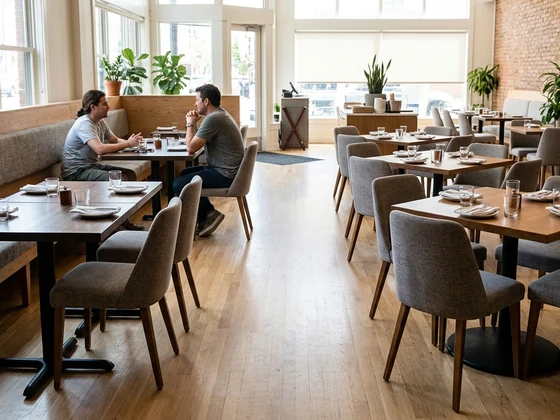
Restaurant Table Spacing and Aisle Clearance: Supplier Drawing Checklist
Check restaurant table spacing, aisle clearance, chair pullout, service path, and supplier drawing proof before approving a...
Sylvia2026-07-20 -

5 Mistakes to Avoid When Buying Restaurant Furniture from China
Don't fall for costly oversights! Learn the 5 mistakes to avoid when buying restaurant furniture from China and ensure a...
 Ron2025-01-079 min read
 -

RON GROUP Launches VR Experience to Explore Our Dynamic Showroom
Discover RON GROUP's VR showroom! Explore dining furniture, tableware, and customized services virtually or visit us in person to...
Sylvia2024-12-163 min read
Subscribe to RON GROUP
Stay up-to-date with the latest industry insights and expert advice. Together, we'll create your ideal restaurant.