










Content
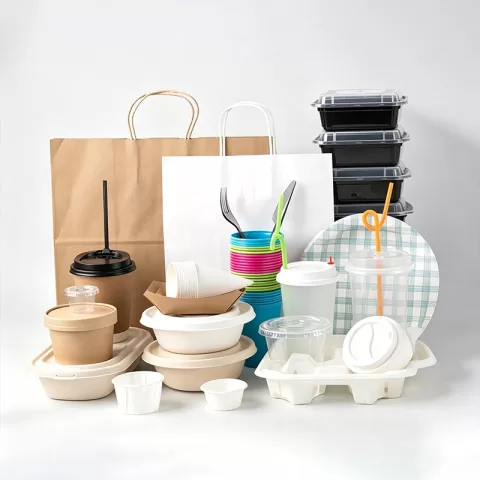
Sourcing food-safe disposable packaging requires moving beyond aesthetic choices and unit-price comparisons to establish rigorous, evidence-based procurement controls. A successful sourcing strategy demands validating food-contact safety, substantiating environmental claims, and implementing strict operational controls over case packs, minimum order quantities (MOQs), and traceability labeling.

This guide provides commercial receivers and procurement teams with an operational framework for evaluating suppliers, managing documentation-led Requests for Quotation (RFQs), and controlling inventory. Buyer requirements vary significantly by product, food type, temperature, contact time, destination market, waste collection system, and specific marketing claim wording. Therefore, a certificate, logo, supplier statement, or resin name alone is never sufficient evidence of product, use, or market suitability.
Phase 1: Defining the Food and Service Model
Before evaluating any disposables supplier, procurement teams must define the exact parameters of the food and service model. Food-contact packaging safety is not a universal state; it is highly conditional.

The U.S. FDA Packaging & Food Contact Substances framework and the EU EUR-Lex Regulation (EC) No 1935/2004 provide regulatory contexts for how materials interact with food. However, these frameworks require product- and use-specific documentation. You cannot declare a product compliant based solely on a supplier’s general assurance.
Buyers must document the following calculation inputs for their service model: * Food Matrix: Is the food acidic, fatty, aqueous, dry, or mixed? The supplier's documentation and any testing should match the intended food category. * Temperature Profile: Will the packaging hold frozen, refrigerated, ambient, hot-fill, or microwave-reheated food? * Contact Time: Is the packaging used for immediate consumption (minutes), short-term delivery (hours), or retail shelf life (days/weeks)?
Phase 2: Evidence-Led Supplier Shortlisting and Use-Case Comparison
Once the service model is defined, shortlisting suppliers requires matching the proposed material to the specific use case through documented evidence.

Table 1: Use-Case and Evidence Requirements
| Application / Food Type | Temperature & Contact Time | Potential Material Profile | Required Food-Contact Evidence (Not Exhaustive) |
|---|---|---|---|
| Hot or fatty delivery food | Actual fill temperature, contact time, grease exposure, closure, and transport | Candidate paperboard, fiber, foil, or polymer systems | Product- and use-specific food-contact evidence, barrier specification where relevant, and a menu sample test |
| Acidic cold beverages | Actual beverage, temperature, contact time, lid and straw interface | Candidate cups, coatings, lids, and closures | Product- and use-specific food-contact evidence plus sample approval for fit, leakage, and handling |
| Buyer-authorized reheating | Exact reheating instruction and expected use | Only products proposed for that instruction | Supplier documentation and qualified test evidence supporting the exact instruction; otherwise do not make the claim |
| Dry bakery goods | Direct contact, grease level, display time, printing and window materials | Candidate paper, board, film, or combined formats | Food-contact documentation appropriate to the intended use and evidence for inks, coatings, or adhesives where relevant |
Note: Do not guarantee food safety or regulatory compliance based on this table. Independent laboratory testing matching the exact use case is required.
Phase 3: End-of-Life and Chemical Claim Substantiation
Environmental marketing claims—such as recyclable, compostable, biodegradable, or PFAS-free—carry significant legal and reputational risk. The FTC Green Guides (16 CFR Part 260) require that all environmental marketing claims, including B2B claims, be truthful, substantiated, and properly qualified.
Furthermore, the EPA notes that compostable plastics and conventional recycling streams are not interchangeable. Introducing compostable plastics into traditional recycling can contaminate the stream, and vice versa. Local infrastructure dictates the reality of end-of-life recovery.
Table 2: Environmental & Chemical Claim Evidence Hierarchy
| Claim Wording | Evidence Requested | Destination / Infrastructure Check | Label Qualification Requirement | Approval Owner |
|---|---|---|---|---|
| "Compostable" | Product-specific test or certification evidence, scope, item identity, and claim wording | Confirm the destination collection and processing route accepts the specific item | Qualify the claim to the conditions and facilities supported by evidence | Legal / Sustainability |
| "Recyclable" | Material and format data, component separability, collection/sorting evidence, and claim substantiation | Confirm whether the destination collection and sorting system handles that format | Qualify the claim where availability or item conditions are limited | Legal / Packaging Engineering |
| "PFAS-free" or "no intentionally added PFAS" | Supplier formulation statement, product scope, test method and result where required, and change-control commitment | Review the destination rules and buyer definition before using the wording | State exactly what was evaluated; do not convert one result into a broader guarantee | Quality / Legal |
| "Biodegradable" / "Degradable" | Product-specific substantiation and the conditions, time frame, and environment covered | Check destination restrictions and disposal reality | Avoid an unqualified claim when the evidence only supports limited conditions | Legal / Compliance |
Phase 4: Packaging Hierarchy, Case-Pack, and Order Data
Operational efficiency in restaurants and warehouses relies on strict control over the packaging hierarchy. Sourcing tableware and disposables requires defining the unit of order and the physical packaging levels.
Using GS1 packaging hierarchy guidance and pack/case quantity standards helps frame the identity, quantity, and logistics data for each level. While GS1 identifiers (like GTINs) should not be required where not applicable (e.g., custom unbranded goods for a single restaurant), the structural logic is essential for inventory control.
Table 3: Packaging Hierarchy & Order Data Master Table
| Hierarchy Level | Definition & Function | Required Master Data | Barcode / GTIN Application (If Applicable) |
|---|---|---|---|
| Each (Base Unit) | The individual consumable item (e.g., one paper cup, one fork). | Material, weight, dimensions, food-contact suitability. | Rarely barcoded unless sold individually at retail. |
| Inner Pack (Sleeve/Bag) | A sanitary grouping of "Eaches" for back-of-house handling (e.g., a sealed plastic sleeve of 50 cups). | Quantity of Eaches, inner pack dimensions, wrapping material spec. | May require a GTIN if the inner pack is a distinct orderable unit for franchisees. |
| Case / Carton | The standard shipping unit containing one or more inner packs | Case quantity, dimensions, weight, item identity, lot/batch field, and handling data | May use a distinct GTIN or buyer item code when the case is an orderable or scanned unit |
| Pallet | A transport unit containing cases secured for freight | Cases per layer, layers, total quantity, height, weight, and securing method | May use an SSCC or the buyer's approved logistics identifier when applicable |
Phase 5: MOQ, Replenishment, and Inventory Controls
Procurement must establish clear rules for Minimum Order Quantities (MOQs) and replenishment to prevent stockouts or excessive warehouse holding costs. Do not accept a supplier's initial MOQ without negotiating the ongoing replenishment terms.
Case-Pack and MOQ Calculation Inputs: 1. Forecasted Daily Usage: Calculated per SKU based on historical data or service model projections. 2. Lead Time Confirmation: The agreed planning interval from purchase-order release to receipt, with manufacturing, transit, customs, and inspection assumptions shown separately. 3. Safety Stock (Buffer Stock): The inventory held to mitigate supply chain disruptions.
Replenishment Workflow & Controls: * Initial MOQ vs. Reorder MOQ: Initial production runs often require higher MOQs to justify tooling or custom printing. Procurement must negotiate a lower Reorder MOQ for ongoing replenishment to optimize cash flow. * Mixed-SKU / Carton Rules: Define whether a supplier is permitted to ship mixed pallets or mixed cartons. If permitted, strict labeling rules must be enforced to prevent warehouse receiving errors. * Split Shipments: If a supplier cannot fulfill a full PO, define the rules for split shipments. Who pays the additional freight? How does this impact the lead time of the remaining balance? * Buffer Stock Ownership: Determine whether the supplier, a logistics partner, or the buyer holds buffer stock, who owns it, and how age, condition, and release are recorded. * Substitution Controls: Contractually prohibit unauthorized substitutions. A supplier cannot change the resin, coating, inner-pack quantity, or manufacturing facility without prior written approval and new documentation.
Phase 6: Labeling, Master Data, and Traceability Checklist
Proper labeling ensures traceability in the event of a food-safety recall or quality failure. Refer to the GS1 Logistic Label Guideline to structure your warehouse receiving labels.
Comprehensive Labeling Checklist: * [ ] Product Level: Buyer-required item identity, use instruction, warning, or claim qualification where applicable and supported. * [ ] Inner-Pack Level: Quantity, item identity, language, and lot/batch fields required by the buyer or destination. * [ ] Case/Carton Level: * Supplier name and manufacturing facility address. * Item description and internal SKU number. * Exact quantity (e.g., 1,000 units: 20 sleeves x 50 units). * Gross and net weight. * Destination-market marks or statements only when applicable and supported. * [ ] Batch/Lot Traceability: Clear, human-readable batch/lot codes on every carton, linked directly to the date of manufacture and specific raw material runs. * [ ] Barcode/GTIN: Scannable barcodes on the case level matching the procurement master data. * [ ] Handling Labels: Only handling and storage instructions supported by the product and logistics specification.
Phase 7: Documentation-Led RFQ and Sample Approval
Transitioning from descriptive purchasing to operational control requires a documentation-led RFQ process. When sourcing restaurant equipment and disposables, the RFQ must demand evidence before pricing is finalized.
Updated RFQ Checklist: * [ ] Detailed specification sheet (dimensions, weight, material composition). * [ ] Request for third-party migration test reports matching the specific food matrix and temperature profile. * [ ] Request for environmental claim substantiation (lab reports, not just logos). * [ ] Request for packaging hierarchy data (Inner pack count, Case count, Ti-Hi). * [ ] Request for lead time, Initial MOQ, and Reorder MOQ.
Sample Approval and PO Change-Control Checklist: * [ ] Engineering Sample: Approved for dimensions, lid-fit, and visual aesthetics. * [ ] Production Sample: Pulled from the first mass-production run. Approved for structural integrity, print quality, and inner-pack sealing. * [ ] PO Change-Control: If a supplier requests a change to the specification, packaging, or MOQ after the PO is issued, the buyer must trigger a formal review. The supplier must submit new test reports for any material change, and the buyer must approve the change in writing before production resumes.
Phase 8: Procurement Risk Scenarios and Recovery Actions
Even with robust controls, supply chain disruptions occur. Procurement teams must anticipate risks and establish recovery actions.

Scenario 1: Unauthorized Material Substitution * Risk: A supplier quietly switches from a high-density polymer to a cheaper blend to save costs, compromising the heat resistance of a soup container. * Recovery Action: Quarantine the affected shipment, compare it with the approved specification and retained sample, obtain qualified testing where needed, and follow the contract's rejection, replacement, or concession route.
Scenario 2: Failed Compostability Claim at Destination * Risk: A shipment described as compostable arrives, but the destination collection or processor does not accept the specific item or the claim evidence does not match the wording. * Recovery Action: Hold the unsupported claim, preserve the product identity and evidence record, and obtain qualified legal, technical, and destination-infrastructure review before future use of the wording.
Scenario 3: Mixed-SKU Carton Labeling Failure * Risk: A supplier ships a mixed pallet of forks and knives, but fails to apply GS1 logistic labels or clearly mark the cartons, causing a massive bottleneck in warehouse receiving. * Recovery Action: Isolate the receiving exception, reconcile item and lot identity, relabel only under an approved correction record, and apply the contract's responsibility terms. Require pre-shipment label evidence for the next release.
Scenario 4: Buffer Stock Depletion Due to Split Shipment Delays * Risk: A supplier ships only part of an order and the remaining balance threatens the buyer's agreed service stock. * Recovery Action: Recalculate coverage by site and SKU, apply the agreed split-shipment and freight responsibility terms, and use an approved alternate source where qualification evidence already exists. Revisit buffer ownership and release rules before the next order.
Scenario 5: Food-Contact Migration Test Failure * Risk: Qualified review finds that the evidence for a custom-printed package does not support the intended food, temperature, contact time, or destination. * Recovery Action: Hold the affected lot and use, notify the named quality and regulatory owners, investigate the source of the mismatch, and require new product- and use-specific evidence plus sample approval before release.
Phase 9: Supplier Scorecard and Due Diligence
Supplier evaluation is an ongoing process. A robust supplier scorecard for disposable packaging should weight operational compliance as heavily as unit price.
Evaluate suppliers based on: 1. Documentation Accuracy: Do they provide complete, unexpired, third-party test reports upon request? 2. Order Accuracy: Do they consistently meet the agreed-upon case-pack quantities, MOQs, and labeling requirements? 3. Lead Time Reliability: Do they deliver within the confirmed lead time, minimizing the need for split shipments? 4. Change Control Discipline: Do they proactively communicate potential raw material shortages or request formal approval before making specification changes?
By implementing these controls, procurement teams protect their brand, ensure operational efficiency, and mitigate the severe risks associated with food-contact packaging. For tailored guidance on establishing these procurement architectures within your supply chain, contact RON GROUP to discuss your specific service model and sourcing requirements.
Sources and Further Reading
FDA Packaging & Food Contact Substances provides U.S. food-contact framework context.
FDA Food Packaging Consumer Information explains how packaging substances come into contact with food.
EUR-Lex Regulation (EC) No 1935/2004 provides European Union food-contact framework context.
GS1 Logistic Label Guideline: Standards for warehouse and freight labeling. https://www.gs1.org/standards/gs1-logistic-label-guideline/current-standard
GS1 Packaging Hierarchy Guidance: Global data model attributes for packaging levels. https://www.gs1.org/standards/gs1-global-data-model-attribute-implementation-guide/13-1
GS1 Pack/Case Quantity: Decision support for framing each, inner pack, and case identities. https://www.gs1.org/en/standards/id-keys/gtin/gtin-decision-support-tool/packcase-quantity
FTC Green Guides (16 CFR Part 260): Requirements for truthful and substantiated environmental marketing claims. https://www.ftc.gov/sites/default/files/attachments/press-releases/ftc-issues-revised-green-guides/greenguides.pdf
EPA FAQ on Plastic Recycling and Composting explains why destination collection and processing infrastructure matters.
U.S. International Trade Administration — Perform Due Diligence supports supplier and partner review context.
BRCGS Packaging Materials supports packaging supplier-assessment context without replacing product-level review.
Get the week's latest industry information
-
Real-Life Professional Restaurant Case Studies
Explore Now
-
Create a unique restaurant with over 95,700+products
Explore Now
-
Protessional Free 3D Restaurant Design
Explore Now
-
Still Have Questions About Opening a Restaurant?
Explore Now

Sylvia
With 8 years in catering & hospitality industry, sales manager of Ron Group, specialise in providing one stop solutions to restaurants, hotels and weddings.
Discover Our Exclusive Products
Explore our extensive range of restaurant and hotel supplies designed to enhance your operations. Find the perfect solutions to meet your needs.
Browse Our ProductsFREE 3D DESIGN
Boost your restaurant's success with our free 3D design service. Start building the restaurant of your dreams today!
Explore 3D Design Case
RECOMMENDED CASES
-

La Rambla by Catalunya: Crafting Barcelona's Soul in Hong Kong - Custom Furniture Excellence
RON Group's custom Spanish-inspired furniture elevates La Rambla with artisanal aesthetics...
Learn More -

Cardinal Point: Elevating Outdoor Seating with Tailored Cushion Upgrades
Discover how Cardinal Point transformed its outdoor dining experience with custom cushions, achievin
Learn More
RECOMMENDED BLOGS
-

Bar Glassware 101: Types, Names, Uses, and How to Stock Your Bar
Learn the 10 core bar glassware types, names, and uses. Discover how to stock your bar with the right glasses for cocktails, beer,...
Sylvia2026-07-26 -
Complete Bar Equipment List for Opening a Bar
Plan a complete commercial bar equipment list by menu, service volume, refrigeration, ice, glassware, utilities, sanitation,...
Sylvia2026-06-11 -

Low Budget Restaurant Interior Design: 2026 Trends
Prioritize a low-budget restaurant interior by protecting code, operations, durability, accessibility, and phased design decisions...
Sylvia2026-04-04
Subscribe to RON GROUP
Stay up-to-date with the latest industry insights and expert advice. Together, we'll create your ideal restaurant.