
5 Restaurant Design Trends Shaping 2026: What Owners Need to Know
Learn 2026s top 5 restaurant design trends—biophilic interiors, modular layouts, warm minimalism, tech integration & sustainable materials—with owner tips.
Content
Restaurant design has always reflected broader cultural shifts, but in 2026 the pace of change is accelerating. Rising consumer expectations, sustainability mandates, and new technology are converging to reshape how dining spaces look, feel, and function. According to OpenTable's 2026 Diner Trends Report, "local charm" now ranks as the single most appealing interior style among diners—a clear signal that authenticity has overtaken spectacle.
For restaurant owners planning a new build, renovation, or rebrand, understanding these shifts is not optional; it is a competitive requirement. Below, we break down five design trends that are defining the restaurant landscape in 2026, with practical guidance on how to implement each one without blowing your budget.
1. Biophilic Design Moves From Accent to Architecture
Biophilic design—the practice of integrating natural elements into built environments—has been discussed for years. In 2026, it has matured from a scattering of potted plants on windowsills to a foundational design strategy. Architects are now creating seamless indoor-outdoor connections through expansive glazing, living green walls, interior courtyards, and raw natural materials such as reclaimed wood, stone, and clay.
Why It Matters
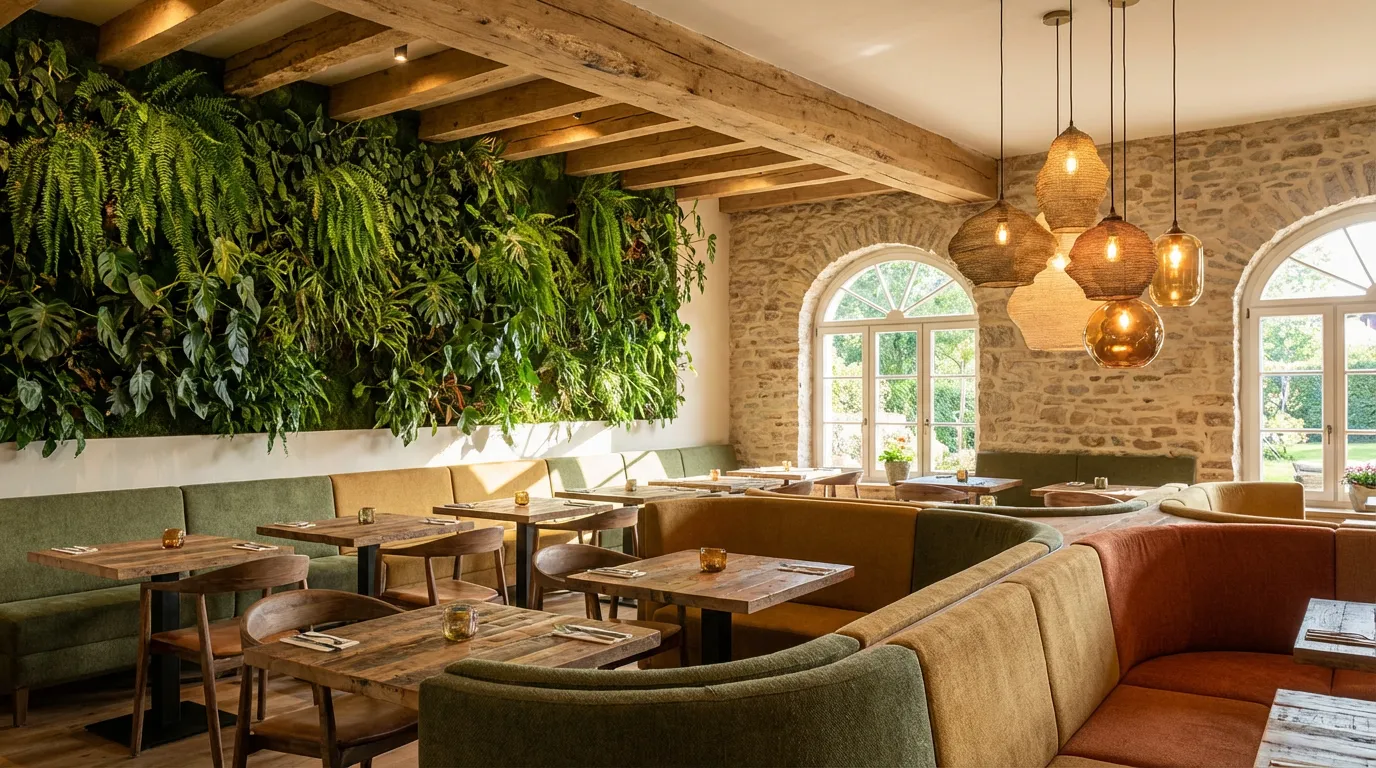
Research published by GrowUp Green describes 2026 as "the year biophilic design moves from accessory to architecture." The shift is driven by wellness expectations: diners increasingly choose restaurants where the space itself makes them feel calm, grounded, and connected to nature. Studies consistently link biophilic interiors to longer dwell times and higher average checks.
How to Implement
Material palette: Replace synthetic laminates with real wood tabletops, stone counter surfaces, and linen upholstery. Even budget-friendly options like bamboo panels and cork flooring deliver a biophilic feel.
Living elements: Vertical herb gardens serve double duty—they enhance the atmosphere and supply the kitchen. Moss walls require zero irrigation and minimal maintenance.
Natural light: Maximize daylight with larger windows or skylights. Where structural changes are impractical, warm-tone LED lighting fixtures that mimic circadian rhythms can replicate the effect.
Acoustic comfort: Wood-slat acoustic ceiling panels reduce noise levels while reinforcing the natural material story.
RON GROUP's free 3D restaurant design service can help you visualize biophilic concepts before committing to materials, ensuring every element works together in the final layout.
2. Flexible, Modular Spaces That Adapt to Demand
The era of the fixed floor plan is ending. In 2026, operators are investing in modular furniture systems that can be reconfigured in minutes to accommodate a two-person lunch, a 30-person private event, or a weekend brunch with expanded bar seating—all in the same footprint.
Why It Matters
Post-pandemic dining habits remain unpredictable. Weekday lunch traffic may be 40% lower than weekend dinner service. Ghost kitchen operations may share the same physical space as a full-service concept. As QSR Magazine reports, "hospitality is re-entering the innovation cycle," and spatial flexibility is a core part of that shift.
How to Implement
Modular tables: Choose tables that lock together for banquets but separate easily for intimate dining. Convertible bar-height and dining-height options maximize per-square-metre revenue.
Stackable and nestable chairs: High-quality commercial restaurant chairs that stack compactly let you clear floor space for private events or live entertainment.
Movable partitions: Acoustic dividers on casters create semi-private zones without permanent construction. They also allow you to test new layouts at zero renovation cost.
Multi-zone design: Designate distinct areas—bar, communal table, lounge seating, traditional dining—within a single open layout. Each zone can be scaled up or down based on the daypart.
Revenue impact is measurable: operators who adopt modular layouts report seat-turnover increases of 15–25% during peak hours because they can right-size the dining room in real time. The capital investment is also more forgiving than a traditional fixed build-out—modular furniture can move with you if you relocate, and it retains resale value far better than custom millwork that is locked to a specific floor plan.
An increasingly popular application is the "day-to-night" concept, where the same space operates as a casual lunch café and transforms into a cocktail-forward dinner venue by rearranging furniture, adjusting lighting zones, and swapping table settings. This dual-identity model is particularly effective in urban markets where rent per square metre demands maximum utilization of every hour the space is open.
3. Earth Tones and Warm Minimalism Replace Industrial Chic
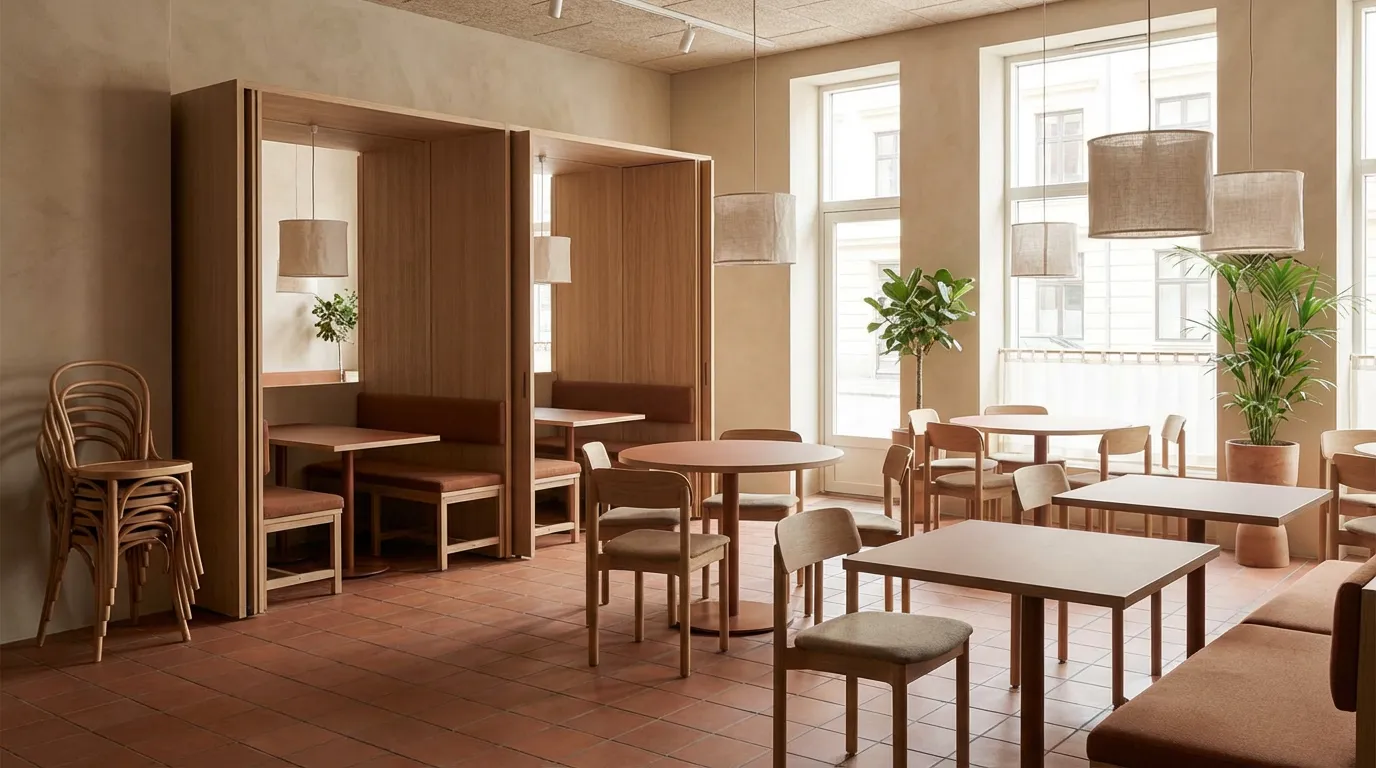
The exposed-brick, raw-steel aesthetic that dominated the 2010s has given way to a warmer, more refined palette. In 2026, the dominant colour story is rooted in earth tones: terracotta, soft clay, warm beige, caramel, antique cream, and muted olive. Designers call it "warm minimalism"—spaces that feel clean and uncluttered but never cold or sterile.
Why It Matters
According to Studia 54's 2026 commercial design report, the restaurant interior in 2026 is "a multisensory experience where every detail—from the softness of a chair to the scent—forms a unique memory of the place." Colour and texture are central to that sensory equation. Warm tones lower perceived stress, encourage lingering, and photograph well for social media—a nontrivial consideration when guest-generated content drives discovery.
How to Implement
Walls and surfaces: Limewash or micro-cement finishes in warm neutrals create depth and texture without pattern fatigue. They also age gracefully, reducing repaint cycles.
Upholstery and textiles: Bouclé, linen, and brushed cotton in tonal variations add tactile richness. Pair with solid wood furniture for a cohesive look.
Accent through material, not colour: Instead of a bold accent wall, use a contrast material—a fluted timber panel, a hand-plastered alcove, or a terrazzo bar top—to create visual interest.
Lighting: Warm-white (2700K–3000K) LED pendants and sconces reinforce the palette. Avoid cool-white fixtures, which clash with earth tones and flatten food presentation.
If you are exploring how colour, material, and lighting choices interact in a Chinese or pan-Asian restaurant concept, our guide on Chinese restaurant interior design trends and ROI provides a detailed framework.
4. Technology-Integrated Environments That Feel Invisible
Technology in restaurant design is no longer about novelty—it is about removing friction. The best implementations in 2026 are the ones diners barely notice: ambient lighting that adjusts automatically as daylight fades, HVAC systems zoned to maintain comfort at every table, and digital ordering options that complement rather than replace human service.
Why It Matters
Guest experience is increasingly tailored via data. As reported by the WebstaurantStore's 2026 design trends analysis, leading operators now use real-time data to adjust lighting, music volume, table spacing, and even menu presentation throughout the service period. The goal is not to make the restaurant feel "techy" but to make it feel effortless.
How to Implement
Smart lighting controls: Programmable LED systems that shift colour temperature from energizing daylight tones at lunch to warm, intimate tones at dinner. ROI is immediate through energy savings and atmosphere management.
Integrated charging and connectivity: Embed wireless charging pads in tabletops and ensure robust Wi-Fi. Business diners and remote workers increasingly factor connectivity into their restaurant choice.
Digital-physical ordering: QR-based menus and tableside ordering tablets reduce wait staff bottlenecks during peak hours without eliminating personal interaction. Design the hardware into the table or menu holder so it does not clutter the surface.
Kitchen display systems: For concepts with open or semi-open kitchens, digital ticket management on sleek, low-profile screens keeps the kitchen choreography visible without industrial ugliness.
The critical design principle is concealment: wiring, routers, and control panels should be built into millwork and ceiling cavities during the fit-out phase, not bolted on as an afterthought.
5. Sustainability as a Design Language, Not Just a Checkbox
Sustainability in restaurant design has evolved from a marketing talking point to a visible, verifiable design language. In 2026, diners expect to see sustainability—in the reclaimed timber on the walls, the recycled-glass light fixtures overhead, and the waste-reduction station near the service area. Greenwashing is rapidly detected and punished on social media; genuine commitment is rewarded with loyalty.
Why It Matters
Multiple industry surveys now confirm that sustainability is a "baseline expectation" rather than a differentiator. Restaurants that fail to address it risk losing younger demographics entirely. Beyond consumer perception, sustainable design often reduces long-term operating costs: LED lighting cuts energy bills by 50–70%, water-saving fixtures reduce utility expenses, and durable, repairable furniture lowers replacement cycles.
How to Implement
Material sourcing: Prioritize FSC-certified woods, recycled metals, low-VOC paints and finishes, and locally sourced stone or tile. These choices reduce carbon footprint and often come with compelling visual stories you can share with guests.
Furniture longevity: Invest in commercial-grade restaurant furniture built to withstand 10+ years of daily use. The cheapest chair is the most expensive one over a five-year period if it needs replacing every 18 months.
Energy systems: Specify energy-efficient kitchen equipment, LED lighting throughout, and smart HVAC with zone controls. Many jurisdictions now offer tax incentives or rebates for certified green fit-outs.
Visible sustainability: Make your choices part of the guest experience. A feature wall built from reclaimed shipping pallets, tabletops made from recycled ocean plastic, or a water-filtration station that eliminates single-use bottles—these elements tell a story and invite conversation.
Waste-reduction zones: Design back-of-house with integrated composting and recycling stations. Front-of-house, consider a visible "zero-waste bar" where garnish trims become syrups and citrus peels become oils.
Bringing It All Together: A Practical Roadmap
No restaurant needs to implement all five trends simultaneously. The most effective approach is to prioritize based on your concept, location, and budget:
| Trend | Best For | Budget Impact | Timeline |
|---|---|---|---|
| Biophilic Design | Fine dining, cafés, wellness-focused concepts | Medium–High | New build or major renovation |
| Modular Spaces | Multi-daypart operations, event venues | Medium | Furniture refresh (can be phased) |
| Warm Minimalism | Any concept seeking a contemporary refresh | Low–Medium | Cosmetic update (paint, textiles, lighting) |
| Tech Integration | QSR, fast-casual, high-volume full-service | Medium–High | New build or phased retrofit |
| Sustainable Design | All concepts (increasingly non-negotiable) | Low–High (varies) | Ongoing (can start immediately) |
Start with a professional space assessment. RON GROUP offers a complimentary 3D design service that lets you test combinations of materials, furniture, and layouts in a photorealistic render before any money is spent on construction. Combined with access to real-world project case studies, you can benchmark your concept against proven implementations across Asia, the Middle East, and beyond.
Final Takeaway
The restaurant design trends of 2026 share a common thread: they put the guest's sensory and emotional experience at the centre of every decision. Biophilic elements, flexible layouts, warm palettes, invisible technology, and genuine sustainability are not isolated trends—they are interconnected components of a design philosophy that prioritizes how a space feels over how it looks in a single photograph.
For operators ready to act, the competitive advantage is real. Restaurants that invest in thoughtful, trend-aware design consistently outperform peers on guest satisfaction, repeat visits, and per-cover revenue. The cost of inaction is equally clear: a dining room that feels dated or generic loses ground every month to competitors who have embraced these shifts. Whether you are opening a new concept or refreshing an existing one, the design decisions you make today will define guest perception—and financial performance—for the next decade.
Ready to Redesign?
RON GROUP provides end-to-end restaurant design and supply solutions—from initial 3D concept through to furniture, lighting, and tableware procurement. With 95,700+ products and 20 years of hospitality industry experience, we help restaurant owners turn design trends into operational reality.
Contact our design team to schedule a free consultation and receive a 3D rendering of your space within 5 business days.
Get the week's latest industry information
-
Real-Life Professional Restaurant Case Studies
Explore Now
-
Create a unique restaurant with over 95,700+products
Explore Now
-
Protessional Free 3D Restaurant Design
Explore Now
-
Still Have Questions About Opening a Restaurant?
Explore Now

Sylvia
With 8 years in catering & hospitality industry, sales manager of Ron Group, specialise in providing one stop solutions to restaurants, hotels and weddings.
Discover Our Exclusive Products
Explore our extensive range of restaurant and hotel supplies designed to enhance your operations. Find the perfect solutions to meet your needs.
Browse Our ProductsFREE 3D DESIGN
Boost your restaurant's success with our free 3D design service. Start building the restaurant of your dreams today!
Explore 3D Design Case
RECOMMENDED CASES
-

La Rambla by Catalunya: Crafting Barcelona's Soul in Hong Kong - Custom Furniture Excellence
RON Group's custom Spanish-inspired furniture elevates La Rambla with artisanal aesthetics...
Learn More -

Cardinal Point: Elevating Outdoor Seating with Tailored Cushion Upgrades
Discover how Cardinal Point transformed its outdoor dining experience with custom cushions, achievin
Learn More
RECOMMENDED BLOGS
-
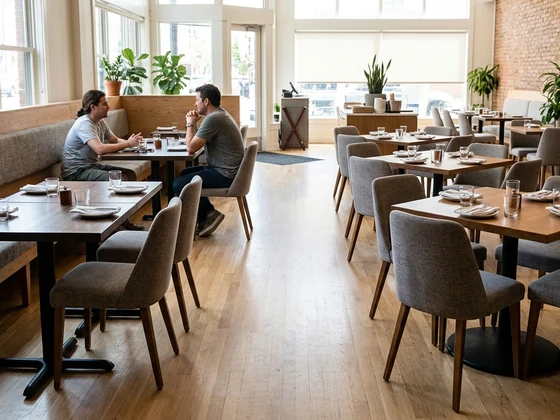
Restaurant Table Spacing and Aisle Clearance: Supplier Drawing Checklist
Check restaurant table spacing, aisle clearance, chair pullout, service path, and supplier drawing proof before approving a...
Sylvia2026-07-20 -

5 Mistakes to Avoid When Buying Restaurant Furniture from China
Don't fall for costly oversights! Learn the 5 mistakes to avoid when buying restaurant furniture from China and ensure a...
 Ron2025-01-079 min read
 -

RON GROUP Launches VR Experience to Explore Our Dynamic Showroom
Discover RON GROUP's VR showroom! Explore dining furniture, tableware, and customized services virtually or visit us in person to...
Sylvia2024-12-163 min read
Subscribe to RON GROUP
Stay up-to-date with the latest industry insights and expert advice. Together, we'll create your ideal restaurant.