




Content
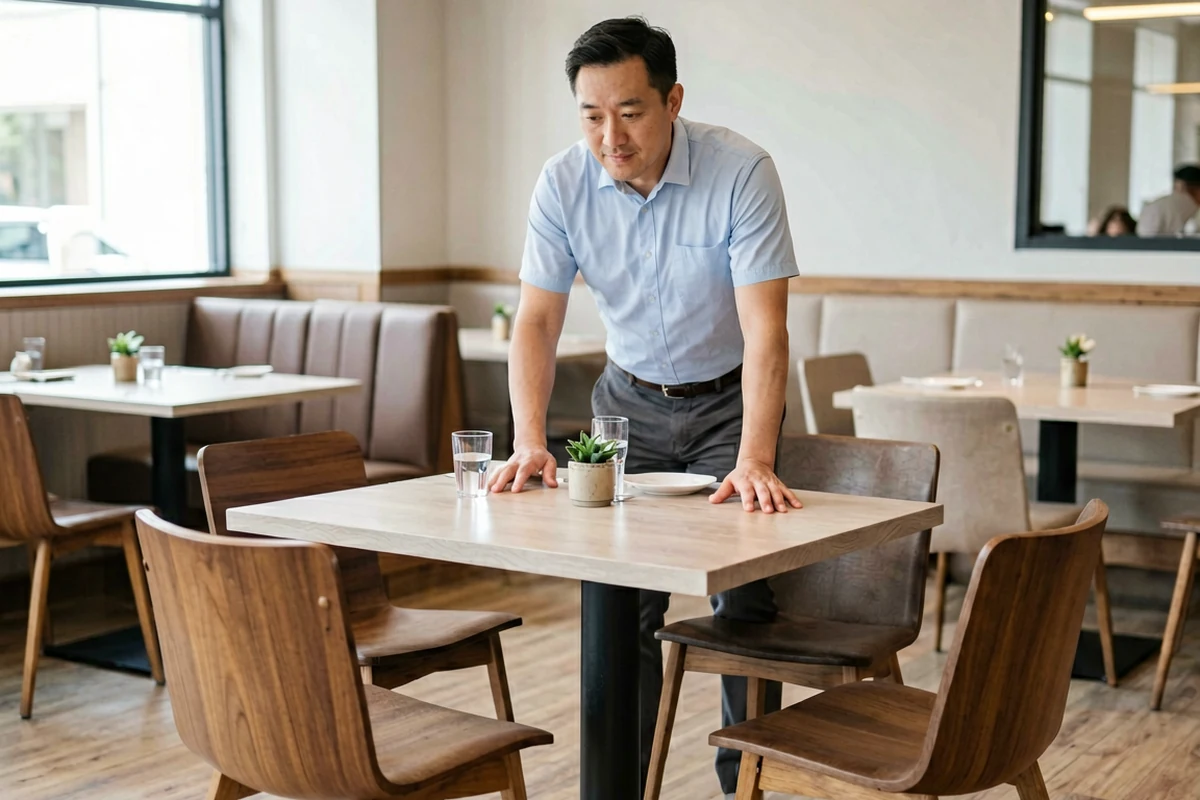
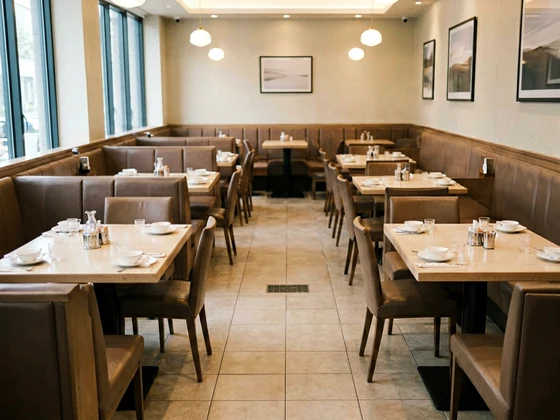
A 1,000 sq ft restaurant does not have one correct seat count. The usable result depends on how much of the floor is assigned to dining, the table mix, service aisles, accessible seating, entrances, restrooms, storage, food preparation, and the occupancy limit approved for the location.
For early planning, use a scenario model instead of a universal seats-per-square-foot rule. Start with the total area, subtract every non-dining function, then test the remaining dining area with a conservative, balanced, and compact furniture layout. Treat the result as a planning range until the local authority and project team confirm the final plan.
Use This Seating Capacity Formula
Planning seat count = usable dining area / assumed dining area per seat
The formula has two inputs:
Usable dining area: the part of the floor that can actually hold guest tables, chairs, booths, and the circulation needed to use them.
Assumed dining area per seat: a project-specific allowance that includes the furniture footprint and the space needed for the chosen service pattern.
Do not divide the entire 1,000 sq ft by a seating allowance. The front door, waiting point, service stations, restrooms, storage, kitchen or finishing area, wall offsets, columns, and required circulation all reduce the space available for seats.
Use the restaurant table sizing guide to compare the table shapes and dimensions that will become inputs to the capacity test.
Worked Example for a 1,000 Sq Ft Restaurant
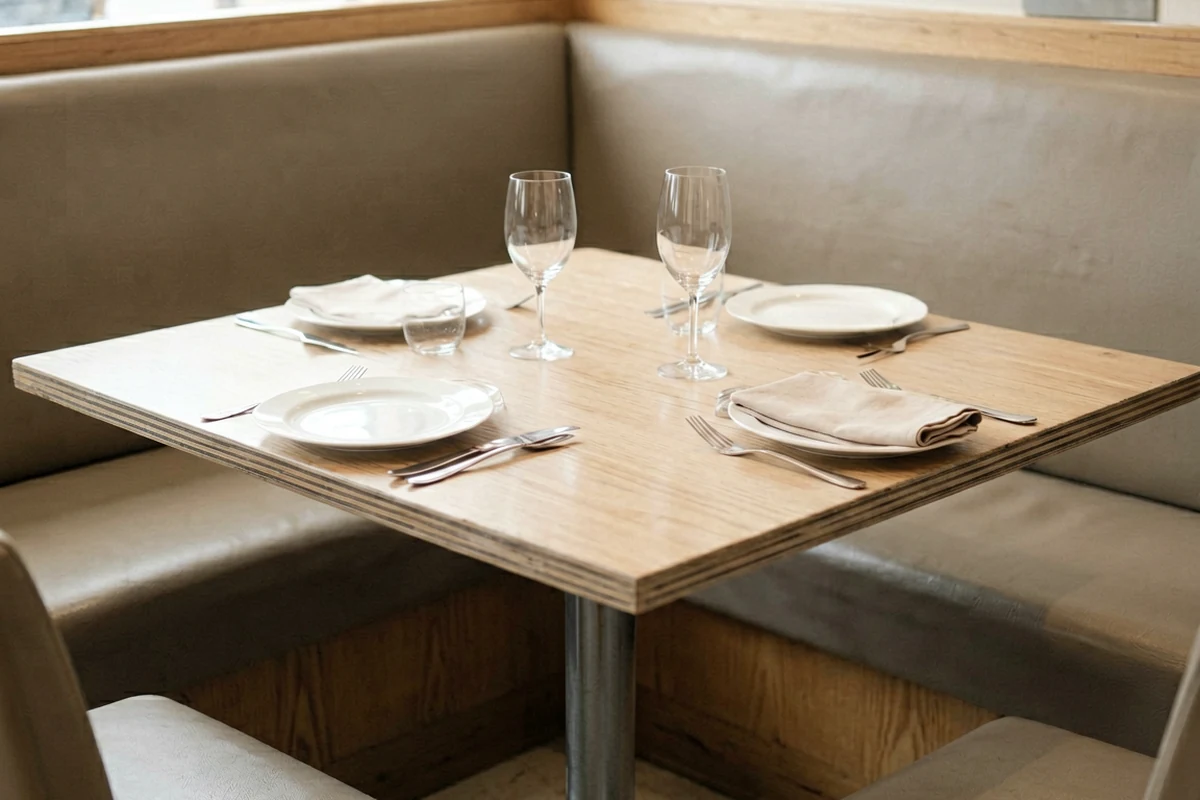
The following numbers are an illustrative planning scenario, not a code rule or industry benchmark.
Assume the project team assigns 620 sq ft to the guest dining zone after reserving 380 sq ft for the entrance, service support, restrooms, storage, food preparation, and other non-dining functions.
Test three furniture scenarios:
| Scenario | Assumed dining area per seat | Calculation | Planning result |
|---|---|---|---|
| Conservative | 20 sq ft | 620 / 20 | 31 seats |
| Balanced | 17 sq ft | 620 / 17 | 36 seats after rounding down |
| Compact | 15 sq ft | 620 / 15 | 41 seats after rounding down |
This produces an early planning range of roughly 31 to 41 seats for the stated assumptions. It does not prove that every 1,000 sq ft restaurant can operate at that capacity. A real plan may lose seats when door swings, columns, accessible routes, queueing, service stations, table clearances, or local requirements are drawn accurately.
The balanced scenario can serve as a middle test for comparing table combinations without making maximum density the only objective. The final count should come from a scaled layout, not from the arithmetic alone.
Calculate the Usable Dining Area First
Create an area schedule before drawing tables.
| Area component | Planning question |
|---|---|
| Entrance and waiting | Where can arriving guests wait without blocking circulation? |
| Service counter or host point | What working space and queue space does the operation need? |
| Food preparation and warewashing | Which equipment, landing areas, and staff paths must remain clear? |
| Restrooms | What existing or proposed footprint is reserved? |
| Storage | Where will food, beverages, disposables, furniture spares, and cleaning supplies go? |
| Service stations | Where will water, cutlery, POS equipment, trays, and clearing supplies be staged? |
| Dining zone | What area remains after the other functions are placed? |
If the building already exists, measure the clear interior dimensions and mark columns, utility walls, level changes, doors, and fixed equipment. If it is a concept plan, keep the assumptions visible so the seat count can be recalculated when the back-of-house plan changes.
Match the Table Mix to the Demand Pattern
The same dining area can produce different seat counts depending on the furniture mix.
Two-top tables can support flexible party combinations, but too many small tables may increase the number of bases and narrow gaps between chair backs. Four-top tables can be efficient for family and group dining, but they may waste capacity when most parties are smaller. Booths can organize perimeter seating and create a strong visual rhythm, but fixed dimensions reduce the ability to react to changing party sizes.
Build at least two scaled options using the dimensions of shortlisted commercial restaurant furniture:
A flexibility plan with more two-tops that can combine.
A stability plan with a deliberate mix of two-tops, four-tops, and perimeter seating.
Compare more than the seat total. Check how staff move, where guests pull out chairs, whether combined tables remain usable, and whether every table can be served without moving another guest.
Include Accessible Dining Spaces in the Layout
The U.S. Access Board explains that at least 5 percent of seating and standing spaces at dining surfaces must comply with the applicable accessibility requirements. When dining surfaces are provided, compliant spaces must be dispersed rather than isolated into one inferior location.
The federal framework also addresses clear floor space, knee and toe clearance, and the height of accessible dining surfaces. The U.S. Department of Justice publishes the 2010 ADA Standards, including the scoping and technical provisions for dining surfaces.
Apply those requirements while drawing the table plan, not after the maximum seat count has been selected. Accessible spaces need a usable approach and position at the dining surface. A table that technically exists but cannot be reached or used in the proposed layout does not solve the planning problem.
Federal ADA requirements are only part of the review. Confirm the state and local building, fire, health, and accessibility rules that apply to the specific project.
Test Circulation and Service Before Approving the Count
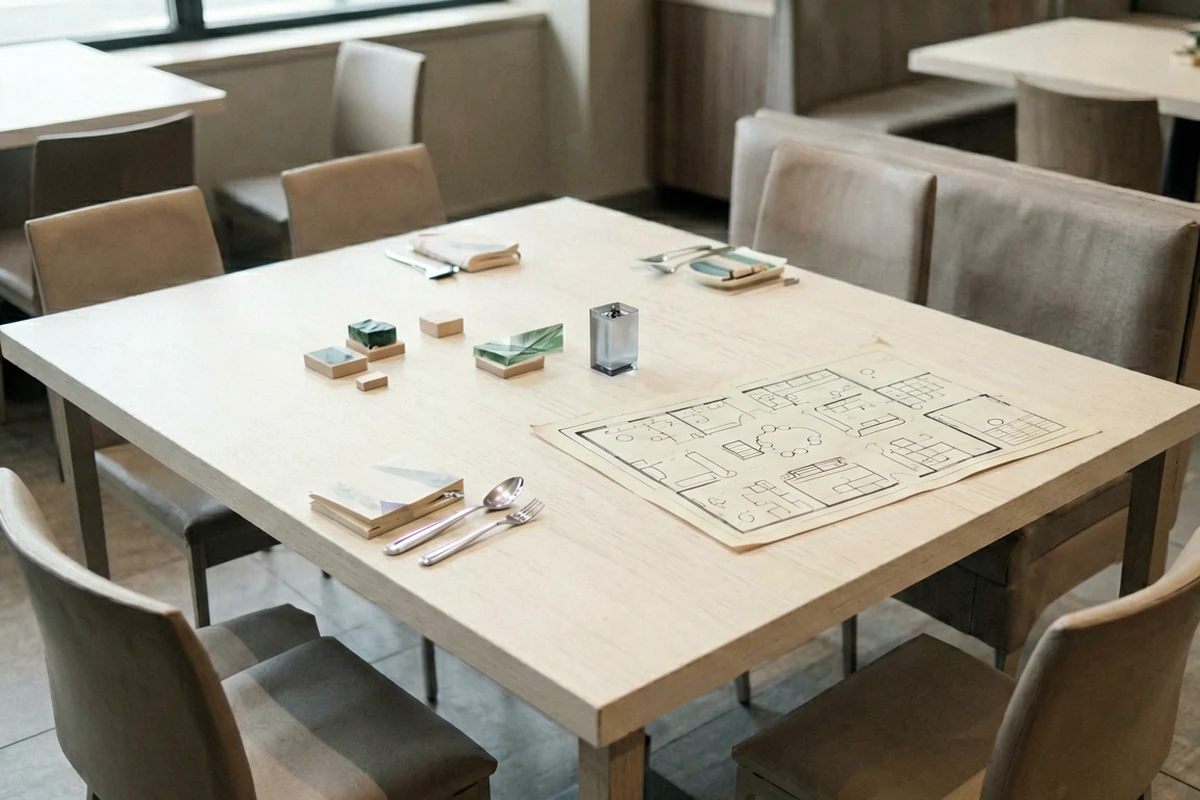
A seat count is only useful if guests and staff can use the room safely and efficiently.
Run a scaled circulation test for these movements:
Guests entering, waiting, being seated, and leaving
Guests moving to restrooms or service counters
Servers carrying trays between service points and tables
Staff clearing tables without blocking adjacent seats
Chairs moving between occupied and unoccupied positions
Tables combining for larger parties
Accessible routes remaining usable during service
Emergency egress paths remaining unobstructed
Then test the busiest operating moment. Place chairs in their occupied positions, add a waiting group, and show staff paths to every service station. A plan that works only when every chair is pushed under the table is not a reliable operating layout.
Use the restaurant table layout dimensions guide when the project moves from capacity arithmetic to a dimensioned furniture drawing and occupied-position review.
Compare Capacity Scenarios
Use a decision table to keep the tradeoffs visible.
| Decision factor | Lower-density plan | Higher-density plan |
|---|---|---|
| Guest movement | More forgiving | More sensitive to chair position and party movement |
| Service paths | Easier to separate | Requires tighter operating discipline |
| Table flexibility | More room to combine tables | More conflicts when tables move |
| Waiting and queueing | More space can remain available | Queue space may compete with dining space |
| Furniture size | Can support larger tops or chairs | Favors compact, carefully selected furniture |
| Simultaneous seat count | Lower | Higher only if the service model can support it |
| Risk of redesign | Lower after detailed testing | Higher if the initial count ignores clearances and fixed conditions |
Do not approve the highest number simply because it fits on one drawing. Approve the smallest layout that meets the operating and commercial target with acceptable circulation, accessibility, service, and furniture durability.
Furniture Information Needed for the Final Plan
Before placing an order, record:
Tabletop dimensions and shape
Base type and base footprint
Chair width, depth, and occupied position
Booth overall depth and seat position
Required quantity by furniture type
Table-combination rules
Finish and material samples
Floor-fixing requirements where applicable
Delivery access and assembly constraints
Spare furniture and replacement strategy
A pedestal base, four-leg table, booth, armchair, and armless chair use space differently. The layout should use the dimensions of the shortlisted products rather than generic rectangles.
Common Seating Capacity Mistakes
Area-assumption mistakes:
Dividing the full building area by one seats-per-square-foot number.
Treating an illustrative planning allowance as a legal occupancy rule.
Counting chairs before the kitchen, restrooms, storage, and service stations are fixed.
Layout-testing mistakes:
Drawing tables without the occupied chair position.
Adding accessible spaces only after the room is full.
Ignoring queues, waiting guests, and delivery or pickup traffic.
Maximizing seats without checking whether the kitchen and service team can support them.
Procurement-approval mistakes:
Selecting furniture before testing bases, chair depth, and table combinations.
Rounding a calculation up when the remaining area cannot support another complete seat position.
Ordering from a concept sketch instead of a dimensioned furniture plan.
Approval Checklist
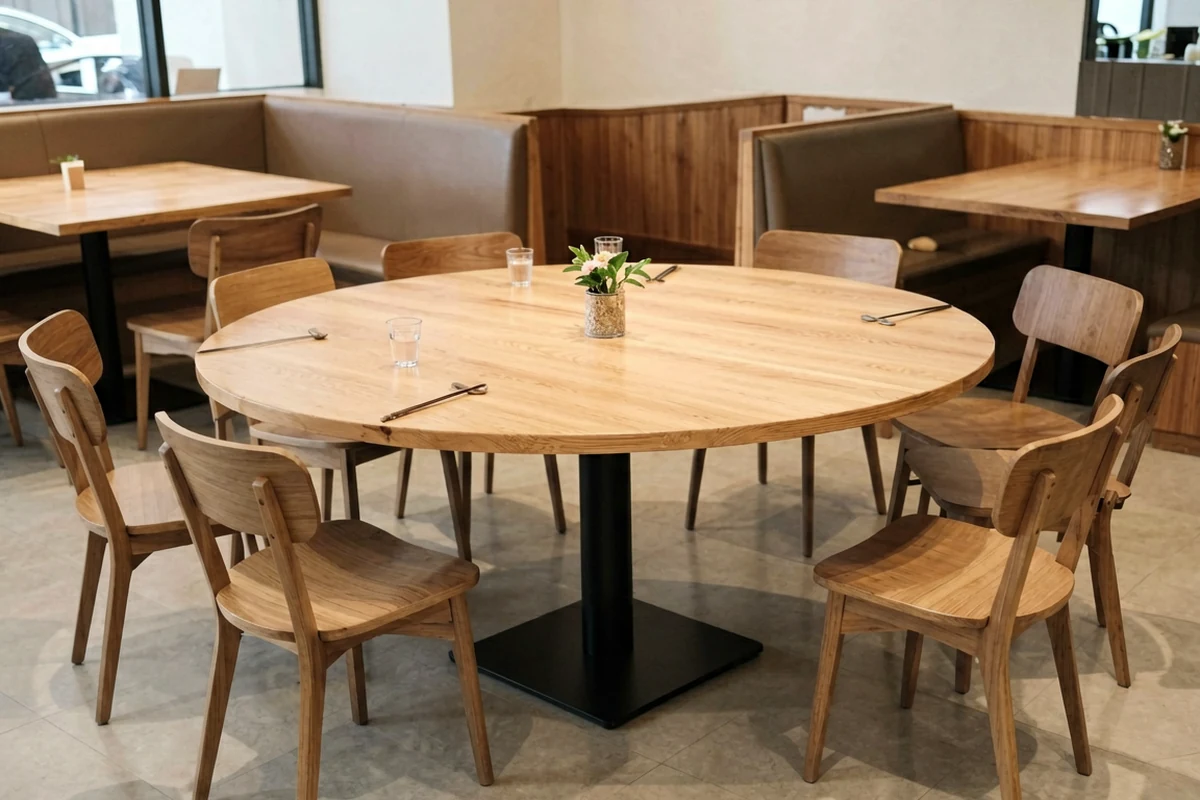
Before approving the seating count, confirm:
The measured total area and all fixed obstructions are recorded.
Non-dining functions have defined footprints.
The usable dining area is calculated from the current plan.
At least two table-mix options have been tested.
Chairs are shown in occupied positions.
Guest, staff, and accessible circulation routes are clear.
Accessible dining spaces are dispersed and technically coordinated.
The local occupancy and code review is complete.
The service model can support the proposed simultaneous covers.
Shortlisted furniture dimensions match the drawing.
Delivery, assembly, cleaning, maintenance, and replacement needs are documented.
Turn the Estimate into a Furniture Plan
For a 1,000 sq ft restaurant, a useful early answer is a scenario range, not a universal number. In the worked example, 620 sq ft of usable dining area produced 31, 36, or 41 planning seats under three explicit assumptions. Your result will change with the actual floor allocation, table mix, local requirements, and operating model.
RON GROUP can review the floor plan, target party mix, table combinations, chair dimensions, finishes, delivery requirements, and replacement strategy. Request a project consultation to turn the preliminary calculation into a project-specific restaurant furniture schedule.
Sources and Further Reading
U.S. Access Board Chapter 2 scoping requirements supports the accessible dining-space percentage, dispersion, and technical planning context.
U.S. Department of Justice 2010 ADA Standards provides the federal scoping and technical framework for accessible dining surfaces.
Get the week's latest industry information
-
Real-Life Professional Restaurant Case Studies
Explore Now
-
Create a unique restaurant with over 95,700+products
Explore Now
-
Protessional Free 3D Restaurant Design
Explore Now
-
Still Have Questions About Opening a Restaurant?
Explore Now

Sylvia
With 8 years in catering & hospitality industry, sales manager of Ron Group, specialise in providing one stop solutions to restaurants, hotels and weddings.
Discover Our Exclusive Products
Explore our extensive range of restaurant and hotel supplies designed to enhance your operations. Find the perfect solutions to meet your needs.
Browse Our ProductsFREE 3D DESIGN
Boost your restaurant's success with our free 3D design service. Start building the restaurant of your dreams today!
Explore 3D Design Case
RECOMMENDED CASES
-
La Rambla by Catalunya: Crafting Barcelona's Soul in Hong Kong - Custom Furniture Excellence
RON Group's custom Spanish-inspired furniture elevates La Rambla with artisanal aesthetics...
Learn More -

Cardinal Point: Elevating Outdoor Seating with Tailored Cushion Upgrades
Discover how Cardinal Point transformed its outdoor dining experience with custom cushions, achievin
Learn More
RECOMMENDED BLOGS
-
Bar Glassware 101: Types, Names, Uses, and How to Stock Your Bar
Learn the 10 core bar glassware types, names, and uses. Discover how to stock your bar with the right glasses for cocktails, beer,...
Sylvia2026-07-26 -
Complete Bar Equipment List for Opening a Bar
Plan a complete commercial bar equipment list by menu, service volume, refrigeration, ice, glassware, utilities, sanitation,...
Sylvia2026-06-11 -
Low Budget Restaurant Interior Design: 2026 Trends
Prioritize a low-budget restaurant interior by protecting code, operations, durability, accessibility, and phased design decisions...
Sylvia2026-04-04
Subscribe to RON GROUP
Stay up-to-date with the latest industry insights and expert advice. Together, we'll create your ideal restaurant.