


Restaurant Supply Chain Management: How to Avoid Delays and Cut Costs
Learn 7 strategies to avoid restaurant supply chain delays and cut procurement costs by 5–15%, covering supplier diversification, forecasting & inventory tips.
Content
Supply chain disruptions cost the average restaurant 3% to 9% of annual revenue, and for an industry already operating on margins of 3% to 6%, that gap can be the difference between profit and loss. Whether you are opening your first location or managing a multi-unit hotel food and beverage operation, the way you source, order, receive, and manage supplies directly impacts your food costs, menu consistency, and guest experience. This guide breaks down the most effective strategies to build a resilient restaurant supply chain, reduce procurement costs, and avoid the delays that erode profitability.
Why Restaurant Supply Chain Management Matters More Than Ever

The hospitality industry has faced unprecedented supply chain volatility since 2020. Geopolitical tensions, shipping container shortages, raw material price swings, and labor disruptions continue to create unpredictable lead times and cost spikes. According to the National Restaurant Association, 9 out of 10 restaurant operators cite rising food and supply costs as their top operational challenge.
For restaurants and hotels, supply chain failures show up in tangible ways:
Menu inconsistency: Unavailable ingredients force last-minute substitutions that disappoint guests and complicate kitchen workflows
Emergency purchasing: Rush orders from alternative suppliers typically cost 15% to 30% more than planned procurement
Inventory waste: Over-ordering perishable items to hedge against shortages leads to spoilage rates that can exceed 10% of total food costs
Operational downtime: Missing equipment parts or cleaning supplies disrupt service and can trigger health code violations
The operators who weather these disruptions best are those who treat supply chain management not as a back-office task but as a strategic function equal to menu development and guest service.
Mapping Your Restaurant Supply Chain: The First Step
Before you can optimize your supply chain, you need to understand it. A restaurant supply chain typically involves four to six tiers, from raw material producers to the distributor or supplier who delivers to your loading dock. Most restaurant operators only have visibility into the final tier — their direct suppliers — which creates blind spots when disruptions occur upstream.
Conduct a Supply Chain Audit
Start by documenting every product category your operation depends on:
Food and beverage: Proteins, produce, dairy, dry goods, beverages, and specialty ingredients
Kitchen equipment and smallwares: Cookware, utensils, cutting boards, storage containers, and replacement parts
Furniture and fixtures: Tables, chairs, booths, lighting, and decor items
Cleaning and sanitation: Chemicals, disposable gloves, sanitizer, trash liners
Tableware and service items: Plates, glassware, flatware, linens, and disposables
Technology and POS: Hardware, receipt paper, payment terminals
For each category, record your current suppliers, lead times, order minimums, payment terms, and the percentage of your total spend they represent. This audit is the foundation for every optimization strategy that follows. If you are in the planning stages, a one-stop supply strategy can simplify this process significantly by reducing the number of vendor relationships you need to manage from day one.
7 Strategies to Avoid Supply Chain Delays
1. Diversify Your Supplier Base Without Overcomplicating It
The most common supply chain mistake is relying on a single source for critical items. When that supplier experiences a shortage, production issue, or logistics failure, you have no fallback. Research from the NetSuite supply chain management guide recommends maintaining at least two qualified suppliers for every high-priority product category.
However, diversification must be balanced against complexity. Managing too many vendors creates administrative overhead, inconsistent quality, and weaker negotiating leverage. The optimal approach is to:
Identify your top 20% of SKUs that represent 80% of your spend (the Pareto principle applies directly here)
Maintain a primary and secondary supplier for each of those critical categories
Consolidate low-priority, non-perishable categories (smallwares, tableware, cleaning supplies, furniture) with a single reliable supplier who can deliver across all of them
2. Build Buffer Stock for High-Risk Items
Just-in-time inventory works well for stable supply chains, but the current environment demands safety stock for items with long or unpredictable lead times. A practical approach:
Calculate your average daily usage for each critical item
Multiply by your supplier's average lead time plus a buffer of 2 to 5 additional days
Set reorder points that trigger new orders before safety stock is depleted
For non-perishable restaurant supplies — equipment, tableware, cleaning chemicals, packaging — maintaining 2 to 4 weeks of buffer stock is standard. Fixing overstocking and understocking issues through proper safety stock calculation can reduce inventory management costs by up to 10%, according to industry benchmarks.
3. Establish Clear Supplier Performance Metrics
You cannot improve what you do not measure. Set KPIs for every supplier and review them quarterly:
| Metric | Target Benchmark | Why It Matters |
|---|---|---|
| On-time delivery rate | 95% or higher | Late deliveries disrupt prep schedules and force emergency purchases |
| Order accuracy | 98% or higher | Wrong items or quantities waste receiving time and create shortages |
| Quality rejection rate | Below 2% | Damaged or substandard goods increase waste and replacement costs |
| Lead time consistency | Within 1 day of quoted lead time | Unpredictable lead times make inventory planning impossible |
| Responsiveness | Reply within 24 hours | Slow communication delays issue resolution and order adjustments |
Share these metrics with your suppliers. The best vendor relationships are built on transparency, and suppliers who know they are being measured tend to prioritize your account. Review case studies from operators who have implemented structured supplier management to see how performance tracking translates into real operational improvements.
4. Use Demand Forecasting to Align Purchasing
Reactive ordering — waiting until you run low to place an order — is the most expensive way to manage inventory. Data-driven demand forecasting uses historical sales data, seasonal patterns, local events, and even weather forecasts to predict what you will need and when.
Practical steps to implement forecasting without enterprise software:
Track weekly sales by menu item for at least 12 weeks to establish baseline demand
Identify seasonal patterns (summer beverage spikes, holiday catering surges, slow periods)
Factor in upcoming events: local festivals, sports events, conferences, and holidays that drive traffic
Build a simple spreadsheet model that converts forecasted covers into ingredient and supply quantities
Even basic forecasting reduces over-ordering by 10% to 15% and virtually eliminates the "we ran out" emergency purchases that drain margins.
5. Negotiate Contracts With Flexibility Clauses
Long-term contracts with suppliers can lock in favorable pricing, but rigid contracts become liabilities when market conditions shift. Structure your agreements to include:
Price adjustment mechanisms: Tie pricing to published commodity indexes so both parties share market risk fairly
Volume flexibility: Allow order quantities to fluctuate 15% to 20% above or below committed volumes without penalty
Substitution clauses: Pre-approve alternative products or grades that can be substituted when primary items are unavailable
Exit provisions: Include performance-based termination clauses linked to your KPI benchmarks
6. Consolidate Non-Food Supplies With a One-Stop Supplier
Food procurement gets most of the attention, but non-food supplies — kitchen equipment, tableware, glassware, furniture, cleaning products, linens, and smallwares — often represent 25% to 35% of a restaurant's total procurement spend. Many operators manage 10 to 15 separate vendors for these categories, creating a logistical burden that diverts management time from revenue-generating activities.
Vendor consolidation for non-food categories delivers measurable benefits. According to UKHospitality research, streamlining suppliers and centralizing procurement can lower costs by 5% to 15% while reducing delivery frequencies and administrative workload. Specific advantages include:
Fewer invoices to process: Reducing vendor count from 12 to 3 cuts accounts payable processing time by up to 75%
Stronger negotiating leverage: Larger consolidated orders qualify for volume pricing tiers
Simplified receiving: Fewer deliveries mean less dock congestion, faster inspection, and reduced labor at the receiving stage
Consistent quality standards: A single supplier accountable for quality across multiple categories is easier to manage than a dozen individual vendors
Faster issue resolution: One point of contact for non-food supplies versus multiple vendor relationships
Browse a comprehensive product catalog to see how consolidating kitchen equipment, furniture, tableware, and operational supplies under one supplier simplifies procurement and unlocks volume savings.
7. Build Relationships, Not Just Transactions
The strongest supply chains are built on relationships where both parties invest in each other's success. Suppliers who view you as a strategic partner — rather than just another account — are more likely to:
Provide early warning of upcoming price increases or shortages
Prioritize your orders during periods of constrained supply
Offer flexible payment terms during slow seasons
Share market intelligence and new product recommendations
Provide value-added services like kitchen design support or operations consulting
Invest in these relationships by paying on time, communicating forecasts in advance, and providing constructive feedback. A supplier who understands your business goals can proactively recommend solutions you might not discover on your own — whether that is a more durable tableware line that reduces replacement frequency or an equipment specification that lowers energy costs.
Cost Reduction Strategies That Do Not Sacrifice Quality
Leverage Group Purchasing Power
If you operate multiple locations or are part of a hotel group, aggregate your purchasing across properties. According to NetSuite's hospitality procurement guide, group purchasing organization (GPO) membership typically delivers 12% to 18% savings on food and beverage purchases and 15% to 25% reductions on operational supplies compared to individual direct purchasing.
Even single-unit operators can access volume pricing by consolidating orders across categories with a supplier who offers breadth. When your kitchen equipment, furniture, tableware, and cleaning supplies all come from one source, your total spend creates the purchasing leverage that would otherwise require multiple locations.
Optimize Order Timing and Frequency
Every delivery has a cost beyond the invoice: receiving labor, inspection time, storage handling, and the operational disruption of dock activity. Analyze whether you can reduce order frequency by:
Combining categories: Order non-perishable supplies weekly or biweekly instead of as-needed
Aligning delivery schedules: Coordinate with suppliers to consolidate shipments on the same day
Meeting minimum order thresholds: Plan orders to hit free-shipping or volume-discount breakpoints consistently
Conduct Regular Menu Engineering Reviews
Your menu is a procurement document as much as a marketing tool. Quarterly menu engineering — analyzing each item's contribution margin and popularity — identifies opportunities to:
Replace low-margin items that require expensive specialty ingredients
Cross-utilize ingredients across multiple dishes to increase volume purchasing
Adjust portion sizes based on actual consumption data rather than assumptions
Introduce seasonal specials that take advantage of lower-cost, peak-availability ingredients
Reduce Waste Systematically
The average restaurant generates 25,000 to 75,000 pounds of food waste per year. Reducing waste by even 20% directly improves your effective food cost by 2 to 4 percentage points. Proven waste reduction tactics include:
FIFO (First In, First Out): Rotate stock so older inventory is used first
Prep sheets tied to forecasts: Prepare only what demand data predicts you will sell
Trim utilization: Train kitchen staff to use vegetable trim for stocks and meat trim for staff meals
Waste tracking: Log what gets thrown away by category and weight to identify patterns
Building a Supply Chain for New Restaurant Openings
The supply chain challenges during a restaurant opening are distinct from ongoing operations. You are purchasing everything at once — furniture, equipment, tableware, signage, uniforms, initial food inventory — often with tight deadlines and limited cash flow. Common pitfalls include:
Underestimating lead times: Commercial kitchen equipment can take 4 to 12 weeks for delivery; custom furniture may require 8 to 16 weeks
Ordering from too many sources: Coordinating 15 to 20 vendors for a new build creates scheduling chaos and finger-pointing when items arrive late
Missing critical items: Operators frequently forget smallwares, cleaning supplies, and back-of-house essentials until days before opening
Paying premium prices: Rush orders due to poor planning can inflate project costs by 10% to 20%
A structured opening timeline with procurement milestones is essential. Begin sourcing equipment and furniture at least 12 to 16 weeks before your target opening date. If you want expert guidance on building your procurement plan, explore restaurant operations consulting services that can help you create a phased purchasing schedule aligned with your construction timeline.
Technology Tools for Supply Chain Visibility
You do not need enterprise-grade software to gain supply chain visibility. Here are practical technology layers ranked by complexity and cost:
| Tool | What It Does | Best For |
|---|---|---|
| Spreadsheet tracking (Google Sheets, Excel) | Track orders, lead times, pricing, and supplier KPIs manually | Single-unit operators with fewer than 20 active suppliers |
| Inventory management software (MarketMan, BlueCart, Supy) | Automate inventory counts, set reorder alerts, track food cost in real time | Mid-volume restaurants ready to digitize inventory workflows |
| Procurement platforms (Procurify, Order.co) | Centralize purchasing, automate approvals, compare supplier pricing | Multi-unit operators or hotel groups with high procurement volume |
| ERP systems (NetSuite, SAP) | Integrate procurement with accounting, inventory, and operations data | Large hospitality groups requiring end-to-end visibility |
Regardless of the technology you choose, the fundamentals remain the same: know what you need, know when you need it, and know who can deliver it reliably and cost-effectively.
A Practical Supply Chain Improvement Checklist
Use this checklist to assess and improve your current supply chain operations:
Audit completed: All product categories, suppliers, lead times, and spend percentages documented
Critical items identified: Top 20% of SKUs by spend have primary and secondary suppliers
Safety stock levels set: Buffer inventory calculated for high-risk, long-lead-time items
Supplier KPIs established: On-time delivery, accuracy, quality, and responsiveness tracked quarterly
Demand forecasting active: At least 12 weeks of historical sales data driving purchasing decisions
Contracts reviewed: Flexibility clauses, price adjustment mechanisms, and exit provisions in place
Non-food supply consolidated: Equipment, tableware, furniture, and operational supplies sourced from as few vendors as possible
Waste tracking implemented: Daily waste logs by category informing prep and ordering adjustments
Technology in place: At minimum, a spreadsheet tracking system for orders, costs, and supplier performance
Supplier relationships reviewed: Quarterly business reviews with top suppliers to discuss performance and upcoming needs
Turn Your Supply Chain Into a Competitive Advantage
A well-managed supply chain is not just about avoiding problems — it is about creating advantages that competitors who treat procurement as an afterthought cannot match. Lower food costs, consistent menu execution, fewer emergency purchases, and the operational bandwidth to focus on guest experience instead of chasing missing deliveries: these are the tangible outcomes of disciplined supply chain management.
For operators looking to simplify procurement while accessing better pricing, RON GROUP offers a one-stop supply solution with over 95,700 products across kitchen equipment, furniture, tableware, and operational supplies. With 80% of products warehoused for immediate dispatch and up to 65% cost savings through direct manufacturer relationships, consolidating your non-food supply chain with a single partner eliminates the vendor coordination headaches that drain time and margin. Contact the RON GROUP team to discuss your procurement requirements and discover how a consolidated supply approach can reduce costs and lead times for your restaurant or hotel operation.
Get the week's latest industry information
-
Real-Life Professional Restaurant Case Studies
Explore Now
-
Create a unique restaurant with over 95,700+products
Explore Now
-
Protessional Free 3D Restaurant Design
Explore Now
-
Still Have Questions About Opening a Restaurant?
Explore Now

Sylvia
With 8 years in catering & hospitality industry, sales manager of Ron Group, specialise in providing one stop solutions to restaurants, hotels and weddings.
Discover Our Exclusive Products
Explore our extensive range of restaurant and hotel supplies designed to enhance your operations. Find the perfect solutions to meet your needs.
Browse Our ProductsFREE 3D DESIGN
Boost your restaurant's success with our free 3D design service. Start building the restaurant of your dreams today!
Explore 3D Design Case
RECOMMENDED CASES
-

La Rambla by Catalunya: Crafting Barcelona's Soul in Hong Kong - Custom Furniture Excellence
RON Group's custom Spanish-inspired furniture elevates La Rambla with artisanal aesthetics...
Learn More -

Cardinal Point: Elevating Outdoor Seating with Tailored Cushion Upgrades
Discover how Cardinal Point transformed its outdoor dining experience with custom cushions, achievin
Learn More
RECOMMENDED BLOGS
-
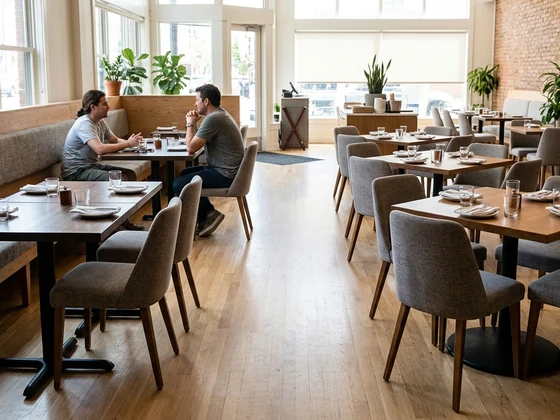
Restaurant Table Spacing and Aisle Clearance: Supplier Drawing Checklist
Check restaurant table spacing, aisle clearance, chair pullout, service path, and supplier drawing proof before approving a...
Sylvia2026-07-20 -

5 Mistakes to Avoid When Buying Restaurant Furniture from China
Don't fall for costly oversights! Learn the 5 mistakes to avoid when buying restaurant furniture from China and ensure a...
 Ron2025-01-079 min read
 -

RON GROUP Launches VR Experience to Explore Our Dynamic Showroom
Discover RON GROUP's VR showroom! Explore dining furniture, tableware, and customized services virtually or visit us in person to...
Sylvia2024-12-163 min read
Subscribe to RON GROUP
Stay up-to-date with the latest industry insights and expert advice. Together, we'll create your ideal restaurant.