

The Complete Checklist for Hotel & Restaurant Supply Sourcing (2026)
Transform your procurement strategy. A guide for owners on managing custom restaurant furniture, kitchen equipment, and logistics with a single integrated partner.
Content
Hospitality procurement is no longer a simple “buy what’s cheapest” exercise. In 2025, the restaurant and foodservice market is still expanding, with the U.S. industry forecast to reach about $1.5 trillion in sales, while operators face tighter timelines, labor constraints, and higher expectations for guest experience.
If you’re opening or renovating a restaurant that also touches hotel operations (or you manage multiple venues across a portfolio), procurement complexity multiplies fast: FF&E, OS&E, kitchen equipment, tableware, lighting, and sometimes uniforms—all with different lead times, compliance requirements, and installation dependencies.
This guide is designed for procurement managers, restaurant owners, developers, and designers in the supplier selection stage. It gives you a practical sourcing framework, a decision-grade checklist, and a copy/paste RFQ template—built around the one-stop hospitality sourcing model (consolidating categories under a single accountable partner).
What “One-Stop Hotel & Restaurant Supply” Actually Means (and When It Wins)
“One-stop” should not mean “one catalog and a lot of outsourcing.” For serious projects, it means one operational owner who can coordinate category coverage, compliance documentation, sampling, production control, consolidation, and shipment release—so your opening date doesn’t become a logistics problem.
One-stop sourcing is most valuable when:
You have many SKUs across categories (furniture + kitchen + tableware + lighting + soft goods).
You need design consistency (finish matching, fabric lots, coordinated silhouettes across public areas and guestrooms).
You can’t afford schedule risk (construction handover windows are tight; delays burn revenue).
You operate across markets (different safety marks, fire requirements, and documentation expectations).
Freight and handling are often the hidden cost center in fragmented procurement. Consolidation programs commonly deliver meaningful savings by reducing partial shipments and improving container utilization; many 3PL case studies show double-digit reductions depending on lane, packaging, and load factor (freight consolidation benefits overview).

Supplier Models Compared: Factory, Trader, or Integrated One-Stop Partner
When shortlisting hospitality furniture suppliers or a general hotel and restaurant supply partner, align your choice to project risk—not just unit price.
| Decision Factor | Factory Direct (Single Category) | Trading Company / Broker | Integrated One-Stop Partner |
|---|---|---|---|
| Best fit | One product family (e.g., chairs only), clear specs | Spot buys, limited scope, price-driven | Multi-category projects, openings, rollouts |
| Accountability | Strong inside one factory; weak cross-category | Often diffused (“supplier says factory issue”) | Single owner for timeline, QC, and shipping release |
| Quality consistency | Good within one line; finish drift across vendors | Variable; depends on the upstream network | Central sample control + coordinated finish schedule |
| Compliance documents | Possible, but you must request and manage per vendor | May be incomplete or hard to verify | Packaged documentation per destination & category |
| Logistics efficiency | You manage consolidation across factories | Often multiple ship points; higher handling | Consolidation + kitting options reduce site chaos |
| True total cost of ownership (TCO) | Competitive for a single item | Can be cheap upfront; risk shows up later | Lower admin + fewer delays + fewer replacements |
Practical takeaway: If you’re sourcing “restaurant furniture manufacturers” for one SKU, factory-direct can be optimal. If you’re sourcing “hotel & restaurant supply” across many categories, prioritize an integrated partner who can prove process control, documentation, and consolidation capability.
Compliance You Must Specify Upfront (Not After Production)
For hospitality projects, compliance failures are expensive because they surface late—at installation, inspection, or insurance onboarding. A good supplier will ask for destination requirements early and include them in the PO and production files.
1) Upholstered seating and soft goods fire requirements
United States: Upholstered furniture is commonly aligned to California TB117-2013; the official bulletin and related documentation are maintained by California regulators (California TB117-2013 reference PDF).
United Kingdom: Furniture supplied in the UK must meet the Furniture and Furnishings (Fire) (Safety) framework; official government guidance explains scope and updates (UK furniture fire safety regulations guidance).
What to put in your RFQ/PO: “Destination compliance required: [TB117-2013 / UK F&F regs / project-specific spec]. Provide test reports or compliance statements, labeling approach, and material declarations for upholstery and foam.”
2) Electrical and gas safety marks for equipment and lighting
North America: For many product types, acceptance often ties back to certification by a Nationally Recognized Testing Laboratory (NRTL). OSHA maintains the program and recognized labs list (OSHA NRTL program and current list).
EU/EEA: Many regulated product categories require conformity assessment and CE marking; the EU’s official guidance explains when CE applies and how to obtain it (EU CE marking requirements overview).
3) Sanitation standards for commercial foodservice equipment
Health departments and consultants frequently expect sanitation-focused certification for food-contact and commercial kitchen equipment. NSF provides the benchmark framework and explains how certification works (NSF food equipment certification overview).
4) Performance testing for contract-grade seating
For high-traffic venues, “commercial grade” should be measurable. Even if your venue is not an office environment, the concept of standardized performance testing is useful. BIFMA sponsors widely referenced safety and performance standards for seating and furniture (BIFMA standards overview).
The Complete Procurement Checklist (Hotel + Restaurant)
Use this checklist to scope your bill of materials (BOM) and avoid the classic “we forgot X” delays. It’s written for buyers comparing restaurant furniture suppliers, restaurant furniture wholesalers, and full-category hospitality sourcing partners.
Front of House (FOH): revenue-driving guest experience
Seating: dining chairs, bar stools, lounge chairs, banquettes/booths. For contract use, specify frame material, joinery, weight rating, and upholstery wear testing expectations.
Tables: restaurant table tops, bases, bar tables, communal tables. Include edge profile, top material (HPL/compact laminate/wood/stone), and maintenance requirements.
Lighting: pendants, sconces, chandeliers, task lighting. Specify color temperature ranges, dimming method, and destination certifications.
Tableware: crockery/chinaware, cutlery, glassware, servingware. Specify chip resistance expectations, dishwasher durability, and replenishment plan for breakage.
Bar supplies: shakers/tools, speed rails, ice buckets, dispensers, bar mats, garnish caddies.
Signage & decor: menus/boards, mirrors, wall features, planters, queue management.
Where buyers get burned: ordering “affordable restaurant furniture wholesale” that looks good on day 1, but fails on stability, finish durability, or warranty response—leading to replacements in months, not years.

Back of House (BOH): the operating system
Cooking line: ranges, ovens (combi if applicable), fryers, griddles, charbroilers, holding cabinets.
Ventilation & fire suppression interfaces: hood compatibility, filters, access panels, maintenance plan.
Refrigeration: walk-ins, reach-ins, undercounter units, blast chiller (if needed), ice machines.
Warewashing: dish machines, glass washers, sinks, drying racks, chemical dispensers.
Prep & storage: stainless worktables, shelving, GN pans, bins, cutting boards, carts.
If your sourcing plan requires a “commercial kitchen supply store” experience (broad selection + compliance-ready specs), treat documentation and after-sales parts availability as non-negotiable—not optional.
Hotel-specific: guestrooms, corridors, public areas
Guestroom casegoods: headboards, nightstands, desks, wardrobes, minibars/credenzas, luggage racks.
Soft goods: blackout drapery systems, sheers, bedding textiles, decorative pillows/throws.
Bathroom items: mirrors, vanities (if in scope), amenity dispensers, hairdryers, irons/boards.
Public areas: lobby seating, coffee tables, reception desk, conference/banquet chairs and folding tables, transport trolleys.
Uniforms and operating supplies (optional, but valuable for one-stop)
For multi-site openings, standardizing uniforms simplifies brand execution and onboarding. If “restaurant uniform supply” is in scope, include FOH and BOH uniforms, apron systems, name badges, and size grading. If you want category visibility in one place, use a consolidated catalog view like the RON Group product catalog to structure your BOM across furniture, tableware, kitchen, lighting, and uniforms.
How to Evaluate Hospitality Furniture Suppliers (What to Ask, What to Verify)
When you shortlist restaurant chair manufacturers, restaurant table manufacturers, or broader hospitality furniture suppliers, go beyond photos and pricing. A reliable supplier should be able to show:
Commercial construction details: frame materials, joint methods, reinforcement, finish system, and serviceability (e.g., replaceable glides, removable seat pads).
Test evidence: requested performance test reports (or a plan to test) aligned to your usage level.
Finish control process: approved sample protocol and how they lock color, sheen, and fabric lots.
Spare parts and replenishment: realistic lead times for replacement chairs, table tops, glassware, and high-break items.
Portfolio proof: comparable projects by category and scale (not just “we can do it”).
To see what “project proof” looks like in practice, review RON Group’s hospitality case studies and match examples to your concept type, size, and finish level.
RFQ Checklist (Copy/Paste Template)
Use this as your RFQ message to any hotel and restaurant supply partner. The goal is to force clarity early, so quotes are comparable and production files don’t drift.
PROJECT OVERVIEW
- Project type: (restaurant / hotel / mixed-use / multi-site rollout)
- Location(s) and delivery address(es):
- Target opening date / install window:
- Responsible parties: (owner / GC / designer / procurement lead)

SCOPE (attach if available)
- Draft BOM (SKUs, quantities, finishes)
- Floor plan + seating plan (PDF/CAD)
- Elevations / millwork drawings (if booths/casegoods)
- Reference images or brand standards

SPECIFICATIONS & COMPLIANCE (destination-specific)
- Upholstery / foam fire requirements:
- Electrical/gas safety marks required:
- Food equipment sanitation requirements:
- Materials declarations needed (wood species, coatings, etc.):

SAMPLING & QUALITY CONTROL
- Required pre-production samples (what items need golden samples):
- Acceptance criteria (dimensions, finish, comfort, stability):
- 3rd-party inspection required? (yes/no; at what stages)

PACKAGING & SHIPPING
- Packaging performance requirement (e.g., ISTA-style simulation for fragile/oversized items):
- Labeling for kitting (by room/area/SKU):
- Shipping terms (Incoterms preferred):
- Consolidation needed? (yes/no) 40HQ target? (estimate)

COMMERCIAL TERMS
- Quote format: unit price + tooling + packaging + estimated CBM/weight
- Payment milestones:
- Warranty terms:
- Spare parts package request:
For shipping terms, be explicit. Incoterms define who owns cost, risk, and tasks at each stage; the U.S. government’s overview is a useful internal reference when aligning stakeholders (Incoterms overview for buyers).
Execution: Samples, Packaging, and Consolidation (Where Projects Slip)
Golden sample discipline
For custom restaurant furniture or coordinated hotel casegoods, “golden sample” approval is your contract-grade control point. Treat it as binding: dimensions, finish, fabric lot, stitch lines, and comfort.
Packaging that survives real transit
Damage is often a packaging failure, not a manufacturing failure. If your project includes stone tops, glass, mirrors, or lighting, specify packaging performance testing expectations. ISTA publishes widely used test procedure frameworks for simulated transit environments (ISTA test procedures overview).
Consolidation and site kitting
If you’re buying from multiple restaurant furniture manufacturers and separate equipment vendors, the job of consolidation becomes yours. One-stop partners can reduce site chaos by consolidating SKUs and labeling pallets by area/room—so the site team installs instead of sorting. This is where the “restaurant wholesale supply store” mentality (lots of vendors, many POs) often loses to structured, consolidated execution.
Common Sourcing Mistakes (and How to Avoid Them)
Mistake: Buying on photos and unit price.
Fix: Compare on TCO: durability, maintenance, replenishment lead time, and warranty response. A slightly higher unit cost can be cheaper than frequent replacements and downtime.Mistake: Vague compliance language (“commercial grade”, “fireproof”).
Fix: Name the exact destination requirement in writing and require test reports or compliance statements before mass production. Use official references when aligning internal stakeholders (e.g., TB117-2013 reference and UK guidance).Mistake: Treating lighting/equipment certifications as “later.”
Fix: Require certification evidence at quote stage. For North America, align expectations to NRTL acceptance pathways (OSHA NRTL list). For EU, confirm whether CE marking applies to your product categories (CE marking guidance).Mistake: Under-scoping BOH.
Fix: Build BOH from workflow, not a shopping list. Tie equipment specs to menu, volume, and sanitation expectations (use sanitation certification requirements as a baseline where appropriate, such as NSF certification).Mistake: No spare parts strategy.
Fix: Include a spare parts package (chair glides, hardware, replacement shades, extra glassware/crockery) and a replenishment plan for high-break items.
Choosing a One-Stop Partner: What “Good” Looks Like
A capable one-stop hospitality sourcing partner should help you:
Translate design intent into buildable specs (not just “nice-looking products”).
Engineer procurement around your critical path (samples → production → consolidation → install window).
Package compliance documentation by category and destination (so approvals don’t stall shipments).
Deliver coordinated finishes across custom restaurant furniture, hotel casegoods, and public-area items.
Protect execution through QC gates and transit-ready packaging.
If you want a practical next step: assemble your draft BOM (even if incomplete) and your target timeline, then request a consolidated quote structure and category roadmap. You can submit your requirements through RON Group’s contact form and ask for a procurement plan that covers furniture, kitchen equipment, tableware, lighting, and (if needed) uniforms—without turning your opening into a vendor-management project.
Get the week's latest industry information
-
Real-Life Professional Restaurant Case Studies
Explore Now
-
Create a unique restaurant with over 95,700+products
Explore Now
-
Protessional Free 3D Restaurant Design
Explore Now
-
Still Have Questions About Opening a Restaurant?
Explore Now

Sylvia
With 8 years in catering & hospitality industry, sales manager of Ron Group, specialise in providing one stop solutions to restaurants, hotels and weddings.
Discover Our Exclusive Products
Explore our extensive range of restaurant and hotel supplies designed to enhance your operations. Find the perfect solutions to meet your needs.
Browse Our ProductsFREE 3D DESIGN
Boost your restaurant's success with our free 3D design service. Start building the restaurant of your dreams today!
Explore 3D Design Case
RECOMMENDED CASES
-

La Rambla by Catalunya: Crafting Barcelona's Soul in Hong Kong - Custom Furniture Excellence
RON Group's custom Spanish-inspired furniture elevates La Rambla with artisanal aesthetics...
Learn More -

Cardinal Point: Elevating Outdoor Seating with Tailored Cushion Upgrades
Discover how Cardinal Point transformed its outdoor dining experience with custom cushions, achievin
Learn More
RECOMMENDED BLOGS
-
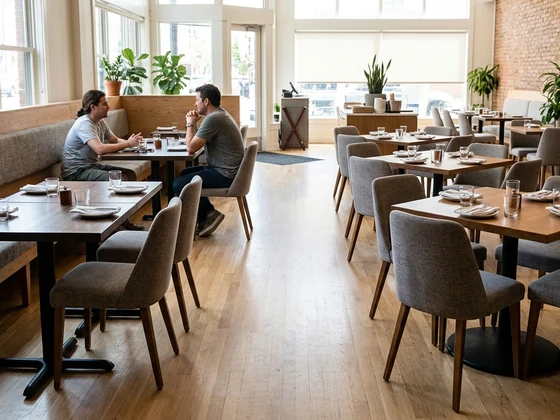
Restaurant Table Spacing and Aisle Clearance: Supplier Drawing Checklist
Check restaurant table spacing, aisle clearance, chair pullout, service path, and supplier drawing proof before approving a...
Sylvia2026-07-20 -

5 Mistakes to Avoid When Buying Restaurant Furniture from China
Don't fall for costly oversights! Learn the 5 mistakes to avoid when buying restaurant furniture from China and ensure a...
 Ron2025-01-079 min read
 -

RON GROUP Launches VR Experience to Explore Our Dynamic Showroom
Discover RON GROUP's VR showroom! Explore dining furniture, tableware, and customized services virtually or visit us in person to...
Sylvia2024-12-163 min read
Subscribe to RON GROUP
Stay up-to-date with the latest industry insights and expert advice. Together, we'll create your ideal restaurant.