
Content
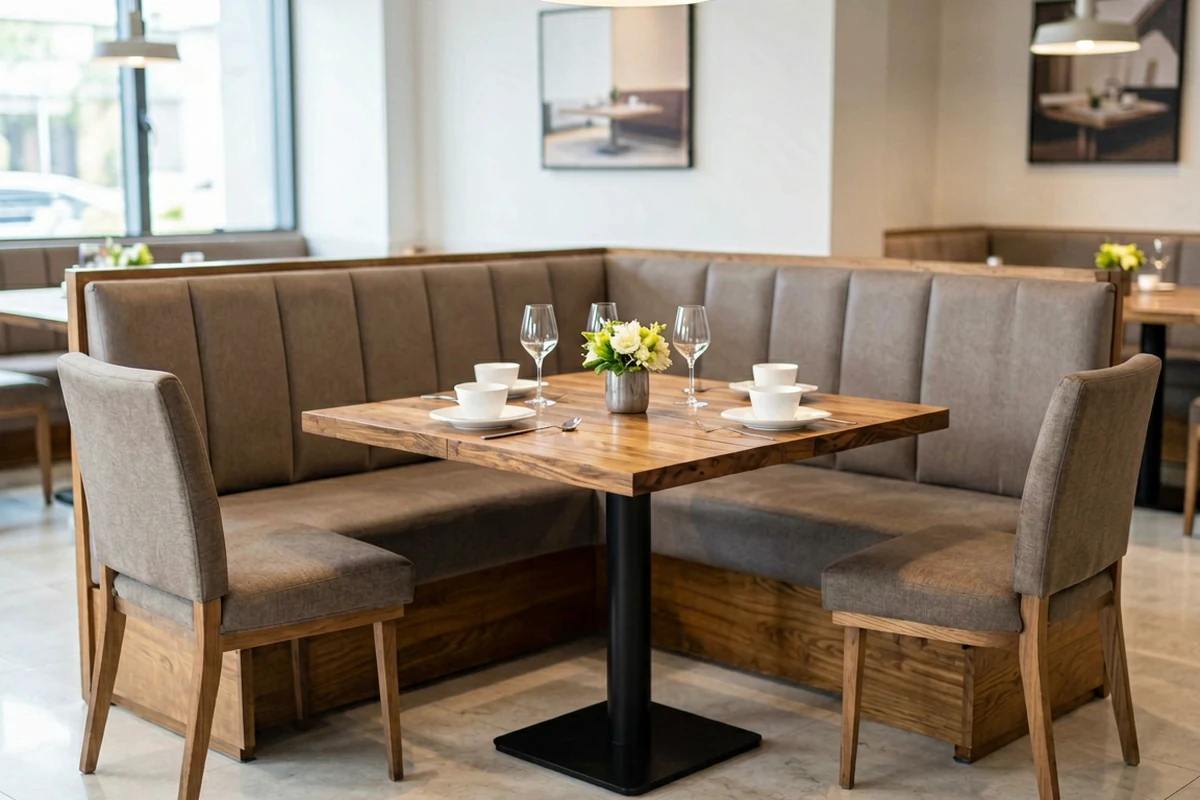
A restaurant furniture cost breakdown should help a buyer compare the same project scope across suppliers. It should not start with a generic chair price or a table price, because those numbers can hide different materials, construction, finishes, packing, delivery terms, inspection scope, and after-delivery support.
The practical way to budget restaurant furniture is to separate the quote into decision areas: product scope, material and finish choices, manufacturing complexity, sample and approval work, quality control, packing, import and logistics factors, and supplier risk. This gives owners, designers, and procurement teams a cleaner way to request quotations and challenge unclear offers.
Start With the Furniture Scope
Begin with a written furniture schedule before asking for prices. RON GROUP maintains a commercial restaurant furniture collection, which can be used as a category reference when building that schedule. For a restaurant project, separate at least these cost groups:
Dining chairs, armchairs, and bar stools
Table tops and table bases
Booths, banquettes, and fixed seating
Outdoor furniture where relevant
Host, waiting, lounge, and private-room furniture
Spare parts, glides, upholstery references, and replacement planning
Do not compare two quotations until both suppliers are pricing the same item codes, quantities, dimensions, material references, finish references, packing expectations, and delivery assumptions. If the scope is unclear, the cheapest quote may simply exclude work that another supplier included.
Break Tables Into Top, Base, and Fit-Out Decisions
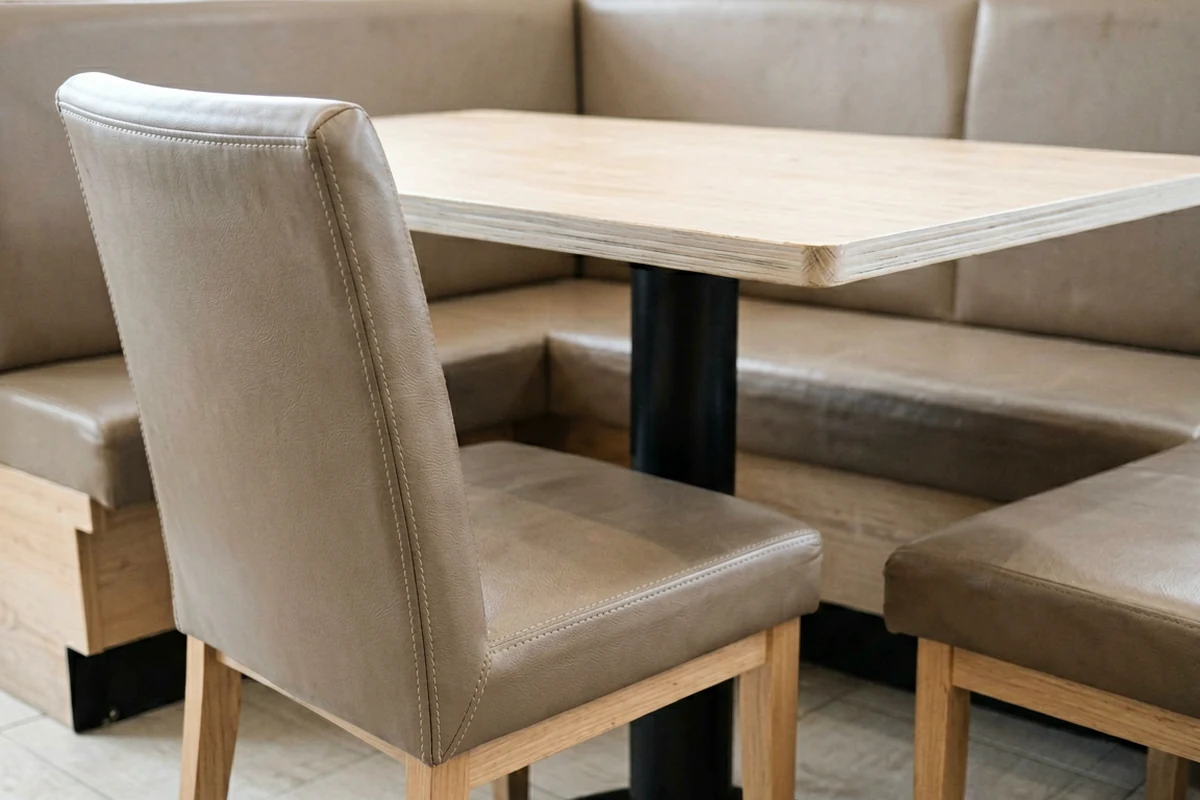
Restaurant tables are often misread as one line item. In practice, cost is shaped by the relationship between the table top, base, finish, size, edge detail, stability requirement, packing method, and layout plan. RON GROUP has separate pages for restaurant table tops and table-related furniture categories, so buyers can treat the table as a set of decisions rather than a single object.
For quote comparison, ask suppliers to separate:
| Table cost driver | What to confirm | Why it changes the quote |
|---|---|---|
| Top material and finish | Surface, edge, thickness, finish reference | Different surfaces and finish systems require different production and protection controls. |
| Base type | Footprint, height, fixing method, finish | The base affects stability, seating comfort, packing, and replacement planning. |
| Size mix | Item codes and quantities by size | A project with many custom sizes is different from one using repeated standard sizes. |
| Site use | Indoor, outdoor, wet-service, heavy-turnover, or private dining | Use conditions shape material and finish expectations. |
| Packing | Carton, crate, protection, labels, and location coding | Better receiving control can reduce site confusion and damage disputes. |
This structure avoids unsupported price claims while still giving the buyer a useful budget model.
Treat Chairs as Material, Construction, and Replacement Decisions
RON GROUP also maintains a restaurant dining chairs category page. Use that category as a scope reference, then define the project-specific decisions that affect cost.
For chairs and stools, the cost discussion should cover frame material, seat construction, upholstery or finish, glides, stacking or storage needs, replacement consistency, and the required approval sample. A simple dining chair, an upholstered armchair, and a bar stool may all sit under restaurant furniture, but they do not carry the same production, packing, or maintenance assumptions.
A good supplier quote should identify what is included in the chair price and what remains open. Open items may include upholstery reference, finish sample, floor glide selection, production sample approval, spare parts, carton labeling, or replacement procedure. Those open items are not minor details; they are budget risks.
Separate Factory Price From Landed-Cost Factors
For imported restaurant furniture, the factory price is only one part of the commercial decision. The U.S. International Trade Administration provides import tariff and fee overview resources, and its guidance supports treating tariffs, taxes, fees, and related import factors as part of import cost planning rather than comparing only the supplier's factory quotation.
A practical landed-cost worksheet can include these non-price-rate categories without inventing exact figures:
Product quotation by item code
Sample, drawing, and approval costs if charged separately
Packing and labeling requirements
Inland transport before export
Export documents and commercial paperwork
Ocean, air, or other freight assumptions
Insurance assumptions where applicable
Import duties, taxes, and fees to be confirmed by the buyer's customs adviser or broker
Destination handling, local delivery, site receiving, and replacement handling
The key point is not to publish a universal percentage. The key point is to compare suppliers on a consistent landed-cost basis and confirm which party owns each cost category.
Add Supplier Due Diligence to the Cost Breakdown
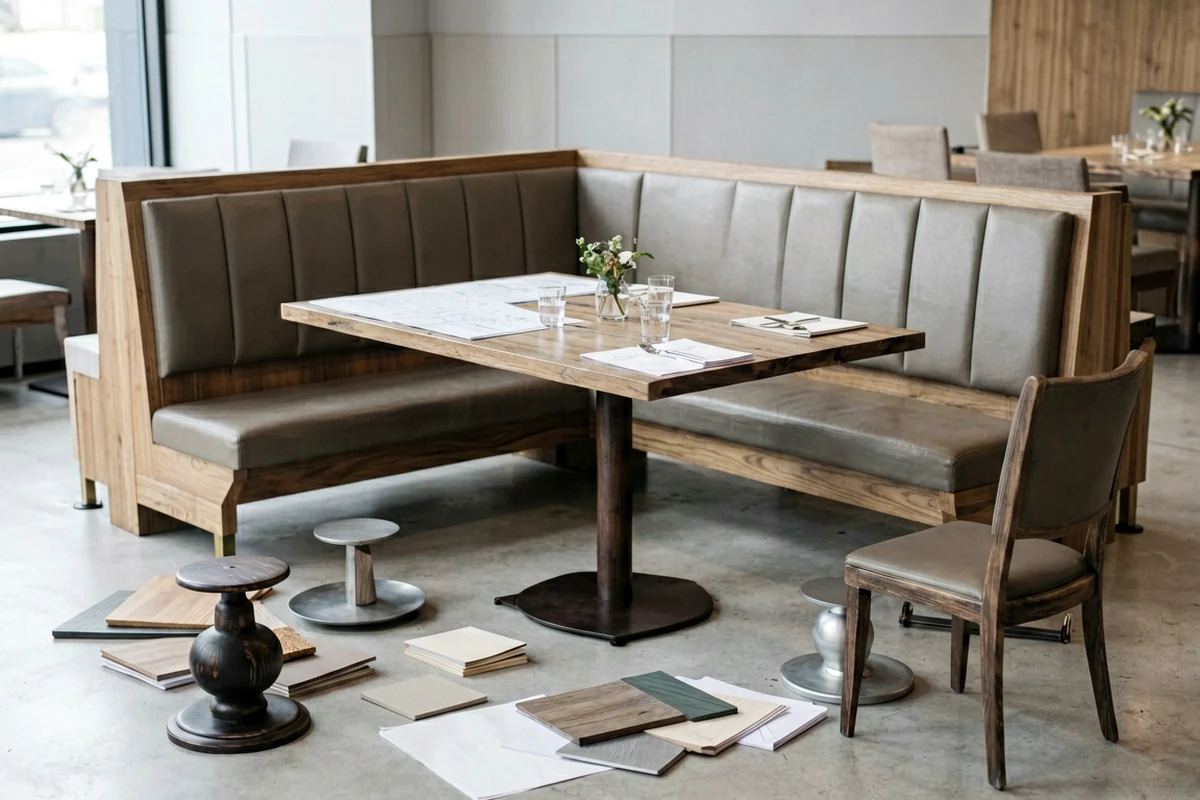
The U.S. International Trade Administration advises companies to perform due diligence before entering business relationships. For restaurant furniture procurement, that guidance matters because a low quote can become expensive if the supplier cannot prove its production route, approval process, quality controls, packing method, or issue-resolution path.
Build a supplier-cost comparison with evidence columns, not only price columns:
| Supplier question | Cost risk if unclear | Evidence to request |
|---|---|---|
| Who is the legal contracting entity? | Payment, responsibility, and dispute confusion | Business identity and contract entity confirmation |
| Who manufactures each furniture category? | Category mismatch or uncontrolled subcontracting | Factory or production-partner explanation |
| How are samples approved? | Production may not match design intent | Sample approval form and retained reference process |
| How is quality checked before packing? | Defects may reach the site | Inspection stages and acceptance criteria |
| How are cartons labeled? | Receiving teams may lose item-location control | Packing list, marks, and item-code examples |
| How are shortages or damage resolved? | Replacement cost and schedule risk | Written replacement and claim process |
This approach keeps the article grounded in approved sourcing guidance while avoiding unsupported rankings or guarantees.
Use Cost Ranges as Internal Planning Bands, Not Public Claims
A restaurant team can still create useful internal budget bands without publishing unsupported price ranges. Use low, medium, and high complexity bands based on scope and risk:
Low complexity: repeated loose furniture, limited finishes, simple packing, and few site-specific dimensions.
Medium complexity: mixed seating types, multiple finishes, coordinated table and chair sets, and controlled sample approval.
High complexity: booth or banquette work, custom dimensions, many finish combinations, staged delivery, stricter packing, and more site coordination.
These bands are not market prices. They are planning labels that help buyers decide how much detail they need before requesting quotations. The more custom the furniture, the more the quote should document drawings, samples, revisions, inspection, and delivery responsibilities.
Compare Quotes With a Scope-Based Matrix
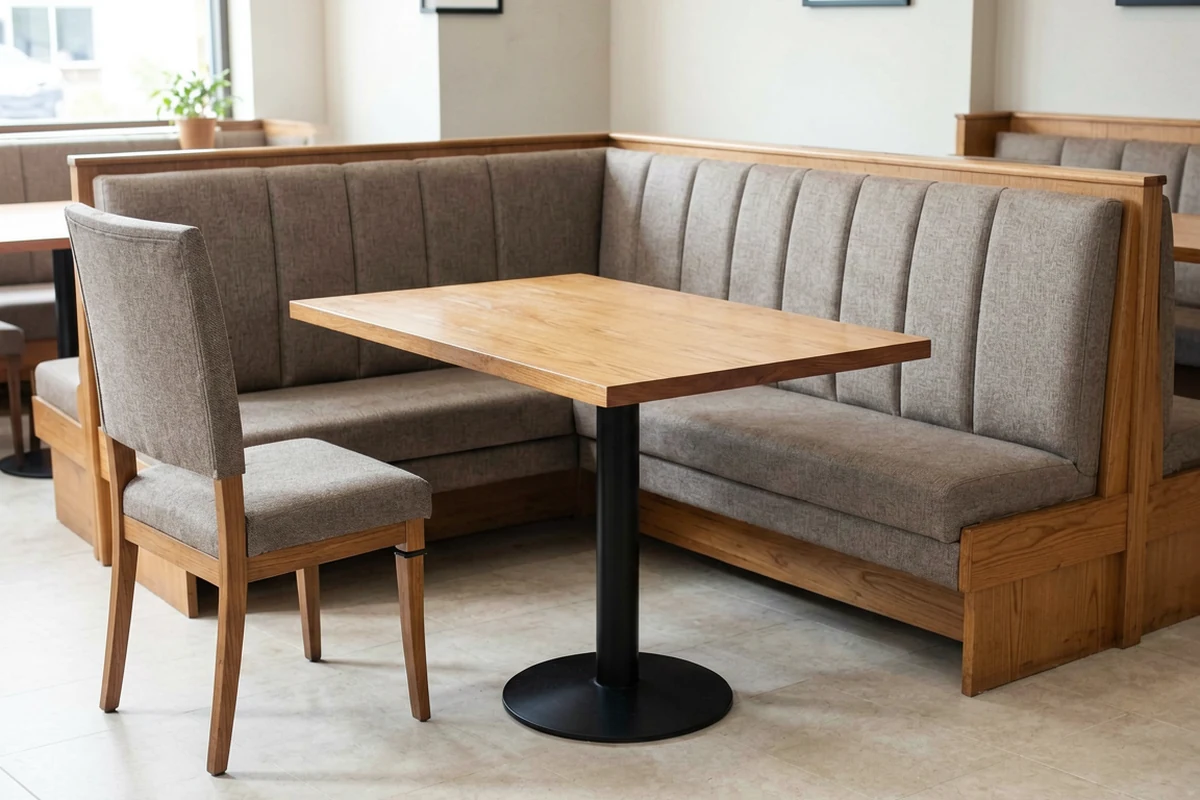
A useful quote comparison starts by normalizing every supplier offer into the same structure.
| Cost area | What to compare | Acceptable basis |
|---|---|---|
| Product scope | Item codes, categories, quantities, dimensions | Furniture schedule and drawings |
| Materials and finishes | Frame, surface, upholstery, finish references | Approved material and finish records |
| Manufacturing complexity | Standard, modified, or custom items | Supplier explanation and sample plan |
| Approval work | Drawings, samples, revisions, sign-off process | Named approval steps and owners |
| Quality control | Inspection stages and issue records | Written QC plan or example report |
| Packing and logistics | Protection, carton marks, document list | Packing method and shipping assumptions |
| Import factors | Tariffs, taxes, fees, freight, insurance, destination handling | Buyer-verified landed-cost worksheet |
| After-delivery support | Shortage, damage, replacement, spare parts | Written support process |
If a supplier cannot show the basis for a cost area, mark that line as open. Do not fill the gap with assumptions just to make a spreadsheet look complete.
Budget Questions to Ask Before Award
Before awarding a restaurant furniture order, ask these questions:
Are all suppliers pricing the same furniture schedule and revision?
Which items are standard, modified, or custom?
Which materials, finishes, and upholstery references still need approval?
Are table tops and bases specified as one coordinated assembly?
Which chair and stool details affect cleaning, storage, floor contact, or replacement?
What sample or pre-production approval is included?
What inspection steps happen before packing?
What packing, labeling, and receiving information will the site team receive?
Which import duties, taxes, fees, freight, insurance, and destination costs are outside the supplier price?
What happens if items arrive damaged, short, or different from the approved record?
The answers turn a vague cost conversation into a controlled procurement decision.
When RON GROUP Fits the Cost Conversation
RON GROUP can support a restaurant furniture quotation discussion when the buyer has a floor plan, item list, target quantities, finish direction, and project schedule. Use the internal product pages to structure the scope, then request a quote that separates product categories, material decisions, sample requirements, packing expectations, and delivery assumptions.
For a project-specific review, request a restaurant furniture quotation with the furniture schedule, floor plan, finish references, delivery location, and any required project milestones. For broader coordination, RON GROUP's restaurant project support page can be used as a service reference, but the quotation should still define the exact responsibilities and exclusions.
Sources and Further Reading
U.S. International Trade Administration due-diligence guidance supports the supplier verification and evidence-based comparison framework.
U.S. International Trade Administration import tariff and fee resources support the landed-cost factor framing.
RON GROUP Furniture Collection supports the internal restaurant furniture product-scope reference.
RON GROUP Dining Chair Category supports the chair-scope example used in the cost breakdown.
Get the week's latest industry information
-
Real-Life Professional Restaurant Case Studies
Explore Now
-
Create a unique restaurant with over 95,700+products
Explore Now
-
Protessional Free 3D Restaurant Design
Explore Now
-
Still Have Questions About Opening a Restaurant?
Explore Now

Sylvia
With 8 years in catering & hospitality industry, sales manager of Ron Group, specialise in providing one stop solutions to restaurants, hotels and weddings.
Discover Our Exclusive Products
Explore our extensive range of restaurant and hotel supplies designed to enhance your operations. Find the perfect solutions to meet your needs.
Browse Our ProductsFREE 3D DESIGN
Boost your restaurant's success with our free 3D design service. Start building the restaurant of your dreams today!
Explore 3D Design Case
RECOMMENDED CASES
-

La Rambla by Catalunya: Crafting Barcelona's Soul in Hong Kong - Custom Furniture Excellence
RON Group's custom Spanish-inspired furniture elevates La Rambla with artisanal aesthetics...
Learn More -

Cardinal Point: Elevating Outdoor Seating with Tailored Cushion Upgrades
Discover how Cardinal Point transformed its outdoor dining experience with custom cushions, achievin
Learn More
RECOMMENDED BLOGS
-
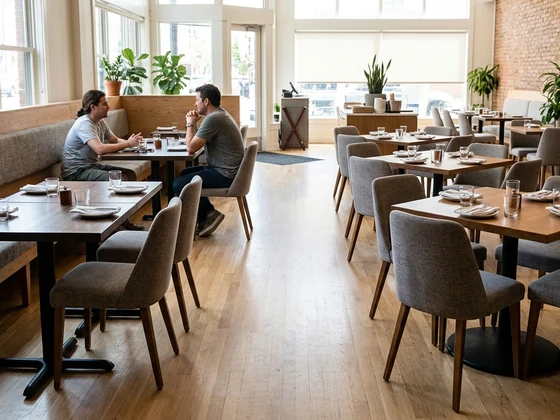
Restaurant Table Spacing and Aisle Clearance: Supplier Drawing Checklist
Check restaurant table spacing, aisle clearance, chair pullout, service path, and supplier drawing proof before approving a...
Sylvia2026-07-20 -

5 Mistakes to Avoid When Buying Restaurant Furniture from China
Don't fall for costly oversights! Learn the 5 mistakes to avoid when buying restaurant furniture from China and ensure a...
 Ron2025-01-079 min read
 -

RON GROUP Launches VR Experience to Explore Our Dynamic Showroom
Discover RON GROUP's VR showroom! Explore dining furniture, tableware, and customized services virtually or visit us in person to...
Sylvia2024-12-163 min read
Subscribe to RON GROUP
Stay up-to-date with the latest industry insights and expert advice. Together, we'll create your ideal restaurant.