









Content
Direct Answer: Specifying loose restaurant dining chairs requires translating aesthetic preferences into measurable procurement inputs. A complete specification defines the frame material, joinery or weld methods, ergonomic dimensions for guest fit, floor contact points, and surface cleanability. Furthermore, it requires requesting exact structural test reports, upholstery performance evidence, and physical samples before issuing a purchase order. Relying on visual design alone without verifying these physical and documentary inputs exposes the operation to premature furniture failure and compromised guest comfort.
Selecting seating for a hospitality environment is a technical procurement exercise. The difference between a chair that maintains its structural integrity through continuous commercial service and one that requires early replacement depends entirely on the criteria established during the Request for Quote (RFQ) phase. This guide details how to evaluate wood, metal, polymer, and upholstered chairs, verify ergonomic and table interface requirements, request appropriate test evidence, and structure a comprehensive sample review.
Material Specification: Wood, Metal, Polymer, and Upholstered Options
No single material provides a universal solution for all hospitality environments. Each category presents specific structural characteristics, maintenance requirements, and specification inputs that must align with the operational realities of the dining space. The objective is to match the material's inherent properties to the expected handling and environmental conditions of the venue.
Solid Wood Seating
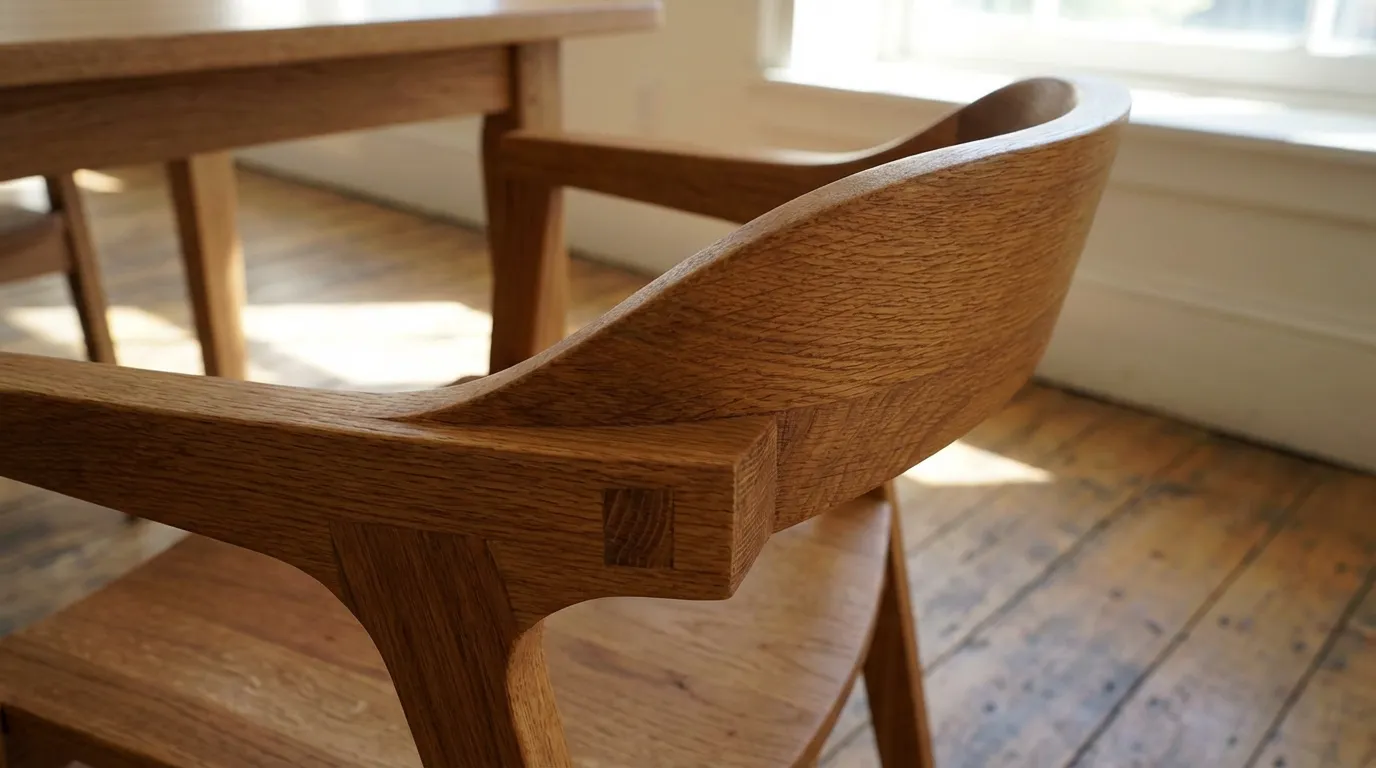
Wood chairs introduce natural texture and warmth, but their performance depends heavily on the species selected, the moisture content of the timber during manufacturing, and the joinery methods employed. When specifying wood chairs, request documentation on the exact hardwood species utilized, such as beech, oak, or ash, rather than accepting generic terms like "solid wood."
The structural integrity of a wood chair relies on its joints. Specify mortise-and-tenon or robust dowel joinery reinforced with corner blocks and commercial-grade adhesives. Joints that rely solely on mechanical fasteners without proper blocking are highly susceptible to racking—the lateral movement that occurs when a seated guest shifts their weight. Additionally, request information on the finishing process, including the application of catalyzed lacquers or polyurethanes that protect the wood grain from moisture and commercial cleaning agents. For a deeper understanding of these manufacturing inputs, review our guide to wood furniture production processes.
Metal Frame Seating
Metal chairs, typically constructed from steel or aluminum, are specified based on the gauge (thickness) of the tubing, the alloy grade, and the integrity of the welds. Steel provides substantial weight and rigidity, making it suitable for high-traffic indoor environments. Aluminum offers a lighter profile and inherent corrosion resistance, which is critical for outdoor or high-humidity applications.
When evaluating metal chairs, inspect the weld points. Record the weld type, weld locations, tube closures, pretreatment, and finish system offered for the exact sample. Compare the visible workmanship and the supplier's applicable test evidence instead of treating one welding or coating process as a universal winner. Request documentation detailing the metal gauge and the specific pretreatment and powder-coating processes used to protect the frame.
Polymer and Molded Seating
Polymer chairs, including those made from polypropylene, polycarbonate, or fiberglass-reinforced plastics, offer seamless construction and ease of sanitation. These materials are formed through injection molding, which eliminates joints and fasteners that can loosen over time.
The primary specification inputs for polymer chairs include the inclusion of UV stabilizers (if the chairs will be exposed to direct sunlight) and any reinforcement or additive claimed for the molded shell, together with evidence for the claimed effect. When requesting quotes for polymer seating, ask suppliers to detail the specific polymer blend and any additives used to prevent embrittlement or color fading.
Upholstered Seating
Upholstered chairs introduce complex specification requirements because they combine a rigid frame (wood or metal) with flexible support systems, foam padding, and surface textiles. The frame must meet the criteria outlined above, while the upholstery components require their own detailed inputs.
Request the foam identification, density and compression data offered for the exact sample, then conduct a seated review with the intended upholstery build. Do not infer field life from a generic foam label. The suspension system—whether webbing, sinuous springs, or a solid plywood deck—must be evaluated for its ability to maintain tension. Upholstered options are frequently paired with restaurant booths to create a cohesive, textured seating landscape. The textile itself must be evaluated against specific performance guidelines, which is detailed in the evidence section below.
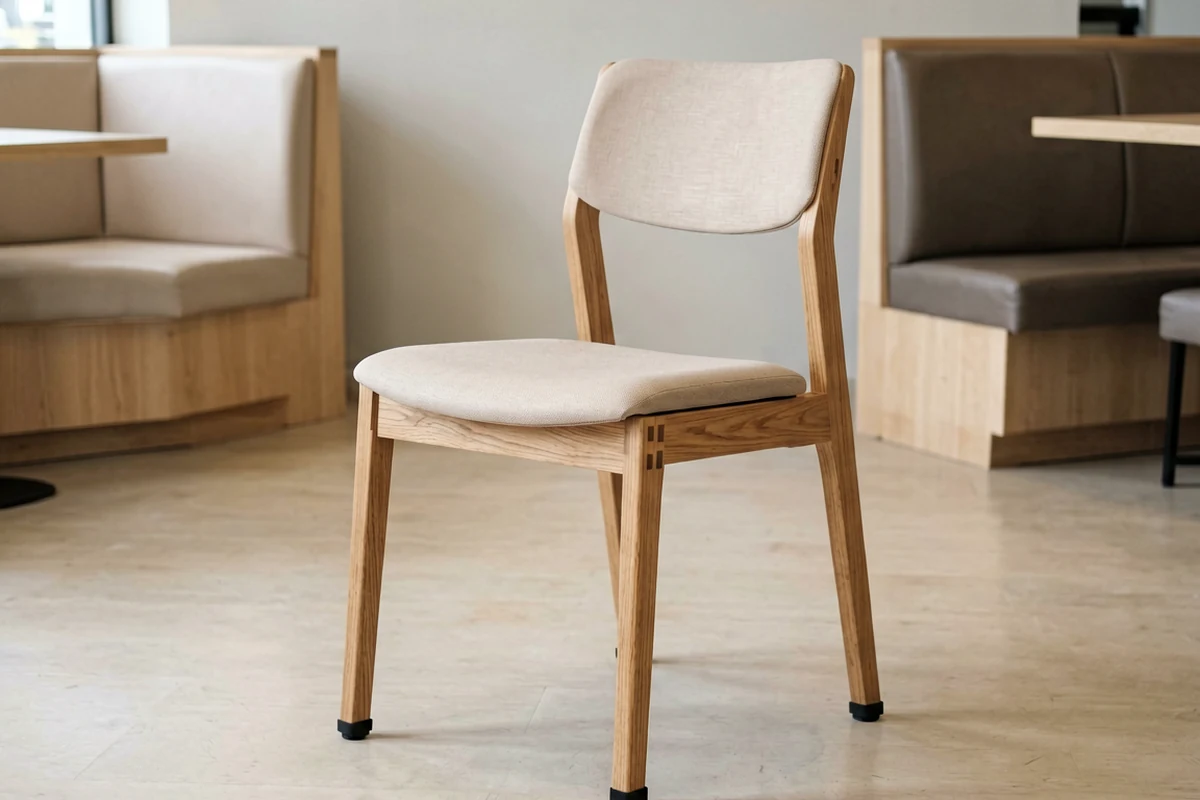
Table 1: Material Specification Inputs
| Material Category | Primary Specification Inputs to Request | Common Vulnerabilities to Inspect |
|---|---|---|
| Solid Wood | Species, moisture content, joinery type (mortise/tenon), finish type | Joint separation (racking), finish wear at contact points, splitting |
| Metal (Steel/Aluminum) | Tubing gauge, alloy grade, weld type, powder-coat specifications | Weld fractures, finish chipping, internal corrosion (if unsealed) |
| Polymer / Molded | Polymer type, glass-fiber reinforcement %, UV stabilizer inclusion | Surface scratching, UV degradation/chalking, stress fractures at flex points |
| Upholstered | Foam density, suspension type, textile performance data, moisture barrier | Foam compression, seam slippage, textile abrasion, liquid penetration |
Ergonomics, Guest Fit, and Table Interface
A chair's physical dimensions dictate the ergonomic fit for the guest and its compatibility with the dining table. Evaluating these dimensions requires precise measurements and an understanding of how the chair interacts with the surrounding architecture.
Seat Height, Depth, and Pitch
The relationship between the seat height and the table height is the most critical ergonomic interface in a restaurant. Measure the project's approved dining-table height, apron or edge profile, and base geometry, then request the exact chair seat height on the supplied sample. For upholstered seating, record both the unloaded measurement and the sample's compressed fit during review rather than relying on a generic dimension range.
Seat depth impacts how the guest's thighs are supported and whether they can comfortably utilize the backrest. Seat depth should be reviewed with a varied user sample because a depth that suits one guest may prevent another from using the backrest comfortably. Record observed thigh support, front-edge pressure, ability to stand, and back contact without declaring a universal dimension. The seat pitch (the slight downward angle from front to back) and the backrest angle must also be evaluated. Review seat pitch and backrest geometry together on the physical sample, and record whether guests can sit, dine, and stand without an uncomfortable edge or unstable posture.
Table Base and Clear Floor Space Interface
Chairs must physically fit around and under the specified tables. Determine the exact width of the chair at its widest point (often the front legs or the armrests) and verify how many chairs can fit between the table legs or around a pedestal base without crowding. If chairs feature armrests, verify the arm height against the clearance under the table apron to ensure the chairs can be pushed in fully when not in use.
Furthermore, the interface between the seating and the dining surface must account for accessibility requirements. When evaluating accessible seating configurations, consult the U.S. Access Board - Chapter 9 as a reference for dining-surface and clear-floor-space interface requirements. Note that local adopted accessibility rules and the project professional always control the final layout and compliance decisions. To visualize how specific chair dimensions interact with your proposed tables and floor plan, utilize a free 3D restaurant design service during the planning phase.
Chair Weight, Handling, and Floor Contact
Restaurant chairs are dynamic objects. They are pulled out, pushed in, lifted for cleaning, and occasionally relocated to accommodate different party sizes. The physical weight of the chair directly impacts the operational efficiency of the front-of-house staff.
Weight and Operational Handling
Request the exact weight per fully assembled unit. Chairs that are excessively heavy increase the physical strain on staff during daily floor cleaning and room resets. Conversely, chairs that are too light may feel unstable to the guest or be easily displaced in high-traffic aisles. Evaluate the chair's weight in the context of your specific operational routines. If the dining room requires frequent reconfiguration, prioritize frame materials and designs that balance structural rigidity with manageable handling weight.
Floor Glides and Substrate Compatibility
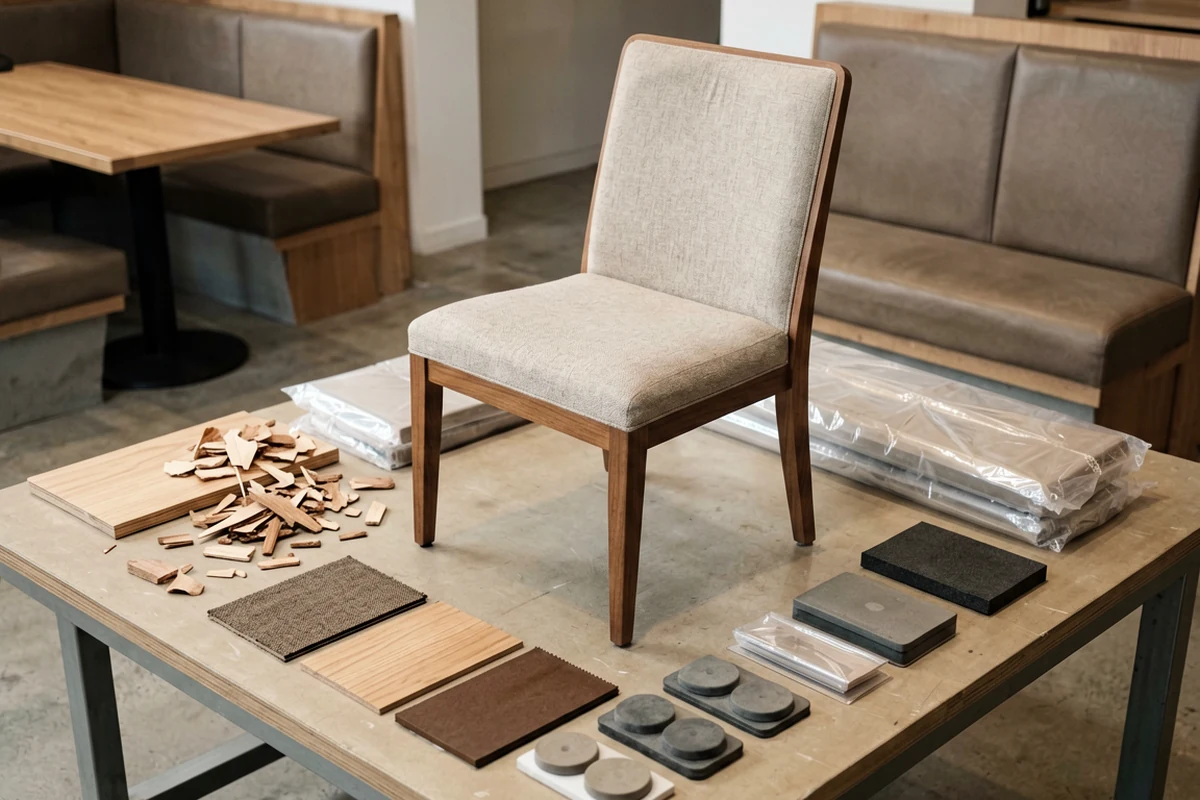
The point where the chair meets the floor is a frequent source of maintenance issues and potential facility damage. Chairs must be equipped with floor glides that are compatible with your specific flooring substrate (e.g., hardwood, LVT, ceramic tile, or concrete).
Specify the glide material during the RFQ process. Ask the chair supplier and flooring manufacturer to confirm the glide material for the exact floor finish and cleaning routine. Test the complete chair-and-glide sample on an approved floor mock-up for marking, noise, drag, retention, and replacement access. Crucially, verify how the glides are attached to the chair legs. Glides that are integrated or securely fastened with screws or heavy-duty inserts are preferable to adhesive pads, which detach rapidly in commercial environments. Request information on how replacement glides can be procured and installed.
Cleanability and Surface Maintenance
The ability to efficiently sanitize a chair between seatings is a fundamental operational requirement. The materials specified dictate the cleaning protocols and the types of cleaning agents that can be safely applied.
For non-porous surfaces like metal, polymer, and sealed wood, request the manufacturer's approved cleaning instructions. When evaluating the chemical compatibility of your facility's cleaning agents with the chair's finish, the EPA Safer Choice standard serves as a bounded reference for evaluating cleaning-product ingredient criteria. However, you must always confirm the material-maker's specific cleaning instructions first to avoid voiding warranties or degrading the finish.
Upholstered surfaces require careful specification regarding cleanability. Coated fabrics (vinyl or polyurethane) offer barrier protection against liquid spills and can typically be wiped down with mild soap and water or approved disinfectants. Woven textiles require specification of stain-repellent treatments or moisture barriers to prevent liquids from penetrating the foam substrate. Always request the exact cleaning code (e.g., W, S, WS) for any specified textile.
Requesting Upholstery and Structural Test Evidence
Visual inspection cannot determine a chair's long-term structural viability or a textile's performance under commercial wear. Procurement decisions must be supported by documented test evidence from recognized testing laboratories.
Upholstery Performance Evidence
When specifying textiles or coated fabrics, require suppliers to provide specification sheets that align with recognized industry guidelines. The ACT performance guidelines provide established categories for evaluating upholstery specifications, including colorfastness to light, colorfastness to crocking (color transfer), flammability, and physical properties like seam slippage and tensile strength.
For surface wear evaluation, refer to the ACT abrasion guideline. Request the specific laboratory abrasion results (such as Wyzenbeek or Martindale test data). It is critical to understand that these laboratory abrasion results are inputs used to compare textile durability; they are not a direct prediction of field lifespan. Use abrasion data only as one comparison input; actual performance also depends on textile construction, maintenance, furniture design, and use conditions.
Structural Strength and Stability Evidence
To evaluate the frame's structural integrity, request evidence of testing against established mechanical standards. ISO 7173:2023 defines the scope of structural strength and durability test methods for seating. Use the standard's published scope to request the relevant strength and durability report for the exact chair specimen. Request the exact current test report and verify the specimen scope to ensure the chair model you are purchasing matches the model that was evaluated. Do not accept a blanket compliance claim without the supporting documentation.
Additionally, evaluate the chair's resistance to tipping. ISO 7174-1:1988 provides the scope of stability evaluation for upright chairs and stools. When requesting this evidence, verify the exact applicable edition and the specific specimen tested. Documented stability testing is particularly important for chairs with splayed legs, high backrests, or those intended for use on carpeted surfaces where the center of gravity may shift.
Failure-Mode Scenarios in Commercial Seating
Understanding how chairs fail in the field informs better specification and sample review. Consider these common failure modes when evaluating supplier proposals:
The Racking Failure: Occurs in wood chairs when guests repeatedly lean back or shift laterally. If the joinery lacks proper corner blocking or relies on insufficient adhesive, the mortise-and-tenon joints loosen. The chair develops a noticeable wobble and eventually collapses under lateral stress.
The Glide Punch-Through: Occurs in hollow metal tubing when the internal glide insert fails. The sharp edge of the metal tube contacts the floor directly, destroying the flooring substrate and creating a severe acoustic disturbance when the chair is moved.
The Surface Delamination: Occurs on coated upholstery fabrics when incompatible cleaning chemicals extract the plasticizers from the vinyl or polyurethane. The surface becomes brittle, cracks, and eventually delaminates from the textile backing, exposing the foam underneath.
The Fastener Pull-Out: Occurs when the screws securing the seat pan to the frame strip out of the substrate (often low-density particleboard or MDF used in budget seating). The seat detaches from the frame when the guest attempts to stand or move the chair.

Sample Review, Replacement Parts, and Packaging
Never issue a volume purchase order without conducting a rigorous physical review of a production sample. The sample must represent the exact material, finish, and construction of the final order.
Conducting the Physical Sample Review
When the sample arrives, evaluate it against the requested specifications. Measure the seat height, depth, and width to confirm they match the approved dimensions. Place the chair on a hard, level surface to check for leg uniformity; all four glides must make simultaneous contact with the floor without rocking.
Have multiple staff members of varying heights sit in the chair to evaluate the ergonomic pitch and backrest support. Lift the chair to assess its handling weight. Inspect the underside: check the joinery, the seat attachment method, and the quality of the welds or corner blocks. Finally, test the specified cleaning agents on an inconspicuous area of the finish or upholstery to verify chemical compatibility.
Spares, Replacement Parts, and Warranty Inputs
Commercial furniture requires ongoing maintenance. When structuring your RFQ, mandate the inclusion of spare parts. Request a surplus of floor glides (as these wear out regularly) and, if applicable, spare seat pads or upholstery covers. Set the spare quantity from the venue's approved seat count, damage history where available, replacement lead time, storage capacity, batch/finish continuity risk, and service-critical minimum. State the assumptions in the RFQ instead of copying a generic percentage.
Review the warranty inputs carefully. Request the exact warranty documentation and identify the specific coverage periods for the frame, the finish, and the upholstery. Note any exclusions related to specific cleaning chemicals or environmental conditions.
Packaging and Delivery Specifications
Specify how the chairs will be packaged and delivered. Determine whether the chairs will arrive fully assembled or knocked-down (KD) requiring on-site assembly. Fully assembled chairs require more shipping volume but eliminate the labor and quality-control risks associated with on-site assembly. Request carton construction, internal blocking, handling marks, packing count, and the delivery inspection procedure so transit damage can be identified and documented at receipt.
RFQ and Approval Checklist
Use the following checklist to structure your Request for Quote and evaluate supplier submissions systematically.
Table 2: Restaurant Chair RFQ Checklist
| Category | Specific Input to Request / Verify | Approval Status |
|---|---|---|
| Dimensions | Exact seat height, depth, width, and backrest angle. | [ ] Verified |
| Materials | Wood species/moisture, metal gauge/weld type, or polymer blend. | [ ] Verified |
| Upholstery | Foam density, ACT performance data, and cleaning codes. | [ ] Verified |
| Floor Interface | Glide material specified and compatible with venue flooring. | [ ] Verified |
| Test Evidence | Exact current test reports for structural strength (e.g., ISO 7173 scope). | [ ] Verified |
| Sample Review | Physical sample received, measured, and handling weight evaluated. | [ ] Verified |
| Spares & Warranty | Extra glides included; exact warranty terms and exclusions documented. | [ ] Verified |
| Packaging | Assembly status (Fully Assembled vs. KD) and transit protection defined. | [ ] Verified |
Finalizing Your Seating Procurement
Specifying restaurant chairs requires a disciplined approach to materials, ergonomics, and documented evidence. By converting aesthetic concepts into precise procurement inputs, you protect your capital investment and ensure the seating performs reliably within your specific operational environment. Explore our comprehensive restaurant furniture collection to identify seating options that align with your required material and structural specifications.
If you require assistance translating your operational requirements into exact chair specifications, or need to verify table interface clearances, our team provides free 3D design renderings to support your procurement process. Contact us to submit your RFQ inputs and request physical samples for your next project.
Get the week's latest industry information
-
Real-Life Professional Restaurant Case Studies
Explore Now
-
Create a unique restaurant with over 95,700+products
Explore Now
-
Protessional Free 3D Restaurant Design
Explore Now
-
Still Have Questions About Opening a Restaurant?
Explore Now

Sylvia
With 8 years in catering & hospitality industry, sales manager of Ron Group, specialise in providing one stop solutions to restaurants, hotels and weddings.
Discover Our Exclusive Products
Explore our extensive range of restaurant and hotel supplies designed to enhance your operations. Find the perfect solutions to meet your needs.
Browse Our ProductsFREE 3D DESIGN
Boost your restaurant's success with our free 3D design service. Start building the restaurant of your dreams today!
Explore 3D Design Case
RECOMMENDED CASES
-

La Rambla by Catalunya: Crafting Barcelona's Soul in Hong Kong - Custom Furniture Excellence
RON Group's custom Spanish-inspired furniture elevates La Rambla with artisanal aesthetics...
Learn More -

Cardinal Point: Elevating Outdoor Seating with Tailored Cushion Upgrades
Discover how Cardinal Point transformed its outdoor dining experience with custom cushions, achievin
Learn More
RECOMMENDED BLOGS
-

Bar Glassware 101: Types, Names, Uses, and How to Stock Your Bar
Learn the 10 core bar glassware types, names, and uses. Discover how to stock your bar with the right glasses for cocktails, beer,...
Sylvia2026-07-26 -

Complete Bar Equipment List for Opening a Bar
Plan a complete commercial bar equipment list by menu, service volume, refrigeration, ice, glassware, utilities, sanitation,...
Sylvia2026-06-11 -

Low Budget Restaurant Interior Design: 2026 Trends
Prioritize a low-budget restaurant interior by protecting code, operations, durability, accessibility, and phased design decisions...
Sylvia2026-04-04
Subscribe to RON GROUP
Stay up-to-date with the latest industry insights and expert advice. Together, we'll create your ideal restaurant.