
Content
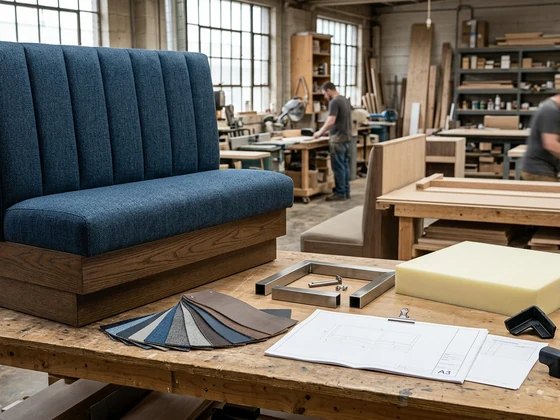
Custom restaurant booth procurement should start with a controlled specification file, not a catalog image. The buyer needs to define the booth type, custom dimensions, upholstery direction, frame and material options, mockup approval route, site-fit risks, MOQ and lead-time assumptions, and supplier proof before asking for final pricing.
This page is for commercial restaurant and hospitality projects preparing a custom booth RFQ. It is not a local repair guide, used-booth buying guide, home booth idea page, DIY build guide, or China manufacturer sourcing page. For broader supplier-screening context, start with the restaurant booth manufacturers in China guide. Use the restaurant booth upholstery materials guide when the RFQ reaches material selection, then review RON GROUP's custom restaurant booth sofas category for the commercial product context.
Start With the Custom Booth Procurement Workflow
A custom booth can be a single wall booth, double booth, corner unit, curved booth, banquette run, loose booth sofa, or a built-in seating element coordinated with millwork. Those options should not be quoted from the same one-line request. The first buying task is to write the scope clearly enough that suppliers can state what they are quoting and what remains open.
| Scope question | What the buyer should define | Why it matters before RFQ |
|---|---|---|
| Booth type | Single, double, L-shaped, curved, banquette, or loose booth sofa | Changes drawings, packing, installation, and site-fit assumptions |
| Site condition | Wall-backed, freestanding, fixed to floor, or coordinated with millwork | Separates furniture supply from contractor work |
| Quantity logic | Prototype, one restaurant, or multi-location rollout | Changes sample, repeatability, spare material, and reorder controls |
| Design control | Buyer drawing, supplier shop drawing, or joint development | Clarifies who owns dimensions and revisions |
| Approval route | Sample, mockup, shop drawing, material board, or production file | Prevents a quote from becoming an uncontrolled production release |
RON GROUP's broader restaurant furniture category can help organize the furniture package context, but the custom booth file still needs item-level decisions. A product category page cannot replace project drawings, site measurements, material approvals, and supplier records.
Build the Specification Checklist and Site-Fit File
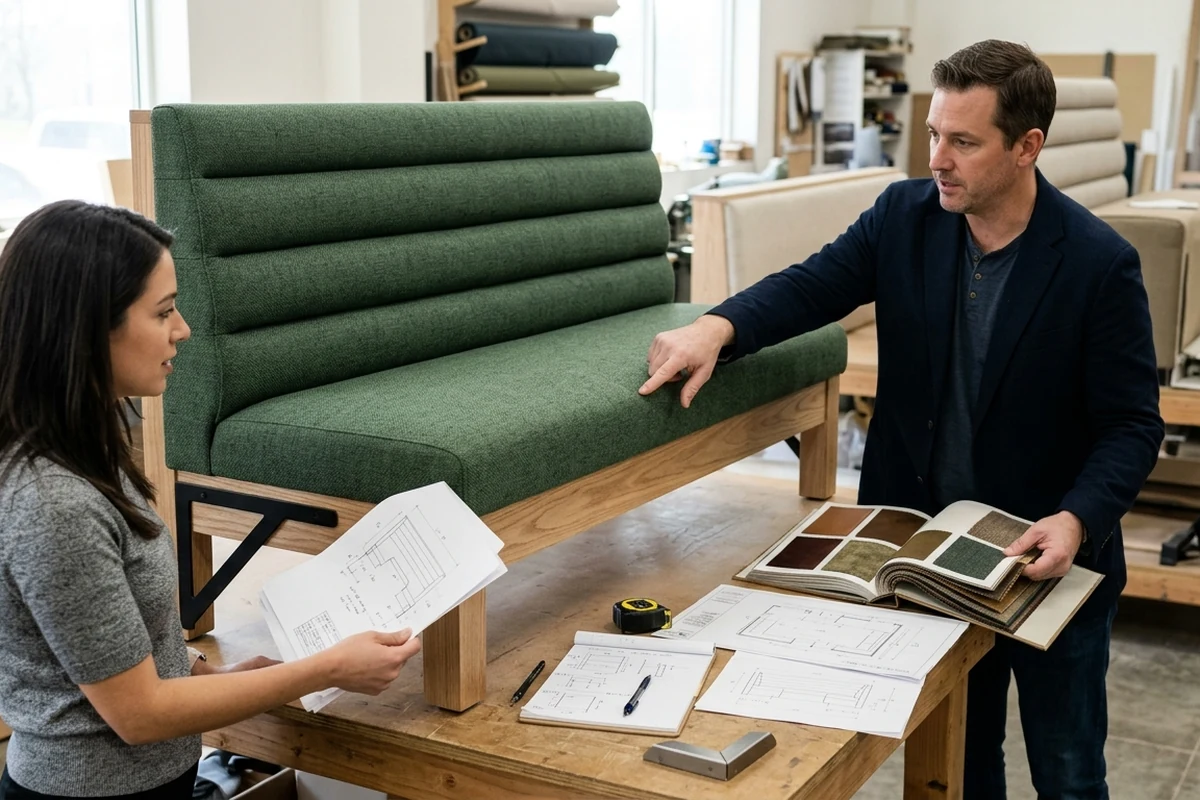
Custom dimensions should be treated as project inputs, not universal rules. The buyer should record what is fixed, what is approximate, and what must be verified on site. A useful dimension file includes overall width, depth, back height, seat height target, seat depth target, base condition, wall interface, floor condition, and table relationship.
Do not make the supplier guess which measurements control the order. Mark each dimension as one of three states:
fixed by the buyer's drawing;
proposed by the supplier for review;
pending site verification.
This distinction is especially important when booths touch walls, windows, floor outlets, columns, millwork, or uneven renovation conditions. If a booth must fit between two walls, the supplier needs maximum allowed width and tolerance notes. If the booth is freestanding, the buyer may care more about visible backs, base finish, cleaning access, and movement control.
For projects with several booth types, create one line item per booth code. The line item should include restaurant zone, quantity, drawing reference, upholstery reference, base condition, and open questions. That gives the buyer a practical way to compare suppliers without turning every answer into a new design interpretation.
Approve Upholstery, Frame, and Material Options
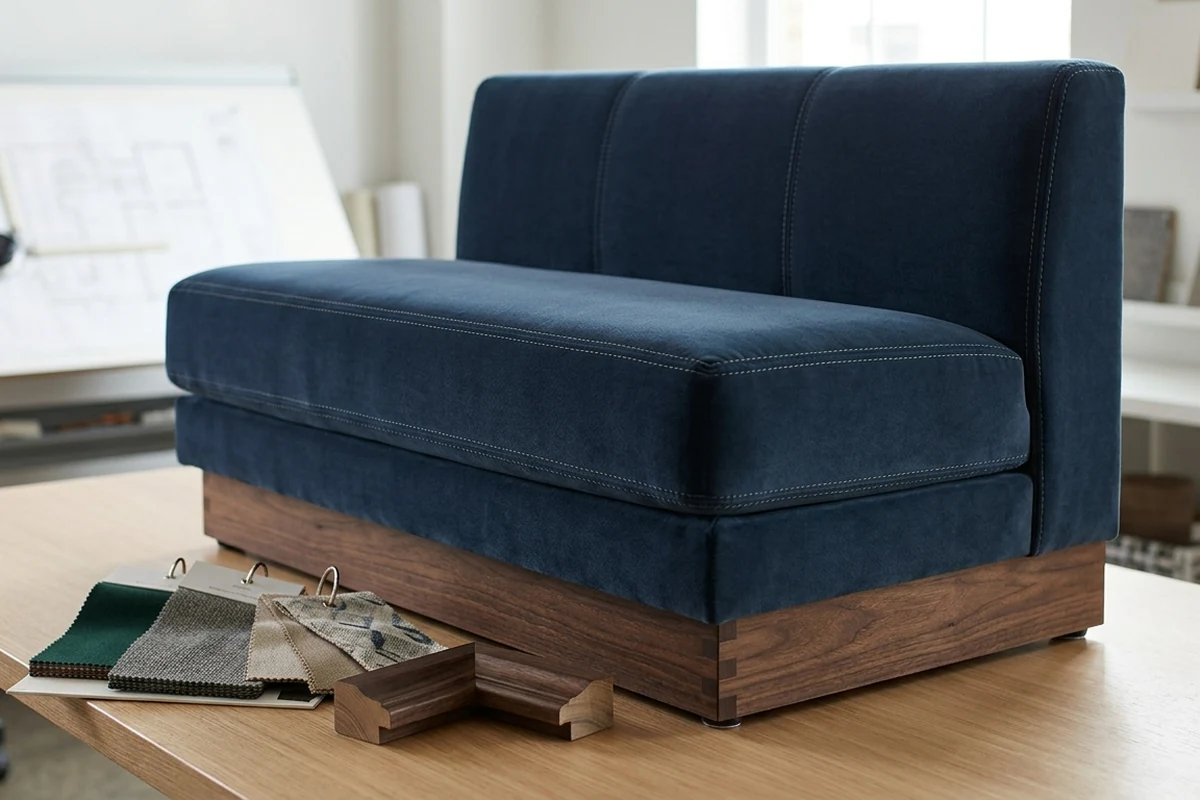
Upholstery is only one part of a custom booth decision, but it is often where visible mistakes appear first. The buyer should define the material family, color reference, texture direction, seam style, cleaning expectation, and approval sample. When a supplier claims a material has a performance property, ask for the exact document and scope instead of repeating the claim as a project fact.
Frame and material options should be handled the same way. Ask suppliers to explain the frame route, base detail, panel construction, fill or cushion approach, and finish protection in terms that can be reviewed against the drawing. Avoid unsupported language such as "commercial grade" unless the supplier can tie it to a submitted specification, sample, or report.
| Component | RFQ input | Supplier proof to request |
|---|---|---|
| Upholstery | Material family, color, texture, seam direction, cleaning exposure | Swatch, sample code, supplier data sheet, and approval record |
| Frame route | Wood, metal, mixed frame, or supplier proposal | Shop drawing note and construction explanation |
| Fill or cushion | Comfort target and service expectation | Sample section, material note, or comparable project record |
| Base and toe detail | Visible base, recessed base, plinth, or glide condition | Drawing detail and site-fit note |
| Finish protection | Edge, corner, and packing risks | Packing method and receiving label plan |
RON GROUP's furniture production capabilities can support the production and sample-control discussion. Use it as first-party workflow context, not as proof that a specific custom booth design has already been approved for a project.
Use a Mockup Evaluation Workflow Before Production Release
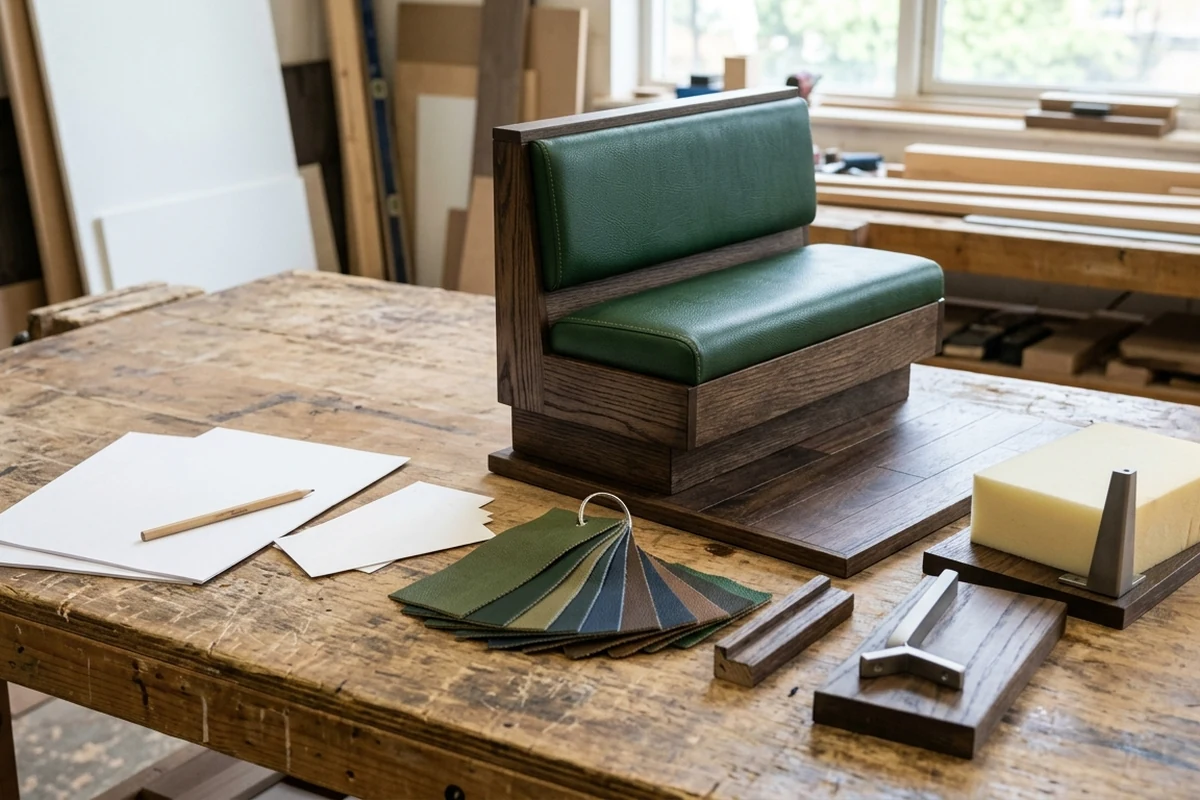
A custom booth mockup is a decision tool. It should test the parts of the booth that are hard to resolve from a PDF: posture, cushion feel, seam alignment, upholstery direction, base detail, cleaning access, and how the booth relates to the table. The buyer should define whether the mockup is full size, partial, digital, or material-only, and what decision it is expected to support.
The mockup file should record:
booth item code and revision;
drawing or shop drawing reference;
upholstery sample code;
frame, base, and seam assumptions;
accepted deviations;
rejected details;
approver and approval date;
remaining open questions before production release.
Do not let a mockup approval drift into production without a release file. If the operator approves comfort, the designer approves color, and the purchasing team approves price, one person still needs to own the final release. Otherwise the supplier may receive conflicting instructions.
Ask Supplier Proof Questions Before Award
The International Trade Administration's due-diligence guidance supports evaluating business partners before commitments. For a custom booth project, partner review should connect directly to the project file: who signs, who receives payment, who controls drawings, who controls samples, who prepares export or delivery documents, and who answers if the delivered booth does not match the approved record.
The ITA Consolidated Screening List can support restricted-party screening workflow context. It does not approve a supplier or replace buyer review.
| Supplier proof area | Ask for | Buying use |
|---|---|---|
| Identity | Legal name, contract route, payment route | Confirms who is commercially responsible |
| Drawing control | Shop drawing owner and revision process | Prevents production from using outdated design inputs |
| Sample control | Physical sample, swatch code, and approval record | Keeps material and finish decisions traceable |
| Production records | Comparable redacted record, inspection note, or process explanation | Shows whether the supplier can manage custom work |
| Packing and labels | Carton marks, item codes, and protection method | Helps receiving and claim handling |
| MOQ and lead time | Stated assumptions and what changes them | Keeps commercial timing separate from design approval |
When a supplier references BIFMA or another furniture standard, use the BIFMA standards overview as a cue to ask for the exact standard, product scope, report date, and tested item. Do not generalize a standard reference into a claim about every custom booth.
Prepare the Custom Booth RFQ Pack
The RFQ pack should be short enough for suppliers to answer, but complete enough to prevent guessing. A practical pack includes:
project type and destination context;
booth codes and quantities;
drawings or measured sketches;
material and upholstery direction;
sample and mockup expectations;
open site-fit questions;
packing, labeling, and delivery constraints;
required supplier proof;
target decision sequence.
The buyer should also state what is not decided yet. If upholstery is still open, label it as open. If site dimensions are pending, do not ask for final production pricing. If MOQ or lead time depends on material selection, ask the supplier to separate the assumption from the confirmed quote.
For multi-location projects, add a repeatability note. A first booth can be solved with close attention, but a rollout needs stable item codes, controlled material references, and a reorder path. The supplier should explain how it will keep the approved booth file usable after the first order.
When to Request a Custom Booth Review
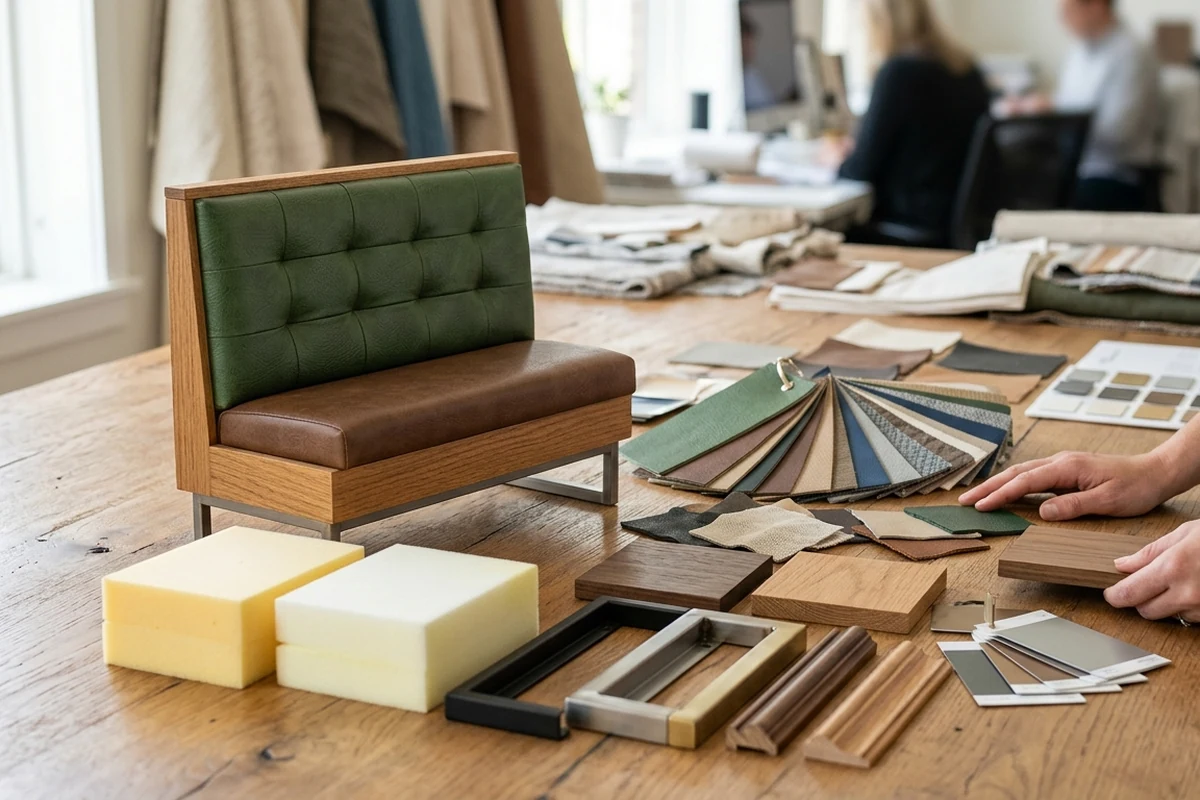
Request a custom booth review when the project has enough information to discuss a real specification: booth type, approximate quantity, floor plan, target upholstery, site constraints, mockup expectations, and open supplier questions. Send the RFQ pack through the RON GROUP contact page with the current risk list and decision deadline.
The best outcome is not a fast generic quote. It is a controlled supplier discussion where dimensions, materials, mockup approval, MOQ and lead-time assumptions, and production proof are visible before the buyer releases the order.
Sources and Further Reading
RON GROUP Booth Sofa supports the commercial receiver and booth product-scope context.
RON GROUP Restaurant Furniture supports restaurant furniture category context.
RON GROUP Factory Showcase supports production, sample, quality, packing, and project communication context.
International Trade Administration due-diligence guidance supports business partner due diligence.
ITA Consolidated Screening List supports restricted-party screening workflow context.
BIFMA Standards Overview supports asking for precise standard and test-report evidence when a supplier makes a claim.
Get the week's latest industry information
-
Real-Life Professional Restaurant Case Studies
Explore Now
-
Create a unique restaurant with over 95,700+products
Explore Now
-
Protessional Free 3D Restaurant Design
Explore Now
-
Still Have Questions About Opening a Restaurant?
Explore Now

Sylvia
With 8 years in catering & hospitality industry, sales manager of Ron Group, specialise in providing one stop solutions to restaurants, hotels and weddings.
Discover Our Exclusive Products
Explore our extensive range of restaurant and hotel supplies designed to enhance your operations. Find the perfect solutions to meet your needs.
Browse Our ProductsFREE 3D DESIGN
Boost your restaurant's success with our free 3D design service. Start building the restaurant of your dreams today!
Explore 3D Design Case
RECOMMENDED CASES
-
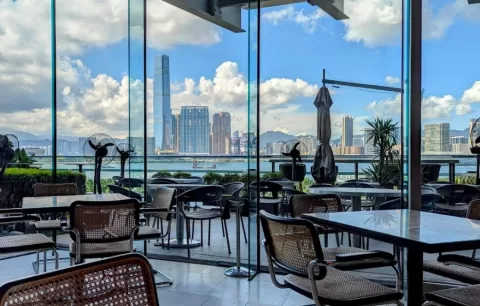
La Rambla by Catalunya: Crafting Barcelona's Soul in Hong Kong - Custom Furniture Excellence
RON Group's custom Spanish-inspired furniture elevates La Rambla with artisanal aesthetics...
Learn More -

Cardinal Point: Elevating Outdoor Seating with Tailored Cushion Upgrades
Discover how Cardinal Point transformed its outdoor dining experience with custom cushions, achievin
Learn More
RECOMMENDED BLOGS
-

Bar Glassware 101: Types, Names, Uses, and How to Stock Your Bar
Learn the 10 core bar glassware types, names, and uses. Discover how to stock your bar with the right glasses for cocktails, beer,...
Sylvia2026-07-26 -
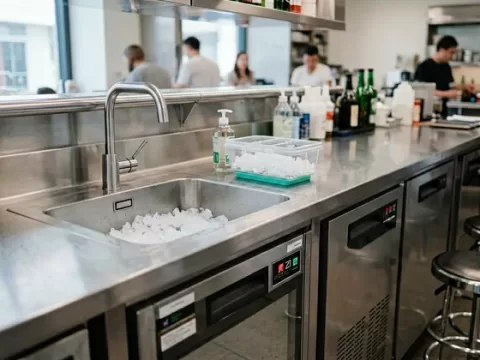
Complete Bar Equipment List for Opening a Bar
Plan a complete commercial bar equipment list by menu, service volume, refrigeration, ice, glassware, utilities, sanitation,...
Sylvia2026-06-11 -
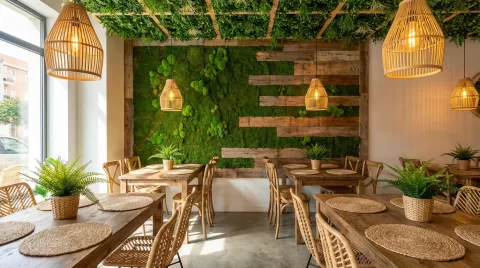
Low Budget Restaurant Interior Design: 2026 Trends
Prioritize a low-budget restaurant interior by protecting code, operations, durability, accessibility, and phased design decisions...
Sylvia2026-04-04
Subscribe to RON GROUP
Stay up-to-date with the latest industry insights and expert advice. Together, we'll create your ideal restaurant.