
Content
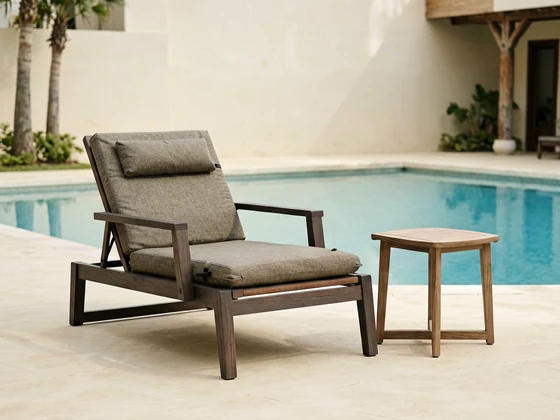
Outdoor hotel furniture procurement fails when one attractive collection is approved for every exterior area. A pool deck, rooftop bar, beachfront terrace, garden lounge, balcony, and outdoor restaurant may share a design language, but they do not share the same exposure, cleaning routine, wind risk, storage plan, or replacement need. The buyer's job is to turn the outdoor concept into a controlled release file before supplier award or production.
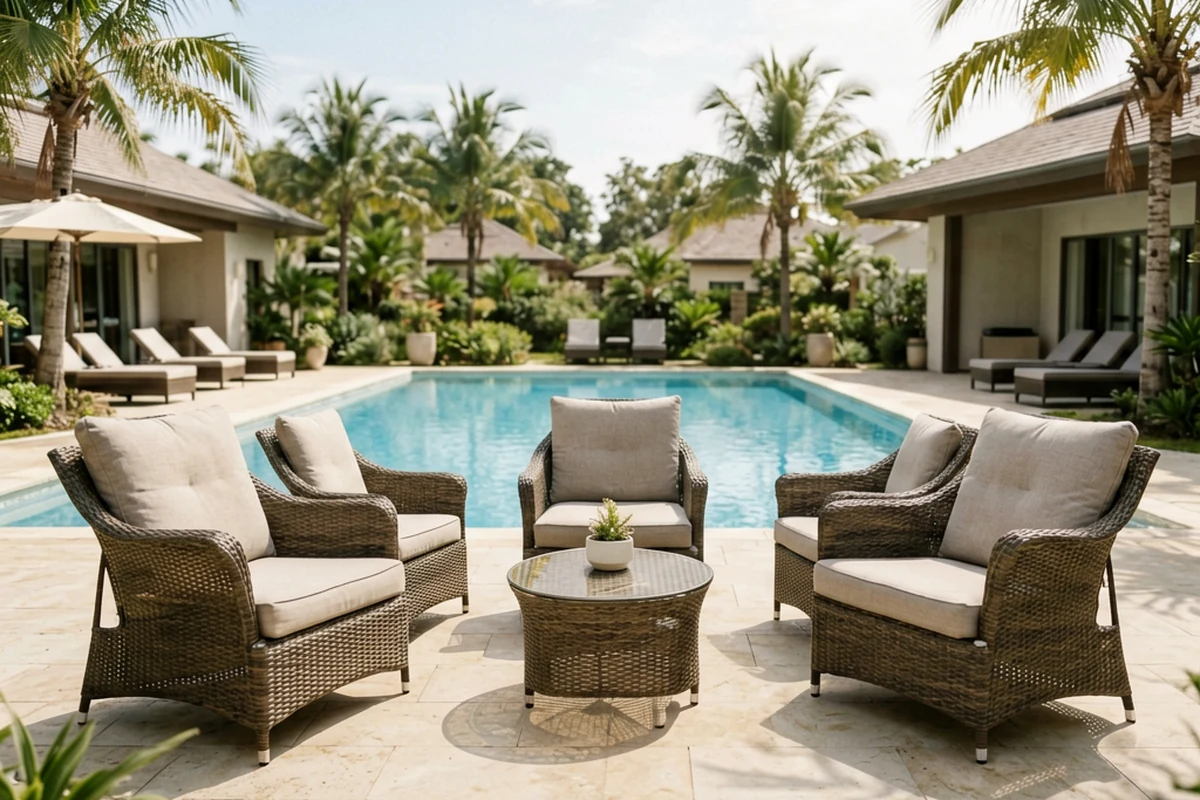
Start with a project schedule, not a catalog shortlist. RON GROUP's commercial furniture collection and hotel furniture category can support early product-scope discussions, but outdoor approval still needs project-specific evidence for the site, material route, sample, packing, and operating plan.
Map each outdoor zone before selecting materials
Create one schedule that separates every outdoor condition. The same chair can behave differently beside chlorinated pool splash, under coastal salt air, on a windy rooftop, in shaded garden service, or in a covered outdoor dining area.
| Schedule field | Buyer input | Supplier evidence to request |
|---|---|---|
| Zone and use | Pool, terrace, rooftop, balcony, beachfront, garden, dining, bar, lounge, or storage | Recommended product family and excluded conditions |
| Exposure | UV, rain, salt air, humidity, wind, pool splash, cleaning chemicals, drainage, shade | Material, finish, hardware, textile, and care limits |
| Operation | Movable, fixed, stacked, covered, seasonal, or high-turnover dining | Weight, glides, anchors, stack height, covers, handling notes |
| Guest interface | Seat comfort, arm height, cushion drainage, table pairing, edge temperature, occupied layout | Sample, dimensions, fabric or sling data, and replacement parts |
| Site logistics | Lift access, unpacking area, storage, labels, room or zone code, and spare inventory | Packing plan, item code, carton mark, and receiving checklist |
Do not approve "outdoor grade" as a specification. Approve the exact material, finish, configuration, and maintenance assumptions that the hotel team can inspect and repeat.
Treat corrosion and weather exposure as procurement evidence
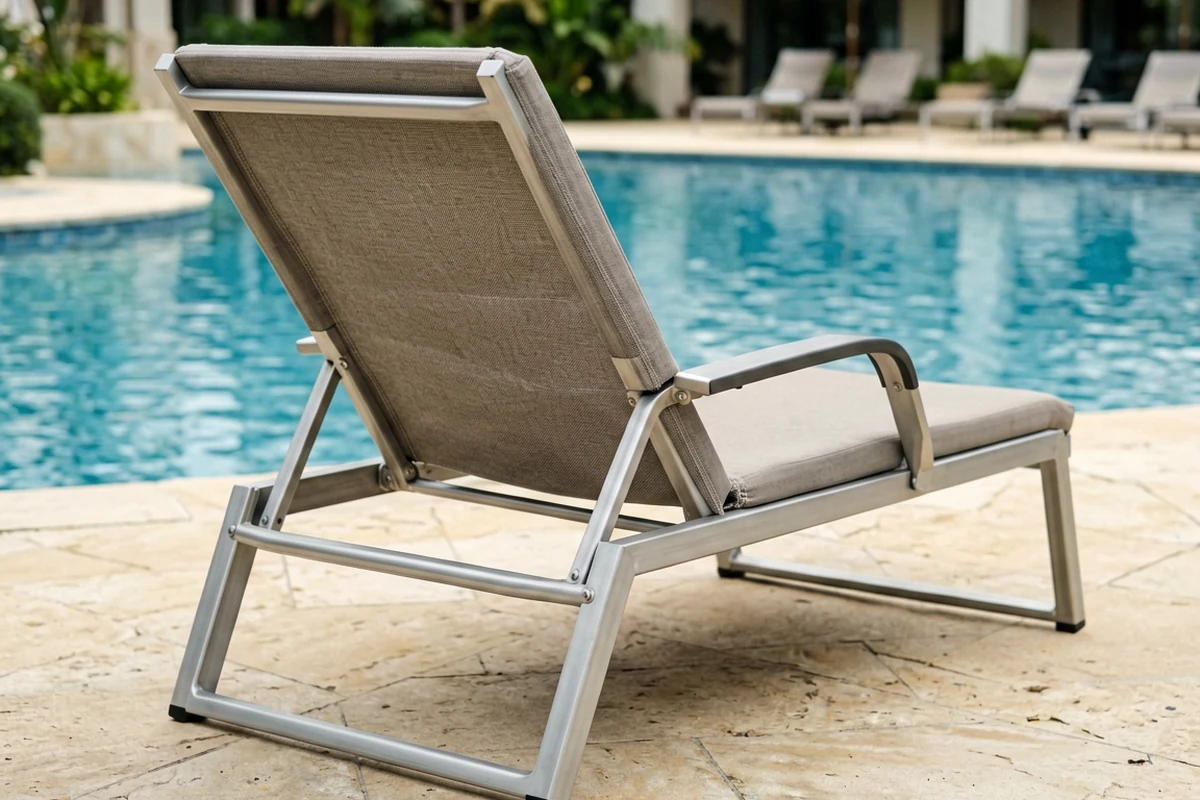
For metal frames, fasteners, glides, connectors, and table bases, ask the supplier to describe the exposure assumption. The official ISO 9223 standard page identifies atmospheric corrosivity classification, determination, and estimation as a defined standards topic. That does not let a buyer assign a site category from a brochure, but it does justify asking suppliers how their alloy, coating, hardware, and warranty exclusions relate to salt, humidity, pollution, pool chemicals, and maintenance.
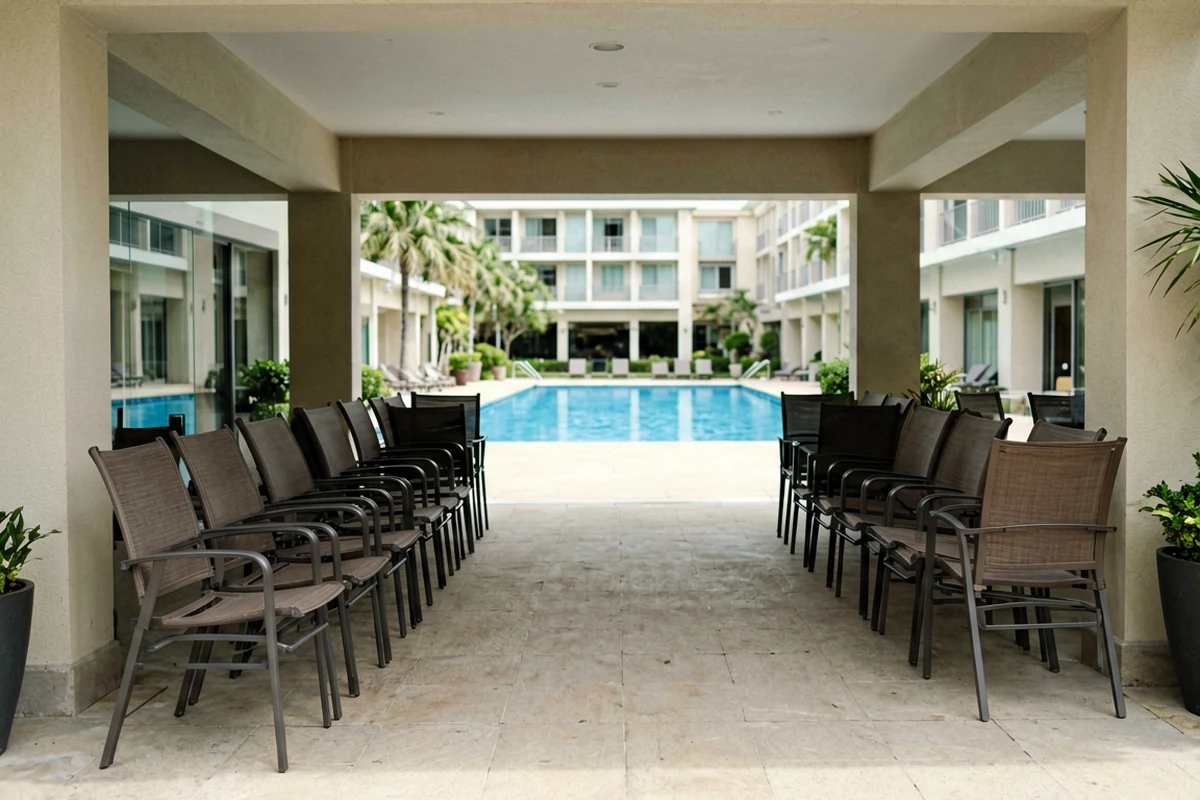
Use this evidence check:
metal route, alloy or substrate, hardware, fasteners, welds, and contact points;
coating, powder coat, anodizing, galvanizing, passivation, or other finish description;
test report or declaration with product model, configuration, method, result, and laboratory or issuer;
exclusions for coastal, poolside, rooftop, high-humidity, or chemical-cleaning environments;
care instructions and repair route for chips, scratches, loose glides, and damaged fasteners;
replacement identifiers for caps, glides, screws, slings, cushions, and hardware.
If the evidence only says rustproof, weatherproof, marine grade, or maintenance free, treat the claim as incomplete. Those phrases do not identify the substrate, coating, fastener, exposure category, cleaning practice, or tested configuration.
Control wood, FSC, and traceability claims
Wood can be appropriate outdoors, but the approval file must be more precise than "teak," "solid wood," or "sustainable wood." The USDA Forest Products Laboratory Wood Handbook is a technical reference for wood properties, moisture, decay, and finishing/weathering topics. For procurement, that means the buyer should request species, treatment or finish route, construction details, drainage and end-grain protection, maintenance assumptions, and replacement components before approving wood furniture for exterior use. It does not support a fixed service-life promise for a specific hotel project.
If FSC material is part of the requirement, record the evidence separately from durability. FSC's chain-of-custody page supports tracing certified material through the supply chain, and the FSC label guidance distinguishes FSC claim types. Ask for the supplier certificate scope, the exact FSC claim, product linkage, claim on sales documents, and any outsourced-process responsibility. FSC evidence can support traceability; it does not prove outdoor performance, emissions, finish quality, or the status of non-wood components.
Coordinate outdoor dining accessibility where it applies
Outdoor hotel furniture often includes dining tables on terraces, pool restaurants, and rooftop bars. For U.S.-scoped projects, dining surfaces are not just a furniture style decision. The U.S. Access Board's Chapter 2 ADA standards include dining-surface scoping, and Chapter 9 contains technical requirements for dining and work surfaces. These are U.S. examples, not global rules or legal advice, and the project team must confirm the applicable jurisdiction and authority.
Use an accessibility coordination check before table release:
| Element | Evidence to coordinate | Stop condition |
|---|---|---|
| Dining table | Height, knee and toe clearance, base type, edge, and clear floor space | Decorative base blocks the required user position |
| Route to table | Outdoor surface, slope, thresholds, furniture movement, and service aisles | Accessible route exists only before chairs are occupied |
| Layout | Chair pull-out, table spacing, umbrellas, heaters, planters, host station, and queue | Added accessories close the route or dining position |
| Operations | Movable furniture reset plan and staff responsibility | Accessible positions disappear during daily setup |
Do not let the supplier's table photo become the accessibility file. The layout, floor surface, route, furniture reset, and table configuration all affect whether the dining position can be used.
Require a supplier submittal that can be audited
International sourcing needs supplier evidence as well as product evidence. The U.S. International Trade Administration's due-diligence guidance supports checking potential business partners before commitment. For China-related sourcing, the ITA China market-entry guidance supports careful partner vetting and alignment on business goals. Use those sources as general risk guidance, not as supplier approval.
Ask each shortlisted supplier for one indexed submittal:
business identity, contracting party, production route, and responsible contact;
product schedule by outdoor zone, item code, revision, quantity, and finish;
material and finish evidence for frame, top, weave, sling, cushion, fasteners, and glides;
certificates or test reports with issuer, model, configuration, method, date, and scope;
physical samples or control samples for finish, fabric, sling, weave, hardware, and cushion;
deviation register showing every difference from the RFQ or sample;
care, cleaning, storage, cover, and repair instructions;
packing plan with carton marks, zone codes, loading sequence, and receiving checks;
spare-parts and replacement plan with identifiers that purchasing can reuse after opening.
The submittal is incomplete if it cannot show which evidence applies to which product. A test report for one coating, alloy, fabric, or fastener does not automatically approve a changed configuration.
Use samples as operating tests, not decorations
Sample review should happen in the expected operating context where possible. For a pool deck, check wet handling, cushion drainage, towel contact, glides, and cleaning access. For a rooftop, test stability, movement, wind-management assumptions, and whether planters, umbrellas, or heaters change circulation. For outdoor dining, test table bases, occupied chairs, staff routes, and reset discipline.

Record each issue as approve, revise, reject, or escalate:
Approve when the zone schedule, material route, samples, evidence, accessibility coordination where relevant, packing, care, spares, and deviations are closed.
Revise when the concept works but finish evidence, hardware, cleaning instructions, storage, replacement IDs, or packing labels remain incomplete.
Reject when the offered product conflicts with exposure, layout, accessibility, operating, or replacement requirements.
Escalate when corrosion classification, structural fixing, wind exposure, fire rules, accessibility, import compliance, certification scope, or warranty language requires a qualified professional, legal review, authority, or owner decision.
For broader supplier-discovery context, the hotel furniture sourcing specialists page can continue the sourcing task. Keep the outdoor award decision tied to the current property's evidence file.
Release the package with clear ownership
Before purchase or production release, name the owner for each open risk: design, procurement, operator, supplier, freight forwarder, installer, accessibility professional, engineer, or authority. Approval to make a sample is not approval for production. Production approval does not waive pre-shipment inspection, receiving checks, or site reset training.
To start a practical project discussion, send the outdoor furniture schedule for review with the property type, location, outdoor zones, target quantities, drawings, photos, exposure notes, preferred materials, FSC requirement if any, dining layout, sample status, packing needs, destination, and approval milestone. RON GROUP can review the commercial inquiry against the information provided; final technical, accessibility, corrosion, installation, and compliance approvals remain with the responsible project parties.
Get the week's latest industry information
-
Real-Life Professional Restaurant Case Studies
Explore Now
-
Create a unique restaurant with over 95,700+products
Explore Now
-
Protessional Free 3D Restaurant Design
Explore Now
-
Still Have Questions About Opening a Restaurant?
Explore Now

Sylvia
With 8 years in catering & hospitality industry, sales manager of Ron Group, specialise in providing one stop solutions to restaurants, hotels and weddings.
Discover Our Exclusive Products
Explore our extensive range of restaurant and hotel supplies designed to enhance your operations. Find the perfect solutions to meet your needs.
Browse Our ProductsFREE 3D DESIGN
Boost your restaurant's success with our free 3D design service. Start building the restaurant of your dreams today!
Explore 3D Design Case
RECOMMENDED CASES
-

La Rambla by Catalunya: Crafting Barcelona's Soul in Hong Kong - Custom Furniture Excellence
RON Group's custom Spanish-inspired furniture elevates La Rambla with artisanal aesthetics...
Learn More -

Cardinal Point: Elevating Outdoor Seating with Tailored Cushion Upgrades
Discover how Cardinal Point transformed its outdoor dining experience with custom cushions, achievin
Learn More
RECOMMENDED BLOGS
-
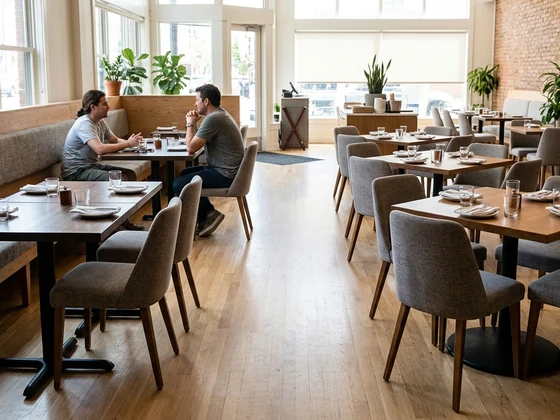
Restaurant Table Spacing and Aisle Clearance: Supplier Drawing Checklist
Check restaurant table spacing, aisle clearance, chair pullout, service path, and supplier drawing proof before approving a...
Sylvia2026-07-20 -

5 Mistakes to Avoid When Buying Restaurant Furniture from China
Don't fall for costly oversights! Learn the 5 mistakes to avoid when buying restaurant furniture from China and ensure a...
 Ron2025-01-079 min read
 -

RON GROUP Launches VR Experience to Explore Our Dynamic Showroom
Discover RON GROUP's VR showroom! Explore dining furniture, tableware, and customized services virtually or visit us in person to...
Sylvia2024-12-163 min read
Subscribe to RON GROUP
Stay up-to-date with the latest industry insights and expert advice. Together, we'll create your ideal restaurant.