
Content
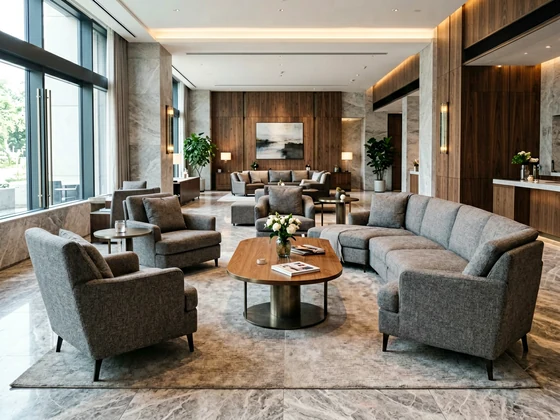
Hotel lobby furniture procurement starts the moment a guest crosses the threshold, not when a buyer asks for sofa prices. The same lobby may need a fast arrival path, a waiting area for early check-in, a social lounge, a quiet work corner, luggage clearance, visible brand cues, and furniture that housekeeping can clean without moving half the room. If the procurement package treats those needs as separate chairs, tables, sofas, and finishes, the quote can look complete while the lobby itself remains unresolved.
Direct answer: The safest way to buy hotel lobby furniture is to create a zone-by-zone furniture schedule before requesting final pricing. Each lobby zone should identify the guest behavior it supports, the furniture group, drawing reference, material direction, sample requirement, accessibility or circulation review question, packing label, and approval owner. Then request coordinated samples, not isolated swatches, so the sofa fabric, lounge chair frame, table finish, hardware, and cleaning assumptions can be reviewed together. For US projects, use the U.S. Access Board ADA Standards as federal accessibility context and confirm local, fire, brand, and project requirements separately. A supplier is ready for production only when its quote, drawings, samples, inspection plan, and packing proposal all match the same lobby schedule.

Walk the lobby before writing the furniture list
Start with a walkthrough. Imagine the guest arriving with luggage, pausing near reception, waiting for a room, meeting someone for coffee, opening a laptop, looking for a charging point, or crossing the lobby to an elevator. Each behavior creates a different furniture requirement. Arrival edges need clear movement and durable touch points. Waiting areas need comfortable seating that does not block circulation. Social lounge zones need coordinated heights, finishes, and table access. Work corners need table depth, chair comfort, power coordination, and housekeeping access. Display or brand moments need furniture that frames the space without becoming fragile props.
This walkthrough should become the first procurement document. A mood board cannot replace it. A general hotel furniture category page can show product scope, and hotel furniture is useful category context, but the buyer still needs a lobby-specific schedule that names the room, zone, item code, quantity, approval status, and sample route.
Keep the procurement package narrow enough to control. The immediate job is to turn one lobby plan into a furniture schedule and coordinated sample request that the design team, operations team, procurement lead, and supplier can all use without guessing.
Decision tool 1: lobby zone schedule
Use the schedule as the control document for RFQ, sample review, production release, packing, and site receiving.
| Lobby zone | Guest behavior to support | Furniture group | Sample or submittal to request | Approval owner |
|---|---|---|---|---|
| Arrival edge | Enter, orient, move with luggage, approach reception | Occasional seating, side table, luggage-friendly surface if needed | Furniture footprint, finish sample, layout overlay | Operations, design |
| Main waiting area | Sit briefly, wait for check-in, watch circulation | Sofas, lounge chairs, coffee tables, side tables | Upholstery swatch, frame finish, table top sample, cleaning note | Design, housekeeping |
| Social lounge | Meet, talk, linger, use F&B service if present | Sofas, lounge chairs, nested tables, ottomans | Coordinated furniture sample set and finish board | Brand, procurement |
| Work or charging point | Open laptop, charge device, sit longer | Work table, lounge chair or task chair, side table | Dimensioned shop drawing, material sample, power-interface question log | Design, MEP, operations |
| Elevator or corridor edge | Move through without bottleneck | Narrow benches, occasional chairs, small tables | Layout overlay and edge-detail sample | Accessibility, operations |
| Feature or brand area | Create visual identity without blocking use | Statement chairs, console, accent tables | Finish sample, photo mock-up, replacement/touch-up route | Brand, owner representative |
The schedule should not hide uncertainty. If a finish is fixed, label it as buyer-approved. If the supplier may propose a finish, label it as supplier proposal. If a clearance, power interface, cleaning method, or local code question remains open, put it in the schedule instead of leaving it in email.
Material decisions change by location
Lobby materials should follow exposure. The chair near the entrance has a different job from the lounge chair in a quiet corner. The coffee table in the social lounge has a different risk profile from a small table beside a charging point. Do not approve every material from a rendered image. Request physical samples and identify who keeps the retained sample.
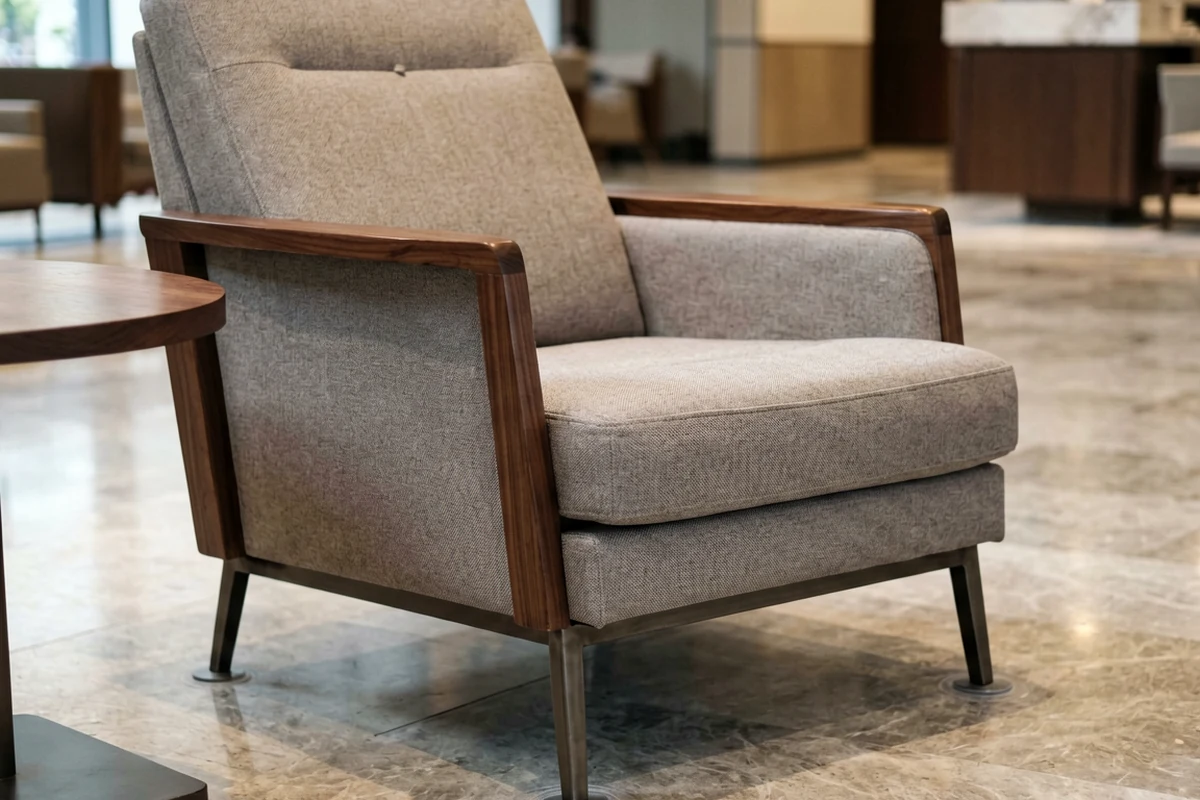
For arrival edges, prioritize surfaces that tolerate luggage contact, frequent touch, and cleaning. For waiting areas, review upholstery texture, seam detail, cushion comfort, and how housekeeping will reach around legs and table bases. For social lounge zones, review color and finish coordination across sofas, lounge chairs, tables, and side pieces. For work areas, check chair comfort, table edge detail, cable or power coordination, surface durability, and replacement route. For feature pieces, ask whether the finish can be repaired or replaced when the hotel is operating.
The BIFMA standards descriptions are useful as commercial furniture standards context when a supplier claims a product has been tested or built to a recognized furniture standard. They do not prove that a specific chair, sofa, or table complies. For any standards-sensitive claim, ask for product-specific documentation tied to the quoted item and project scope.
Decision tool 2: material-by-location approval matrix
| Location | Material decision | What to compare | Evidence to request |
|---|---|---|---|
| Entry-side lounge seat | Upholstery and exposed frame durability | Fabric or leather feel, seam position, frame finish, glide or foot detail | Upholstery swatch, frame finish chip, seam photo, cleaning instruction |
| Main waiting sofa | Comfort, cleanability, and replacement logic | Cushion support, removable or fixed components, stain response, color match | Fabric sample, cushion note, retained sample code, replacement-panel route |
| Social lounge table | Finish coordination and surface maintenance | Top material, edge detail, base finish, touch-up method | Table-top sample, edge detail photo, hardware/metal finish sample |
| Work table | Longer use and power coordination | Table height relationship, chair fit, cable route, surface wear | Dimensioned shop drawing, material sample, power-interface question log |
| Corridor bench | Circulation edge and impact risk | Overall footprint, leg position, wall clearance, finish toughness | Layout overlay, finish sample, packing mark by zone |
| Accent piece | Brand effect without operational fragility | Finish uniqueness, replacement risk, cleaning access | Physical sample, deviation note, repair or replacement method |
This matrix keeps the buyer from approving isolated swatches. A sofa fabric may look acceptable alone but fail beside the lounge chair frame or coffee table finish. A table finish may look premium but create cleaning or touch-up questions. A chair may photograph well but need a stronger frame finish where luggage contacts the arm or leg.
Procurement risk scenarios to resolve before deposit
Risk scenario 1: the lobby quote does not match the lobby plan. A supplier may quote sofas, chairs, and tables from a product list while the designer assumes specific zones, circulation paths, and guest behaviors. The fix is to quote from the lobby schedule and drawing references, not from product names alone.
Risk scenario 2: samples are approved one by one and then clash in the room. The sofa fabric, lounge chair frame, table top, metal finish, and hardware may each pass individually. Together, they may create color drift, mismatched sheen, or a brand tone that was never reviewed. The fix is to request coordinated sample boards or sample sets by zone.
Risk scenario 3: accessibility and circulation questions appear after the order. For US projects, the U.S. Access Board ADA Standards and Chapter 2 scoping material provide federal accessibility context for public accommodations and commercial facilities. They are not a substitute for project review. The fix is to add an accessibility and circulation review question to each affected zone before release.
Risk scenario 4: housekeeping cannot maintain the furniture as specified. A chair with complicated legs, a table that traps debris, a fabric that reacts poorly to cleaning, or a tight layout that blocks vacuum access can create operating problems. The fix is to include cleaning method, access, and replacement route in the sample review.
Risk scenario 5: carton labels do not match the lobby schedule. Furniture may arrive as generic sofas, chairs, and tables rather than zone-coded items. Site teams then open the wrong carton, misplace hardware, or install pieces in the wrong area. The fix is to require carton labels tied to zone, item code, finish, and destination.
Risk scenario 6: a supplier hides proposals inside the quotation. A quote may use an alternate frame finish, substitute upholstery, different table edge, or simplified construction without making the change obvious. The fix is to separate buyer-fixed requirements, supplier proposals, open questions, and approved deviations.
Supplier evidence checklist for coordinated samples
Ask every supplier to respond against the same evidence list. The point is not to collect paperwork for its own sake. The point is to make the quote, sample, drawing, and packing plan comparable.
Zone-by-zone furniture schedule with item codes, quantities, drawing references, and approval status.
Marked layout or plan overlay showing how furniture footprints relate to circulation and luggage movement.
Upholstery swatches for sofas, lounge chairs, benches, and ottomans, labeled by item and zone.
Frame, metal, wood, stone, laminate, or table-top samples tied to the same item codes used in the schedule.
Dimensioned shop drawings for tables, benches, work points, modular seating, or any custom piece.
Cleaning and maintenance instructions for each approved upholstery or surface material.
Applicable standards or test documentation when the supplier makes a standards or durability claim.
Sample approval log with code, date, retained sample owner, approved deviation, and pending decision.
Inspection checklist and example QC photos for upholstery, frame finish, table top, hardware, and packing.
Carton label example showing zone, item code, finish, destination, and hardware pack reference.
Replacement or touch-up route for high-use upholstery, table tops, frame finishes, feet, glides, or hardware.
Lead time timeline linked to drawing approval, sample approval, deposit, inspection, packing, and shipment.
RON GROUP's furniture production capabilities can support production-scope and sample-support discussions. Treat those pages as first-party capability context, not as proof that a specific quoted item meets the current project's performance, accessibility, or standards requirements.
How RON GROUP coordinates the middle of the process
The middle of hotel lobby furniture procurement is where many mistakes become visible. The buyer has a design direction, but the supplier still needs item codes, samples, shop drawings, packing labels, and release approvals. RON GROUP can help organize that middle stage by converting the lobby plan into a supplier-facing schedule, requesting coordinated samples by zone, and keeping supplier responses in a comparable format.
The first RON GROUP-specific procurement insight is that lobby furniture is often a multi-category package even when the buyer wants one visual language. Sofas, lounge chairs, coffee tables, side tables, benches, work tables, accent pieces, and occasional casegoods may not share the same production line. The schedule needs one coordination layer so finish and packing decisions do not drift by factory category.
The second insight is that sample timing should follow decision risk, not product order. A feature lounge chair, high-touch sofa upholstery, table top, and exposed frame finish may need earlier sample approval than a lower-risk side table. If the buyer waits for all samples at once, one unresolved material can delay the whole lobby release.
The third insight is that packing is part of design coordination. A beautiful furniture package can still fail at the site if cartons are not labeled by zone, item code, finish, and hardware set. RON GROUP can help connect packing marks to the same schedule used for pricing and sample approval, so receiving teams can sort by lobby zone rather than guess from product descriptions.
The fourth insight is that first-party project examples should be used carefully. Hospitality project examples can help a buyer discuss style, scope, and category range, but they should not replace the current project's drawings, physical samples, supplier documentation, or approval records.
Sample coordination workflow
The sample workflow should be short enough to manage but strict enough to prevent ambiguity.
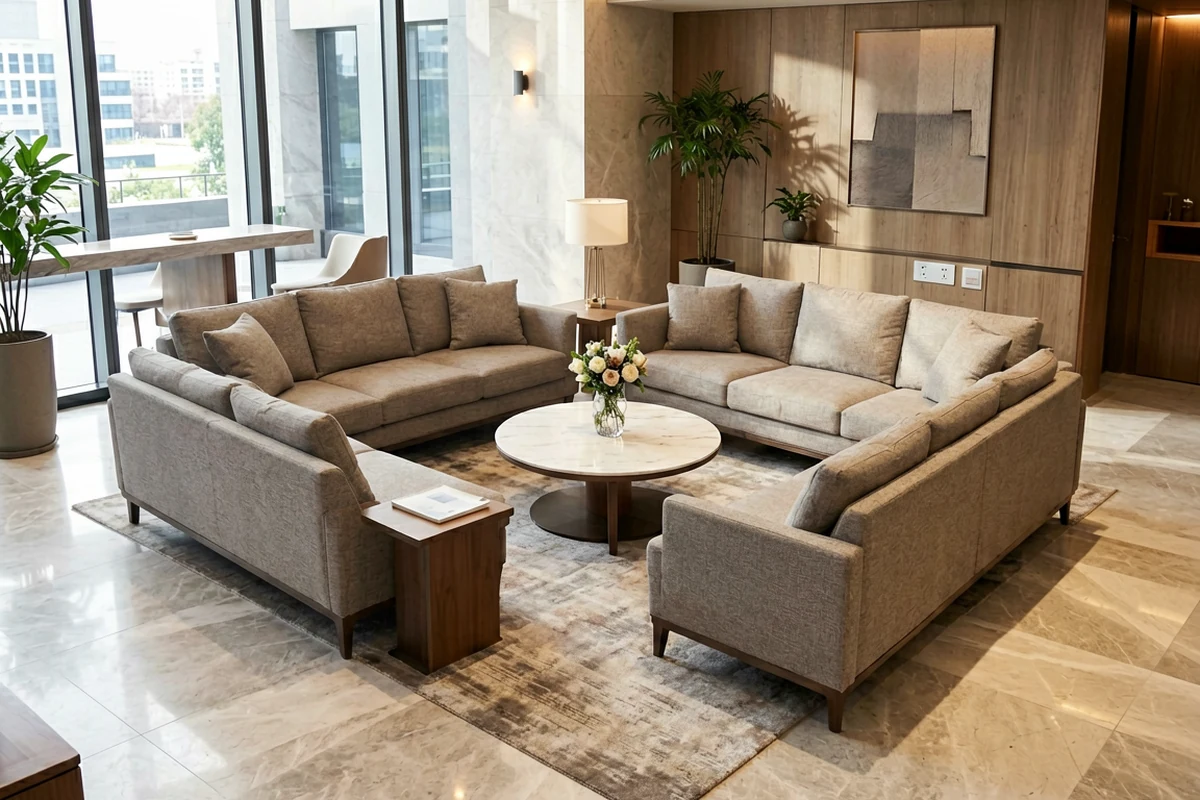
First, freeze a draft lobby schedule. It does not need every decision closed, but it must identify zones, item codes, quantities, drawing references, and open decisions. Second, request supplier comments before final samples. A good supplier should flag unclear dimensions, finish conflicts, construction assumptions, power or hardware interfaces, and packing questions. Third, request coordinated samples by zone. A single sample set for the main waiting area may include sofa upholstery, lounge chair fabric, table top, base finish, frame finish, and hardware. Fourth, review the set with design, operations, housekeeping, procurement, and the owner representative where needed. Fifth, record approvals and deviations in the sample log. Sixth, release production only when the quote, drawings, samples, and packing method match the same schedule.
For accessibility or circulation-sensitive zones, keep the review bounded. The U.S. Access Board material provides federal context for US public accommodations and scoping requirements, but the project team still needs local code, fire, brand, operational, and site-specific review. The furniture supplier should not be asked to make a legal conclusion; it should be asked to provide drawings, dimensions, and product evidence that the project team can review.
Internal links for the procurement path
Use these links as practical next steps, not as decorative SEO anchors.
Review the hotel furniture category when you need a product-scope reference for lobby seating, tables, and related hotel furniture.
Check RON GROUP furniture production capabilities when discussing sample support, production scope, and supplier response formats.
Compare hospitality project examples when the team needs visual context for public-area furniture language, while keeping current project samples as the approval record.
Use the contact page to request a project consultation when the lobby schedule, sample direction, and destination are ready for procurement review.
Final decision tool: lobby furniture RFQ handoff
Before asking for final pricing, make the supplier answer the same handoff questions.
| RFQ handoff field | What the buyer sends | What the supplier must return |
|---|---|---|
| Zone schedule | Lobby zone, item code, quantity, drawing reference, destination | Confirmation, open questions, and any proposed changes |
| Furniture group | Sofa, chair, table, bench, work point, accent piece | Quoted construction, finish, dimensions, and sample requirement |
| Material direction | Upholstery, frame, top, metal, wood, hardware, surface finish | Labeled physical samples and cleaning notes |
| Review boundary | Accessibility, circulation, housekeeping, brand, owner review questions | Drawings and product evidence for project-team review |
| Quality control | Expected inspection stage and photo record | QC checklist, photo examples, and nonconformance route |
| Packing and receiving | Zone labels, item codes, destination, hardware pack expectation | Carton label sample and packing plan linked to the schedule |
This is the final decision point for hotel lobby furniture procurement. If the supplier can return a clear schedule response, coordinated samples, marked drawings, QC plan, and packing labels, the buyer can compare proposals on execution quality rather than only product appearance. If the supplier cannot do that, the risk is still inside the buyer's project.
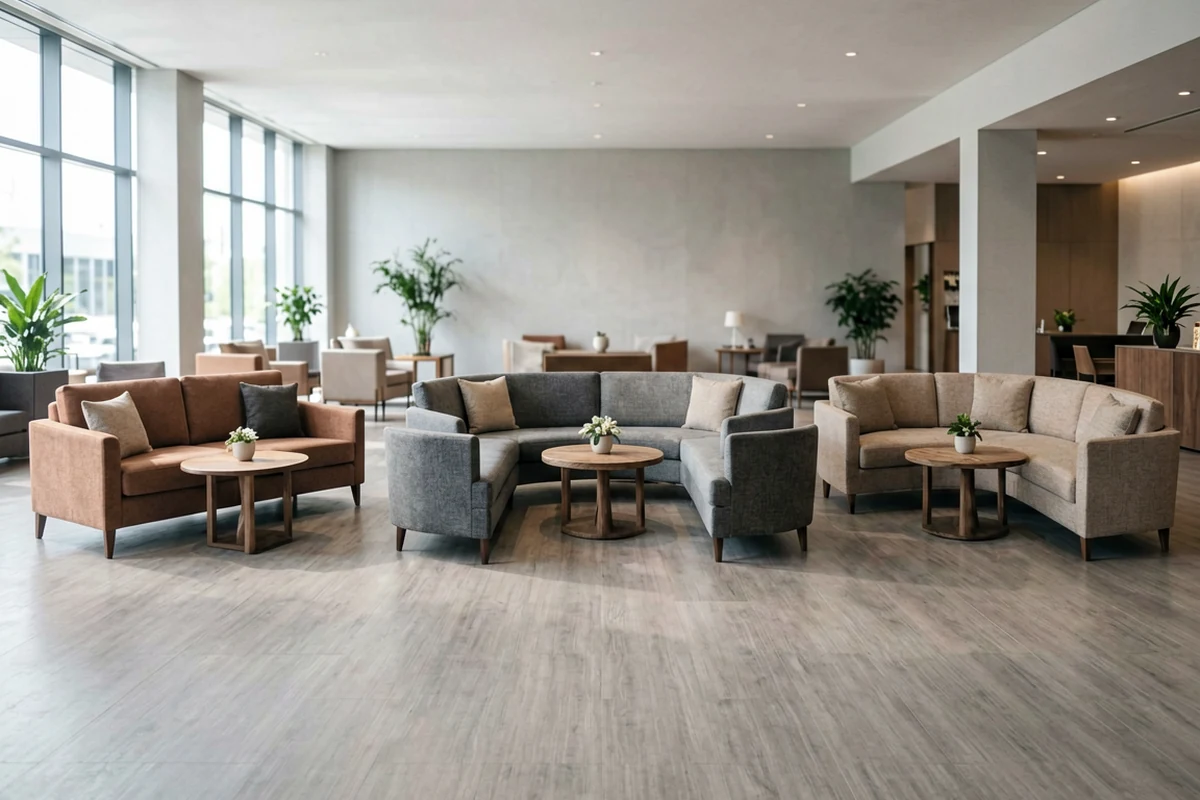
Request a lobby furniture schedule review
When the lobby plan is ready for sourcing, send the zone schedule, furniture list, layout references, target materials, sample priorities, approval owners, destination, and expected delivery sequence. RON GROUP can help turn those inputs into a supplier-facing procurement package, coordinate samples across furniture categories, compare supplier evidence, and align packing labels with the lobby schedule. Request a lobby furniture schedule review before deposit if the team needs a clearer path from design intent to samples, production, QC, packing, and shipment coordination.
Get the week's latest industry information
-
Real-Life Professional Restaurant Case Studies
Explore Now
-
Create a unique restaurant with over 95,700+products
Explore Now
-
Protessional Free 3D Restaurant Design
Explore Now
-
Still Have Questions About Opening a Restaurant?
Explore Now

Sylvia
With 8 years in catering & hospitality industry, sales manager of Ron Group, specialise in providing one stop solutions to restaurants, hotels and weddings.
Discover Our Exclusive Products
Explore our extensive range of restaurant and hotel supplies designed to enhance your operations. Find the perfect solutions to meet your needs.
Browse Our ProductsFREE 3D DESIGN
Boost your restaurant's success with our free 3D design service. Start building the restaurant of your dreams today!
Explore 3D Design Case
RECOMMENDED CASES
-

La Rambla by Catalunya: Crafting Barcelona's Soul in Hong Kong - Custom Furniture Excellence
RON Group's custom Spanish-inspired furniture elevates La Rambla with artisanal aesthetics...
Learn More -

Cardinal Point: Elevating Outdoor Seating with Tailored Cushion Upgrades
Discover how Cardinal Point transformed its outdoor dining experience with custom cushions, achievin
Learn More
RECOMMENDED BLOGS
-
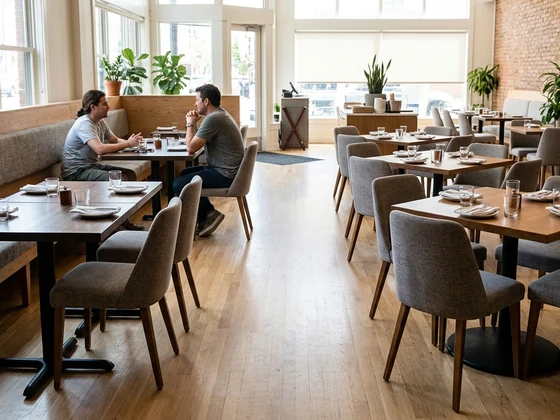
Restaurant Table Spacing and Aisle Clearance: Supplier Drawing Checklist
Check restaurant table spacing, aisle clearance, chair pullout, service path, and supplier drawing proof before approving a...
Sylvia2026-07-20 -

5 Mistakes to Avoid When Buying Restaurant Furniture from China
Don't fall for costly oversights! Learn the 5 mistakes to avoid when buying restaurant furniture from China and ensure a...
 Ron2025-01-079 min read
 -

RON GROUP Launches VR Experience to Explore Our Dynamic Showroom
Discover RON GROUP's VR showroom! Explore dining furniture, tableware, and customized services virtually or visit us in person to...
Sylvia2024-12-163 min read
Subscribe to RON GROUP
Stay up-to-date with the latest industry insights and expert advice. Together, we'll create your ideal restaurant.