

Content

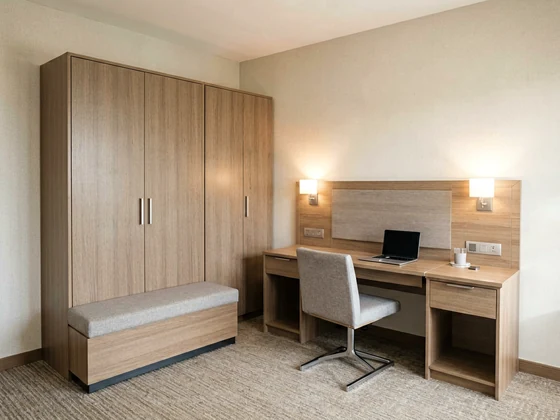
A supplier submission can look complete while still being unsafe to approve. The finish matches the concept board, the overall dimensions fit the plan, and the quotation lists every room type. Yet the package says nothing about the drawer-box substrate, edge treatment, hardware model, back construction, field tolerances, or responsibility for wall fixing. Once production starts, those omissions become supplier interpretations. The sample room then reveals inconsistent construction, disputed substitutions, blocked outlets, or site modifications that no one priced or approved.
The useful procurement question is simple: Is the package defined and evidenced well enough to pass the next gate?
Turn the RFQ into a component-level specification
An RFQ based only on item names, overall dimensions, and finish references leaves too much open. Break each wardrobe, nightstand, desk, dresser, headboard, minibar cabinet, and luggage bench into components and interfaces. This approach follows the material distinctions in the USDA Wood Handbook and the defined casework elements in ANSI/AWI 0641-2019. AWI covers architectural casework, so its component logic is a useful specification method, not automatic compliance for movable hotel furniture.
| RFQ field | What the buyer must define or request | Risk if omitted |
|---|---|---|
| Identity and use | Item ID, room type, quantity, intended use, stored items, and project-specific use or abuse conditions | Different constructions may be quoted under one item name |
| Dimensions | Overall dimensions, clearances, alignments, openings, service zones, and critical interfaces | A nominally correct item may not fit the room |
| Components | Body, fronts, backs, shelves, drawers, supports, plinths, panels, and exposed or concealed faces | Hidden parts remain open to substitution |
| Materials | Substrate category, grade or applicable standard, thickness by component, face, and backer construction | "MDF" or "plywood" becomes a false performance proxy |
| Edges and finish | Edge construction, finish system, color reference, sheen, grain direction, and accepted variation | Production can drift from the approved visual intent |
| Joinery and hardware | Joint and fastening method; hardware manufacturer/model or required evidence | Operation, replacement, appearance, and test relevance may change |
| Room interfaces | Walls, backing, floors, skirting, outlets, data, lighting, HVAC, sprinklers, minibar, sink, and access panels | Clashes appear after delivery |
| Responsibility and evidence | Field measurement, attachment or anti-tip assessment where applicable, installer scope, drawings, samples, declarations, certificates, and reports | Critical work remains unowned |
Material categories are inputs, not rankings. Veneer, laminate, paint, solid-wood components, plywood, particleboard, and MDF raise different questions about face and edge treatment, machining, moisture exposure, repair, weight, adhesives, consistency, and component design. Compare the offered assembly with the item's environment and use. Panel composition, processing, adhesive, geometry, fasteners, edge protection, and tested configuration work together; the category name alone does not establish suitability or service life.
RON GROUP's hotel furniture category provides room-furniture navigation and public options for custom size, material, and color. Those choices still need to be translated into item-level requirements before quotations can be compared on the same basis.
Make the supplier prove what is being offered
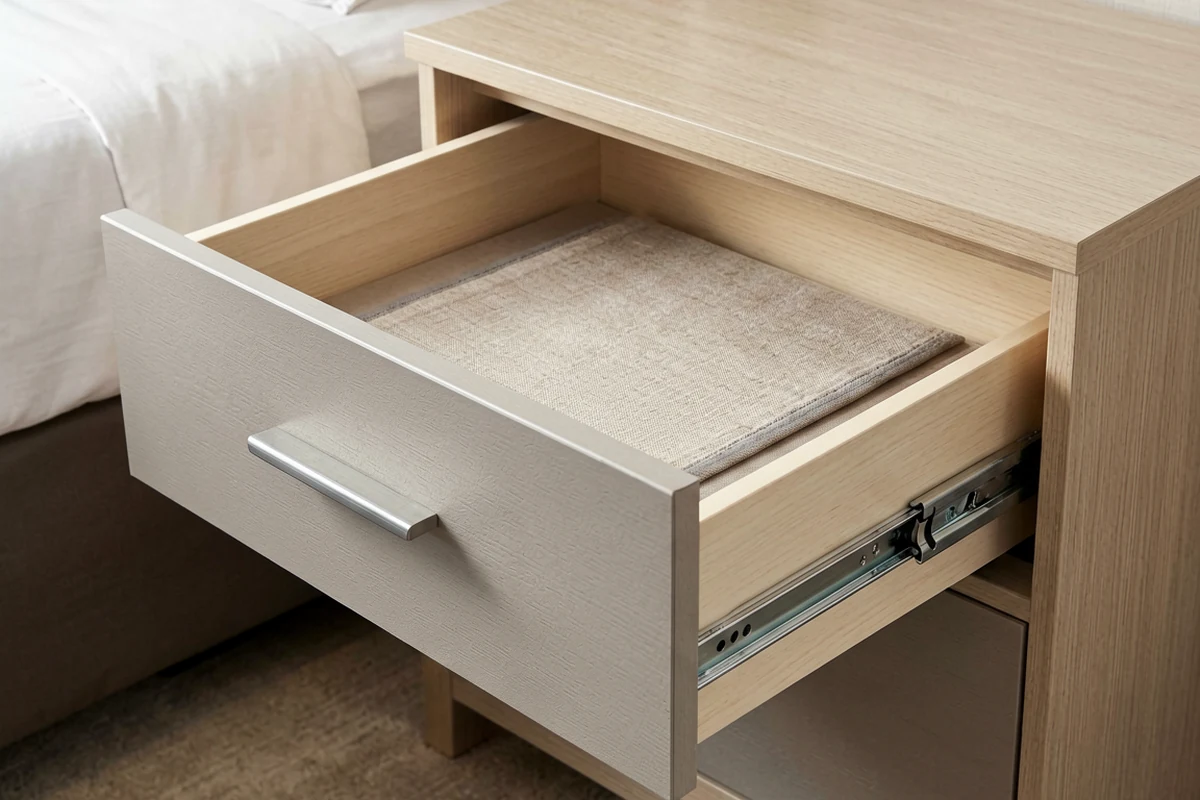
Ask for one indexed submission instead of evidence spread across email threads. It should contain the completed compliance schedule, shop drawings, material and finish data, physical samples, hardware data, test reports, certificates, declarations, packaging proposal, quality plan, and deviation register. AWI's public submittal guidance identifies shop drawings, material data, finish and core samples, sheet-product data, and hardware data as coordination records within architectural woodwork. Applied to hotel casegoods, these records create an approvable manufacturing baseline.
Every alternative in the deviation register should identify the RFQ requirement, proposed change, reason, affected items and room types, supporting evidence, approval status, and any known cost or schedule effect. An unlisted difference remains unresolved; silence does not make it acceptable.
| Evidence field | Supplier question | Approval rule |
|---|---|---|
| Standard and edition | What exact published method was used? | Reject generic "commercial grade" wording |
| Product scope | Does the method cover this item type and claimed attribute? | Escalate uncertain applicability |
| Tested model and configuration | Do dimensions, substrate, hardware, attachment, and construction match the offer? | Record every difference |
| Laboratory and report | Who tested it, who owns the report, when, and under what accreditation? | Review the identifiable report, not a summary |
| Result and criterion | What was measured or passed, against which acceptance criterion? | Do not turn a laboratory load into a normal service rating |
| Destination evidence | Which rule applies, and what labels, declarations, certifications, or records support it? | Verify by destination and transaction |
A generic standards claim is incomplete without the exact method, edition, tested item, configuration, claimed attribute, acceptance criterion, and deviations. A pass report for one drawer box, slide, shelf, thickness, or attachment cannot approve a changed configuration without review. The AWI casework material and test guidance also keeps laboratory values tied to named methods and architectural-casework scope; those values are not universal hotel service-load recommendations.
Destination rules need the same precision. For products within United States scope, the EPA's TSCA Title VI composite wood page addresses hardwood plywood, MDF, particleboard, and finished goods containing regulated composite wood products, with certification, labeling, testing, recordkeeping, and import provisions. The page was updated February 12, 2026 and notes a February 6, 2026 proposed standards update. Recheck its status and the applicable 40 CFR Part 770 definitions and exemptions before publication or procurement release.
California separately administers its Composite Wood Products ATCM for relevant products sold, supplied, used, or manufactured for sale in California. These are jurisdiction examples, not global rules or legal advice. The compliance schedule should record destination, material or finished-good scope, requested evidence, responsible party, verification status, reviewer, and approval date.
An FSC logo or broad sustainability statement is also insufficient. FSC chain of custody identifies and tracks certified material through manufacturing and distribution, supported by purchase, production, and sales records and certification audits. Request the current certificate identity and scope, relevant claim, product or material linkage, claim on applicable sales documents, and evidence that the offered transaction sits within the certified chain. FSC chain-of-custody certification does not prove emissions, durability, product quality, or the status of non-wood materials.
Use the sample room as a production-release gate
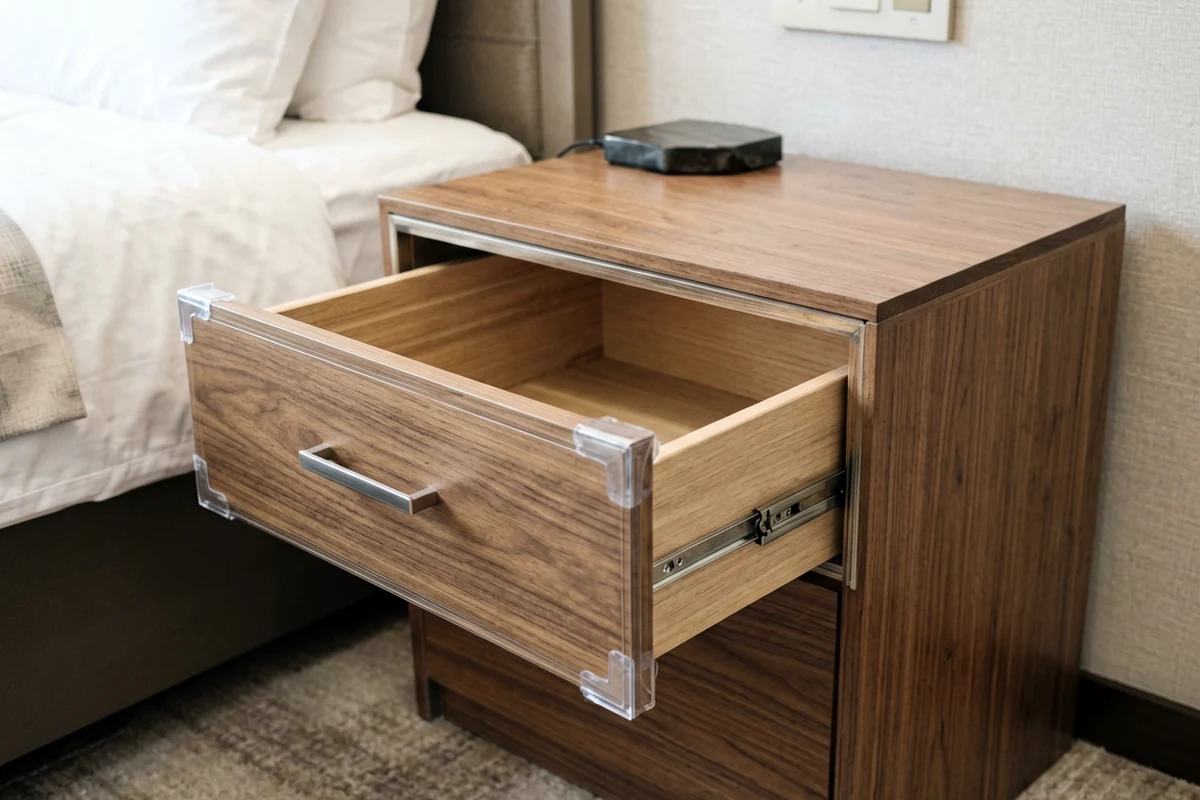
The sample room is where the specification, supplier submission, room conditions, and installer assumptions meet. Freeze the reviewed drawing set and samples before inspection, then record every result against that baseline.
| Check | Evidence and decision | Owner/action record |
|---|---|---|
| Materials and finish | Component identity, color and grain range, sheen, edge quality, and approved control samples | Approve, revise, reject, or escalate; supplier correction and due date |
| Assembly and operation | Gaps, alignment, joints, door/drawer operation, hardware identity, stability, and project-defined use checks | Reviewer, result, evidence, and deviation reference |
| Room coordination | Bedside and circulation clearances; wall, floor, skirting, power, data, lighting, minibar, and access-panel interfaces | Responsible designer or trade and required drawing update |
| Maintenance | Cleaning access, service replacement, touch-up, and damage-repair method | Operations reviewer and accepted method |
| Delivery and installation | Packaging, room/item identification, installation sequence, fixing assumptions, and installer scope | Logistics or installation owner and release condition |
Treat any substitution after sample approval as a controlled change. The supplier must state what changes, why, which evidence remains valid, which samples or tests must be repeated, and which rooms or interfaces are affected. Keep one approved deviation log and one control-sample reference. A revised quotation, verbal approval, or near-match finish chip does not change the production baseline.
This gate is a recommended procurement control, not a statutory rule or hotel-brand mandate. It closes only when every issue has an owner, action, due date, and disposition. Material, hardware, finish, interface, regulatory, traceability, and test questions must be resolved or formally accepted before mass production.
Assign field and installation responsibility before shipment
Field-verified drawings should show item locations, dimensions, elevations, components, clearances, mounting or connector details, and building-service coordination. The UFGS systems-furniture specification offers a transferable field-verification method, but it does not govern hotel casegoods. Its federal product requirements and drawing scales are not universal project rules.
| Interface | Required record | Named responsibility |
|---|---|---|
| Survey conditions | Field dimensions, wall type/backing, floor level/finish, and skirting/base | Surveyor, contractor, designer, and acceptance date |
| Building services | Power, USB, data, lighting, HVAC, sprinklers, minibar/sink services | Coordinating designer or trade and supplier drawing owner |
| Access and attachment | Access panels, service replacement path, fixing points, attachment or anti-tip assessment where applicable | Project authority, substrate provider, supplier, and installer |
| Site execution | Installer scope, tolerances, sequence, protection, and field-modification process | Installation lead and change approver |
International sourcing adds counterparty risk to the technical review. General U.S. International Trade Administration due-diligence guidance supports investigating markets and selecting foreign partners carefully. For this package, check business identity, manufacturing responsibility, references, report ownership, certificate scope, quality controls, sample accountability, and change authority in proportion to the commercial risk. These checks do not replace legal, sanctions, credit, technical, or factory review.
Release only the next justified step
Use a controlled sequence:
design intent -> specification freeze -> supplier submittal -> finish/sample approval -> sample room -> corrections -> approved drawings and control sample -> mass-production release -> pre-shipment inspection -> installation handoff
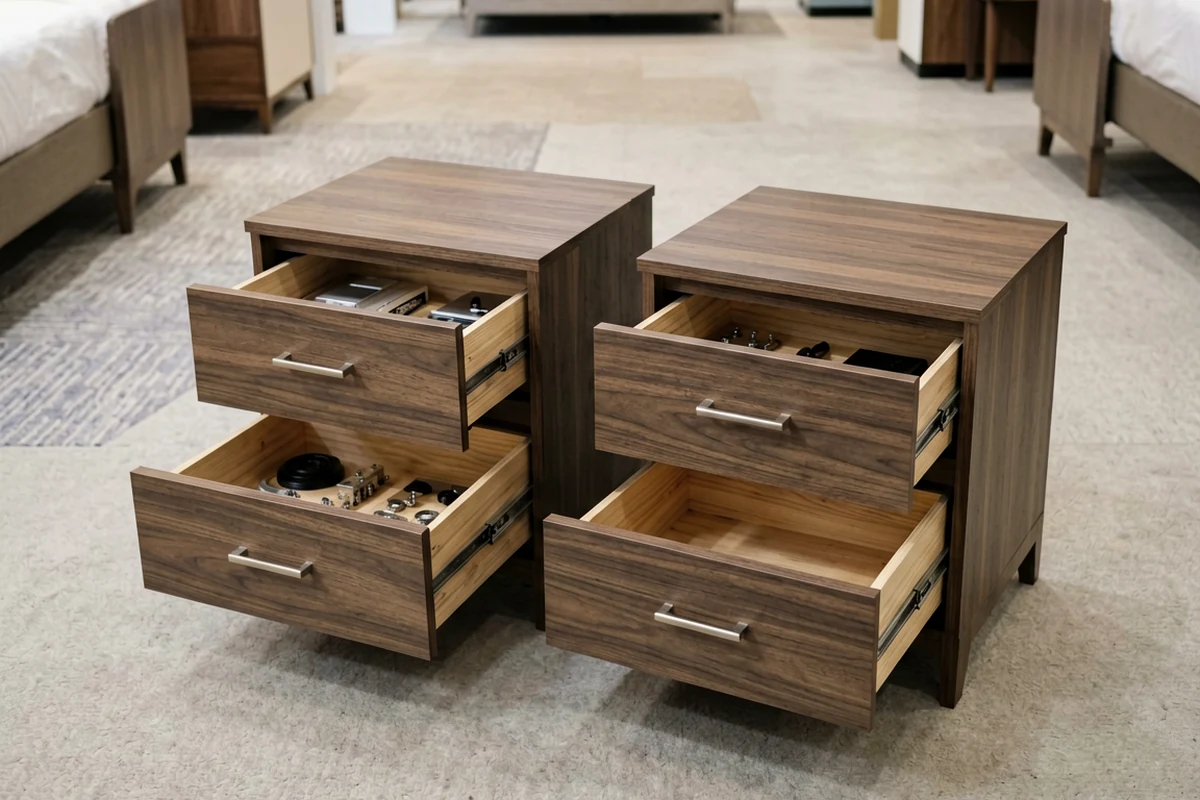
At each arrow, record the decision, required evidence, decision owner, and prohibited next step. Approval to make samples is not production approval. Production approval does not waive pre-shipment inspection. Shipment approval does not transfer unresolved installation work to the site team.
For broader project navigation, the hospitality furniture project support page can help the reader continue the task, but it is not evidence for a technical, compliance, or project-performance claim.
To submit your casegoods specification package, include the hotel location and destination, operator requirements, room types and quantities, item list, plans and elevations, critical dimensions, finish schedule and control samples, material and hardware requirements, required standards and documents, sample-room status, packaging and installation scope, and target approval and opening milestones.
The final decision can be conditional: release the next gate only after named evidence or corrections are complete. That keeps design intent, supplier accountability, and site responsibility tied to one approved baseline.
Get the week's latest industry information
-
Real-Life Professional Restaurant Case Studies
Explore Now
-
Create a unique restaurant with over 95,700+products
Explore Now
-
Protessional Free 3D Restaurant Design
Explore Now
-
Still Have Questions About Opening a Restaurant?
Explore Now

Sylvia
With 8 years in catering & hospitality industry, sales manager of Ron Group, specialise in providing one stop solutions to restaurants, hotels and weddings.
Discover Our Exclusive Products
Explore our extensive range of restaurant and hotel supplies designed to enhance your operations. Find the perfect solutions to meet your needs.
Browse Our ProductsFREE 3D DESIGN
Boost your restaurant's success with our free 3D design service. Start building the restaurant of your dreams today!
Explore 3D Design Case
RECOMMENDED CASES
-

La Rambla by Catalunya: Crafting Barcelona's Soul in Hong Kong - Custom Furniture Excellence
RON Group's custom Spanish-inspired furniture elevates La Rambla with artisanal aesthetics...
Learn More -

Cardinal Point: Elevating Outdoor Seating with Tailored Cushion Upgrades
Discover how Cardinal Point transformed its outdoor dining experience with custom cushions, achievin
Learn More
RECOMMENDED BLOGS
-

Restaurant Table Spacing and Aisle Clearance: Supplier Drawing Checklist
Check restaurant table spacing, aisle clearance, chair pullout, service path, and supplier drawing proof before approving a...
Sylvia2026-07-20 -

5 Mistakes to Avoid When Buying Restaurant Furniture from China
Don't fall for costly oversights! Learn the 5 mistakes to avoid when buying restaurant furniture from China and ensure a...
 Ron2025-01-079 min read
 -

RON GROUP Launches VR Experience to Explore Our Dynamic Showroom
Discover RON GROUP's VR showroom! Explore dining furniture, tableware, and customized services virtually or visit us in person to...
Sylvia2024-12-163 min read
Subscribe to RON GROUP
Stay up-to-date with the latest industry insights and expert advice. Together, we'll create your ideal restaurant.