











A Global Compliance Guide to Hospitality Equipment and Furniture: Navigating US & EU/UK Regulatory Frameworks
Content
Of course. As the Content Strategist and SEO Specialist for RON Group Global, I will transform the provided text. My focus will be on seamlessly integrating the citations as natural anchor text links, refining the grammar for a professional American English voice, and aligning the content with our authoritative, solutions-oriented brand style. I will also remove any links to direct competitors and strategically add internal links to relevant RON Group content.
Here is the revised and enhanced article:
Introduction: Navigating the Global Compliance Landscape for Hospitality Equipment
In the highly competitive global hospitality market, regulatory compliance is not merely a procedural hurdle; it is a cornerstone of sound business strategy. For manufacturers, distributors, and procurement specialists of hospitality equipment and furniture, a nuanced understanding of international standards is essential for ensuring market access, mitigating significant legal and financial risks, and building a reputation for safety and quality, a process supported by rigorous testing and certification for commercial appliances. Failure to comply can result in costly product recalls, legal liability, and irreparable damage to a brand’s standing with both commercial buyers and the public. This guide provides an exhaustive analysis of the primary compliance frameworks in two of the world’s largest markets: the United States and the European Union/United Kingdom.
Two Markets, Two Philosophies
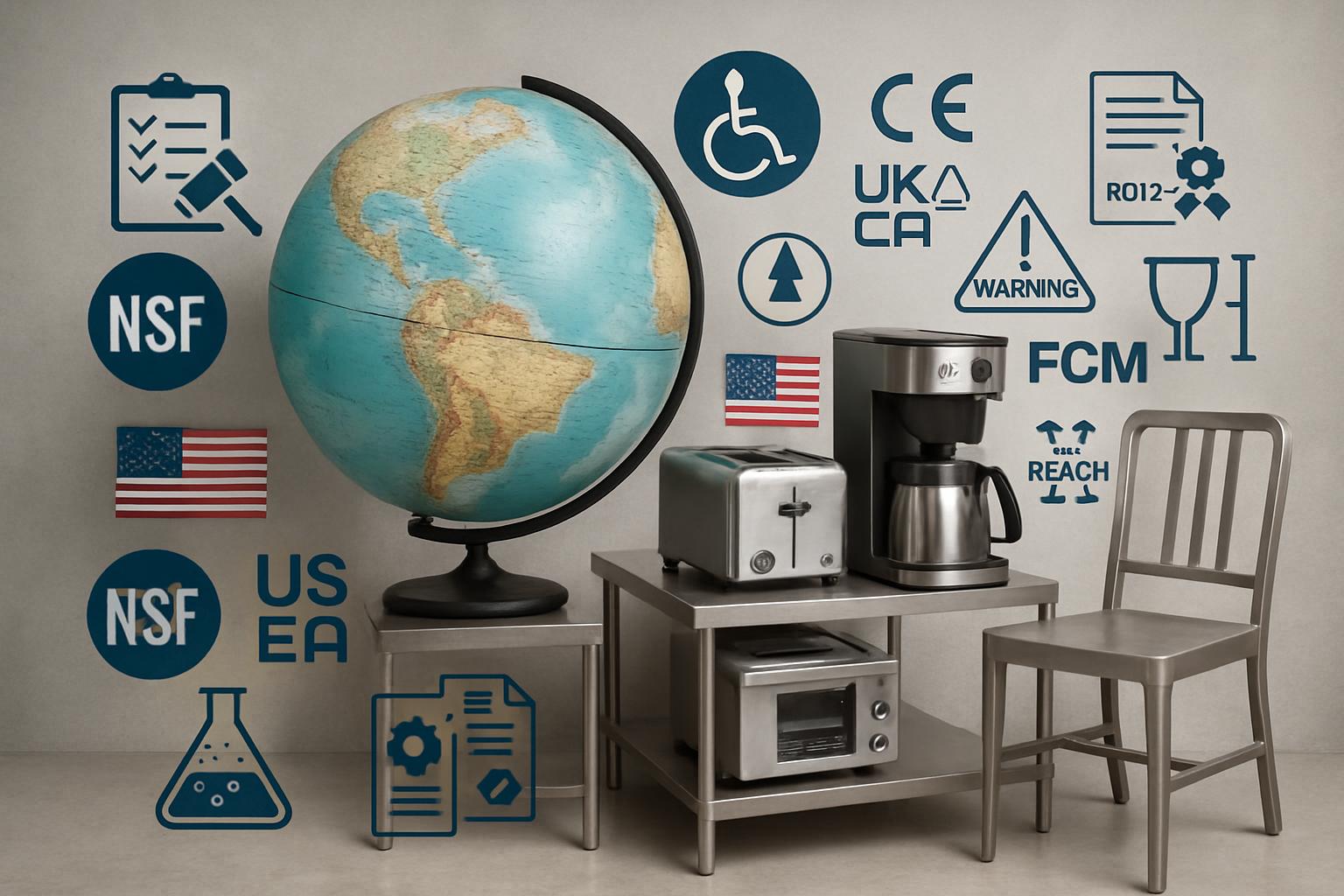
A fundamental grasp of the differing regulatory philosophies of the US and the EU/UK is critical to navigating their respective requirements. The United States operates on a complex, multi-layered system that combines federal laws, state-specific regulations, and the widespread adoption of standards developed by independent, third-party organizations. Federal mandates like the Americans with Disabilities Act (ADA) set a national baseline for accessibility, while state laws such as California’s Proposition 65 impose unique chemical safety and communication requirements. However, for sanitation and operational safety, the system relies heavily on standards from organizations like NSF International (NSF) and UL Solutions (UL). While not federal laws themselves, these standards are so deeply embedded in local health, building, and fire codes that they function as de facto mandatory requirements, making food equipment certification a critical step for market entry.
In contrast, the European Union and, by extension, the post-Brexit United Kingdom, employ a more centralized and harmonized legislative approach. The cornerstone of this system is the CE mark (and its UKCA equivalent), which represents a manufacturer’s self-declaration that a product conforms to all applicable EU directives and regulations governing health, safety, and environmental protection, a process detailed in the UK’s guidance on CE marking. This framework places the primary responsibility for demonstrating compliance squarely on the manufacturer, who must compile extensive technical documentation and issue a formal Declaration of Conformity. This top-down, legislative model contrasts with the US market’s reliance on third-party verification and the authority of local inspectors.
Pillars of Hospitality Compliance
This report dissects the compliance landscape across four essential pillars, each representing a critical area of risk and regulation for hospitality equipment and furniture:
Sanitation & Food Safety: This pillar addresses the prevention of foodborne illness through hygienic design, cleanable surfaces, and the use of materials that will not leach harmful substances into food.
Operational & User Safety: This area covers the protection of kitchen staff, service personnel, and patrons from a range of physical hazards, including electrical shock, gas leaks, fire, and mechanical failures.
Accessibility: This pillar focuses on ensuring that facilities and furnishings provide equitable access and usability for people with disabilities, a requirement rooted in civil rights legislation.
Chemical Safety: This addresses the management of chemical substances within products, focusing on restricting hazardous materials and communicating potential exposure risks to end-users and consumers.
How to Use This Guide
This guide is structured to provide a comprehensive understanding of these complex topics. Part I offers a deep dive into the specific standards and regulations governing the US market. Part II provides a parallel analysis of the integrated framework used in the EU and UK. Part III synthesizes this information into a central, side-by-side comparison table designed for quick reference and practical application. This “cheat sheet” is intended to be an actionable tool for professionals to use when evaluating product specifications, vetting suppliers, and making critical procurement decisions. The guide concludes with a strategic analysis, offering recommendations for building a robust global compliance program that leverages regulatory adherence as a competitive market advantage.
Part I: United States Compliance Deep Dive
The US compliance landscape is a mosaic of federal, state, and local requirements, heavily influenced by the standards and certification marks of independent organizations. For any company looking to place hospitality equipment or furniture on the US market, understanding the roles of NSF, UL, the ADA, and Proposition 65 is not just advisable—it is essential for commercial viability.
NSF: The Gold Standard for Sanitation and Food Safety
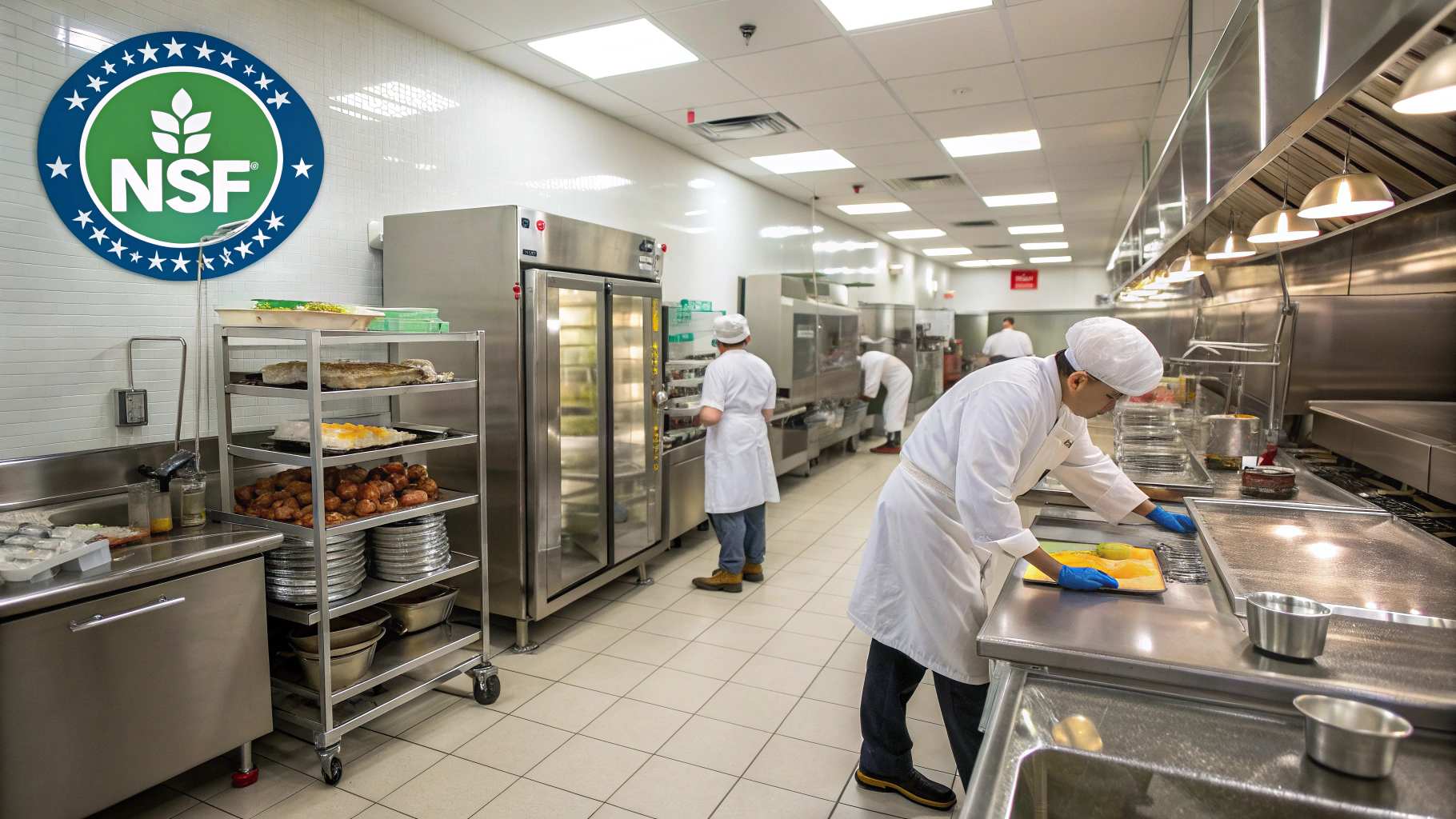
NSF International, founded in 1944 as the National Sanitation Foundation, is a non-governmental, third-party organization that develops public health standards and provides certification services for a wide range of products, including commercial food equipment. While not a federal law, NSF certification is so widely required by local health departments that it is virtually impossible to operate a commercial kitchen without equipment that meets NSF’s food equipment standards.
The authority and market power of NSF certification are directly linked to the influence of the U.S. Food and Drug Administration (FDA) Food Code. The Food Code is a model regulation—not a federal law—that provides scientifically sound technical and legal guidance for state, local, tribal, and territorial jurisdictions to regulate the retail and foodservice industries, as detailed in the full text of the FDA Food Code. The latest version is the 2022 Food Code, which is periodically updated, with the FDA providing a summary of key changes for each version.
Crucially, Section 4-205.10 of the Food Code specifies that food equipment should be “certified or classified for sanitation by an ANSI-accredited certification program,” a recommendation that reinforces the importance of marks from organizations on the FDA’s list of accepted programs. This recommendation creates a powerful public-private dynamic: the FDA sets the national expectation for food safety, and NSF provides the most recognized and trusted ANSI-accredited program to meet that expectation. As states and local jurisdictions adopt the Food Code into their own health regulations, the recommendation for third-party certification effectively becomes a mandatory requirement enforced by local health inspectors, who are trained to look for the NSF mark as proof of compliance.
NSF has developed over 75 standards for food equipment, each tailored to a specific product category. These standards cover three main areas: material safety (ensuring no harmful chemicals leach into food), design and construction (ensuring the product is easily cleanable and does not harbor bacteria), and product performance. For hospitality operators and suppliers, several key standards are of paramount importance:
NSF/ANSI 2 - Food Equipment (Latest Version: 2022): This standard establishes the minimum food protection and sanitation requirements for a broad category of non-powered food handling and processing equipment. Its scope includes bakery units, cafeteria counters, tables, shelves, sinks, and even dinnerware, all of which are covered in the NSF’s portfolio of food equipment standards. The core requirements of NSF/ANSI 2 focus on hygienic design: surfaces must be smooth, non-absorbent, and corrosion-resistant; corners and angles in food zones must be rounded to facilitate cleaning; and seams and fasteners must be sealed to prevent the accumulation of food debris and bacteria. According to an analysis of the NSF/ANSI 2-2022 standard, recent revisions have addressed details like equipment mounting, glass tableware, and the use of wood.
NSF/ANSI 7 - Commercial Refrigerators and Freezers (Latest Version: 2024): This standard applies to all types of commercial refrigeration equipment, including reach-in and walk-in coolers and freezers, refrigerated transport cabinets, and display cases. NSF/ANSI 7 sets critical performance requirements to ensure food safety, mandating that coolers maintain an air temperature of 40°F (4°C) or lower and that freezers maintain 0°F (−18°C) or lower. The full NSF/ANSI 7-2024 standard for commercial refrigerators also includes stringent design requirements, such as the use of permanently attached gaskets and doors that can be opened from the inside.
NSF/ANSI 51 - Food Equipment Materials (Latest Version: 2023): This is a foundational standard that is referenced by many other equipment-specific NSF standards. It establishes minimum public health requirements for materials intended for use in a food zone, a topic detailed in the overview of NSF/ANSI 51-2023. The standard ensures that materials are formulated in a way that does not impart deleterious substances to food. It sets limitations on materials such as stainless steel, aluminum alloys, plastics, glass, and wood, and defines criteria for surface characteristics like cleanability and corrosion resistance. A significant update in the 2023 version was the revision of language regarding lead content to align with the stricter requirements of the U.S. Environmental Protection Agency’s Safe Drinking Water Act.
The interconnected nature of these standards is a crucial concept. A manufacturer seeking certification for a refrigerated food preparation table, for example, must navigate a web of requirements. The refrigeration system would need to comply with NSF/ANSI 7, the work surfaces with NSF/ANSI 2, and the raw materials used in the food-contact zones of both components would need to meet the criteria of NSF/ANSI 51. This hierarchical structure necessitates an integrated approach to design and material sourcing from the earliest stages of product development.
Achieving NSF certification is a rigorous, multi-step process that underscores the mark’s credibility. This seven-step certification process, which includes annual plant inspections and retesting, ensures that products bearing the NSF mark consistently meet the standard to which they were originally certified.
UL: Ensuring Electrical, Gas, and Fire Safety
UL Solutions, formerly Underwriters Laboratories, is a global safety science company and a leading provider of testing, inspection, and certification (TIC) services since its establishment in 1894. Similar to NSF, UL certification is not typically mandated by federal law but is widely required by state and local authorities having jurisdiction (AHJs), such as electrical inspectors and fire marshals, who rely on UL marks to verify compliance with local codes. Furthermore, many commercial property insurance policies require that installed equipment be UL certified, a key aspect of mitigating fire and electrical risks in commercial kitchens.
UL offers a portfolio of marks that signify different types of certification, and it is essential to understand their distinctions:
UL Listed Mark: This is one of the most frequently seen marks in North America. It signifies that UL has tested representative samples of a complete, standalone product and determined that it meets UL’s defined safety requirements. This mark indicates the product is suitable for installation and use in accordance with national and local safety codes, such as the National Electrical Code (NEC), as outlined in this overview of UL Solutions for foodservice equipment.
UL Classified Mark: This mark is applied to products that UL has evaluated for a specific set of properties, a limited range of hazards, or for use under specific conditions. It indicates that the product has been tested for certain, but not all, potential safety risks.
UL EPH Mark (Environmental and Public Health): This mark indicates that a product has been evaluated to environmental and public health standards, including sanitation standards like those developed by NSF. A product, such as a commercial dishwasher, might bear a UL Listed Mark for electrical safety and a UL EPH Mark for sanitation compliance. This presents a strategic choice for manufacturers based on factors like cost, efficiency, and the perceived market value of each mark, as detailed in UL’s own service documentation.
Several UL standards are fundamental to the hospitality industry:
UL 197: Commercial Electric Cooking Appliances. This standard covers the electrical safety of a vast range of equipment, from ovens and fryers to toasters and coffee makers.
ANSI Z83.11/CSA 1.8: Gas Food Service Equipment. This is the primary safety standard for gas-fired appliances, and UL is a major certifier to this standard.
UL 300: Fire Testing of Fire Extinguishing Systems for Protection of Commercial Cooking Equipment. This is a system-level standard critical for kitchen fire safety. It sets requirements for the design and performance of pre-engineered fire suppression systems used over cooking equipment like deep-fat fryers, a critical component of commercial kitchen fire safety. Compliance is often mandated by fire codes based on NFPA 96 (Standard for Ventilation Control and Fire Protection of Commercial Cooking Operations) and by insurance carriers, creating a powerful indirect compliance driver for restaurant owners.
UL 710B: Recirculating Systems. This standard applies to ventless cooking equipment, which uses integrated systems to filter grease-laden air, allowing for operation without a traditional ventilation hood. It is a critical safety and performance standard for this growing category of equipment.
In recent years, UL has expanded its services beyond core safety to include performance verification. The UL Verified Mark allows manufacturers to substantiate specific marketing claims through independent, third-party testing. For example, a manufacturer of a ventless oven can obtain a UL Verified Mark to prove its claim of limiting grease emissions to below a certain threshold (e.g., 5mg/m3) when tested using a specific method like EPA-202. This service, part of UL’s product engineering solutions, helps manufacturers differentiate their products in a crowded market and provides credible data for buyers and AHJs.
ADA: Mandating Accessibility in Hospitality Spaces
The Americans with Disabilities Act (ADA) of 1990 is a landmark federal civil rights law, not a product certification standard. It prohibits discrimination against individuals with disabilities in all areas of public life. Title III of the ADA applies to businesses and non-profit service providers that are “public accommodations,” a category that explicitly includes restaurants, bars, hotels, and other hospitality venues.
The current, legally enforceable technical requirements for accessibility are found in the 2010 ADA Standards for Accessible Design. These standards apply to all new construction and alterations made to facilities. For existing facilities built before the standards took effect, the law requires the removal of architectural barriers when it is “readily achievable” to do so, meaning “easily accomplishable and able to be carried out without much difficulty or expense.”
The 2010 Standards contain highly specific requirements that directly impact the selection and layout of furniture in hospitality settings:
Seating Distribution and Quantity: At least 5% of all fixed tables, or at least one table if fewer than 20 are provided, must be accessible. This requirement applies independently to each distinct dining area. For instance, if a restaurant has a main dining room, a separate bar area, and an outdoor patio, each of these spaces must meet the 5% threshold. Critically, these accessible tables must be dispersed throughout the facility to provide a choice of seating locations and prevent the segregation of patrons with disabilities.
Table and Counter Dimensions: To be considered accessible, dining and work surfaces must meet specific dimensional criteria outlined in the official ADA standards:
Surface Height: The top of the table or counter surface must be between 28 inches and 34 inches above the finished floor.
Knee and Toe Clearance: To accommodate a person using a wheelchair, a clear space must be provided underneath the surface that is at least 30 inches wide, 27 inches high, and extends at least 19 inches deep.
Accessible Routes: An accessible route, or a clear path of travel, with a minimum width of 36 inches must be maintained between tables and through all public areas of the facility, connecting the entrance, dining areas, restrooms, and service counters.
Compliance with the ADA is a matter of both product design and facility layout. A furniture manufacturer can design and sell a table with perfectly compliant dimensions. However, if the restaurant operator places these tables too close together, obstructing the 36-inch accessible route, the facility is no longer in compliance. This distinction is vital. It implies that responsible manufacturers and suppliers should not only offer dimensionally compliant products but also provide guidance on how to arrange that furniture to create a fully accessible environment. This can be a significant value-added service, helping clients avoid potential legal challenges—a key consideration when planning your restaurant’s furniture budget and layout—and creating a more inclusive space for all patrons.
California Proposition 65: Chemical Exposure and the Right-to-Know
California’s Proposition 65, officially the Safe Drinking Water and Toxic Enforcement Act of 1986, is a unique “right-to-know” law that has a profound impact on businesses operating in the United States, as explained on the official Proposition 65 website. It requires businesses with 10 or more employees to provide a “clear and reasonable warning” before knowingly and intentionally exposing individuals in California to any of the approximately 900 chemicals on the state’s official list of substances known to cause cancer, birth defects, or other reproductive harm. The state maintains an official list of these chemicals, which is updated at least annually.
Proposition 65 is not a product safety law in the traditional sense; it does not ban or restrict the use of listed chemicals. Instead, it is a communication statute. The warning requirement is triggered not by the mere presence of a listed chemical, but by the exposure it causes. If the level of exposure from a product is below a scientifically determined “No Significant Risk Level” (NSRL) for carcinogens or “Maximum Allowable Dose Level” (MADL) for reproductive toxicants, no warning is required.
While Proposition 65 is a California law, its practical reach is national. Due to the complexity of modern supply chains, many manufacturers find it operationally infeasible to maintain separate inventories for California and the rest of the country. As a result, it is common to see Prop 65 warnings on products sold nationwide, a direct consequence of modern supply chain complexities that many businesses must navigate.
For the hospitality industry, the law is relevant in several ways. Warnings may be required for:
Food Contact Materials: Chemicals like Bisphenol A (BPA) from can linings or jar lids, or phthalates like Di(2-ethylhexyl)phthalate (DEHP) from flexible plastics used in processing and packaging, can migrate into food and beverages.
Furniture and Equipment: Components of furniture or equipment could contain listed chemicals, such as lead in certain alloys or flame retardants in upholstery.
Cooked Foods: The cooking process itself can form listed chemicals, such as acrylamide, which is created in some plant-based foods during high-temperature cooking like frying or baking.
A defining feature of Proposition 65 is its enforcement mechanism. The law can be enforced by the California Attorney General, district attorneys, or, most significantly, by private parties “acting in the public interest.” This “citizen suit” provision has given rise to a substantial volume of litigation initiated by private law firms and advocacy groups. Penalties for failing to provide a required warning can be as high as $2,500 per violation, per day.
This legal landscape means that Proposition 65 compliance is primarily a matter of risk management. The burden of proof falls on the business to demonstrate that any exposure from its product is below the safe harbor levels. Conducting the sophisticated exposure assessments and migration testing necessary to make this determination can be prohibitively expensive. Consequently, many businesses opt to provide a warning as a precautionary measure to mitigate the significant financial risk associated with litigation, a practice often referred to as “over-warning.”
Like the EU’s REACH regulation, Proposition 65 forces a high degree of supply chain transparency. To assess the need for a warning on a finished piece of equipment, a manufacturer must have detailed knowledge of the chemical composition of every component and raw material sourced from its suppliers. This necessitates robust data collection processes and contractual agreements with suppliers to provide the necessary chemical information.
Part II: European Union & United Kingdom Compliance Deep Dive
The regulatory framework for hospitality equipment and furniture in the European Union is characterized by a harmonized, legislative approach aimed at ensuring the free movement of goods within the Single Market. This system is built on a foundation of directives and regulations that establish essential requirements for product safety, health, and environmental protection. Following its departure from the EU, the United Kingdom has implemented a parallel system, the UKCA (UK Conformity Assessed) mark, which for now largely mirrors the EU’s CE marking requirements for the market in Great Britain (England, Scotland, and Wales). Due to this high degree of alignment, this guide will focus on the CE framework as the representative model.

The CE Mark: A Passport to the European Market
The CE mark, an acronym for “Conformité Européenne” (French for European Conformity), is a mandatory marking for specific product categories sold within the European Economic Area (EEA), which includes the 27 EU member states plus Iceland, Liechtenstein, and Norway. The mark signifies that a product conforms to EU safety, health, and environmental protection requirements, as outlined in the EU’s own guidance on CE marking. The CE mark is not a mark of quality, origin, or third-party approval. It is a manufacturer’s self-declaration that the product meets all legal requirements of the applicable EU directives and regulations. By affixing the CE mark, the manufacturer takes full legal responsibility for the product’s compliance.
The process of affixing the CE mark is a structured, six-step procedure that must be undertaken by the manufacturer:
Identify Applicable Legislation: The manufacturer must determine all EU directives and/or regulations that apply to their product.
Verify Essential Requirements: Each directive or regulation specifies the “essential requirements” (e.g., for health and safety) that the product must meet.
Determine Need for Notified Body: For some high-risk products, the law requires that a third-party conformity assessment be conducted by a “Notified Body.”
Assess Conformity: The manufacturer must test the product and assess its conformity to the essential requirements.
Compile the Technical File: The manufacturer must create and maintain a comprehensive Technical File containing all documentation that proves the product’s conformity.
Draw Up Declaration of Conformity and Affix CE Mark: The final step is to draw up a formal EU Declaration of Conformity (DoC) and affix the CE mark to the product, completing the six-step process for conformity assessment.
This system creates a holistic compliance statement. A single CE mark on a smart commercial oven signifies that the manufacturer declares conformity not just to one set of rules, but to all applicable legislation, which could include the Machinery Regulation, the Low Voltage Directive, the Electromagnetic Compatibility (EMC) Directive, and the Restriction of Hazardous Substances (RoHS) Directive. This is a key difference from the US approach, where separate marks (e.g., UL for electrical safety, NSF for sanitation) are used to denote compliance with different types of standards.
A pivotal piece of legislation for the hospitality equipment sector is the new Machinery Regulation (EU) 2023/1230. This regulation replaces the long-standing Machinery Directive (2006/42/EC) and introduces significant updates to address the risks associated with modern technologies. Its application becomes mandatory for all new machinery placed on the market starting January 20, 2027, as specified in the official text of Regulation (EU) 2023/1230.
The regulation’s scope is broad, covering nearly all powered food service equipment, such as mixers, slicers, grinders, dishwashers, and coffee machines. Key changes and new requirements include:
Cybersecurity: In a major shift, the regulation introduces new Essential Health and Safety Requirements (EHSRs) for “protection against corruption.” It mandates that machinery be designed and constructed so that its connection to another device does not create a hazardous situation. Safety-related control systems must be protected against intentional or unintentional corruption that could lead to hazardous behavior, representing one of the most important changes in the new Machinery Regulation. This requirement also aligns with broader EU initiatives like the Cyber Resilience Act (CRA).
Artificial Intelligence (AI) and Machine Learning: The regulation explicitly addresses machinery with self-evolving behavior or learning capabilities. It requires that these systems are designed to ensure that the machine remains safe throughout its lifecycle and that safety functions cannot be altered beyond defined limits, a key requirement detailed in analyses of the new regulation’s impact on AI.
Digital Documentation: The new regulation formally permits manufacturers to provide instructions for use in a digital format, acknowledging modern business practices and sustainability goals. However, a paper version must still be provided free of charge upon request by the customer.
The EU Declaration of Conformity is the legal document that accompanies the CE mark. In it, the manufacturer or their authorized representative formally declares, under their sole responsibility, that the product complies with all relevant EU legislation. The DoC must identify the manufacturer, the product (e.g., by model and serial number), and, critically, list all EU directives and regulations to which conformity is declared, along with the harmonized standards used to demonstrate compliance, and it is a critical legal document for exporting goods to the EU. This document must be made available to market surveillance authorities upon request and must be translated into the official language(s) of the member state(s) where the product is sold.
Food Contact Materials (FCM) Regulations: Safeguarding Food Integrity
The EU has a comprehensive and stringent legal framework for all materials and articles intended to come into contact with food, known as Food Contact Materials (FCMs). This framework is designed to ensure that such materials do not endanger human health or adversely affect the quality of the food.
The EU’s approach to FCM regulation is multi-tiered:
Framework Regulation (EC) No 1935/2004: This is the overarching legislation that applies to all FCMs, from kitchenware and packaging to the components of food processing machinery. This overarching FCM legislation establishes the fundamental principle that materials must be sufficiently inert so that they do not transfer their constituents to food in quantities large enough to endanger human health, bring about an unacceptable change in the composition of the food, or bring about a deterioration in its taste or smell. The regulation also establishes key legal requirements for traceability throughout the supply chain and mandates that a Declaration of Compliance (DoC) must accompany FCMs, a key component of the EU’s food contact regulations.
Specific Measures: For certain material types, more detailed “specific measures” have been established. The most significant of these for the hospitality equipment industry is Commission Regulation (EU) No 10/2011 on plastic materials and articles intended to come into contact with food. This regulation establishes a “Union list” or “positive list” of substances (monomers, additives, etc.) that are authorized for use in the manufacture of plastic FCMs, which are detailed in the regulation’s positive list of authorized substances. It also sets strict limits on the migration of substances from the plastic into food, including an Overall Migration Limit (OML) of 10 milligrams of total substances per square decimeter of contact surface (10mg/dm2), and Specific Migration Limits (SMLs) for individual substances.
National Legislation: For materials where no harmonized EU-wide specific measure exists (e.g., paper and board, rubbers, coatings), individual member states may maintain their own national regulations.
The Declaration of Compliance is a critical document in the EU’s FCM system. It is a mandatory written statement from the business operator confirming that the material or article complies with the applicable rules. The DoC must be passed down the supply chain (from raw material supplier to finished product manufacturer) to ensure that each actor has the necessary information to guarantee the safety of the final product. This heavy reliance on documentation places a significant burden on supply chain communication and makes rigorous supplier vetting an essential compliance activity.
Visually, products intended for food contact are often identified by the internationally recognized “wine glass and fork” symbol, which indicates that the material is safe for its intended use with food.
REACH: Managing Chemical Risks in the Supply Chain
The Registration, Evaluation, Authorisation and Restriction of Chemicals Regulation, known as REACH (EC) No 1907/2006, is a comprehensive EU regulation that governs the production, import, and use of chemical substances. As explained by the International Trade Administration, its primary aim is to ensure a high level of protection for human health and the environment. While REACH covers chemical substances themselves, it has specific and important implications for manufacturers and importers of finished products, which it defines as “articles.” Most hospitality equipment and furniture fall into this category.
The core obligations for suppliers of articles under REACH revolve around Substances of Very High Concern (SVHCs). These are substances that have been identified as having particularly hazardous properties, such as being carcinogenic, mutagenic, or toxic for reproduction (CMR), or being persistent, bioaccumulative, and toxic (PBT), as defined under the REACH regulation. The European Chemicals Agency (ECHA) maintains and regularly updates a public “Candidate List” of SVHCs that are candidates for eventual inclusion in the Authorisation List.
When a substance is included on the SVHC Candidate List, it triggers immediate legal obligations for suppliers of articles containing that substance:
Duty to Communicate (Article 33): If an article contains an SVHC from the Candidate List in a concentration above 0.1% weight by weight (w/w), the supplier has a duty to communicate information. They must provide their professional customers with sufficient information to allow for the safe use of the article, including, as a minimum, the name of the SVHC. This information must be provided automatically. Upon request from a consumer, the same information must be provided free of charge within 45 days.
Notification to ECHA (Article 7(2)): Producers or importers of articles must notify ECHA if their articles contain an SVHC that meets two conditions: (1) the substance is present in a concentration above 0.1% w/w, AND (2) the total quantity of the substance present in all articles produced or imported exceeds one metric ton per year.
A critical and often complex aspect of REACH is the interpretation of the 0.1% w/w threshold. Following a ruling by the European Court of Justice, this threshold applies not just to the final product as a whole, but to each individual component that independently meets the definition of an “article.” This interpretation significantly increases the likelihood of triggering the communication obligation and amplifies the need for detailed chemical composition data from the entire supply chain.
The SVHC Candidate List is typically updated twice a year, which creates an ongoing compliance challenge. Companies must have robust systems in place to continuously monitor these updates and re-survey their supply chains to ensure they remain compliant with their communication and notification duties. This makes REACH a dynamic regulation that requires constant vigilance and a proactive approach to supply chain data management.
Part III: The US vs. EU/UK Compliance Quick Guide
The following table serves as a high-level, comparative summary of the key compliance frameworks for hospitality equipment and furniture in the United States and the European Union/United Kingdom. It is designed to be a practical tool for procurement professionals, compliance managers, and product designers to quickly identify applicable regulations, understand their core purpose, and know what to look for on product specification sheets and in supplier documentation. This guide is intended for quick reference and is not a substitute for consulting the full text of the standards or seeking expert legal and technical advice.
| Compliance Area | Jurisdiction | Standard / Regulation Name (Latest Version) | Core Scope & Purpose | Applicability to Hospitality | What to Check on Spec Sheets & Supplier Docs |
|---|---|---|---|---|---|
| Sanitation & Food Safety | US | NSF/ANSI Standards (e.g., NSF/ANSI 2-2022, NSF/ANSI 7-2024, NSF/ANSI 51-2023) | Third-party certification for hygienic design, construction, materials, and performance to prevent foodborne illness. Driven by FDA Food Code (2022). | All equipment in contact with food or in a food zone (kitchens, bars, service areas). e.g., prep tables, refrigerators, ice machines, dishwashers, shelves. | Look for the official blue NSF mark. Spec sheet should list the specific NSF/ANSI standard number (e.g., “Certified to NSF/ANSI 7”). |
| EU/UK | Framework Regulation (EC) No 1935/2004 & specific measures like (EU) No 10/2011 (Plastics) | Manufacturer’s declaration that materials are inert and will not transfer harmful substances to food. Mandates traceability and a Declaration of Compliance (DoC). | All materials intended to come into contact with food. e.g., plastic containers, gaskets, tubing, non-stick coatings, countertops. | Look for the “wine glass and fork” food-safe symbol. Request the Declaration of Compliance (DoC) which specifies materials and conditions of safe use. | |
| Operational & User Safety | US | UL Standards (e.g., UL 197, UL 300) & others (e.g., ANSI Z83.11 for gas) | Third-party certification for safety against electrical shock, fire, mechanical hazards, and gas leaks. Often required by local codes and insurers. | All electrically powered or gas-fired equipment. e.g., ovens, fryers, mixers, dishwashers, coffee machines. Also includes fire suppression systems. | Look for the UL Listed Mark (or Classified/Recognized). Spec sheet should state “UL Listed” and may cite the specific standard number. |
| EU/UK | CE Marking per Machinery Regulation (EU) 2023/1230 (mandatory Jan 2027) & others (e.g., Low Voltage, EMC Directives) | Manufacturer’s self-declaration of conformity to all applicable EU safety, health, and environmental legislation. Covers mechanical, electrical, and now cybersecurity risks. | All powered equipment. e.g., ovens, fryers, mixers, dishwashers, coffee machines, slicers. | Look for the CE mark on the product’s rating plate. Request the EU Declaration of Conformity (DoC) which must list all applicable regulations/directives. | |
| Accessibility | US | 2010 ADA Standards for Accessible Design | Federal civil rights law requiring public accommodations to be accessible to people with disabilities. Sets specific dimensional and spatial requirements. | Fixed furniture and facility layout. e.g., dining tables, bar counters, self-service stations, pathways between furniture. | Check product dimensions (height: 28-34", knee clearance: ≥27" H x 30" W x 19" D). Look for a “Statement of ADA Compliance.” Note: Compliance also depends on facility layout. |
| EU/UK | Varies by member state; no single harmonized equivalent to ADA for furniture dimensions. EN standards exist but are often not mandatory law. | National building codes and disability discrimination laws apply. Focus is on ensuring overall accessibility of the premises. | Facility design and layout. Less prescriptive for individual furniture items compared to the US. | Not typically found on product spec sheets. Compliance is an architectural/facility-level concern based on local national laws. | |
| Chemical Safety (General) | US | California Proposition 65 | State law requiring warnings for exposure to ~900 chemicals known to cause cancer or reproductive harm. Focus is on communicating exposure risk. | Any product sold in California containing a listed chemical that results in exposure above safe harbor levels. Affects furniture, equipment, and even food itself. | Look for a Prop 65 warning label on the product/packaging (e.g., “WARNING: This product can expose you to chemicals including…”). Check for a statement of compliance from the supplier. |
| EU/UK | REACH Regulation (EC) No 1907/2006 | EU-wide regulation of chemical substances. For articles (equipment/furniture), the key is managing and communicating the presence of Substances of Very High Concern (SVHCs). | Any article (product) containing an SVHC on the Candidate List in a concentration > 0.1% weight by weight. | Request a REACH Declaration. Specifically, ask for a statement confirming whether the product contains any SVHCs above the 0.1% w/w threshold. |
Conclusion: Strategic Compliance as a Market Advantage
The regulatory landscapes of the United States and the European Union/United Kingdom present distinct challenges and opportunities for the hospitality equipment and furniture industry. A successful global strategy requires more than just reacting to these regulations; it demands a proactive and integrated approach that treats compliance as a core business function and a source of competitive differentiation.
Synthesizing the Differences
The analysis reveals a core philosophical divergence between the two markets. The US system operates on a “trust-but-verify” model, where market access for critical safety and sanitation aspects is predicated on obtaining certification marks from trusted third-party organizations like NSF and UL. These marks serve as a clear, visible signal of compliance for regulators and buyers, each mark addressing a specific risk category. The EU, in contrast, employs a “manufacturer responsibility” model. The CE mark is a holistic, all-encompassing declaration by the manufacturer that the product meets a broad spectrum of legislative requirements. Here, the proof of compliance lies not in a third-party mark, but in the comprehensive Technical File and the legally binding Declaration of Conformity that the manufacturer must maintain and produce upon request.
Building a Global Compliance Program
For companies operating in both markets, navigating these different systems requires a sophisticated and forward-thinking compliance program. The following strategic pillars are essential:
Design for the Strictest Standard: The most efficient path to creating a “globally compliant” product is to design it from the outset to meet a synthesis of the most stringent requirements from each market. This means engineering equipment that meets the hygienic design principles of NSF, the robust electrical and mechanical safety standards of UL, the strict chemical restrictions of REACH and EU FCM regulations, and the dimensional guidelines of the ADA. While this may increase initial design complexity, it minimizes the need for costly market-specific variations and streamlines production, a key factor in avoiding common mistakes when buying furniture from China.
Master Supply Chain Data: A recurring theme across both regulatory frameworks is the critical importance of supply chain transparency. Compliance with the EU’s REACH and FCM regulations, as well as California’s Proposition 65, is fundamentally impossible without deep, accurate, and up-to-date information on the chemical composition of all raw materials and components. A modern compliance program must therefore include robust systems for collecting, managing, and verifying this data from all tiers of the supply chain. This is no longer a peripheral activity but a central operational necessity, a core principle in our ultimate guide to sourcing from China.
Prioritize Documentation Management: In the EU, the Technical File and Declaration of Conformity are the legal embodiment of a product’s compliance. In the US, maintaining current certification documentation from NSF and UL is paramount for demonstrating compliance to inspectors and customers. A centralized, accessible, and meticulously maintained documentation repository is a critical asset that protects the company from legal challenges and facilitates smooth market access.
Leveraging Compliance for Competitive Edge
Ultimately, viewing compliance solely as a cost center or a barrier to entry is a strategic misstep. In a sophisticated B2B market like hospitality, where buyers are increasingly concerned with risk, safety, and brand reputation, demonstrable compliance is a powerful competitive advantage. Products that carry the trusted marks of both NSF and UL, and are backed by comprehensive CE/UKCA and REACH documentation, are perceived as being of higher quality, safer, and lower risk. This builds confidence with global hotel and restaurant chains, large-scale distributors, and discerning procurement teams.
By investing in a world-class compliance program, businesses can not only unlock access to global markets but also build a brand synonymous with trust, safety, and excellence. For guidance on navigating these complexities when sourcing custom restaurant furniture or hotel casegoods, contact the experts at RON Group Global to build a compliant and cost-effective procurement strategy.
Get the week's latest industry information
-
Real-Life Professional Restaurant Case Studies
Explore Now
-
Create a unique restaurant with over 95,700+products
Explore Now
-
Protessional Free 3D Restaurant Design
Explore Now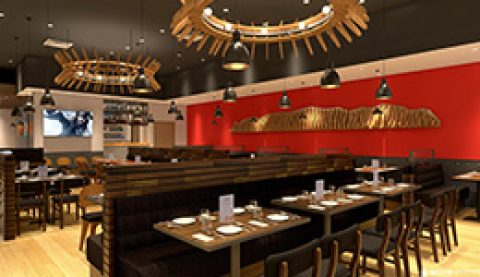
-
Still Have Questions About Opening a Restaurant?
Explore Now

Sylvia
With 8 years in catering & hospitality industry, sales manager of Ron Group, specialise in providing one stop solutions to restaurants, hotels and weddings.
Discover Our Exclusive Products
Explore our extensive range of restaurant and hotel supplies designed to enhance your operations. Find the perfect solutions to meet your needs.
Browse Our ProductsFREE 3D DESIGN
Boost your restaurant's success with our free 3D design service. Start building the restaurant of your dreams today!
Explore 3D Design Case
RECOMMENDED CASES
-

La Rambla by Catalunya: Crafting Barcelona's Soul in Hong Kong - Custom Furniture Excellence
RON Group's custom Spanish-inspired furniture elevates La Rambla with artisanal aesthetics...
Learn More -

Cardinal Point: Elevating Outdoor Seating with Tailored Cushion Upgrades
Discover how Cardinal Point transformed its outdoor dining experience with custom cushions, achievin
Learn More
RECOMMENDED BLOGS
-

Bar Glassware 101: Types, Names, Uses, and How to Stock Your Bar
Learn the 10 core bar glassware types, names, and uses. Discover how to stock your bar with the right glasses for cocktails, beer,...
Sylvia2026-07-26 -

Complete Bar Equipment List for Opening a Bar
Use a complete bar equipment list with pictures, covering workstations, ice, refrigeration, glassware, utilities, sanitation and a...
Sylvia2026-06-11 -

Low-Budget Restaurant Interior Design Ideas: Spend Where Guests and Staff Notice
Explore low-budget restaurant interior design ideas, practical material choices, layout priorities and phased upgrades without...
Sylvia2026-04-04
Subscribe to RON GROUP
Stay up-to-date with the latest industry insights and expert advice. Together, we'll create your ideal restaurant.