









Content
TECHNICAL NOTE // KEY ENGINEERING STANDARD
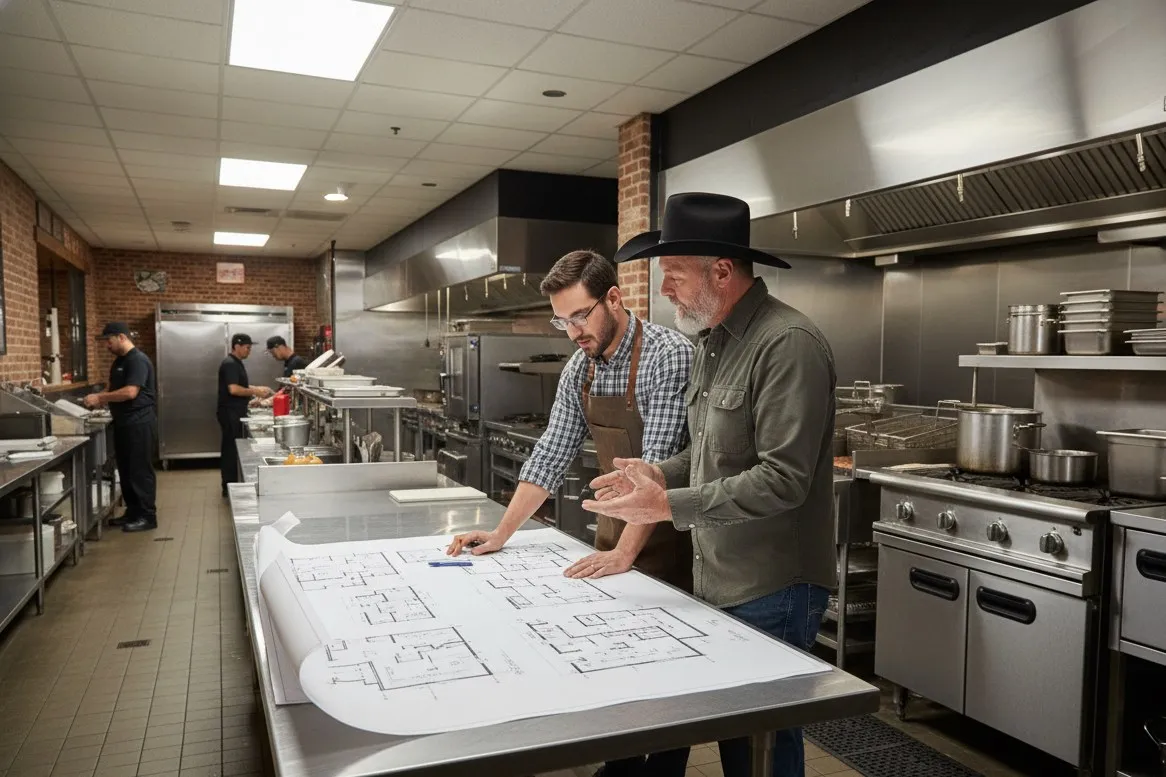
Commercial Sourcing & Engineering Standard: High-turnover hospitality environments require rigorous commercial-grade compliance (ASTM, NFPA 96, NSF/ANSI, and BIFMA engineering standards). Standard residential-grade items experience rapid fatigue failure, escalating long-term Total Cost of Ownership (TCO).
EXECUTIVE MANDATE // PROCUREMENT COMPLIANCE AUDIT
Procurement Compliance Audit: Verify all factory test certificates, utility load calculations (kW, voltage, phase, and ventilation CFM requirements), and manufacturer warranties prior to final procurement dispatch.
Executive Summary
The global hospitality landscape is witnessing a paradigmatic shift in the perception of American Barbecue (BBQ). Once relegated to roadside vernacular cuisine, BBQ has ascended to the status of a premium dining experience, commanding significant capital investment and rigorous operational sophistication. For the B2B stakeholder-whether a hotel owner in Dubai, a franchise developer in London, or an F&B director in Chicago-the BBQ segment offers a compelling value proposition: high-volume throughput, "destination" appeal, and a product that resists commoditization through its inherent craft.
However, the transition from a primitive pit to a scalable commercial enterprise is fraught with complexity. The volatility of beef commodities, specifically brisket, demands a menu engineering strategy resilient to inflation, especially as projected beef price pressures continue through late 2025 . Simultaneously, the regulatory environment has tightened; strict adherence to NFPA 96 standards for solid fuel cooking now imposes specific capital requirements on ventilation and fire suppression. Furthermore, the physical environment must navigate the tension between "authentic" rusticity and the durability required for high-traffic commercial operations.
This report serves as a strategic dossier for decision-makers. It bypasses the superficiality of consumer-facing blogs to provide a granular analysis of the operational, financial, and architectural pillars of a successful BBQ venture. As a solutions architect for the hospitality industry, RON Group Global recognizes that success lies not just in the equipment, but in the intelligent integration of supply chain, design, and workflow.
1. Strategic Context: The Business of Smoke
1.1 Global Market Trajectory and Investment Viability
The fundamentals of the BBQ market are robust, driven by a global consumer shift toward "experiential dining" and "comfort heritage." As of 2024, the global barbecue grill market-a strong proxy for the broader culinary category-was valued at approximately USD 5.28 billion, with forecasts predicting growth to USD 7.08 billion by 2030 .
This growth is heavily weighted toward the "fast-casual" and "premium casual" segments. In these models, profit margins typically outperform traditional full-service dining, a discrepancy highlighted in recent comparative analyses of restaurant sector margins .
For the investor, the allure of BBQ lies in its scalability. Unlike distinct "chef-driven" concepts that rely on the minute-by-minute execution of a saut line, BBQ is a production-based cuisine. The cooking happens in bulk (batch processing) over 12 to 16 hours. This disconnects the labor-intensive cooking process from the service hour, allowing a restaurant to serve hundreds of covers per hour with a lean service staff.
However, entering this market requires navigating the "authenticity paradox." Consumers can instantly detect inauthenticity. A gas-assisted oven masquerading as a wood pit may pass in a fast-food context, but in the premium sector, it undermines brand equity. Therefore, the investment thesis must account for specialized infrastructure-pit rooms, wood storage, air scrubbers-required to produce a genuine product in a commercial setting.
1.2 The Economic Landscape: Commodity Volatility
The primary risk factor for the modern BBQ restaurant is the cost of goods sold (COGS), specifically protein. The beef brisket market has seen extreme volatility. Wholesale beef prices are expected to remain high due to tighter cattle supplies and high feed costs, a trend confirmed by livestock market outlook reports for Q4 2025 .
This inflationary environment creates a specific design challenge. If food costs hover between 30-35% (or higher for beef-heavy menus), the operational design must aggressively minimize waste and labor to protect the bottom line. Successful BBQ joints often aim for labor costs between 18-24%, significantly lower than the standard industry labor benchmarks of 30% . This is achieved through the efficient "cafeteria-style" service line discussed later in this report.
Designers and planners must therefore view the restaurant layout not just as a spatial exercise, but as a mechanism for yield protection . Every time a brisket is moved, sliced, or held improperly, money is lost.
2. Regional Authenticity: Design Analysis & Architectural Archetypes
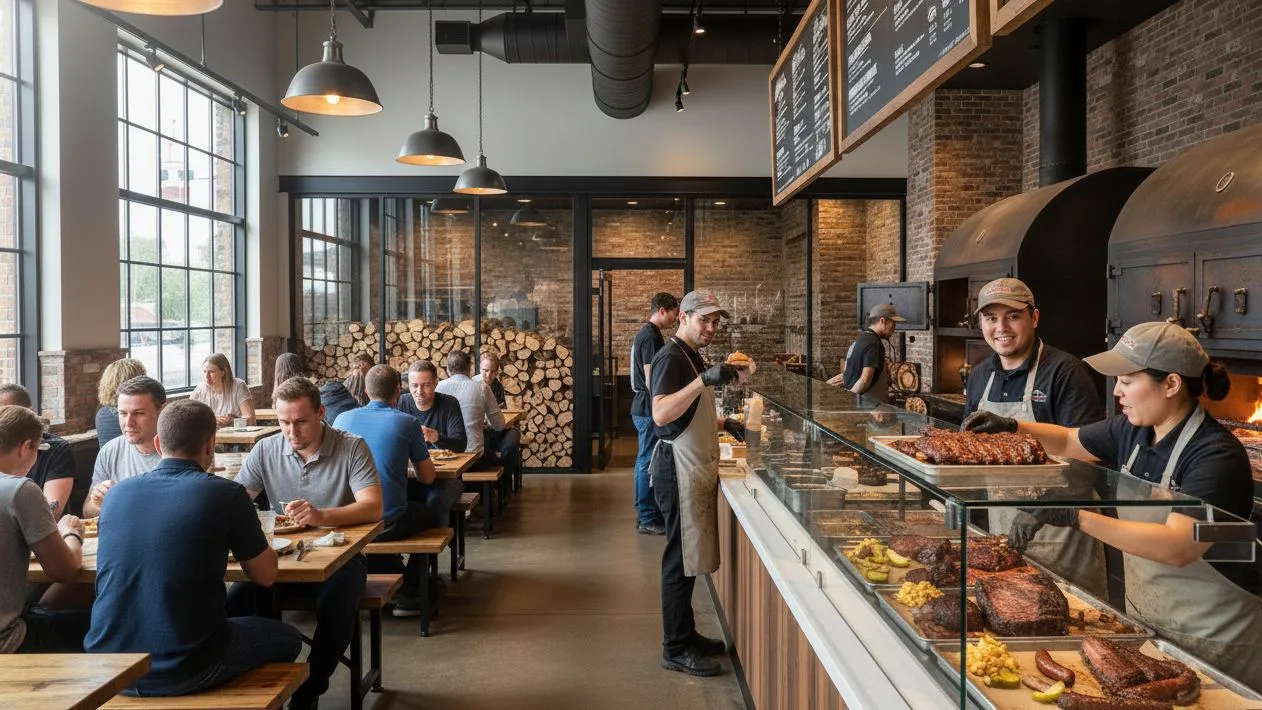
In the BBQ sector, "design" is synonymous with "storytelling." Operators must select a specific regional archetype and commit to its architectural and operational dictates. Failure to align the design with the menu creates cognitive dissonance for the guest.
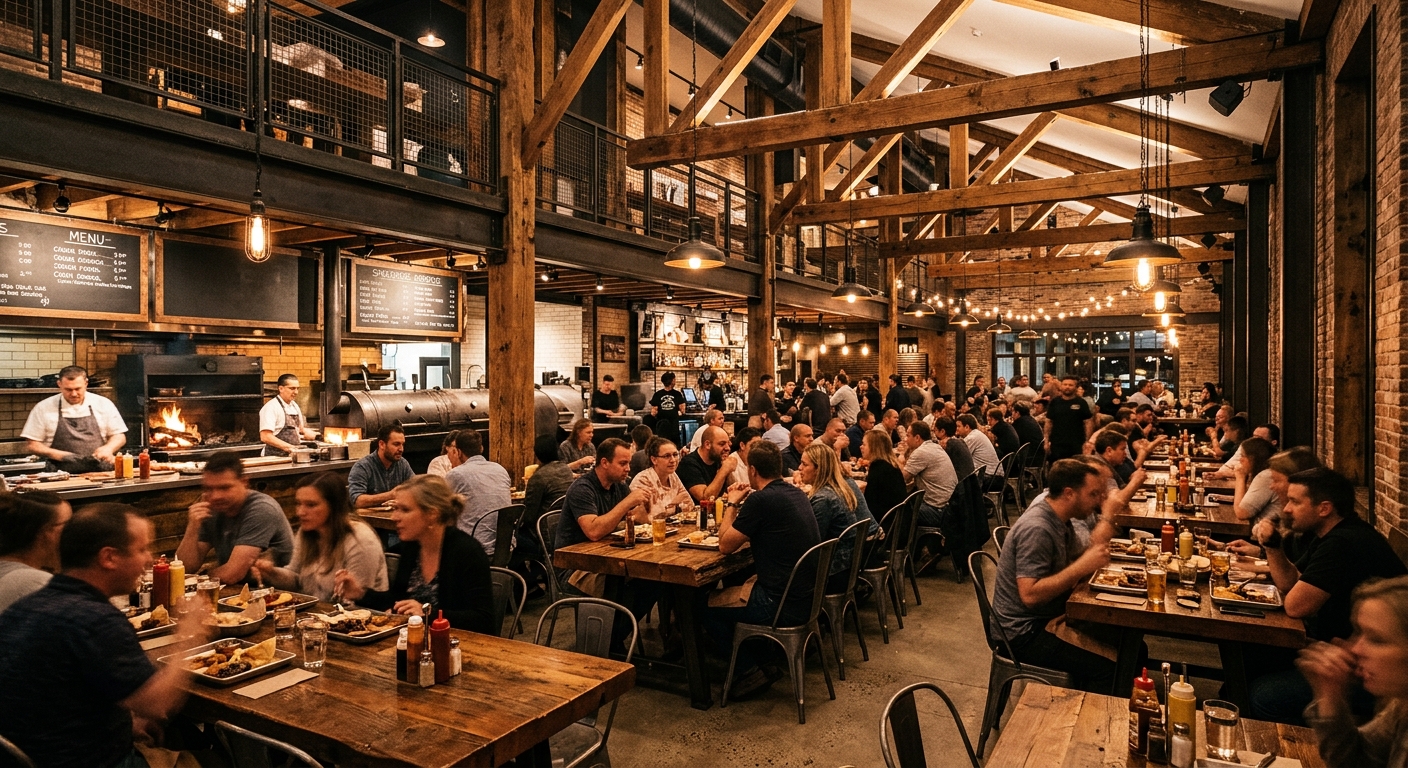
2.1 Texas Style: The Industrial Cathedral
Texas BBQ, specifically Central Texas style (Lockhart/Austin), is currently the dominant export globally. It is characterized by beef brisket, minimal sauce, and a "market style" service where meat is weighed to order.
- Architectural DNA: The aesthetic is "Industrial Rustic." Historically, these venues were meat markets that began smoking leftover cuts. The design should reflect this utility.
- Flooring: Concrete is the standard-polished or sealed. It withstands the heavy grease load and foot traffic common in high-volume foodservice environments .
- Wall Treatments: Exposed brick, raw cinder block, or reclaimed barn wood. The walls should serve as a textural backdrop to the "work" of the pit.
- Lighting: Utilitarian lighting is key. Enamel shade pendants and warm-temperature LEDs (2700K) evoke the feeling of a workshop.
- The "Queue" as Architecture: In Texas BBQ, the line is the lobby. A successful design allocates significant square footage (often 20-30% of FOH space) to an indoor, air-conditioned queue. This is not dead space; it is the primary merchandising zone.
- Furniture Strategy: Communal seating is non-negotiable. Large, heavy tables encourage social interaction. Materials must be substantial-solid oak or butcher block tops on heavy steel bases. Flimsy furniture contradicts the "heft" of the cuisine.
- Resource: Browse our Hotel Furniture Collection for heavy-duty, industrial options.
2.2 Carolina Style: The Community Agrarian
Carolina BBQ is pork-centric, focusing on whole hog or shoulder. The vibe is distinct from the industrial Texas feel; it is more agrarian, community-focused, and "porch-like."
- Architectural DNA: The "Pig Pickin'" Pavilion. The design language draws from open-air community shelters.
- Materiality: Whitewashed wood and screened-in patio elements are central. The palette is lighter-whites, gingham reds, and sky blues.
- Operational Specifics: The kitchen design must account for the logistics of whole hog cooking. This requires 60-inch wide doorways and walk-in coolers with rail systems.
- Surface Durability: Carolina sauces are vinegar-based (acetic acid) or mustard-based. These are highly corrosive to certain varnishes. Table finishes must be chemically resistant. Using a commercial-grade catalyzed varnish is essential to prevent the sauce from stripping the table finish.
2.3 Kansas City Style: The Urban Jazz Hall
Kansas City (KC) style is the "melting pot" of BBQ, featuring a wide variety of meats and thick, sweet, tomato-based sauces.
- Architectural DNA: The Supper Club. KC BBQ often has a more polished, urban aesthetic.
- Ambiance: Darker woods, booth seating, and moodier lighting.
- Layout: Table service is common. The floor plan must include server stations and wider aisles for food runners.
- Kitchen Implications: The "Sides" Station. KC BBQ is famous for fried sides. This dictates a heavy Type I hood requirement for a battery of high-recovery fryers, creating a heavy grease-vapor environment distinct from Texas pits.
- Stain Management: The high sugar content and tomato base of KC sauce make it a staining nightmare. FOH materials must be non-porous. Upholstery should be black or dark leather/vinyl to avoid permanent discoloration, a common issue noted in hospitality fabric performance guides .
2.4 Memphis Style: The High-Energy Roadhouse
Memphis BBQ is defined by ribs (wet or dry) and chopped pork sandwiches, often served in high-volume, energetic environments.
- Architectural DNA: The Juke Joint. Neon signage, wall-to-wall memorabilia, and a chaotic, high-energy atmosphere.
- Operational Focus: Speed. Memphis joints often operate closer to a fast-food model. The layout emphasizes a massive expo window.
- The "Rub" Factor: Dry ribs involve liberal use of paprika-based spice rubs. Ventilation design must account for "spice dust," which can clog standard mesh filters. Baffle filters and frequent cleaning cycles are mandatory.
2.5 Summary of Regional Design Dictates
| Design Element | Texas (Central) | Carolina (East/West) | Kansas City | Memphis |
|---|---|---|---|---|
| Primary Vibe | Industrial / Meat Market | Agrarian / Community Hall | Urban / Jazz Club | Eclectic / Roadhouse |
| Service Style | Counter / By-the-Pound | Buffet / Family Style | Table Service | Fast Casual / Counter |
| Key Furniture | Communal Tables (Wood/Steel) | Picnic Benches / Resin | Booths (Upholstered) | Laminate Tables / Retro |
| Kitchen Pivot | Carving Station Visibility | Whole Carcass Handling | Fryer Station Capacity | Rub/Spice Ventilation |
3. The Physics of the Pit Room: Engineering the Core
The pit room is the engine of the BBQ restaurant. It is an industrial manufacturing facility embedded within a retail space. Designing this room requires a mastery of thermodynamics, airflow dynamics, and strict regulatory compliance.
3.1 Smoker Selection and Production Capacity
The choice of smoker dictates the flavor profile, labor cost, and facility infrastructure.
- The Offset Smoker (Stick Burner): The purist's choice. Offers unparalleled flavor but requires 24-hour fire watch and massive wood consumption.
- The Rotisserie Smoker (Gas-Assist): The commercial standard (e.g., Southern Pride, J&R Oyler). Offers consistency and automation.
- Capacity Planning: A 1,000-gallon offset smoker can hold roughly 30-40 briskets. A restaurant aiming for $5,000/day in sales needs to cook approx. 300-400 lbs of finished meat. Considering a 50% yield loss on brisket, this requires raw input of 800 lbs. The pit room must be sized to handle this surge volume.
3.2 NFPA 96 Compliance: The Non-Negotiables
Solid fuel cooking (wood/charcoal) triggers Chapter 14 of the NFPA 96 code. This is the most common point of failure for new BBQ restaurants during inspection.
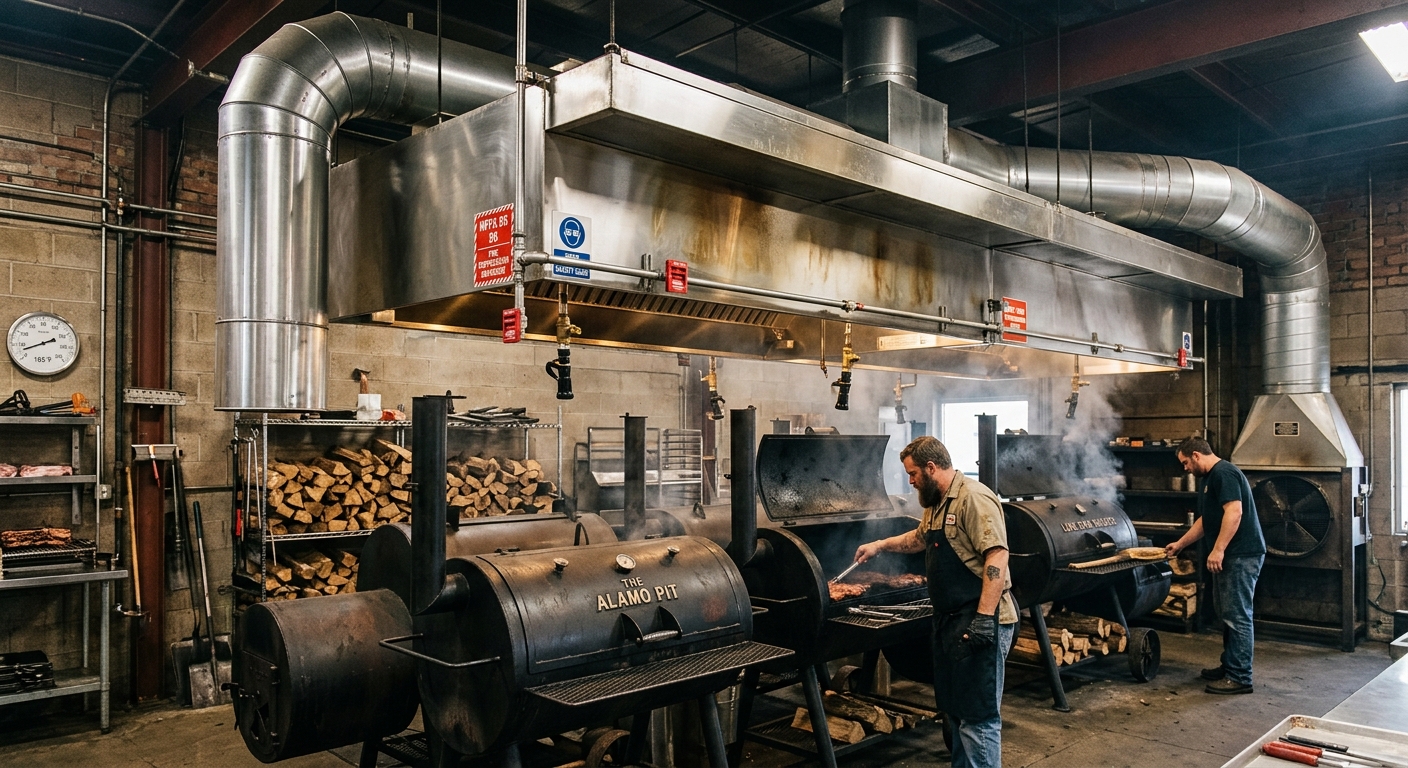
- Dedicated Exhaust Systems: You cannot vent a wood smoker into the same ductwork as a gas fryer. According to fire safety regulations for commercial cooking , smokers require their own hood, duct, and fan.
- Spark Arrestors: Every hood over a solid fuel appliance must be equipped with a spark arrestor to prevent embers from entering the grease duct.
- Clearance to Combustibles: NFPA 96 dictates a minimum clearance of 48 inches from the appliance to any combustible material.
- Fuel Storage Restrictions: Only one day's supply of wood is permitted in the same room as the smoker. Bulk wood storage guidelines are strictly enforced by local fire marshal codes .
3.3 Ventilation Dynamics: The Make-Up Air (MUA) Equation
A commercial pit room exhausts a massive volume of air. If this air is not actively replaced, the building will depressurize.
- The 80/20 Solution: Engineering best practice suggests supplying 80% of the replacement air directly into the kitchen (tempered MUA) and allowing 20% to transfer from the dining room. This creates a pressure gradient that keeps smoke contained, a principle outlined in ASHRAE's commercial kitchen ventilation guidelines .
- Tempered Air: In climates with cold winters, MUA units must be heated to prevent warping the firebox steel and lowering cooking temperatures.
4. Operational Layout & Workflow: The "Pit-to-Plate" System
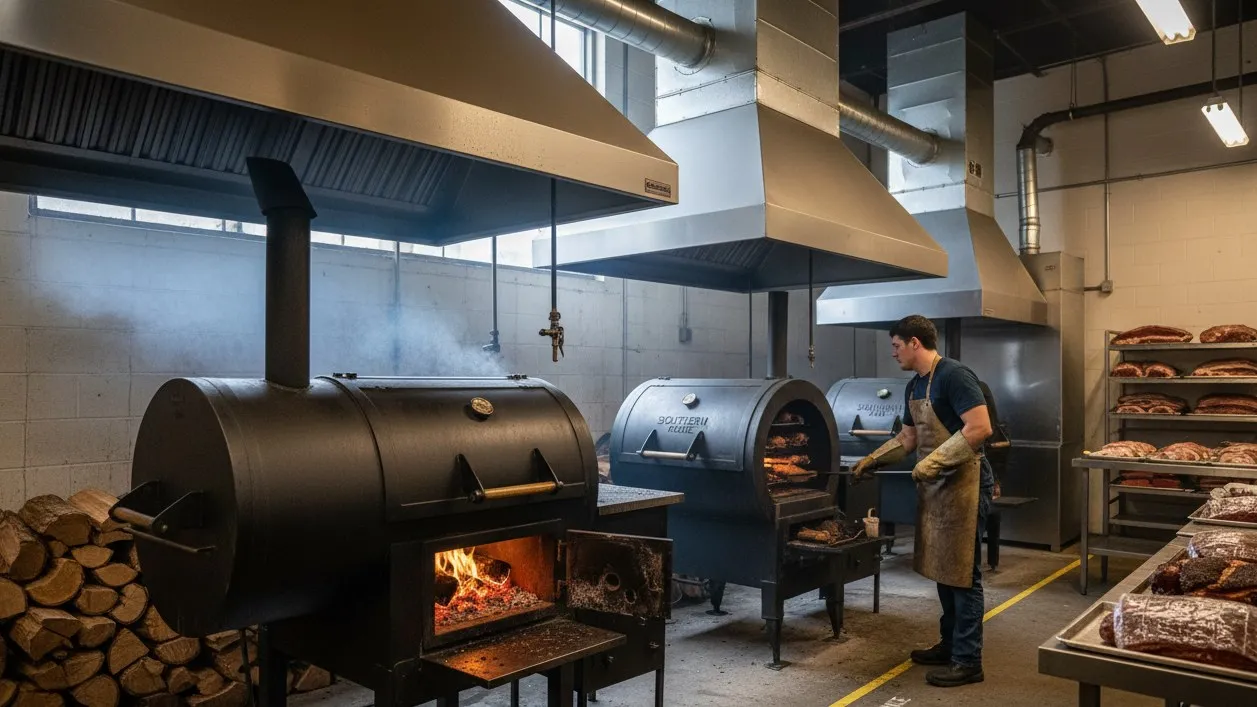
The operational efficiency of a BBQ restaurant is defined by linearity. The flow of product must be unidirectional to ensure food safety and thermal retention.
4.1 HACCP & Food Safety Zones
Cross-contamination is the enemy. The layout must physically separate raw flows from Ready-to-Eat (RTE) flows, consistent with FDA HACCP principles .
- Zone 1: Raw Prep (Cold Room): Where raw meats are trimmed. Requires heavy-duty 14-gauge stainless steel tables.
- Zone 2: The Cook (Pit Room): See Section 3.
- Zone 3: The Rest (Hot Hold): Large cuts like brisket benefit from long resting periods (4 to 12 hours) at 140 deg F. High-capacity holding cabinets must be located immediately adjacent to the pit room output.
- Zone 4: The Service (Cutting Station): The final stage.
4.2 The Cutting Station: Ergonomics and Showmanship
In the Texas market style, the cutting station is the Point of Sale (POS).
- The Block: The center of the universe is the chopping block. It should be end-grain wood (maple or walnut) to protect knife edges.
- Ergonomics: The table height must be customized to the cutter. Standard 36" prep tables are often too low for tall cutters using leverage to slice brisket.
- The "Sneeze Guard" Barrier: Regulatory codes require food protection. However, high glass walls kill intimacy. We recommend low-profile, angled glass allowing clear verbal communication, ensuring compliance with NSF food shield standards .
4.3 Waste Management
BBQ generates unique waste: ash and liquid fat.
- Grease Management: BBQ restaurants put immense strain on grease traps. Engineers should oversize the grease interceptor by at least 25-50% over standard code calculations to handle the heavy polymerized fat load.
5. Materiality, Furniture, and FOH Durability
The Front-of-House (FOH) must withstand an aggressive environment of grease, acids, and heat, while communicating warmth and hospitality.
5.1 Tabletop Science: The Polyurethane Imperative
Standard nitrocellulose lacquers used on residential furniture will fail in a BBQ restaurant within months. Hot sheet pans cause "white rings," and vinegar sauces strip finishes.
- The Solution: Specify Catalyzed Conversion Varnish (CV) or 2K Polyurethane . These provide superior heat and chemical resistance.
- Resin Tables: For a modern look, poured epoxy resin tables are virtually indestructible.
- Read More: How Often Do Restaurants Replace Furniture? understanding the lifespan of different materials is crucial for your budget.
5.2 Seating Strategy
- Upholstery: If booths are used, specify Crypton fabrics or marine-grade vinyls with a high "double rub" count (50,000+) to prevent grease absorption.
- Chair Construction: Avoid glued joints. Chairs should have mortise-and-tenon joinery with metal corner blocks.
- Read More: How Much Do Restaurants Spend on Furniture? to budget effectively for commercial-grade seating.
5.3 Tableware: The Vessel of Value
The choice of tableware subtly influences the customer's perception of value.
- The Tray: Heavy-gauge, rimmed baking sheets or custom stainless steel trays convey quality better than flimsy aluminum.
- Sides Presentation: Avoid cheap plastic ramekins. Melamine that mimics the look of cast iron offers durability with a heritage aesthetic. RON Group's catalog of "faux cast iron" melamine is a strategic choice here, reducing breakage costs while maintaining the rustic aesthetic.
- Explore: Restaurant Furniture Collection for seating and table options that fit the BBQ aesthetic.
6. Financial Planning & Budgeting: The 2025 Outlook
Building a BBQ restaurant is capital intensive due to the specialized ventilation and smoking equipment.
6.1 Startup Cost Analysis (Estimated for 2025)
Based on current restaurant construction cost indices , here is a breakdown for a hypothetical 3,000 sq. ft. full-service BBQ restaurant.
| Cost Category | Estimated Range | Strategic Notes |
|---|---|---|
| Leasehold Improvements | $150 - $250 / sq. ft. | Plumbing for grease traps, gas lines, HVAC upgrades. |
| Smoker/Pit Acquisition | $30,000 - $100,000 | High-capacity Oylers or custom offsets. |
| Kitchen Equipment | $80,000 - $120,000 | Ranges, fryers, walk-ins, holding cabinets. |
| Ventilation (Hoods/MUA) | $40,000 - $80,000 | Type I hoods, pollution control units. |
| Furniture & Fixtures | $40,000 - $80,000 | Commercial grade tables, chairs, booths. |
| TOTAL ESTIMATED CAPEX | $500,000 - $900,000+ | Expect 15-20% contingency for 2025 inflation. |
For a deeper dive on cost-saving strategies, review our guide: Save 65% on Restaurant Setup: The Ultimate Guide to Sourcing from China .
6.2 Managing Prime Costs in an Inflationary Era
"Prime Cost" (COGS + Labor) determines profitability. In BBQ, the "effective" cost per pound of brisket doubles after trimming and cooking loss. Menu prices must be calculated on the yield weight , not the raw weight.
- Read More: Restaurant Table Selection Guide: When Will Your Restaurant Tables Start Making Money? covers ROI on your physical assets.
7. Compliance & Risk Management: The Smoke Nuisance
A growing threat to BBQ restaurants is litigation regarding smoke pollution. High-profile legal disputes have established that commercial BBQ smoke can constitute a legal nuisance , posing a risk to operations.
- Mitigation Technology: In dense urban environments, you may be required to install an electrostatic precipitator (smog hog) in the exhaust stack. While expensive ($20k-$50k), these units are often necessary to comply with EPA air quality standards in city centers.
8. Practical Recommendations for the RON Group Client
For the global client looking to import the American BBQ concept, the path to success involves strategic partnerships and smart procurement.
- Leverage Custom Fabrication: Use RON Group's manufacturing capabilities to create bespoke stainless steel prep tables that fit the specific geometry of large briskets and whole hogs.
- Import the Look, Not the Liability: Utilize our industrial-rustic furniture lines that use commercial-grade sealants. Do not rely on locally sourced residential furniture that will fail under commercial use.
- The "Faux" Advantage: Utilize high-quality melamine serving ware to reduce breakage and weight while maintaining visual authenticity.
- Sourcing Strategy: For a complete breakdown on sourcing high-quality furniture at factory prices, refer to our Restaurant Cost-Cutting Guide .
9. Conclusion
The winning formula for 2025 and beyond is "High-Tech Authenticity." It leverages the visual language of the past to tell a compelling story, while utilizing the engineering of the future to ensure consistency and compliance.
For the hotel owner or F&B director, the BBQ concept represents a powerful tool to drive foot traffic and differentiate a property. By adhering to these rigorous design, operational, and financial principles, you can build a BBQ destination that is not only a culinary asset but a robust, profitable business engine.
Ready to start your project? Contact Us today to discuss your restaurant's needs with our design specialists.
Get the week's latest industry information
-
Real-Life Professional Restaurant Case Studies
Explore Now
-
Create a unique restaurant with over 95,700+products
Explore Now
-
Protessional Free 3D Restaurant Design
Explore Now
-
Still Have Questions About Opening a Restaurant?
Explore Now

Sylvia
With 8 years in catering & hospitality industry, sales manager of Ron Group, specialise in providing one stop solutions to restaurants, hotels and weddings.
Discover Our Exclusive Products
Explore our extensive range of restaurant and hotel supplies designed to enhance your operations. Find the perfect solutions to meet your needs.
Browse Our ProductsFREE 3D DESIGN
Boost your restaurant's success with our free 3D design service. Start building the restaurant of your dreams today!
Explore 3D Design Case
RECOMMENDED CASES
-
La Rambla by Catalunya: Crafting Barcelona's Soul in Hong Kong - Custom Furniture Excellence
RON Group's custom Spanish-inspired furniture elevates La Rambla with artisanal aesthetics...
Learn More -

Cardinal Point: Elevating Outdoor Seating with Tailored Cushion Upgrades
Discover how Cardinal Point transformed its outdoor dining experience with custom cushions, achievin
Learn More
RECOMMENDED BLOGS
-
Bar Glassware 101: Types, Names, Uses, and How to Stock Your Bar
Learn the 10 core bar glassware types, names, and uses. Discover how to stock your bar with the right glasses for cocktails, beer,...
Sylvia2026-07-26 -

Complete Bar Equipment List for Opening a Bar
Use a complete bar equipment list with pictures, covering workstations, ice, refrigeration, glassware, utilities, sanitation and a...
Sylvia2026-06-11 -
Low-Budget Restaurant Interior Design Ideas: Spend Where Guests and Staff Notice
Explore low-budget restaurant interior design ideas, practical material choices, layout priorities and phased upgrades without...
Sylvia2026-04-04
Subscribe to RON GROUP
Stay up-to-date with the latest industry insights and expert advice. Together, we'll create your ideal restaurant.