




How to Choose the Best Commercial Restaurant Furniture Manufacturers in China (2026 Buying Guide)
Content
Procuring commercial restaurant furniture from overseas manufacturing hubs is one of the most effective methods for hospitality operators, hotel development groups, and multi-unit franchisees to control capital expenditure (CapEx). China remains the primary global manufacturing center for contract-grade hospitality furniture, centered predominantly in the Pearl River Delta industrial clusters of Foshan, Dongguan, and Zhongshan, as well as the Anji seating cluster in Zhejiang.
However, navigating the landscape of Chinese commercial furniture manufacturing requires shifting away from generic consumer procurement methods toward rigorous, engineering-led supply chain governance. Selecting an overseas factory is not a matter of browsing digital marketplaces or relying on subjective "top 10" supplier lists generated by marketing aggregators. It demands a systematic evaluation of factory production capacity, machinery tolerances, sub-tier raw material traceability, structural joinery, commercial code compliance, and global logistics execution.
This comprehensive technical guide outlines the objective criteria required to evaluate, audit, and partner with commercial restaurant furniture manufacturers in China, ensuring your hospitality project delivers on design intent, commercial durability, code compliance, and landed budget targets.
What Makes a China Restaurant Furniture Supplier Suitable
A common failure mode in international procurement is treating commercial contract furniture the same as residential retail furniture. In a high-turnover casual dining, quick-service (QSR), or upscale hotel dining environment, a dining chair experiences more structural stress and physical abrasion in three months than a domestic dining chair experiences in ten years.
A suitable commercial restaurant furniture manufacturer must meet five core operational baselines:
- Dedicated Contract-Grade Engineering: The manufacturer must operate an in-house engineering and drafting department capable of generating 1:1 scale shop drawings, specifying joinery details, and identifying structural stress points before production tooling begins.
- Moisture-Controlled Kiln Drying Systems: Wood movement is the primary cause of structural failure when importing solid timber from southern China to varied international climates. Qualified factories must utilize computerized, humidity-controlled drying kilns capable of seasoning solid hardwoods to an equilibrium moisture content (EMC) of 8% to 12% for North American and European exports.
- Traceable Raw Material Ecosystems: The supplier must provide certified documentation for commercial raw materials, including CARB Phase 2 and EPA TSCA Title VI certified engineered boards, commercial high-pressure laminates (HPL), fire-retardant foams, and high-abrasion upholstery fabrics.
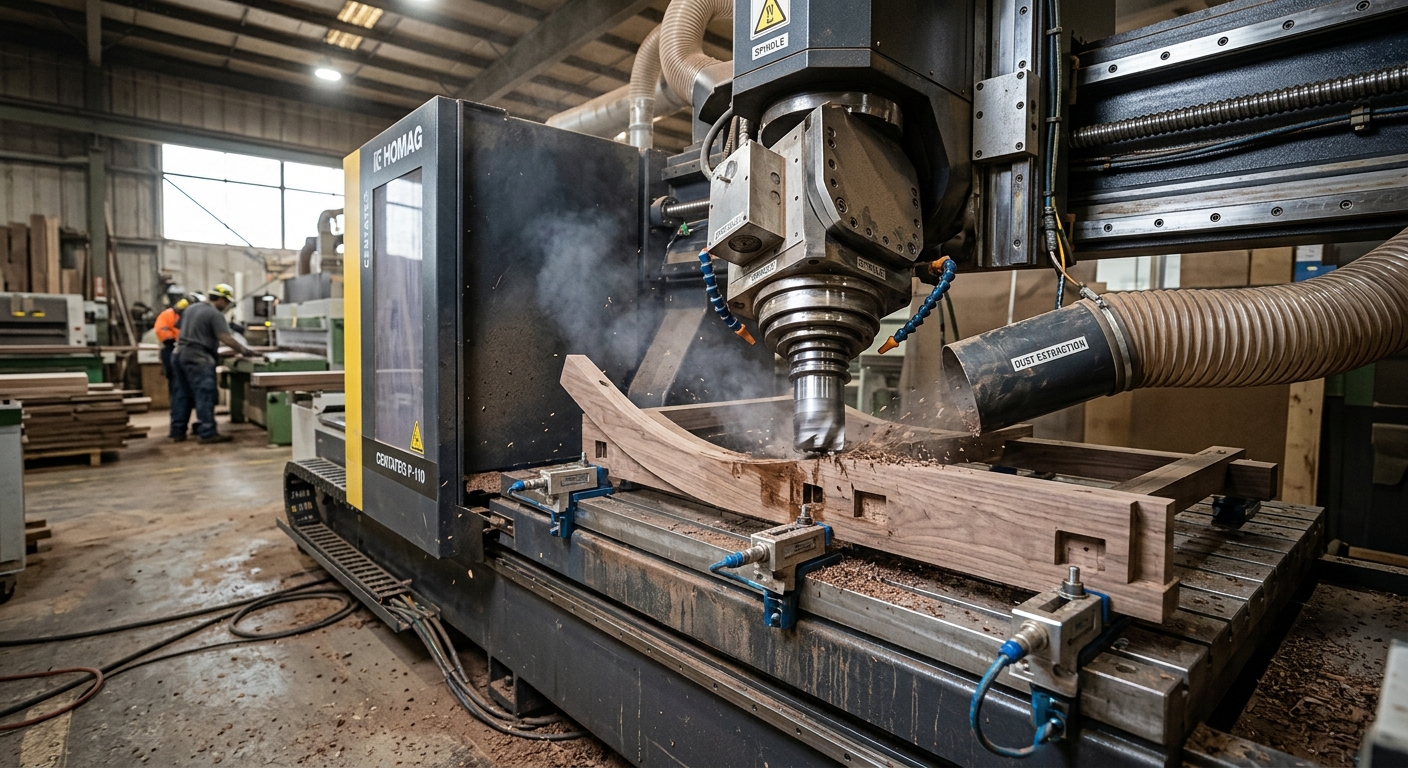
- Machinery and Industrial Automation: The production floor must utilize modern machinery, including multi-axis computerized numerical control (CNC) routers, automated edge-banding lines with PUR or hot-air zero-joint capabilities, and positive-pressure, dust-free paint and powder-coating lines.
- Verified Export Logistics Acumen: A factory may produce exceptional joinery, but if it lacks the operational rigor to pack, crate, stage, and containerize heavy, high-volume casegoods without freight crushing, the project will suffer expensive site delays.
EXECUTIVE MANDATE // PROCUREMENT COMPLIANCE AUDIT
Residential furniture suppliers frequently bid on commercial hospitality projects by quoting low unit costs. Never source from factories that cannot present a dedicated commercial project portfolio and third-party commercial structural test certificates (such as ANSI/BIFMA or EN 16139). Residential assemblies rely on light-duty cam-locks, weak doweled joints, and low-density polyether foams that disintegrate under commercial cycle loads.
Manufacturer, Trading Company, or Local Distributor
When sourcing restaurant furniture from China, international buyers encounter three primary supply-chain entities: direct standalone factories, export trading companies, and fully integrated hospitality supply specialists. Understanding the functional differences between these entities determines your project's risk profile, communication speed, and total cost of ownership (TCO).
[ Direct Standalone Factory ]  Specialized production line (e.g., metal chairs only)
                                 Requires buyer to coordinate multiple vendors.

[ Middleman Trading Company ]  High-margin broker, lacks direct factory-floor control,
                                 frequently obscures true manufacturing origins.

[ Integrated Hospitality Specialist ]  Consolidated millwork, loose seating, casegoods,
                                         direct engineering, multi-factory QC, and single-container FCL dispatch.
Direct Standalone Factory
Direct factories own their land, production lines, and machinery. In China, direct furniture factories are highly specialized. A factory that excels at bentwood dining chairs rarely manufactures custom commercial upholstery booths or architectural stone-top tables.
- Advantages: Lowest initial ex-factory (EXW) unit prices on specific mass-production SKUs; direct access to workshop managers for technical modifications.
- Disadvantages: Highly siloed production scope. If your restaurant design requires cast-iron table bases, solid ash dining chairs, custom leather-upholstered banquet booths, and sintered stone service stations, dealing strictly with direct factories forces you to manage, audit, and coordinate four separate manufacturing facilities simultaneously. This creates massive logistical friction when attempting to consolidate freight into single shipping containers.
Export Trading Company (Middleman)
Traditional trading companies act as third-party brokers. They do not own production assets. They solicit customer orders, shop the bill of materials (BOM) across various domestic workshops to secure the lowest sub-contracted price, add a markup (typically 15% to 35%), and handle export documentation.
- Advantages: Broad product portfolios; English-speaking account reps.
- Disadvantages: Lack of engineering and factory-floor quality control. Trading companies routinely obscure the identity of the true manufacturer to prevent buyers from bypassing them. If an on-site quality failure occurs during production, trading reps lack the authority or technical depth to halt assembly lines or re-engineer failed components.
Integrated Commercial Hospitality Solutions Partner
An integrated hospitality supply specialist (such as Ron Group) combines direct proprietary manufacturing for core categories with structured supply chain governance, cross-category consolidation, and dedicated commercial project engineering.
- Advantages: Single-point accountability for the entire restaurant furniture, fixtures, and equipment (FF&E) package. In-house technical CAD/BIM teams review shop drawings across all product categories to verify visual continuity, dimensional tolerances, and joint finishes. They consolidate custom booths, loose chairs, banquettes, and millwork into single factory-sealed full container loads (FCL), dramatically reducing inland logistics and port clearance fees.
- Disadvantages: Not designed for retail consumers purchasing low single-digit quantities; strictly structured for commercial enterprise buyers, hospitality groups, and multi-unit rollouts.
Commercial Supply Channel Comparison
| Operational Metric | Direct Single-Category Factory | Export Trading Company | Integrated Hospitality Specialist | Domestic Importer / Distributor |
|---|---|---|---|---|
| Direct Cost (Ex-Works) | Base Factory Cost | Factory Cost + 15% to 35% | Factory Cost + Engineering Margin | Factory Cost + 60% to 120% Markup |
| Product Breadth | Narrow (Single material focus) | Wide (Unvetted sourcing) | Broad (Engineered contract packages) | Limited to stocked domestic catalog |
| Custom Engineering Support | Moderate to Low (Prefers standard dies) | Minimal (Relies on vendor interpretation) | High (Dedicated shop drawings & mockups) | Low (Catalog-driven configurations) |
| QC Enforcement | Internal factory bias | Visual spot-check at port | Process-based multi-stage floor audits | Third-party inspection reports |
| Multi-SKU FCL Consolidation | Extremely difficult (Single point dispatch) | Variable (Often consolidates at CFS warehouse) | Optimized (Centralized staging & container loading) | Not applicable (Domestic warehouse dispatch) |
| Warranty & Structural Liability | Difficult to enforce across borders | High risk; broker can dissolve liability | High; documented commercial warranty | Direct domestic legal recourse |
Define the Furniture Package and Project Requirements
Before reaching out to Chinese manufacturers, you must prepare a comprehensive FF&E specification package. Vague inquiries such as "Please quote your best price on restaurant chairs and booths" result in arbitrary estimates from brokers and low-tier suppliers quoting residential-grade materials.
To understand the core components of your seating plan, cross-reference our detailed technical guide on selecting commercial restaurant chairs alongside structural criteria for commercial restaurant booth construction.
A complete commercial furniture procurement package must divide items into explicit categories and technical criteria:
[ Complete Commercial FF&E Package ]

    1. Loose Seating (Chairs, barstools, counter stools)
          Focus: Joinery, leg wall-thickness, rub count, floor glides

    2. Fixed & Semi-Fixed Upholstery (Booths, banquettes, banquette-benches)
          Focus: Kiln-dried internal framing, high-resilience foam, kickplates

    3. Dining Tables (Bases, structural sub-plates, commercial tops)
          Focus: Anti-wobble spider plates, thermal shock, core substrates

    4. Architectural Casegoods & Service Units (Host stations, POS, credenzas)
           Focus: Hardware cycles, edge-banding, utility cutouts
1. Loose Seating (Dining Chairs, Barstools, Counter Stools)
- Frame Substrate: Grade-A European beech, North American white oak, or solid ash; or minimum 1.5 mm to 2.0 mm wall-thickness cold-rolled steel or seamless 6063 aluminum alloy tubing.
- Joinery Method: Mortise and tenon with corner block reinforcement, glued and screwed. No exposed staples or hollow-core dowel assemblies.
- Floor Glides: Heavy-duty, non-marking nylon or rubber-cushioned stainless steel swivel glides mechanically fastened to the leg base (not adhesive pads).
2. Fixed and Semi-Fixed Banquettes and Custom Booths
- Internal Structural Frame: Minimum 18 mm (3/4 inch) marine-grade or commercial birch plywood, CNC-machined, interlocking slots, reinforced with kiln-dried solid hardwood corner bracing.
- Seat Suspension: High-carbon, 8-gauge sinuous no-sag steel springs cross-tied with paper-coated wire, or heavy-duty woven elastomeric webbing (minimum 50 mm width with 100% elongation allowance).
- Foam Cushioning: High-resilience (HR) polyurethane cold-cured foam. Seat core minimum density: 40 kg/m3 to 45 kg/m3 (2.5 to 2.8 lb/ft3); backrest core minimum density: 30 kg/m3 to 35 kg/m3.
- Base Details: Commercial-grade black laminate, stainless steel, or ceramic-tile kickplates resistant to industrial floor scrubbers and customer shoe scuffs.
3. Dining Tables and Bases
- Table Tops: Commercial HPL pressed onto high-density moisture-resistant MDF (MR-MDF) with matching 2 mm ABS edge-banding; solid timber edge-banded tops; or non-porous sintered stone (minimum 12 mm thickness) laminated to structural plywood sub-tops.
- Structural Connection: Flat steel sub-mounting spider plates (minimum 4 mm to 6 mm thickness) designed to prevent center-point screw pull-out under downward dynamic leverage.
- Table Bases: Cast iron or heavy-gauge steel with durable textured powder-coating; internal threaded tie-rod construction with adjustable, non-marking commercial leveling glides.
For an overarching view of how procurement choices align with floor planning and layout engineering, consult our analysis on integrating restaurant interior design with commercial furniture sourcing.
How to Evaluate Manufacturers Without Inventing a Ranking
The internet is flooded with generic "Top 10 Furniture Manufacturers in China" lists. Most of these articles are published by lead-generation brokers who aggregate public business directory entries and rank factories based on advertising spend or affiliate partnerships.
In actual commercial hospitality procurement, no single factory is universally "the best." A manufacturer that produces high-volume stamped aluminum bistro chairs for national fast-food chains may fail completely when tasked with fabricating high-end, hand-finished walnut millwork and custom leather booths for a luxury hotel dining room.
Instead of relying on fabricated rankings, professional procurement directors evaluate manufacturers against an objective Industrial Verification Matrix:
Industrial Verification Matrix:
1. Operational Audits   Verify proprietary workshops vs. outsourced broker lines
2. Technical Machinery  Inspect 5-axis CNC, automated edge-banding, dust-free paint
3. Material Control     Review lumber kiln EMC records and chemical testing
4. Testing Rigor        Audit internal drop-test rigs and third-party lab reports
5. Historical Proof     Validate physical case studies in high-volume environments
Factory Audit, Capacity, Materials, Engineering, and Project Evidence
When evaluating a prospective Chinese commercial furniture supplier, audit five critical production pillars:
1. Facility Ownership and Workshop Segmentation
Verify business registration licenses (Unified Social Credit Code) and environmental operating permits. A legitimate commercial manufacturer maintains distinct workshops for:
- Solid wood conversion, machining, and moisture-controlled conditioning.
- Metal cutting, robotic or precision TIG/MIG welding, deburring, and polishing.
- Upholstery preparation, automated CNC fabric cutting, foam profiling, and sewing.
- Dust-controlled, climate-regulated spray finishing and automated curing lines.
- Dedicated packaging, pre-assembly staging, and indoor container staging bays.
2. Machinery and Dimensional Tolerances
High-volume consistency demands precision machinery. Walk the factory floor (or conduct an exhaustive, real-time unannounced third-party engineering video audit) to confirm the presence of:
- Automated double-sided CNC sizing and mortising equipment with processing tolerances within +/- 0.5 mm.
- Computerized panel saws equipped with scoring blades to prevent micro-chipping on laminated faces.
- Heavy-duty edge-banding machines equipped with pre-milling units, dual-motor end-trimming, radius scraping, and buffing stations.
3. Solid Timber Seasoning Protocol
Lumber must undergo a documented multi-week acclimation process. Inquire about the factory's raw timber moisture management:
- What is the incoming moisture content of raw lumber logs or planks?
- How many days do rough-sawn boards remain in the computerized drying kilns?
- Does the factory utilize electronic pinless or pin-type moisture meters before wood enters the rough mill?
- If exporting to arid climates (such as Nevada, Arizona, or the Middle East) or high-humidity regions (such as coastal Florida or Southeast Asia), can the factory calibrate the target wood moisture content specifically to your project's regional EMC (typically 8% to 10% for North America)?
4. Engineering Submittal Competence
Request an anonymized shop-drawing submittal package from a recently completed hospitality project. Evaluate the technical depth:
- Are sectional views provided for all major structural joints?
- Are material callouts specific (e.g., "18 mm E1 Birch Plywood with 0.8 mm HPL" versus generic "wood with laminate")?
- Do the drawings detail mechanical fastener specs, counterbore depths, spring gauges, foam densities, and packaging drop-test ratings?
5. Verifiable Commercial Project History
Examine photographic and bill-of-lading (B/L) project records. Look for installations subjected to commercial usage patterns over multiple years:
- Multi-unit corporate franchise rollouts.
- Four-star and five-star brand hotel dining rooms.
- High-volume international airports or casino food halls.
- Request photographic evidence of real production runs on the factory floor, including sub-frame assembly stages, rather than slickly staged showroom photos.
Samples, Shop Drawings, Mockups, and Approval Records
A failure-proof procurement protocol is built on a structured submittal and physical approval chain. Never approve a mass production run based solely on digital computer renderings or generic catalog photos.
[ Submittal & Approval Sequence ]
1. 2D/3D CAD Shop Drawings  Approval of joinery, dimensions, and tolerances
2. Material Finish Fin-Boards  Approval of wood stains, metal chips, fabric swatches
3. Physical 1:1 Scale Mockup  Stress testing, ergonomic sit-test, visual sign-off
4. Sealed "Golden Sample"  Retained benchmark for final QA comparison
Stage 1: Shop Drawings (Engineering Detailing)
Following contract award, the factory must generate comprehensive shop drawings (AutoCAD or SolidWorks format) for every custom piece. These drawings must reflect:
- True finished dimensions (seat height, seat depth, arm clearance, back rake angle).
- Structural framing members, internal dowel positions, corner-block screw patterns.
- Table base ballast weights and spider plate hole patterns.
- Detailed electrical, data, or LED routing channels for banquet booths.
Stage 2: Material Finish Boards (Fin-Boards)
The manufacturer must submit physical finish samples for physical sign-off:
- 100 mm x 100 mm stained solid wood and veneer swatches demonstrating allowable grain and color variation ranges.
- Powder-coated metal chips demonstrating gloss level, texture, and substrate adhesion.
- 200 mm x 200 mm fabric and leather swatches labeled with manufacturer codes, abrasion cycle ratings, and fire barrier compliance.
- Labeled stone, quartz, or sintered stone cutoffs with specified edge profiles (e.g., bullnose, chamfer, eased edge).
Stage 3: The 1:1 Scale Physical Mockup
For custom banquette packages or large seating orders (exceeding 100 loose chairs or 15 custom booths), commission a full-scale physical prototype unit.
- The Ergonomic Sit-Test: Have operations and culinary team members sit in the mockup for 45 consecutive minutes. Verify that the lumbar support angle prevents slouching, the front edge of the seat does not compress the popliteal artery behind the knee, and the foam returns to its exact profile without surface wrinkling.
- Table-to-Seat Clearance Validation: Place the prototype chair or booth against the specified prototype dining table. Confirm that the vertical distance from the compressed seat cushion to the top of the table measures precisely 280 mm to 300 mm (11 to 12 inches) to ensure comfortable dining posture.
Stage 4: The Golden Sample Protocol
Once the mockup passes functional, aesthetic, and structural review, it is designated as the Golden Sample.
- Two identical samples are verified: one is retained by the client or independent inspection agency, and one is sealed and tagged on the factory production floor.
- Every finished production piece rolling off the assembly line must match the dimensional tolerances, finish sheen, stitch tension, and foam resilience of this signed Golden Sample.
Commercial Durability and Compliance Evidence
Commercial hospitality furniture must comply with strict international regulatory codes covering structural strength, impact resistance, flammability, and indoor air quality. When procuring furniture from China, specify the exact testing protocols required for your jurisdiction and demand certified third-party laboratory test reports (from accredited bodies such as SGS, Intertek, or TUV Rheinland).
Essential Testing Framework:
* Structural Stability: ANSI/BIFMA X5.1 / X5.4 / X5.5 (USA) | EN 16139 Level 2 (Europe)
* Flammability:         CAL TB 117-2013 / NFPA 260 (USA)    | BS 5852 Crib 5 (UK)
* Surface Abrasion:     Wyzenbeek ASTM D4157 (USA)          | Martindale ISO 12947 (EU)
* Air Quality:          CARB Phase 2 / EPA TSCA Title VI    | EN 717-1 (Formaldehyde E1/E0)
Commercial Furniture Standards and Benchmarks
| Metric / Test Standard | Regulatory Scope | Required Commercial Minimum | Testing Methodology & Failure Modes Prevented |
|---|---|---|---|
| ANSI/BIFMA X5.1 | General Purpose Office / Commercial Chairs | 300 lb (136 kg) dynamic proof load; 225 lb (102 kg) functional load | Evaluates backrest strength, base stability, and drop impact. Prevents sudden frame snapping and weld shear. |
| ANSI/BIFMA X5.4 | Lounge and Public Seating (Booths, Banquettes) | High-energy dynamic drop test (300 lb / 136 kg dropped from 6 inches) | Tests frame torsion, no-sag spring fatigue, and structural corner joints under severe vertical impact. |
| EN 16139 Level 2 | European Contract Seating (Extreme Use) | 200,000 cyclic loading cycles on seat and backrest | Simulates severe, continuous commercial use in high-traffic airports, night clubs, and high-turnover dining rooms. |
| CAL TB 117-2013 / NFPA 260 | Upholstery Component Flammability (USA) | Smolder resistance; char length must not exceed 45 mm (1.8 inches) | Exposes upholstered foam, fabric, and barrier composites to cigarette ignition sources without open flaming. |
| BS 5852: Source 5 (Crib 5) | Upholstery Flammability (UK, Middle East, Cruise) | Zero progressive smoldering or flaming 10 minutes after wooden crib ignition | Rigorous flammability standard using a measured wooden crib structure saturated with propan-2-ol. |
| ASTM D4157 (Wyzenbeek) | Commercial Fabric Abrasion (North America) | Minimum 50,000 double rubs (Heavy Commercial: 100,000+ double rubs) | Oscillating cylinder wrapped with cotton duck fabric abrades the test material until visible yarn breakage occurs. |
| ISO 12947-2 (Martindale) | Commercial Fabric Abrasion (International) | Minimum 40,000 cycles (Heavy Commercial: 60,000 to 100,000 cycles) | Circular abrasive action rubbing against standard worsted wool cloth under controlled pressure. |
| CARB Phase 2 / EPA TSCA Title VI | Formaldehyde Emissions in Engineered Wood Panels | MDF emission limit: <= 0.11 ppm; Hardwood Plywood: <= 0.05 ppm | Chamber testing of raw substrates to prevent off-gassing of toxic volatile organic compounds (VOCs). |
TECHNICAL NOTE // KEY ENGINEERING STANDARD
Do not accept generic factory statements claiming their furniture is "built to BIFMA standard." Request the full, serialized laboratory test report conducted on the specific frame model. The report must clearly state the sample description, test date, testing body accreditation number, and unambiguous "PASS" ratings across all static, dynamic, and cyclical load parameters.
MOQ, Lead Time, Pricing Scope, and Payment Terms
Negotiating commercial terms with Chinese manufacturers requires a firm understanding of industrial economics. Misunderstandings regarding minimum order quantities (MOQs), production scheduling, and international commercial terms (Incoterms) can disrupt project timelines and inflate costs.
Standard Production Cycle (Foshan Industrial Cluster):
[ Shop Drawings & Finish Boards ]  7 to 14 Calendar Days
[ Physical Golden Mockup Unit ]    14 to 21 Calendar Days
[ Client Review & Sign-Off ]       7 Calendar Days
[ Mass Batch Production ]          35 to 45 Working Days
[ Final Pre-Shipment QC & Pack ]   5 to 7 Working Days

Total Production Window:             68 to 94 Calendar Days (Ex-Works)
Minimum Order Quantities (MOQ)
Direct commercial factories operate on production batch minimums dictated by tooling setups and raw material procurement runs:
- Custom Metal or Wooden Dining Chairs: Typically 50 to 100 units per style and finish. Lower volumes require the factory to absorb substantial machine changeover costs, resulting in steep setup surcharges.
- Custom Architectural Booths & Banquettes: Typically 5 to 10 linear meters (16 to 33 linear feet). Because booths are largely fabricated by hand using CNC panel layouts, MOQs are more flexible than stamped metal or cast seating.
- Stock Mold Seating / Standard Catalog SKUs: Typically 20 to 50 units.
Realistic Lead Times
A reliable commercial production cycle within the Foshan and Pearl River Delta manufacturing hubs follows these timeframes:
- CAD Shop Drawing Generation: 7 to 14 calendar days after receipt of architectural floor plans and specifications.
- Physical Prototype Mockup: 14 to 21 calendar days following CAD sign-off.
- Mass Production: 35 to 45 working days following sample approval and deposit confirmation. (Add 15 to 20 days if sourcing custom-woven fabrics or specialized natural stone requiring non-stock quarry extraction).
- Holiday Buffer: The Lunar New Year (Spring Festival) completely halts Chinese manufacturing and export transport for three to four weeks every January or February. Always factor in a 30-day operational buffer for orders placed between November and February.
Pricing Scope and Incoterms
Ensure every commercial quotation unambiguously identifies the applicable Incoterm (Incoterms 2020 rules).
- EXW (Ex Works): The buyer assumes all costs, risks, inland trucking, export customs clearance, ocean shipping, and destination transport the moment goods are packed at the factory gate. Best suited only for buyers with their own dedicated, permanent consolidation offices in China.
- FOB (Free on Board - e.g., FOB Yantian, FOB Nansha, FOB Shenzhen): The factory pays all domestic inland freight, export documentation, terminal handling charges (THC), and customs clearance fees, delivering the goods loaded securely aboard the ocean vessel. This is the industry standard for international B2B container procurement.
- DDP (Delivered Duty Paid - Direct to Job Site): The supplier handles the complete supply chain, including export, ocean transport, destination port customs clearance, payment of import duties/tariffs, and final delivery to the restaurant dock.
OPERATIONAL WARNING // SITE RISK ALERT
Beware of suppliers quoting low CIF (Cost, Insurance, and Freight) prices. Under CIF terms, the supplier selects cheap, low-tier ocean freight to the destination port, but leaves the buyer responsible for predatory destination terminal handling charges, arbitrary consolidation fees, and local customs release complications. For full transparency, contract under FOB (using your chosen freight forwarder) or transparent DDP terms.
Payment Terms and Milestones
Standard commercial payment milestones in the contract furniture sector are:
- 30% Advance Deposit: Transferred upon shop drawing sign-off to initiate raw material purchasing and production scheduling.
- 40% Intermediate Progress Payment (Optional on large custom millwork): Paid upon successful intermediate sub-frame and structural woodworking inspection.
- 70% (or remaining balance): Transferred only after the completion of an exhaustive Pre-Shipment Inspection (PSI) by your third-party auditor or procurement specialist, supported by high-resolution photographic and video proof of the packaged goods, but prior to the release of the original ocean Bill of Lading (or Telex Release).
- Letters of Credit (L/C): Utilized primarily for major corporate enterprise contracts exceeding $100,000 USD, issued as an Irrevocable Letter of Credit at Sight from a reputable commercial bank.
Quality Control, Packaging, Shipping, and Installation Support
Quality control in international furniture manufacturing must occur during production, not after the ocean container unloads at your restaurant job site. Returning defective commercial furniture to China is cost-prohibitive; defects discovered on-site during restaurant fit-out will permanently compromise your grand opening schedule.
Quality Control Pipeline:
[ IQC: Inbound Lumber & Materials ]  Verify kiln moisture, laminate thickness, foam density

[ IPQC: Interlocking Framing ]      Audit mortise and tenons, weld penetration, glue spread

[ FQC: Assembly & Finishing ]       Surface coat thickness, stitch tension, color tolerance

[ PSI: Staging, Drop-Test & Load ]  100% staging of large units, drop tests, container balance
The Three-Tier QC Protocol
- Incoming Quality Control (IQC): Verifying incoming raw lumber moisture content (pinless electronic meter checks), panel core integrity, HPL laminate thickness, and fabric lot consistency against approved Golden Samples.
- In-Process Quality Control (IPQC): Inspecting raw sub-frames before upholstery covers or paint coats are applied. Once a banquette is wrapped in foam and leather, verifying whether the internal frame contains commercial corner blocks or sub-standard scrap chipboard is impossible without destructive testing.
- Final Quality Control / Pre-Shipment Inspection (FQC/PSI): Conducted after 100% of the production run is completed and at least 80% is packaged. Inspectors verify dimensional conformity, visual finishes, hardware operations, structural stability, and packaging integrity against an AQL (Acceptable Quality Limit) standard, typically General Inspection Level II, Critical 0, Major 1.5, Minor 4.0.
Export Packaging Engineering
Commercial furniture sustains intense dynamic vibrations, heavy moisture exposure, and multi-axis drop shocks during ocean transit and intermodal drayage. Inadequate retail packaging will crush goods within ocean containers.
Insist on export packaging engineered to contract-grade standards:
- Chairs and Loose Seating: Individual high-density expanded polyethylene (EPE) pearl-cotton foam wrapping on all finished legs and armrests. Heavy-duty 5-ply (or 7-ply double-wall) corrugated outer cartons with an edge crush test (ECT) rating of minimum 44 to 55 lbs/in. Internal cardboard dividers between nested or stacked frames.
- Upholstered Booths: Full 360-degree wrapping in 2 mm EPE protective foam, followed by heavy stretch-film moisture wrapping, impact-resistant corner foam caps (minimum 25 mm thick), enclosed within rigid exterior 5-ply corrugated carton sleeves. Heavy, continuous, or curved booth sections must be crated in ISPM-15 heat-treated, certified non-coniferous timber crates or compliant OSB shipping crates.
- Table Tops (Stone, Quartz, Sintered Stone): Vertical packing inside heavy-duty, reinforced plywood A-frame stillages. Never permit natural or engineered stone slabs to be stacked flat horizontally inside a shipping container; vertical edge-loading is necessary to prevent dynamic shock cracking during ocean swells.
+-------------------------------------------------------------------------+
|                  CONTAINER UTILIZATION QUICK REFERENCE                  |
+-------------------+-------------------+---------------------------------+
| Container Type    | Usable Volume     | Usable Commercial Weight Limit  |
+-------------------+-------------------+---------------------------------+
| 20ft General (GP) | ~28 to 30 CBM     | ~21,500 kg (47,400 lbs)         |
| 40ft General (GP) | ~56 to 58 CBM     | ~24,500 kg (54,000 lbs)         |
| 40ft High Cube    | ~66 to 68 CBM     | ~26,000 kg (57,300 lbs)         |
+-------------------+-------------------+---------------------------------+
*Note: Usable volume accounts for practical carton nesting and pallet loss;
 theoretical container maximums are higher but rarely achievable with boxed casegoods.
Reality of B2B Delivery Logistics
Managing international logistics requires clear operational expectations regarding container freight distribution:
- FCL Direct Factory Sealing: For mid-to-large hospitality build-outs, Full Container Load (FCL) shipping is the gold standard. The ocean container arrives directly at the manufacturing facility dock, is loaded under the supervision of your QC team, and is secured with a numbered high-security bolt seal (ISO 17712). That seal remains intact across the Pacific or Atlantic until arriving at your project warehouse or distribution center.
- LCL Consolidation Warnings: Less-than-Container Load (LCL) freight requires shipping crated goods to an intermediary Container Freight Station (CFS), where warehouse crews pack your furniture alongside arbitrary, heavy industrial cargo from other shippers. LCL freight drastically increases the incidence of transit impact damage, forklift puncture, and destination port delivery delays. Whenever possible, bundle your procurement package into a dedicated 20GP or 40HQ FCL.
- Curbside and Loading Dock Realities: Standard commercial B2B freight carriers operate strictly on a loading-dock-to-loading-dock or curbside delivery basis. Ocean shipping lines and domestic freight forwarders never provide white-glove inside delivery, room placement, uncrating, or carrying casegoods upstairs. Hospitality operators must coordinate an on-site receiving team, pallet jacks, a dock forklift, and certified installation trades to uncrate, inspect, and position furniture upon delivery.
Restaurant Furniture RFQ Checklist
To receive rapid, precise, and binding commercial quotations from high-tier Chinese manufacturers, download and complete this standardized Request for Quotation (RFQ) checklist before contacting suppliers.
================================================================================
           COMMERCIAL RESTAURANT FURNITURE RFQ SPECIFICATION SHEET
================================================================================

1. PROJECT OVERVIEW
   * Project Name: _____________________________________________________________
   * Hospitality Concept: (QSR / Casual Dining / Fine Dining / Hotel Lounge) ___
   * Target Grand Opening (Installation) Date: _________________________________
   * Project Destination Port / Delivery Zip Code: _____________________________

2. SEATING & BOOTH SPECIFICATIONS
   * Loose Chair Frame: Solid Hardwood (Species: ________) / Metal (Wall: ___mm)
   * Joint Engineering: Mortise & Tenon / Full-Weld (Spot-welds unacceptable)
   * Foam Density Minimum: Seats: ___ kg/m3 (Min 40) | Backs: ___ kg/m3 (Min 30)
   * Upholstery Standard: Heavy Contract (Min 50,000 double rubs / Martindale)
   * Fire Retardant Code: CAL TB 117-2013 / NFPA 260 / BS 5852 Crib 5 / Other: __
   * Booth Sub-frame: Minimum 18 mm Commercial Plywood / Solid Wood Bracing

3. TABLE & CASEGOOD SPECIFICATIONS
   * Table Top Substrate: MR-MDF / Marine Plywood / Solid Hardwood Core
   * Surface Material: Commercial HPL (Brand: __________) / Sintered Stone / Wood
   * Edge Treatment: 2 mm Impact-Resistant ABS / Solid Timber Edge / Bullnose
   * Table Bases: Cast Iron / Heavy Steel Plate (Sub-plate thickness: ___ mm)
   * Floor Levelers: Heavy-Duty Commercial Adjustable Non-Marking Nylon Glides

4. COMPLIANCE & TESTING SUBMITTALS REQUIRED WITH BID
   [ ] Structural Test Reports: ANSI/BIFMA X5.1 / X5.4 or EN 16139 Level 2
   [ ] Flammability Certification: Lab-certified foam and fabric compliance
   [ ] Environmental / VOC Certification: CARB Phase 2 / EPA TSCA Title VI
   [ ] Wood Kiln Drying Records: Certified Equilibrium Moisture Content (8%-12%)

5. LOGISTICS & COMMERCIAL EXECUTION TERMS
   * Preferred Incoterm: FOB Port: ______________ / DDP Job Site: ______________
   * Packaging Standard: 5-Ply / 7-Ply Heavy Corrugated + EPE Foam + Crated Stone
   * Production Golden Sample Required Before Mass Production: [YES / NO]
   * Mandatory Pre-Shipment Third-Party Floor Audit Allowed: [YES / NO]
================================================================================
Supplier Red Flags
During the qualification and audit process, walk away immediately if a prospective Chinese manufacturer displays any of the following operational red flags:
1. Refusal of Live Unannounced Video Audits or Factory Visits
If a supplier claims to own a 50,000-square-meter advanced manufacturing facility in Shunde or Dongguan, but refuses a live, scheduled video tour of their raw processing lines-or demands two weeks advance notice before an independent inspection agency can enter the floor-they are almost certainly an intermediary trading company sub-contracting work to unvetted, small workshops.
2. Quotations Missing Explicit Material Substrate Specifications
Vague line items such as "solid wood dining chair with luxury PU leather" are deliberately engineered to allow the supplier to substitute cheap, green (undried) local pine or rubberwood, fragile doweled joinery, and low-density scrap foam wrapped in thin vinyl. Legitimate commercial quotes explicitly declare wood species, board formaldehyde emissions classes, foam core densities, and fabric rub-test ratings.
3. Guaranteeing Unrealistic Lead Times for Custom Millwork
A supplier that promises to engineer, build, finish, pack, and export three full containers of complex, custom architectural booths and high-end restaurant furniture in under 15 calendar days is cutting critical corners. Structural adhesive setting times, multi-stage wood stain curing, and moisture stabilization cannot be accelerated without causing long-term structural failure, finish bubbling, and wood warping.
4. Insistence on Unregulated International Payment Channels
Never wire procurement capital or project deposits to private offshore bank accounts or personal recipient names. Commercial contract payments must be wired through registered corporate commercial bank accounts matching the verified business license name of the operating company or its authorized corporate export subsidiary.
How to Compare RON GROUP Transparently
Sourcing commercial hospitality furniture directly from overseas industrial hubs offers substantial financial and design advantages, but only when managed with engineering precision, comprehensive quality control, and direct accountability.
At Ron Group, we operate on a fundamental principle: complete supply-chain transparency. We encourage hospitality operators, general contractors, and design agencies to compare our commercial furniture manufacturing capabilities against any standard supplier or trading intermediary across six core benchmarks:
+----------------------------------------------------------------------------------------------------+
|                                    RON GROUP TRANSPARENT BENCHMARK                                  |
+----------------------------+-----------------------------------+-----------------------------------+
| Procurement Metric         | Standard Factory or Middleman     | Ron Group Commercial Hospitality  |
+----------------------------+-----------------------------------+-----------------------------------+
| 1. Integrated Scope        | Siloed; loose chairs, booths, and | Complete, centralized FF&E package|
|    Management              | millwork split across vendors     | under one project engineering team|
+----------------------------+-----------------------------------+-----------------------------------+
| 2. Engineering Submittals  | Often basic digital catalog cuts; | Full 1:1 CAD/BIM shop drawings,   |
|                            | no dynamic joint detailing        | cross-sections, and stress models |
+----------------------------+-----------------------------------+-----------------------------------+
| 3. Material Compliance     | Self-declared "commercial-grade"  | Certified BIFMA X5.1/X5.4 test    |
|    Verification            | without traceable lab reports     | records, CAL 117-2013 & CARB 2    |
+----------------------------+-----------------------------------+-----------------------------------+
| 4. Production Quality      | Final spot-check at port gate     | Multi-stage IQC, IPQC, and FQC    |
|    Control Oversight       | or self-monitored by workers      | with photographic client portals  |
+----------------------------+-----------------------------------+-----------------------------------+
| 5. Freight Optimization    | High LCL breakage risk; unaligned | Optimized FCL container packing,  |
|    and Consolidation       | multi-factory dispatch            | centralized Foshan consolidation  |
+----------------------------+-----------------------------------+-----------------------------------+
| 6. Commercial Warranty     | Cross-border dispute friction;    | Clear contract-backed commercial  |
|    Accountability          | limited structural liability      | warranties on frames and joinery  |
+----------------------------+-----------------------------------+-----------------------------------+
Direct Engineering and Design Support
Our engineering departments do not simply accept drawings; we analyze them for real-world restaurant durability. We review your architectural design files to catch clearance collisions, propose value-engineering solutions to lower manufacturing costs without compromising aesthetics, and issue full CAD submittal packages detailing every internal screw, joint, spring, and finish interface.
Centralized Foshan Hospitality Infrastructure
Headquartered in the heart of the global furniture capital of Foshan, Ron Group maintains manufacturing facilities and dedicated staging warehouses designed specifically for contract hospitality consolidation. Our clients can source custom architectural booths, heavy-duty metal and solid hardwood loose seating, custom marble and sintered stone dining tables, outdoor patio suites, and full service-station millwork-all consolidated into factory-sealed, optimized 40HQ containers.
Certified Commercial Durability
Every furniture piece engineered by Ron Group is built to withstand high-turnover hospitality environments. We engineer to North American ANSI/BIFMA and European EN 16139 Level 2 structural standards, specify high-abrasion commercial upholstery (50,000 to 100,000+ double rubs), integrate high-resilience flame-retardant cold-cured foams meeting CAL TB 117-2013 / NFPA 260 standards, and manage precision kiln drying protocols to ensure wood stability in any operating climate.
Transparent Logistics Without False Promises
We provide our clients with accurate, realistic logistics execution. We do not make false promises about impossible lead times or white-glove driver carry-in services. We provide honest, end-to-end supply chain execution: direct factory-to-container loading, clear FOB shipping coordination or fully transparent DDP door-to-dock delivery services, robust 7-ply and timber crating, and complete export documentation.
Whether you are launching a single, high-concept flagship restaurant or executing a multi-unit international hospitality rollout, partnering with an experienced, hospitality-dedicated manufacturing specialist transforms offshore procurement from a high-risk operational gamble into a structured, profitable competitive advantage.
Commercial Procurement & Specification Benchmark
| Specification Category | Budget / Residential Grade | Heavy Commercial Grade (Ron Group Standard) | Compliance & Test Verification |
|---|---|---|---|
| Structural Material | Thin gauge 430 stainless / laminated particle board | 16-18 Gauge 304 Stainless Steel / Solid Hardwood Core | NSF/ANSI Standard 2 / ANSI/BIFMA X5.5 |
| Operational Duty Cycle | 2-4 hours intermittent | 18-24 hours continuous commercial turnover | UL Commercial / CE / ETL Sanitation Certified |
| Thermal / Mechanical Tolerance | Rapid fatigue after 6-12 months | 5-10 year commercial design lifespan | High thermal shock resistance (180 deg C delta) |
| 5-Year Total Cost of Ownership | High (frequent breakdown & replacement) | 35-45% lower net amortized TCO | Fully warrantied commercial supply chain |
Get the week's latest industry information
-
Real-Life Professional Restaurant Case Studies
Explore Now
-
Create a unique restaurant with over 95,700+products
Explore Now
-
Protessional Free 3D Restaurant Design
Explore Now
-
Still Have Questions About Opening a Restaurant?
Explore Now

Sylvia
With 8 years in catering & hospitality industry, sales manager of Ron Group, specialise in providing one stop solutions to restaurants, hotels and weddings.
Discover Our Exclusive Products
Explore our extensive range of restaurant and hotel supplies designed to enhance your operations. Find the perfect solutions to meet your needs.
Browse Our ProductsFREE 3D DESIGN
Boost your restaurant's success with our free 3D design service. Start building the restaurant of your dreams today!
Explore 3D Design Case
RECOMMENDED CASES
-
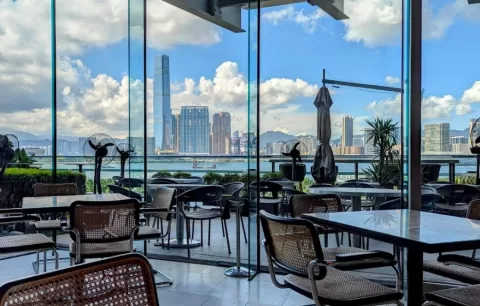
La Rambla by Catalunya: Crafting Barcelona's Soul in Hong Kong - Custom Furniture Excellence
RON Group's custom Spanish-inspired furniture elevates La Rambla with artisanal aesthetics...
Learn More -

Cardinal Point: Elevating Outdoor Seating with Tailored Cushion Upgrades
Discover how Cardinal Point transformed its outdoor dining experience with custom cushions, achievin
Learn More
RECOMMENDED BLOGS
-

Bar Glassware 101: Types, Names, Uses, and How to Stock Your Bar
Learn the 10 core bar glassware types, names, and uses. Discover how to stock your bar with the right glasses for cocktails, beer,...
Sylvia2026-07-26 -

Complete Bar Equipment List for Opening a Bar
Plan a complete commercial bar equipment list by menu, service volume, refrigeration, ice, glassware, utilities, sanitation,...
Sylvia2026-06-11 -
Low Budget Restaurant Interior Design: 2026 Trends
Prioritize a low-budget restaurant interior by protecting code, operations, durability, accessibility, and phased design decisions...
Sylvia2026-04-04
Subscribe to RON GROUP
Stay up-to-date with the latest industry insights and expert advice. Together, we'll create your ideal restaurant.