
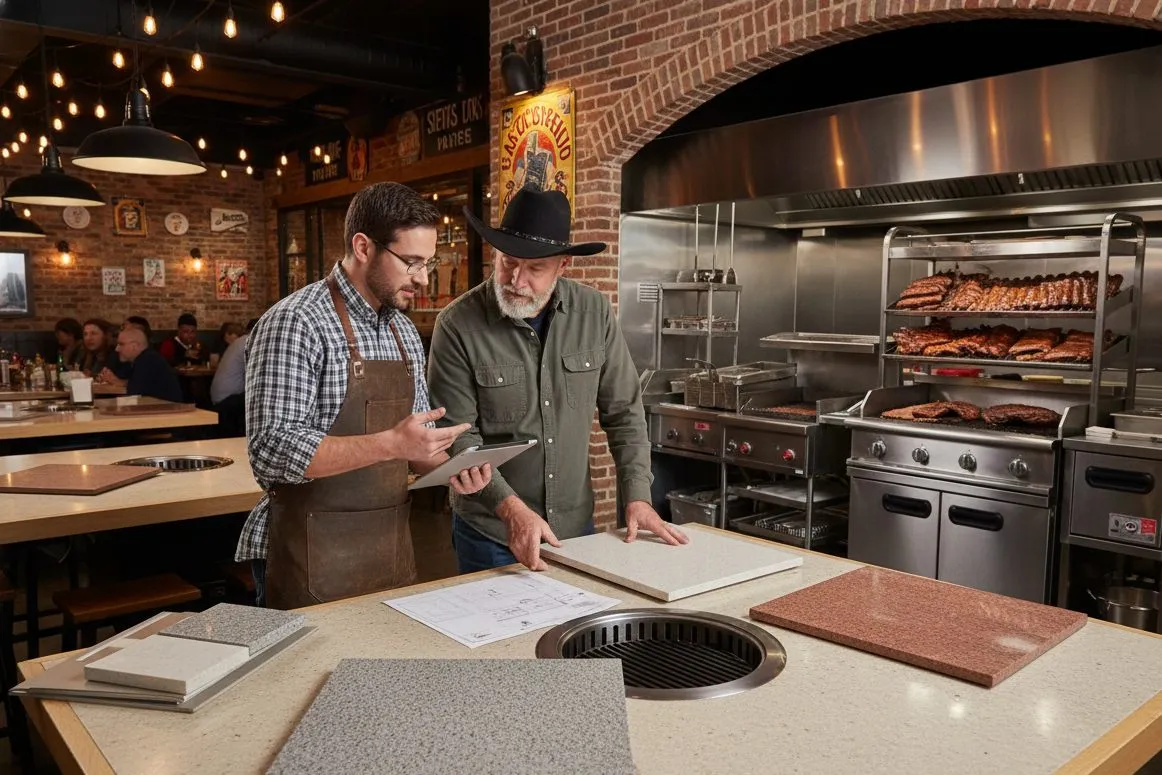
BBQ & Hot Pot Tabletop Materials: Durability, Hygiene & ROI
Cheap BBQ tables cost a fortune later. Learn the 3 stress vectors (Heat, Acid, Wear) and the best materials (Sintered Stone, Quartz) for ROI and hygiene.
Content
1. Introduction: Where Durability, Hygiene, and ROI Collide in BBQ and Hot Pot Table Design
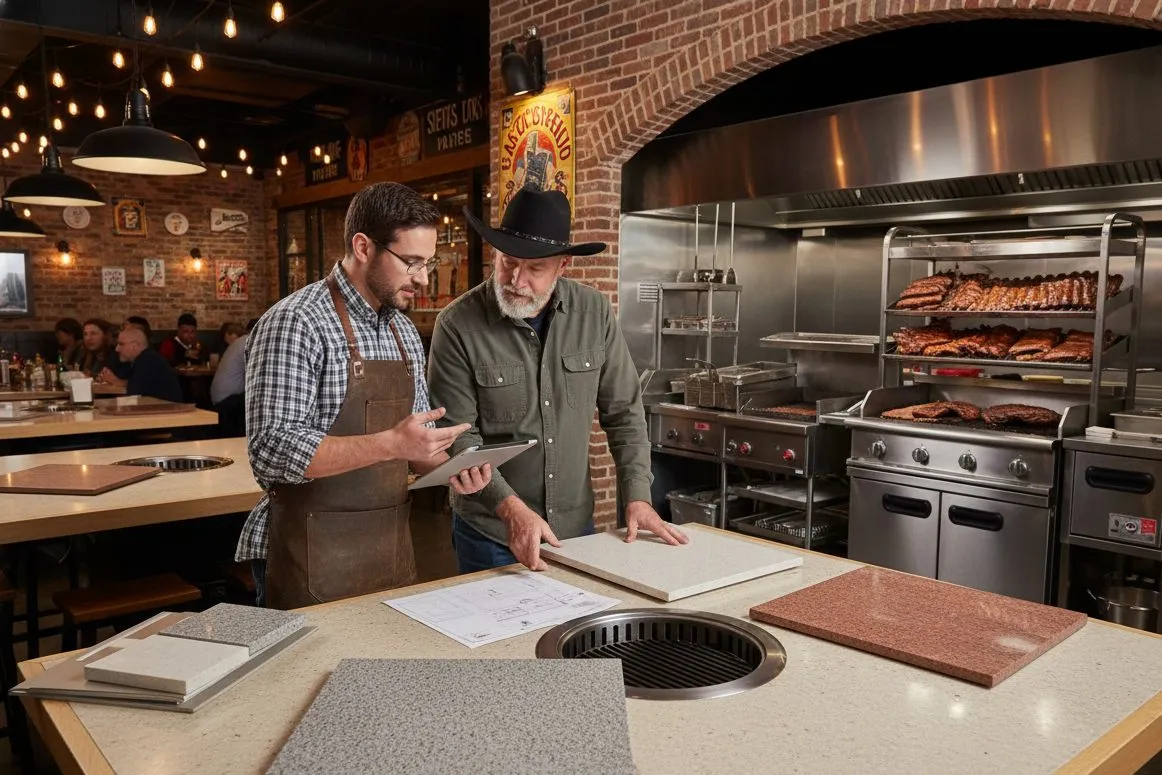
In high-volume BBQ and Hot Pot operations, the tabletop is not just décor. It is a heat-adjacent work surface, a sanitation touchpoint, and a cost center that impacts labor, replacement risk, and the guest’s perception of cleanliness and quality.
Unlike standard dining tables, BBQ tabletops live in a harsher reality: sustained radiant heat around grill cutouts, frequent hot-to-cold wipe-downs during turnover, aggressive degreasers, acidic sauces, heavy cookware, and constant abrasion. Material selection affects:
CAPEX: initial tabletop spend
OPEX: daily cleaning time, re-sealing cycles, repairs, and downtime
Brand equity: tables that look stained, etched, or yellowed read as “unclean,” even if your kitchen is excellent
This guide is designed to help operators, designers, and procurement teams make decisions based on operational physics, sanitation compliance, and total cost of ownership, not surface-level aesthetics.
2. The BBQ Environment: The Three Stress Vectors That Break Tabletop Materials
A commercial BBQ/Hot Pot tabletop fails for one of three reasons: thermal stress, chemical attack, or mechanical damage. You need a material that can handle all three—at the same time.
2.1 Thermal Load: Sustained Heat + Thermal Shock
Sustained heat around the rim zone: Even with insulated grill units, the “rim zone” sees elevated temperatures for long service windows. Charcoal grilling environments can produce very high heat at the cooking surface depending on airflow and fuel, and the surrounding cutout area experiences repeated heating cycles during peak hours. A practical reference point is that high-heat grilling commonly operates in the hundreds of degrees Fahrenheit, with variability based on setup and ventilation.
Thermal shock is the silent killer: The biggest damage often comes from rapid temperature swings: a hot rim zone gets hit by ice water, a cold wet towel, or a chilled cleaning solution mid-turnover. Materials with weak thermal stability—or multi-layer materials where components expand at different rates—tend to discolor, delaminate, or crack over time.
Operational takeaway: If your concept is charcoal/gas BBQ, materials that rely on polymer binders (many quartz products, many laminates) must be treated as higher-risk unless the grill collar design effectively isolates heat.
2.2 Chemical Exposure: Acidic Sauces + Alkaline Degreasers
BBQ and Hot Pot menus are chemistry-heavy: vinegar-based dips, citrus, tomato products, chili oils, and strong back-of-house degreasers.
Acid etching: Calcium-carbonate stones (especially marble/limestone/travertine) can etch quickly when exposed to acidic foods. That etching is not just cosmetic—it increases micro-roughness and makes cleaning harder. A straightforward field method to identify acid sensitivity is described in LATICRETE’s guide to determining acid-sensitive stone.
Tomato products are borderline-acidic in food safety terms: Many tomatoes sit around pH ~4.0–4.6, which is why canning/acidification guidance treats them carefully. That acidity is enough to punish acid-sensitive stones over time in a dining room environment.
2.3 Mechanical Wear: Abrasion, Impact, and “Bacteria Harborage”
If staff are constantly sliding ceramic bowls, using metal tools, or swapping heavy grill components, surface durability becomes sanitation durability.
Even small chips and deep scratches matter because food codes and sanitation standards emphasize smooth, nonabsorbent, easily cleanable surfaces in food environments—damage creates harborage points.
3. Material Deep Dive: What Actually Works in Commercial BBQ/Hot Pot
Below is a performance-first evaluation of the most common tabletop material classes seen in hospitality projects.
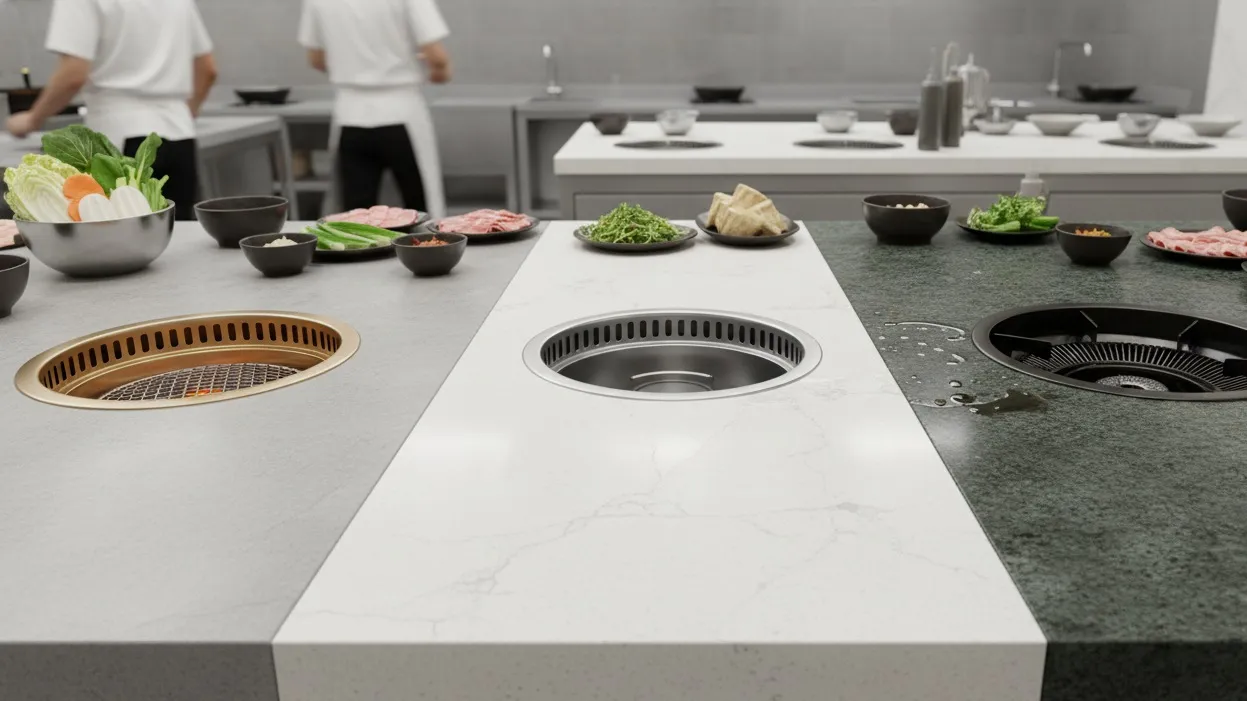
3.1 Sintered Stone: Best-in-Class for Heat + Hygiene (When Properly Supported)
Sintered stone (often sold under various trade names) is manufactured at very high temperatures and is engineered to deliver low porosity, high chemical resistance, and strong thermal performance—which is exactly what BBQ operations need. A representative technical reference is Cosentino’s Dekton technical documentation, which includes performance characteristics often used in specification work.
Why operators choose it for BBQ/hot pot:
Heat tolerance and shock resistance: Designed for demanding surface conditions, making it far more forgiving near grill cutouts than resin-bound materials.
Very low water absorption: Many sintered surfaces publish low water absorption values in their technical literature, supporting easier sanitation.
Chemical inertness: More tolerant of degreasers and acids than acid-sensitive natural stones.
What to watch (so you don’t lose the ROI):
Edge chipping risk: The surface is hard; edges can chip if left sharp and exposed. Specify bullnose/bevel edges and design the base/substrate correctly.
Support matters: For restaurant use, spec a robust substrate and proper cutout reinforcement—this is where long-term performance is won or lost.
3.2 Quartz (Engineered Stone): Excellent for Induction-Only Hot Pot, Riskier for BBQ
Quartz surfaces are widely used because they’re consistent, cleanable, and visually “premium.” The constraint is the resin binder. Many quartz manufacturers explicitly recommend protection from very high temperatures (often referenced around 150°C / 300°F) to prevent damage or discoloration, which is a real operational risk near BBQ cutouts. See Caesarstone’s heat and care guidance for a representative example.
Best fit: Induction hot pot tables where heat is insulated by the cooktop design and where staff training prevents hot-lid contact.
Not recommended: Charcoal/gas BBQ concepts unless the grill system and collar insulation keep tabletop temperatures within a safe envelope.
3.3 Natural Granite: Durable Heat Performance, But Porosity Creates a Maintenance System
Granite is a strong traditional choice for heat tolerance. The trade-off is that natural stone varies and can be more porous than operators expect, which introduces a maintenance system (sealing + verification + rework). The Natural Stone Institute’s countertop surface performance testing is useful context for how different materials behave under real-world use.
Granite can work in BBQ—but only if you treat it as an asset with a maintenance plan, not a “set it and forget it” purchase.
3.4 Compact Laminate (HPL / Phenolic): Strong Value, But Respect the Heat Limits
Compact laminate is popular for cost control and design flexibility, and it can be very practical in high-turnover hospitality environments.
However, it is still a resin-based product, and manufacturer technical documentation typically specifies service temperature limits. For example, compact laminate technical briefs and product data sheets commonly reference maximum continuous service temperatures around the mid-100°C range (varies by system and brand). See the Formica compact laminate technical brief and the Wilsonart compact laminate technical guide as examples of how these limits are presented in spec language.
If you choose HPL near heat:
Use insulated grill collars and drop-in systems designed to protect the laminate edge
Train staff to avoid abrasive pads that dull finishes and accelerate wear
4. Economics: Why “Cheap Tabletops” Become Expensive in Year 2
A common procurement mistake is optimizing for unit price while ignoring cleaning labor minutes and heat-damage replacement risk.
4.1 CAPEX Benchmarks (Directional Wholesale Ranges)
Typical wholesale ranges (4-seater tabletop surface only; fabrication, bases, shipping vary by region/spec):
| Material Class | Estimated Unit Cost (Wholesale) | Relative Cost Index |
|---|---|---|
| Compact Laminate (HPL) | $70–$150 | 1.0x |
| Quartz (Engineered) | $150–$300 | ~2.0x |
| Granite (Natural) | $150–$250 | ~2.0x |
| Sintered Stone | $250–$450 | ~3.0x |
If you want a broader operator-level view of furniture budgeting (beyond just tabletops), see: How Much Do Restaurants Spend on Furniture?
4.2 OPEX Reality: Cleaning Minutes Are the Biggest Hidden Line Item
To model labor impact, use a realistic wage reference and then add burden (taxes, turnover, supervision). The U.S. Bureau of Labor Statistics reports a median hourly wage for janitors and building cleaners of $17.27 (May 2024); many hospitality operations experience higher fully loaded costs depending on market and staffing model.
Even +2 minutes per table per day becomes expensive fast in a 50-table operation.
For a full cost-control plan, pair this with: Restaurant Cost-Cutting Guide: How to Source Quality Furniture at Factory Prices
4.3 Replacement Risk: Heat Damage Is a Profit Leak
Quartz and laminate failures near heat zones are rarely “repairable”—they become replacement events.
Sintered stone reduces heat-related failure risk, but must be specified with edge protection and support engineering.
If you are planning a multi-unit rollout, also reference replacement-cycle thinking from: How Often Do Restaurants Replace Furniture?
5. Compliance and Hygiene: Design for “Smooth, Nonabsorbent, Easily Cleanable”
In the U.S., food codes emphasize that surfaces in food environments should be smooth, nonabsorbent, and easily cleanable—damage and porosity work against that goal. The California Retail Food Code (surface requirements) is a clear example of how these requirements are stated in enforceable language.
For operators specifying “food-contact safe” surfaces, NSF/ANSI 51 is a key benchmark. NSF’s certified product listings include many sintered/porcelain-style surfaces evaluated for food contact use (examples include listings for Neolith and Dekton in the NSF database).
Practical compliance takeaway: If you want the tabletop to function as a true “cleanable, resilient food-zone adjacent surface,” prioritize materials that are:
nonabsorbent (low water absorption)
chemically stable under sanitizers
resistant to damage that creates harborage
6. Design and Brand Positioning: Tables Are a “Trust Signal”
In BBQ/hot pot, guests watch the table like they watch the grill. Your tabletop choice sends cues about:
cleanliness
quality control
whether the restaurant feels “new” or “aged”
For projects where the furniture specification is tied to concept identity, explore our production options here: Restaurant Furniture and Hotel Furniture
7. Maintenance Protocols That Protect Your Tabletop Investment
Even the best surface fails with the wrong procedures. In BBQ operations, a realistic 3-step turnover protocol is:
Degrease: Use appropriate cleaner chemistry for grease breakdown (and follow dwell time)
Remove mechanically: Wipe; use non-abrasive tools on laminate finishes
Sanitize: Use approved sanitizers with correct contact time
Your material choice should reduce friction here, not add steps.
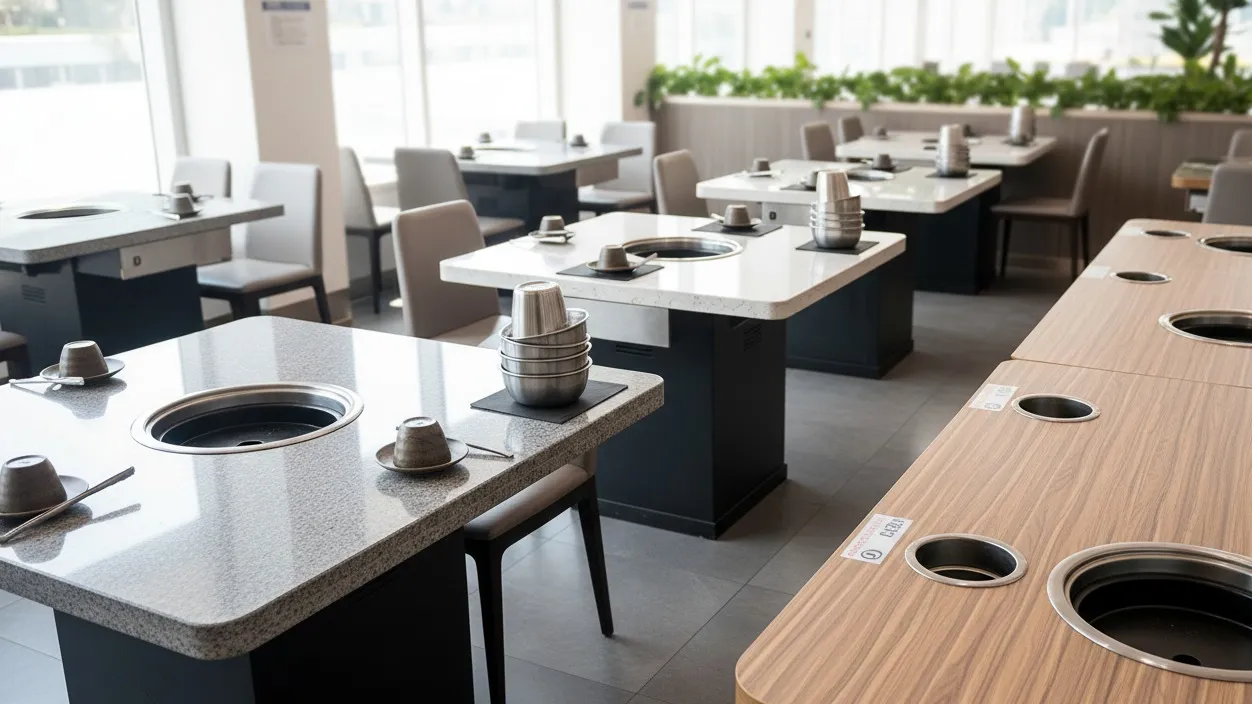
8. Decision Framework: What We Recommend (By Concept Type)
Gold Standard: Sintered Stone (BBQ + Hot Pot + Premium Hospitality)
Best for: high-volume Korean BBQ, yakiniku, hot pot, premium hotels
Why: strongest balance of heat tolerance + sanitation performance + long-term appearance
Spec defaults:
Minimum 12mm (project-dependent)
Full substrate support and reinforced cutouts
Beveled/bullnose edges
Matte/satin finishes for fingerprint and grease management
Value Engineering: Quartz (Induction-Only Hot Pot)
Best for: induction concepts with insulated cooktops
Why: premium look, easy wipe-down
Operational warning: follow manufacturer heat guidance; protect surfaces from high-heat contact.
Budget/Casual: Compact Laminate (HPL) With Proper Heat Isolation
Best for: fast-casual, food courts, lower-heat concepts, many patio applications
Why: strong cost-performance ratio and high design flexibility
Constraint: engineer grill collar insulation around published service temperature limits.
Procurement Checklist for RON Group Clients
Before you lock a spec, ask for:
NSF/ANSI 51 documentation (if food-zone performance matters)
Water absorption test data (especially near heat and grease)
Cutout/collar drawings that show how heat is isolated from the tabletop
Edge and substrate details (this is where chipping and cracking risk is controlled)
If you want us to recommend the right surface + base structure for your exact grill system, send your concept details and layout here: Contact RON Group Global
Report generated by RON Group Global Research Division.
Get the week's latest industry information
-
Real-Life Professional Restaurant Case Studies
Explore Now
-
Create a unique restaurant with over 95,700+products
Explore Now
-
Protessional Free 3D Restaurant Design
Explore Now
-
Still Have Questions About Opening a Restaurant?
Explore Now

Sylvia
With 8 years in catering & hospitality industry, sales manager of Ron Group, specialise in providing one stop solutions to restaurants, hotels and weddings.
Discover Our Exclusive Products
Explore our extensive range of restaurant and hotel supplies designed to enhance your operations. Find the perfect solutions to meet your needs.
Browse Our ProductsFREE 3D DESIGN
Boost your restaurant's success with our free 3D design service. Start building the restaurant of your dreams today!
Explore 3D Design Case
RECOMMENDED CASES
-

La Rambla by Catalunya: Crafting Barcelona's Soul in Hong Kong - Custom Furniture Excellence
RON Group's custom Spanish-inspired furniture elevates La Rambla with artisanal aesthetics...
Learn More -

Cardinal Point: Elevating Outdoor Seating with Tailored Cushion Upgrades
Discover how Cardinal Point transformed its outdoor dining experience with custom cushions, achievin
Learn More
RECOMMENDED BLOGS
-
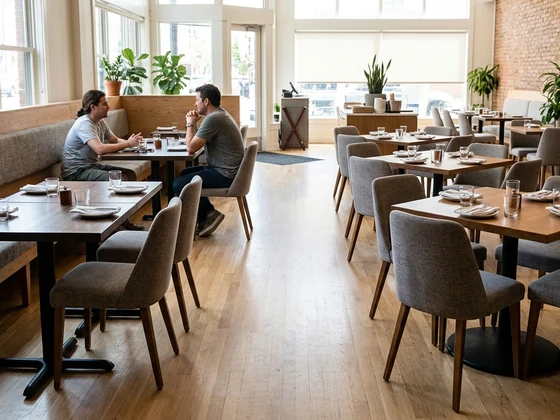
Restaurant Table Spacing and Aisle Clearance: Supplier Drawing Checklist
Check restaurant table spacing, aisle clearance, chair pullout, service path, and supplier drawing proof before approving a...
Sylvia2026-07-20 -

5 Mistakes to Avoid When Buying Restaurant Furniture from China
Don't fall for costly oversights! Learn the 5 mistakes to avoid when buying restaurant furniture from China and ensure a...
 Ron2025-01-079 min read
 -

RON GROUP Launches VR Experience to Explore Our Dynamic Showroom
Discover RON GROUP's VR showroom! Explore dining furniture, tableware, and customized services virtually or visit us in person to...
Sylvia2024-12-163 min read
Subscribe to RON GROUP
Stay up-to-date with the latest industry insights and expert advice. Together, we'll create your ideal restaurant.