
How to Care for Wooden Restaurant Furniture: Maintenance Tips That Extend Lifespan
Practical wooden restaurant furniture care guide: daily cleaning, humidity control, scratch repair & refinishing schedules to extend lifespan by 30% or more.
Content
A single wooden restaurant table can see 1,500 or more seatings per year. Multiply that across a dining room of 30 tables, and you begin to understand why maintenance is not optional—it is a financial strategy. Industry data consistently shows that routine wood furniture care extends lifespan by 30% or more, turning a 7-year replacement cycle into a 10-year one. For a mid-size restaurant with $40,000 invested in wooden tables and chairs, that extension is worth $12,000–$17,000 in deferred capital expenditure. This guide provides a practical, step-by-step maintenance program for restaurant and hotel operators who want to protect that investment.
Why Wood Remains the Material of Choice for Restaurant Furniture
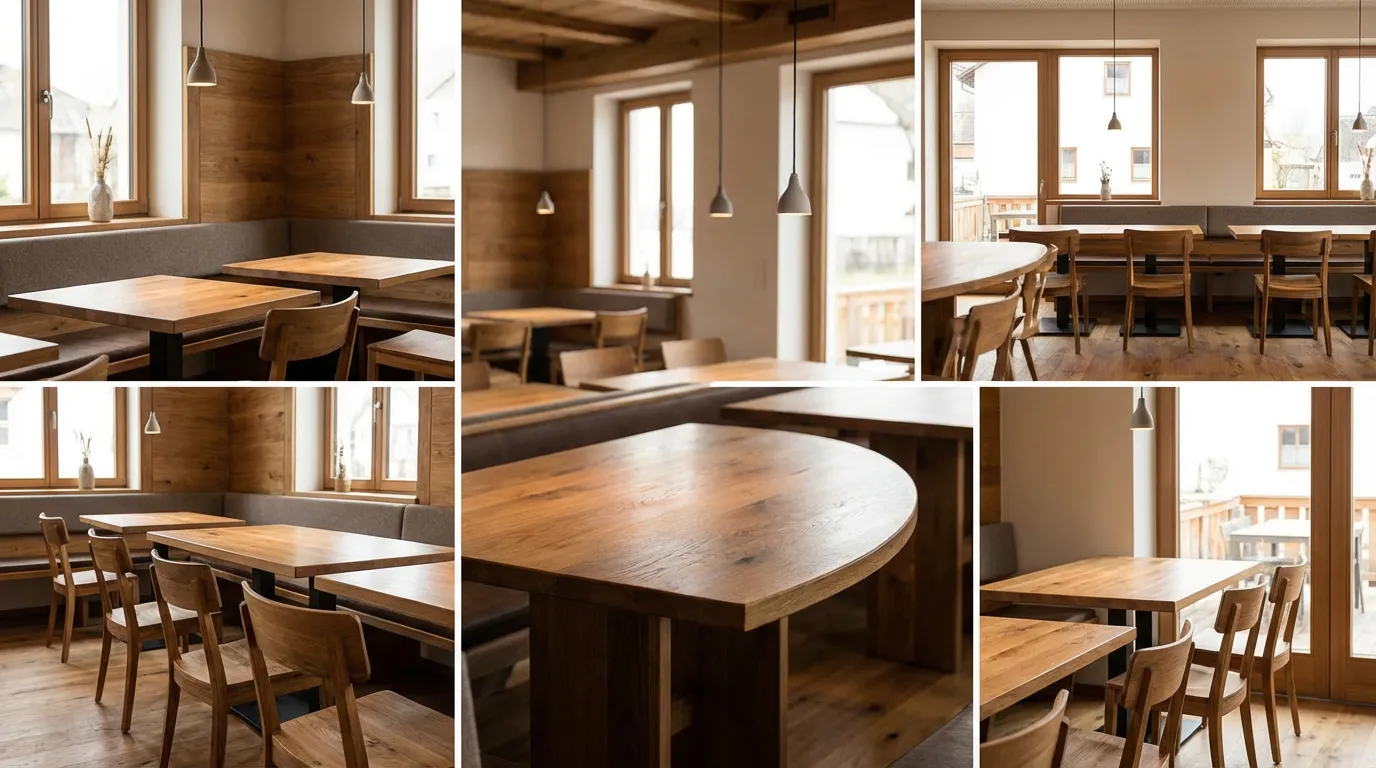
Despite the availability of metal, plastic, and composite alternatives, solid wood continues to dominate restaurant interiors. Oak, beech, ash, and walnut deliver warmth and visual richness that synthetic materials cannot replicate. More importantly, wood is repairable. A scratched metal chair gets replaced; a scratched wooden table gets refinished. That repairability is the foundation of wood's long-term cost advantage in commercial foodservice environments.
Understanding how wood furniture is manufactured—from timber selection through joinery and finishing—helps operators make smarter care decisions. A table built with mortise-and-tenon joints and a catalyzed lacquer finish has different maintenance needs than one assembled with dowels and coated with oil. Knowing your furniture's construction informs every recommendation that follows.
Understanding Wood Finishes: The First Step in Proper Care
Before you clean, condition, or repair any piece of wooden restaurant furniture, you need to identify the finish. Using the wrong product on the wrong finish causes more damage than neglect. The four most common commercial finishes are:
Polyurethane: The most durable option for restaurant use. Creates a hard, water-resistant film on the wood surface. Resists heat marks and chemical cleaners better than other finishes. Found on most commercial-grade dining tables.
Catalyzed lacquer: Offers a smooth, glossy or satin appearance with excellent scratch resistance. Cures chemically rather than by evaporation, making it harder than standard lacquer. Common on higher-end restaurant furniture.
Varnish: Provides a durable, heat-resistant protective coating. Slightly softer than polyurethane but more forgiving to repair. Suitable for tables and chairs in moderate-traffic settings.
Oil finish (tung oil, Danish oil): Penetrates the wood rather than sitting on top. Provides a natural, matte appearance but requires more frequent reapplication. Increasingly popular in farm-to-table and rustic restaurant concepts.
If you are unsure which finish is on your furniture, apply a small drop of water to an inconspicuous area. If the water beads up, you have a film finish (polyurethane, lacquer, or varnish). If the water soaks in and darkens the wood, you have an oil finish. This simple test determines your entire cleaning and conditioning approach.
Daily Cleaning: The Foundation of Furniture Longevity
Most wood furniture damage in restaurants is cumulative. It happens one wet rag, one harsh cleaner, one dragged plate at a time. A disciplined daily cleaning routine prevents 80% of cosmetic deterioration.
For Film-Finished Surfaces (Polyurethane, Lacquer, Varnish)
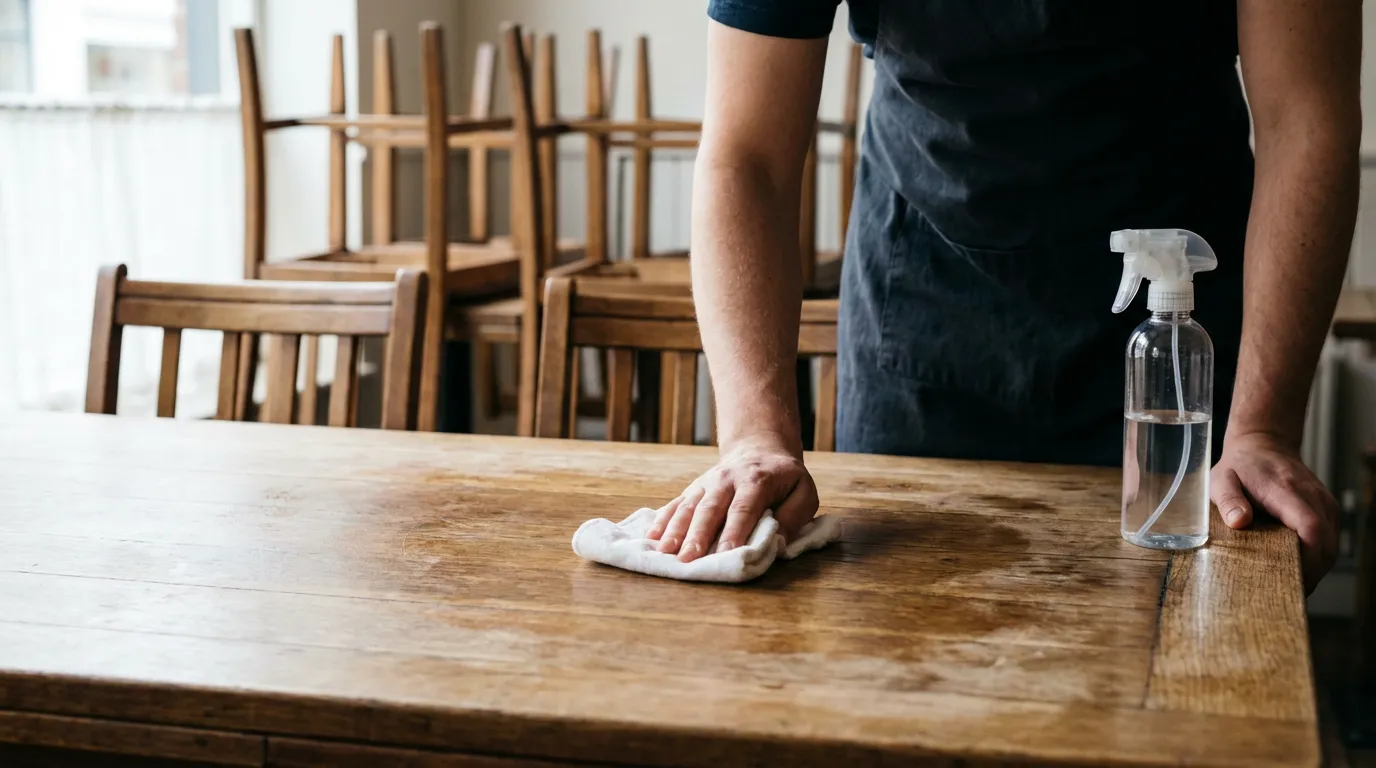
Wipe with a damp—not wet—microfiber cloth. Excess water is the single greatest enemy of wood furniture. Wring the cloth until it is barely damp. Wipe in the direction of the wood grain to avoid streaking.
Use a mild, pH-neutral cleaner. Mix a few drops of a gentle dish soap (like Dawn or a commercial equivalent) in warm water. Avoid cleaners containing ammonia, bleach, or silicone. These chemicals degrade finish integrity over time.
Dry immediately. Follow each wipe with a dry microfiber cloth. Standing moisture—even on polyurethane—can seep into joints and edge seams, causing swelling, discoloration, and eventual delamination.
Remove sticky residues with a specialized wood cleaner. Products like Murphy Oil Soap are formulated for wood surfaces and will not strip protective finishes when used at recommended dilution rates.
For Oil-Finished Surfaces
Dust first with a dry microfiber cloth. Oil finishes attract and hold dust particles more readily than film finishes.
Clean with a cloth dampened in warm water only. Soap-based cleaners can strip oil finishes. If a cleaner is necessary, use one specifically formulated for oiled wood.
Re-oil high-traffic areas monthly. Apply a thin coat of the original oil product, let it penetrate for 15–20 minutes, then buff off the excess with a clean cloth. This is not optional for oil-finished restaurant tables—skipping this step leads to visible wear patterns within weeks.
What Staff Should Never Do
Never spray cleaner directly onto wood surfaces. Spray onto the cloth instead. Direct application causes pooling in joints and crevices.
Never use abrasive pads (Scotch-Brite, steel wool) for routine cleaning. These scratch even polyurethane finishes.
Never use all-purpose restaurant sanitizers on wood without verifying chemical compatibility. Many quaternary ammonium-based sanitizers are safe on film finishes; alcohol-based sanitizers can dissolve lacquer.
Weekly and Monthly Maintenance Tasks
Daily cleaning handles surface-level concerns. Weekly and monthly tasks address the structural and protective elements that determine whether your furniture lasts 5 years or 15.
Weekly Tasks
Inspect all joints and hardware. Wobbling chairs and tables are not just a guest complaint—they accelerate structural failure. Tighten bolts, screws, and knock-down fittings as soon as looseness is detected. A loose joint under repeated stress becomes a broken joint within weeks.
Check for new scratches, dents, or finish wear. Catalog any damage in a maintenance log. Addressing small scratches promptly prevents moisture from reaching bare wood, which leads to staining and swelling.
Rotate tables and chairs. If your restaurant has areas with varying traffic levels (window seats vs. interior tables), rotate furniture positions monthly to equalize wear across your inventory.
Monthly Tasks
Apply wood conditioner or polish. For film-finished pieces, a quality furniture polish (not silicone-based spray) restores luster and adds a thin protective layer. Products like Howard Feed-N-Wax condition the wood through the finish while adding a beeswax coating. For high-traffic restaurant environments, apply every two weeks rather than monthly.
Deep-clean with a wood-specific cleaner. Once a month, move beyond the daily damp-wipe routine. Apply a dedicated wood cleaner, work it into the surface with a soft cloth, and buff dry. This removes built-up residue from cooking oils, skin oils, and cleaning products that daily wiping does not fully address.
Inspect leg glides and floor protectors. Worn or missing felt pads on chair and table legs cause scratches on both the furniture and your flooring. Replace pads as soon as they show wear. Self-adhesive felt pads cost less than $0.10 each—a negligible expense compared to the floor and furniture damage they prevent.
Seasonal Maintenance: Controlling Humidity and Temperature
Wood is a hygroscopic material—it absorbs and releases moisture in response to ambient humidity. This natural expansion and contraction is the primary cause of cracking, warping, and joint failure in wooden restaurant furniture. The USDA Forest Products Laboratory recommends maintaining indoor relative humidity between 30% and 50% for optimal wood stability.
Winter (Heating Season)
Forced-air heating systems reduce indoor humidity to 15–25%, well below the safe range for wood furniture. At these levels, wood shrinks, joints loosen, and surface cracks appear. Countermeasures include:
Install a commercial humidifier or integrate humidity control into your HVAC system. Target 35–45% relative humidity.
Move furniture away from heat vents and radiators. Direct heat exposure causes localized drying that leads to cracking and finish degradation.
Apply an extra coat of conditioner during winter months to help maintain moisture balance in the wood.
Summer (Humid Season)
High humidity causes wood to expand, which can lead to sticking drawers, swollen joints, and a tacky feel on some finishes. Manage summer conditions by:
Running air conditioning or dehumidifiers to keep humidity below 55%.
Increasing air circulation around furniture. Avoid pushing tables flush against walls where moisture can collect.
Wiping furniture dry more frequently during humid periods to prevent surface moisture from being absorbed at joints and end-grain areas.
Repairing Common Damage: A Practical Guide
Even with meticulous maintenance, commercial restaurant furniture sustains damage. Knowing how to handle common issues in-house saves both money and downtime.
Surface Scratches
Light scratches that do not penetrate the finish can be concealed with a furniture touch-up marker or wax fill stick matched to the wood color. For deeper scratches that expose bare wood:
Clean the scratch with a soft cloth dampened in mineral spirits.
Apply a wood filler or wax stick that matches the furniture color.
Let it dry completely (24 hours for filler; immediate for wax).
Lightly sand the filled area with 320-grit sandpaper, feathering into the surrounding finish.
Apply a thin coat of the original finish (polyurethane, lacquer, or oil) to seal the repair.
Water Rings and Heat Marks
White rings or cloudy marks on film finishes are caused by moisture or heat trapped within the finish layer. To remove them:
Mild cases: Apply a paste of baking soda and non-gel toothpaste to the mark. Rub gently with a soft cloth in the direction of the grain. Wipe clean and polish.
Moderate cases: Place a clean cloth over the mark and briefly apply a warm iron (no steam) on the lowest setting. The heat draws trapped moisture out of the finish. Check every few seconds to avoid further damage.
Severe cases: The finish must be stripped and reapplied in the affected area. This is a professional-level repair.
Wobbling and Loose Joints
Loose joints in chairs are the most common structural issue in restaurant furniture. For bolt-and-knockdown joints, simply retightening hardware often resolves the problem. For traditional glued joints:
Disassemble the loose joint completely.
Clean old adhesive from both surfaces using warm water and a stiff brush.
Apply fresh wood glue (PVA such as Titebond III for its waterproof bond).
Reassemble and clamp firmly for 24 hours.
Wipe away any squeeze-out with a damp cloth before it dries.
A proactive approach to joint maintenance is far more cost-effective than replacing chairs. RON GROUP's restaurant furniture collection uses reinforced joinery designed for commercial use, but even the strongest joints benefit from periodic inspection and tightening.
When to Refinish vs. When to Replace
The refinish-or-replace decision is ultimately a financial one. Here is a framework for making it objectively:
| Condition | Action | Estimated Cost (per piece) |
|---|---|---|
| Surface scratches, worn finish, minor discoloration | Sand and refinish | $80–$200 (40–60% of replacement) |
| Loose joints, minor structural wear | Re-glue joints, tighten hardware | $30–$80 |
| Significant warping, deep cracks, split wood | Replace | $150–$500+ depending on piece |
| Structural failure (broken legs, cracked seat) | Replace | $150–$500+ |
| Outdated style, brand refresh | Replace (or refinish in new color/stain) | $100–$250 for refinish; full cost for replacement |
The rule of thumb: if the repair cost exceeds 60% of replacement cost, replace the piece. Below that threshold, refinishing is almost always the better financial decision. Solid hardwood furniture can typically be refinished 3–5 times over its lifetime, each cycle extending usable life by 3–5 years. This means a well-built oak dining table could serve a restaurant for 20–30 years with proper maintenance and periodic refinishing.
Preventive Measures That Pay for Themselves
The most cost-effective maintenance is prevention. These measures require minimal investment but yield outsized returns in furniture longevity:
Use placemats and coasters. A $1 placemat prevents $200 in tabletop refinishing. Specify materials that will not trap moisture against the wood—cork or fabric placemats outperform plastic-backed options.
Install felt pads on all chair and table legs. Replace them every 3–6 months. For heavy chairs that are moved frequently, consider nail-on glides with felt surfaces rather than adhesive pads.
Train staff on proper cleaning procedures. A 15-minute training session on correct cleaning products, wiping technique, and damage reporting can prevent thousands of dollars in avoidable damage. Include furniture care in your standard onboarding checklist.
Position furniture away from direct sunlight. UV exposure fades wood stain and degrades finish chemistry. If tables must be placed near windows, apply a UV-filtering window film or rotate sun-exposed pieces more frequently.
Use bus tubs and trays. Dragging plates and glassware across tabletops is the primary source of surface scratches. Requiring servers to use bus tubs eliminates this damage vector entirely.
Control humidity. As discussed in the seasonal maintenance section, maintaining 30–50% relative humidity protects against both cracking (too dry) and swelling (too humid). A commercial hygrometer costs under $30 and provides the data you need to manage this risk.
Building a Maintenance Schedule: The Annual Calendar
Systematizing maintenance ensures it actually happens. Here is a consolidated annual calendar for restaurant wood furniture care:
| Frequency | Tasks |
|---|---|
| Daily | Wipe surfaces with damp microfiber cloth; dry immediately; remove sticky residues; check for obvious damage |
| Weekly | Inspect and tighten joints/hardware; log new scratches or damage; rotate furniture positions |
| Monthly | Apply wood conditioner or polish; deep-clean with wood-specific cleaner; replace worn felt pads; re-oil any oil-finished pieces |
| Quarterly | Touch up surface scratches; check humidity levels and HVAC settings; review maintenance log for recurring issues |
| Annually | Full condition assessment of all pieces; professional refinishing of high-wear items; budget planning for replacements; deep structural inspection of all chairs |
The Cost of Maintenance vs. the Cost of Neglect
The financial case for proactive wood furniture maintenance is overwhelming. Consider a restaurant with 30 wooden dining tables valued at $350 each ($10,500 total investment):
With maintenance: Annual cost of cleaning supplies, conditioner, and minor repairs is approximately $300–$500. Tables last 12–15 years with one mid-cycle refinishing at $2,400–$4,000. Total 15-year cost: approximately $7,000–$11,000.
Without maintenance: Tables deteriorate within 5–7 years, requiring full replacement twice in a 15-year period. Total 15-year cost: $21,000–$31,500, plus operational disruption during each replacement cycle.
That is a 300–500% cost differential—a figure consistent with data from the American Hotel & Lodging Association, which identifies furniture lifecycle management as a key lever for controlling FF&E budgets across the hospitality industry.
Choosing the Right Furniture From the Start
Maintenance can only extend the life of well-built furniture. A poorly constructed table with particleboard core and thin veneer will fail regardless of how diligently you care for it. When sourcing wooden restaurant furniture, prioritize:
Solid hardwood construction (oak, beech, ash) over engineered or softwood alternatives.
Reinforced joinery (mortise-and-tenon, corner blocks, metal brackets) over dowel-only assembly.
Commercial-grade finishes (catalyzed lacquer, commercial polyurethane) rated for foodservice environments.
Manufacturer support including maintenance guidelines, touch-up kits, and warranty coverage that reflects commercial use expectations.
RON GROUP's manufacturing facilities produce wooden restaurant furniture using kiln-dried hardwoods, reinforced joinery systems, and commercial-grade finishes engineered for the demands of daily foodservice operation. Every piece is built to be maintained, repaired, and refinished—maximizing the total return on your furniture investment. Explore our full hotel and restaurant furniture collections to see options designed for commercial longevity.
Putting It All Together
Wood furniture care in a restaurant is not complicated, but it does require consistency. The operators who get the most value from their wooden tables and chairs are the ones who treat maintenance as a scheduled, budgeted activity rather than a reactive afterthought. Identify your finishes, train your staff, follow the daily-weekly-monthly-quarterly-annual cycle outlined above, and address damage promptly. These habits will extend the life of your furniture by years and save thousands in replacement costs.
Need help selecting commercial-grade wooden furniture built for long-term performance? Contact RON GROUP for expert guidance on restaurant furniture selection, maintenance planning, and bulk procurement. With over 20 years of experience supplying furniture to restaurants and hotels in 50+ countries, we help operators make investments that last.
Get the week's latest industry information
-
Real-Life Professional Restaurant Case Studies
Explore Now
-
Create a unique restaurant with over 95,700+products
Explore Now
-
Protessional Free 3D Restaurant Design
Explore Now
-
Still Have Questions About Opening a Restaurant?
Explore Now

Sylvia
With 8 years in catering & hospitality industry, sales manager of Ron Group, specialise in providing one stop solutions to restaurants, hotels and weddings.
Discover Our Exclusive Products
Explore our extensive range of restaurant and hotel supplies designed to enhance your operations. Find the perfect solutions to meet your needs.
Browse Our ProductsFREE 3D DESIGN
Boost your restaurant's success with our free 3D design service. Start building the restaurant of your dreams today!
Explore 3D Design Case
RECOMMENDED CASES
-

La Rambla by Catalunya: Crafting Barcelona's Soul in Hong Kong - Custom Furniture Excellence
RON Group's custom Spanish-inspired furniture elevates La Rambla with artisanal aesthetics...
Learn More -

Cardinal Point: Elevating Outdoor Seating with Tailored Cushion Upgrades
Discover how Cardinal Point transformed its outdoor dining experience with custom cushions, achievin
Learn More
RECOMMENDED BLOGS
-
Restaurant Table Spacing and Aisle Clearance: Supplier Drawing Checklist
Check restaurant table spacing, aisle clearance, chair pullout, service path, and supplier drawing proof before approving a...
Sylvia2026-07-20 -

5 Mistakes to Avoid When Buying Restaurant Furniture from China
Don't fall for costly oversights! Learn the 5 mistakes to avoid when buying restaurant furniture from China and ensure a...
 Ron2025-01-079 min read
 -

RON GROUP Launches VR Experience to Explore Our Dynamic Showroom
Discover RON GROUP's VR showroom! Explore dining furniture, tableware, and customized services virtually or visit us in person to...
Sylvia2024-12-163 min read
Subscribe to RON GROUP
Stay up-to-date with the latest industry insights and expert advice. Together, we'll create your ideal restaurant.