

How Global Supply Chain Shifts Are Affecting Restaurant Equipment Prices in 2026
Steel tariffs, freight chaos & geopolitical risks are rising restaurant equipment costs in 2026. Learn the latest data + 5 budget-protection strategies.
Content
If you have requested a quote for commercial kitchen equipment or restaurant furniture in the past six months, you have likely noticed something unsettling: prices are climbing again. Stainless-steel prep tables, combi ovens, walk-in refrigerators, and even basic dining chairs are all more expensive than they were at the start of 2025. The reason is not a single event but a convergence of supply chain disruptions, raw material tariffs, and shifting global trade patterns that are reshaping the cost landscape for the entire hospitality industry.
This article breaks down exactly what is driving restaurant equipment prices in 2026, provides the latest data on material costs and freight rates, and offers practical strategies for operators and procurement teams to protect their margins without sacrificing quality.
The Numbers: How Much Have Prices Actually Increased?

Before diving into causes, it helps to quantify the impact. According to the Associated General Contractors of America (AGC), the producer price index for key metals used in commercial kitchen equipment saw dramatic year-over-year increases in 2025:
Aluminum mill shapes: up 30.5% year-over-year—the largest increase since the supply-chain disruptions of early 2022.
Steel mill products: up 17%—the steepest rise for that index since 2022.
Copper: double-digit increases, further pressuring manufacturers of electrical components, wiring, and refrigeration systems.
These are not abstract commodity numbers. They translate directly into higher prices for the stainless-steel worktables, aluminum shelving, and copper-line refrigeration units that every commercial kitchen depends on. Industry analysts estimate that finished commercial kitchen equipment prices have risen 12–22% depending on the category and manufacturer, with lead times extending from the pre-pandemic norm of 4–6 weeks to 8–14 weeks for many product lines.
Beyond equipment, broader operating costs continue their upward march. Electricity costs for restaurants are up 10.2% year-over-year, transportation expenses have risen 13.9%, and paper and disposable supplies have nearly quadrupled since 2020, according to Barmetrix's restaurant inflation analysis.
Driver #1: The 50% Steel and Aluminum Tariff
The single largest factor pushing equipment prices higher in 2026 is the expanded Section 232 tariff on steel and aluminum. In June 2025, the U.S. Department of Commerce increased the tariff rate from 25% to 50% on steel, aluminum, and their derivative products imported from nearly all trading partners. An additional 407 product categories were added to the derivatives list, broadening the reach of these duties into downstream industries including foodservice equipment manufacturing.
The impact on commercial kitchen equipment is direct and measurable. As procurement advisory firm Aldevra explains, products made overseas with imported steel, aluminum, or electronics are seeing rapid pricing changes, especially on stainless-steel equipment like prep tables, combi ovens, refrigerators, and dish machines. Quote validity has shrunk to 15–30 days or less due to the volatile pricing environment.
For restaurant operators and hotel groups purchasing equipment from U.S.-based distributors, this means budgets established at the beginning of 2025 may already be insufficient for projects executing in mid-2026. For international buyers sourcing directly from manufacturing regions like Foshan, China—the global hub for commercial furniture and kitchen equipment production—the calculus is different, as we will discuss in the mitigation strategies section below.
Driver #2: Freight Rate Volatility
Ocean freight, which seemed to be normalizing in late 2024, has been anything but stable. The Drewry World Container Index in early 2026 shows rates around $1,933 per 40-foot container on average, but with significant route-level variation:
Asia to U.S. West Coast: $2,127/FEU (up 8% week-over-week in recent tracking).
Asia to U.S. East Coast: $3,069/FEU.
Asia to Northern Europe: $2,707/FEU (up 11% week-over-week).
While these rates represent a 30–35% decrease compared to the peaks of 2024–2025, the market remains vulnerable to sudden spikes. According to SeaRates, sudden shocks—such as the reopening of the Suez Canal to full traffic or a U.S. restocking surge—could push container rates from $2,200 to $9,500 or more within weeks.
For restaurant groups ordering bulky equipment like restaurant furniture, ovens, or refrigeration units, freight costs represent a meaningful percentage of the total landed cost. A 40-foot container of restaurant chairs, for example, might hold 200–300 units. When freight rates swing by $3,000–5,000 per container, that translates to $10–25 per chair in additional cost—a margin hit that most operators cannot simply absorb.
Driver #3: Geopolitical Disruption and Trade Route Instability
The Red Sea shipping crisis, which began in late 2023, continues to shape global logistics in 2026. Although Houthi attacks have officially stopped and a truce has held for approximately 10 months, industry analysts assign only a 40–50% probability that the Suez Canal will return to full commercial use in the first half of 2026. Until that happens, vessels continue diverting around the Cape of Good Hope, adding 10–14 days to Asia-Europe transit times and tying up vessel capacity that would otherwise help moderate rates.
Meanwhile, fleet overcapacity is building as a large orderbook of new container ships enters service. This creates a paradox: there are more ships available, but many are deployed on longer, less efficient routes. The net effect is that schedule reliability remains below pre-2023 levels, and operators cannot count on predictable delivery windows for equipment orders.
For hospitality procurement teams, this means building longer buffers into project timelines. A hotel renovation that needs 500 guest-room furniture sets or a restaurant chain rolling out a new prototype must now plan 4–6 months ahead of the installation date, compared to the 6–8 weeks that was standard before 2020.
Driver #4: Reshoring and Near-Shoring Are Not Reducing Costs (Yet)
There is growing discussion about reshoring manufacturing back to North America or near-shoring to Mexico and Southeast Asia. While these strategies can reduce dependence on any single region, they are not delivering cost savings in 2026. Domestic U.S. steel prices remain elevated due to the same tariff regime that taxes imports, and new manufacturing facilities in Mexico or Vietnam require significant capital investment and time to reach the production quality and scale of established hubs.
Foshan, China, remains the dominant manufacturing center for commercial restaurant furniture and kitchen equipment for a reason: the city's network of over 3,000 factories with more than 150,000 skilled workers produces over 50% of all furniture in China, with deeply integrated supply chains for raw materials, finishing, and quality control. This kind of ecosystem density is impossible to replicate quickly elsewhere.
For buyers with the sourcing expertise and logistics capability to work directly with factories in established manufacturing clusters, the price advantage is substantial. A direct-from-factory model eliminates the layers of margin added by importers, distributors, and dealers—a savings that typically ranges from 20–40% compared to purchasing through domestic channels.
Driver #5: Construction Cost Inflation Is Squeezing Total Project Budgets
Equipment does not exist in isolation. It is purchased as part of a broader construction or renovation project, and every dollar spent on rising construction costs is a dollar not available for FF&E (furniture, fixtures, and equipment). The number of hotels under construction in the U.S. hit a five-year low in mid-2025, driven by a combination of high construction costs, elevated interest rates, and supply chain uncertainty around tariffs.
For restaurants, the impact is similar. Operators are responding by choosing smaller footprints for new locations, opting for used equipment where possible, and prioritizing multipurpose equipment over single-function appliances. As KMC Sales reports, the used restaurant equipment market is booming in 2026 as operators seek to redirect budget toward high-ROI technology upgrades while controlling the overall project cost.
However, used equipment is not a viable option for every category. Items that directly affect food safety (refrigeration, dishwashing), brand presentation (front-of-house furniture, tableware), or regulatory compliance are almost always better purchased new. The question then becomes not whether to buy new, but how to buy new at the best possible price.
Strategies to Mitigate Rising Equipment Costs
Given the structural nature of these price drivers, operators cannot simply wait for costs to come down. Here are five evidence-based strategies to protect your budget:
1. Source Directly From Manufacturing Hubs
The most impactful cost-reduction strategy is to shorten the supply chain. Working directly with manufacturers in established production clusters like Foshan eliminates distributor markups and gives you access to factory-gate pricing. RON GROUP, for example, operates as a direct bridge between Foshan's manufacturing base and international buyers, providing access to over 95,700 products across kitchen equipment, furniture, tableware, and hotel supplies—all at factory-direct pricing with in-house quality control.
2. Consolidate Orders to Optimize Freight
Freight cost per unit drops significantly when you fill containers efficiently. Instead of ordering equipment and furniture separately from different suppliers and paying for partially loaded containers, consolidate your procurement through a single sourcing partner who can combine multiple product categories into full container loads (FCL). A well-packed 40-foot container of mixed restaurant supplies—chairs, tables, tableware, kitchen smallwares—delivers dramatically lower per-item shipping costs than multiple less-than-container-load (LCL) shipments.
3. Lock In Pricing Early and Plan Longer Lead Times
With quote validity shrinking to 15–30 days, hesitation is expensive. If you have a project with a confirmed timeline, place orders as early as possible to lock in current pricing. Build a minimum 4–6 month buffer between order placement and required delivery. For large-scale projects, consider phased ordering: secure the highest-cost items (stainless steel equipment, refrigeration) first, as these categories are most exposed to tariff-driven price increases.
4. Invest in Multipurpose and Durable Equipment
The trend toward multipurpose equipment is not just about kitchen efficiency—it is a procurement strategy. One combi oven that replaces a separate steamer, convection oven, and holding cabinet represents a lower total cost of ownership even if its upfront price is higher. Similarly, investing in commercial-grade restaurant furniture with longer replacement cycles (8–12 years vs. 3–5 years for consumer-grade alternatives) reduces the annualized cost of furnishing your space.
5. Use Data to Benchmark and Negotiate
Procurement teams should track commodity price indices (steel, aluminum, lumber) and freight rate benchmarks (Drewry WCI, Freightos Baltic Index) to understand whether a supplier's price increase is justified by market conditions or represents opportunistic margin expansion. Armed with this data, you can negotiate more effectively—or identify when it is time to seek alternative suppliers.
What the Hospitality Industry Procurement Outlook Says
The 2026 Hospitality Procurement Outlook from Avendra projects food and beverage pricing increases of 3–5% in Q1 and 3–4.5% in Q2, with elevated prices expected to persist for the next 9–12 months. While this data is specific to F&B inputs, it signals broader inflationary pressure across all hospitality procurement categories, including equipment and furniture.
The report also highlights a strategic shift from "just-in-time" to "just-in-case" inventory models. Properties are adopting dynamic par levels that adjust based on real-time booking trends and seasonal demand, rather than relying on lean inventory assumptions that proved fragile during the pandemic. For equipment procurement, the parallel lesson is clear: order earlier, stock critical spares, and avoid single-source dependencies.
Technology adoption is another response. Around 80% of restaurant executives surveyed planned to increase their investment in AI for inventory management, predictive analytics, and supply chain visibility. While these tools do not lower the price of a stainless-steel range, they help operators make smarter purchasing decisions and reduce waste—an indirect but meaningful impact on total cost of operations.
The 2026 Outlook: When Will Prices Stabilize?
There is no single event that will reset restaurant equipment prices to pre-2020 levels. The 50% steel and aluminum tariffs show no sign of being reversed in the near term. Freight rates, while lower than their 2024 peaks, remain structurally elevated due to Red Sea diversions and geopolitical uncertainty. And the construction cost inflation that constrains total project budgets is unlikely to ease until interest rates decline meaningfully.
What operators can expect is a period of gradual normalization rather than a sudden correction. Fleet overcapacity in container shipping should provide some downward pressure on freight rates through the second half of 2026. Steel prices may moderate if demand from the construction and automotive sectors softens. And as new manufacturing capacity comes online in Southeast Asia and other regions, some product categories will see more competitive pricing.
In the meantime, the most effective response is strategic procurement: source directly, consolidate shipments, plan ahead, and invest in durable, multipurpose equipment that delivers long-term value.
How RON GROUP Helps You Navigate Supply Chain Complexity
RON GROUP was built for exactly this kind of environment. Based in Foshan—the heart of China's commercial furniture and kitchen equipment manufacturing ecosystem—RON GROUP offers international hospitality buyers a direct line to factory-gate pricing on over 95,700 products, from commercial kitchen equipment to restaurant furniture and everything in between.
With 20+ years of experience serving 10,000+ customers—including global chains like Burger King, Sofitel, and W Hotel—RON GROUP provides:
Factory-direct pricing that eliminates distributor and dealer markups, delivering 20–40% savings compared to domestic sourcing channels.
Consolidated shipping across multiple product categories, optimizing container utilization and reducing per-unit freight costs.
In-house quality control with factory inspections before shipment, ensuring that cost savings never come at the expense of quality.
Project-based procurement support for large-scale restaurant and hotel openings, with dedicated account management and proven case studies across global markets.
In a market where equipment costs are rising and supply chains are unreliable, the direct-from-factory model is not just a cost advantage—it is a competitive one. Contact RON GROUP today to discuss your upcoming project and lock in pricing before the next round of increases.
Get the week's latest industry information
-
Real-Life Professional Restaurant Case Studies
Explore Now
-
Create a unique restaurant with over 95,700+products
Explore Now
-
Protessional Free 3D Restaurant Design
Explore Now
-
Still Have Questions About Opening a Restaurant?
Explore Now

Sylvia
With 8 years in catering & hospitality industry, sales manager of Ron Group, specialise in providing one stop solutions to restaurants, hotels and weddings.
Discover Our Exclusive Products
Explore our extensive range of restaurant and hotel supplies designed to enhance your operations. Find the perfect solutions to meet your needs.
Browse Our ProductsFREE 3D DESIGN
Boost your restaurant's success with our free 3D design service. Start building the restaurant of your dreams today!
Explore 3D Design Case
RECOMMENDED CASES
-

La Rambla by Catalunya: Crafting Barcelona's Soul in Hong Kong - Custom Furniture Excellence
RON Group's custom Spanish-inspired furniture elevates La Rambla with artisanal aesthetics...
Learn More -

Cardinal Point: Elevating Outdoor Seating with Tailored Cushion Upgrades
Discover how Cardinal Point transformed its outdoor dining experience with custom cushions, achievin
Learn More
RECOMMENDED BLOGS
-
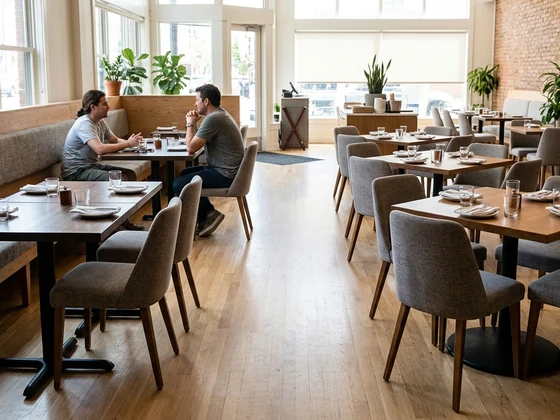
Restaurant Table Spacing and Aisle Clearance: Supplier Drawing Checklist
Check restaurant table spacing, aisle clearance, chair pullout, service path, and supplier drawing proof before approving a...
Sylvia2026-07-20 -

5 Mistakes to Avoid When Buying Restaurant Furniture from China
Don't fall for costly oversights! Learn the 5 mistakes to avoid when buying restaurant furniture from China and ensure a...
 Ron2025-01-079 min read
 -

RON GROUP Launches VR Experience to Explore Our Dynamic Showroom
Discover RON GROUP's VR showroom! Explore dining furniture, tableware, and customized services virtually or visit us in person to...
Sylvia2024-12-163 min read
Subscribe to RON GROUP
Stay up-to-date with the latest industry insights and expert advice. Together, we'll create your ideal restaurant.