
Content
A restaurant furniture manufacturer China review should prove the manufacturer's role before the buyer releases a full RFQ. The key question is not whether a supplier says it can make restaurant furniture. The buyer needs to know who controls production files, samples, revisions, packing, and export-facing documents before sharing drawings, finish boards, or a complete bill of quantities.
This page is for commercial restaurant and hospitality buyers reviewing a China manufacturer for a controlled restaurant furniture package. It is not a ranking page, supplier directory, local buying page, used-furniture page, repair guide, or generic furniture sourcing overview. The procurement workflow below focuses on file release, sample control, and manufacturer responsibility before price comparison.
Confirm the Manufacturer Role
Start by separating manufacturer role proof from sales representation. A supplier may be a factory, exporter, trading company, project coordinator, or a mix of those roles. Any route can be workable, but the buyer should know who is responsible for production decisions before RFQ release.
The International Trade Administration due-diligence guidance supports reviewing business partners before commitments. The ITA Consolidated Screening List can support restricted-party screening workflow context. These sources do not approve a supplier; they help the buyer define what must be checked.
| Role question | Evidence to request | RFQ release use |
|---|---|---|
| Who owns the factory response? | Legal name, address, role statement, and contact route | Identifies who answers production questions |
| Who controls drawings? | Drawing review owner and revision route | Prevents uncontrolled file sharing |
| Who controls samples? | Sample owner, sample code, and approval record | Keeps material and finish decisions traceable |
| Who signs and invoices? | Contracting entity and payee route | Clarifies commercial responsibility |
| Who prepares export documents? | Document responsibility statement | Lets the buyer and broker review early |
Do not release complete restaurant drawings to a party that cannot explain this chain. Ask for role proof first, then decide how much of the RFQ file the supplier should receive.
Build a Production File Boundary
The production file boundary tells the manufacturer what it may price, what it must confirm, and what remains withheld until the supplier proves readiness. This is different from a broad supplier evaluation. It is a file-control decision.
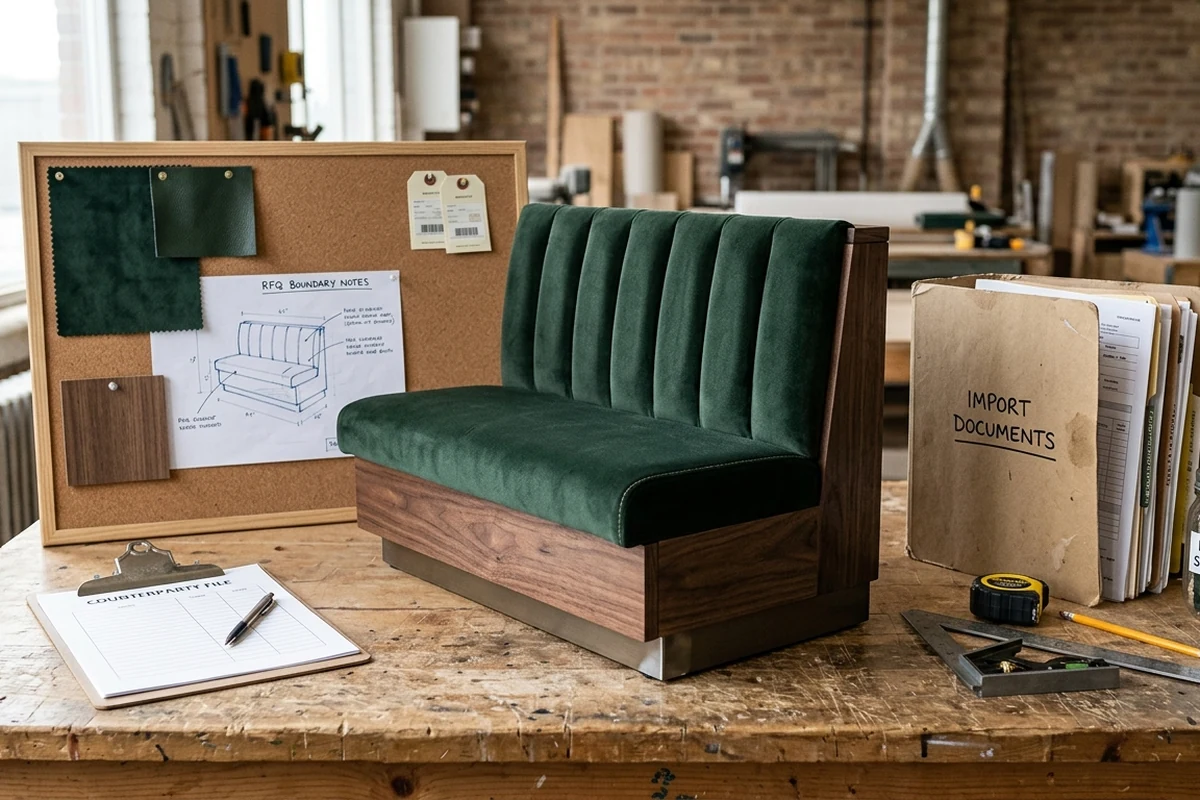
RON GROUP's restaurant furniture collection can support product-scope discussion. RON GROUP's furniture production capabilities can frame sample, production, quality, packing, and project communication questions. The buyer still needs an item-level production boundary.
Include:
item codes and restaurant zones;
drawing or reference version;
materials, finishes, upholstery, metal, wood, laminate, or hardware references;
sample route and approval owner;
quantity basis and open quantity assumptions;
packing and carton-mark expectation;
document owner for export-facing paperwork;
information withheld until role proof is acceptable.
The boundary should also name what is not decided. If site dimensions, upholstery selection, finish approval, or delivery sequence is open, label it as open rather than letting the manufacturer create hidden assumptions.
Test Sample-to-Bulk Control
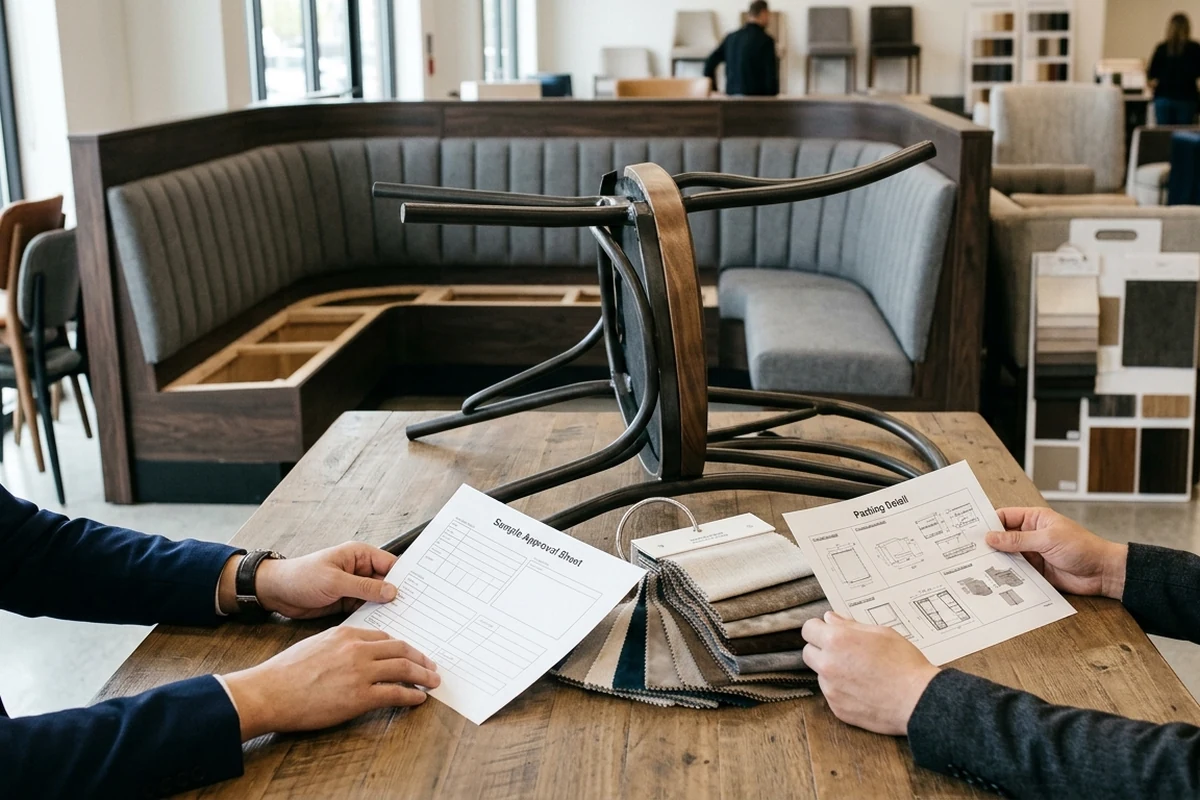
Manufacturer readiness is visible in how the supplier controls the path from sample to bulk production. A sample is not only a sales object. It is a control record that connects one approved material, finish, construction note, and drawing version to one item code.
| Control point | What to ask | Blocking risk |
|---|---|---|
| Sample code | Which item code and revision does the sample represent? | Sample cannot be tied to the RFQ line |
| Material record | What fabric, veneer, laminate, metal, foam, or hardware was used? | Bulk production may drift |
| Deviation note | What differs from the drawing or reference? | Buyer approves one thing and receives another |
| Production handoff | Who receives the approved sample record? | Workshop uses an old version |
| First article check | How will first bulk output be compared with the sample? | Drift is found after shipment |
Use sample control before price negotiation. If the manufacturer cannot keep sample identity clear, a low unit price is not a release-ready offer.
Verify Restaurant-Scope Capability by Item Family
A restaurant package can include chairs, tables, booths, banquettes, bar stools, service counters, outdoor pieces, and host-stand items. A manufacturer may be strong in one family and weak in another. Review capability by restaurant use case instead of accepting one broad factory claim.
| Item family | Manufacturer proof to request | Decision use |
|---|---|---|
| Dining chairs | Frame route, finish record, carton label plan, replacement part route | Confirms repeatable seating production |
| Tables | Top material, edge detail, base compatibility, packing method | Prevents surface and assembly assumptions |
| Booths and banquettes | Drawing response, upholstery sample, fill route, site dimension questions | Tests custom-production control |
| Bar stools | Foot rail, frame finish, seat material, stability review path | Separates commercial use from residential style |
| Outdoor pieces | Exposure assumptions, finish evidence, hardware notes | Avoids indoor capability being treated as outdoor proof |
This section keeps the page focused on manufacturer role and production capability. It does not replace a broader China supplier evaluation page, and it does not promise that every listed product is suitable without project-specific review.
Check Export and Packing Responsibility
For U.S. import contexts, eCFR 19 CFR Part 134 is useful country-of-origin and marking review context. It should not be used as a legal conclusion for a specific furniture item. The supplier can prepare consistent commercial documents and supporting information, while the buyer or broker reviews applicability.
Ask the manufacturer how it will support:
commercial invoice consistency;
packing list item codes, carton counts, dimensions, and weight basis;
carton marks tied to restaurant zones or item codes;
origin or marking support information;
wood packing questions when pallets, crates, or wood are used;
replacement or spare-part shipment route.
The key is responsibility mapping. Late document correction is a poor substitute for knowing who prepares each record before production starts.
RFQ Release Checklist: Release a Limited RFQ or Withhold the Full File
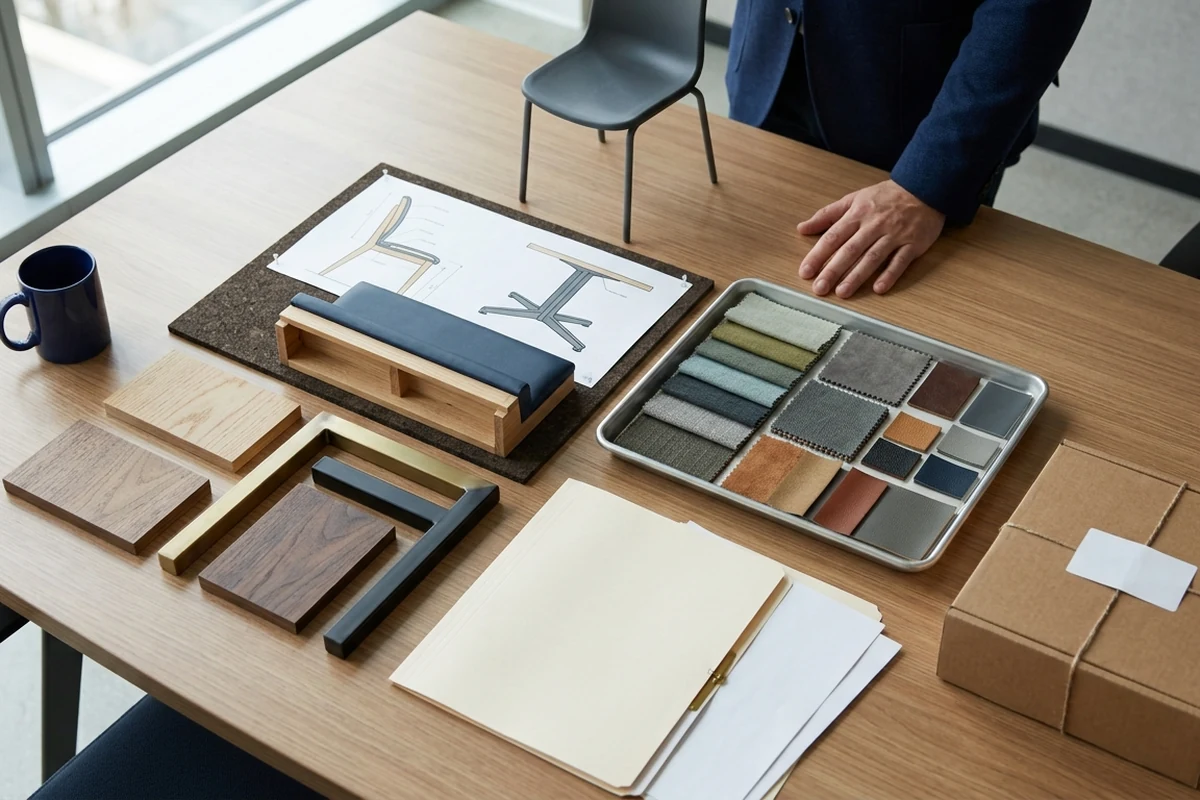
End the review with an RFQ release checklist and file-release decision. The buyer does not need to choose the final supplier at this stage. The buyer needs to decide what the manufacturer is allowed to receive and price.
| Decision | Use when | Next action |
|---|---|---|
| Release full RFQ | Manufacturer role, production file owner, sample control, and document route are clear | Send drawings, quantities, finishes, and sample deadlines |
| Release limited RFQ | Role is clear but one product family needs proof | Share only the controlled category |
| Hold file | Product fit is promising but sample, payee, or document responsibility is unclear | Ask one focused evidence request with a deadline |
| Reject for RFQ | Role, sample control, or production responsibility stays vague | Do not send full drawings or final BOQ |
BIFMA's standards overview supports asking for precise standard and report scope when a supplier makes a furniture-standard claim. It does not prove that every product from a manufacturer is covered.
When ready, send item codes, drawings, material references, sample questions, destination context, and open manufacturer risks through the RON GROUP contact page to request a restaurant furniture manufacturer review.
The goal is not to find the cheapest first answer. It is to decide whether the manufacturer can receive a controlled RFQ file without creating avoidable production, sample, or document risk.
Sources and Further Reading
RON GROUP Restaurant Furniture supports product-scope and commercial receiver context.
RON GROUP Factory Showcase supports production, sample, quality, packing, and project communication context.
International Trade Administration due-diligence guidance supports partner due diligence before commitments.
ITA Consolidated Screening List supports restricted-party screening workflow context.
eCFR 19 CFR Part 134 supports country-of-origin and marking review context.
BIFMA Standards Overview supports requesting precise standard and test-report evidence when relevant.
Get the week's latest industry information
-
Real-Life Professional Restaurant Case Studies
Explore Now
-
Create a unique restaurant with over 95,700+products
Explore Now
-
Protessional Free 3D Restaurant Design
Explore Now
-
Still Have Questions About Opening a Restaurant?
Explore Now

Sylvia
With 8 years in catering & hospitality industry, sales manager of Ron Group, specialise in providing one stop solutions to restaurants, hotels and weddings.
Discover Our Exclusive Products
Explore our extensive range of restaurant and hotel supplies designed to enhance your operations. Find the perfect solutions to meet your needs.
Browse Our ProductsFREE 3D DESIGN
Boost your restaurant's success with our free 3D design service. Start building the restaurant of your dreams today!
Explore 3D Design Case
RECOMMENDED CASES
-

La Rambla by Catalunya: Crafting Barcelona's Soul in Hong Kong - Custom Furniture Excellence
RON Group's custom Spanish-inspired furniture elevates La Rambla with artisanal aesthetics...
Learn More -

Cardinal Point: Elevating Outdoor Seating with Tailored Cushion Upgrades
Discover how Cardinal Point transformed its outdoor dining experience with custom cushions, achievin
Learn More
RECOMMENDED BLOGS
-
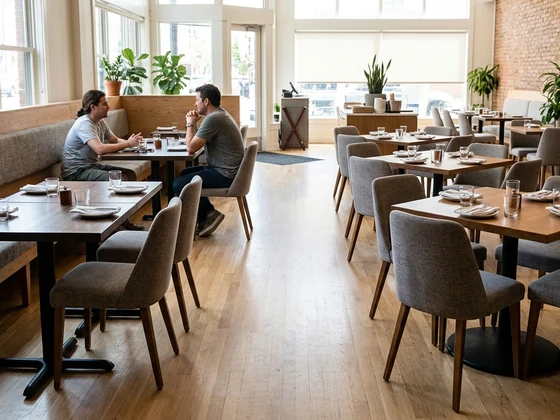
Restaurant Table Spacing and Aisle Clearance: Supplier Drawing Checklist
Check restaurant table spacing, aisle clearance, chair pullout, service path, and supplier drawing proof before approving a...
Sylvia2026-07-20 -

5 Mistakes to Avoid When Buying Restaurant Furniture from China
Don't fall for costly oversights! Learn the 5 mistakes to avoid when buying restaurant furniture from China and ensure a...
 Ron2025-01-079 min read
 -

RON GROUP Launches VR Experience to Explore Our Dynamic Showroom
Discover RON GROUP's VR showroom! Explore dining furniture, tableware, and customized services virtually or visit us in person to...
Sylvia2024-12-163 min read
Subscribe to RON GROUP
Stay up-to-date with the latest industry insights and expert advice. Together, we'll create your ideal restaurant.