
Content

Restaurant furniture manufacturers in China should be screened before the RFQ becomes a price comparison. The useful question is not only whether a supplier can show restaurant chairs, booths, tables, or bar stools. The buyer needs to know who controls the contract, who controls samples, who controls production records, who prepares export-facing documents, and who will answer site problems after delivery.
A strong shortlist is built from evidence layers: identity, scope fit, sample control, production documentation, packing and marking, and claim verification. That gives a restaurant buyer a practical way to separate a factory, a trading company, an exporter, and a project coordinator before full drawings and finish files are shared.
Build the Counterparty File First
Start with the business relationship, not the catalog. A restaurant furniture supplier may respond through a sales office, factory, exporter, or project coordinator. The buyer should record how those parties relate before sending a full BOQ, finish board, or restaurant floor plan.
| Counterparty question | Evidence to request | Procurement use |
|---|---|---|
| Who quotes and signs? | Legal name, address, and contracting entity | Aligns negotiation and contract responsibility |
| Who receives payment? | Payee name and relationship to the contracting party | Flags gaps between sales and finance route |
| Who controls the sample? | Sample owner, sample code, and approval record | Keeps finish and construction decisions traceable |
| Who controls production records? | Factory or coordinator role statement | Shows who can answer manufacturing questions |
| Who prepares export documents? | Document responsibility statement | Helps the buyer involve broker or importer review early |
The U.S. International Trade Administration's due-diligence guidance supports evaluating potential business partners before commitments. The ITA Consolidated Screening List can also be part of restricted-party screening. Those tools do not approve a supplier; they help the buyer decide what must be checked before the commercial relationship advances.
Do this check before the supplier sees the complete specification set. At the first contact stage, a buyer can share category names, approximate quantities, and destination region. After the counterparty file is clear, the buyer can share drawings, finish targets, and project timing. This staged release protects the buyer from handing detailed design information to a party that cannot explain its legal, financial, and production route.
If the supplier says the factory, exporter, and payment company are "all the same group," ask for a simple relationship note instead of accepting the phrase. The note does not need to be legal advice, but it should name the contracting entity, production site or coordinator, export document owner, and payment receiver. A supplier that can explain this cleanly is usually easier to manage when a sample, claim, or shipment document needs correction.
Separate Restaurant Furniture Scope by Risk
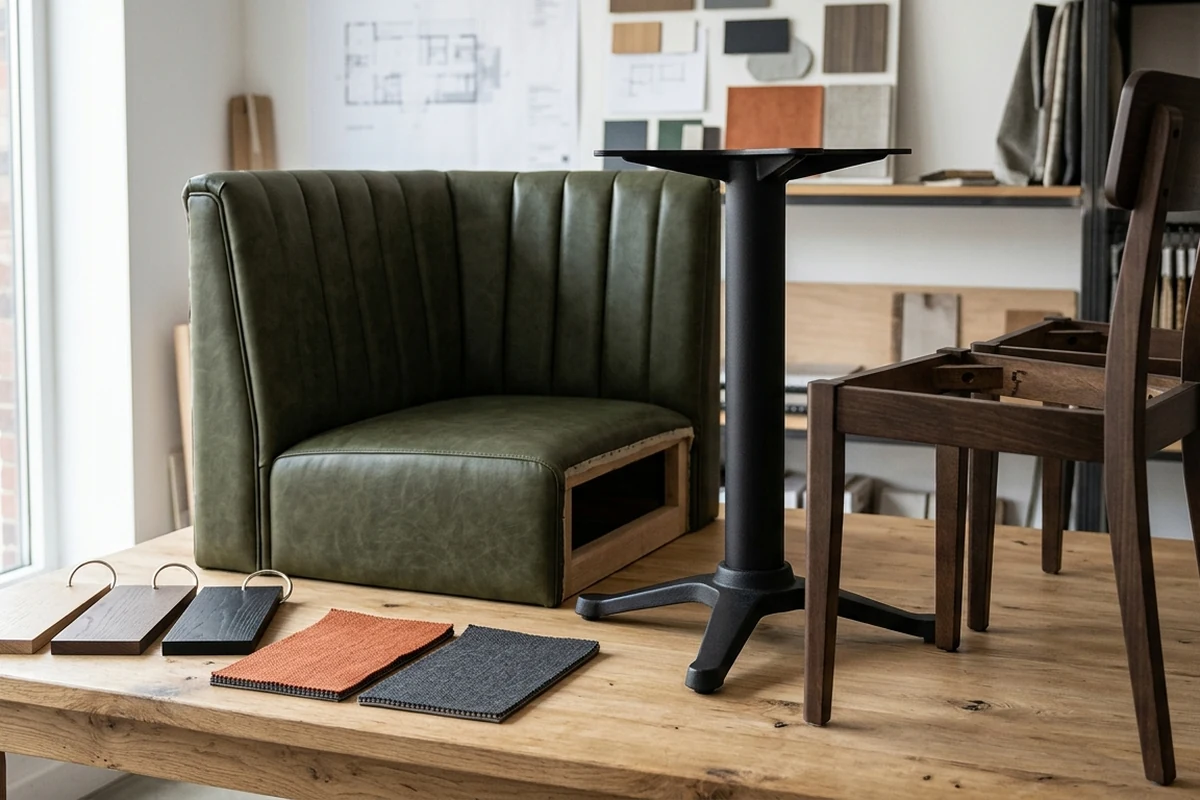
A restaurant furniture package can include dining chairs, tables, booths, banquettes, bar stools, outdoor furniture, host stands, and loose lounge seating. Do not evaluate all of those through one capability claim. Divide the package by the decisions that can fail.
| Package part | Evidence that matters | What not to assume |
|---|---|---|
| Dining chairs | Frame construction route, finish sample, carton label plan, replacement part route | Do not infer commercial fit from showroom photos |
| Restaurant tables | Top material, edge detail, base compatibility, packing plan | Do not accept a surface image without construction assumptions |
| Booths and banquettes | Drawing response, upholstery sample, foam or fill route, site dimension questions | Do not release from mood images alone |
| Bar stools | Foot rail, frame finish, seat material, stability review path | Do not treat a residential stool as commercial proof |
| Outdoor pieces | Exposure assumptions, finish evidence, hardware notes | Do not claim outdoor suitability without product-level evidence |
RON GROUP's restaurant furniture category can help organize the product-scope conversation. RON GROUP's furniture production capabilities can frame sample, production, quality, and packing questions. Those pages support context; the current project still needs item-level evidence.
The risk split also changes the RFQ sequence. Chairs and stools can often move through a sample-first path because ergonomics, finish, and frame feel are hard to judge from a PDF. Tables need a base-and-top compatibility check before price comparison, especially when the buyer mixes pedestal bases, booth seating, and aisle constraints. Booths should not be priced as loose commodities; they need dimensions, upholstery direction, and site boundary assumptions. Outdoor furniture needs a separate exposure discussion because indoor restaurant experience does not prove suitability for weather, humidity, coastal air, or cleaning chemicals.
For a multi-location restaurant rollout, add one more column to the scope file: repeatability. A prototype restaurant may accept a supplier that can solve a custom item with close supervision. A rollout needs repeatable item codes, controlled finish references, and a replacement route that can survive later reorders. That difference should be visible before RFQ award, not discovered after the first store opens.
Use a Sample File Before Price Negotiation
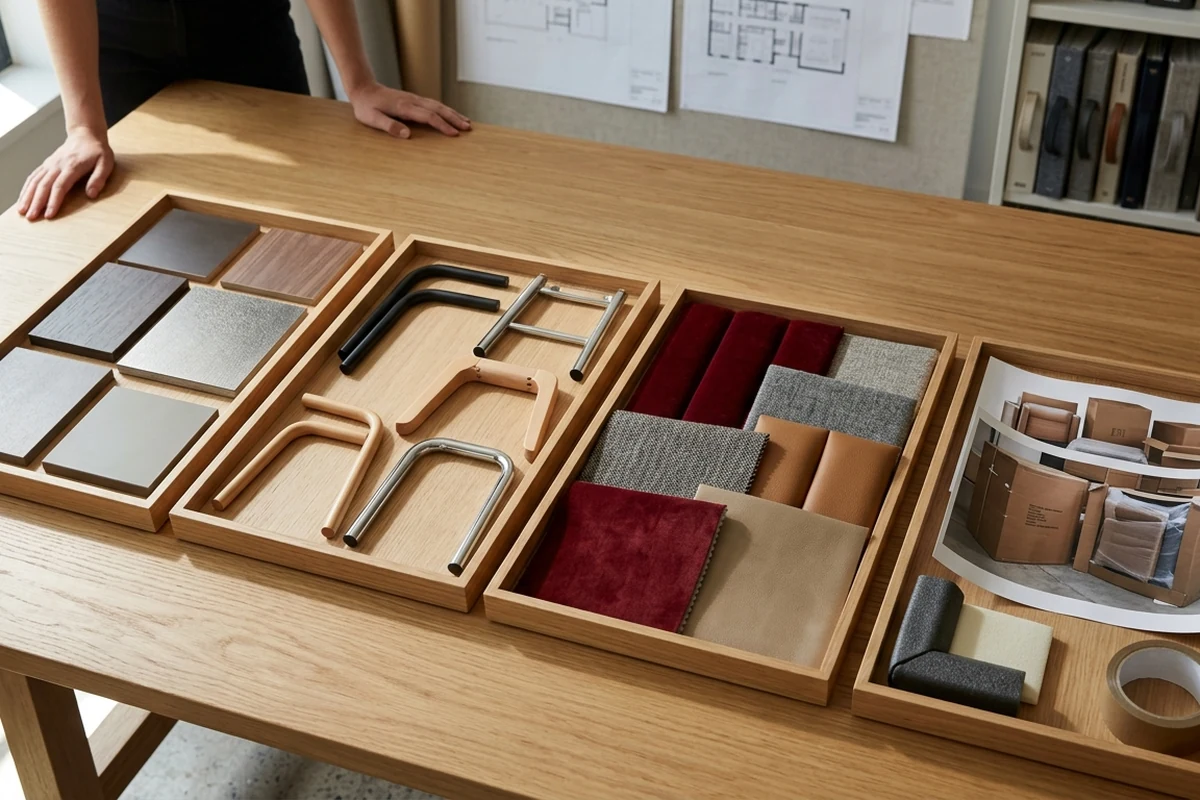
A sample file is more useful than a generic supplier profile. It ties each accepted material, finish, and construction assumption to an item code. Ask for a sample file before the supplier receives final award pressure.
The file should include:
item code and restaurant zone;
drawing or reference image version;
finish, fabric, veneer, metal, or laminate reference;
sample date and reviewer;
accepted deviations;
open questions;
packing or carton label notes;
replacement or spare-part route.
If a supplier cannot maintain this file, the risk is not only quality. The larger risk is decision drift. The buyer may approve one finish, the quotation may describe another, and the factory may produce a third.
Use the sample file as a decision record, not as decoration. Each revision should show what changed, who accepted it, and whether price, lead time, packing, or replacement parts are affected. If a restaurant designer approves a chair fabric while the operator rejects the cleaning performance, the supplier should not be left to choose which instruction wins. The file needs one final release owner.
For upholstered seating, add photographs of the accepted sample under normal lighting and keep the physical sample until the first delivery is checked. For wood, metal, stone-look, laminate, or veneer finishes, record the tolerance discussion in plain language. "Match sample exactly" is often weaker than a note that states which variation is acceptable and which variation triggers a hold.
Check Import-Facing Readiness Early
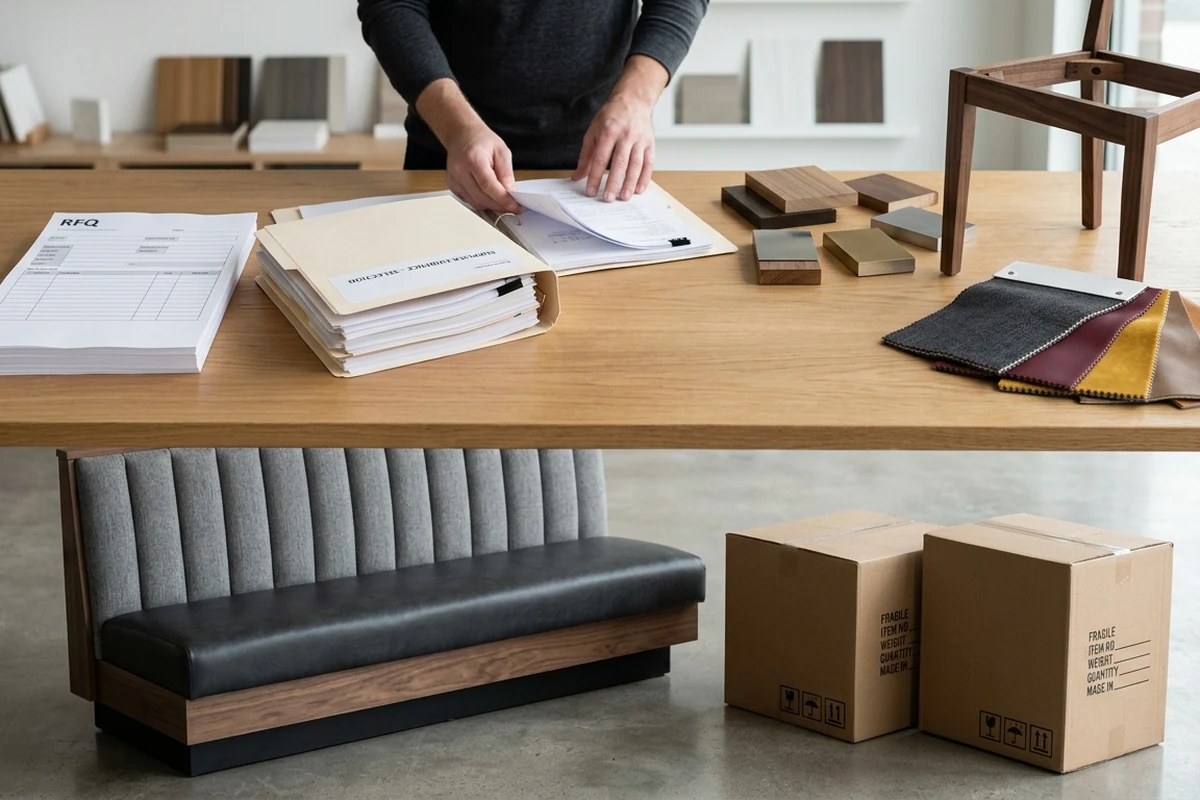
For U.S. import contexts, country-of-origin and marking questions belong in early review. eCFR 19 CFR Part 134 and CBP rules-of-origin resources are useful review cues. They should not be used as legal conclusions for a specific restaurant furniture item.
Ask the supplier to explain how it will support:
| Import-facing item | Supplier should prepare | Buyer or broker should review |
|---|---|---|
| Commercial invoice | Consistent entity, item names, quantities, and values | Importer/broker document requirements |
| Packing list | Carton count, item code, dimensions, and weight basis | Receiving and import documentation |
| Carton marks | Item code, room or zone reference, and shipment identification | Site receiving sequence |
| Origin and marking information | Declared origin and marking support information | Legal applicability and classification questions |
| Wood packing question | Whether pallets, crates, or wood packing are used | Any required treatment or document review |
Late document correction is a poor substitute for early responsibility mapping. It happens when the opening schedule is closer and the buyer has less room to change suppliers.
This is also where carton marks become more than a warehouse detail. A restaurant opening team may need to separate front-of-house chairs, patio furniture, booth parts, spare glides, table bases, and replacement hardware quickly. Ask the supplier to link carton marks to item codes and restaurant zones. If the receiving team cannot identify what a carton belongs to, the buyer may lose days even when the goods themselves are correct.
For U.S. buyers, classification, origin, and marking decisions should be reviewed by the importer or broker. The furniture supplier can prepare consistent commercial documents and supporting information, but the buyer should avoid treating supplier statements as the final legal conclusion.
Verify Claims With a Supplier Evidence Ladder
Restaurant furniture suppliers often present capability claims through logos, project photos, or broad statements. Treat those as starting points. If a supplier references a commercial furniture standard, BIFMA context, or a quality process, ask which product, which test report, which certificate scope, which facility, and which date.
| Evidence level | Meaning | Buying action |
|---|---|---|
| Claim only | Sales statement, logo, or verbal assurance | Keep in discovery only |
| Sample document | Blank template or generic example | Useful for process discussion |
| Comparable record | Redacted sample approval, inspection note, packing example, or project record | Good shortlist evidence |
| Buyer-verifiable record | Certificate, test report, listing, or document set that can be checked | Stronger evidence before RFQ release |
The goal is not to collect paperwork. It is to decide which supplier can take responsibility for the restaurant furniture package without hiding assumptions in the quote.
Ask the same evidence question in three ways. First, request a recent comparable document with sensitive buyer information removed. Second, ask who created the document and who can correct it. Third, ask what happens if the buyer changes a finish, dimension, or delivery sequence. Good suppliers can explain the process without overpromising. Weak suppliers often answer with another brochure.
Evidence should also match the item. A table-base packing photo does not prove booth manufacturing capability. A chair certificate does not cover every chair, bar stool, or custom banquette. A project photo does not prove the current factory, finish, or construction route. Keep the evidence tied to the specific restaurant furniture category under review.
Keep, Pause, or Reject the Supplier
Keep a supplier when the counterparty is clear, the furniture scope is mapped, samples can be controlled, import-facing documents are addressable, and claims can move beyond sales language. Pause a supplier when one of those areas remains unclear but the product fit is promising. Reject a supplier when the contract route, sample owner, production responsibility, or document path remains vague after focused questions.
Use a short decision note at the end of evaluation:
| Decision | When to use it | Next action |
|---|---|---|
| Keep | Scope, identity, sample control, and document route are understandable | Send controlled RFQ and define sample deadlines |
| Pause | Product fit is interesting but one evidence gap remains | Ask one focused evidence request with a deadline |
| Split scope | Supplier is strong in one category but weak in another | Award only the controlled category or keep as backup |
| Reject | Responsibility, sample ownership, or document route stays vague | Do not send complete drawings or final BOQ |
A shortlist is stronger when it records why a supplier was kept or removed. That note helps the buyer explain later why the cheapest quote was not the best commercial option.
Relevant hospitality project examples can support context discussion, but current drawings, sample files, and supplier records should drive the decision. When ready, request a supplier review with item codes, quantities, target finishes, sample questions, destination context, and open supplier risks.
Sources and Further Reading
RON GROUP Restaurant Furniture supports restaurant furniture product-scope context.
RON GROUP Factory Showcase supports production, sample, quality, packing, and project communication context.
International Trade Administration due-diligence guidance supports business partner due diligence.
ITA Consolidated Screening List supports restricted-party screening workflow context.
eCFR 19 CFR Part 134 supports origin and marking review context.
BIFMA Standards Overview supports requesting precise standard and test-report evidence when relevant.
Get the week's latest industry information
-
Real-Life Professional Restaurant Case Studies
Explore Now
-
Create a unique restaurant with over 95,700+products
Explore Now
-
Protessional Free 3D Restaurant Design
Explore Now
-
Still Have Questions About Opening a Restaurant?
Explore Now

Sylvia
With 8 years in catering & hospitality industry, sales manager of Ron Group, specialise in providing one stop solutions to restaurants, hotels and weddings.
Discover Our Exclusive Products
Explore our extensive range of restaurant and hotel supplies designed to enhance your operations. Find the perfect solutions to meet your needs.
Browse Our ProductsFREE 3D DESIGN
Boost your restaurant's success with our free 3D design service. Start building the restaurant of your dreams today!
Explore 3D Design Case
RECOMMENDED CASES
-

La Rambla by Catalunya: Crafting Barcelona's Soul in Hong Kong - Custom Furniture Excellence
RON Group's custom Spanish-inspired furniture elevates La Rambla with artisanal aesthetics...
Learn More -

Cardinal Point: Elevating Outdoor Seating with Tailored Cushion Upgrades
Discover how Cardinal Point transformed its outdoor dining experience with custom cushions, achievin
Learn More
RECOMMENDED BLOGS
-
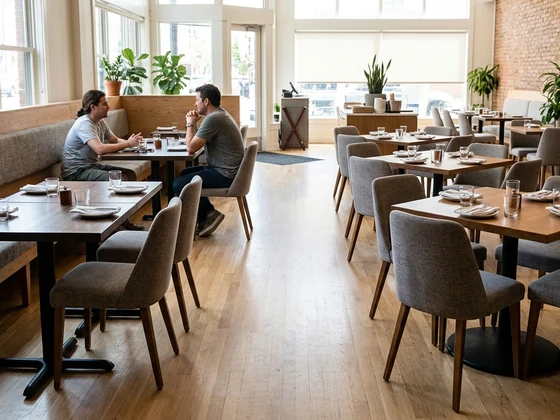
Restaurant Table Spacing and Aisle Clearance: Supplier Drawing Checklist
Check restaurant table spacing, aisle clearance, chair pullout, service path, and supplier drawing proof before approving a...
Sylvia2026-07-20 -

5 Mistakes to Avoid When Buying Restaurant Furniture from China
Don't fall for costly oversights! Learn the 5 mistakes to avoid when buying restaurant furniture from China and ensure a...
 Ron2025-01-079 min read
 -

RON GROUP Launches VR Experience to Explore Our Dynamic Showroom
Discover RON GROUP's VR showroom! Explore dining furniture, tableware, and customized services virtually or visit us in person to...
Sylvia2024-12-163 min read
Subscribe to RON GROUP
Stay up-to-date with the latest industry insights and expert advice. Together, we'll create your ideal restaurant.