






Content
A poorly designed floor plan is one of the most expensive mistakes a restaurant owner can make - and unlike a bad menu item, you can't fix it with a recipe tweak. From wasted square footage and bottlenecked service lanes to fire code violations that shut you down before opening night, layout errors bleed money in ways that don't show up until it's too late. Industry data suggests that restaurants allocating space incorrectly can lose 10-20% of potential revenue per service simply through inefficient seating arrangements and sluggish table turns. This guide breaks down the most common restaurant floor plan mistakes, the real dollar impact of each, and the data-backed strategies to avoid them.
TECHNICAL NOTE // KEY ENGINEERING STANDARD
Commercial Sourcing & Engineering Standard: High-turnover hospitality environments require rigorous commercial-grade compliance (ASTM, NFPA 96, NSF/ANSI, and BIFMA engineering standards). Standard residential-grade items experience rapid fatigue failure, escalating long-term Total Cost of Ownership (TCO).
EXECUTIVE MANDATE // PROCUREMENT COMPLIANCE AUDIT
Procurement Compliance Audit: Verify all factory test certificates, utility load calculations (kW, voltage, phase, and ventilation CFM requirements), and manufacturer warranties prior to final procurement dispatch.
Why Your Restaurant Floor Plan Is a Revenue Engine
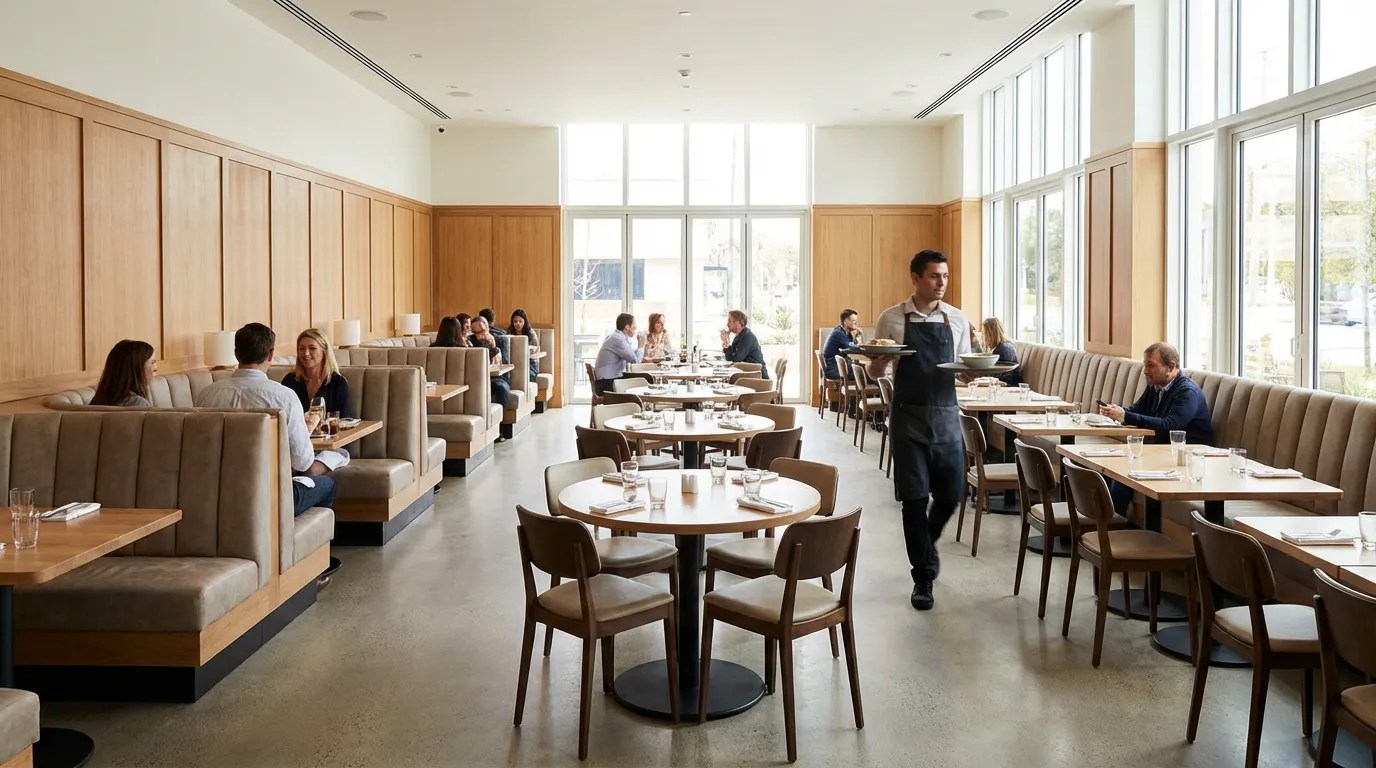
Most operators think of the floor plan as a one-time design task. In reality, it's an operational system that directly controls three financial levers: seating capacity , service speed , and guest experience . Get the layout wrong and you're fighting an uphill battle on all three fronts every single shift.
Consider the math. A casual dining restaurant with 4,000 square feet of total space should seat approximately 100-130 guests at 12-15 square feet per person (dining area only). If your layout wastes just 400 square feet - the equivalent of a single awkward corner plus an oversized host stand - you lose 25-30 seats. At an average check of $28 and two turns per night, that's $1,400-$1,680 in lost revenue every evening , or roughly $500,000 per year.
That's the difference between a profitable restaurant and one that closes within 18 months.
Mistake #1: Over-Seating the Dining Room
The instinct is understandable: more seats equals more covers equals more revenue. But over-seating is a trap. When you pack tables too tightly, three things happen simultaneously:
- Service slows down. Servers navigating a cramped floor take longer per table visit, reducing turns per shift.
- Guest satisfaction drops. Research shows diners become noticeably uncomfortable when freestanding tables are set closer than 24 inches apart. The ideal spacing is closer to 36 inches (one yard).
- Staff injuries increase. Tight layouts lead to more collisions, spills, and burns - driving up workers' compensation costs.
The Right Square Footage Per Guest
Industry benchmarks vary by concept:
| Restaurant Type | Sq. Ft. Per Guest | Typical Dining Area % |
|---|---|---|
| Quick-Service / Fast Casual | 10-12 sq. ft. | 65-70% |
| Casual Dining | 12-15 sq. ft. | 60-65% |
| Fine Dining | 18-20 sq. ft. | 55-60% |
| Banquet / Event Space | 10-12 sq. ft. | 70-75% |
If your current layout allocates less than these minimums, you're over-seated - regardless of what your landlord's "maximum occupancy" sign says. Choosing the right restaurant furniture with appropriate dimensions is the first step toward maintaining proper spacing.
Mistake #2: Ignoring the FOH-to-BOH Ratio
One of the most damaging floor plan errors is compressing the kitchen to maximize dining room square footage. The traditional guideline recommends a 60/40 split between front-of-house (FOH) and back-of-house (BOH), though the ideal ratio depends on your concept and menu complexity.
A more practical rule: allocate 5 square feet of kitchen space for every seat in the dining room. So a 120-seat restaurant needs at least 600 square feet of kitchen - and that's a bare minimum for a streamlined menu. Full-service concepts with extensive menus, in-house baking, or prep-heavy dishes need more.
When the kitchen is too small:
- Ticket times increase by 15-25% due to station crowding
- Food quality suffers because cooks can't maintain proper mise en place
- Health code violations multiply (inadequate separation of raw and cooked food, insufficient handwashing stations)
- Staff turnover rises - nobody wants to work in a cramped, overheated kitchen
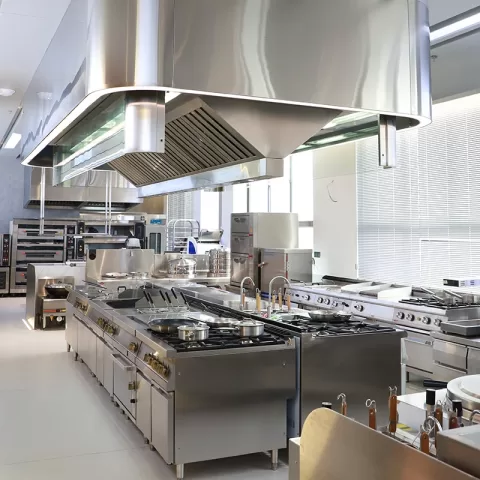
Before you finalize your kitchen footprint, consult a commercial kitchen equipment specialist who can help you select right-sized equipment that maximizes output within your available space.
Mistake #3: Poor Traffic Flow and Narrow Service Lanes
If your servers have to plot routes around tables, dodge bussers, and squeeze past the host stand on every trip, you have a traffic flow problem. According to restaurant design professionals, service routes narrower than 36 inches (3 feet) create constant friction and operational chaos.
Critical Clearance Minimums
- Main service aisles: 4-5 feet (two-way traffic for servers carrying trays)
- Between occupied chairs: 18-24 inches minimum, 36 inches preferred
- ADA-accessible pathways: 36 inches minimum, with 60-inch turning radius at key points
- Emergency egress routes: Must comply with local fire code - typically 44 inches minimum for occupancy over 50 people
- Kitchen pass-through area: 48 inches minimum for safe food transport
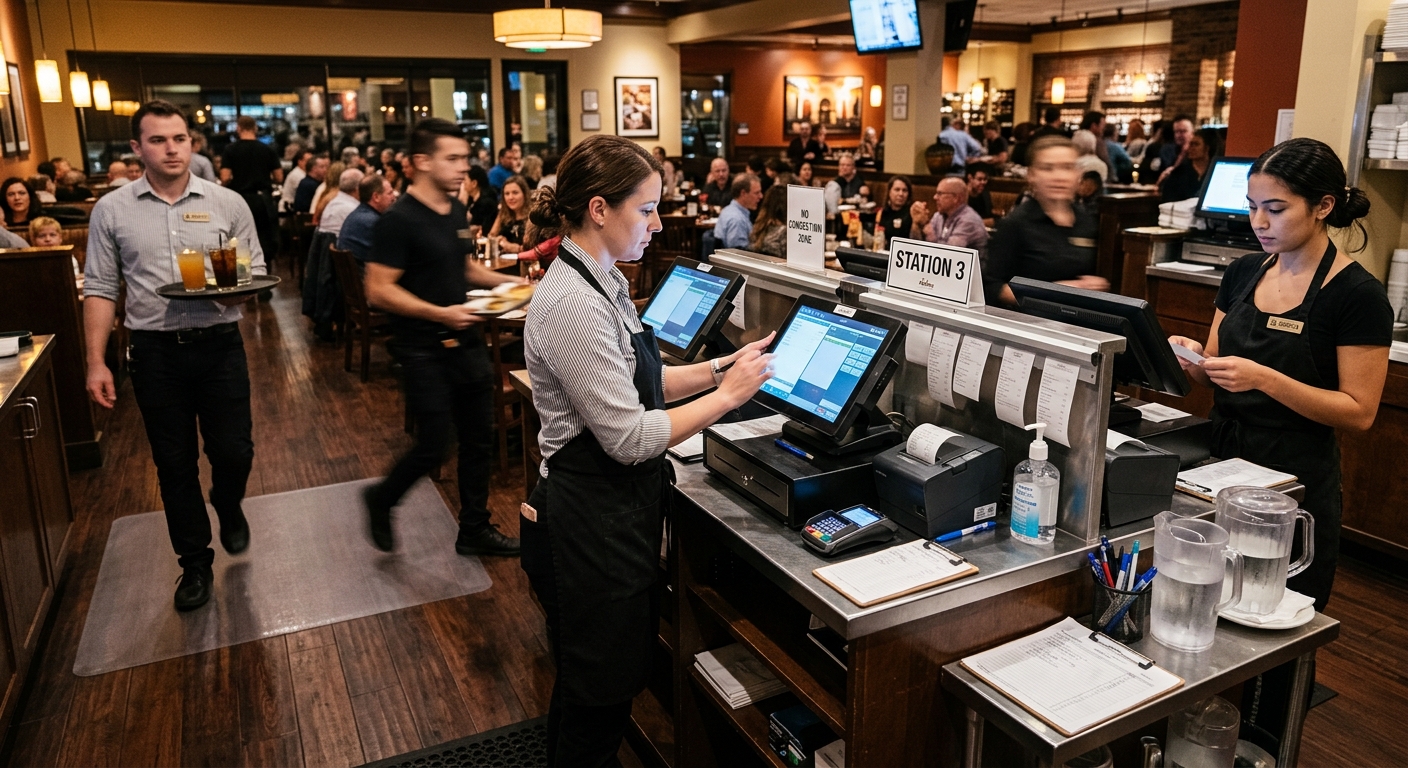
A common mistake is placing the POS station, drink pickup, or service station near the entrance or restroom hallway. These high-traffic zones create collisions between guests and staff. The service station should sit centrally within the server's section , away from guest walkways.
Mistake #4: Mismatching Table Sizes to Party Demand
This is the silent revenue killer. If your reservation data shows that 60% of your parties are two-tops, but your floor plan is dominated by four-top tables, you're running at roughly 50% seat utilization on every deuce - because you're blocking two chairs that could serve another party.
Recommended Table Mix by Concept
For a typical casual dining restaurant:
- 50-60% two-tops (most versatile - two deuces can be combined for a four-top)
- 25-30% four-tops
- 10-15% six-tops or larger (or flexible banquette seating for groups)
- 1-2 large-format tables or a private dining area for parties of 8+
The key is flexibility. Square tables that can be pushed together outperform round tables in space efficiency. Banquettes along walls add 20-25% more seating capacity compared to freestanding tables in the same footprint. Investing in modular, high-quality restaurant furniture pays for itself through better seat utilization alone.
Mistake #5: Failing Fire Code and ADA Compliance
This mistake doesn't just cost money - it can cost your entire business. Fire marshals calculate maximum occupancy based on 15 net square feet per occupant in dining areas with unconcentrated tables and chairs, and 200 gross square feet per occupant in commercial kitchens, according to the NFPA Life Safety Code .
Violations that trigger immediate shutdown orders include:
- Blocked emergency exits or exit signage obscured by decor
- Aisle widths below minimum egress requirements
- Exceeding posted occupancy limits (even by a handful of people)
- Non-compliant ADA pathways (missing accessible routes, inaccessible restrooms)
Beyond the shutdown risk, a single ADA lawsuit can cost $50,000-$150,000 in legal fees and settlement - before you factor in the renovation costs to fix the violation. Build compliance into your floor plan from day one, not as an afterthought.
Mistake #6: No Flexibility for Reconfiguration
A floor plan that works for Tuesday dinner service might fail completely for Saturday brunch, a private buyout, or a holiday rush. Operators who lock themselves into fixed seating configurations - built-in booths wall to wall, permanently bolted tables, immovable host stations - sacrifice the ability to adapt to shifting demand patterns.
Smart operators build in flexibility:
- Movable furniture: Tables on glides or casters that can be rearranged in under 15 minutes
- Convertible zones: A semi-private alcove that works as a two-top during slow periods and a group table during peak hours
- Modular banquettes: Sections that can be separated or combined for different party sizes
- Outdoor-indoor transition: Patio areas with easy access that expand capacity in warm weather
This is especially critical for operators running multiple dayparts or pivoting between service styles . A floor plan that can't flex is a floor plan that's losing money during non-peak hours.
Mistake #7: Neglecting the Guest Journey From Entry to Exit
Your floor plan tells a story from the moment a guest walks through the door. A disorienting entrance, a cramped waiting area, a confusing path to the restroom - these are all layout failures that damage the dining experience before the food ever arrives.
The Ideal Guest Flow
- Entrance/Host Area: 80-120 square feet. Guests should immediately see a host stand or clear signage. Avoid placing this directly adjacent to occupied tables - nobody wants to eat next to a queue of waiting guests.
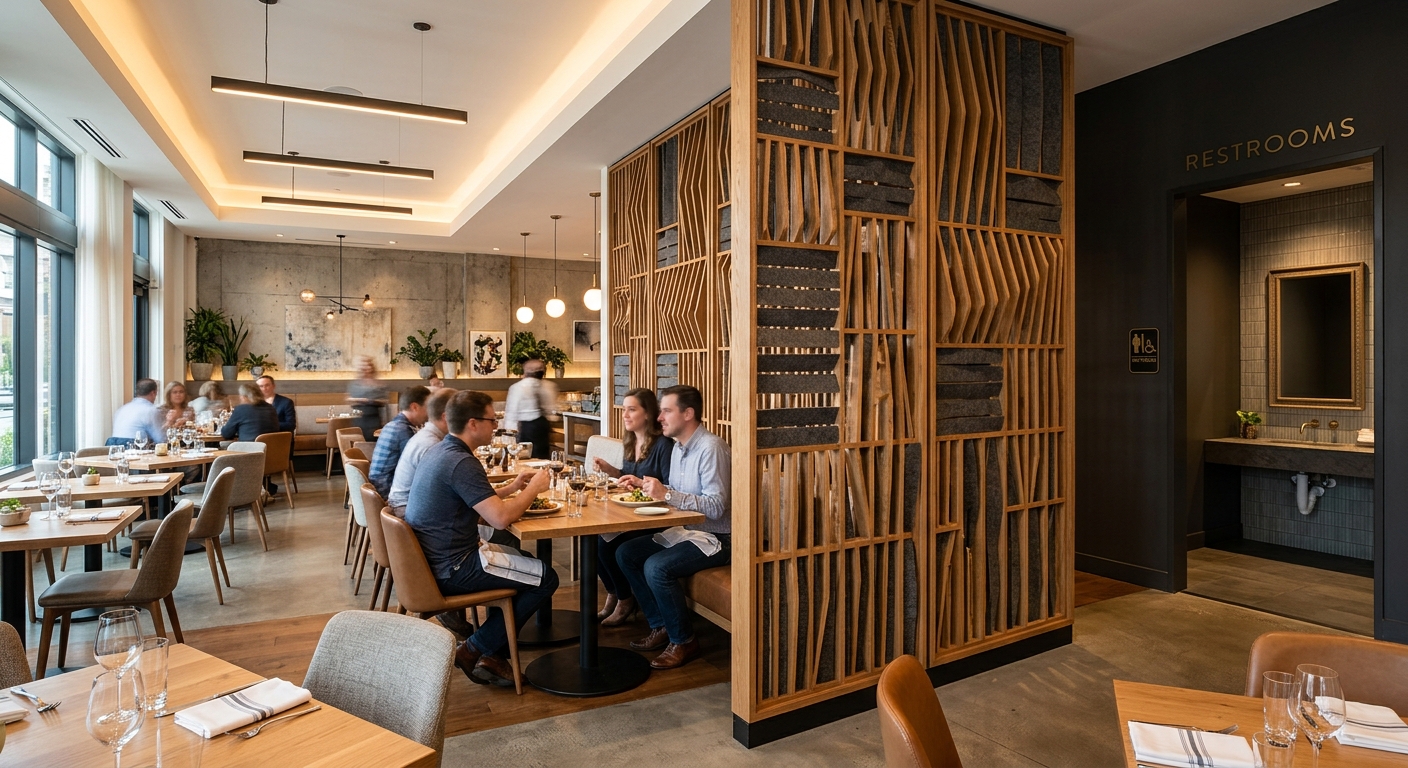
- Transition Zone: A visual buffer between the entrance and dining room (a half-wall, planter, or change in flooring) that creates a sense of arrival.
- Seating Zone: Tables arranged so no guest has their chair directly in a service lane. Corner and window seats should be prioritized - these are perceived as premium positions.
- Restroom Access: Clear sightlines from the dining area, but not directly visible from tables. A short hallway or alcove shields diners from restroom traffic.
- Bar/Waiting Area: Positioned to capture pre-meal and post-meal drink revenue without blocking the host stand or service lanes.
Operators who map the guest journey before placing a single table consistently outperform those who start with "how many seats can we fit."
Mistake #8: Hiding the Kitchen When It Should Be Visible (and Vice Versa)
Open kitchens have become a powerful design and marketing tool - but they only work when the kitchen is designed for visibility. Exposing a cluttered, disorganized prep area destroys the effect. Conversely, hiding a beautifully operated kitchen behind a solid wall wastes a competitive advantage.
The rule is simple: if your kitchen is a showpiece (wood-fired oven, sushi counter, live grill), design the floor plan to give diners a view. If your kitchen is purely functional, shield prep zones and waste areas from guest sightlines with partitions, half-walls, or clever zoning.
This is a design decision that should be made during the 3D design and layout planning phase - not discovered after construction is complete.
A Floor Plan Audit Checklist
Before you finalize your restaurant layout, run through this checklist:
| Checkpoint | Target | Red Flag |
|---|---|---|
| Sq. ft. per guest (dining area) | 12-20 sq. ft. (by concept) | Below 10 sq. ft. in any concept |
| FOH:BOH ratio | 60:40 (adjust by menu) | Kitchen below 5 sq. ft. per seat |
| Main service aisle width | 4-5 feet | Under 36 inches anywhere |
| Table spacing (chair-to-chair) | 24-36 inches | Under 18 inches |
| ADA pathway width | 36 inches + 60-inch turns | Any pathway under 36 inches |
| Two-top percentage | 50-60% of total tables | Below 40% (for most concepts) |
| Emergency egress compliance | Per local fire code | Any blocked or undersized exit |
| Waiting area capacity | 10-15% of total seating | No dedicated waiting space |
How to Get Your Floor Plan Right the First Time
The cost of fixing a bad floor plan after construction ranges from $15,000 for minor furniture rearrangement to $200,000+ for structural changes like moving plumbing, electrical, or load-bearing walls. The most cost-effective approach is to get it right during the design phase.
That means working with professionals who understand both the operational realities of restaurant service and the technical requirements of commercial spaces. A proper design process includes:
- Site survey and measurement - Accurate dimensions, utility locations, and structural constraints
- Concept alignment - Matching the floor plan to your menu, service style, and target check average
- Traffic simulation - Mapping server routes, guest flow, and kitchen workflows on paper before committing to construction
- 3D visualization - Seeing the space in three dimensions before a single wall is built
- Equipment specification - Ensuring kitchen equipment, furniture, and fixtures are sized correctly for the space
For further reading on industry layout standards and compliance requirements, the ADA.gov accessibility guidelines and the Toast restaurant square footage benchmarks provide reliable reference data.
Get a Free 3D Restaurant Floor Plan from RON GROUP
RON GROUP's in-house design team creates complimentary 3D restaurant layouts for operators and investors worldwide. With 20+ years of experience equipping restaurants for brands like Burger King, Sofitel, and W Hotel, our designers combine operational expertise with access to 95,700+ products - from commercial furniture and kitchen equipment to lighting and tableware.
Our free 3D design service includes space planning, equipment layout, furniture selection, and a photorealistic rendering of your finished restaurant - before you spend a dollar on construction.
Contact us today to start your floor plan consultation.
Get the week's latest industry information
-
Real-Life Professional Restaurant Case Studies
Explore Now
-
Create a unique restaurant with over 95,700+products
Explore Now
-
Protessional Free 3D Restaurant Design
Explore Now
-
Still Have Questions About Opening a Restaurant?
Explore Now

Sylvia
With 8 years in catering & hospitality industry, sales manager of Ron Group, specialise in providing one stop solutions to restaurants, hotels and weddings.
Discover Our Exclusive Products
Explore our extensive range of restaurant and hotel supplies designed to enhance your operations. Find the perfect solutions to meet your needs.
Browse Our ProductsFREE 3D DESIGN
Boost your restaurant's success with our free 3D design service. Start building the restaurant of your dreams today!
Explore 3D Design Case
RECOMMENDED CASES
-
La Rambla by Catalunya: Crafting Barcelona's Soul in Hong Kong - Custom Furniture Excellence
RON Group's custom Spanish-inspired furniture elevates La Rambla with artisanal aesthetics...
Learn More -

Cardinal Point: Elevating Outdoor Seating with Tailored Cushion Upgrades
Discover how Cardinal Point transformed its outdoor dining experience with custom cushions, achievin
Learn More
RECOMMENDED BLOGS
-
Bar Glassware 101: Types, Names, Uses, and How to Stock Your Bar
Learn the 10 core bar glassware types, names, and uses. Discover how to stock your bar with the right glasses for cocktails, beer,...
Sylvia2026-07-26 -
Complete Bar Equipment List for Opening a Bar
Plan a complete commercial bar equipment list by menu, service volume, refrigeration, ice, glassware, utilities, sanitation,...
Sylvia2026-06-11 -
Low Budget Restaurant Interior Design: 2026 Trends
Prioritize a low-budget restaurant interior by protecting code, operations, durability, accessibility, and phased design decisions...
Sylvia2026-04-04
Subscribe to RON GROUP
Stay up-to-date with the latest industry insights and expert advice. Together, we'll create your ideal restaurant.