
Content
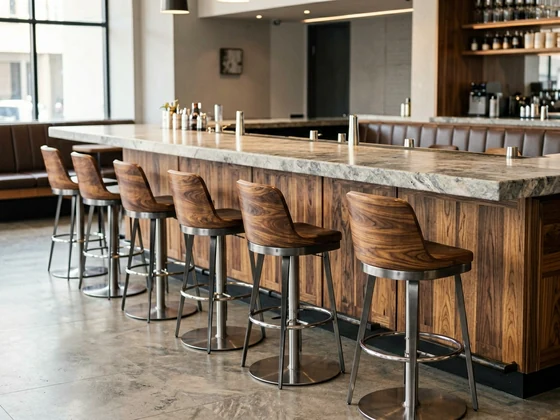
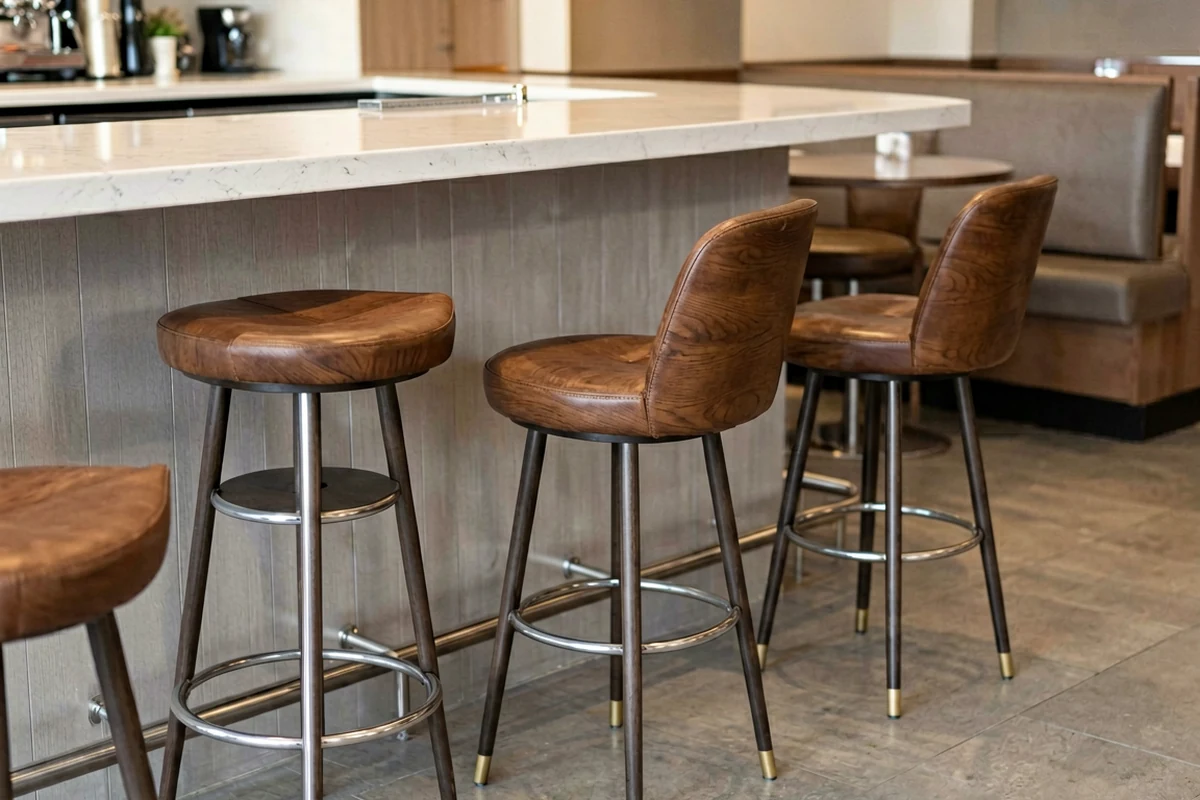
Restaurant bar stool selection should start with the counter, not the catalogue. A stool that looks right in a product photo can still fail when the finished counter height, overhang, footrest position, floor finish, aisle pressure, cleaning method, and packing plan are not reviewed together. For restaurant procurement, the real decision is not simply fixed versus swivel or wood versus metal. The decision is whether the stool-counter pair can work in service without creating comfort, stability, maintenance, or site receiving problems.
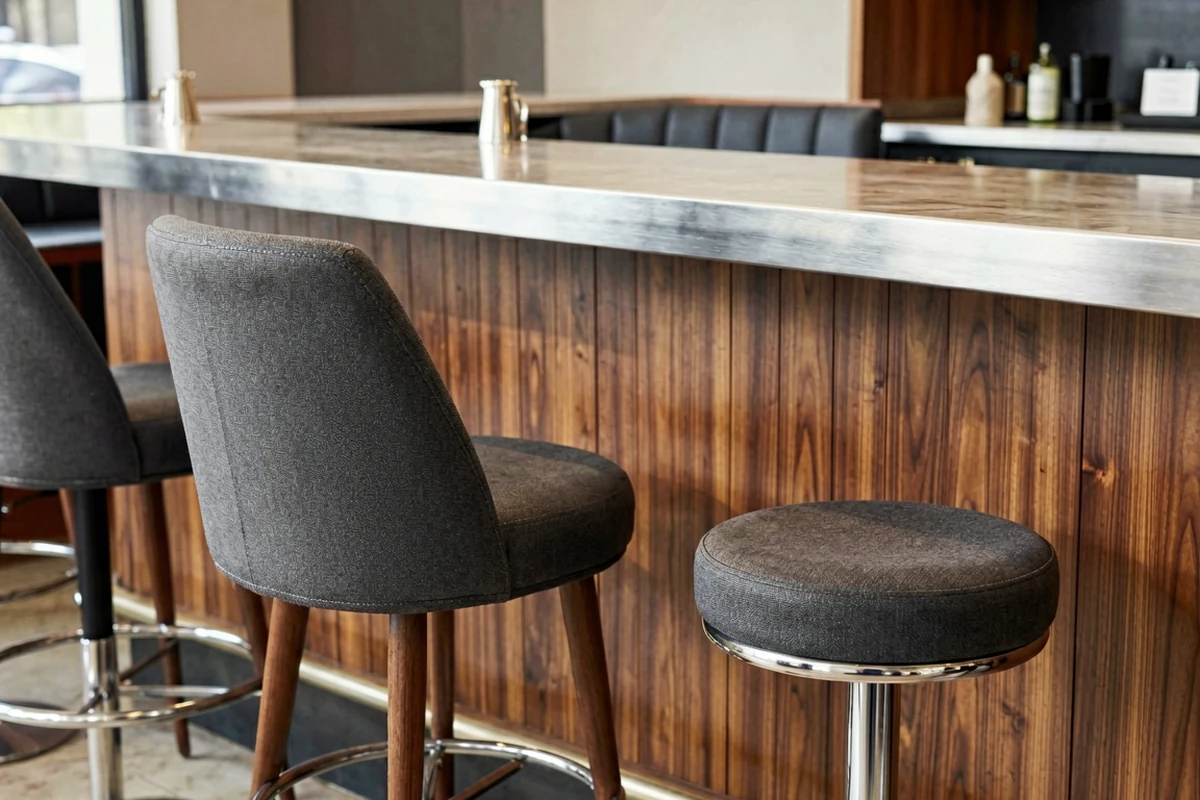
Direct answer: The safest way to buy restaurant bar stools is to approve a stool-counter pair, not an isolated stool sample. Confirm the finished counter condition, overhang, floor finish, guest use pattern, foot support, frame footprint, swivel or fixed mechanism, upholstery or seat surface, cleaning exposure, packing label, and approval owner before production release. Then request a physical sample or mock-up review that uses the same dimensions, finish codes, mechanism, glides, and packing assumptions that will be used for the order. A supplier is ready for production only when its quote, drawings, sample, mechanism evidence, finish record, QC checklist, and carton labels all describe the same stool.
Start With the Counter Condition
The first procurement document should be a counter condition sheet. It does not need to be complicated, but it must be more precise than a style note. Record the finished counter height as built or as specified by the project team, the underside condition, the overhang, the face of the bar, floor material, aisle pressure, whether guests will dine or only drink, and whether staff need to pass behind seated guests with trays or cleaning tools.
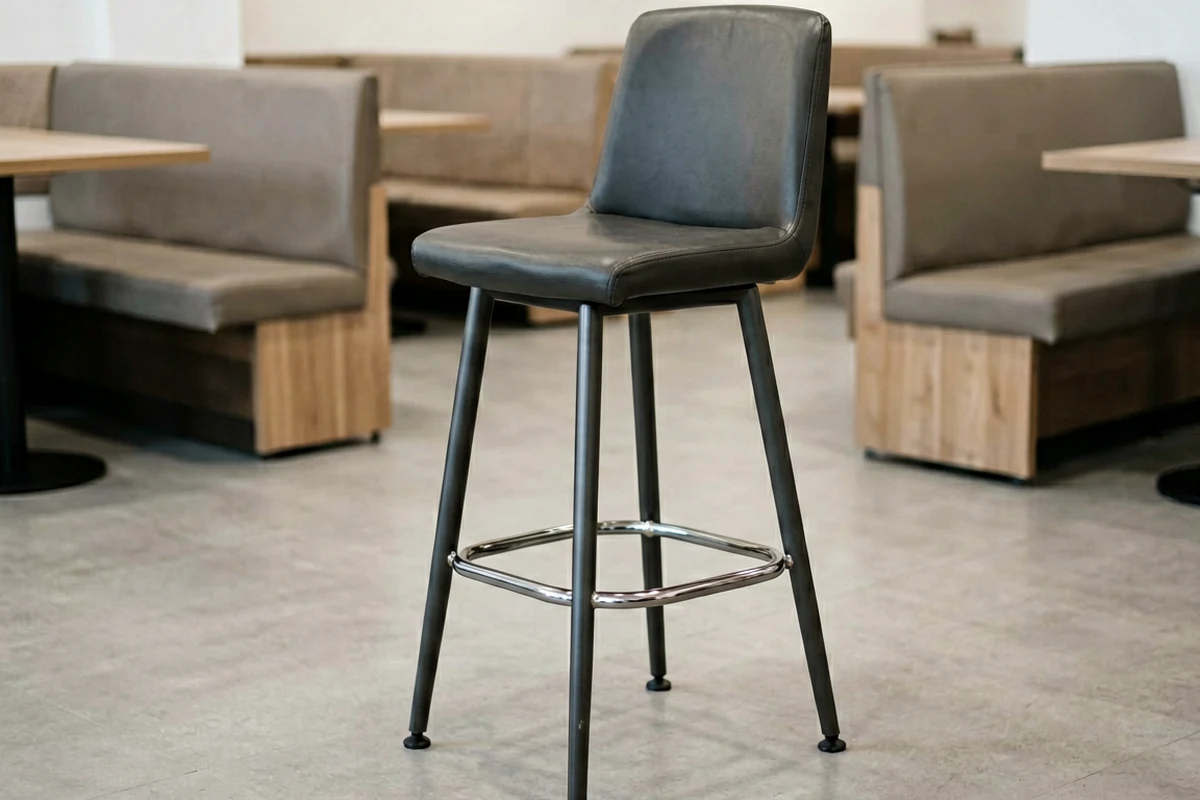
Do not use a universal stool height rule as the purchasing basis. The finished counter may differ from an early drawing after stone, wood, metal trim, substrate, or floor build-up is added. The stool also changes in use: upholstery compresses, guests shift position, a swivel mechanism adds movement, and a backrest can push the guest farther into the aisle. Treat the counter and stool as one working interface.
Use commercial restaurant tables as a schedule reference when the bar area connects to the wider dining room. The same project discipline applies: finish codes, sample ownership, packing labels, and approved deviations should match across tables, chairs, and stools.
Decision Tool 1: Counter-to-Stool Approval Matrix
Use this matrix before requesting final pricing.
| Approval field | Buyer confirms | Supplier must return | Release risk if missing |
|---|---|---|---|
| Finished counter condition | Final counter height, underside, overhang, bar face, floor finish | Stool seat height, frame footprint, footrest position, glide detail, underside clearance notes | Stool may sit too high, too low, too far back, or too close to the counter face |
| Use pattern | Quick drink service, meal-length seating, waiting area, or mixed use | Back option, swivel/fixed format, upholstery exposure, seat comfort note | Guest comfort and aisle use may be judged only after delivery |
| Movement format | Loose, fixed, swivel, return-to-center, or floor-mounted concept | Mechanism description, base detail, fixing method if applicable, maintenance access | Moving parts, base stability, or floor interface may become site problems |
| Cleaning exposure | Daily floor cleaning, spills, foot rail contact, food-service residue | Finish sample, cleaning note, seam detail, footrest material, glide material | Finish wear, trapped residue, odor, or premature corrosion may appear in service |
| Approval evidence | Sample owner, drawing owner, deviation owner, release authority | Labeled sample, finish code, signed deviation log, QC checklist, carton label example | Buyer and supplier may not share the same production reference |
This tool keeps the buyer from approving stools in a showroom condition that does not match the restaurant. A stool can feel comfortable away from the bar but become awkward when the overhang, footrest, counter face, and aisle are added.
Choose Fixed, Loose, or Swivel After the Use Pattern Is Clear
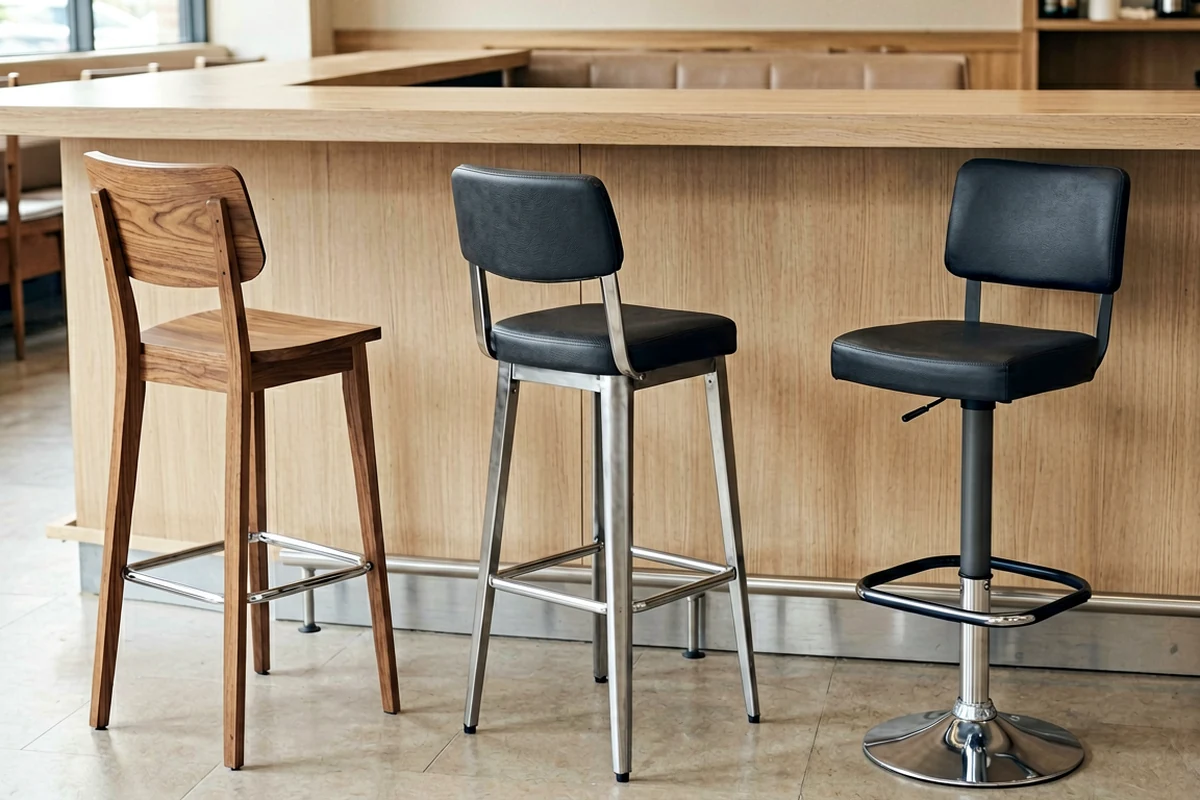
Fixed, loose, and swivel stools solve different operating problems. A fixed stool can maintain alignment and reduce movement, but it needs precise site coordination and may limit cleaning flexibility. A loose stool is easier to move for cleaning and reconfiguration, but it needs a stable footprint and disciplined return position. A swivel stool can improve entry and exit where guests cannot pull the stool back easily, but it introduces a mechanism that must be reviewed, maintained, and protected from abuse.
There is no universal best format. The right decision depends on the counter shape, service aisle, guest stay length, cleaning routine, floor finish, and brand expectation. Ask the supplier to show the mechanism, base, glide, footrest, and maintenance access before the buyer treats the quote as comparable.
The BIFMA standards descriptions can support standards-awareness questions when a supplier references commercial seating performance. Do not treat a standards mention as product approval. If a supplier says a stool, frame, or mechanism was tested, ask for documentation tied to the quoted model, construction, finish, and project use.
Procurement Risk Scenarios to Resolve Early
Risk scenario 1: the counter changes after the stool is ordered. The buyer quotes from a drawing, but the finished counter gains a thicker top, trim, or floor build-up. The stool then sits at the wrong relationship to the work surface. Control it by delaying production release until the project team confirms the finished counter condition or records an approved assumption.
Risk scenario 2: the stool looks comfortable until the overhang is tested. A guest can sit comfortably away from the counter, but the knee position, bar face, and seat depth force the stool into the aisle when used in place. Control it with a counter mock-up, plan overlay, or site test using the selected sample.
Risk scenario 3: the swivel mechanism becomes the weak point. The seat style is approved, but the buyer does not review mechanism type, return behavior, access for maintenance, or replacement route. Control it by requiring mechanism evidence and a spare or replacement plan before deposit.
Risk scenario 4: the footrest fails before the seat. The guest constantly loads the footrest, shoes scrape the finish, and cleaning chemicals reach the lowest frame areas. Control it by reviewing footrest material, finish durability, weld or fixing detail, and cleaning instructions as part of the sample approval.
Risk scenario 5: the glide does not match the floor. The same stool can behave differently on tile, timber, concrete, vinyl, or carpeted zones. Wrong glides can create noise, floor damage, or unstable movement. Control it by naming the floor finish in the RFQ and requesting glide material confirmation.
Risk scenario 6: cartons arrive without bar-zone logic. Site teams receive generic stool cartons with no counter location, finish, hardware, or room reference. Control it by requiring carton labels tied to item code, bar zone, finish, and hardware pack.
Supplier Evidence Checklist
Ask suppliers to respond against the same evidence list, so each quotation can be compared on execution quality rather than product appearance alone.
Finished stool dimensions tied to the quoted model and construction.
Counter interface drawing or marked sketch showing seat, footrest, overhang, frame footprint, and aisle relationship.
Physical material samples for seat, frame, footrest, metal, wood, upholstery, or surface finish.
Swivel or return mechanism description, where applicable.
Base, fixing, or floor-interface detail, including glide material.
Upholstery or seat cleaning instructions tied to the offered material.
Footrest finish and attachment detail.
Standards or test documentation when a supplier makes a performance or standards claim.
Sample approval log with code, date, retained sample owner, and accepted deviations.
QC checklist covering frame, welds or joints, mechanism, finish, upholstery, glides, and packing.
Carton label example showing item code, bar zone, finish, quantity, and hardware reference.
Replacement route for glides, footrests, swivel mechanisms, seat pads, upholstery panels, or hardware.
Lead time timeline linked to drawing approval, sample approval, deposit, inspection, packing, and shipment.
The NSF food equipment standards portfolio can frame sanitation-awareness questions in food-service environments. Do not claim a stool is NSF listed or accepted unless the supplier provides product-specific proof. For procurement writing, the safer task is to ask how the selected surface, seams, footrest, base, and glides will be cleaned and maintained.
Where RON GROUP Fits in the Middle of the Process
The middle of restaurant bar stool selection is where a buyer usually has a style direction but not yet a production-ready stool schedule. RON GROUP can help turn the counter condition, use pattern, finish direction, and quantity basis into a supplier-facing request that makes quotations comparable.
The first RON GROUP-specific procurement insight is that bar stools often need tighter interface control than dining chairs. A dining chair can be tested around a loose table arrangement, but a bar stool must work against a fixed counter. RON GROUP can help the buyer convert counter drawings, bar-zone notes, finish samples, and mechanism questions into one approval sheet.
The second insight is that finish coordination should happen across the full restaurant furniture package. A bar stool frame finish may need to coordinate with chair legs, table bases, wall trim, or service counter metalwork. Reviewing these finishes separately can create shade, sheen, or maintenance drift.
The third insight is that packing is part of the stool specification. Bar stools often involve hardware, glides, footrests, mechanisms, or protective wrapping that must reach the right zone. RON GROUP can help connect item codes, finish codes, and packing labels so the receiving team can sort cartons by bar location rather than guess from product names.
RON GROUP's factory showcase is useful first-party capability context for production, sampling, finish coordination, QC records, packaging, and project communication. Use it as supplier context, not as proof that any specific stool automatically meets a standard, local requirement, or project performance target.
Accessibility and Route Boundaries
Restaurant seating plans may require accessibility review, especially when bar seating, circulation routes, waiting areas, or outdoor dining zones interact. The U.S. Access Board ADA materials and Chapter 2 scoping content provide federal accessibility context for U.S. public accommodations and commercial facilities. The ADA National Network's sidewalk dining material is also useful context for accessible routes and dining surfaces in outdoor or public-space dining conditions.
Keep the boundary clear. A bar stool sample does not prove that the restaurant's seating plan is accessible. The project team must confirm accessible routes, accessible dining surfaces, clear floor space, local requirements, fire review, health review, and operational layout. The supplier should provide dimensions, drawings, and product evidence that the project team can review. It should not be asked to make the legal conclusion for the site.
Decision Tool 2: Sample Review Scorecard
Use this scorecard during the physical sample review.
| Review area | What to test | Evidence to retain | Approval owner |
|---|---|---|---|
| Counter relationship | Seat position, footrest reach, overhang comfort, aisle impact | Photo of sample at counter or mock-up, marked dimension sheet | Design lead |
| Stability and movement | Base footprint, glide behavior, swivel or fixed behavior, return position if applicable | Mechanism note, glide sample, movement observation log | Operations and procurement |
| Comfort and use pattern | Short-stay versus dining-length comfort, back support, seat surface, arm or no-arm decision | Sample comment sheet and accepted deviation record | Owner or operator |
| Cleaning and maintenance | Seam access, footrest wear exposure, base cleaning, chemical contact risk | Cleaning note, material sample, maintenance route | Housekeeping or operations |
| Production transfer | Whether mass production will match the approved sample | Retained sample code, QC checklist, carton label example | Procurement lead |
Do not release production when the sample review leaves a major question open. If the buyer wants a different footrest, finish, glide, seat pad, or mechanism after the sample review, record it as a deviation and request supplier confirmation before release.
Connect the Stool Schedule to Tables and Chairs
Bar stools are often purchased alongside dining chairs, dining tables, banquettes, or outdoor furniture. This can help procurement if the buyer keeps one schedule discipline. Finish codes should be consistent. Sample ownership should be clear. Carton labels should match zones. Replacement routes should be documented for every high-wear part.
The commercial restaurant chairs category is useful for comparing adjacent seating language, but a chair decision should not be copied onto a stool without checking counter geometry and foot support. A dining chair does not need to solve bar overhang, elevated foot position, or swivel mechanism questions.
The same applies to commercial restaurant tables. Table height, base placement, and chair pull-out behavior create one set of questions. Counter seating creates another. Use the same procurement discipline, but do not collapse the two page intents into one checklist.
Final Release Checklist
Before approving the bar stool order, confirm:
Finished counter condition and assumptions are recorded.
Stool format is selected: loose, fixed, swivel, return-to-center, or floor-mounted where applicable.
Seat height, footrest position, frame footprint, and overhang relationship are reviewed together.
Floor finish and glide material are matched.
Cleaning exposure, footrest wear, upholstery or seat surface, and base finish are reviewed.
Standards or performance claims have product-specific documentation if they are used in the decision.
Accessibility and route questions remain with the project team, not hidden in the supplier quote.
Physical sample, finish samples, mechanism evidence, and deviation log are retained.
QC checklist covers frame, finish, mechanism, upholstery or seat, glides, and packing.
Carton label format includes item code, bar zone, finish, destination, and hardware reference.
Replacement route is documented for high-wear components.
Request a Stool and Counter Coordination Review
Restaurant bar stool procurement is ready for final supplier comparison when the stool-counter pair is documented. Send the counter drawing, finished-condition assumptions, bar-zone plan, target quantity, finish direction, floor condition, cleaning concerns, sample priority, destination, and delivery window. RON GROUP can help organize the RFQ, coordinate physical samples, compare supplier evidence, align finishes with the wider restaurant furniture package, and connect packing labels to the final stool schedule.
Request a stool and counter coordination review before deposit if the team needs a clearer path from counter geometry to sample approval, production, QC, packing, and shipment coordination.
Get the week's latest industry information
-
Real-Life Professional Restaurant Case Studies
Explore Now
-
Create a unique restaurant with over 95,700+products
Explore Now
-
Protessional Free 3D Restaurant Design
Explore Now
-
Still Have Questions About Opening a Restaurant?
Explore Now

Sylvia
With 8 years in catering & hospitality industry, sales manager of Ron Group, specialise in providing one stop solutions to restaurants, hotels and weddings.
Discover Our Exclusive Products
Explore our extensive range of restaurant and hotel supplies designed to enhance your operations. Find the perfect solutions to meet your needs.
Browse Our ProductsFREE 3D DESIGN
Boost your restaurant's success with our free 3D design service. Start building the restaurant of your dreams today!
Explore 3D Design Case
RECOMMENDED CASES
-

La Rambla by Catalunya: Crafting Barcelona's Soul in Hong Kong - Custom Furniture Excellence
RON Group's custom Spanish-inspired furniture elevates La Rambla with artisanal aesthetics...
Learn More -

Cardinal Point: Elevating Outdoor Seating with Tailored Cushion Upgrades
Discover how Cardinal Point transformed its outdoor dining experience with custom cushions, achievin
Learn More
RECOMMENDED BLOGS
-
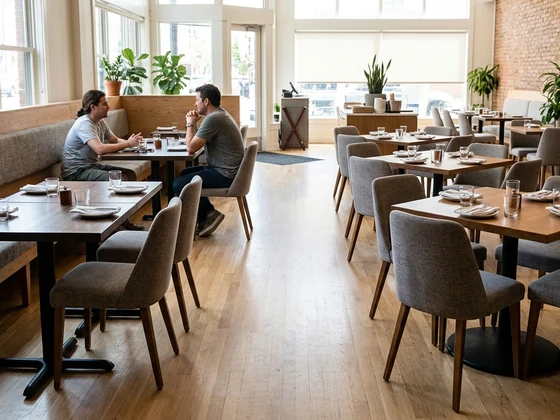
Restaurant Table Spacing and Aisle Clearance: Supplier Drawing Checklist
Check restaurant table spacing, aisle clearance, chair pullout, service path, and supplier drawing proof before approving a...
Sylvia2026-07-20 -

5 Mistakes to Avoid When Buying Restaurant Furniture from China
Don't fall for costly oversights! Learn the 5 mistakes to avoid when buying restaurant furniture from China and ensure a...
 Ron2025-01-079 min read
 -

RON GROUP Launches VR Experience to Explore Our Dynamic Showroom
Discover RON GROUP's VR showroom! Explore dining furniture, tableware, and customized services virtually or visit us in person to...
Sylvia2024-12-163 min read
Subscribe to RON GROUP
Stay up-to-date with the latest industry insights and expert advice. Together, we'll create your ideal restaurant.