





Content
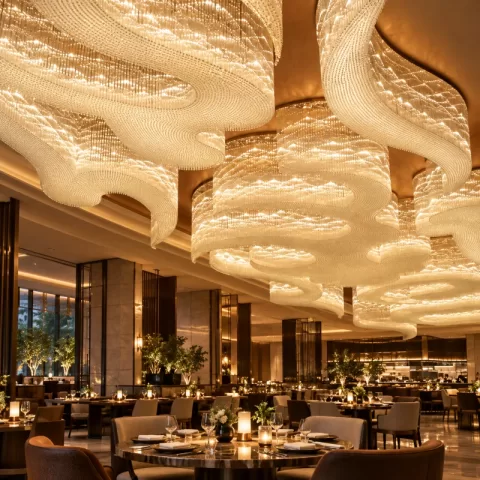
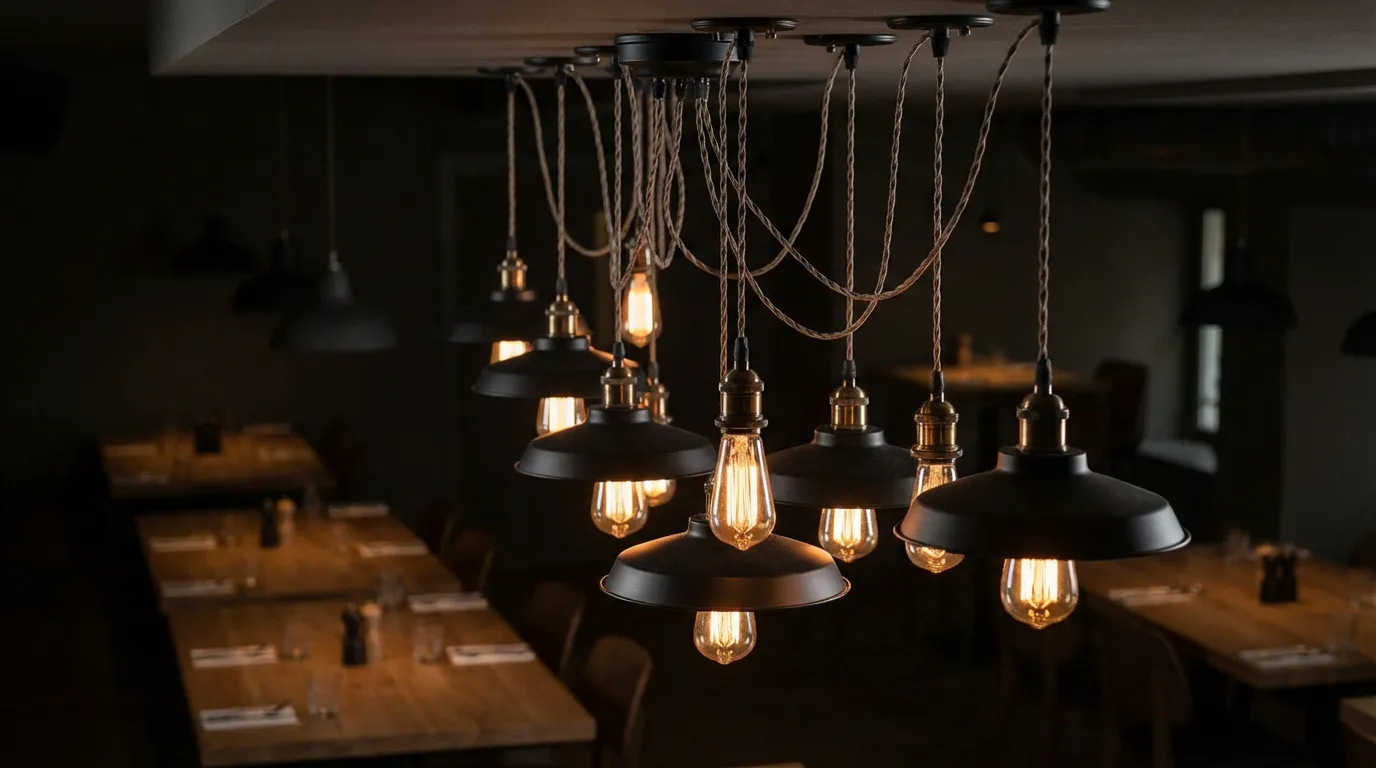
The decision between pendant lights and chandeliers in commercial dining and bar service zones requires rigorous evaluation of structural ceiling requirements, ongoing maintenance workflows, localized task illumination, and precise electrical coordination. Rather than relying on universal output values or generic rules of thumb, commercial operators should consult the Illuminating Engineering Society Lighting Library to frame lighting decisions around documented criteria and project-specific professional practice rather than universal output values. This guide provides a comprehensive procurement framework for evaluating restaurant lighting fixtures, ensuring that your selection aligns with the physical realities of your service zones, the capabilities of your maintenance staff, and the specific photometric requirements of your dining environment. Procurement teams must mandate that every fixture specification is supported by exact manufacturer data and reviewed by the project engineer and local authority having jurisdiction prior to purchase order issuance.

Fundamental Structural and Distribution Differences
Failure Scenario: Structural Overload
Procurement teams often encounter failure when assuming a standard commercial junction box can support a selected fixture without verifying the exact weight and mounting requirements with the project engineer.
Containment Action: The buyer should promptly halt the purchase order process and require the project engineer to review the exact fixture data, including the supplier-quoted total weight and mounting hardware specifications. The engineer must verify the structural load capacity of the ceiling infrastructure and provide a documented approval record before procurement proceeds.
Pendant-Versus-Chandelier Decision Matrix
| Evaluation Criteria | Pendant Fixtures | Chandelier Fixtures |
|---|---|---|
| Photometric Distribution | Creates distinct, localized pools of light on specific dining or bar surfaces based on supplier-quoted beam angles. | Delivers multi-directional illumination across a wider architectural volume based on supplier-quoted distribution charts. |
| Structural Load Requirements | Requires project engineer review of the exact fixture weight to determine if standard commercial junction boxes or additional structural blocking is necessary. | Requires project engineer review of the exact fixture weight to determine the necessity of dedicated structural blocking or independent suspension cables. |
| Deployment Strategy | Modular and repetitive; deployed in linear runs or clusters to map directly to seating arrangements documented in the architectural plan. | Singular and centralized; deployed as a primary focal point anchoring a specific room or large zone documented in the architectural plan. |
| Relamping and Access | Localized placement requires a documented maintenance plan detailing the exact access equipment needed for component swapping. | Central placement over large tables or in high ceilings requires a documented maintenance plan detailing the exact scaffolding or lift equipment needed. |
| Visual Sightline Impact | Suspension profiles must be evaluated against the architectural section drawings to document cross-room visibility for staff and guests. | Multi-arm structures must be evaluated against the architectural section drawings to document their impact on the upper visual field. |
| Seismic Bracing Requirements | Requires project engineer review to determine if independent seismic tethering is mandated by the local authority having jurisdiction. | Requires project engineer review to determine if independent seismic tethering is mandated by the local authority having jurisdiction. |
Service-Zone and Mounting Worksheet
Step 1: Evaluate the Ceiling Infrastructure
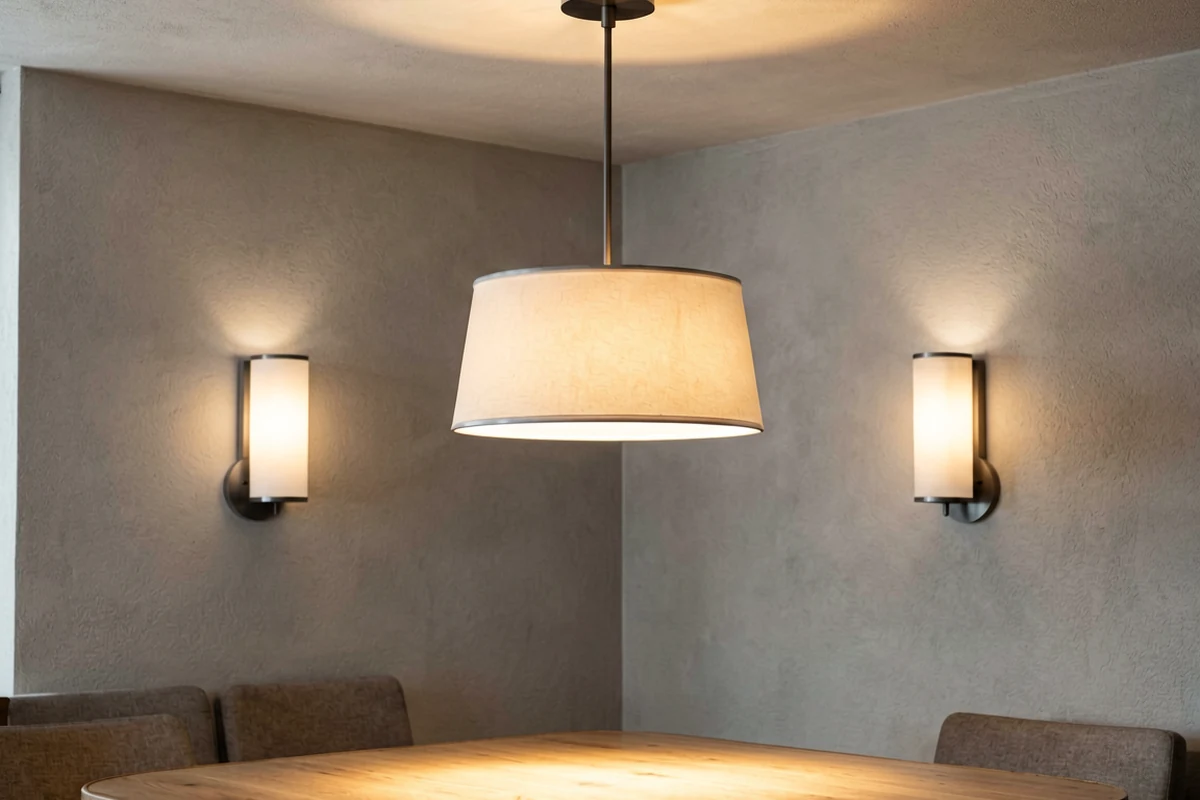
The ceiling plane dictates the mounting requirements. Measure the finished ceiling height in each distinct service zone. Chandeliers require specific vertical volume to prevent the fixture from encroaching on the pedestrian space below. Furthermore, inspect the plenum space above the ceiling. Heavy fixtures require structural blocking tied directly to the building's joists or concrete slab. The project engineer must review all structural assumptions.
Buyer-Entered Field: [ ] Documented finished ceiling height for the specific service zone.
Buyer-Entered Field: [ ] Documented plenum clearance above the finished ceiling.
Buyer-Entered Field: [ ] Supplier-quoted total weight of the proposed fixture assembly.
Buyer-Entered Field: [ ] Project engineer approval record for the proposed structural blocking and mounting method.
Buyer-Entered Field: [ ] Documented requirement for seismic bracing based on local jurisdiction review.
Step 2: Map the Seating and Service Layout
Lighting must align with the physical layout of the room. It is imperative to coordinate fixture centers only after the seating plan is established using table spacing and aisle planning. If a dining room features modular tables that are frequently reconfigured, fixed fixtures centered over the original layout will misalign, casting shadows on the new table configuration. The interior design team must provide documented approval of the fixture locations.
Buyer-Entered Field: [ ] Supplier-quoted beam spread for the proposed fixture.
Buyer-Entered Field: [ ] Buyer-entered distance from the bottom of the fixture to the dining surface.
Buyer-Entered Field: [ ] Documented dimensions of the dining table or bar surface being illuminated.
Buyer-Entered Field: [ ] Approval record from the interior designer confirming fixture alignment with the finalized seating plan.
Buyer-Entered Field: [ ] Documented strategy for illuminating reconfigured table layouts during private events.
Step 3: Identify Life-Safety and Egress Conflicts
Decorative lighting must never interfere with emergency systems. It is critical to separate decorative fixture selection from mandatory exit-route illumination and local life-safety review, as outlined in OSHA 1910.37 exit-route lighting. Ensure that the hanging height and physical volume of a fixture do not block the visibility of illuminated exit signs or interfere with the spray patterns of fire suppression sprinklers.
Buyer-Entered Field: [ ] Documented distance between the proposed fixture and the nearest illuminated exit sign.
Buyer-Entered Field: [ ] Documented distance between the proposed fixture and the nearest fire suppression sprinkler head.
Buyer-Entered Field: [ ] Documented distance between the proposed fixture and the nearest emergency egress pathway.
Buyer-Entered Field: [ ] Approval record from the local authority having jurisdiction confirming no interference with life-safety systems.
Failure Scenario: Egress Obstruction
The selected chandelier blocks the visibility of the primary exit sign from the main dining room, resulting in a failed life-safety inspection.
Containment Action: The procurement team should promptly request a revised mounting height or a smaller fixture profile from the supplier. The revised architectural elevation must be submitted to the local authority having jurisdiction for documented approval before the procurement team can proceed with the purchase order or authorize any installation work.
Photometric and Color-Rendering Submittal Checklist
Electronic Photometric Data
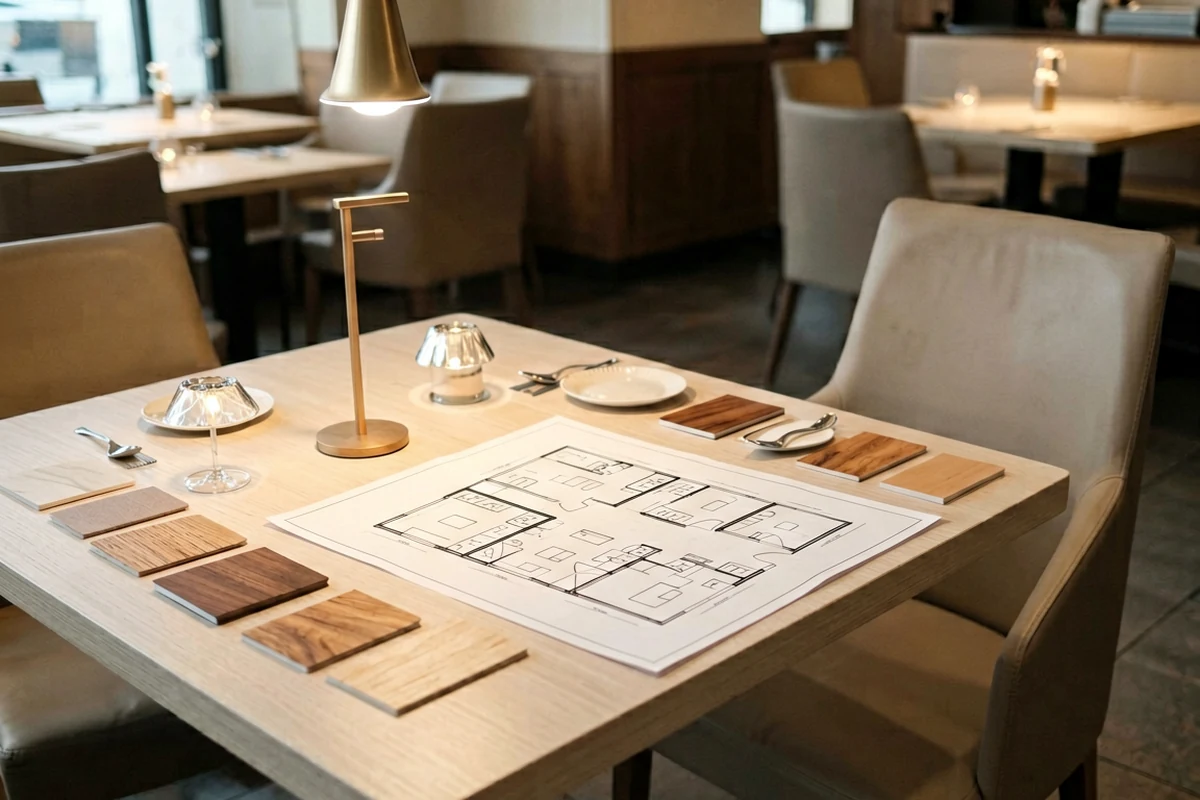
To accurately predict how a pendant or chandelier will distribute light across a dining table, lighting designers require precise digital models. Require an exact-fixture electronic photometric file in the supplier submittal formatted to the IES LM-63 photometric data format. This file allows your design team to calculate exact illuminance levels on the table surface.
Buyer-Entered Field: [ ] Supplier-provided IES LM-63 file for the exact fixture and lamp configuration.
Buyer-Entered Field: [ ] Supplier-quoted total lumen output for the specified fixture.
Buyer-Entered Field: [ ] Approval record from the lighting designer confirming the photometric distribution meets the project-specific criteria.
Failure Scenario: Photometric Mismatch
The installed pendant fixture creates a harsh hotspot on the center of the dining table while leaving the perimeter of the table in shadow.
Containment Action: The procurement team must require the supplier to provide an updated IES LM-63 file for a fixture with a wider beam angle or a different optical lens. The lighting designer must run a new calculation using the updated file and provide a documented approval record before the replacement fixtures are ordered.
Color Rendition Documentation
The way light renders the color of food, beverages, and interior finishes requires precise documentation. Request documented color-rendition information for the exact light source without inventing a pass threshold by utilizing the IES TM-30 color rendition method. This documentation provides a Fidelity Index and a Gamut Index, giving buyers an accurate understanding of how a specific fixture will render the environment. Request exact source color-rendering data for project review.
Buyer-Entered Field: [ ] Supplier-provided IES TM-30 report for the exact light source.
Buyer-Entered Field: [ ] Supplier-quoted color temperature for the exact light source.
Buyer-Entered Field: [ ] Approval record from the project design team confirming the color rendition data aligns with the interior finish specifications.
Dimming and Control Compatibility
Restaurant lighting must transition smoothly across different service periods. Incompatible drivers can cause flickering, strobing, or premature failure. Add compatible dimming and control interfaces to the exact-fixture submittal checklist by consulting the NEMA lighting controls overview. The submittal must explicitly state the required dimming protocols and list specific compatible control modules.
Buyer-Entered Field: [ ] Supplier-quoted dimming protocol required for the fixture driver.
Buyer-Entered Field: [ ] Supplier-quoted minimum dimming level supported by the driver.
Buyer-Entered Field: [ ] Supplier-provided list of compatible dimming control modules.
Buyer-Entered Field: [ ] Approval record from the electrical engineer confirming compatibility between the fixture driver and the central lighting control system.
Failure Scenario: Dimming Incompatibility
The installed pendant fixtures flicker when dimmed below a certain level due to a mismatch between the fixture driver and the wall dimmer.
Containment Action: The procurement team must require the supplier to provide a documented list of compatible dimming modules for the exact driver used in the fixture. The electrical engineer must review and approve the revised control schedule before any replacement parts are ordered or installed by the electrical contractor.
Cleaning, Access, Relamping and Replacement Plan
Ingress Protection and Cleaning Protocols
Fixtures located in bar areas, near open kitchens, or in high-traffic dining zones are subjected to airborne grease, dust, and moisture. Request the exact enclosure/IP documentation where moisture or cleaning exposure makes it relevant; do not infer suitability from appearance. Reference IEC 60529 ingress protection. A chandelier with multiple exposed facets requires a documented cleaning schedule. A pendant with a sealed shade requires a different cleaning protocol.
Buyer-Entered Field: [ ] Supplier-quoted IP rating for the exact fixture enclosure.
Buyer-Entered Field: [ ] Documented cleaning protocol provided by the manufacturer, including approved cleaning agents.
Buyer-Entered Field: [ ] Documented chemical compatibility of the fixture finish with commercial cleaning agents.
Buyer-Entered Field: [ ] Approval record from the facility manager confirming the cleaning protocol is viable for the in-house maintenance staff.
Lumen Maintenance and Aging
LED sources degrade over time, losing output and shifting in color. Treat lumen and optical maintenance as documented product characteristics that require exact manufacturer data rather than generic lifespan promises, as detailed in the DOE solid-state lighting aging article. The supplier must provide lumen maintenance data for the exact LED module used in the fixture, allowing the operator to plan a realistic replacement schedule.
Buyer-Entered Field: [ ] Supplier-provided lumen maintenance report for the exact LED module.
Buyer-Entered Field: [ ] Supplier-quoted availability of replacement LED modules and drivers.
Buyer-Entered Field: [ ] Buyer-entered replacement schedule based on the supplier-provided data.
Buyer-Entered Field: [ ] Approval record from the operations team confirming the replacement schedule aligns with the facility maintenance budget.
Safety Listings and Jurisdictional Approval
Commercial environments require strict adherence to electrical safety standards. Require exact model certification or listing evidence where the authority having jurisdiction requires it, utilizing resources like UL lighting industry services. A custom-fabricated fixture imported without proper safety listings can result in failed electrical inspections. Always verify that the specific configuration being purchased carries the necessary marks for commercial installation.
Buyer-Entered Field: [ ] Supplier-provided safety certification document for the exact fixture model.
Buyer-Entered Field: [ ] Documented verification of the certification mark on the physical fixture sample.
Buyer-Entered Field: [ ] Approval record from the local electrical inspector confirming the certification is acceptable for the jurisdiction.
Failure Scenario: Failed Electrical Inspection
The local inspector rejects the installed chandeliers because they lack the required safety certification marks for the jurisdiction, halting the restaurant opening.
Containment Action: The procurement team should promptly contact the supplier to request the exact certification documentation. If the fixture is uncertified, the buyer must initiate a return process and source a replacement fixture that carries the required safety listings, submitting the new specification to the inspector for pre-approval before issuing a new purchase order.
Mockup and Approval Workflow
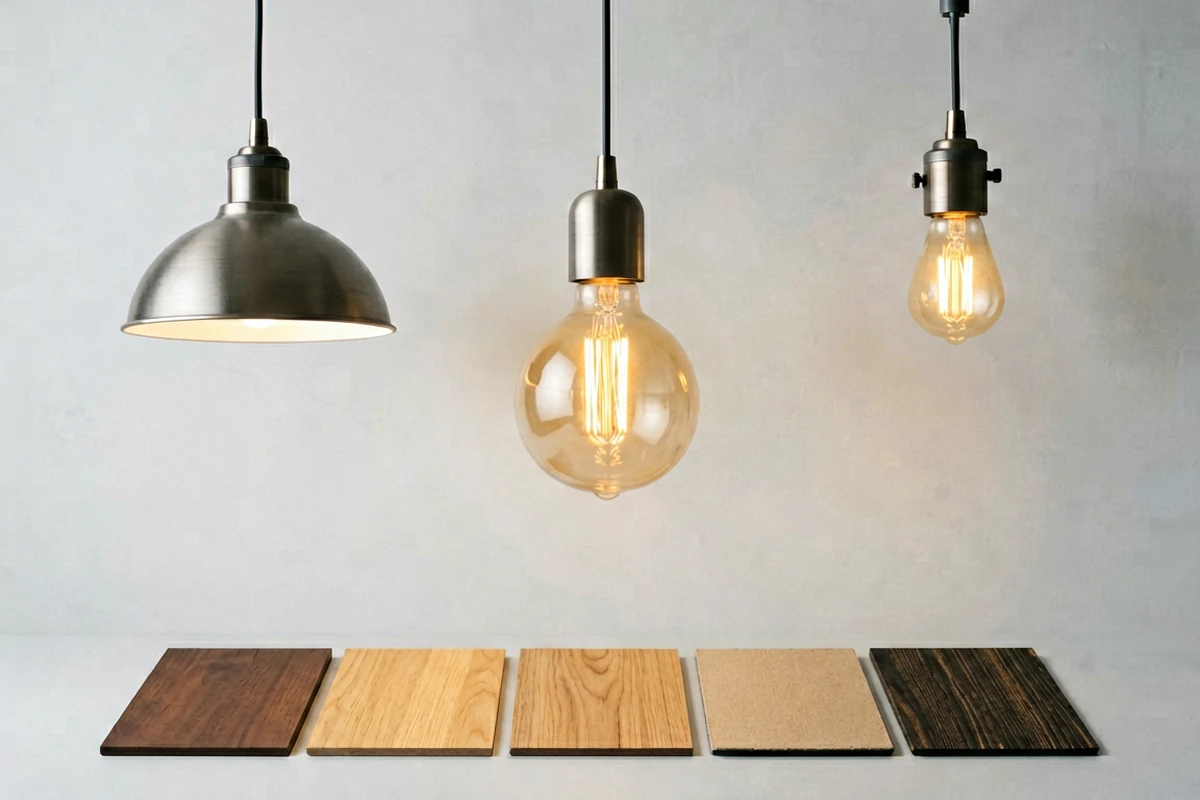
Never commit to a full restaurant lighting package based solely on digital renderings or catalog photographs. The interaction between a light source, the physical fixture housing, and the surrounding architectural finishes requires a physical mockup. Establish a rigorous mockup workflow as part of your boundary resource for restaurant lighting supplier evaluation.
Order a single production-grade sample of the proposed pendant or chandelier. Suspend the fixture in a darkened room at the exact proposed mounting height over a sample of the actual dining table finish. This physical test reveals critical data that specification sheets cannot show: glare angles when seated, reflections on tabletops, or shadows cast by the fixture's own structural arms.
During the mockup, connect the fixture to the exact dimming hardware planned for the restaurant. Test the dimming curve across the entire range. Look for color shifting at low dim levels and listen for audible buzzing from the driver. Only after the physical mockup passes all visual and technical criteria should the procurement team authorize the full production run.
Buyer-Entered Field: [ ] Documented date of the physical mockup review.
Buyer-Entered Field: [ ] Buyer-entered list of all personnel present for the mockup review, including the architect and electrical engineer.
Buyer-Entered Field: [ ] Documented results of the glare and reflection assessment from a seated position.
Buyer-Entered Field: [ ] Documented results of the dimming and driver noise assessment across the full control range.
Buyer-Entered Field: [ ] Final approval record signed by the project architect, lighting designer, and electrical engineer authorizing the full production run.
Failure Scenario: Unacceptable Glare During Mockup
The physical mockup reveals that the selected pendant fixture produces severe glare for seated guests at the specified mounting height.
Containment Action: The design team must adjust the mounting height during the mockup to determine if a new height resolves the glare. If adjusting the height is not viable, the procurement team must request a different optical accessory, such as a frosted lens or a louver, from the supplier. A second mockup must be conducted and approved by the design team before the purchase order is issued.
Buyer-Ready RFQ Checklist
When transitioning from the design phase to procurement, the Request for Quote (RFQ) must be exhaustive. Vague requests yield inconsistent bids and substitute products that fail to meet the project's technical requirements. Use the following checklist to structure your RFQ before sending it to a commercial receiver after requirements are documented in the restaurant lighting collection.
Exact Fixture Designation
Buyer-Entered Field: [ ] Complete, alphanumeric manufacturer part number.
Buyer-Entered Field: [ ] Supplier-quoted suffix for the exact finish specification.
Buyer-Entered Field: [ ] Supplier-quoted suffix for the exact color temperature specification.
Buyer-Entered Field: [ ] Supplier-quoted suffix for the exact mounting hardware specification.
Buyer-Entered Field: [ ] Supplier-quoted suffix for the exact optical accessory specification.
Mounting and Suspension Details
Buyer-Entered Field: [ ] Buyer-entered exact drop length required from the finished ceiling to the bottom of the fixture.
Buyer-Entered Field: [ ] Buyer-entered specification for the ceiling canopy type based on the architectural ceiling conditions.
Buyer-Entered Field: [ ] Supplier-quoted total weight of the fixture and suspension hardware.
Buyer-Entered Field: [ ] Supplier-quoted dimensions of the ceiling canopy and required junction box size.
Photometric Requirements
Buyer-Entered Field: [ ] Requirement for the supplier to include the specific IES LM-63 file for the exact LED module and driver combination being quoted.
Buyer-Entered Field: [ ] Requirement for the supplier to include the TM-30 color rendition report for the exact LED module and driver combination being quoted.
Buyer-Entered Field: [ ] Supplier-quoted beam angle or distribution classification.
Buyer-Entered Field: [ ] Supplier-quoted total lumen output for the specified configuration.
Driver Specifications
Buyer-Entered Field: [ ] Buyer-entered required input voltage for the specific installation zone.
Buyer-Entered Field: [ ] Buyer-entered required dimming protocol based on the central control system.
Buyer-Entered Field: [ ] Buyer-entered specification stating whether the driver must be integral to the fixture canopy or mounted remotely.
Buyer-Entered Field: [ ] Supplier-quoted maximum distance for remote driver mounting, if applicable.
Buyer-Entered Field: [ ] Supplier-quoted dimensions of the remote driver enclosure, if applicable.
Certification Requirements
Buyer-Entered Field: [ ] Requirement for the supplier to provide proof of applicable safety listings for the intended installation zone.
Buyer-Entered Field: [ ] Requirement for the supplier to provide specific IP ratings for the intended installation zone.
Buyer-Entered Field: [ ] Requirement for the supplier to provide documentation of compliance with local energy codes, if applicable.
Warranty and Replacement Terms
Buyer-Entered Field: [ ] Requirement for the supplier to provide the formal warranty document detailing coverage for driver failure, LED module degradation, and finish deterioration.
Buyer-Entered Field: [ ] Supplier-quoted lead times for replacement parts.
Buyer-Entered Field: [ ] Supplier-quoted lead times for the initial production run.
Buyer-Entered Field: [ ] Supplier-quoted terms for returning defective components during the warranty period.
Failure Scenario: Incomplete RFQ Response
The supplier returns the RFQ with missing photometric files and an incomplete alphanumeric part number.
Containment Action: The procurement team must reject the incomplete bid and return the RFQ to the supplier, highlighting the missing fields. The bid cannot be evaluated against competing quotes until all required documentation, including the IES LM-63 file and the complete alphanumeric part number, is provided and verified by the project engineer.
Finalizing Your Lighting Strategy
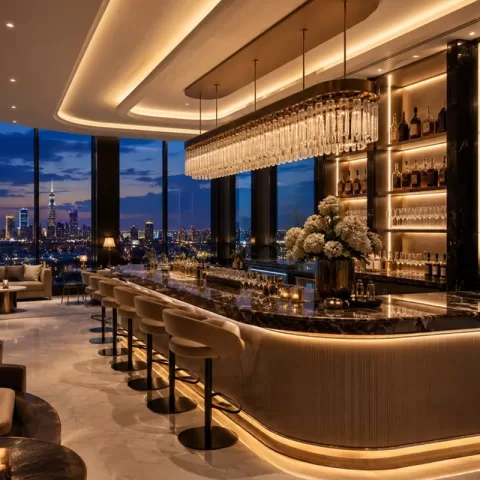
Choosing between pendant lights and chandeliers is a foundational decision that impacts the structural engineering, daily operations, and visual comfort of your restaurant. By demanding rigorous photometric data, verified safety listings, and clear maintenance protocols, operators can specify fixtures that perform reliably in demanding commercial environments. Whether you are illuminating a cocktail bar with directional pendants or anchoring a dining hall with a central chandelier, disciplined procurement ensures that the final installation meets both the design intent and the operational realities of the space. Every specification must be supported by exact manufacturer data and reviewed by the project engineer and local authority having jurisdiction. To begin coordinating your specific fixture requirements with our engineering and procurement teams, send RON GROUP your lighting fixture brief.
Get the week's latest industry information
-
Real-Life Professional Restaurant Case Studies
Explore Now
-
Create a unique restaurant with over 95,700+products
Explore Now
-
Protessional Free 3D Restaurant Design
Explore Now
-
Still Have Questions About Opening a Restaurant?
Explore Now

Sylvia
With 8 years in catering & hospitality industry, sales manager of Ron Group, specialise in providing one stop solutions to restaurants, hotels and weddings.
Discover Our Exclusive Products
Explore our extensive range of restaurant and hotel supplies designed to enhance your operations. Find the perfect solutions to meet your needs.
Browse Our ProductsFREE 3D DESIGN
Boost your restaurant's success with our free 3D design service. Start building the restaurant of your dreams today!
Explore 3D Design Case
RECOMMENDED CASES
-
La Rambla by Catalunya: Crafting Barcelona's Soul in Hong Kong - Custom Furniture Excellence
RON Group's custom Spanish-inspired furniture elevates La Rambla with artisanal aesthetics...
Learn More -
Cardinal Point: Elevating Outdoor Seating with Tailored Cushion Upgrades
Discover how Cardinal Point transformed its outdoor dining experience with custom cushions, achievin
Learn More
RECOMMENDED BLOGS
-

Bar Glassware 101: Types, Names, Uses, and How to Stock Your Bar
Learn the 10 core bar glassware types, names, and uses. Discover how to stock your bar with the right glasses for cocktails, beer,...
Sylvia2026-07-26 -

Complete Bar Equipment List for Opening a Bar
Plan a complete commercial bar equipment list by menu, service volume, refrigeration, ice, glassware, utilities, sanitation,...
Sylvia2026-06-11 -

Low Budget Restaurant Interior Design: 2026 Trends
Prioritize a low-budget restaurant interior by protecting code, operations, durability, accessibility, and phased design decisions...
Sylvia2026-04-04
Subscribe to RON GROUP
Stay up-to-date with the latest industry insights and expert advice. Together, we'll create your ideal restaurant.