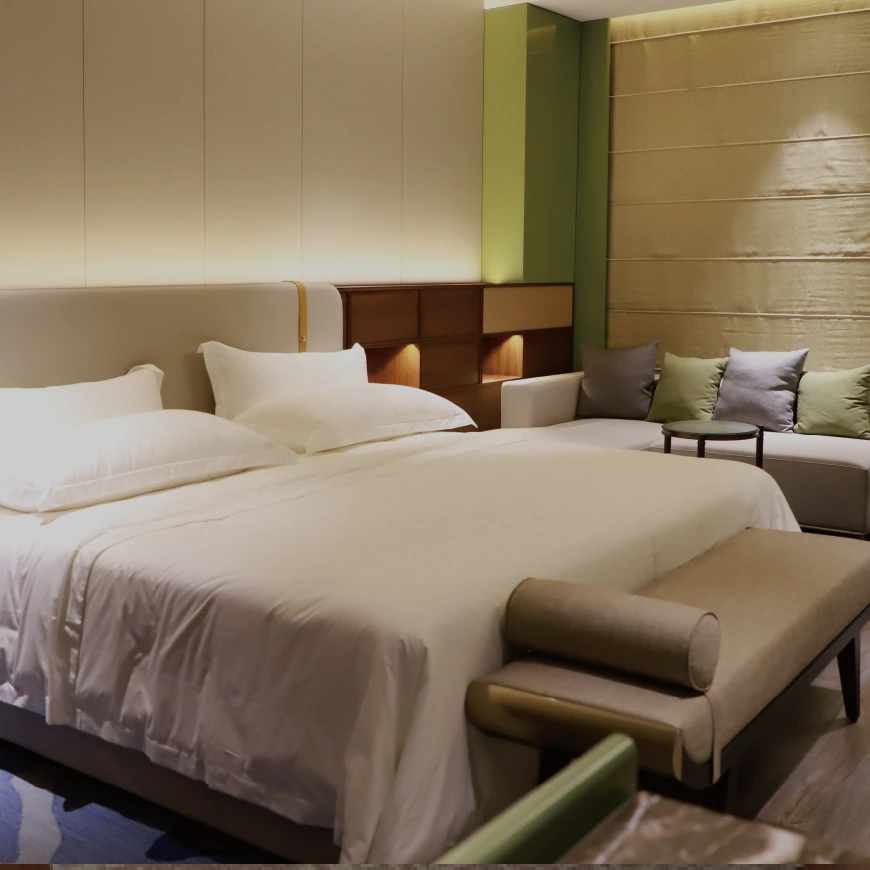


From Factory to Table: How Direct-from-Manufacturer Sourcing Saves Hotels 40-65%
See how intermediary markups inflate hotel supply costs by 50–85% & how direct-from-manufacturer sourcing saves 40–65% on furniture, equipment & tableware.
Content
The hospitality industry operates on thin margins. A full-service hotel typically runs on net profit margins of 5–10%, meaning every dollar saved in procurement flows almost directly to the bottom line. Yet most hotels and restaurants still purchase equipment, furniture, and supplies through a multi-layered distribution chain that adds 40–65% to the factory cost before a single plate or chair reaches the property. In an era where supply chain optimization is a top strategic priority for hospitality operators, direct-from-manufacturer sourcing represents one of the highest-impact changes a procurement team can make.
This article breaks down exactly where those markups accumulate, quantifies the savings available through direct sourcing, and provides a practical framework for hotels and restaurants evaluating a shift from traditional distribution channels to factory-direct procurement.
The Traditional Supply Chain: Where Your Money Goes
The conventional path from factory floor to hotel property involves three to four intermediaries, each adding their own margin. Understanding this structure is the first step toward identifying savings opportunities.

| Supply Chain Level | Role | Typical Markup | Cumulative Price Increase |
|---|---|---|---|
| Manufacturer (factory gate price) | Production, raw materials, quality control | Base cost | 0% |
| Trading company / Export agent | Sourcing coordination, export documentation | 8 – 15% | 8 – 15% |
| Regional distributor | Warehousing, territory sales, logistics | 20 – 30% | 30 – 50% |
| Local dealer / Reseller | Sales, delivery, installation | 15 – 25% | 50 – 85% |
According to PROS, a leading B2B pricing analytics firm, average distributor markups range from 20–40% depending on the product category, and that is just a single layer. When you stack multiple intermediaries, a commercial kitchen range that costs $2,000 at the factory gate can reach the end buyer at $3,400–$3,700. A banquet chair manufactured for $28 may retail through a local dealer at $55–$70.
Each intermediary provides a service — warehousing, territory coverage, customer service — but the question hospitality operators must ask is whether those services justify a 50–85% cost premium, or whether modern logistics and direct communication with manufacturers have made some of those layers redundant.
The Direct Sourcing Model: How It Changes the Math
Direct-from-manufacturer sourcing eliminates the trading company, distributor, and dealer layers entirely. The buyer works directly with the factory that produces the goods. The cost structure changes dramatically:
| Product Category | Traditional Channel Price (USD) | Factory Direct Price (USD) | Savings |
|---|---|---|---|
| Banquet chairs (per unit) | $55 – $70 | $22 – $35 | 45 – 60% |
| Hotel room furniture set | $5,500 – $9,000 | $2,800 – $5,000 | 40 – 50% |
| Commercial kitchen range | $3,400 – $4,500 | $1,800 – $2,600 | 42 – 55% |
| Porcelain dinnerware (per 100 pcs) | $450 – $700 | $180 – $320 | 50 – 65% |
| Stainless steel buffet equipment | $1,200 – $2,000 | $550 – $1,000 | 50 – 55% |
| Hotel bathroom amenities (per 1,000 sets) | $800 – $1,400 | $350 – $650 | 50 – 56% |
For a 200-room hotel undergoing a full FF&E renovation, these savings translate to $400,000–$900,000 in reduced procurement costs. For a restaurant chain opening 10 locations per year, the annual savings on kitchen equipment and dining furniture alone can exceed $500,000.
Five Advantages Beyond Price
Cost savings get the attention, but direct manufacturer sourcing delivers several operational advantages that compound over time.
1. Quality Control at the Source
When you source through intermediaries, quality issues often surface only after delivery — and tracing the root cause back through multiple layers is slow and frustrating. Direct sourcing puts you in direct communication with the production team. You can specify materials, request pre-shipment inspections, and visit the factory floor to verify processes firsthand.
According to industry procurement guides, hotels that implement direct quality control programs report 30–40% fewer warranty claims and extended product lifespans — an additional layer of cost savings that does not appear in the purchase price comparison.
2. Full Customization Without Premium Pricing
Distributors typically offer customization as an upcharge, adding 20–40% to the base price for modifications to dimensions, finishes, or branding. When working directly with a manufacturer, customization is part of the production process rather than a separate service layer. A hotel furniture manufacturer can modify dimensions, materials, colors, and branding as part of the standard production run, often at little or no additional cost above the standard product price.
This is particularly valuable for hotel groups maintaining brand standards across properties. Instead of searching for off-the-shelf items that approximate your brand specifications, you get exact matches — and you get them at factory pricing.
3. Faster Response to Market Changes
Traditional distribution channels create a 4–8 week lag between a hotel identifying a need and receiving product. The order passes through a dealer to a distributor to a manufacturer, and each step adds processing time. Direct sourcing compresses this to a single communication channel. When 80% of products are warehoused and ready for immediate dispatch, lead times drop from months to days for standard items.
4. Transparent Pricing and No Hidden Fees
Multi-layer distribution creates pricing opacity. A hotel purchasing manager often cannot determine what percentage of the invoice represents actual product cost versus intermediary margins. Direct manufacturer pricing is straightforward: product cost plus shipping plus applicable duties. This transparency makes budgeting more accurate and negotiations more productive.
5. Strategic Partnership Over Transactional Relationships
When you are one of thousands of accounts managed by a distributor's sales team, your leverage is limited. Working directly with a manufacturer — especially one with dedicated hospitality expertise and a track record with major hotel and restaurant brands — creates a partnership dynamic. The manufacturer understands your specifications, production timelines, and quality requirements intimately. Reorders become faster. Product development conversations happen naturally. Issues get resolved at the source.
Common Objections — and the Reality
Despite the clear financial advantages, many hospitality operators hesitate to shift from traditional channels. Here are the most frequent concerns and how experienced direct-sourcing operations address them.
“Minimum order quantities are too high for us.”
This was true a decade ago when most manufacturers required container-load minimums. Today, many hospitality-focused manufacturers have adjusted their models to accommodate mid-size operators. Suppliers with extensive product catalogs — offering 95,700+ products across categories — can consolidate smaller orders across product lines to reach efficient production and shipping thresholds.
“International shipping is too complex and expensive.”
Shipping costs have decreased significantly as manufacturers invest in logistics infrastructure. According to Inbound Logistics, hospitality-focused suppliers now routinely handle end-to-end logistics including freight, customs documentation, and last-mile delivery. When factored against the 40–65% markup savings, international shipping costs (typically 5–12% of order value for containerized goods) are comfortably absorbed while still delivering substantial net savings.
“We need local support for warranty and service issues.”
Legitimate concern. The best direct-source manufacturers address this by building robust quality control into the production process — reducing warranty claims from the start — and by maintaining responsive remote support teams. For high-value items like commercial kitchen equipment, detailed installation guides, video support, and partnerships with local service technicians fill the gap that a local dealer would traditionally occupy.
“How do we verify quality without seeing the product?”
Reputable manufacturers invite factory visits, provide detailed product samples before bulk orders, share third-party certification documentation (ISO, SGS, CE), and offer pre-shipment inspection reports with photographs. The transparency available from a direct manufacturer relationship often exceeds what a distributor provides, since the distributor is itself one step removed from production.
A Case Study in Scale: Hotel Chain Procurement Transformation
To illustrate the impact, consider a real-world scenario. A hotel management group operating 12 properties across Southeast Asia was sourcing FF&E through a combination of regional distributors and local dealers. Their annual procurement spend on furniture, kitchen equipment, tableware, and bathroom supplies totaled approximately $3.2 million.
After transitioning to direct manufacturer sourcing for 70% of their procurement categories, the results over the first 18 months included:
Procurement cost reduction: 43% average across all direct-sourced categories, translating to approximately $960,000 in annual savings
Lead time improvement: Average order-to-delivery time decreased from 9.2 weeks to 4.8 weeks
Quality metrics: Warranty claims dropped 35% due to pre-shipment quality control protocols
Customization: 100% of furniture orders were customized to brand specifications at no additional cost, compared to the 20–30% customization upcharge previously paid to distributors
This pattern is consistent with findings from Hotel Investment Today, which documented a hotel chain saving over $1 million in its first year by consolidating procurement and eliminating unnecessary intermediary layers.
How to Evaluate a Direct-Source Manufacturer
Not all manufacturers are equipped to serve hospitality buyers directly. When evaluating potential factory-direct partners, assess the following criteria:
| Evaluation Criteria | What to Look For | Red Flags |
|---|---|---|
| Product range | Broad catalog covering furniture, kitchen, tableware, bathroom, and amenities | Single-category specialists who cannot consolidate shipments |
| Production capacity | Factory facilities you can visit or verify; published production volumes | Unwillingness to share factory details or arrange visits |
| Hospitality experience | Named hotel and restaurant brand references; published case studies | No hospitality-specific portfolio or references |
| Quality certifications | ISO 9001, SGS testing, CE marking, FDA compliance where applicable | No third-party certifications or unwillingness to share reports |
| Logistics capability | End-to-end shipping, customs handling, warehousing with ready stock | EXW-only terms with no logistics support |
| Customization flexibility | Custom dimensions, finishes, branding, and packaging at factory pricing | Large upcharges for any modification to standard products |
| Communication | Dedicated account management; responsive in your time zone; multilingual | Slow responses; language barriers; rotating contacts |
The Foshan Advantage: Why Geography Matters
China's Guangdong province — particularly Foshan — has emerged as the global epicenter for hospitality supply manufacturing. The region's concentration of raw material suppliers, skilled labor, and specialized production facilities creates an ecosystem that delivers both cost efficiency and quality that is difficult to replicate elsewhere.
Foshan-based manufacturers benefit from:
Integrated supply chains: Raw material suppliers, component manufacturers, and finished goods producers are clustered within a 50-kilometer radius, reducing logistics costs and lead times within the production process
Specialized expertise: More than 20 years of serving international hospitality brands has built deep institutional knowledge of global quality standards, safety certifications, and brand requirements
Scale economies: High production volumes across a large customer base allow manufacturers to offer competitive pricing while maintaining investment in quality control infrastructure and modern production equipment
Port access: Proximity to major shipping ports (Nansha, Shenzhen, Hong Kong) enables efficient container loading and competitive ocean freight rates to destinations worldwide
This geographic advantage is one reason why sourcing from a Foshan-based manufacturer with two decades of hospitality industry experience delivers savings that go beyond simply removing intermediary margins — the entire production ecosystem is optimized for this industry.
Making the Transition: A Practical Roadmap
Shifting from distributor-based procurement to direct sourcing does not happen overnight, nor should it. A phased approach reduces risk and builds internal confidence.
Phase 1: Identify high-impact categories (Month 1–2). Analyze your current procurement spend by category. Prioritize categories where the price differential between estimated factory cost and your current purchase price is largest. Furniture, tableware, and buffet equipment typically offer the highest savings percentages.
Phase 2: Qualify manufacturers (Month 2–3). Request samples, certifications, and reference lists. If possible, arrange a factory visit. Evaluate against the criteria table above. Narrow to 2–3 qualified manufacturers for your priority categories.
Phase 3: Pilot order (Month 3–5). Place a limited order across 2–3 product categories. Monitor the end-to-end process: communication responsiveness, production quality, shipping logistics, and delivery condition. Use this pilot to establish realistic lead time expectations and identify any process adjustments needed.
Phase 4: Scale and consolidate (Month 5–12). Based on pilot results, expand direct sourcing to additional product categories. Consolidate orders with proven manufacturers to leverage volume pricing and simplify logistics. Establish standing production schedules for recurring needs.
Phase 5: Strategic integration (Ongoing). Transition from transactional ordering to strategic partnership. Collaborate with your manufacturer on product development, explore custom product lines for your brand, and establish rolling procurement plans that align with your property renovation and expansion schedules.
The Bottom Line: What Direct Sourcing Means for Your P&L
For a mid-size hotel or restaurant group spending $1–5 million annually on supplies and equipment, direct manufacturer sourcing at a conservative 40% average savings translates to $400,000–$2,000,000 in annual cost reduction. Even after accounting for international shipping costs (5–12%), customs duties (0–8% depending on product and destination), and the internal resources required to manage direct supplier relationships, the net savings typically range from 25–50% of previous spend.
Those are not marginal improvements. For a business running on 5–10% net margins, a 25–50% reduction in a major cost category can double operating profit.
The hospitality operators achieving these results are not cutting corners on quality. They are cutting out unnecessary intermediary layers and working directly with the people who actually make their products. The factory-to-table model is not a trend — it is the rational economic choice for any hospitality business serious about operational efficiency.
Start the Conversation
RON GROUP has served over 10,000 hospitality customers worldwide — from independent boutique hotels to global chains like Burger King, Sofitel, and W Hotel — with direct-from-factory pricing across 95,700+ products. With more than 20 years of manufacturing expertise in Foshan and 80% of products warehoused for immediate dispatch, we eliminate the intermediary layers that inflate your procurement costs by 40–65%.
Whether you are opening a new property, planning a renovation, or simply reviewing your supply chain for cost optimization opportunities, contact our team for a complimentary procurement cost analysis. We will map your current spend against factory-direct pricing and show you exactly where the savings are.
Get the week's latest industry information
-
Real-Life Professional Restaurant Case Studies
Explore Now
-
Create a unique restaurant with over 95,700+products
Explore Now
-
Protessional Free 3D Restaurant Design
Explore Now
-
Still Have Questions About Opening a Restaurant?
Explore Now

Sylvia
With 8 years in catering & hospitality industry, sales manager of Ron Group, specialise in providing one stop solutions to restaurants, hotels and weddings.
Discover Our Exclusive Products
Explore our extensive range of restaurant and hotel supplies designed to enhance your operations. Find the perfect solutions to meet your needs.
Browse Our ProductsFREE 3D DESIGN
Boost your restaurant's success with our free 3D design service. Start building the restaurant of your dreams today!
Explore 3D Design Case
RECOMMENDED CASES
-

La Rambla by Catalunya: Crafting Barcelona's Soul in Hong Kong - Custom Furniture Excellence
RON Group's custom Spanish-inspired furniture elevates La Rambla with artisanal aesthetics...
Learn More -

Cardinal Point: Elevating Outdoor Seating with Tailored Cushion Upgrades
Discover how Cardinal Point transformed its outdoor dining experience with custom cushions, achievin
Learn More
RECOMMENDED BLOGS
-
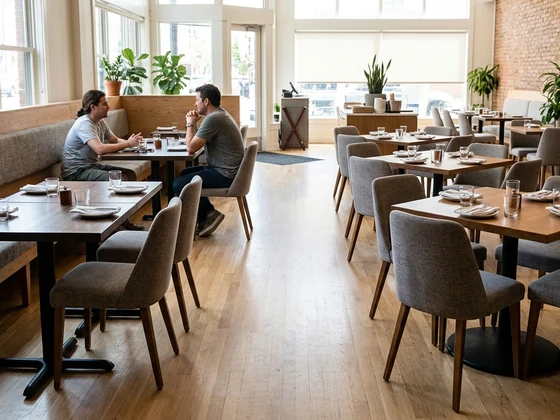
Restaurant Table Spacing and Aisle Clearance: Supplier Drawing Checklist
Check restaurant table spacing, aisle clearance, chair pullout, service path, and supplier drawing proof before approving a...
Sylvia2026-07-20 -

5 Mistakes to Avoid When Buying Restaurant Furniture from China
Don't fall for costly oversights! Learn the 5 mistakes to avoid when buying restaurant furniture from China and ensure a...
 Ron2025-01-079 min read
 -

RON GROUP Launches VR Experience to Explore Our Dynamic Showroom
Discover RON GROUP's VR showroom! Explore dining furniture, tableware, and customized services virtually or visit us in person to...
Sylvia2024-12-163 min read
Subscribe to RON GROUP
Stay up-to-date with the latest industry insights and expert advice. Together, we'll create your ideal restaurant.