
Commercial Restaurant Dining Chair Procurement: Supplier Evidence and Sample Approval Guide
Content
A project designer specifies a seating package based on a beautiful architectural render. After opening, the procurement failure becomes visible: armrests are chipping because they collide with table aprons, incorrect glides have permanently scratched the hardwood floors, the upholstery is degrading from standard daily cleaning products, and warehouse staff cannot identify replacement stock because the cartons arrived blank. This operational breakdown occurs when commercial restaurant dining chair procurement relies on visual selection rather than strict specification control and supplier validation.
Direct answer: Commercial restaurant dining chair procurement is the process of freezing physical specifications and validating supplier production capabilities before bulk manufacturing. Unlike retail purchasing, it requires buyers to secure documented supplier evidence - such as frame construction details, glide specifications, upholstery cleaning codes, and packaging protocols - and to execute a strict sample approval workflow from the initial Request for Quotation (RFQ) to a retained golden sample used for pre-shipment inspection.
Differentiating Dining Chairs from Other Hospitality Seating
When consolidating a complete restaurant furniture package, dining chairs often represent the highest volume seating asset, requiring a distinct procurement approach compared to other fixtures.
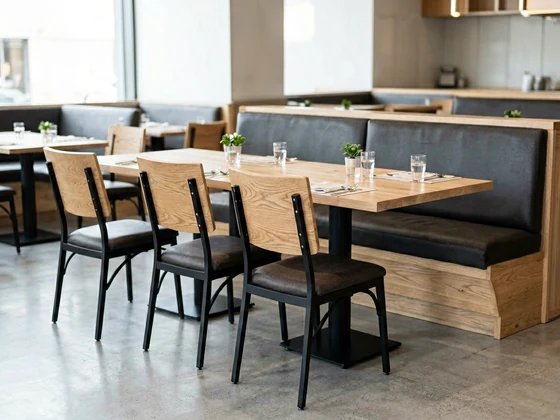
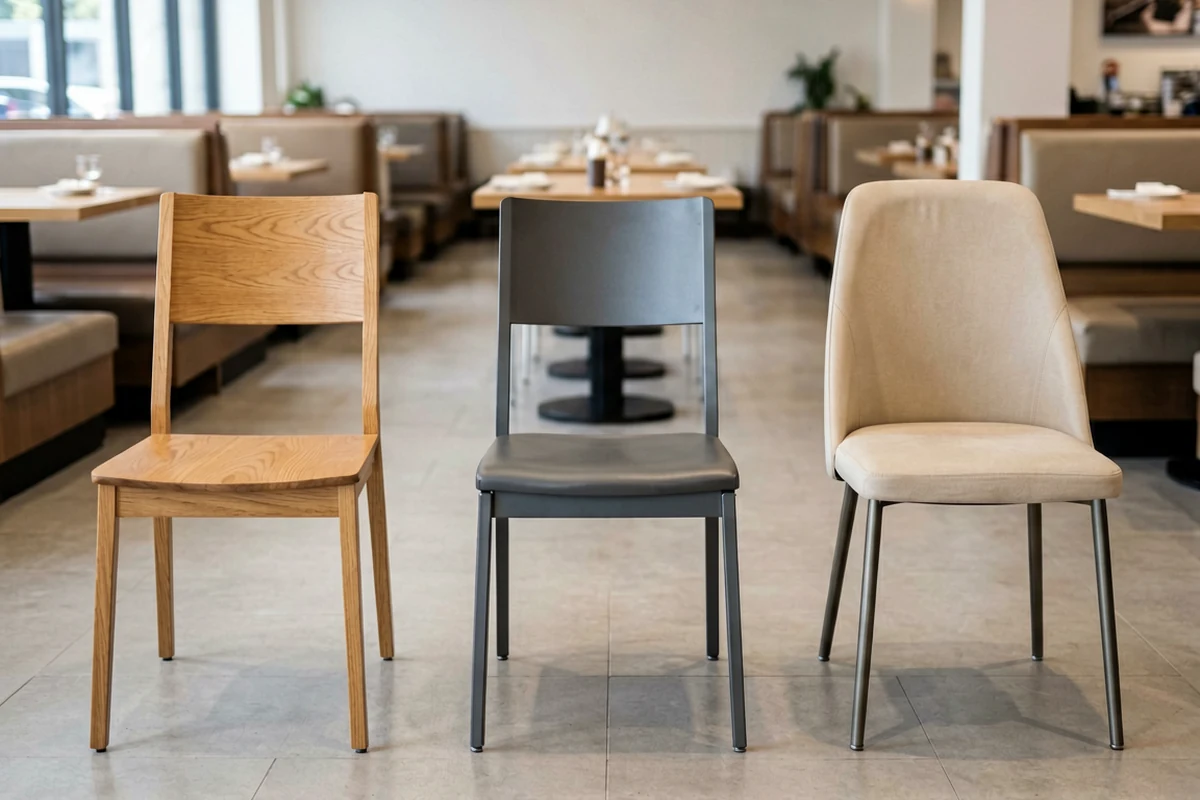
Evaluating commercial restaurant chairs requires focusing on sustained seating posture, table clearance, and high-turnover floor movement. This differs fundamentally from bar stool selection, which prioritizes footrest durability, tipping resistance, and specific counter-height clearances. It also differs from hotel banquet chair selection, where the primary procurement drivers are high-density vertical stacking capabilities, lightweight frame construction, and compatibility with transport trolleys. Dining chairs remain active on the floor, meaning their interaction with tables, guests, and cleaning staff must be heavily controlled through the supplier specification process.
Named Procurement Risk Scenarios
Procurement buyers must anticipate operational failures during the RFQ stage. Failing to request the correct supplier evidence leads directly to the following risk scenarios.
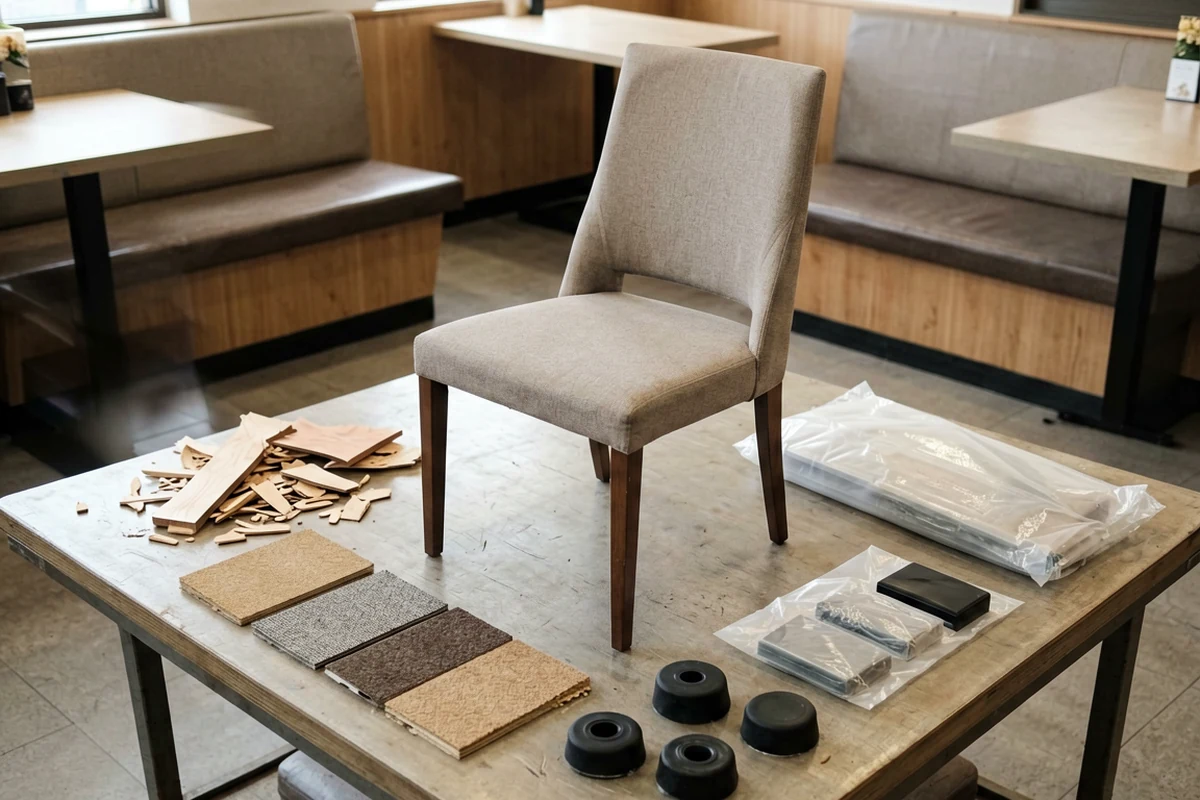
Named Procurement Risk Scenario 1: The Table-Chair Interface Mismatch
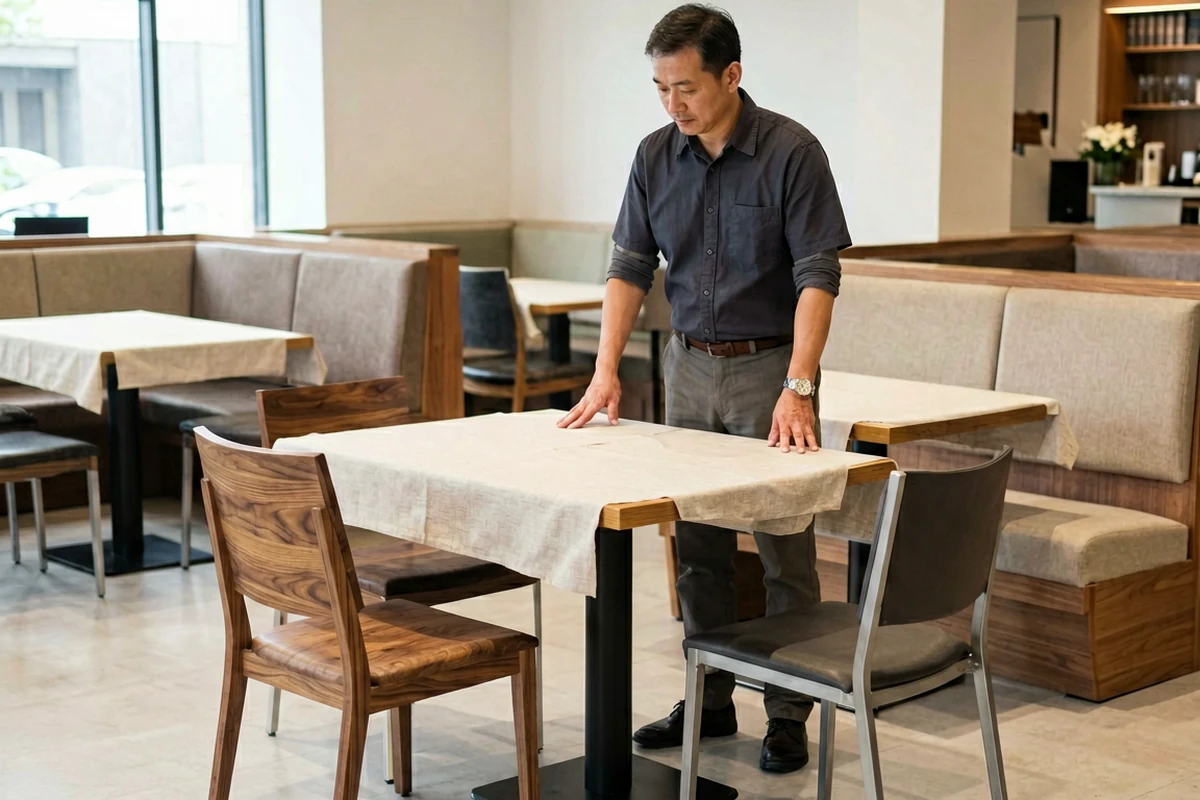
This scenario occurs when a chair is procured in isolation from the dining surface. If the chair's armrest height is not checked against the clearance beneath commercial restaurant tables, guests will push the chairs into the table aprons. Over time, this repeated collision destroys the finish on both the chair arms and the table edges. Furthermore, failing to verify the seat height relative to the table height can result in inadequate knee clearance, rendering the seating position unusable for guests.
Named Procurement Risk Scenario 2: Floor Damage from Incorrect Glides
Chairs are moved repeatedly across dining room floors. If the procurement specification does not match glide material to the venue flooring, floor damage, noise, and guest-experience problems can appear quickly. Ask the supplier to document glide material, attachment method, and flooring assumptions instead of treating glides as a minor accessory.
Named Procurement Risk Scenario 3: Sample-to-Bulk Finish Drift
A buyer approves a single prototype chair with a specific wood stain or metal powder coat. However, when the bulk order arrives, the color is noticeably different, or the finish is inconsistently applied. This drift happens when the buyer fails to implement a retained "golden sample" workflow and does not require the supplier to document their batch-control processes, moisture content management, or finish application methods during the bulk production run.
Named Procurement Risk Scenario 4: Upholstery and Cleaning Protocol Mismatch
Restaurant seating is subjected to spills and aggressive daily sanitization. If a buyer selects a fabric based solely on texture and color without requesting the manufacturer's cleaning codes, the venue's cleaning staff may use solvent-based cleaners on water-safe-only fabrics. This mismatch causes the upholstery to bleach, pill, or dissolve entirely. The procurement specification must align the upholstery's chemical resistance with the operator's standard cleaning protocols.
Named Procurement Risk Scenario 5: Weak Carton Labeling and Replacement Route Failure
Chairs arrive at the staging warehouse in generic brown cartons with no identifying marks. When the operations team needs to pull replacement stock months later, they are forced to open multiple boxes to find the correct chair. If the procurement team does not mandate a strict carton labeling template, including SKU, PO number, finish code, and project name, the replacement route becomes harder to manage.
Fast Decision Matrix for Chair Procurement Options
Before releasing an RFQ, buyers must determine the procurement route. This matrix outlines the relationship between customization, lead times, and the level of specification control required.
| Procurement Route | Lead Time Impact | Specification Control Level | Primary Supplier Evidence Required |
|---|---|---|---|
| Off-the-Shelf Standard | Shortest | Low (Accepting existing specs) | Existing specification sheets, standard warranty terms, stock availability records. |
| Modified Standard | Moderate | Medium (Controlling specific variables) | Updated BOM for changed materials (e.g., custom fabric or specific glides), revised sample approval. |
| Fully Custom Design | Longest | High (Defining all variables) | Complete CAD drawings, frame joinery diagrams, raw material sourcing records, multiple prototype iterations. |
The Supplier Evidence Checklist
To mitigate the risk scenarios outlined above, procurement buyers must demand specific documentation from the manufacturer. Do not accept verbal assurances; require the following 11 items of supplier evidence before freezing the specification.
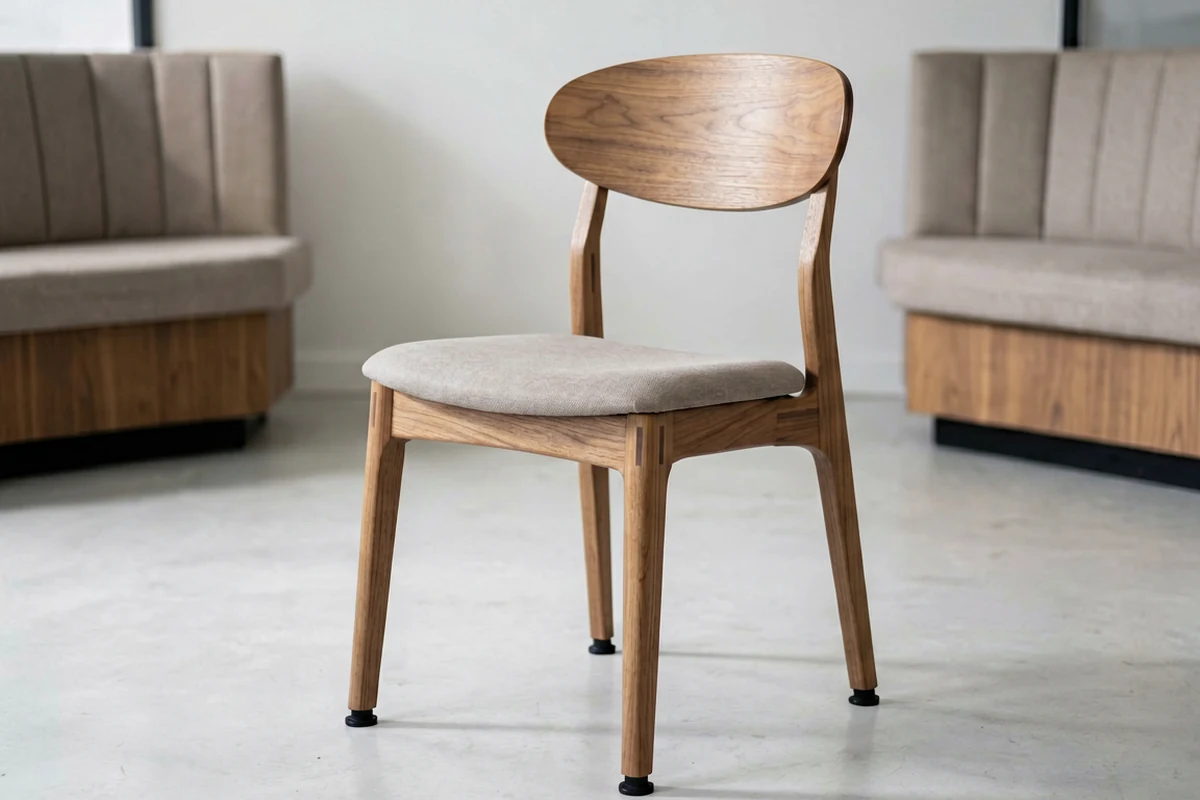
1. Frame Joinery DiagramsRequest technical drawings detailing how the chair frame is assembled. Buyers should look for evidence of reinforced joinery, such as corner blocks, mortise and tenon joints, or continuous TIG welds for metal frames, rather than relying on basic screws or spot welds.
2. Glide Material SpecificationRequire a documented specification of the glide material (e.g., nylon, felt, steel, or PTFE/Teflon) and the attachment method (e.g., screw-in, nail-on, or insert). This evidence must be cross-referenced with the venue's flooring schedule.
3. Foam Density and Fire Retardancy DocumentationAsk the supplier to provide the density specifications of the seat and back foam. Additionally, request documentation regarding the foam and fabric's regional fire documentation when applicable to confirm whether they align with the destination region's project requirements.
4. Upholstery Cleaning CodesDemand the official cleaning codes (e.g., W for water-based, S for solvent-based, WS for both, X for vacuum only) for all specified fabrics or vinyls. This documentation must be handed over to the venue's operations team.
5. Fastener and Hardware Bill of Materials (BOM)Request a complete BOM for all hardware used in the chair. This helps confirm that the supplier is using commercial-grade fasteners, such as locking nuts or thread-locking fluid, which prevent chairs from loosening under continuous dynamic loads.
6. Weight Capacity and Testing DocumentationAsk suppliers which applicable seating and furniture standards documents they have available for the specific chair model. Referencing organizations like BIFMA is a standard method to ask suppliers for documented testing reports regarding static load, dynamic drop, and backrest durability.
7. Wood Moisture Content RecordsIf procuring solid wood chairs, request the supplier's protocol for managing wood moisture content. Evidence of kiln-drying processes and moisture control helps prevent the wood from warping, cracking, or splitting when introduced to the restaurant's HVAC environment.
8. Metal Finish Application MethodFor metal chairs, require documentation on how the finish is applied. Buyers need to know if the frame is powder-coated, electroplated, or liquid-painted, and request evidence of surface preparation (e.g., sandblasting or anti-corrosion treatments) prior to finishing.
9. Packaging and Drop-Test RecordsRequest the supplier's carton specifications and any available drop-test records. The evidence should detail the thickness of the corrugated cardboard, the internal edge protection used, and how the chairs are secured within the box to prevent transit damage.
10. Carton Labeling TemplateRequire a visual template of the shipping label that will be applied to the cartons. The template must include fields for the project name, purchase order number, item description, SKU, and quantity per carton.
11. Warranty Terms and Replacement Part AvailabilityRequest the formal warranty documentation, specifically noting what constitutes a manufacturing defect versus standard wear and tear. Additionally, ask for evidence of replacement part availability, such as spare glides or seat pads, to support long-term maintenance.
Sample Approval Workflow
Securing supplier evidence is only the first half of the procurement process. The second half is executing a rigid sample approval workflow.
Phase 1: RFQ and Initial Specification
The buyer issues the RFQ, including the demand for the supplier evidence listed above. The supplier responds with pricing, lead times, and the requested documentation. Once the buyer reviews and accepts the documentation, a prototype sample is ordered.
Phase 2: First-Off Sample Production and Review
The supplier produces a single sample based on the agreed-upon specifications. The buyer receives this sample and conducts a physical review. This review must include testing the chair with the actual dining tables to check armrest and knee clearances, verifying the glide material against a flooring sample, and inspecting the joinery and finish quality.
Procurement Insight: Reviewing our project cases reveals that successful first-party project context relies on aligning chair specifications with the exact operational flow of the venue. Testing the sample in a mockup room helps the buyer compare the chair against adjacent fixtures before bulk production begins.
Phase 3: The Retained "Golden" Sample
If the sample requires modifications, a second sample is produced. Once a sample matches the approved specification, it becomes the "golden sample." The buyer signs and dates the underside of the chair.
Procurement Insight: RON GROUP uses its Factory Showcase as first-party production context, then asks the project team to treat the signed physical sample as the working benchmark for production review. The practical procurement task is to keep the sample code, finish reference, upholstery note, packing mark, and inspection record tied to the same chair schedule.
Phase 4: Pre-Shipment Inspection (PSI)
Before the bulk order is packaged and loaded into shipping containers, a Pre-Shipment Inspection is conducted. The inspector uses the signed golden sample and the documented supplier evidence to verify that the bulk production matches the approved standard in finish, dimensions, joinery, and packaging.
Accessibility and Standards Coordination
Procurement buyers must coordinate chair specifications with broader facility requirements. While a chair itself is a movable asset, its physical footprint and placement directly impact the venue's spatial compliance.
Buyers should reference guidelines from the U.S. Access Board and the ADA National Network as accessibility coordination context. When specifying dining chairs, buyers should route chair depth, table interface, clear route, and accessible dining surface questions to the project team. The supplier can provide dimensions and drawings; the project team owns the site-specific accessibility decision.
Similarly, referencing industry standards organizations like BIFMA should be used as a framework to ask suppliers which testing documents are available. Requesting these documents acts as a filter to evaluate the supplier's maturity and their commitment to documented quality control, rather than relying on unverified claims of durability.
RFQ Release Checklist
Before issuing the final Purchase Order, use this decision tool to confirm all specifications are frozen and all supplier evidence has been collected and verified.
| Specification Category | Buyer Requirement | Supplier Deliverable | Status Check |
|---|---|---|---|
| Dimensions & Clearances | Verify table apron and knee clearance. | Technical CAD drawing with exact dimensions. | [ ] Pending / [ ] Approved |
| Frame & Joinery | Request stability evidence appropriate to the project. | Joinery diagrams and hardware BOM. | [ ] Pending / [ ] Approved |
| Floor Protection | Match glides to venue flooring. | Glide material specification and attachment method. | [ ] Pending / [ ] Approved |
| Upholstery Maintenance | Align with daily cleaning protocols. | Fabric/vinyl cleaning codes and regional fire documents when applicable. | [ ] Pending / [ ] Approved |
| Finish Consistency | Prevent sample-to-bulk drift. | Finish application method and moisture/batch records. | [ ] Pending / [ ] Approved |
| Logistics & Receiving | Ensure safe transit and easy identification. | Carton specifications and labeling template. | [ ] Pending / [ ] Approved |
| Quality Control | Establish the production benchmark. | Signed and retained golden sample on the factory floor. | [ ] Pending / [ ] Approved |
Conclusion
Executing commercial restaurant dining chair procurement requires moving beyond visual aesthetics and enforcing strict specification controls. By demanding comprehensive supplier evidence - from joinery diagrams to cleaning codes - and adhering to a disciplined sample approval workflow, buyers can reduce the risk of table interface mismatches, floor damage, and replacement route failures.
Procurement Insight: Maintaining rigorous control over packaging and project communication context helps confirm that when the bulk order arrives, the transition from the shipping container to the dining room floor is seamless, with every carton clearly labeled and every chair matching the approved golden sample.
For the final handoff, RON GROUP can review the chair schedule, supplier evidence, sample record, packing labels, and replacement route before the buyer releases production. To align your seating specifications with verified production capabilities, request a dining chair procurement review with RON GROUP.
Get the week's latest industry information
-
Real-Life Professional Restaurant Case Studies
Explore Now
-
Create a unique restaurant with over 95,700+products
Explore Now
-
Protessional Free 3D Restaurant Design
Explore Now
-
Still Have Questions About Opening a Restaurant?
Explore Now

Sylvia
With 8 years in catering & hospitality industry, sales manager of Ron Group, specialise in providing one stop solutions to restaurants, hotels and weddings.
Discover Our Exclusive Products
Explore our extensive range of restaurant and hotel supplies designed to enhance your operations. Find the perfect solutions to meet your needs.
Browse Our ProductsFREE 3D DESIGN
Boost your restaurant's success with our free 3D design service. Start building the restaurant of your dreams today!
Explore 3D Design Case
RECOMMENDED CASES
-

La Rambla by Catalunya: Crafting Barcelona's Soul in Hong Kong - Custom Furniture Excellence
RON Group's custom Spanish-inspired furniture elevates La Rambla with artisanal aesthetics...
Learn More -

Cardinal Point: Elevating Outdoor Seating with Tailored Cushion Upgrades
Discover how Cardinal Point transformed its outdoor dining experience with custom cushions, achievin
Learn More
RECOMMENDED BLOGS
-
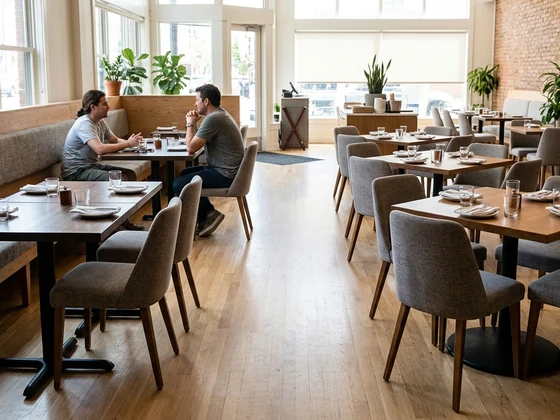
Restaurant Table Spacing and Aisle Clearance: Supplier Drawing Checklist
Check restaurant table spacing, aisle clearance, chair pullout, service path, and supplier drawing proof before approving a...
Sylvia2026-07-20 -

5 Mistakes to Avoid When Buying Restaurant Furniture from China
Don't fall for costly oversights! Learn the 5 mistakes to avoid when buying restaurant furniture from China and ensure a...
 Ron2025-01-079 min read
 -

RON GROUP Launches VR Experience to Explore Our Dynamic Showroom
Discover RON GROUP's VR showroom! Explore dining furniture, tableware, and customized services virtually or visit us in person to...
Sylvia2024-12-163 min read
Subscribe to RON GROUP
Stay up-to-date with the latest industry insights and expert advice. Together, we'll create your ideal restaurant.